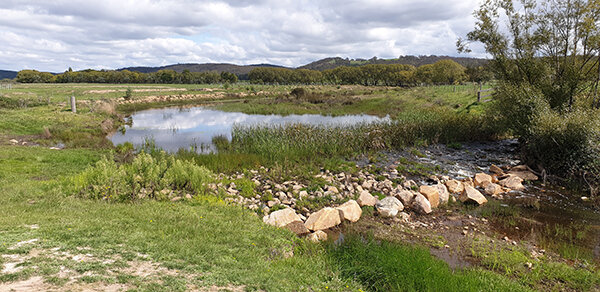
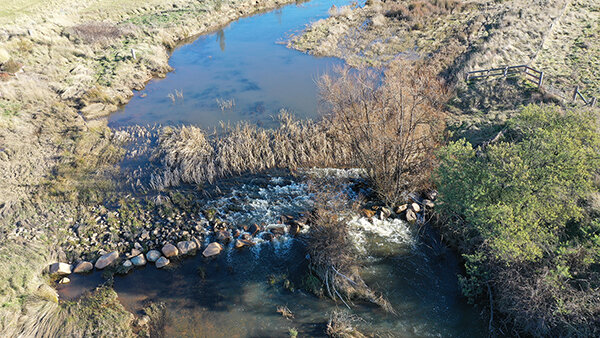
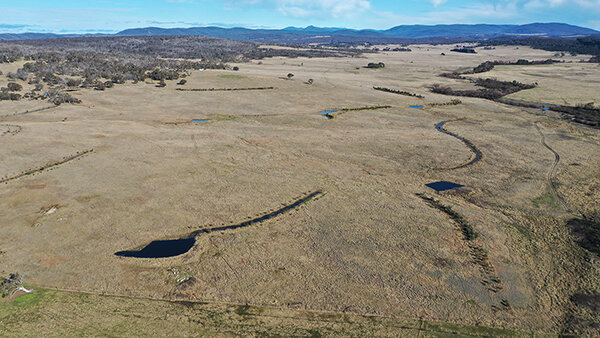
All 31 Sentek soil moisture probes are now installed across the Mulloon catchment, paired with groundwater monitoring sites. Each soil moisture probe has six sensors distributed between 10 and 150cm in depth, which monitor the proportion of moisture at each depth in the underlying aquifers. This will aim to assess how the plant available water in the soil profile interacts with groundwater, and the effect of rehydration actions in the catchment including the implementation of leaky weirs. 

Despite some challenges with install due to the March 2021 flood event and some technical issues with transmitting data from remote locations, all instruments are now performing as expected. The soil moisture sensors are transmitting data to a data management system and accessed by TMI scientists via an online portal in near-real time. 

The Mulloon catchment has had its wettest 12 months on record and TMI’s scientists and partner HydroTerra are keen to analyse the results following the flood event that rehydrates the floodplains due to the actions of the leaky weirs. 
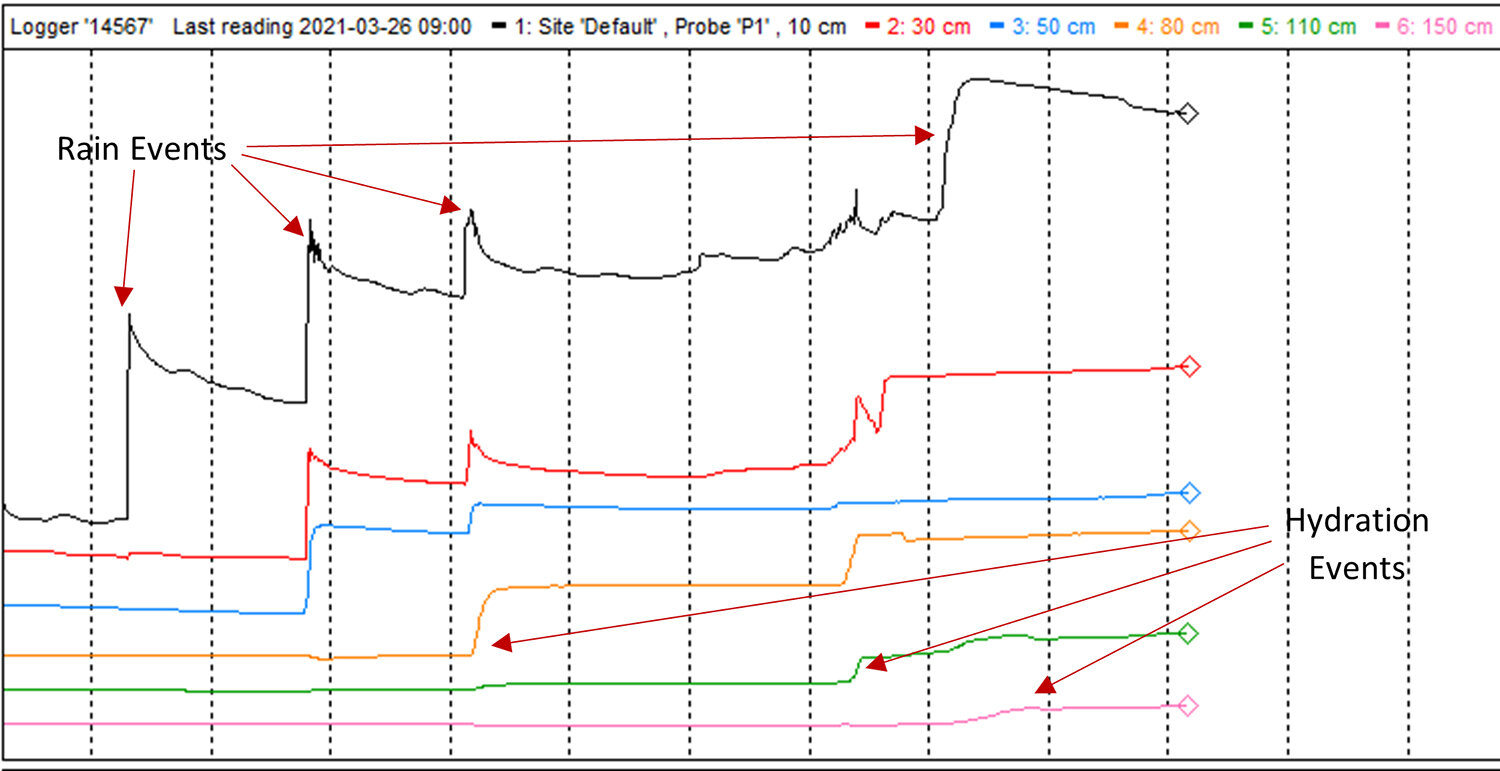
Figure 1: Hydration of the floodplain through infiltration (marked with red arrows).

Figure 1: Hydration of the floodplain through infiltration (marked with red arrows).

The significant wet period has produced some fascinating initial results. With each rain event it’s possible to see how much water infiltrates down the soil profile in real time. Figure 1 shows a one-month period where initial rain events hydrate only the upper soil layers, with further rain and continued infiltration the deeper soil zones start to be hydrated. Another means of rehydration is through aquifers carrying water from external sources. Figure 2 shows deep soil hydration from water carried through aquifers from elsewhere in the floodplain.
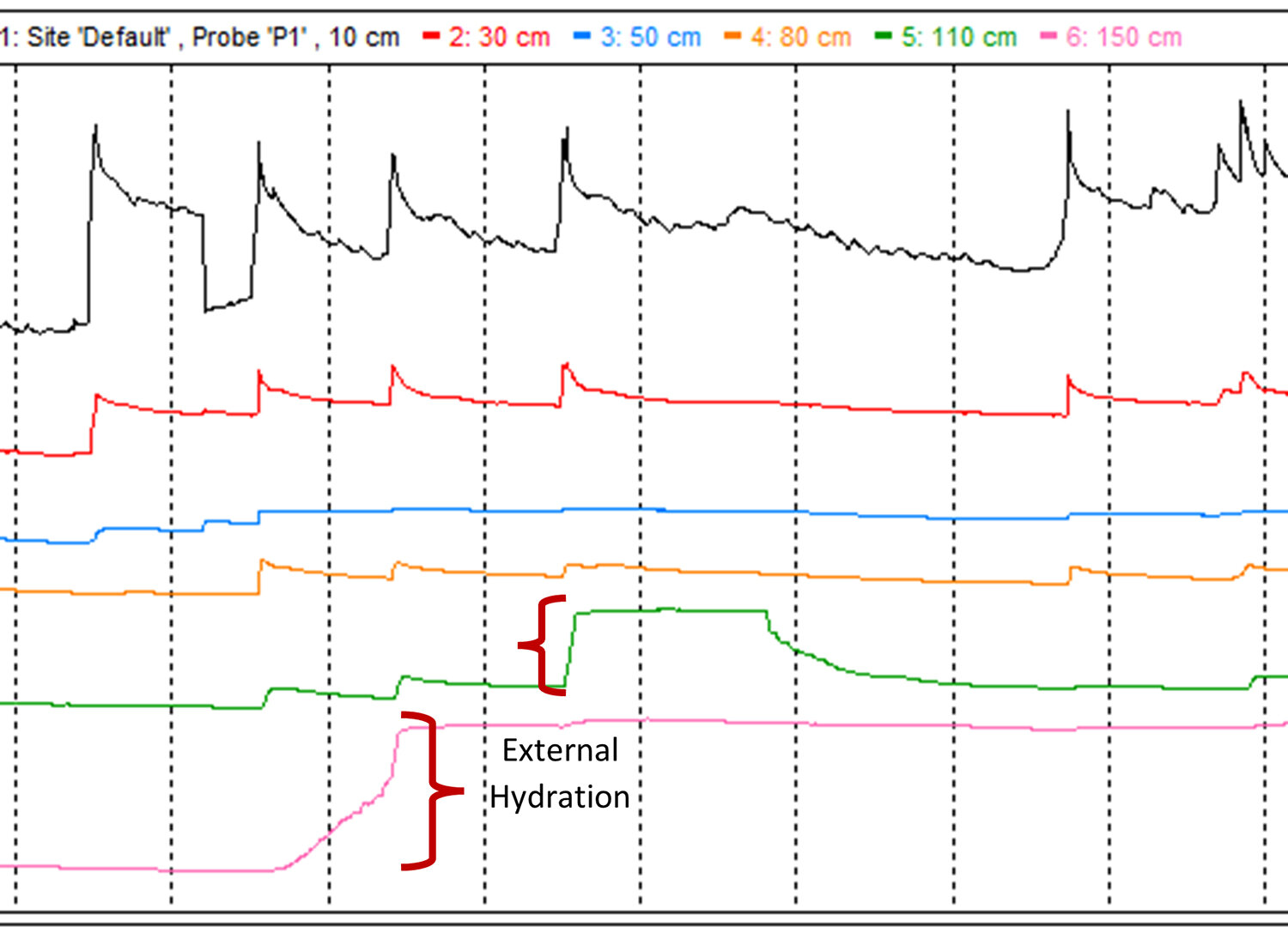
Figure 2: Hydration of deep soil zones from subsurface movement of water (marked in red). This is evident from the soil zones above 150cm and 110cm that show a different moisture profile to their own.

Figure 2: Hydration of deep soil zones from subsurface movement of water (marked in red). This is evident from the soil zones above 150cm and 110cm that show a different moisture profile to their own.

The data acquired from the soil moisture probes will be used in conjunction with pressure and depth information from the paired bore-holes equipped with groundwater monitoring instrument to monitor where all the water goes and create a hydrogeological model of the floodplains. From this model, we will better understand the effects that leaky weirs and contouring can produce in a floodplain environment.

It will be very interesting to see how each of the sites in the Mulloon Rehydration Initiative respond to different climatic extremes such as floods, drought, and heatwaves. To maintain the highest quality dataset, the team is working with HydroTerra to ensure data management processes and integrating all our data into DataStream. TMI and HydroTerra are streamlining the maintenance process by using tablets with software FastFields to ensure that the data is consistent, and all maintenance protocols are carried out following best practice. Stay tuned for further analysis and the reporting that’s forthcoming.

The Mulloon Rehydration Initiative is jointly funded through the Mulloon Institute and the Australian Government’s National Landcare Program. The initiative is also assisted by the NSW Government through its Environmental Trust.

Prawi-600px.jpg

For the Molonglo floodplain, regenerative land management could be the key to saving the last remaining population of the endangered Green and Golden Bell Frogs (GGBF) within the Southern Tablelands. Recent field survey indicates that this population may still be in decline.

Prior to European settlement, it is likely that the Molonglo floodplain was an intact valley filled with discontinuous braided flow patterns containing a complex of wet and dry grasslands, ponds and wetlands. Through the practice of agriculture and through major mining activities upstream, impacts on the floodplain include deep incision, deposition of mine tailings, stripping of nutrients and organic matter – all of which have negatively impacted the population of the GGBF.

Mulloon Institute, in collaboration with Catchment Simulation Solutions (CSS), has investigated options to rehydrate and regenerate the floodplain via the introduction of a series of soft engineering interventions such as leaky weirs, baffles and minor cuttings to promote rehydration of the floodplain while at the same time improving water quality, reducing hydraulic energy and increasing attenuation of flow. The Molonglo Floodplain Rehydration Initiative also aims to improve and create habitat for the GGBF, including targeted areas for increased inundation and the preferred flow regime of wetting and drying.

CSS have assisted with the development of spatial hydrological modelling to inform how TMI’s work can contribute to the hydrological regime required by the GGBF and to assist stakeholders in seeing where water flows across the floodplain, pre and post proposed interventions.

Water Engineer Prawi Woods from CSS has recently achieved acclaim from his peers by winning several awards for his presentation on ‘Rehydrating the Floodplain to Save the Endangered Green and Golden Bell Frog’ at the 2021 Floodplain Management Australia National Conference.

  • Winner of 2021 Harold Sternbeck Medal

  • Young Floodplain Manager Outstanding Presenter Award

Prawi’s presentation gives a thorough overview of the Molonglo Catchment Rehydration Initiative including how the floodplain has been impacted by erosion from historical land use and how this has affected the local population of endangered GGBF. It also describes some of the challenges associated with undertaking the assessment, including how the floodplain rehydration was modelled and how the results were used to help communicate the future changes to the floodplain, and hopefully create a more resilient future for the GGBF population.

PRESENTATION: ‘Rehydrating the Floodplain to Save the Endangered Green and Golden Bell Frog

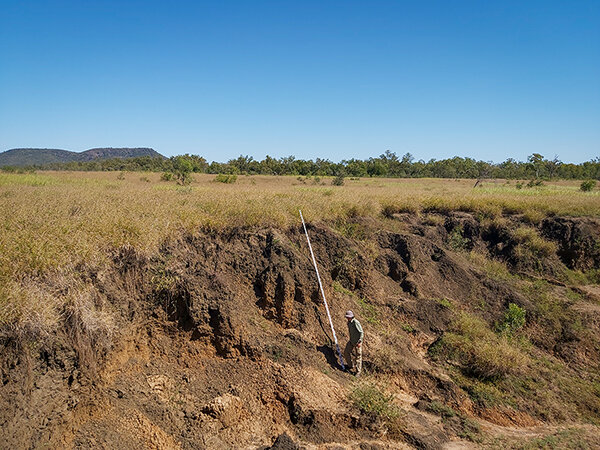
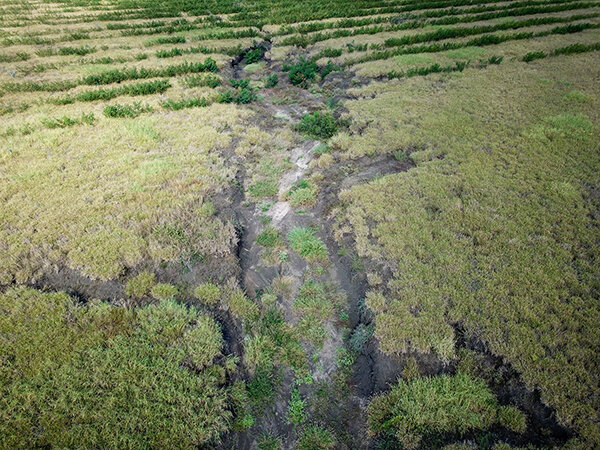
A highly eroded flow line in valuable black soil country.

A highly eroded flow line in valuable black soil country.

Weetalaba

The landscape rehydration demonstration site on Weetalaba Station near Collinsville in north Queensland is in full swing. The project funded by NQ Dry Tropics through the Great Barrier Reef Foundation has progressed into the regulatory approvals phase. Our team is in the process of ensuring that all designs comply with state regulations while delivering sediment savings and ecological benefits.

Leaky weirs, contour banks and a dam are designed to rehydrate a degraded alluvial fan. An exciting feature of the design is the repair of a head-cut feature that is threatening an intact vegetation zone. This project will also include community workshops to support the understanding and implementation of landscape rehydration measure further in this high priority reef catchment.

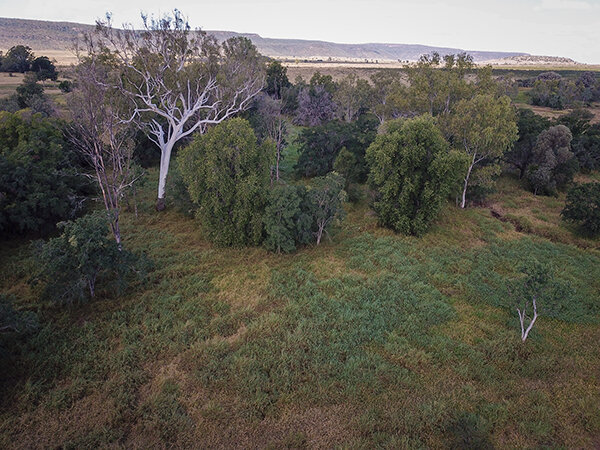
Intact vegetation zone.

Intact vegetation zone.

A 5m deep erosion feature.

A 5m deep erosion feature.


Landsdowne

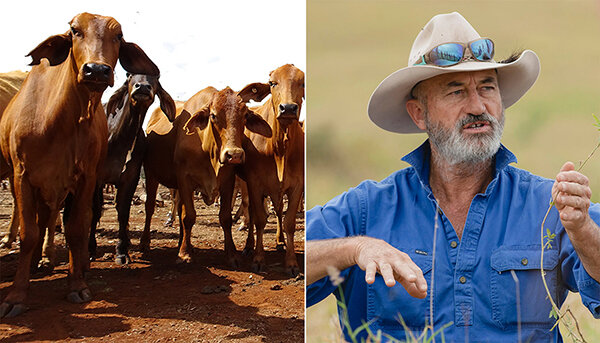
The Landsdowne Creek Community Rehydration Initiative funded by the Australian Government’s Future Drought Fund has kicked off. The project in the Landsdowne catchment near Townsville in north Queensland will see both direct landscape rehydration measures implemented as well as regenerative agriculture training and support in the Landsdowne catchment. The first community workshop was run on recently with Grazing Naturally’s principal Dick Richardson delivering regenerative grazing education to the landholders in the area. This workshop was supported by NQ Dry Tropics and was well attended by local landholders. 

Grazing Naturally with Dick Richardson.

Grazing Naturally with Dick Richardson.

Upcoming work

Sam Skeat will be travelling to Toowoomba in September to do one on one consulting for a cropping property on the Condamine floodplain. 

Terrain NRM has engaged Mulloon Consulting to deliver a four part landscape rehydration workshop series with the first of the these to be held before the end of the year.

Joe moves to NQ

Landscape Planner, Joe Skuse and his dog Colin are set to make the move up north from Canberra as soon as COVID permits. Joe has been relocated to assist in meeting the growing demand for landscape rehydration works in Queensland. Joe is a welcome addition to the Queensland team with plenty of exciting projects in the pipeline.

Back to Country crew – L to R – Richard, Greg, Tyson, Jack, Byron, Nathan, Sky and Joel.

Back to Country crew – L to R – Richard, Greg, Tyson, Jack, Byron, Nathan, Sky and Joel.

Thanks to the generosity of the Capricorn Foundation, the Mulloon Institute (TMI) is planning a co-educational workshop for staff with local Indigenous organisation Back to Country (BTC).

A primary focus of this project is to facilitate a co-educational environment whereby TMI staff can share their knowledge of designing and construction of environmental protection works, while the Gurundgi can share their understanding of connection to Country. This will allow both groups to produce better environmental outcomes in landscape rehydration and restoration into the future. Works undertaken during the workshop will be made up of native vegetation planting and small-scale erosion control measures that can be easily replicated across all Australian landscapes. 

The workshop will be held on Tom and Martina’s property ‘Birkenburn’ which currently hosts Cultural Burning Workshops in partnership with the Koori Country Cultural Fire Aboriginal Corporation. The property is along Sandhills Creek, a tributary of Mulloon Creek. The environmental benefits of the works carried out during the workshop will contribute to the ongoing success of the Mulloon Rehydration Initiative.

TMI staff have expressed desire for a deeper understanding of connection to Country. It is hoped that TMI will be able to use these new perspectives of the landscape in the design and implementation of future work. Additionally, TMI has identified a need for a network of skilled practitioners in Landscape Rehydration to call upon when undertaking work around the country. Given the far reach of BTC, TMI is eager to establish a network of informed and enthusiastic practitioners made up of the Gurundgi.

TMI has worked with BTC in the past on a gully restoration working bee at Numeralla that aimed to restore habitat and bring an eroded, fire ravaged landscape back to life. It was a great community event where everyone learnt a lot from one another and the environmental yields are also already evident. Following high rainfall events, it now takes three days for the water to reach to bottom of the repaired system, a far cry from the three minutes it used to take! 

While our planning is restricted by current COVID restrictions, TMI staff are glad to have such an exciting event on the horizon to look forward to.

Wanda mockup-600px.jpg

‘Wanda’ is the star character of a new curriculum project TMI is working on in collaboration with The Scots College. Scots is a boys’ school in Sydney’s Eastern Suburbs that also has a 300 hectare active learning campus called Bannockburn on the NSW South Coast. Scots is breaking ground by establishing Australia’s first Regenerative Environmental Science program for Years 1 to 10, with the first modules being taught this year. 

Carolyn Hall and Laura Fisher have been working with Kym McMaster, the coordinator of Experiential Education at Bannockburn, and with illustrator Melinda Turnbull, to develop content for the Year 2 program, ‘The Water Story’. Across a series of storyboards, students will accompany the adventurous Wanda through the water cycle as she plays her part as an elemental force shaping the planet. As the story goes, Wanda is now moving too fast, rushing down the eroded gullies of our farms and across the concrete surfaces of our cities. She looks forward to a time when humanity has a lighter impact on the earth, so she can be part of thriving, rehydrated landscapes and move at a more leisurely pace.

This project has been assisted by the NSW Government through its Environmental Trust.

The Mulloon Institute has won an ‘Inspiring Australia – Science Engagement’ grant from the Australian Government to deliver its ‘Modelling Landscape Rehydration for Catchments, Communities and Curriculum’ project thanks to the Department of Industry, Science, Energy and Resources. The project aims to empower citizens to understand landscape rehydration science through co-creation. 

Workshop in the Capertee Valley involving TMI, Kandos School of Cultural Adaptation, Capertee Valley Landcare and University of Wollongong students, 2020.  [Photo: Alex Wisser]

Workshop in the Capertee Valley involving TMI, Kandos School of Cultural Adaptation, Capertee Valley Landcare and University of Wollongong students, 2020. [Photo: Alex Wisser]

Led by TMI’s Laura Fisher, the project will see an array of ‘citizen-scientists’ participate in physical and digital model-making: artists, community groups, students from several regional schools, the University of Wollongong and the Australian National University

Water moves through our landscapes in ways that can feel very mysterious to many of us. Interactive models and digital tools that illustrate hydrological processes can help people interpret our landscapes and understanding how broken water cycles can be healed. This project will unfold over three years in the spirit of collaboration and experimentation, blending art and science in many different settings. 

As part of this project, we have taken exciting early steps on a digital experiment involving Joseph Guillaume and 3rd year students from ANU’s Institute for Water Futures. This project will test how a “digital twin” of a sub-catchment can support storytelling about landscape change and help people visualise the different scales of a catchment landscape from the micro to the macro. Meanwhile, Visual Arts students studying ‘Art, Nature and the Environment’ at the University of Wollongong are currently experimenting with how to represent chains-of-ponds, braided waterways, incised gullies, and spongey floodplains with any material of their choice (including food!). 

My name is Nick Bassett, and I’m in my final year at the University of Sydney, studying a Bachelor of Science/ Bachelor of Advanced Studies (Agriculture), majoring in Plant Production, and Soil Science and Hydrology (yes, it’s a bit of a mouthful!). I’m also in my Honours year. My research project is a field and plot trial investigating the use of applying gibberellic acid (a natural and important plant hormone that promotes stem and leaf elongation) to increase the growth of common summer and winter pastures, and in turn, to begin to restore soil carbon in depleted cropping soil through increased biomass growth and soil respiration activity.  

My interest in regenerative agriculture began with a first-year university field trip to the Central West of NSW, where a member of the Australian Institute of Ecological Agriculture (IEA) introduced us to this new form of thinking. I was also made aware of Charles Massy’s book ‘The Call of the Reed Warbler’, which certainly explained what he was talking about. I was drawn to this new way of thinking into how we manage out agricultural landscapes because I could already see the effects of our traditional management practices of Australia’s unique environment. I don’t come from an agricultural background. I’m from suburban Sydney and was lucky to be able to study agriculture at high school. It’s also been said to me on multiple occasions that I have “fresh eyes” and few ingrained preconceptions as to the proper way how we manage our land. 

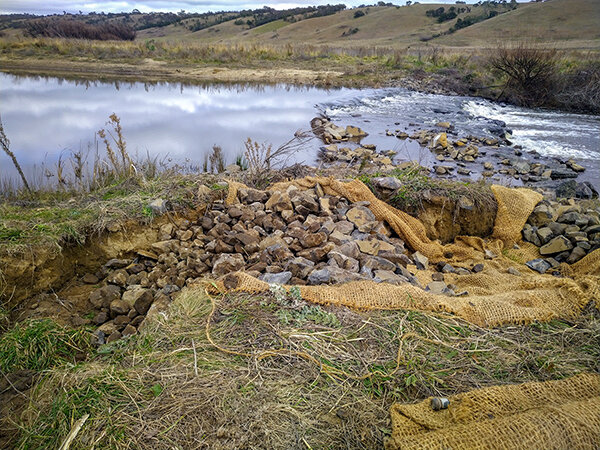
Rebuilding a rock baffle at Duralla along Mulloon Creek.  

Rebuilding a rock baffle at Duralla along Mulloon Creek.  

Photos:  Max Brunswick.

Photos: Max Brunswick.

I was first introduced to the Mulloon Institute (TMI) through the ABC programs ‘Australian Story’ and ‘Landline’ that explored the successes Tony Coote and the TMI team had in regenerating a degraded landscape and improving the health of Mulloon Creek. I thought TMI would be a really interesting place to complete my work placement/internship for the professional development component of my degree, as I could already see the benefits of what places like TMI were doing. 

I predominantly spent my time working with the research team of TMI as part of the Mulloon Rehydration Initiative (MRI)*. Working with Hydrologist Tony Bernardi, Research Coordinator Luke Peel and Science Officer Ira Dudley-Bestow, I assisted with the maintenance and collection of groundwater and soil moisture data from the multiple gauging stations across the Mulloon Creek catchment and private farms participating in the MRI. Driving around the catchment with Tony, Luke and Ira, I was able to observe the scale of the landscape rehydration project: 50 leaky weirs and counting, and dozens of gauging stations, across four different farms. It became obvious to me the success that TMI has had, from the praise from other farms across Mulloon North and Palerang, about how the project and research has benefitted them economically and environmentally, and the long term relationships that have been established. 

Leaky weir structure DM6 at Duralla.

Leaky weir structure DM6 at Duralla.

I also worked with Technical Officer Max Brunswick, who is responsible for building and maintaining the many leaky weirs across the catchment. Walking along the creeks with Max, it was really worthwhile to learn how these structures are built in the first place given the importance they play in rehydration. What immediately stuck out to me was the extent by which the weirs were able to raise the water level. In some situations, this could easily have  been over 75 cm. Multiplying this across each weir upstream, you can imagine, not just how much is now being held back (especially at this time as the drought breaks), but at how much higher the water level would be only a couple of hundred metres upstream. No activity that I had to do was particularly difficult but dealing with the winter wind of the Southern Tablelands certainly served as a challenge! 

This leaky weir (DM6) at Duralla would easily have raised the water  50cm high upstream. 

This leaky weir (DM6) at Duralla would easily have raised the water  50cm high upstream. 

As someone who is keeping their options open as to where they go next after university, doing my placement with the Mulloon Institute has been a fantastic, and very much worthwhile experience. Observing the success that landscape rehydration has had on this environment, there has certainly been a positive impact on the productivity of this farm and the relationships with other farms in the Mulloon catchment. For any student studying agriculture, environmental science or any other discipline, I would highly recommend doing a placement at the Mulloon Institute. If you are someone like me who still isn’t sure where they like to go after university, learning about regenerative agriculture and landscape rehydration at TMI will give you a great introduction into a newer aspect of Australian agriculture and a positive outlook as you begin to sense that there is a better way of doing things into the future.

* The Mulloon Rehydration Initiative is jointly funded through the Mulloon Institute and the Australian Government’s National Landcare Program. The initiative is also assisted by the NSW Government through its Environmental Trust.

The Mulloon Institute welcomes internships and placements that can be designed and resourced primarily through the applicant’s respective tertiary institution and/or employer. We can then look at facilitating the research project if it aligns with our goals and our work on the Mulloon Rehydration Initiative. If this sounds like you, then please get in contact via info@themullooninstitute.org with your proposed idea for a research project.

We invite you to join us on the next stage of our journey as we launch our new logo and branding.

The symbol in our redesigned logo takes its inspiration from the rural landscape, with a series of shapes reflecting key elements of the landscape – soil, water, plant growth and the sky. 

It represents to us the maturing of our organisation as we expand our work across all parts of Australia in partnership with local farmers and natural resource management experts. 

What isn’t changing is our commitment to being global leaders and innovators in landscape rehydration and the regeneration of Australia’s agricultural landscapes.

We will continue to use scientific research and education to improve farming practice, to help build a climate resilient environment that protects Australia’s food and water security for future generations.

We hope that you like our new look and we look forward to sharing updates and stories of our work from different parts of the country.

Thanks to our branding partners at Redhanded for working with us on the redesign and to digital designer and developer Tia Kelly for helping with the roll out.

Science Institute says soil can absorb our annual emissions through carbon sequestration and the answer lies in rehydrating the Australian landscape.


Australia’s Mulloon Institute says the country can achieve its emissions reduction target by focussing on what is literally right under its feet, our soil.

One of only five organisations chosen globally as a demonstrator of sustainable agriculture by the United Nation’s Sustainable Development Solutions Network, the Institute says that soil can play a major role in reducing the impact of climate change through the natural cycle of soil carbon sequestration. 

The key to this occurring is through a rehydrated landscape.

The Hon. Gary Nairn AO, Chairman of the Mulloon Institute, says unfortunately the solutions being put forward by the IPCC and others rely heavily on the reduction in actual emissions (focused on energy) and achieving ‘net zero’. 

Mr Nairn says there are other, simpler solutions to this complex problem, “Few people are aware that soil contains two to three times more carbon than the atmosphere, and that it is possible to absorb the world’s annual anthropogenic emissions in our soils.”

Carbon sequestration, the long-term removal, capture or sequestration of carbon dioxide from the atmosphere, helps slows or reverses atmospheric CO2 pollution.

“Key to carbon sequestration is water,” Mr Nairn says, “and a hydrated landscape will speed up carbon sequestration.”

Rehydrated landscapes are key to carbon sequestration and improving farm resilience to climatic extremes. (Westview Farm 2020)

Rehydrated landscapes are key to carbon sequestration and improving farm resilience to climatic extremes. (Westview Farm 2020)

“For example, soil organic matter (SOM) has increased by up to 129% over the past ten years as a result of our work through the award winning, catchment-scale Mulloon Rehydration Initiative (MRI).”

The Initiative, jointly funded by the Mulloon Institute and the Australian Government’s National Landcare Program, is located in the Mulloon catchment, east of Canberra.

“SOM is a lead indicator for soil health and soil carbon. We have proven through our research, that when we fix water cycles on farmers’ land, we can retain more water in the soil, increase vegetation cover, sequester carbon and improve long term profitability,” he explains.

The release of the latest IPCC Report on the climate further reinforces the urgent need for landscape-scale repair and rehydration works across the country, according to Mr Nairn.

“While the IPCC Report will trigger debate and finger pointing on who is doing what and where, the least expensive and most practical action that will quickly get results, including a return on investment, is fixing and rehydrating our degraded landscapes,” he says. 

“In particular, the IPCC Report highlights a future of less rain overall but more intensive events, risking flooding and erosion. Our work is geared specifically towards making our landscapes more resilient to such events,” he continues.

“While this work is a no-brainer for farmers’ resilience to extreme weather events, drought, flood and bushfire, it is having a positive impact on the climate as it transfers carbon dioxide emissions from the atmosphere into the soil, as soil organic carbon,” Mr Nairn emphasises.

“The end result is a win for the environment with repaired landscapes and increased biodiversity, a win for farmers with improved soil health, nutrient dense food, productivity and resilience and a win for the climate, with reduced emissions, thus helping to put a break on temperature increases,” he concludes.


Media enquiries: Richard Forbes, Head of Corporate Affairs, 0427 270 687.

Leaky weir installed at Westview Farm.

Leaky weir installed at Westview Farm.

On-ground works are continuing in the Mulloon Rehydration Initiative with Stage 2 nearly complete. 

So far, 60 creek structures have been installed across five properties along a 20 km stretch of Mulloon Creek. Over the coming stages of the project (Stages 3 – 5) a further 60 structures will be built over another 30 km of the creek.

Around 40,000 trees, shrubs, sedges, grasses and reeds have been planted, transplanted and naturally regenerated in the project area since it began. Many volunteer planting days have been held with two more planned for October and November 2021. Contact us to get involved!

These plants and associated biology are what turn the leaky weirs into living, growing, self-sustaining structures. Without the life sustaining force, the leaky weirs would eventually decay, erode and wash away. 

The Mulloon Rehydration Initiative is jointly funded through the Mulloon Institute and the Australian Government’s National Landcare Program. The initiative is also assisted by the NSW Government through its Environmental Trust.
Westview Farm

Westview Farm