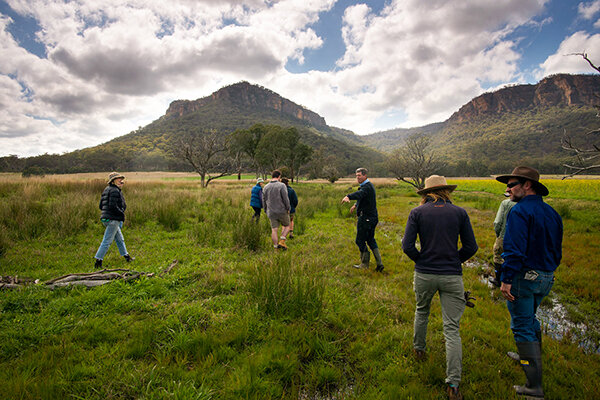
Peter Hazell presenting at the Bass Coast Landcare Field Day.   (Photo: Bass Coast Landcare)

Peter Hazell presenting at the Bass Coast Landcare Field Day. (Photo: Bass Coast Landcare)

In May, TMI’s Senior Landscape Planner Peter Hazell visited South Gippsland, Victoria to present workshops for Bass Coast Landcare and for Maffra and Districts Landcare.

Water Management in a Changing Climate workshop – 3 May 2021, Bass Coast VIC

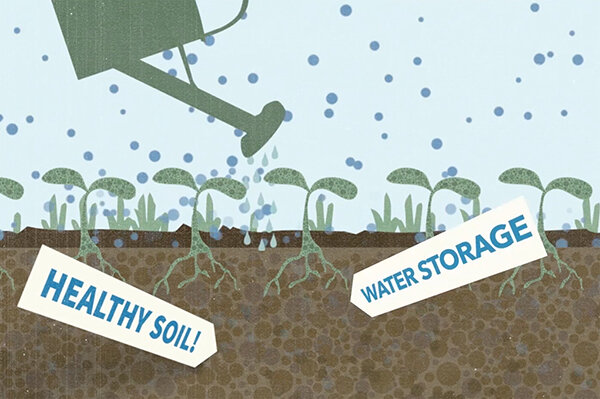
Peter’s presentation had an emphasis on managing soils and landscape to increase soil moisture as well managing excess water in the landscape. Followed by a farm walk after lunch. 

Participant comment: “I feel this rehydration approach is extremely relevant for our Southern Gippsland landscape, and really hasn’t been done before. The approach makes sense. In Southern Gippsland we also need to be mindful of excessive water during wet winter periods also.”

Drought Resilience in Farm Landscapes workshop – 4 May 2021, Maffra VIC

Peter emphasised the importance of managing soils and landscape to increase soil moisture as well as managing excess water in the landscape. Topics included: the water and carbon cycles, thermodynamics and regulating temperatures on farm, slowing water and saving it, soil health and water security. Both workshops were well received.

This workshop was funded through the Australian Government’s Communities Combating Pest and Weed Impacts During Drought program. 

untitled-46-600px.jpg

In the last Resilience newsletter, we reported on the ‘education blitz’ that launched TMI’s five year ‘Landscape Rehydration Capacity Building’ project, funded by the NSW Environmental Trust. 

This project was inspired by the extraordinary number of inquiries TMI receives from communities seeking landscape rehydration education, tools and strategies. TMI is keen to build on the achievements of the Mulloon Rehydration Initiative* to support other landholder groups to embark on their own catchment-scale projects. 

Since the education blitz, members of the team have begun mapping out the components of a Landscape Rehydration Curriculum that could serve the needs of school students right up to advanced natural resource management professionals. 

As part of this process, Pete Hazell and Laura Fisher have been engaging with landowners in the majestic Capertee Valley in the Central West of NSW. We have had some fascinating and generative conversations about a potential community-led project in a sub-catchment within the Valley. 

The team are now working out how we might support local landowners on this journey. The goal will be to trial newly designed educational resources within that process, resources that will eventually form part of TMI’s Landscape Rehydration Curriculum.

*The Mulloon Rehydration Initiative is jointly funded through the Mulloon Institute and the Australian Government’s National Landcare Program

harvesting hay-600px.jpg

The Mulloon Institute has won a WA Community Stewardship Grant to plan and implement landscape rehydration works to restore landscape function on three properties in the agricultural areas of WA. 

Rehydration works will be implemented on properties preferably encompassing a single sub-catchment, across all landscape zones (ridgeline to valley floor). The objectives are to introduce landscape rehydration to WA farmers through workshops, implementing and modifying the concepts to suit the WA landscape (in particular addressing salinity issues) and demonstrate the benefits of landscape rehydration to agricultural productivity and its assets (soil, water) and the natural environment.

An initial workshop is planned for 14 July at the Muresk Institute near Northam, 1.5 hrs north-east of Perth. The workshop will be led by Peter Hazell. 

Peter Hazell presenting at Mulloon.

Peter Hazell presenting at Mulloon.

During that visit, seven properties will be visited by Mulloon Consulting landscape planners (with one who is based in WA) to assess them for inclusion in the WA Community Stewardship grant. Of these, three will be chosen for detailed landscape rehydration design and construction works and six will have regenerative management plans/frameworks prepared. This will include consulting with landholders on their needs and issues in terms of grazing management, cropping management, plant identification/use and land management objectives. 

A total of seven workshops or field days will take place to build the capacity of landholders and local Landcare members to understand the benefits that landscape rehydration and regenerative land management measures can bring to agricultural land in the Wheatbelt over the three years of the grant.

Graziers from Ravenshoe to Ingham are part of a new $3.2 million project to clean up the water flowing down the Herbert River and out to the Great Barrier Reef lagoon.

Terrain NRM will work with landholders changing their grazing management practices in a project focused on reducing the amount of fine sediment in the Herbert River catchment’s waterways.

Terrain’s Jen Mackenzie said the team would also repair major gully and streambank erosion on two properties through rock chutes and pile fields, and would support a number of graziers to fence off waterways and install off-stream watering systems for cattle.

The Upper Herbert Sediment Reduction Project is funded by the partnership between the Australian Government’s Reef Trust and the Great Barrier Reef Foundation.

“We are really looking forward to this – we’ll also be working with the Mulloon Institute for the first time, helping landholders to prevent further erosion on their land, and with visiting grazing and soil health specialists who already work successfully with landholders in this region,” Ms Mackenzie said.

upper-herbert-sediment-smaller-square-reduction-project-woodleigh-station-1b.jpg

The new project will complement a Herbert Gully and Grazing Program that has been running for the past three years, funded by the Australian Government and delivered by Terrain NRM. The project has led to reductions in sediment loads through gully erosion remediation work and changes to grazing management practices.

“These projects are benefitting the land, the Reef and graziers with their soil health and natural grazing practices focus,’’ Ms Mackenzie said. “The engineered works – from rock chutes and bund walls to whoay boys on roads – are significant for sediment reduction. But it’s the changes to the way we manage the land that will lead to long-term and ongoing improvements.

“The new Upper Herbert Sediment Reduction Project will build on the success of our existing project and expand our reach of support for landholders in the Herbert catchment.”

Herbert River catchment extends 340km from the Herberton and Ravenshoe areas to the coastal region of Ingham. It is one of the three biggest contributors of sediment loads to the Great Barrier Reef. Sediment is one of the major materials affecting the health of the Reef. Fine sediment smothers corals, seagrasses and other plants, also affecting turtles, dugongs, fish and other species that rely on them for food and shelter.

“The partnerships we develop with graziers help the Reef and waterways and, just as importantly, they help landholders to manage their properties more sustainably and improve long-term profitability,’’ Ms Mackenzie said. “So it’s a win-win situation.”

Great Barrier Reef Foundation Managing Director Anna Marsden said the Foundation was looking forward to working with Terrain NRM to deliver an important regional water quality program.

“A healthy Reef needs clean water, which is why improving water quality from land-based run-off is so important to the health of our global icon,” Ms Marsden said.

“Terrain NRM has a strong track record of working with landholders and others in the local community who are committed to making a positive difference to Reef health and this program will build on some of the great initiatives underway and bring forward new on-ground activities proposed for the region.”

SOURCE: https://terrain.org.au/upper-herbert-sediment-reduction-project/

Kindly reproduced from Terrain NRM’s website.

Up in Queensland, landscape planner Sam Skeat has been busy working with NQ Dry Tropics on various property visits, workshops, maintenance and design work.


Maintenance workshop, Mt Pleasant Station, Collinsville

Landholders from the Bowen Broken Bogie region took part in hands-on maintenance of existing landscape rehydration structures that were constructed on Mt Pleasant in 2019. Part of NQ Dry Tropics’ Landholders Driving Change project.

The workshop was followed by two days of basic maintenance work on rehydration structures. This was designed to upskill local landholders and was done with involvement from the property owners, allowing them to understand and get hands on training in construction and maintenance of rehydration structures.

Part of Landholders Driving Change which is a Burdekin Major Integrated Project funded by the Queensland Government through the Queensland Reef Water Quality Program.

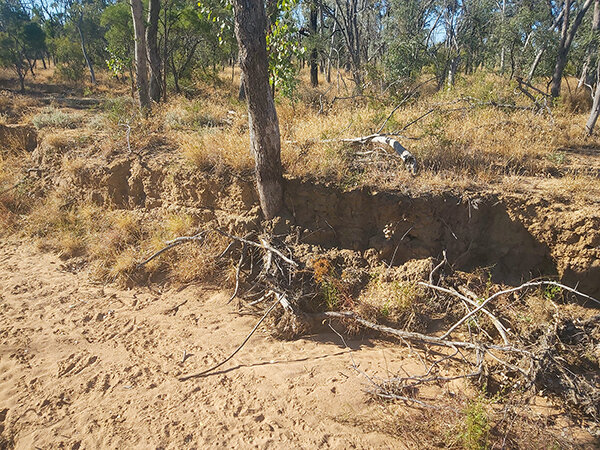
Mt Pleasant - Repacking Rock after some rock movement. Two wet seasons after construction it has vegetated nicely and will only get more stable.

Mt Pleasant – Repacking Rock after some rock movement. Two wet seasons after construction it has vegetated nicely and will only get more stable.


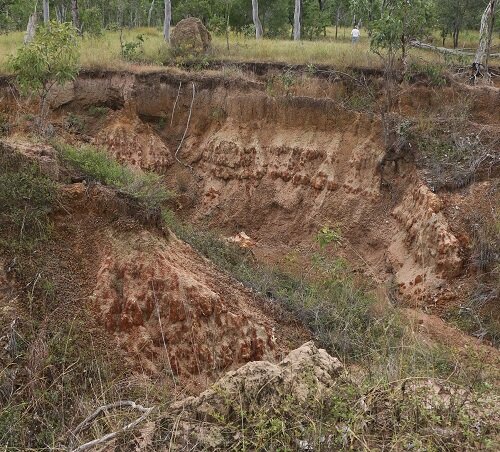
Monklands - A gully plug now filling on old erosion channel. Looking up stream. Funded by NQ Dry Tropics designed by Mulloon.

Monklands – A gully plug now filling on old erosion channel. Looking up stream. Funded by NQ Dry Tropics designed by Mulloon.

Landscape Rehydration workshop, Monklands Station, Alpha

One day workshop helping build practical understanding of landscape rehydration for extensive grazing properties. Participants looked at existing rehydration structures and how they have performed, and learnt how to identify potential beneficial rehydration sites and apply simple designs. Supported by CHRRUP and NQ Dry Tropics through funding from the Australian Government’s National Landcare Program.

A second day of activities involved a group of local landholders looking at previous works designed by the Mulloon Institute and funded through NQ Dry Tropics that had been implemented for two years. Training was provided around how to identify site similar sites to replicate this type of design and how to understand landscape evolution since the introduction of grazing that has led to landscape dehydration. 

Monklands - Post settlement alluvium over box tree broad flowline then incised. Features like this give inside into what the country used to be like and when changes occurred.

Monklands – Post settlement alluvium over box tree broad flowline then incised. Features like this give inside into what the country used to be like and when changes occurred.


Weetalaba - Large gully where overland flow re-enters incised fan.

Weetalaba – Large gully where overland flow re-enters incised fan.

Weetalaba Station, Collinsville

Landscape Planner Bill McAlister joined Sam Skeat on a site visit to Weetalaba Station, 55km south of Collinsville, where they will designing a demonstration site through NQ Dry Tropics as part of the Landholders Driving Change project, and is supported by funding from the Great Barrier Reef Foundation. 

Weetalaba - On top of fan feature looking in the direction of the old flow path.

Weetalaba – On top of fan feature looking in the direction of the old flow path.

This landscape rehydration site is an old alluvial fan which has incised and cut a shortened path down to Rosella Creek. It is still actively lowering in the current flowline with large active black soil gullies from overland flow now dropping into the feature. The design will look to lift and spread water higher in the landscape and re-establish an older flow pattern where water ran parallel to Rosella creek for a couple of km’s before re-entering. There is also a recent intact deposition zone which will be protected and erosion threatening leucaena (legume fodder crop) and the large gully at the bottom that will be halted.

The team is currently in the design phase and all going to plan it will be constructed this dry season. 

Weetalaba - Gully cut up through leucaena.

Weetalaba – Gully cut up through leucaena.


Enhancing landholder capacity to undertake landscape rehydration workshop, Strathalbyn Station

Workshop for NQ Dry Tropics, building on previous workshop at Flagstone in 2020 delving deeper into understanding landscape and what individual landholders can do on an extensive property scale. 

This workshop is part of Enhanced Extension Coordination in the GBR project, funded by the Queensland Government’s Reef Water Quality program.

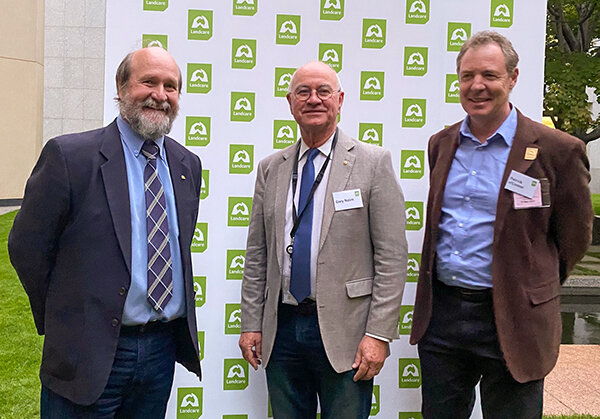
L-R: Jim Adams (National Landcare Network, CEO), Gary Nairn AO and Patrick O’Connor (NLN, Chair)

L-R: Jim Adams (National Landcare Network, CEO), Gary Nairn AO and Patrick O’Connor (NLN, Chair)

Parliamentary Friends of Landcare

In early March, Chairman Gary Nairn AO attended the launch of the Parliamentary Friends of Landcare inviting politicians to join in championing the work of Landcare and the beneficial impact it has on the environment.

New South Wales Nationals Senator Perin Davey says the work done by Landcare is an essential part of restoring and protecting our local environment. 

“Landcare not only supports our native flora and fauna, but also helps farmers and fishers across Australia adopt sustainable practices to deliver productive and environmental outcomes,” Senator Davey said. 

National Soil Advocate’s Forum

In April, Gary was invited to attend the National Soil Advocate’s Forum covering soil organic carbon. The Hon. Penny Wensley AC and her office put together a broad range of experts to present at the forum and a very good group of stakeholders to attend, ask questions and debate some of the big issues. 

Beyond descriptions of soil organic carbon and how it can be increased, there was plenty of debate around those parts of Australia best situated to sequester carbon; the issue of the accuracy of measurement; and of its permanence. There is much work going into these issues and they will be the basis of much conjecture around carbon credits as many organisations jockey for involvement in the credit market. Watch this space!

You can view all the presentations here: https://vimeo.com/soilsadvocate

Carbon Link

Following the forum, Gary then attended a day in Nimmitabel run by Terry McCosker and his Resource Consulting Services. Terry is also Executive Chairman of Carbon Link, a company that has been developing methodologies to better measure soil organic carbon and related technologies. 

RCS has been a leading company in Australia for 30 years working with farmers to help make their farms more regenerative and profitable. RCS’s ‘Grazing for Profit’ courses have been undertaken by literally tens of thousands of farmers and his methodologies are key drivers for sequestering carbon.

HealthySoilWaterStorage-600px.jpg

During May, you will have received an email from TMI about the urgent need to train more staff in landscape planning and hydrology. Hopefully the accompanying video explained succinctly the difficulty TMI faces as a not-for-profit in responding to the great need that exists in Australia’s degraded landscapes. 

While we have been fortunate to attract some government funding for certain projects, generally those grants require joint funding in either cash or kind. But whether it is cash or kind, it is ultimately all cash as TMI needs to pay wages to its professional and wonderfully qualified staff. 

A donation before 30 June 2021 will be a 100% tax deduction for you, and with your support, TMI will be able to have more qualified people on the ground helping to rehydrate catchments and working with farmers to make them more resilient to challenges such as drought, flood and bushfires. 

Any assistance will always be greatly appreciated.

Existing dams

Existing dams

Mulloon Consulting are working with the Harris family (of Harris Farm Markets) and their farm manager to assist them in creating an example of low intensity regenerative farming, with a focus on grazing animals and ecotourism and incorporating propagation of native plants and a family and business retreat. 

Mulloon Consultants Sam Skeat and Anne Gibson visited the Cox’s River Rest property in March to present a ‘Grazing and Planning’ workshop with advice on managed grazing to assist with the cattle and equine enterprises while ensuring the property remains in top condition.

Dam and access

Dam and access

IMG_0083-600px.jpg

Mulloon Consulting has prepared a report for the Ginninderry Development Group on applying the Mulloon Institute’s approach to riparian restoration, erosion management, habitat restoration and water management to parts of the Ginninderry Conservation Corridor, which is part of the Ginninderry development in West Belconnen, ACT. 

The report assesses ephemeral flow lines identified by the group and makes recommendations for riparian restoration and repair, with a focus on site analysis and the design of landscape rehydration and regeneration measures. It also provides management recommendations for specific issues identified across the site.

IMG_0074-600px.jpg

Paling yards in the Bago State Forest

Paling yards in the Bago State Forest

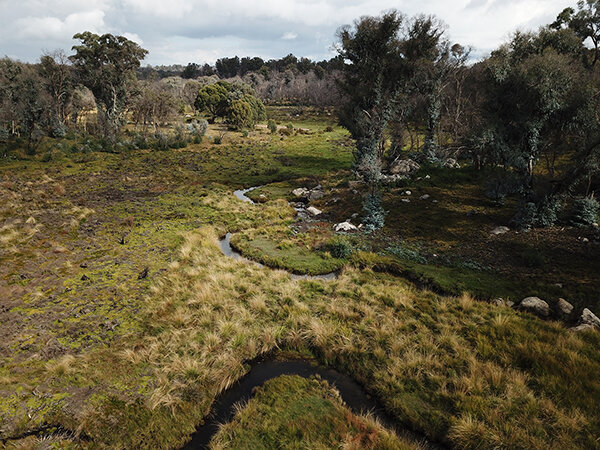
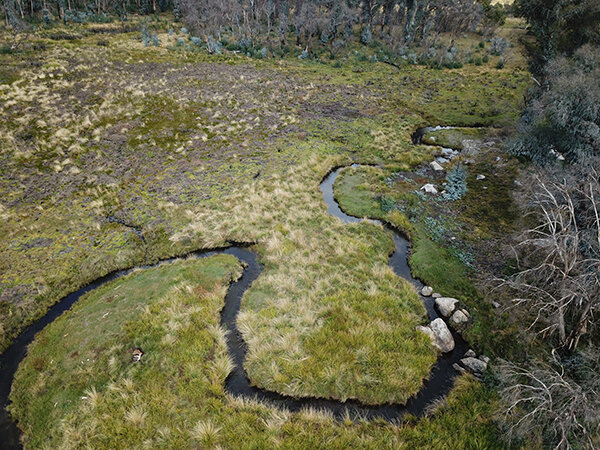
During March, Mulloon Consulting’s Cam Wilson and Bill McAlister inspected peat bogs in the Bago State Forest as part of a plan to upgrade tourism facilities through the Snowy Mountains Tourism Upgrade Program. 

The project, led by the Forestry Corporation of NSW is a first step in an exciting project aiming to restore the hydrology of sensitive montane peatlands and, through tourism, draw public attention to the value of wetland ecosystems, some of which have been subject to historical degradation. 

Mulloon Consulting has been engaged to investigate the potential for restoration of the peatlands in the Paddy’s River Dam catchment near Tumbarumba in south-eastern NSW and to provide recommendations for potential peatland restoration projects, including a preliminary design to rehydrate a peatland at Paling Yards.

Paling yards in the Bago State Forest

Paling yards in the Bago State Forest