Ecological Outcome Verification

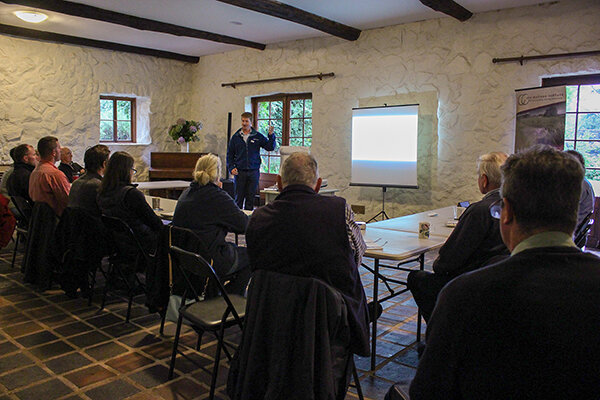
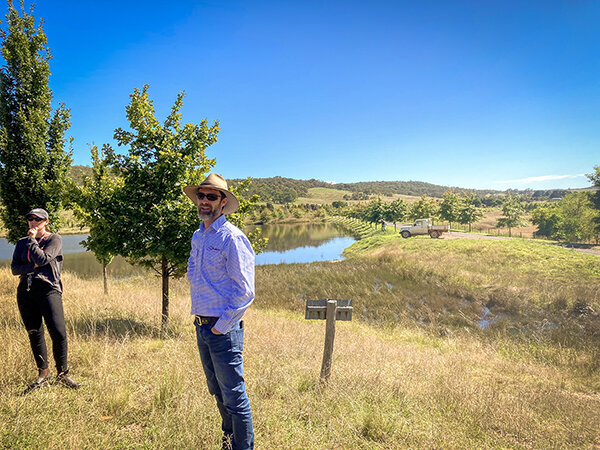
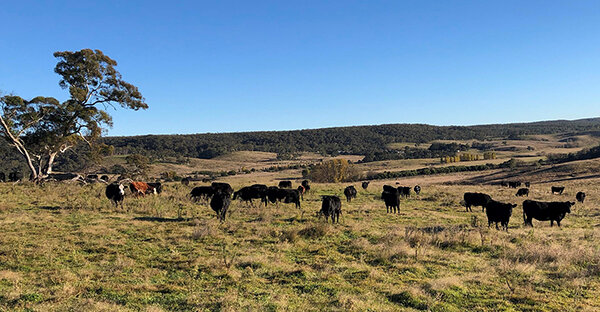
We recently met with Tony Hill from Australian Holistic Management Cooperative’s Land to Market Australia program to discuss results from the latest round of Ecological Outcome Verification (EOV) monitoring undertaken on the farm. We scored exceptionally well across 95% of the farm with very high scores in the ecological health indicators and water cycle and mineral cycle indices which is testament to the regenerative practices we use on farm and the rehydration work undertaken as part of the Mulloon Rehydration Initiative across the whole catchment. 

Committing to managing the farm regeneratively and continual improvement in ecological outcomes has seen Mulloon Creek Natural Farms become certified Land to Market – be sure to look out for the label on your egg cartons in the coming months! For more information on the EOV process head to https://landtomarket.com.au/verification

Matt Narracott joined us at the start of May as Farm Manager to support operations and management at Mulloon Creek and Duralla. Matt’s background is in environmental science and engineering having previously worked in consulting across land remediation, planning, mining, agriculture and waste management. He will also provide a link with MCNF, TMI and MC, adding complementary skills to both teams.

chickens-2-crop-600px.jpg

Poultry Update

We would like to thank our dedicated Poultry management team Roberto and Maria who for the past 14 months have gone above and beyond the call of duty to ensure that our layers remained in peak condition during the very testing times of drought, bushfires and floods. Roberto and Maria, both vets from Venezuela, while at MCNF received their permanent residency and now call Australia home. They leave MCNF in order to further develop their knowledge and experience what their adopted country has to offer. We wish them well on their journey and hope to see them back at MCNF sometime in the future. 

Gareth Law has been promoted to the position of Poultry Manager and while he has big shoes to fill he is proving himself to be a capable replacement. 

Over the past months we have been busy renovating our packaging shed and coolroom facilities now over 100,000,000 eggs old. The improvements are due to be completed in July and will ensure that our eggs are always in peak condition well into the future. We are also carrying out renovations to the layer sheds giving the chooks even more space to roost and more comfortable nesting boxes so they can feel right at home in all conditions. 

Paddock feed for the layers has recovered well after the drought and it is planned over the coming year to further increase our biodiversity giving the chooks more palatable plants to graze, and planting bushes, shrubs and trees to encourage additional bugs, grubs and insects into their diet.

MCNF continues to use certified biodynamic pasture and will soon add “certified chemical free” and “land to market verification” making us Australia’s first farm verified as regenerative to its portfolio.
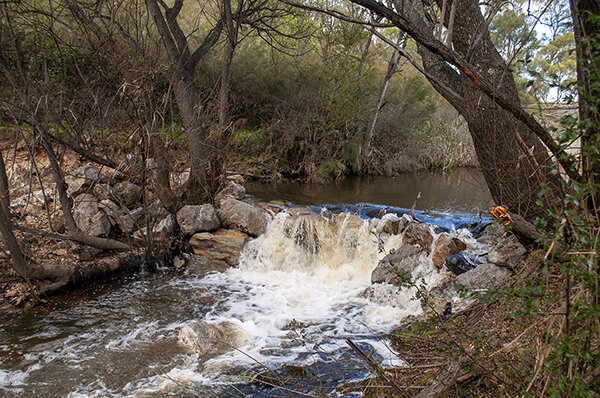
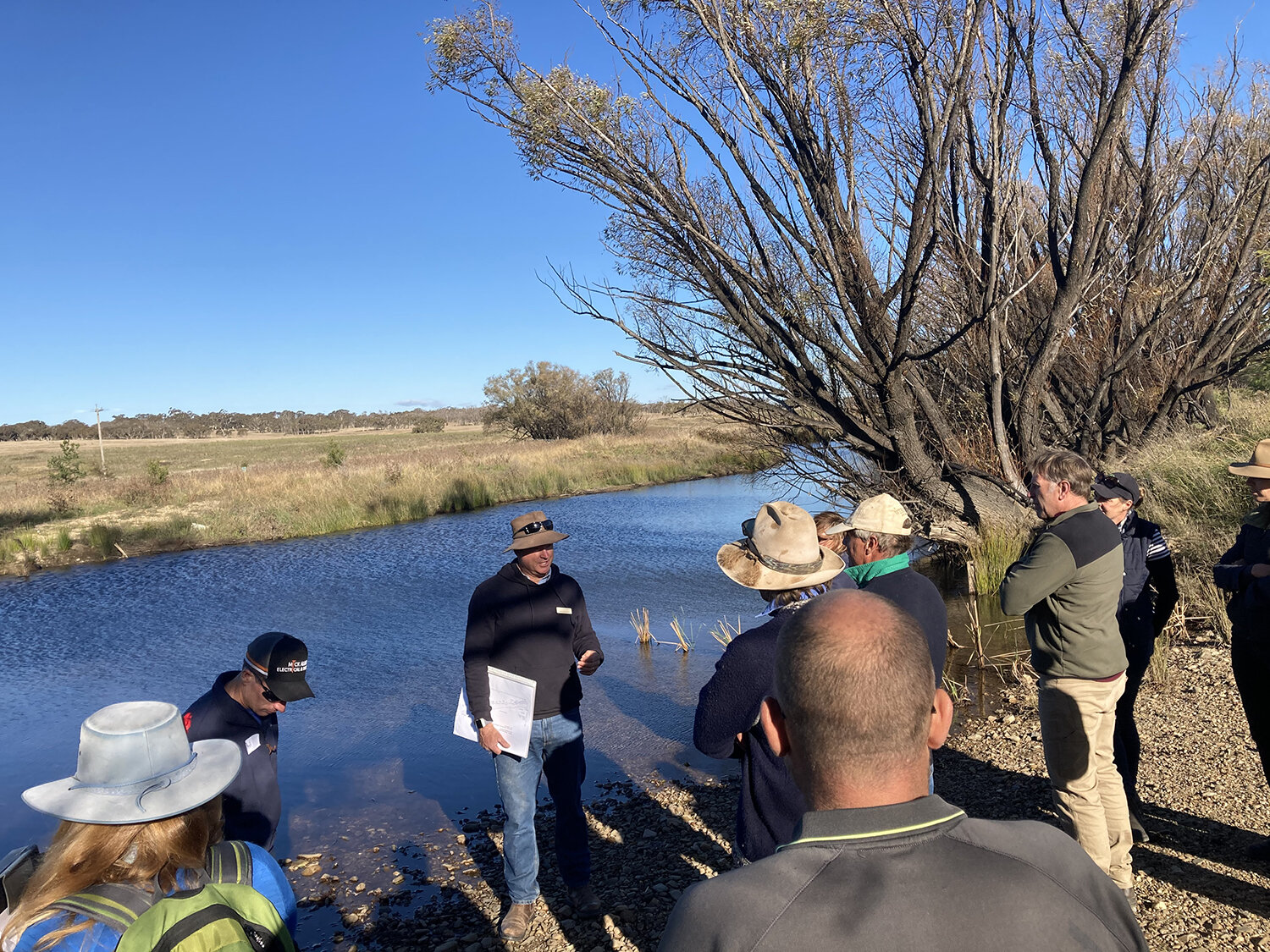
The leaky weir at Peter’s Pond on the Home Farm

The leaky weir at Peter’s Pond on the Home Farm

Canberra Institute of Technology – 11 March 2021

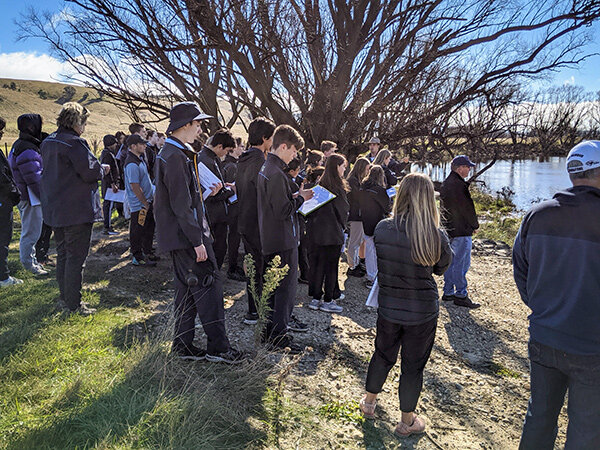
Twenty three mature-age students from the Canberra Institute of Technology – Conservation and Land Management course visited the Mulloon Institute’s Home Farm to learn about sustainable biomes, landscape rehydration and how to manage farmland that benefits humans and the natural environment in a sustainable way. Specifically, they learnt about landscape rehydration and how it is being implemented at the farm, including leaky weirs, the importance of snags in-stream and the use of contours to slow down water flow across paddocks. They were also introduced to the Mulloon Rehydration Initiative.

Take home comments from students included: anything is possible, don’t be afraid of weeds, read the landscape, slow the flow and take the long-view when dealing at landscape scale.

ANU Art & Design students – 16 March 2021

Twenty five students from the Australian National University’s School of Art and Design visited Mulloon Creek Natural Farms to learn about the Mulloon Rehydration Initiative and interventions in the landscape that support restoration and sustainability efforts. They learnt about reading the landscape and how design can be used at the paddock, farm and catchment scales. 

PRIVATE EDUCATIONAL TOURS

If your Landcare group, organisation or school are interested in a similar workshop or a tour of Mulloon Creek, please contact us via info@themullooninstitute.org

The Mulloon Rehydration Initiative is jointly funded through the Mulloon Institute and the Australian Government’s National Landcare Program. The initiative is also assisted by the NSW Government through its Environmental Trust.

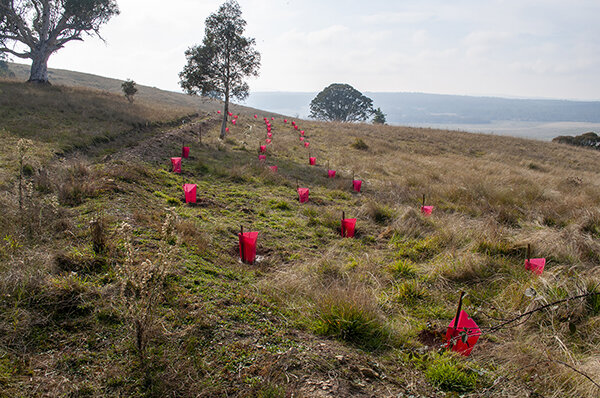
Tree planting revegetation on the hilltop at Duralla

Tree planting revegetation on the hilltop at Duralla

As part of their Sustainable Lands Project, the Snowy Monaro Regional Council brought interested community members to the Mulloon Institute’s living laboratory at Mulloon Creek Natural Farms to learn about the Mulloon Rehydration Initiative, including landscape rehydration, sustainable land management, soils and soil health, erosion control and leaky weirs. 

Landholders were interested in managing water on their lands, including techniques for slowing down run-off and remediating incised waterways, through vegetation to roughen surfaces and diversions to dissipate energy and speed. 

PRIVATE EDUCATIONAL TOURS

If your Landcare group, organisation or school are interested in a similar workshop or a tour of Mulloon Creek, please contact us via info@themullooninstitute.org

The Mulloon Rehydration Initiative is jointly funded through the Mulloon Institute and the Australian Government’s National Landcare Program. The initiative is also assisted by the NSW Government through its Environmental Trust.


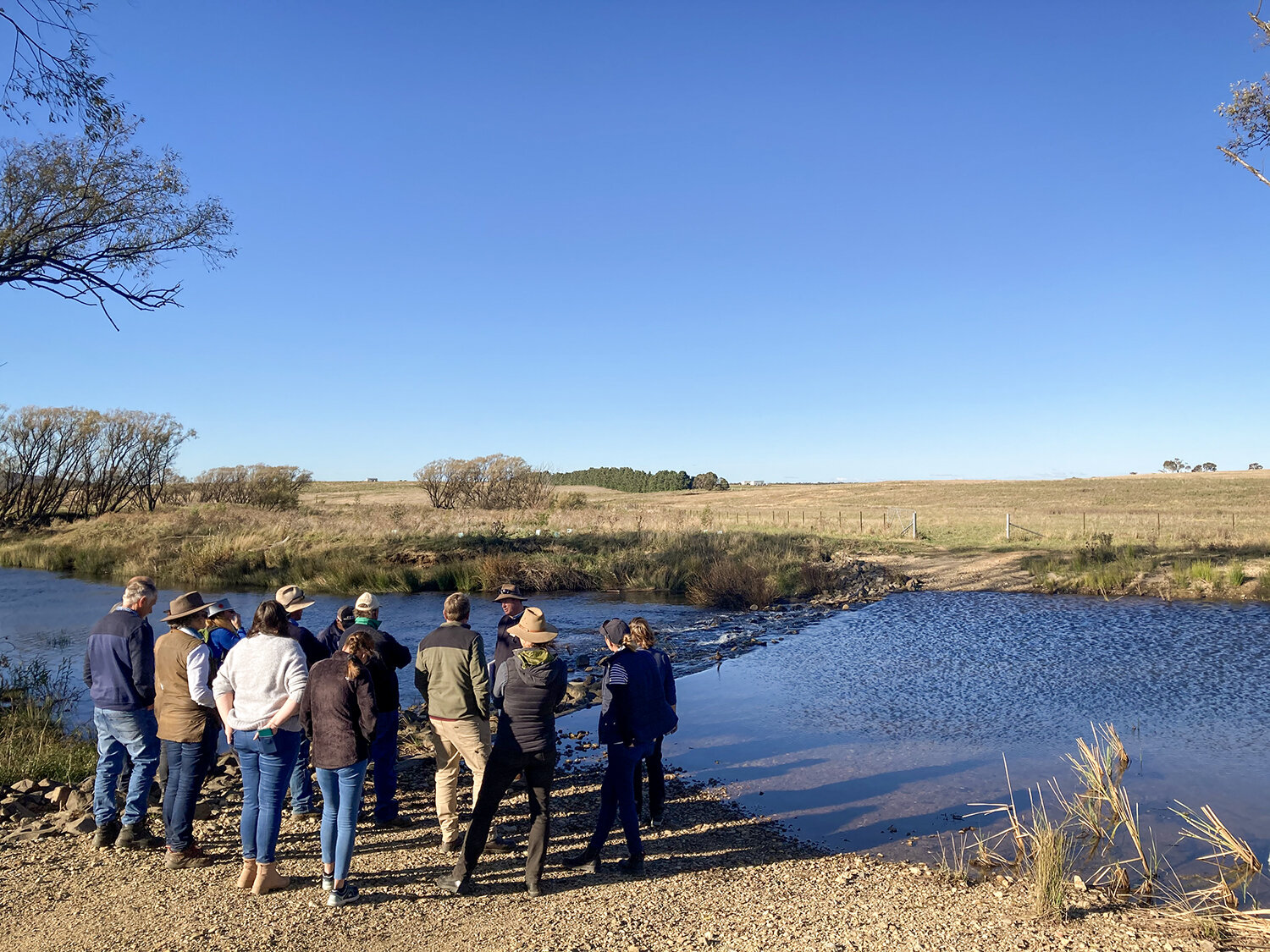
TOP – Viewing a recently installed leaky weir at Duralla.

BOTTOM – Viewing an established leaky weir at Peter’s Pond on the Home Farm.

On the hilltop at Duralla

On the hilltop at Duralla

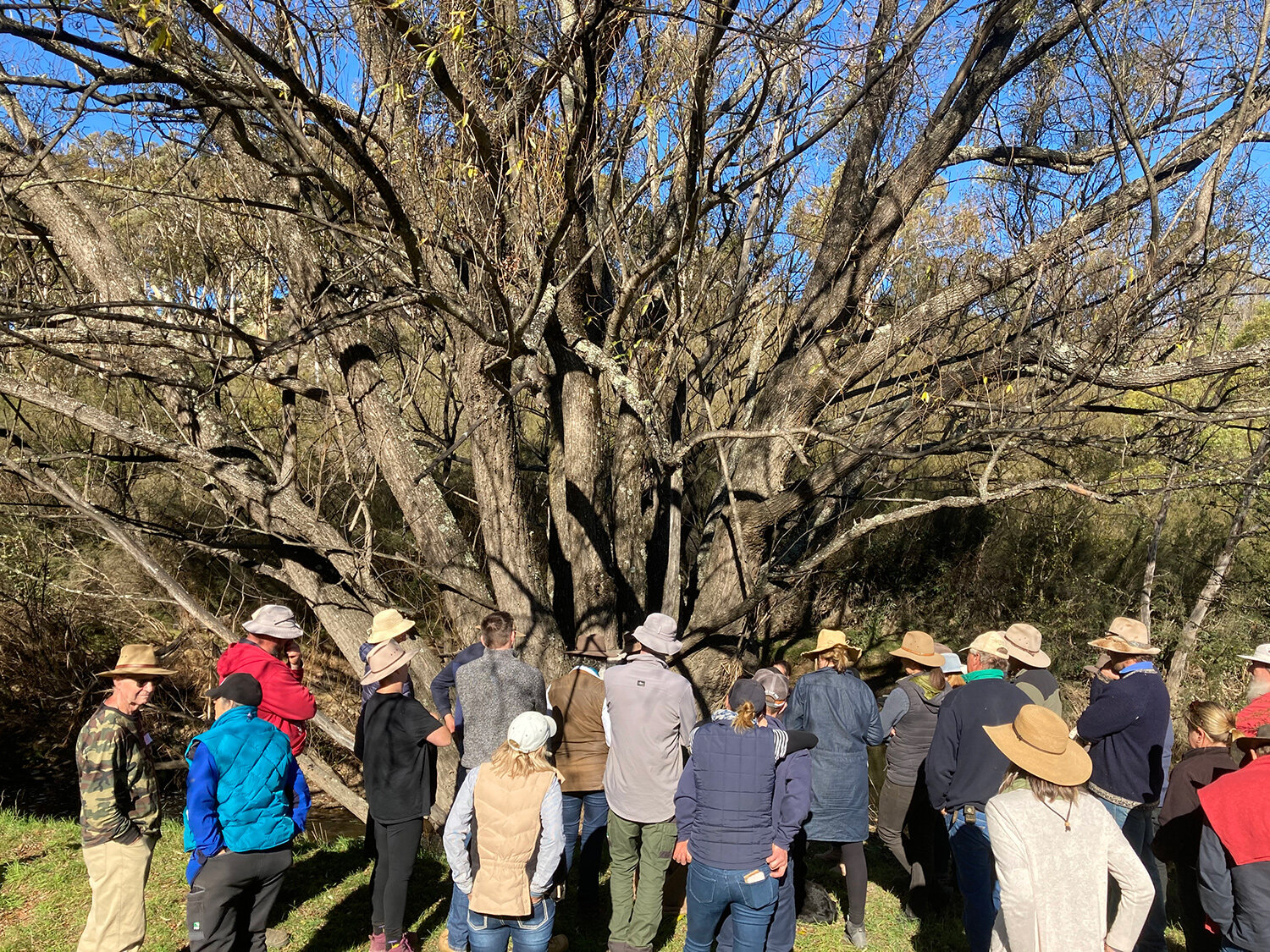
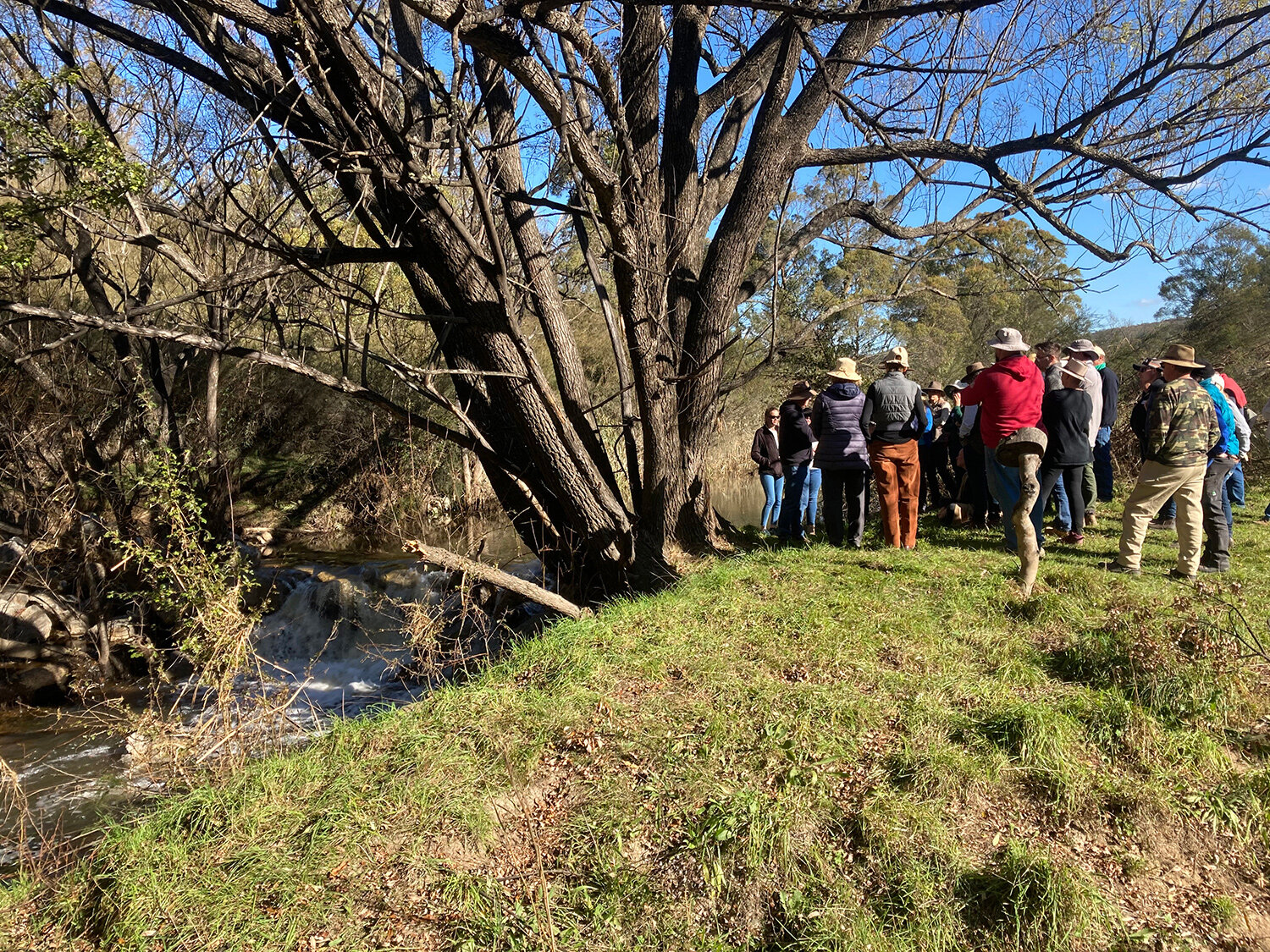
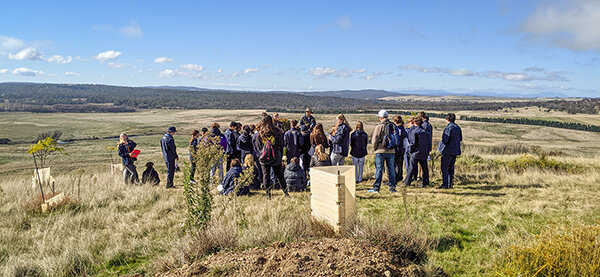
A whopping ninety three Year 10 Geography students from Canberra Grammar School attended tours of the Mulloon Institute’s Home Farm and Duralla properties in May for a field investigation into the issues of environmental sustainability and to learn about the Mulloon Rehydration Initiative.

Their educational aims were to learn about: the application of human environment systems thinking to understanding the causes and likely consequences of the environmental change being investigated; the application of geographical concepts and methods to the management of the environmental change being investigated; and, the application of environmental economic and social criteria in evaluating management responses to the change.

Viewing a newer leaky weir installed at Duralla

Viewing a newer leaky weir installed at Duralla

Split into two groups, they visited Peter’s Pond (an established leaky weir), newer leaky weirs at Duralla (as a comparison to Peter’s Pond), and the hilltop contours at Duralla. While the tours were short and all field-based, students were able to really experience being out in the landscape. 

One teacher commented that the tour was “absolutely relevant, as we are teaching a unit on Environmental Change and Management and regenerative farming is at the forefront of sustainable land management.”

We will be welcoming them back later in the year when the other half of Year 10 come along for the same tour.

PRIVATE EDUCATIONAL TOURS

If your Landcare group, organisation or school are interested in a similar workshop or a tour of Mulloon Creek, please contact us via info@themullooninstitute.org

The Mulloon Rehydration Initiative is jointly funded through the Mulloon Institute and the Australian Government’s National Landcare Program. The initiative is also assisted by the NSW Government through its Environmental Trust.

20210513_151830-600px.jpg

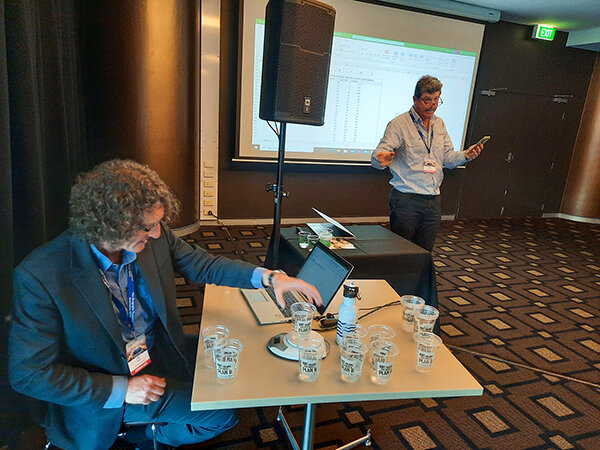
Peter Hazell and Luke Peel presented at the 2021 Geography Teachers Association NSW & ACT Annual Conference held in Sydney during May, with Damon Gameau as the keynote speaker who linked in via Zoom.

Peter and Luke’s presentation on the first day covered theory and practical demonstrations with a focus on water and soil. While on the second day, Luke conducted a session for the advanced/senior teachers on Integrated Systems Thinking and how Geography is the key to student education relating to the Sustainable Biomes curricula.

Lorraine Chaffer and others at GTA NSW ACT have been very supportive of TMI over the years and actively encourage school groups to engage with us at Mulloon and undertake educational field tours. We actively welcome such groups and see the tours as an important and valuable way to help provide education in a field environment for better engagement and learning outcomes.

Resources

Mulloon Rehydration Initiative – Peter Hazell

Regenerating Australia’s natural landscapes: processes and strategies – Luke Peel

Geography Teacher’s Association NSW & ACT

The Mulloon Rehydration Initiative is jointly funded through the Mulloon Institute and the Australian Government’s National Landcare Program. The initiative is also assisted by the NSW Government through its Environmental Trust.

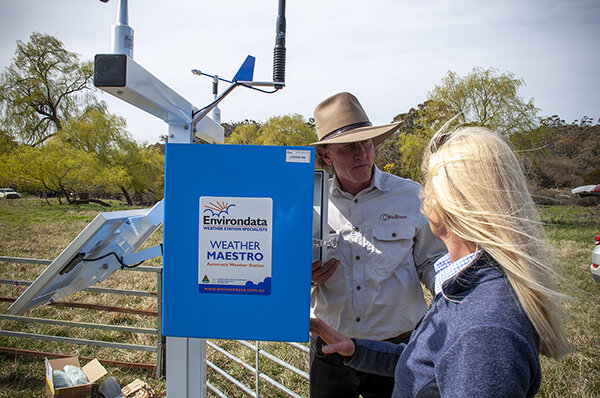
Research Coordinator Luke Peel and CEO Carolyn Hall inspect the climate station at Home Farm. (Photo taken in pre-Covid times)

Research Coordinator Luke Peel and CEO Carolyn Hall inspect the climate station at Home Farm.
(Photo taken in pre-Covid times)

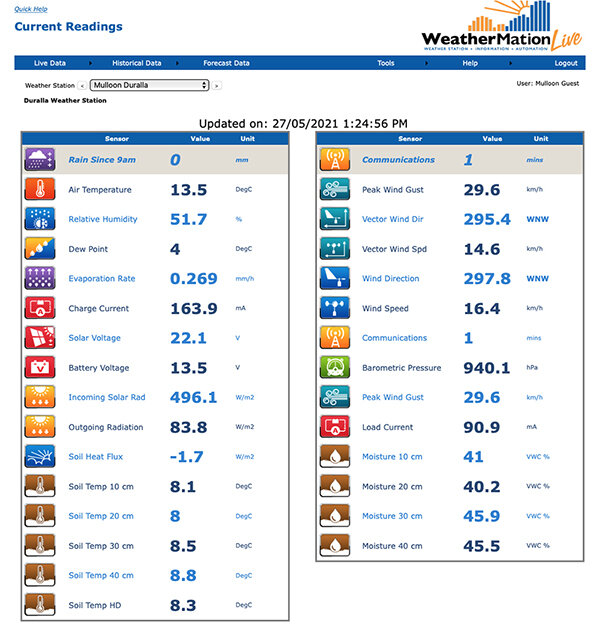
The two climate stations installed at Mulloon Creek Natural Farms as part of ongoing monitoring for the Mulloon Rehydration Initiative were supplied by Envirodata and have been operational since July 2020, with real-time data available to all through the Weathermation website. 

The climate stations have a few extra components measured compared to the standard weather station. 

  • Temperature

  • Relative humidity

  • Barometric pressure – these first three instruments are housed in the white dome-shaped device on the eastern arm

  • Rainfall – accurate to 0.2mm

  • Wind speed and direction

  • Incoming and outgoing solar radiation – separate pole with glass bulbs on the upper and lower side

  • Soil moisture sensor at 8, 18, 28 and 38cm depth – also measures temperature

  • Soil temp sensor at 8cm associated with soil heat flux

  • Soil heat flux plate at 8cm.

These measurements are important individually, and with appropriate formulas, allow us to calculate evaporation, potential evapo-transpiration and stored energy in the soil. This is important in understanding how the sun’s energy is transferred or transformed to various components (e.g. soil temp) and to power plants (biotic pumps of water cycle), in the context of soil moisture and temperature (that drive soil microbe activity). The prevailing conditions such as humidity, air temperature, wind speed, etc can also significantly affect evaporation and evapotranspiration (small water cycle). 

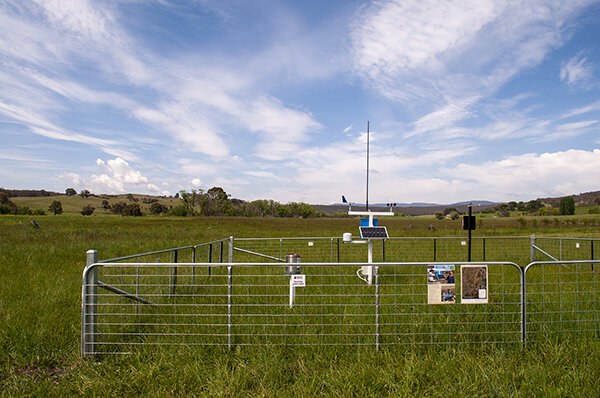
Exclusion fencing has been installed to protect the instrumentation from livestock and wildlife.

Exclusion fencing has been installed to protect the instrumentation from livestock and wildlife.

Sentek soil moisture sensors have also been installed close to the surface (i.e. 8cm beneath the ground) and in many cases are displaying the diurnal soil moisture changes created by dew fall that depletes during the day and replenishes each morning (the small water cycle). 

For landholders, being able to maintain good soil moisture in the root zone and temperature via plant or litter cover helps moderate temperature and soil moisture (during extreme hot or cold days) and maximise soil microbial activity, which in turn drives plant growth and carbon sequestration. Moderating the extremes of climate particularly in the root zone is significant for any farmer or land manager. Being able to monitor those parameters and adjust farming practices accordingly gives land managers a valuable tool for better managing their land.

These climate stations have been installed as part of the Mulloon Rehydration Initiative, which is jointly funded through The Mulloon Institute and the Australian Government’s National Landcare Program.


Log in to the Weathermation website to access live climate station data at Mulloon: 

https://www.weathermation.net.au/WMLogin.aspx

User Name = Mulloon.Guest

Password = MRIGuest

You will be able to choose to see data for the two weather stations at Mulloon Creek Natural Farms – either the Home Farm or Duralla.

Weathermation live-600px.jpg

_DSC8799-600px.jpg

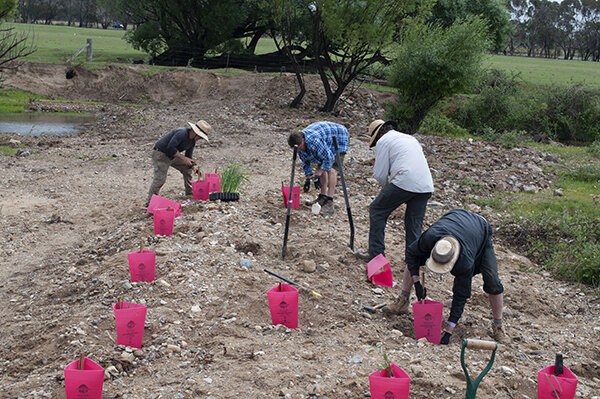
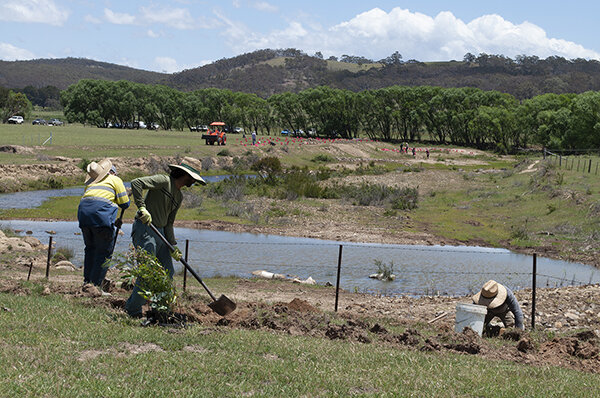
With the planting season coming to a close for winter, we’re keen to recruit volunteers for spring plantings as it is usually our busiest time, and we’d love your help!

Volunteer work is a valuable part of our catchment-scale Mulloon Rehydration Initiative to rehydrate 23,000 hectares of the Mulloon catchment, including rehabilitating 50km of watercourses. It is also part of our plan to bring the community along on our landscape rehydrating journey. Come and be part of the action to make a difference!

Volunteering will involve transplanting and planting vegetation to support new structures in the streambed. We’ll be planting trees and shrubs on slopes, gullies and hilltops at existing and new rehabilitation sites. Planting is one of the best things you can do for yourself and the land and the work will be fun and full of learning!

_DSC8814-600px.jpg

What to Expect:

Physical work; this is not backyard gardening although many skills in the backyard transition very well into the field. You will need to be agile enough to go under/over cattle fencing and be confident on rough/slippery terrain, but we can also find tasks for people unable to participate in the more physical activities. With wildlife such as kangaroos, wombats and snakes prevalent along the creek, we make sure our volunteer team leader carries bandages and is well versed in snake bite first aid. 

Risks:

Working in or near water; uneven or slippery terrain; exposure to the elements; snakes; weather – we can experience very strong winds and storms in the area, so be prepared for rain or windchill; general manual labour.

What to Bring:

You will need to bring everything you would for field work, including long sleeves and long pants, hat, water, sunscreen, lunch and snacks, plus gardening gloves and gumboots if you have them. Closed toe shoes are essential. The work will be outside all day, so be prepared for exposure to a variety of weather conditions, including sun, wind, rain, hot and cold. 

To find out more, please email us via info@themullooninstitute.org

The Mulloon Rehydration Initiative is jointly funded through the Mulloon Institute and the Australian Government’s National Landcare Program. The initiative is also assisted by the NSW Government through its Environmental Trust.

_DSC8938-600px.jpg

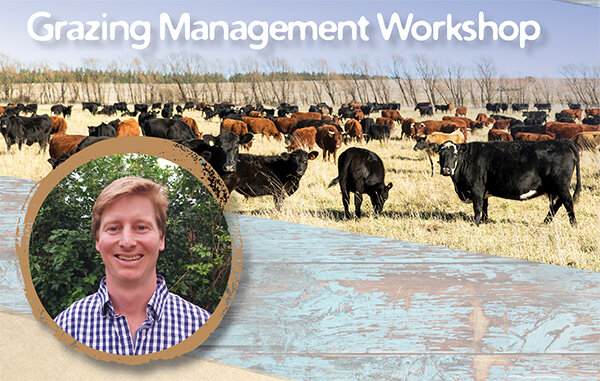
An exclusive workshop for landholders taking part in the Mulloon Rehydration Initiative (MRI) was held during March with Landscape Planner and grazing expert Sam Skeat.

Sam has excellent experience and knowledge with grazing management and broader land management strategies and provides specialist advice in the context of landscape rehydration projects, with a focus on balancing ecological return and business return. He has extensive experience in Queensland and locally in the Mulloon catchment and has assisted numerous landholders in understanding the role grazing management plays in environmental and economic returns and its context for landscape rehydration.

The ‘Grazing Management’ workshop looked at how to increase farm productivity and environmental outcomes in coordination with landscape rehydration activities and covered:

  • Why manage grazing?

  • Plant response to grazing

  • Harnessing energy through grass and the benefits for soil and animal performance

  • Mineral and water cycles

  • Understanding stocking rate vs. carrying capacity, density vs. intensity

  • Planning to match stocking rate to carrying capacity, including assessing feed quantity and infrastructure needs.

Mulloon catchment group-600px.jpg

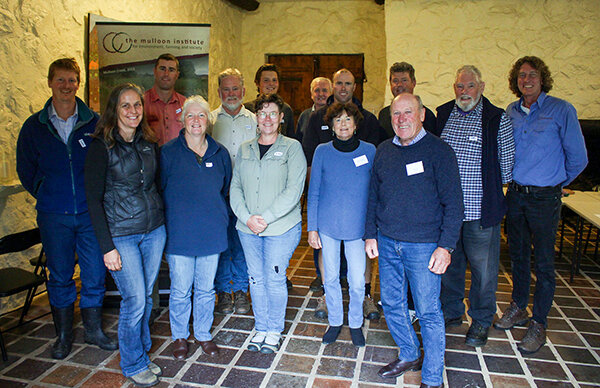
Project Coordinator Peter Hazell and Research Coordinator Luke Peel also took the opportunity to update participating landholders on the continued roll-out of the MRI within the catchment, including on-ground works, revegetation and the installation of scientific monitoring equipment. 

Following the workshop, Sam spent the week visiting the landholders on-farm to discuss the initial workshop and assist with customising farm operations. This provided landholders with a valuable opportunity to discuss their farm operations and planning, and to identify any problem areas with pasture and grazing management. In turn, Sam was able to provide guidance and mentoring to the participants in attaining increased production and beneficial environmental outcomes. 

MRI update workshop #6-600px.jpg

It was a great chance for landholders to catch up with each other and find out what has been happening in the Mulloon catchment community with landholders commenting that the workshop was informative and interesting and a great opportunity to build relationships. Thanks must also go to Sue and Ulli Tuisk who hosted the workshop at their Palerang property.

This workshop forms part of the broader Mulloon Rehydration Initiative which is jointly funded through the Mulloon Institute and the Australian Government’s National Landcare Program. The initiative is also assisted by the NSW Government through its Environmental Trust.

Dear Supporters,

The Mulloon Institute is embarking on a truly ground-breaking landscape rehydration project to reduce the impact of climate change. Demand for our services has never been greater, with growing enquiry from all over Australia, and we need your support. See how together we can make an impact by clicking on the video above.

Right now, we need funding to train more landscape planners and hydrologists to help us establish large-scale catchment projects around Australia. No specific course exists for this type of training and every person we train costs the Institute around $60,000.

Our fundraising target is $420,000.

Please consider donating $50.00 or more to help make this happen. Your donation will be tax deductible.

Your donation will ultimately go towards: 

  • Reducing climate change impacts on society and the planet.

  • Enhancing food and water security.

  • Increasing environmental biodiversity.

  • Improving water quality and availability.

  • Healthier, nutrient dense food leading to healthier human beings.

  • Vastly improved resilience to natural disasters.

  • Long-term improvement in farmer productivity and profitability.

  • Viable rural and regional communities.

Cheers,
Gary Nairn AO
The Mulloon Institute, Chairman

Video produced by Grow Love Project with additional footage provided by Nviro Media.

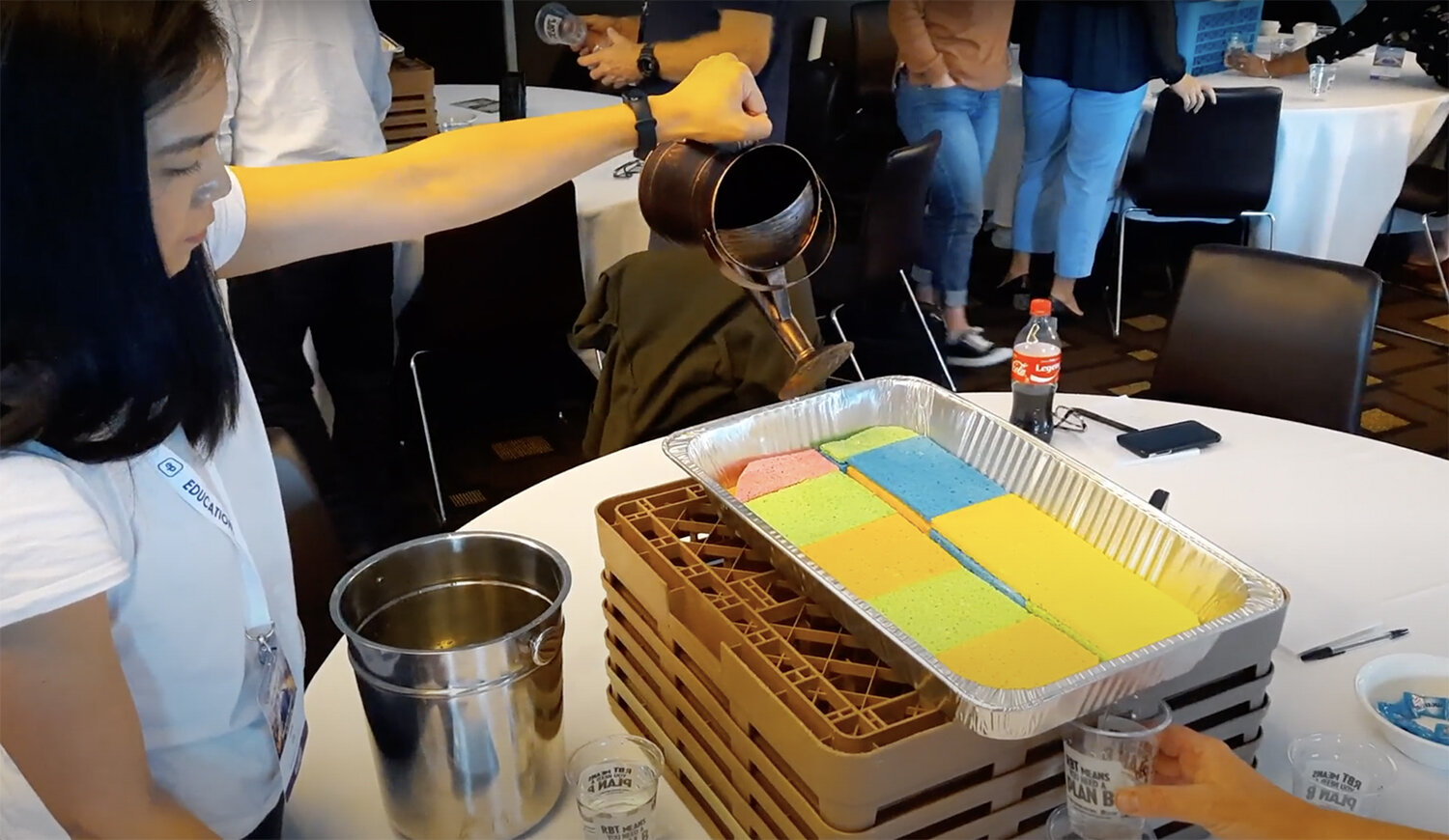
Learning about soil water storage.

Learning about soil water storage.

The Mulloon Institute’s James Diak and Joe Skuse hosted an eager class of Year 9 students from Lyneham High School for a morning in late April with a focus on regenerative agricultural principles. The group was keen to see how farms can harness natural processes to play vital roles in fertility and water management. The students gained an insight into how a regenerative farming operation works and how work undertaken by TMI helped reinstate natural processes that manage water, soil, and plant growth.

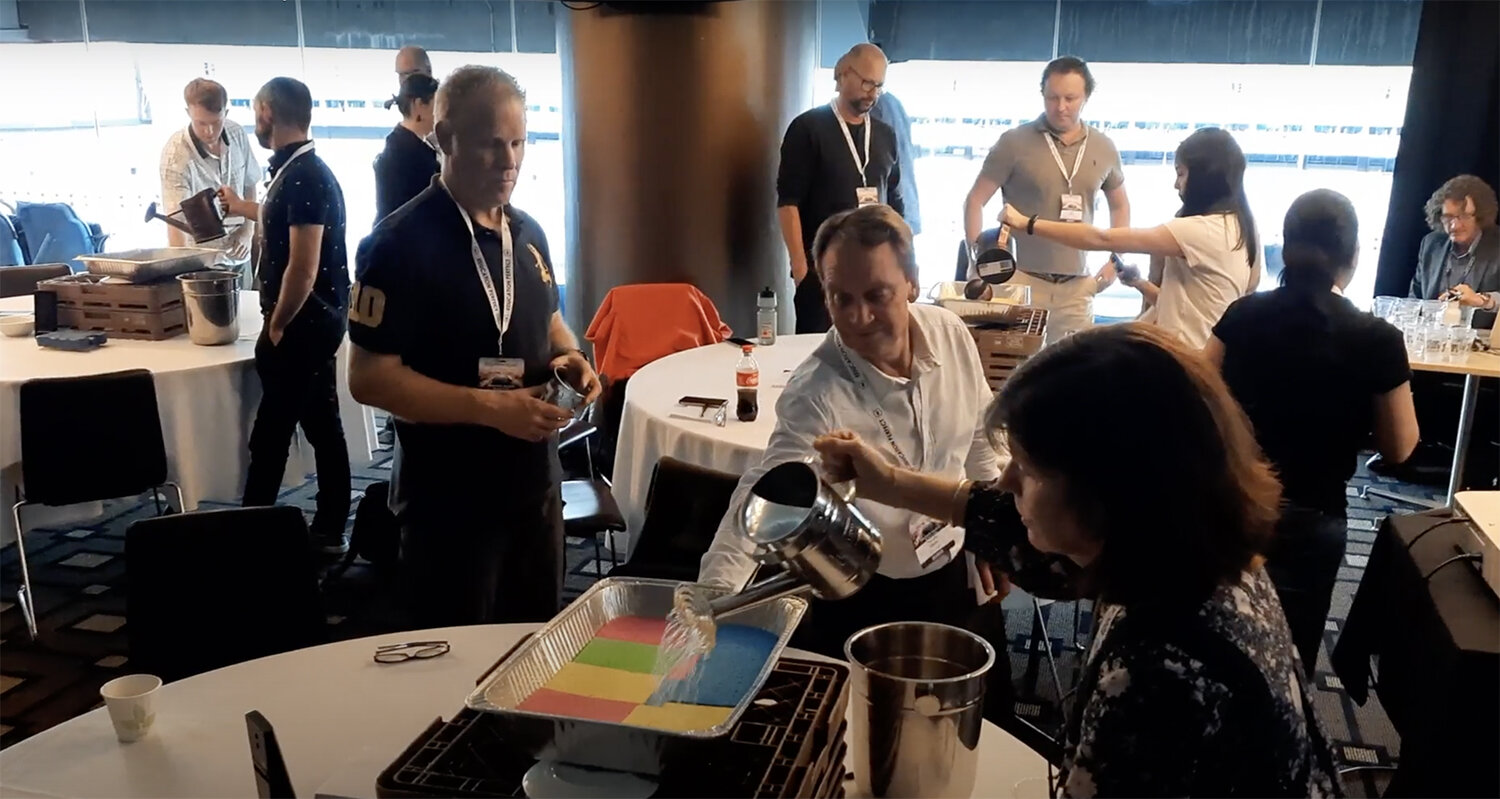
The class was taken through a small experiment designed to highlight the interaction between soil compaction and soil water storage. Water was poured over a set of sponges varying in density and permeability. This provided the students with a visual representation of how regenerative management can aid water management in Australian landscapes.

The group then went on a walking tour around the farm to dams, contours and the creek, providing students with a holistic picture of the landscape and its driving processes. On the tour James was peppered with questions with topics ranging from stock management, weed management and drought tolerance.

A special thanks to the teachers and students for being such engaged and polite guests. The Mulloon Institute looks forward to seeing these bright people emerge in the regenerative agriculture industry in the future.

The Mulloon Rehydration Initiative is jointly funded through the Mulloon Institute and the Australian Government’s National Landcare Program. The initiative is also assisted by the NSW Government through its Environmental Trust.

Visiting one of the farm’s dams.

Visiting one of the farm’s dams.