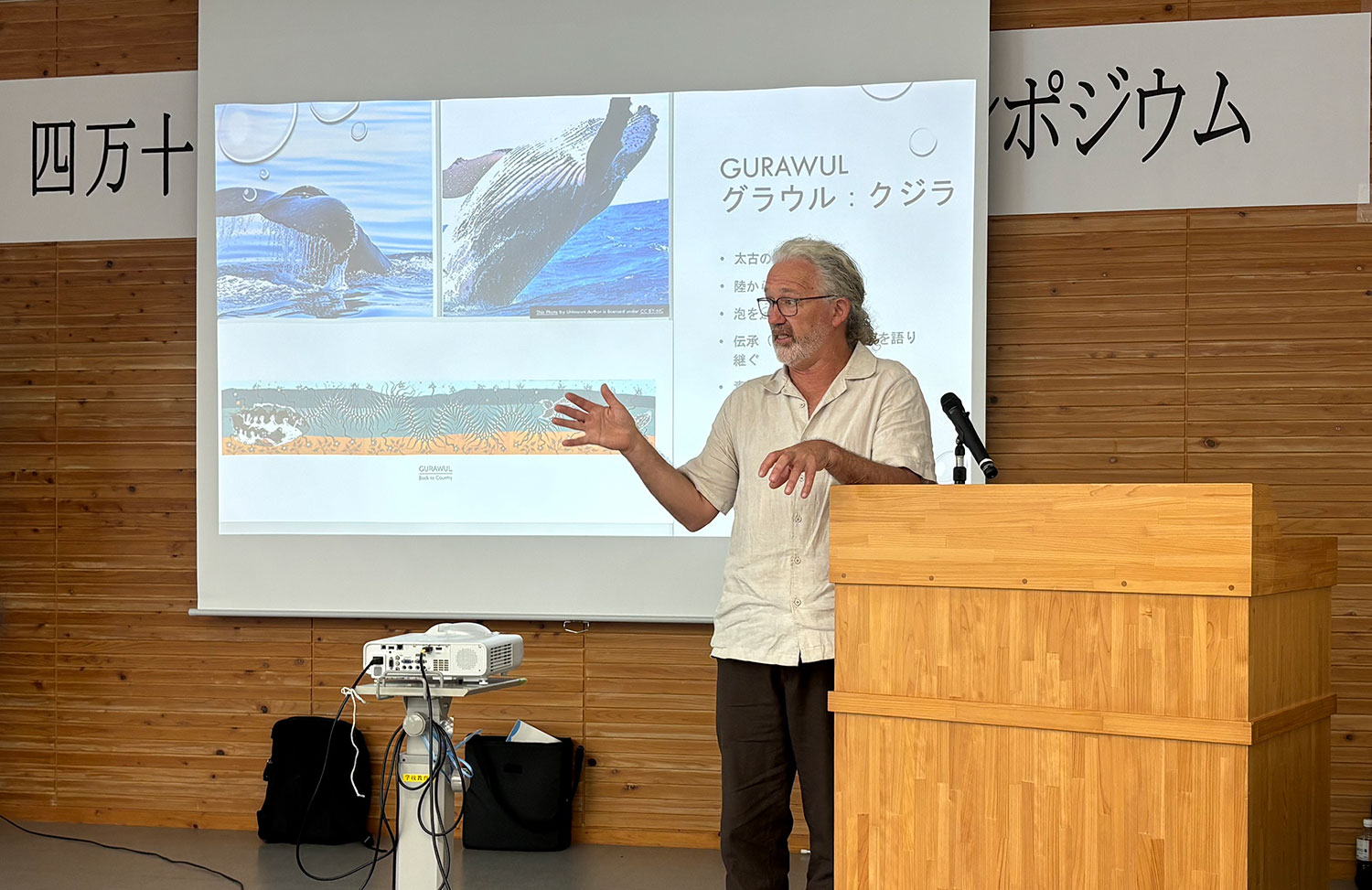
In June this year I had the privilege of visiting the Shimanto region on the island of Shikoku in Japan. This was part of the Japan-Australia Foundation-funded series of symposia across the Kochi region.
The symposia and associated meetings highlighted the opportunity for nature-based solutions to support some of the challenges facing this region, including declining water quality due to chemical-laden agricultural runoff, subsequent collapsing fish stocks and declines in biodiversity and sea lettuce production.
Associate Professor Dr Anthony McKnight joined us on this trip to provide a First Nations perspective on nature-based solutions for food and water security in Japan. Dr McKnight is an Awabakal, Gamaroi man who continues to be ‘grown up’ by his Yuin Cultural lines on the South Coast of NSW. He reminded us that nature is our greatest teacher and that nature is the knowledge system for First Nations people. Dr McKnight was clear that we needed to learn from the Shimanto River how to take care of the river.
We were also joined by Australia’s primary representative handling agricultural trade and market access in Japan, Mr James Strachan, the Counsellor (Agriculture). Stationed at the Australian Embassy, Tokyo, he works alongside the Australian Ambassador to Japan, Justin Hayhurst, to promote the interests of Australian farmers and exporters. James spoke of the close friendship between our nations and Australia’s important role as an agricultural producer to contribute to Japan’s food security.
Dr Komatsu (pictured right) raised the alarm once again about the falling water quality in the Shimanto River and the direct link subsequent decline in fisheries, biodiversity and sea lettuce production. There is real opportunity for knowledge sharing on nature-based solutions to meet these challenges and to ensure that farming and food production systems in the Kochi region can have a positive impact on the Shimanto River.

Our trip ended in Muroto where we were hosted by Gen Nakatani who served as the Minister of Defence for Japan from 2024 to 2025. Nakatani Sensei is increasingly concerned about the economic impacts of declining fish stocks on his coastal electorate. He invited us to Muroto to tour the area and meet local producers and discuss opportunities for nature-based solutions to meet the significant challenges being faced by the local community.
It was a special opportunity to share the story of hope that Mulloon brings and provide a systems perspective on the challenges and the opportunities facing these communities in Japan. It underscored to me how our approach can be adapted and implemented in any landscape to deliver environmental and social benefits to rural communities.
Carolyn Hall,
CEO