When the Water Stewardship Program’s Bombay Community of Practice got rolling in May 2025, local catchment champion Damien Hart put in an expression of interest to host a WSP demonstration site – a working example of landscape rehydration that neighbours and the community can visit, learn from and be inspired by, setting off a chain reaction of repair across the whole catchment.
The site came with a stubborn problem: active erosion eating away at a small western tributary of Bombay Creek, which flows into the upper Shoalhaven River. Repairs had been attempted in the past, but the gully was still on the move.
Over winter 2025, Mulloon’s landscape planning team designed a staged project. Stage 1 took an integrated approach to landscape rehydration – slowing water down so the landscape can soak it up and hold onto it. The plan established:
- a riparian corridor (the strip of vegetated land along a waterway) connecting and protecting the western tributary through to the main creek
- revegetation focused on climate smart plantings – species chosen to withstand hotter, drier conditions – lifting the health and habitat of the corridor, an upstream alluvial fan and an adjacent floodplain pocket
- subsidised water supply works, including troughs, tanks and pipes, allowed livestock to come off the waterway, protected by riparian fencing
- to treat the erosion itself, a series of four structures built from log sills and rock was designed to safely stabilise the gully and gently raise its floor and water level – so that instead of acting as a drain in the landscape, it can now slow and hold flows. The payoff: greater resilience to both drought and flood, new aquatic and riparian habitat, a boost for biodiversity and pasture productivity.
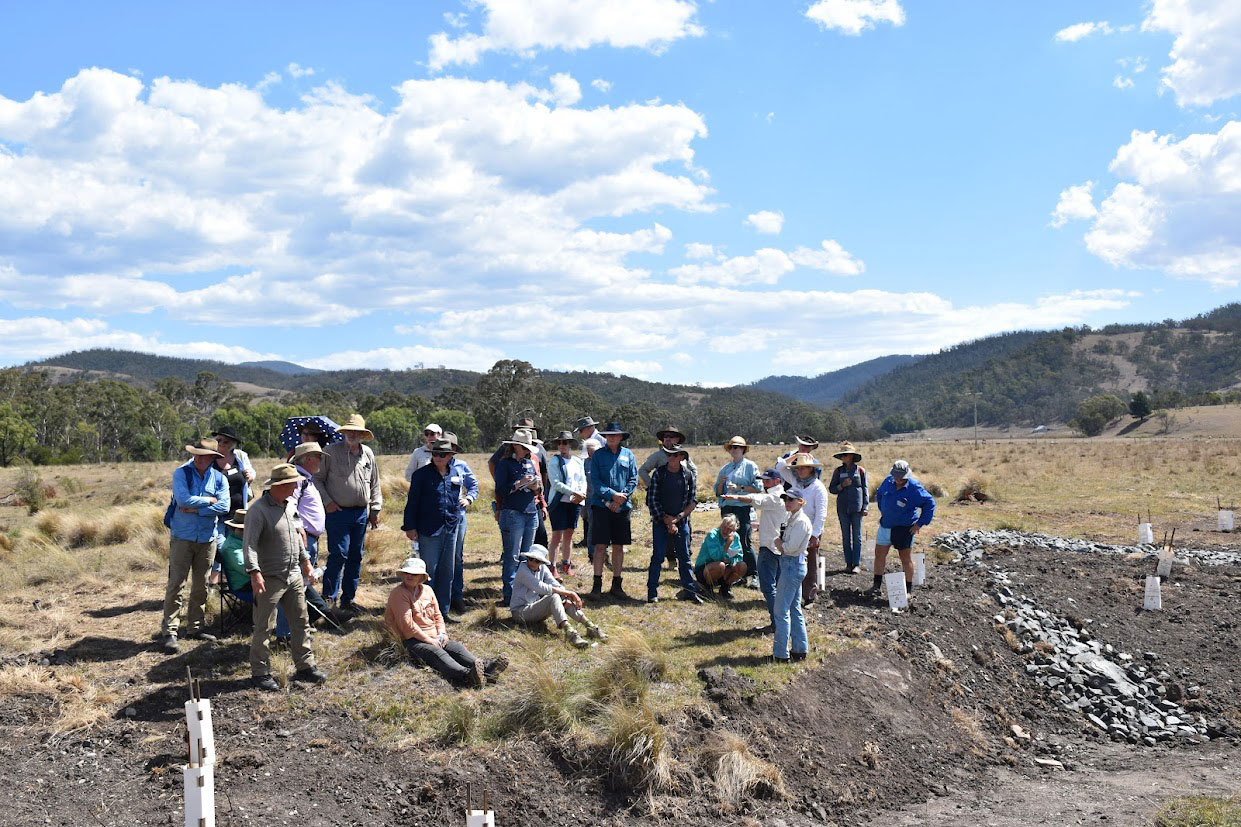
In-stream construction wrapped up in Summer 2026, followed close behind by the Braidwood Bootcamp – a chance for neighbouring landholders and the broader community to see the fresh works, pick up practical landscape rehydration skills for their own places, and get hands-on building smaller brush structures upstream of the eroded area, which have nicely complemented the log-and-rock structures downstream. Just one week after the brush structures went in, frogs had moved in and laid their eggs – one big tick of approval from our amphibian friends.
Best of all, the chain reaction has already begun. Since works were completed, the Water Stewardship Program has received a further four-plus expressions of interest from landholders whose properties connect in with Damien’s place and the wider Bombay Creek catchment – exactly the kind of neighbour-to-neighbour momentum a demonstration site is designed to spark.
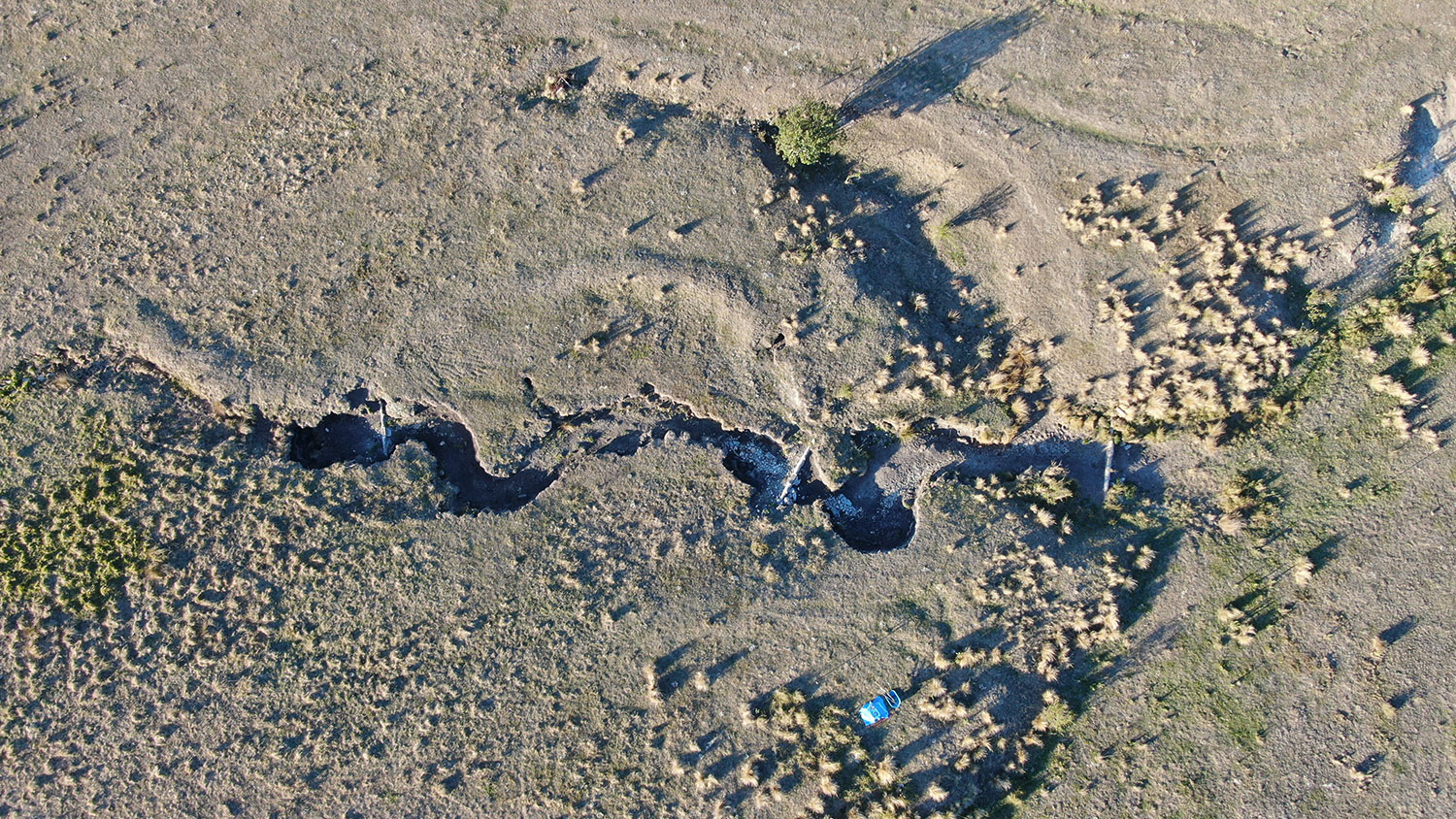
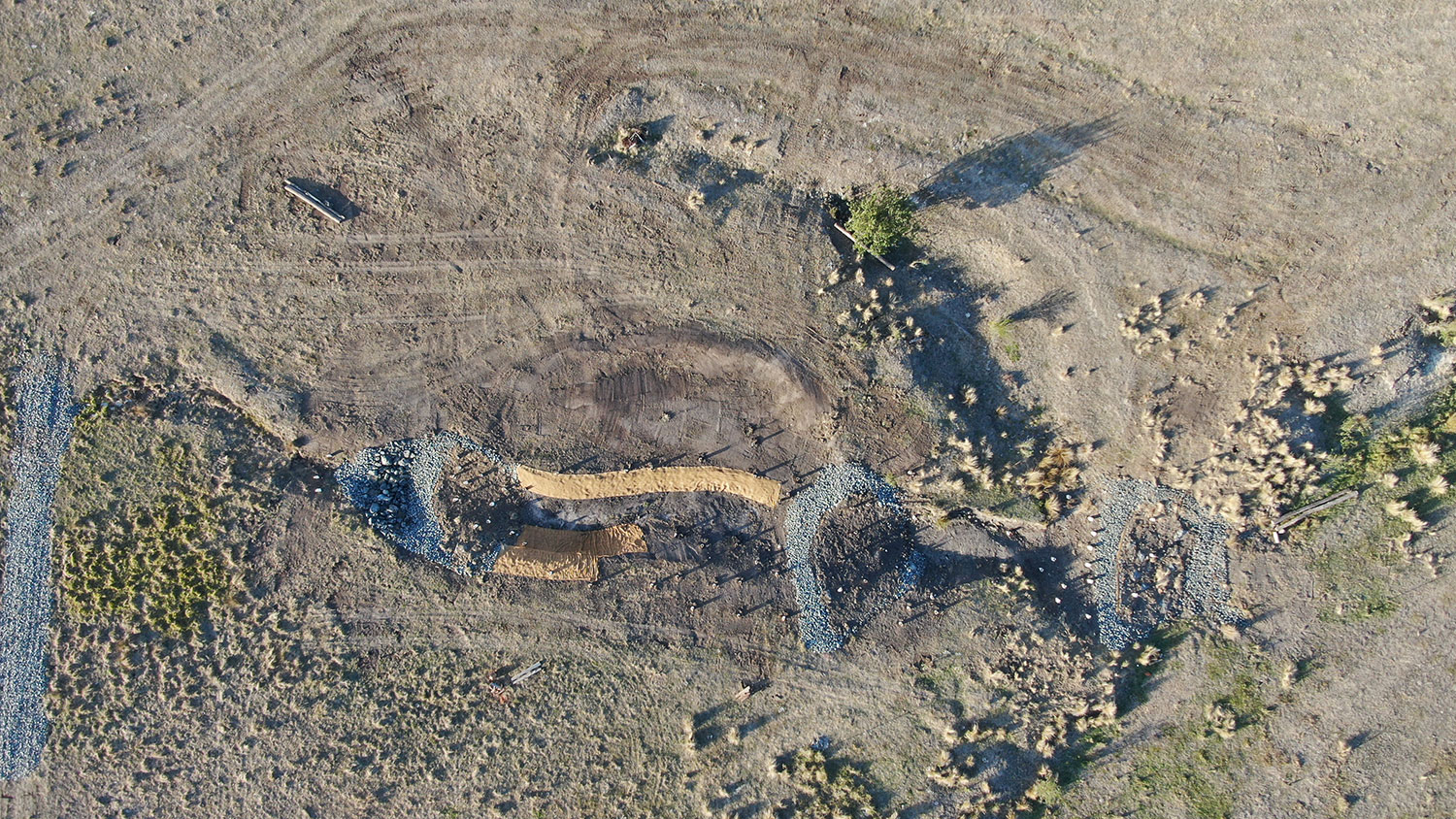
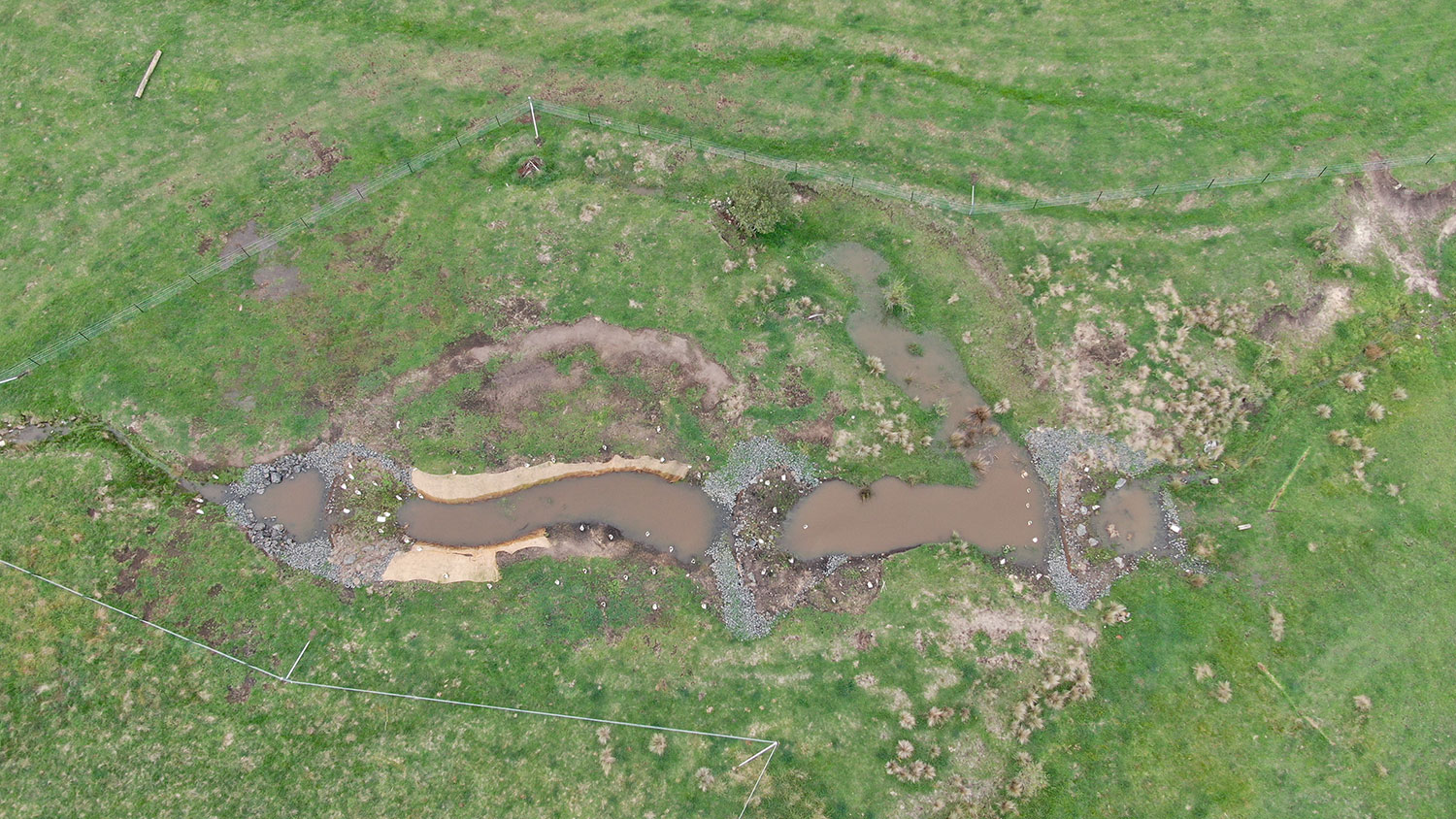
Jan 2026 – Feb 2026.
What’s next?
For our new expressions of interest, the Mulloon team is starting to prioritise which projects will come next at Bombay for FY27. At Damo’s place, revegetation goes in this spring, with 3,500 tubestock destined for the floodplain to build on the sedges and grasses planted during construction.
Mulloon Institute and Upper Shoalhaven Landcare, alongside Bombay Landcare, then plan to run some project visits and monitoring workshops over spring and summer. Watch this space!
This event has been funded by WaterNSW and The Ian Potter Foundation.
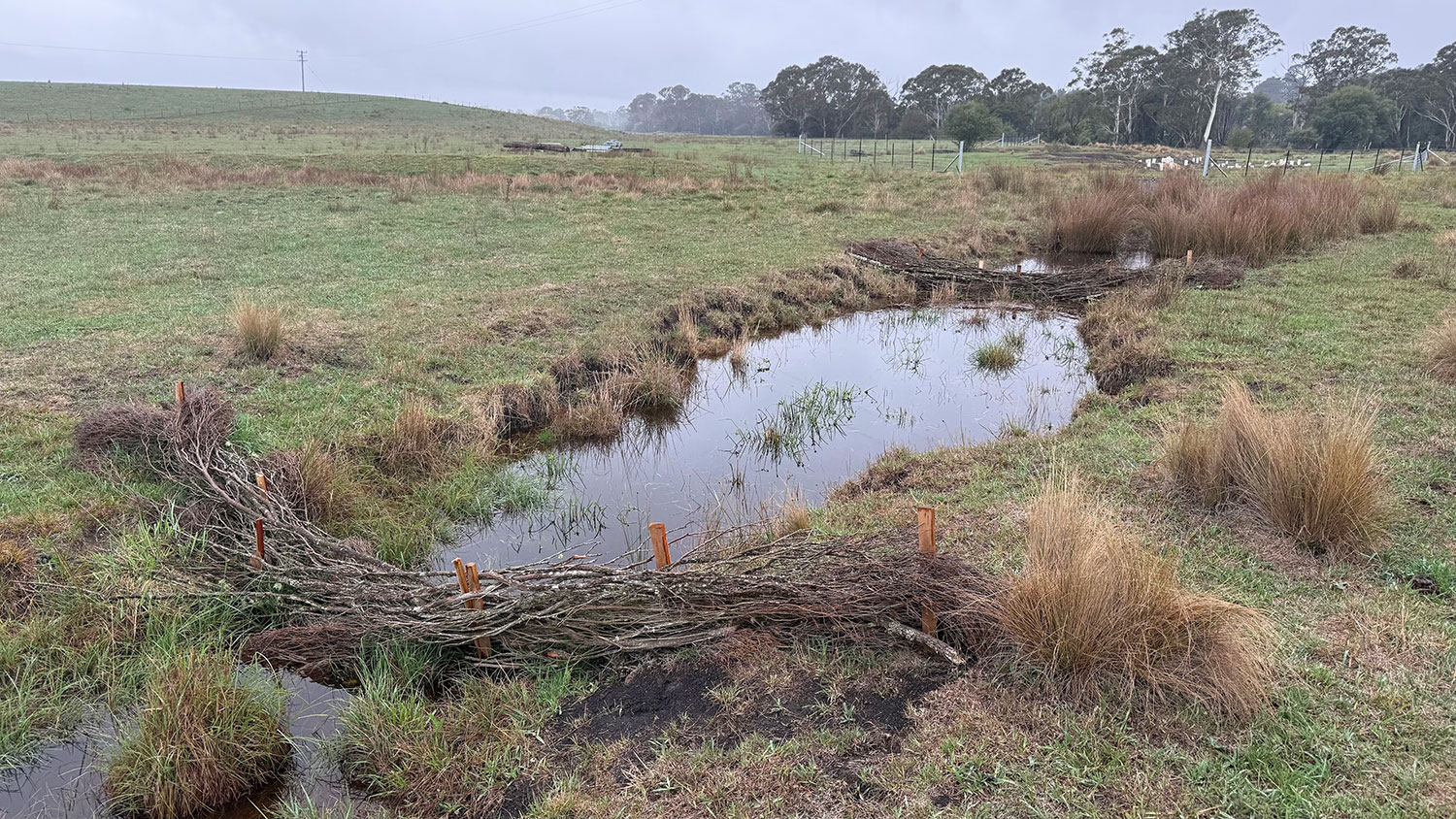
Bottom: Frog eggs were spotted just one week after the brush structures were built – a big tick of approval from the locals.