In 2025, the Brogers Creek community came together with Mulloon Institute to learn from the landscape, share knowledge and co-design small-scale works that support healthier waterways in their catchment.
Reconnecting water, land and community at Brogers Creek
Over the past year, an inspiring collaboration has been unfolding in the Brogers Creek catchment in Kangaroo Valley, bringing together local landholders, the Brogers Creek community, and Mulloon Institute under the shared goal of improving how water moves, infiltrates and cycles through the landscape.
This work forms part of a broader Water Stewardship initiative, supporting community-led action to regenerate waterways and strengthen catchment resilience in one of the highest rainfall landscapes within the Sydney Drinking Water Catchment.led action to regenerate waterways and strengthen catchment resilience in one of the highestrainfall landscapes within the Sydney Drinking Water Catchment.
A community-led beginning
In early 2025, invited by the Brogers Creek Landcare chair, Greg Thompson, Mulloon Institute met with members of the Brogers Creek community to walk the landscape and learn from local observations.
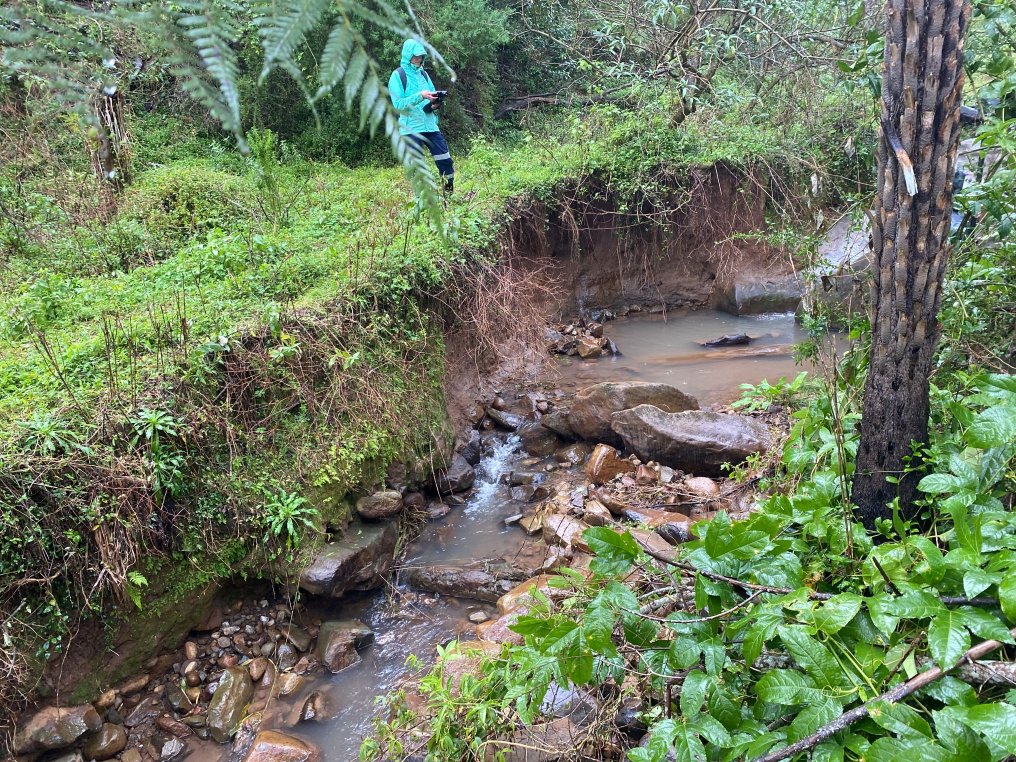
The Brogers Creek valley has a long history of agricultural use, having once been extensively cleared for dairy farming. While decades of revegetation and weed management have made an enormous difference, more recent heavy rains have exposed new challenges — including channel incision, creek bank erosion and reduced connection between waterways and their floodplains. Locals have noticed that sections of Brogers Creek and its tributaries are now carrying water faster and deeper than they once did. Rainfall events have exposed new challenges — including channel incision, creek bank erosion and reduced connection between waterways and their floodplains.
Together with landholders, two small but highly informative demonstration sites — Beauridge Creek and Secret Creek — were identified as priority areas where small-scale, well-designed works could make a meaningful difference.
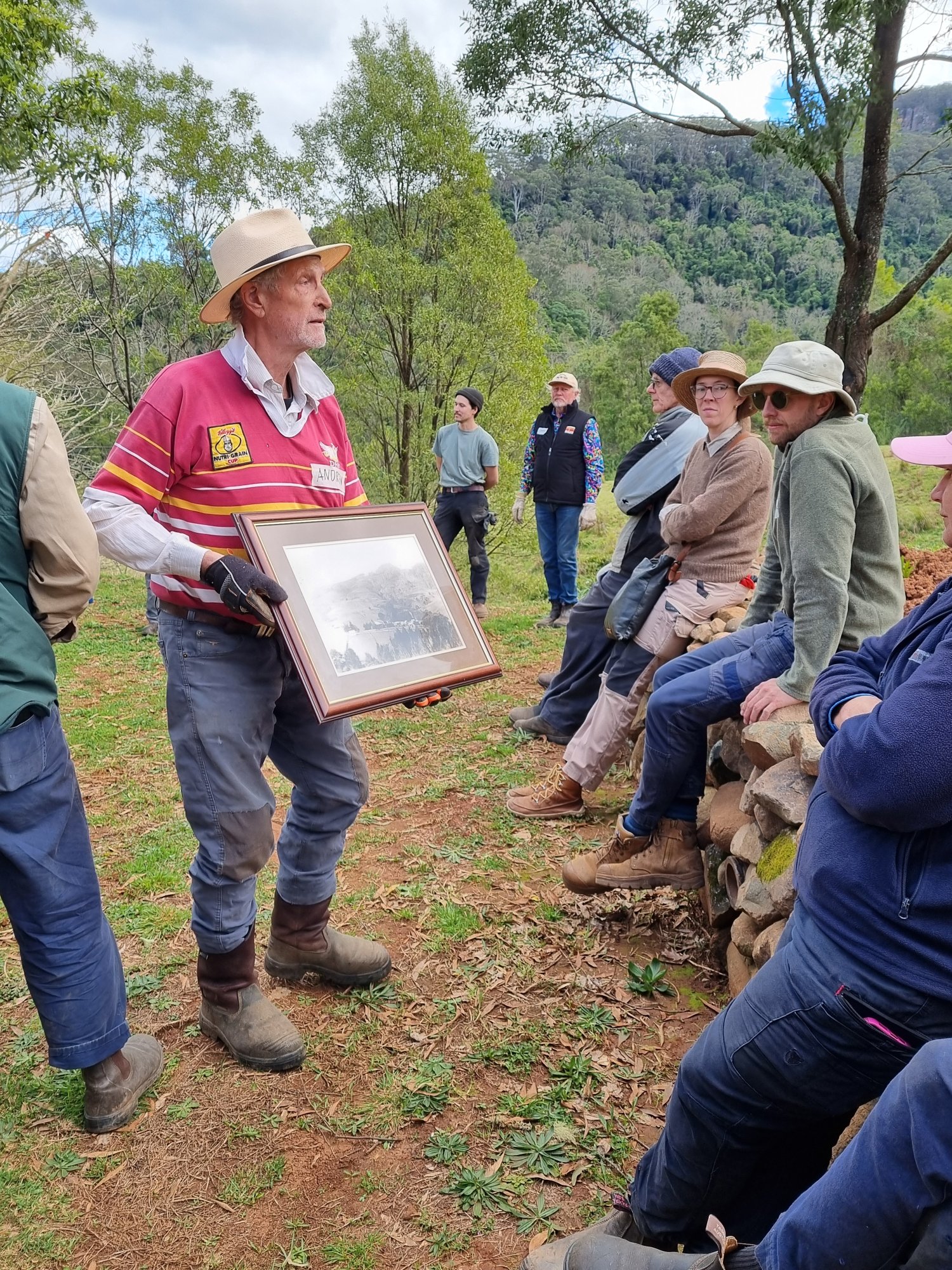
Pictured at right: Brogers Creek Landcare initially invited Mulloon Institute out for a chat and a chance to see potential water stewardship sites in May 2025.
From observation to understanding
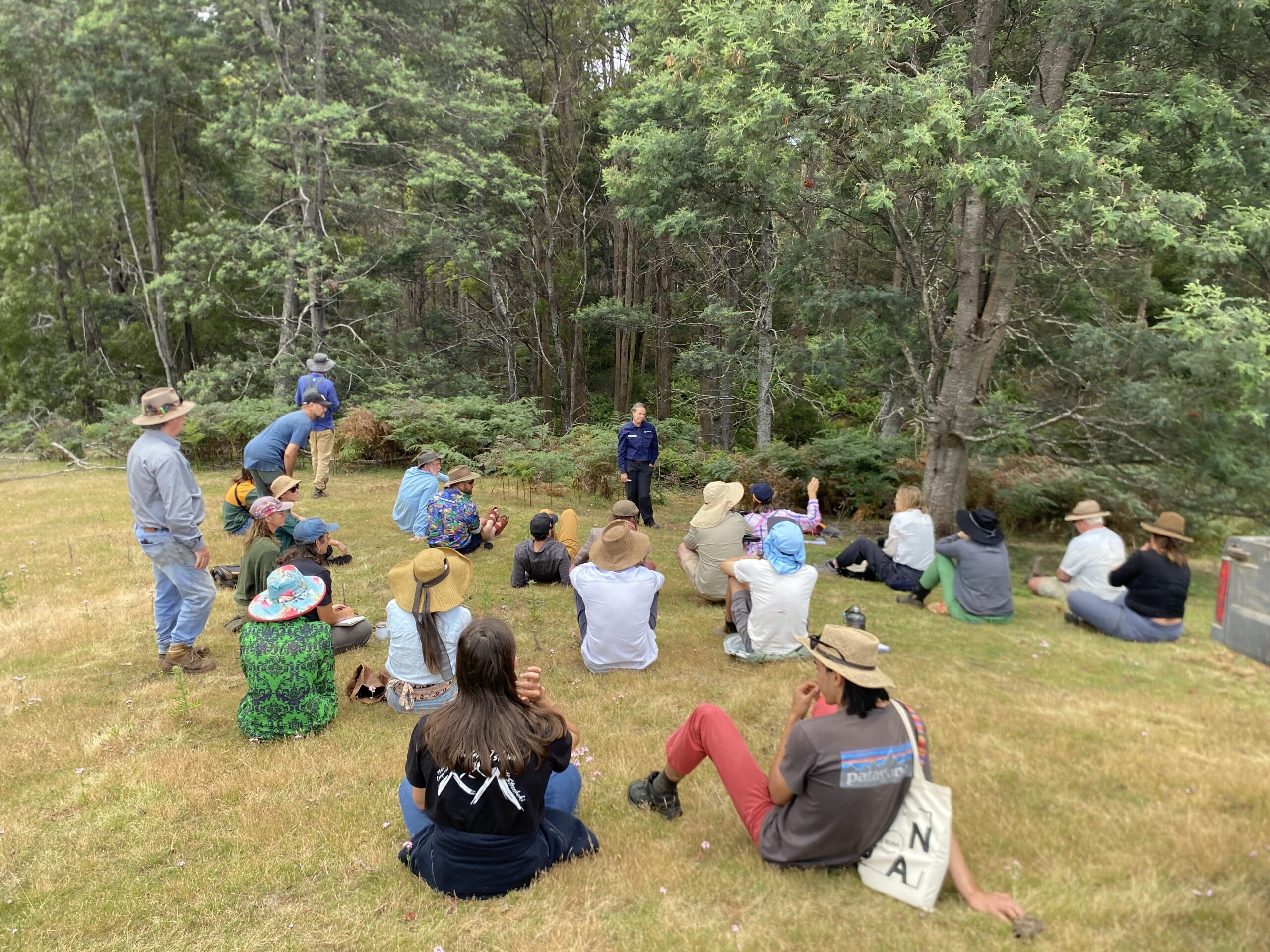
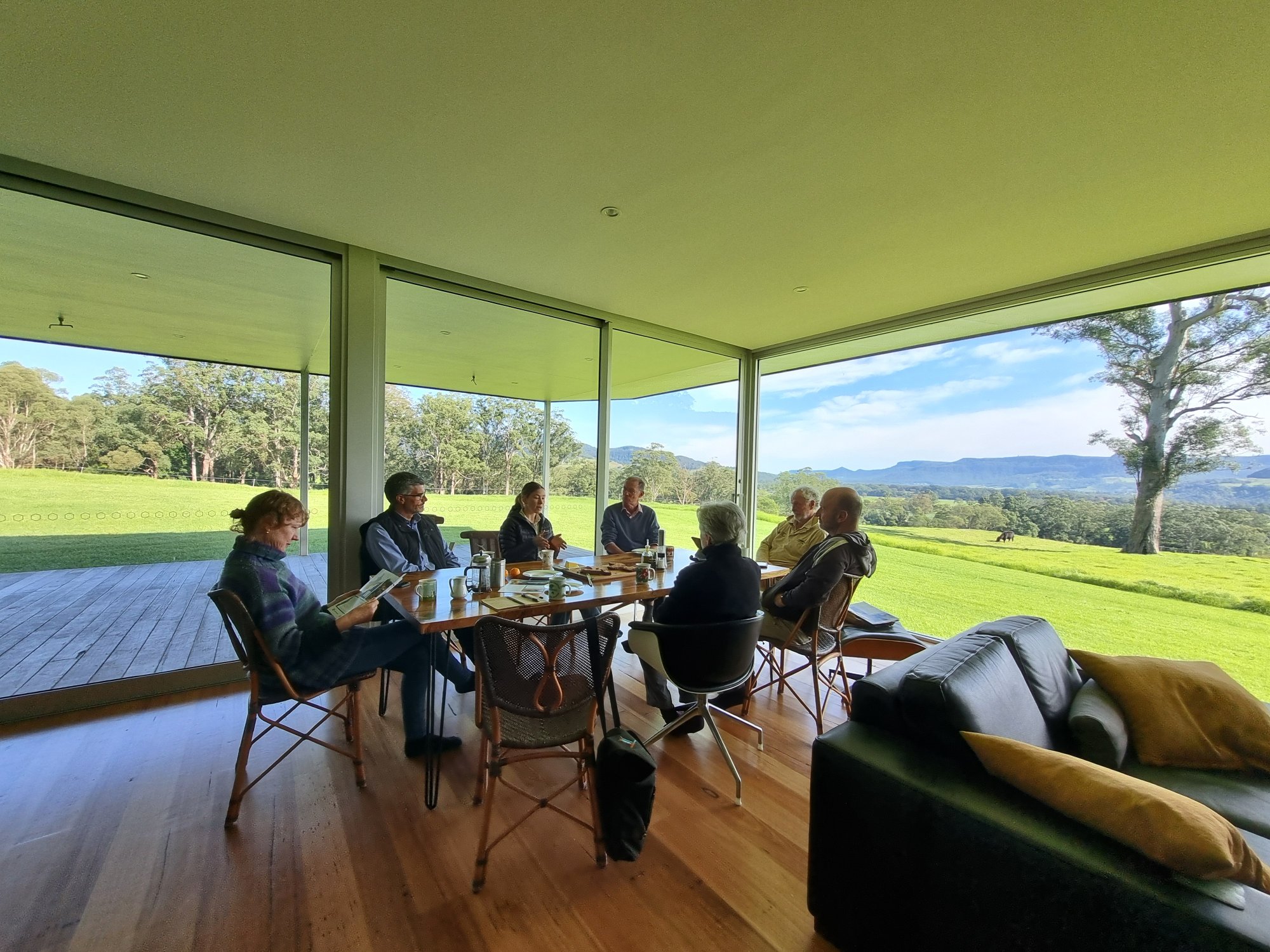
Later in 2025, the team returned to the valley to survey the selected sites and begin developing designs, deepening their understanding of how these waterways function.
This visit was enriched by the involvement of John McInnes, an Indigenous ranger and ecologist from Aroona Project Management, who joined the site assessment to share cultural, ecological and Country-based insights. John prepared a Preliminary Cultural and Ecological Assessment of Secret Creek and Brogers Creek, grounding the project in a deeper respect for both natural systems and First Nations connections to place.
John’s assessment identified Kangaroo Valley as an area of deep cultural significance for the Woodi Woodi (Wodi Wodi) people, historically known as Noggarah, meaning “Big Gully”. The valleys and waterways once served as seasonal gathering places, travel routes and resource-rich landscapes where people fished, harvested aquatic plants, collected medicinal species and maintained longstanding cultural practices.
Ecologically, John’s survey highlighted encouraging signs of native freshwater life, including whirligig beetles, common yabbies, and potential evidence of rakali (native water rats). The presence of these species — particularly yabbies and rakali — was noted as an important indicator of freshwater health and habitat integrity, strengthening the case for restoration approaches that slow water, stabilise channels and support regeneration rather than hard engineering solutions.
These observations have helped shape how the project responds to the landscape: not simply addressing erosion, but working with natural processes, protecting culturally significant features and creating conditions that support ecological recovery over time.
Both Secret Creek and Beauridge Creek are focal points of the project. Flowing through a steep, high rainfall landscape, these creeks have sections where past land use and recent flood events have left the channel incised and disconnected from surrounding flats. The intent of the project is to slow water, reduce erosion, encourage sediment deposition and support natural regeneration, improving creek health before flows reach Brogers Creek itself.
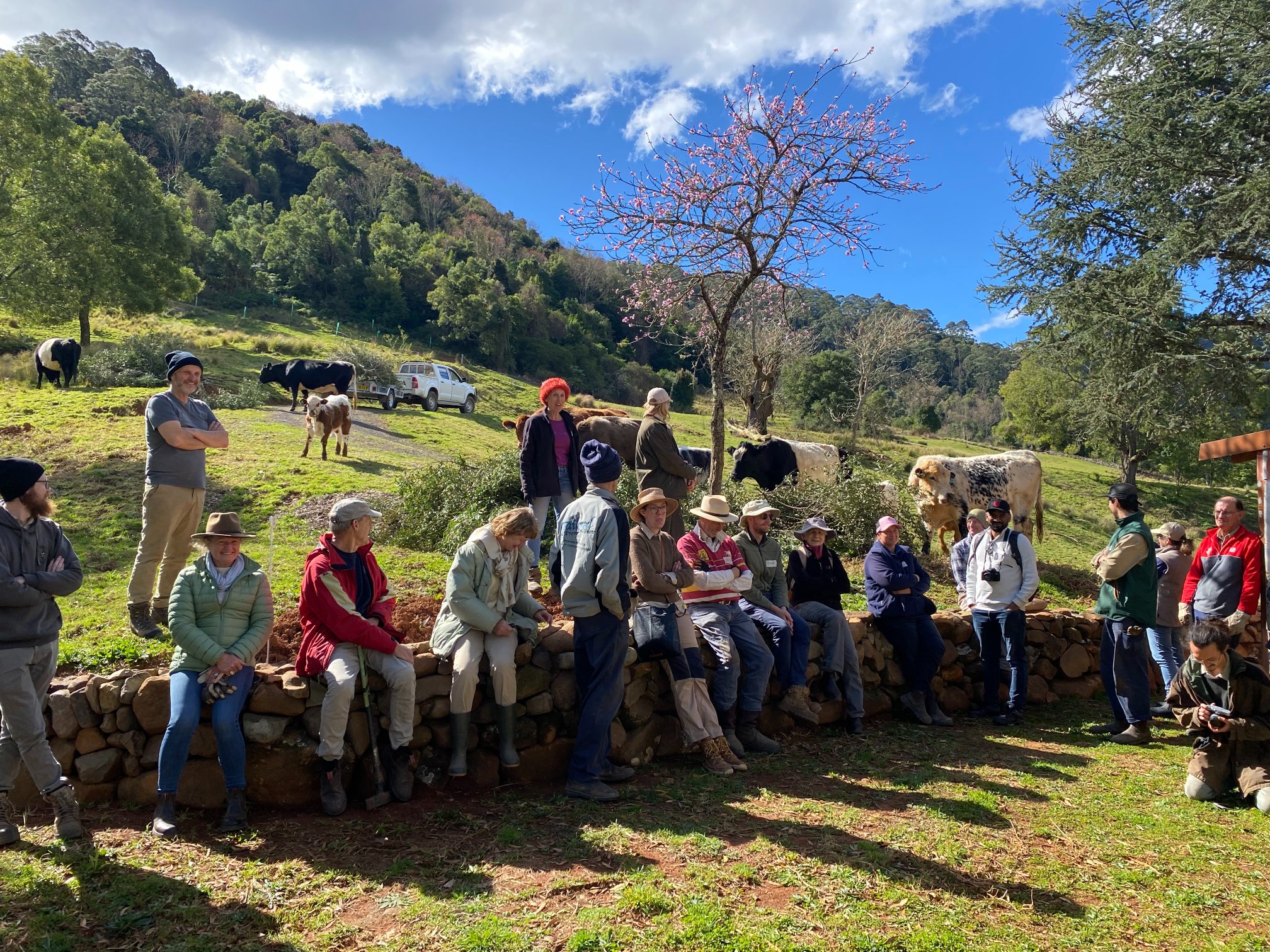
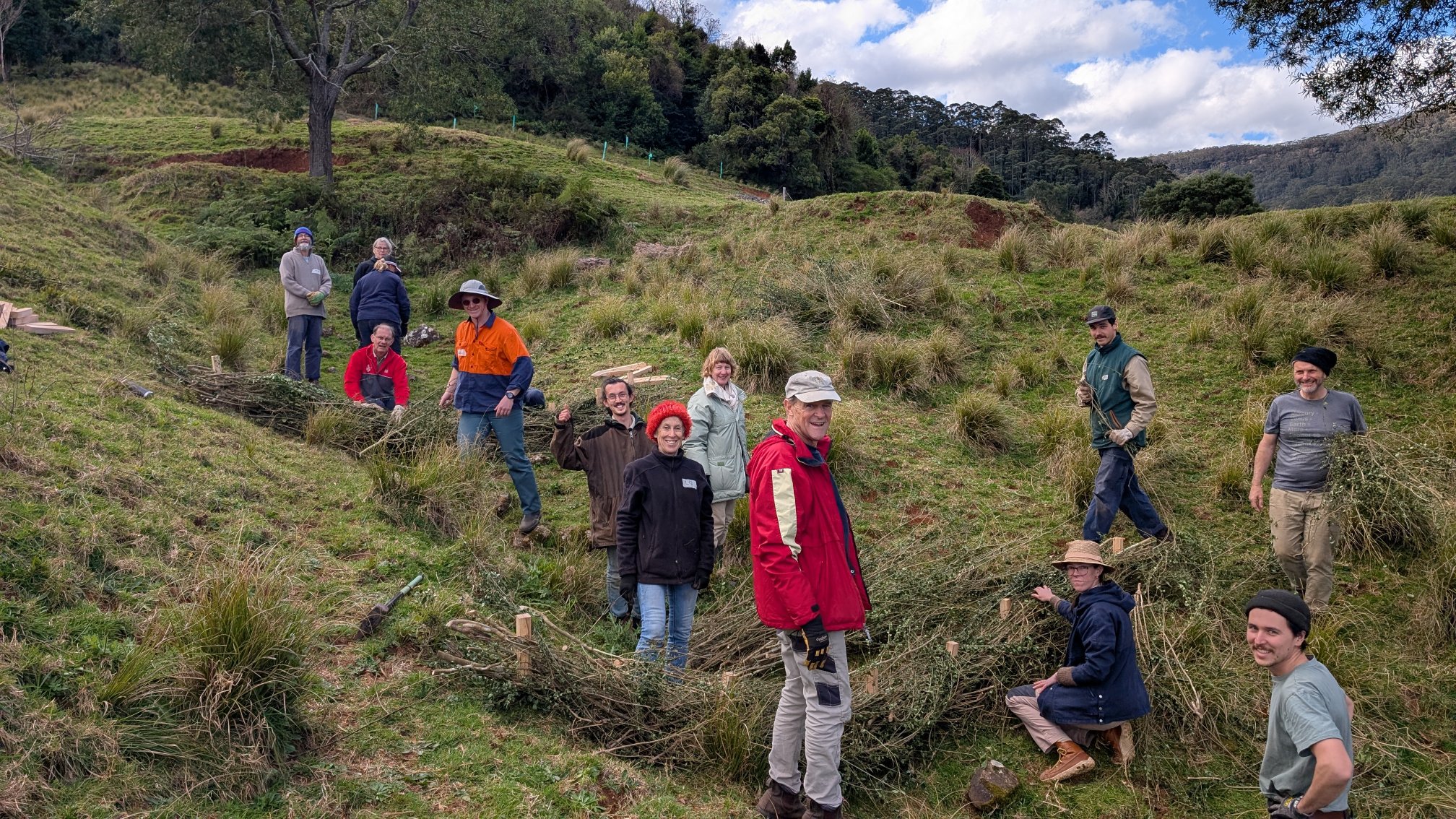
Pictured at right: Kangaroo Valley community comes together at Brogers Creek to build brush packs which aim to slow the flow in high gully catchments, August 2025.
Learning together in the field
One of the highlights of the year was a community field day, attended by around 40 local landholders and community members.
Walking the landscape together, participants explored how water behaves in different parts of the catchment, why some areas are eroding while others are stable, and how small-scale natural infrastructure using rocks, vegetation and thoughtful placement can help restore balance.
These conversations weren’t about imposing solutions, but about building shared understanding, confidence and a common language around landscape rehydration and water stewardship. The enthusiasm and curiosity demonstrated on the day reflected the strong foundation already present in the Brogers Creek community.
What’s next
As we move into 2026, the project is entering its final design stages. Detailed plans are being prepared for livestock exclusion fencing, assisted regeneration and riparian revegetation and a series of small instream structures across the demonstration sites, with construction planned later this year.
These works are designed not only to improve local conditions, but to act as learning sites — places where the community can observe change over time, reflect on outcomes, and adapt future actions across the broader catchment.
The collaboration at Brogers Creek demonstrates what’s possible when community knowledge, ecological understanding and practical design come together with a shared commitment to caring for water in the landscape.
Thank you to the Brogers Creek community, especially Greg, Sonya, David and Belinda, Andrew, Ruben and Liz, and Alexandra and John for their generosity, curiosity and leadership, and to everyone contributing their time, knowledge and energy to this ongoing project.
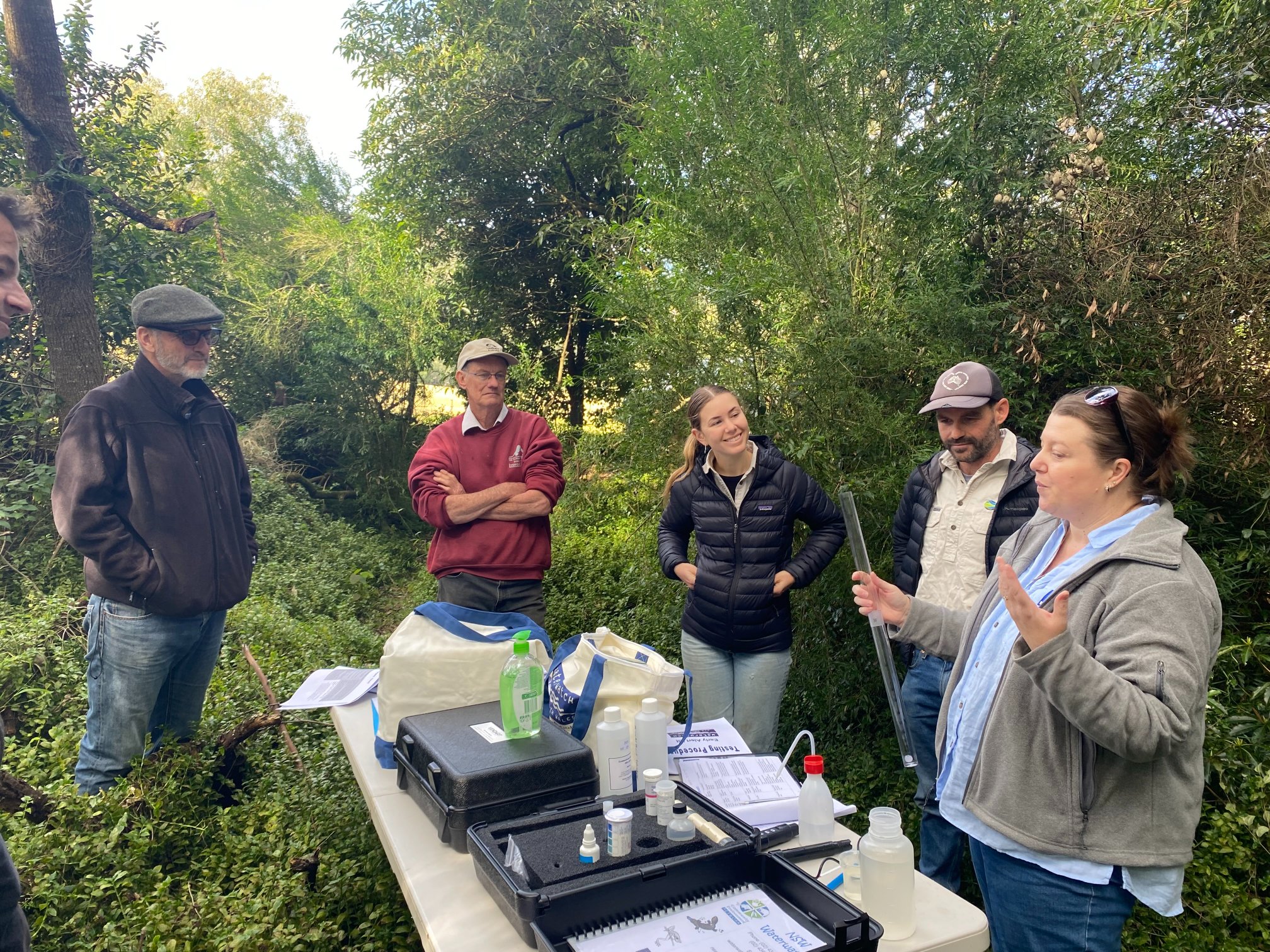
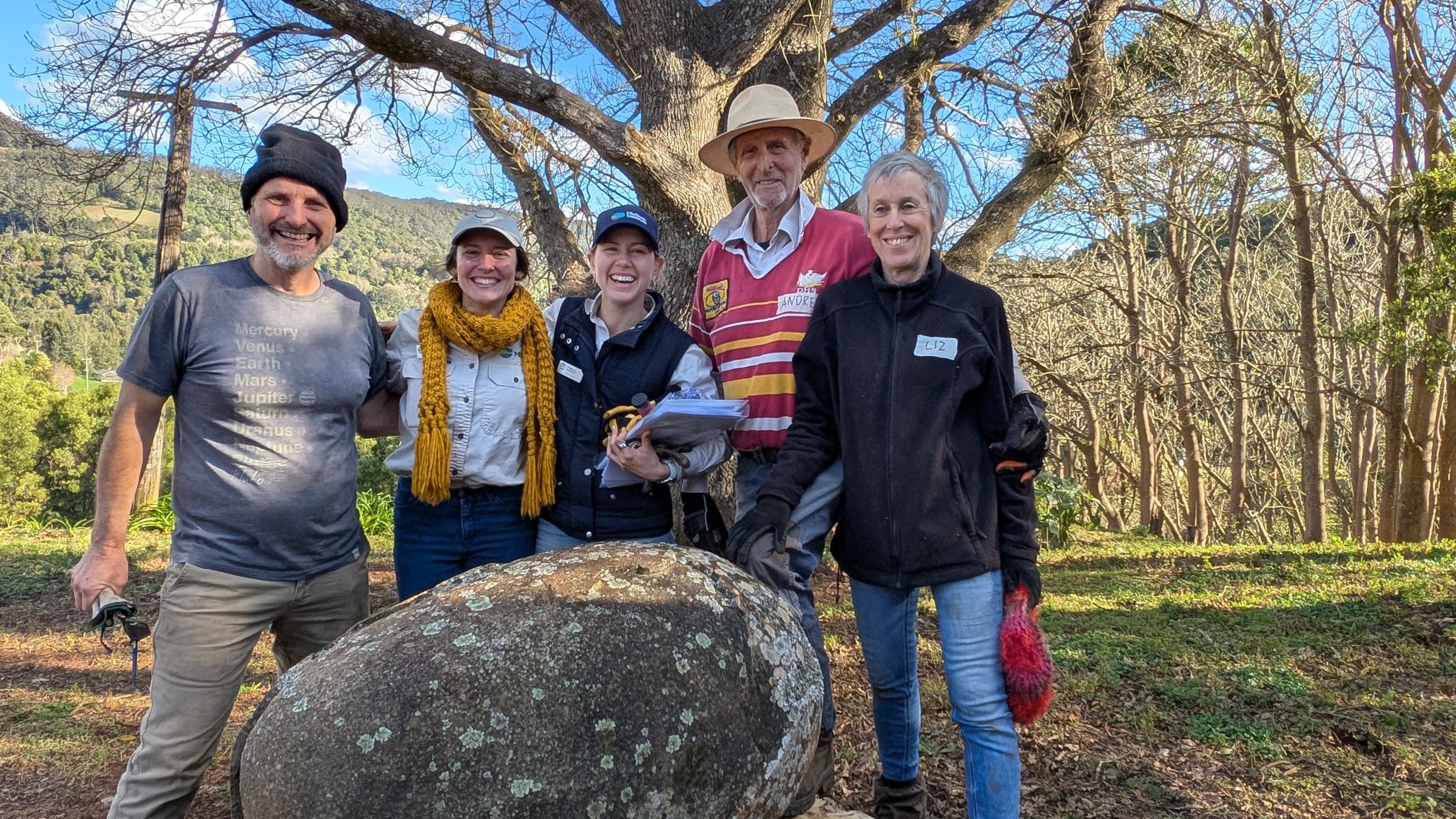
Pictured at right: Secret Creek landholders David, Andrew and Liz with Landscape Planners Erin Healy and Sharni Pike.
Click on photos to enlarge.