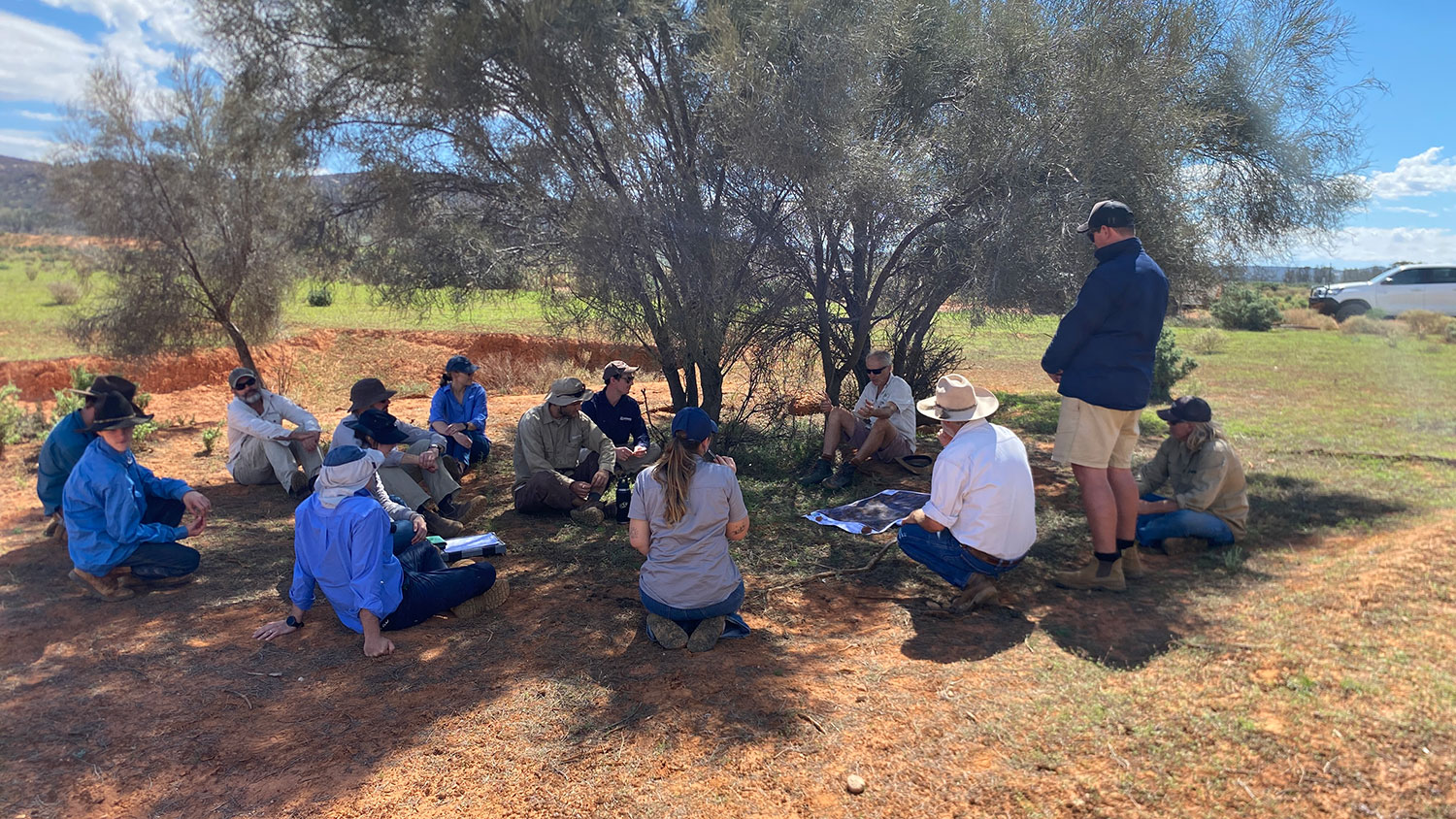
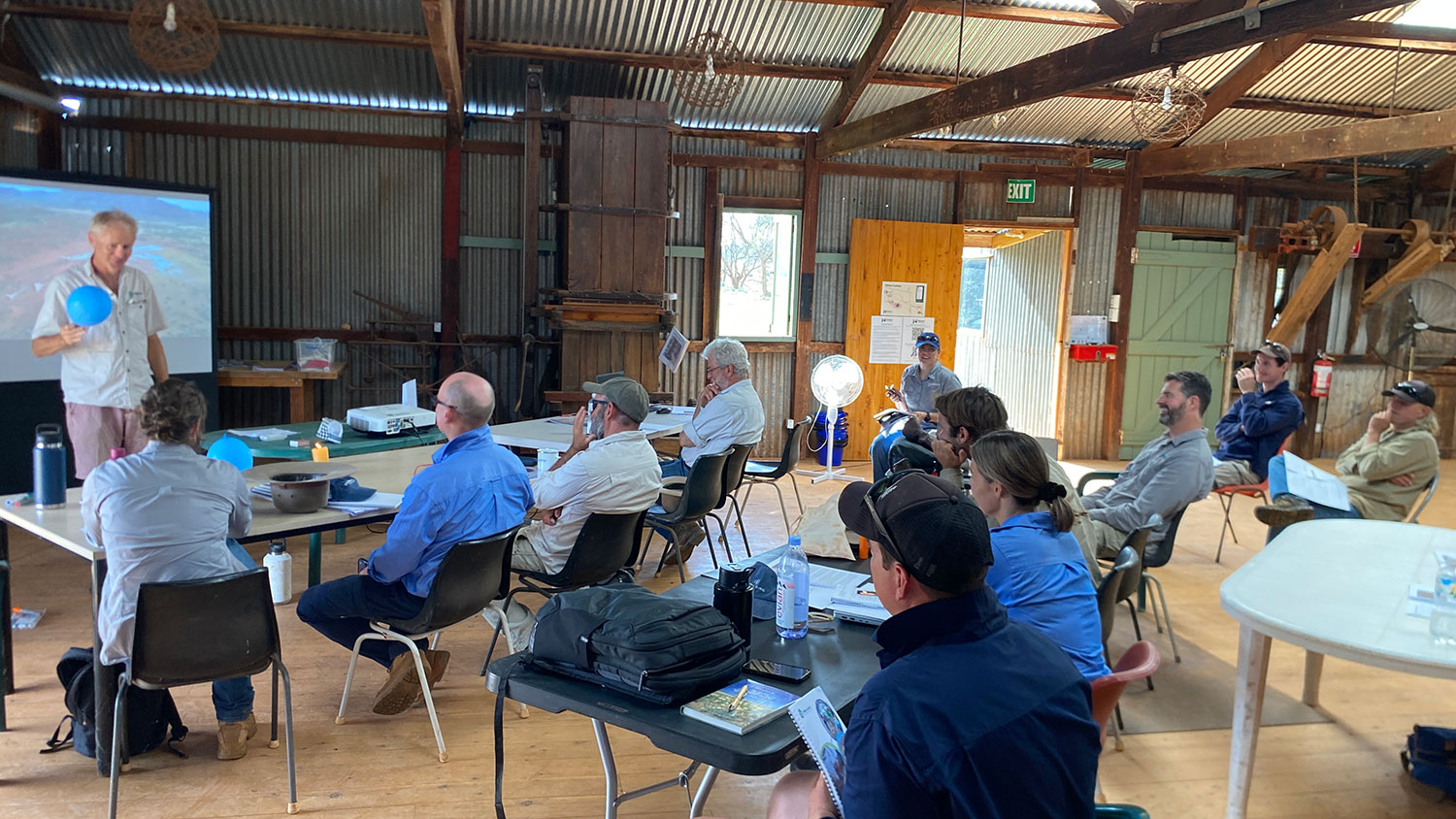
The bootcamp brought together members of the pastoral community, NRM groups, industry and government agencies to explore the topics of landscape function and how it is influenced by the small water cycle. The event was generously hosted by the Hiltaba Nature Reserve, a 78,000 ha former pastoral station that is now a refuge for numerous threatened species, including the Yellow-footed Rock-wallaby. The management of grazing pressure, from both domestic and feral animals, has allowed vegetation to recover and has highlighted the important role plants play in cycling water through the landscape.
The two-day event was filled with interactive presentations, practical demonstrations and multiple site walks. Linking desktop-based assessments of the landscape, through catchment mapping and catchment discharge calculations, with on-ground observations and understanding of soils, vegetation and topography, the Bootcamp provided participants with the tools to assess landscapes in their own context. The Bootcamp also introduced them to some of the practical tools and methods to address erosion issues and allow water to spread across the landscape.
A follow-up webinar was held at the end of April to provide participants of the recent SA Arid Lands landscape rehydration events (Boolcoomatta – 2024, Kingoonya – 2025, Mt Victor – 2025) with the opportunity to ask questions and share some good news stories. It was especially great to hear about the success some of the past participants have had with rip lines along the contour on bare, scalded claypans.
Pictured right: taking some time in the shade to discuss soil types and testing methods