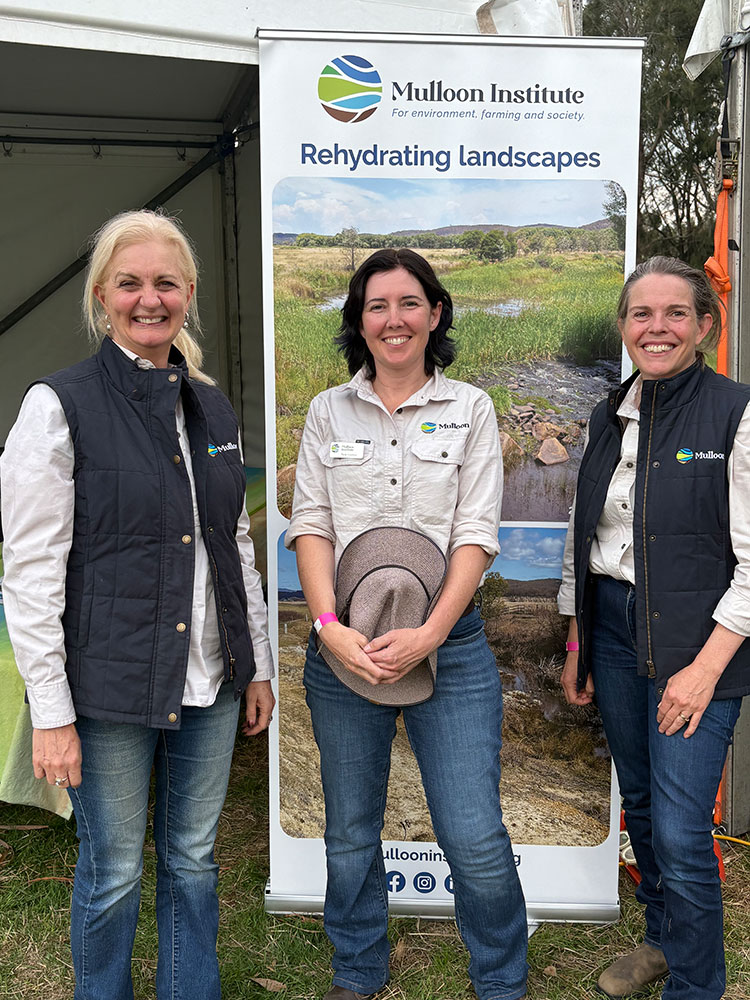
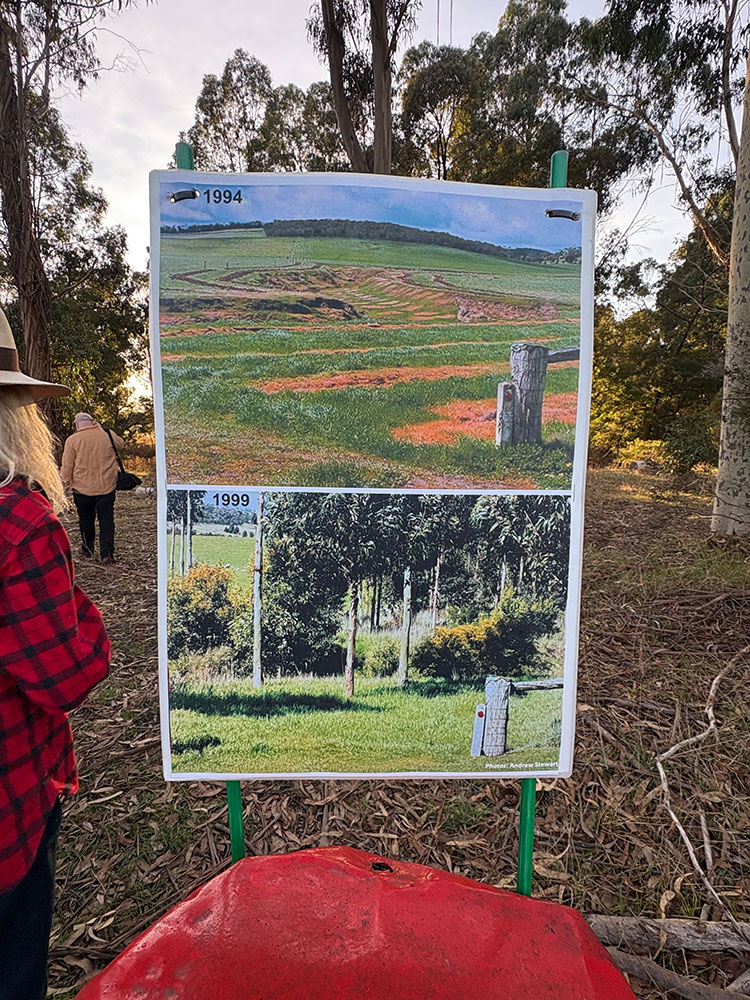
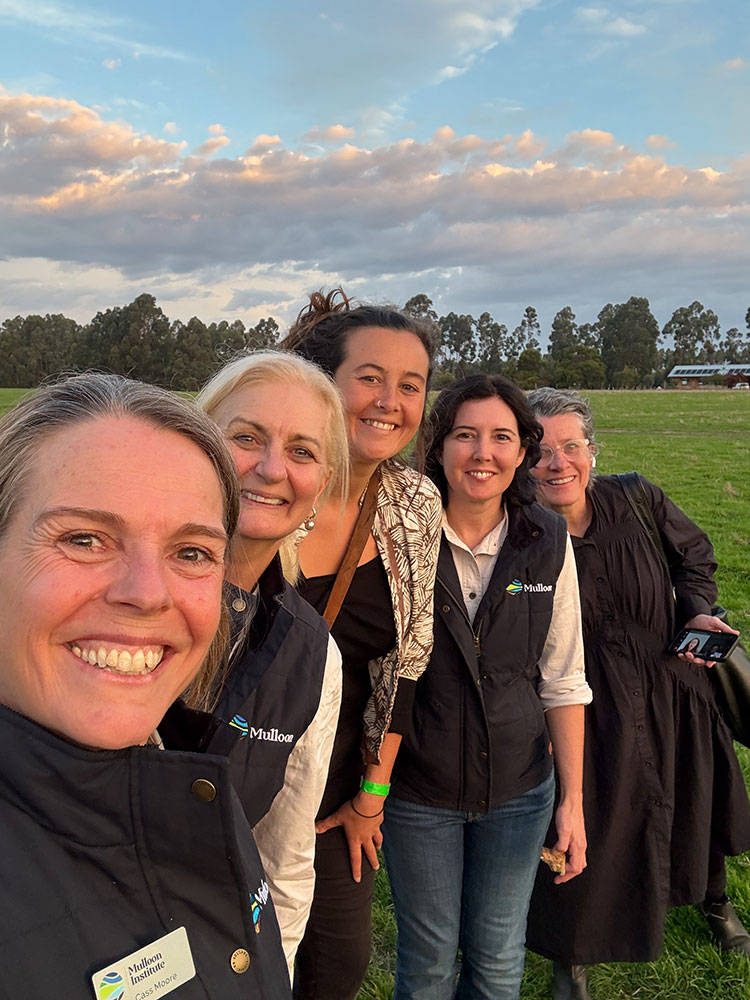
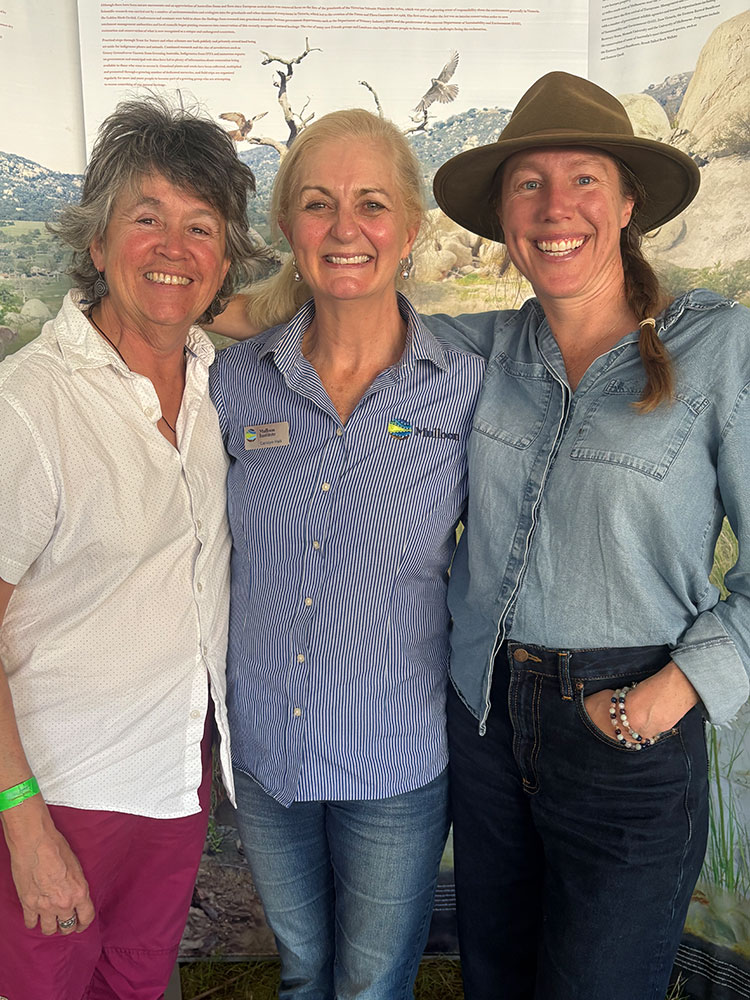
Summer is off to a warm start with recent high temperatures giving those of us on the east and west coast of Australia a taste of things to come. Things are also heating up for Mulloon Institute with major grant wins and an important partnership with WaterNSW and The Ian Potter Foundation, delivering unprecedented success and growth.
The end of this year has been a time of reflection and gratitude. The efforts and determination of our hardworking team have been rewarded. Highlights include:
This is also a time to welcome new members of our executive team, Glen Norris, General Manager and Jeanette Rawlings as Chief Financial Officer. They join Matt Smith, Project Engagement and Delivery Manager, with myself and Executive Landscape Planner Nolani MColl to round out the executive team.
Kathy Kelly has finished up as Executive Director, Company Secretary and CFO. Kathy has accepted the offer to be the inaugural chair of the Mulloon Farm Advisory Committee and will spend the coming months consulting on the terms of reference for that committee.
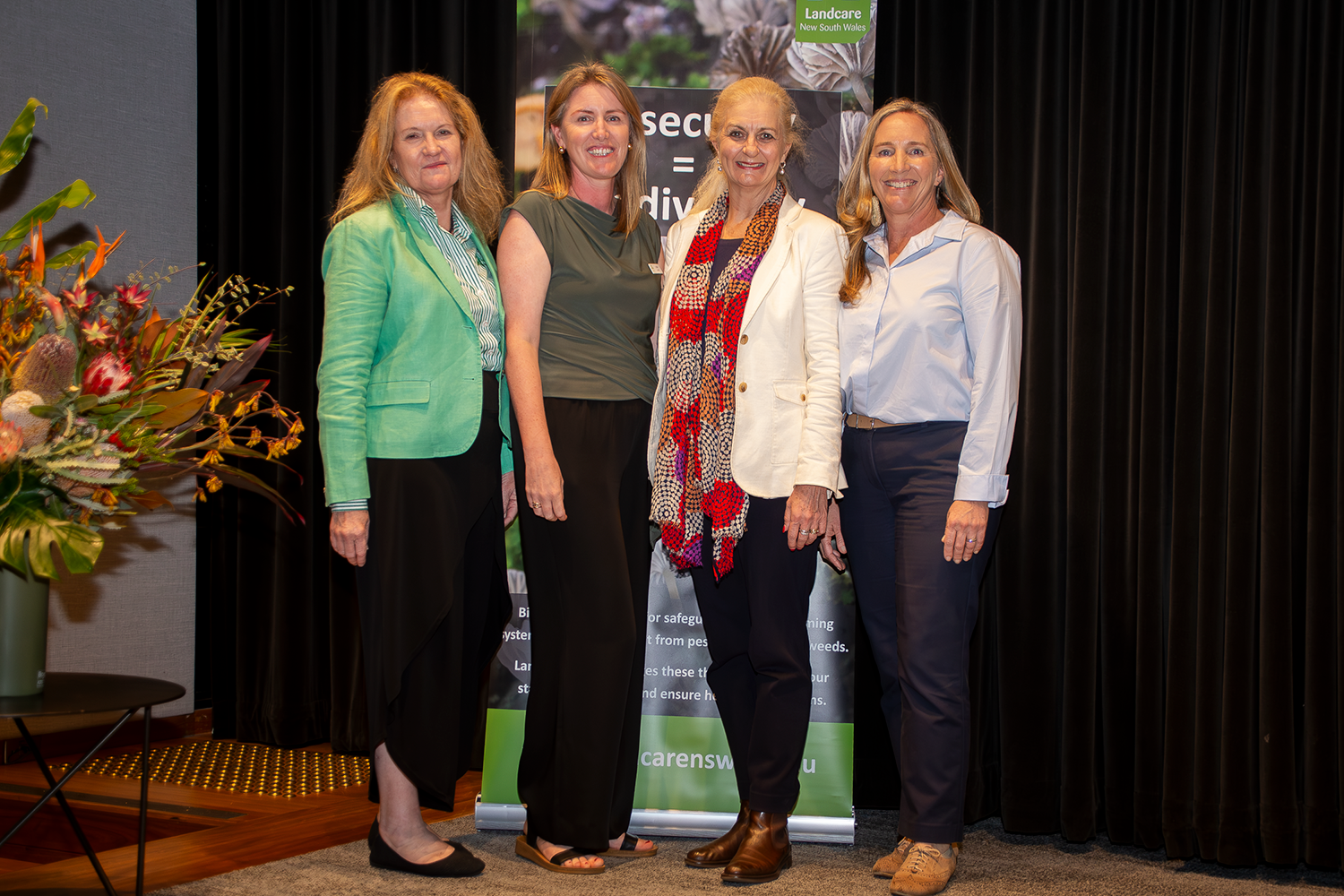
Dr Emma Carmody has accepted the offer to chair the newly reformed Mulloon Law Advisory Committee. Emma’s depth of experience across water law and policy has been invaluable in progressing Ministerial awareness of the issues we face in NSW, and I very much look forward to working with Emma on much-needed regulatory reform.
Mulloon Institute is naturally outcomes-focused and is set to deliver increasing areas of landscape rehydration and restoration across Australia in the coming years. Underpinning our success is collaboration with key stakeholders in the regenerative agriculture sector.
Our founders, Tony and Toni Coote and our late chairman, The Hon. Gary Nairn AO, have left a remarkable legacy. It has been our task to take that legacy, generate an overarching strategic plan, win and secure the required funding and then deliver against that plan.
Our members have made it clear they support our work. The evolution of our board via an open public recruitment process to be an experienced, skills-based board will further support scaling of the Institute and our important work.
Grant and sponsorship funding now provides the means for us to take the generous legacy left to us and deliver against the vision to repair, restore and rehydrate Australian landscapes.
This work is all made possible by the energy and commitment of a fantastic team, and I am grateful to each and every one of them for their continued support and hard work.
Special thanks must go to Jono Forrest, who finished up as General Manager of Mulloon Consulting in August this year. Also, a fond farewell to Max Brunswick, a foundational member of the Science and on-ground team – thank you.
A special mention to Peter Hazell, who, after over 20 years of service to Mulloon Institute, retired from his role as Principal Landscape Planner to concentrate on the restoration work required on his own properties. Peter’s dedication to Mulloon and his leadership in all facets of promoting landscape rehydration and restoration are legendary. Mulloon will be forever grateful.
A fond farewell also to Jim Steele, General Manager of Mulloon Creek Natural Farms. Jim has delivered a modern, profitable egg enterprise that is the beating heart of our farming operation. He departs Mulloon Creek Natural Farms, having left nothing to chance and providing us with a strong future growth outlook.
In 2025, I stepped down as a Board Director of Mulloon Institute, a role I took on at the request of our late Chairman, The Hon. Gary Nairn AO, in 2020. I thank my fellow Board Directors, it has been an honour to foster the Institute through this period of growth and change.
Thank you to you, our loyal supporters for your ongoing interest. 2026 promises to be a year of action and expansion for Mulloon Institute, and we are so excited about what lies ahead.
Carolyn
(All photos: NVIRO Media)
The tremendous spring conditions have really been the icing on the cake for what has been an exceptional 2025. MCNF has enjoyed fantastic rainfall — not too much, not too little, and almost perfectly timed. Pasture growth has been well above average thanks to these excellent growing conditions.
Cattle have made the most of the favourable conditions, delivering outstanding growth. The 2024 drop heifer weaners grazing the poultry paddocks have been a particular highlight, achieving weight gains close to two kilos per head per day through September, and they are maintaining a rising plane of nutrition heading into joining.
The poultry have also benefited from the good spring, with plenty of clover, bugs and grubs on offer. Egg production is set to increase with an additional 10,000 pullets now at point of lay. Mulloon Creek Eggs have made some minor changes to the egg cartons and removed the Humane Choice logo, which sadly came about by the certifying body NASAA going into receivership.
Over the past three months, the farm has continued its general clean-up program, recycling more than 50t of scrap steel, upgrading roads and sheds, and keeping the ongoing infrastructure maintenance on track.
We welcome back Belle to the farm team, where she will take up a new role as farm overseer.
Mulloon Institute is delighted to announce that the following Non-executive Directors were elected by our members to the Board at our recent AGM, held in the Barn at Home Farm on 4 December.
Pictured above: Mulloon Institute Board (minus Robert Purves) with CEO Carolyn Hall, December 2025.
The appointments follow an extensive public recruitment process that commenced in August 2025 and the Board was delighted with the number and calibre of applications – which was a testament to the Institute’s standing in Australia and validation of members’ support for an open and public process.
This exceptional team brings expertise in a range of professions and skills that will help us to continue to drive our mission to build on the founders’ legacy. The new Board is focussed on continuing to grow our impact in this important work of rehydrating and repairing landscapes as well as ensuring the core business continues to be financially viable and healthy.
We are looking forward to such an accomplished Board joining the organisation at a time of great opportunity and growth for the Institute.
With the Board now in place and plans for increased member engagement next year, I am greatly looking forward to being part of the Institute in 2026.
Rose Nairn OAM and Robert Purves AM will remain on the Board for a short further period to assist with the transition arrangements. A summary of each of the directors’ significant background and experience is linked to their names at left, and available for download here.
Best wishes for a safe, happy and (re)hydrated Summer break.
Wilf
Wilfred Finn
Chair
Mulloon Institute has entered a period of strong momentum, marked by growing demand for our work across science, learning, and on-ground programs. I’m delighted to have joined the organisation as General Manager at this exciting time and have been inspired by the passion, expertise, and commitment of our team.
Recent months have seen high levels of activity across the organisation, with increased workloads occurring alongside reduced staffing capacity. While this has placed pressure on staff, it also reflects the relevance and uptake of Mulloon’s programs. Resourcing and developing capacity as the organisation continues to scale will be a key focus along with nurturing and supporting our exceptionally talented and professional team.
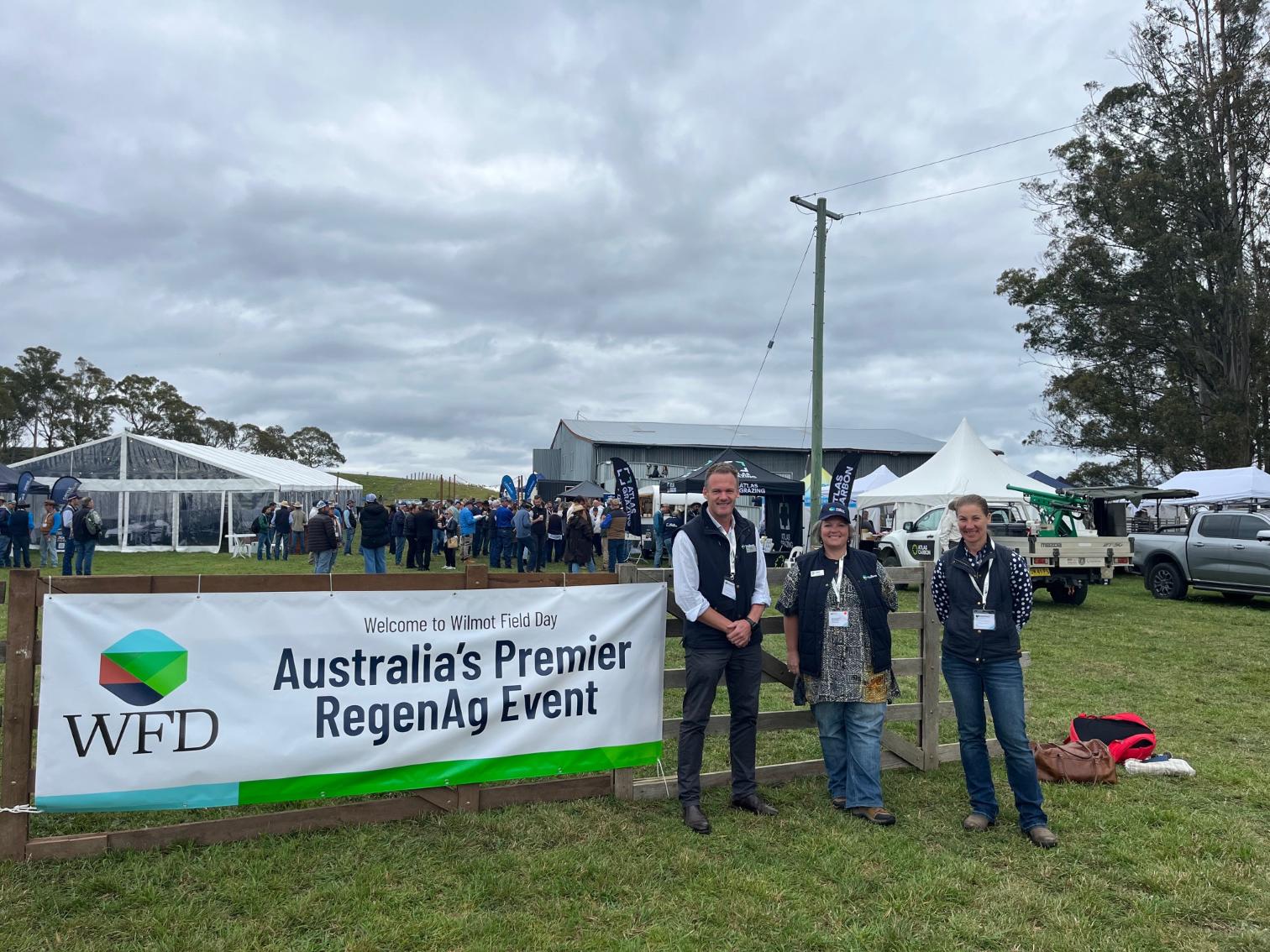
A highlight early in my role was the Home Farm Field Day, which provided a powerful demonstration of the depth of expertise across the organisation and reinforced my confidence in our strategic direction. Events like this exemplify Mulloon’s ability to connect science, practice, and community in meaningful ways; and I encourage you all to check out The Regenerative Power of Water publication which captures the essence of our organisation beautifully, and was recently celebrated with a soft launch at the Home Farm Field Day.
Another highlight was meeting the incoming Board of Directors at the recent Board meeting and AGM. The combined experience of this group, along with the depth of their experience, gives me great confidence that we have the right leadership team to deliver on our strategic goals in a meaningful way.
Have a safe and restful holiday break with friends and family. I look forward to rolling up my sleeves with the Mulloon team, our partners, and communities with what is shaping up to be an exciting year ahead.
Glen Norris
General Manager, Mulloon Consulting
Pictured top: Home Farm Field Day
Pictured right: General Manager, Glen Norris with CEO, Carolyn Hall on Home Farm.
(photos: NVIRO Media)
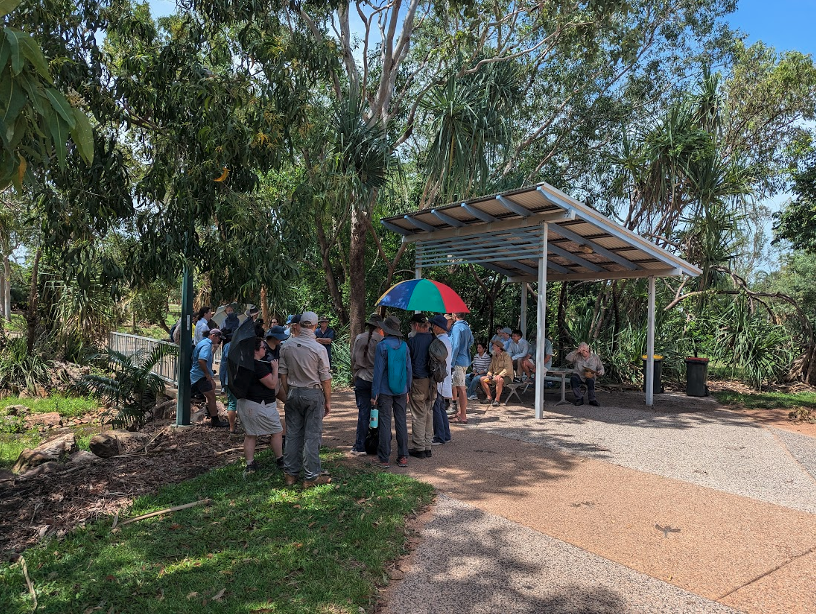
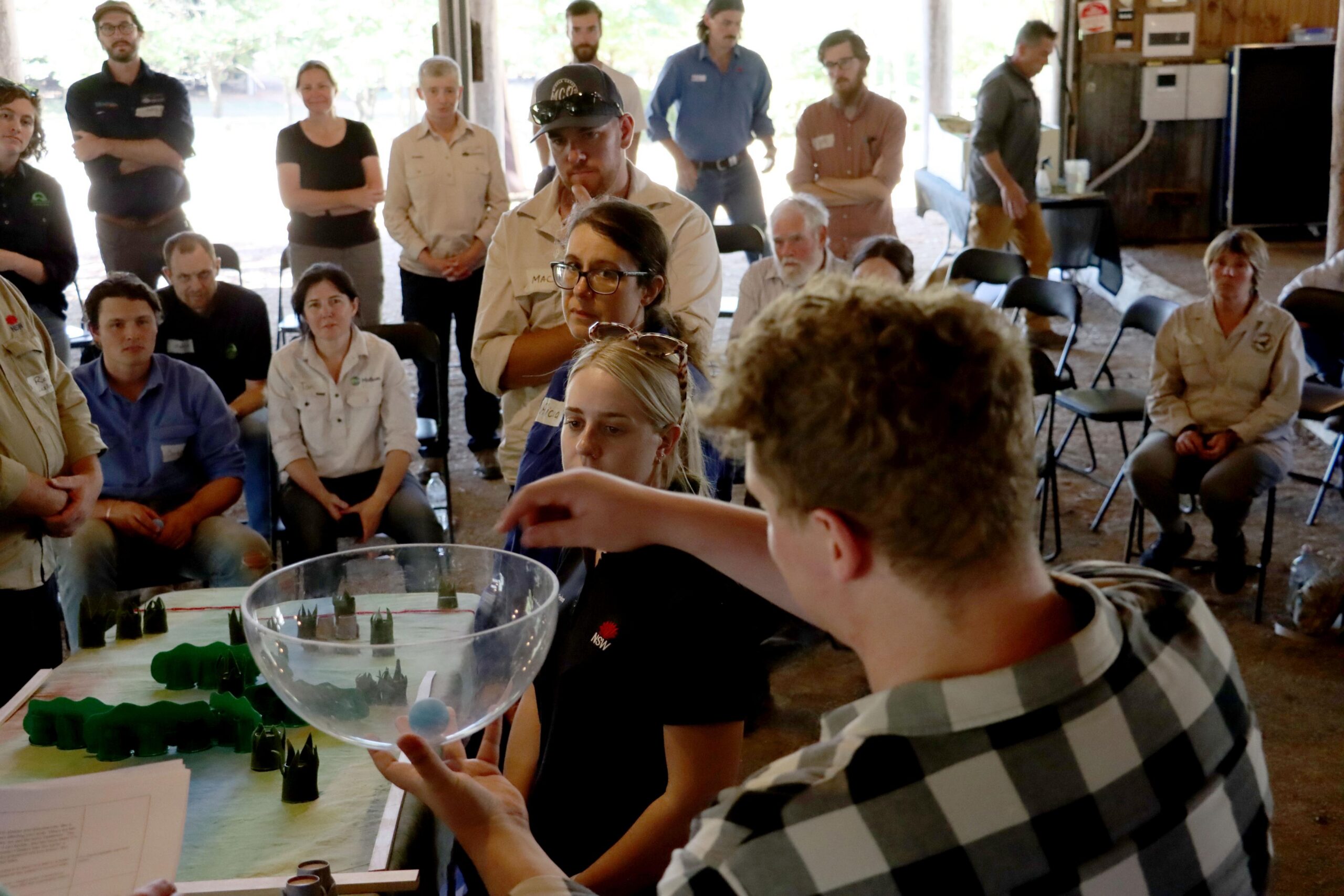
Over the past two years, our Communities of Practice Project (CoPP) has been on an incredible journey, working with five farming communities across NSW, QLD, VIC, NT, and WA. Together, we’ve focused on upskilling land managers, First Nations groups, and natural resource professionals to plan, design, and deliver landscape rehydration projects using low-risk, nature-based solutions. The goal? Building greater drought resilience for the future.
Hear directly from land managers, the Mulloon team and researchers who’ve turned theory into practice.
Watch the action: Check out videos from our NT and WA Boots on Ground events.
Listen and learn: Tune into the Soils for Life podcasts over the summer break for inspiring conversations about healthy soils and resilient landscapes.
(Pictured at top: Lance leading the WA Boots on Ground project day)
Across the Mulloon Rehydration Initiative (MRI), we delivered our spring seasonal monitoring campaign, including groundwater downloads, surface-water instrumentation checks, and ecological surveys across frogs, birds, vegetation, and soils. We also continued strengthening our internal data governance and workflows, ensuring MRI’s long-term datasets remain robust, accessible, and ready for future analysis. This work lays the groundwork for a project we hope to initiate in 2025 to make our science more visible and actionable for landholders, partners, and the public.
LiFT continues to gain momentum, with the literature review finalised, demonstration-site screening tools refined, and ongoing co-design work with landholders and First Nations groups.
STREAM has been deeply involved in shaping the monitoring framework, ensuring it reflects landscape function, drought resilience, and the needs of diverse user groups. The team also provided science and monitoring advice across several Mulloon-supported projects this quarter, such as Turnip Creek, helping align on-ground work with hydrological function, ecological recovery and long-term monitoring requirements.
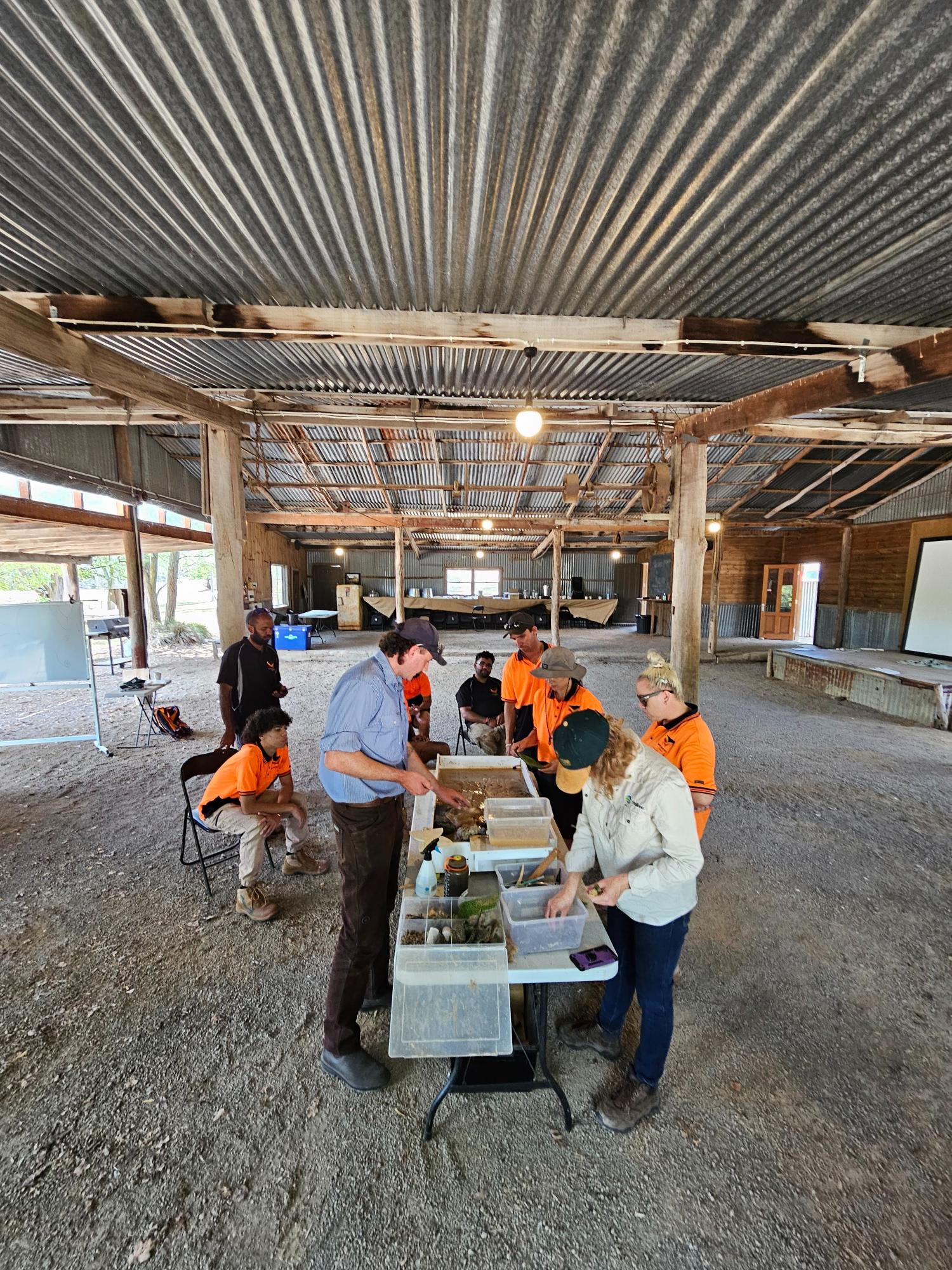
New automated groundwater tools, DEM workflows, and internal spatial-tool development continued to evolve, helping streamline how we process, visualise and interpret the growing volume of data across MRI and LiFT. At the same time, we supported multiple education and engagement activities, including GIS training for landholders and ranger groups, helping build confidence in mapping, landscape interpretation, and digital decision-support.
Looking ahead to summer, STREAM will focus on drought-resilience assessments, LiFT Activity 3 monitoring design, continued ecological surveys, and preparing key scientific contributions for 2025, including the UNCCD case study, the LiFT monitoring framework, and next steps in MRI data integration.
A sincere thank you to our landholders, partners, technical collaborators and the wider MI team for another quarter of momentum, curiosity and shared commitment to landscape rehydration.
What a year 2025 has been for Mulloon Institute. Our annual report is launched today, and it reflects the efforts of our amazing team. This year we have seen the benefit of all the hard work we have put into the Mulloon Group and preparing it to scale our work across Australia.
Their vision was profound yet practical: to position Mulloon Institute as one of the world’s leading authorities on landscape rehydration and restoration. This isn’t aspiration – it’s a natural evolution of the groundbreaking work they initiated fourteen years ago when they established Mulloon Institute.
We are building a sustainable organisation with multiple revenue streams, talented people, and robust networks that ensure we continue – and amplify – the extraordinary work they began in 2005 with the pilot project at the Home Farm.
Core to this vision has been the task of establishing the structural foundations of an organisation built to prosper in perpetuity. Our focus is on our technical design approach, building our learning programs and ensuring our business processes and governance are fit for scaling.
We hope you enjoy reflecting on our work this year as much as we have enjoyed putting this report together.
Thank you for your ongoing support.
Carolyn Hall
CEO
Please use the green buttons to access the report and financial statements.
On a windy, blustery, but joyful day, Mulloon staff and dedicated volunteers, including members of Queanbeyan Landcare, joined forces to help restore a stretch of land adjacent to the upper Molonglo River in the NSW Southern Tablelands.
The event took place on one of the two properties included in the Molonglo Catchment Rehydration Initiative (MCRI), a project that’s focused on using natural infrastructure, including instream structures and floodplain earthworks, to rehabilitate the habitat of the nationally endangered Green and Golden Bell Frog.
The day was all about collaboration and hands-on local action. Volunteers from the region worked together to plant native trees and shrub species upslope and installed brush packs and pin-weir structures, all designed to kickstart landscape repair. These efforts aim to stabilise the soil and slow the flow of water, nutrients and sediment, ultimately improving water quality in the Molonglo River. A sincere thank you to all our volunteers in pitching in to help this project become reality.
Stay tuned for updates as we continue work on the in-stream structures planned for this vital restoration project.
Funding to complete Stage 2 of the project has been provided by the landholder, Mulloon Institute, and NSW Environmental Trust.
Pictured top banner: Brushpacks underway, at right: the team with the completed brushpacks, and below: planning, before and after.
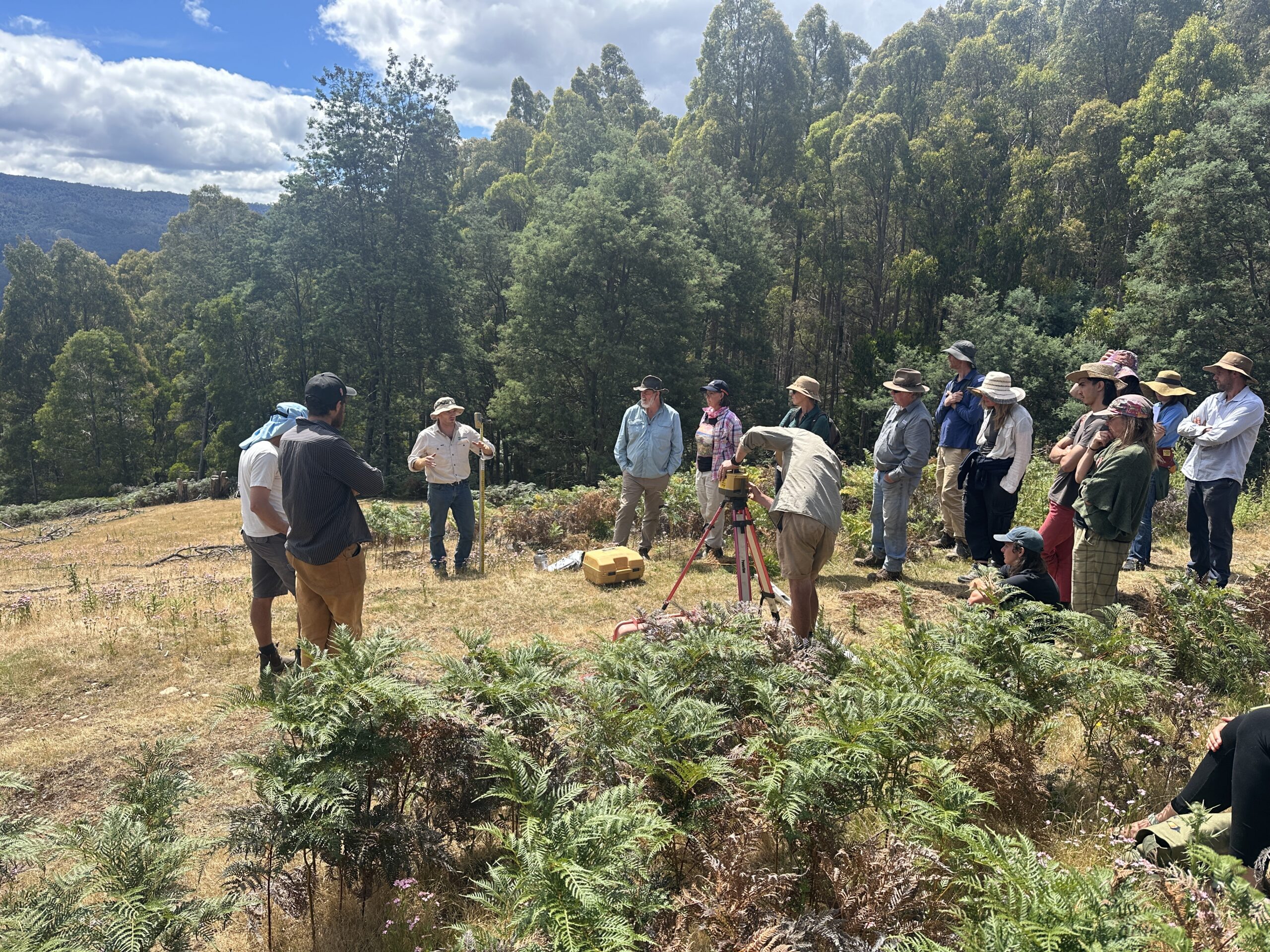
Under brilliant blue skies, 25 landholders and community members from Kerosene Creek, Blackmans Creek, and Hartley Vale gathered for a Landscape Rehydration field day facilitated by Mulloon Institute. The day was all about learning, sharing and walking the land together to explore how water stewardship can strengthen our catchments against drought, bushfire and flood.
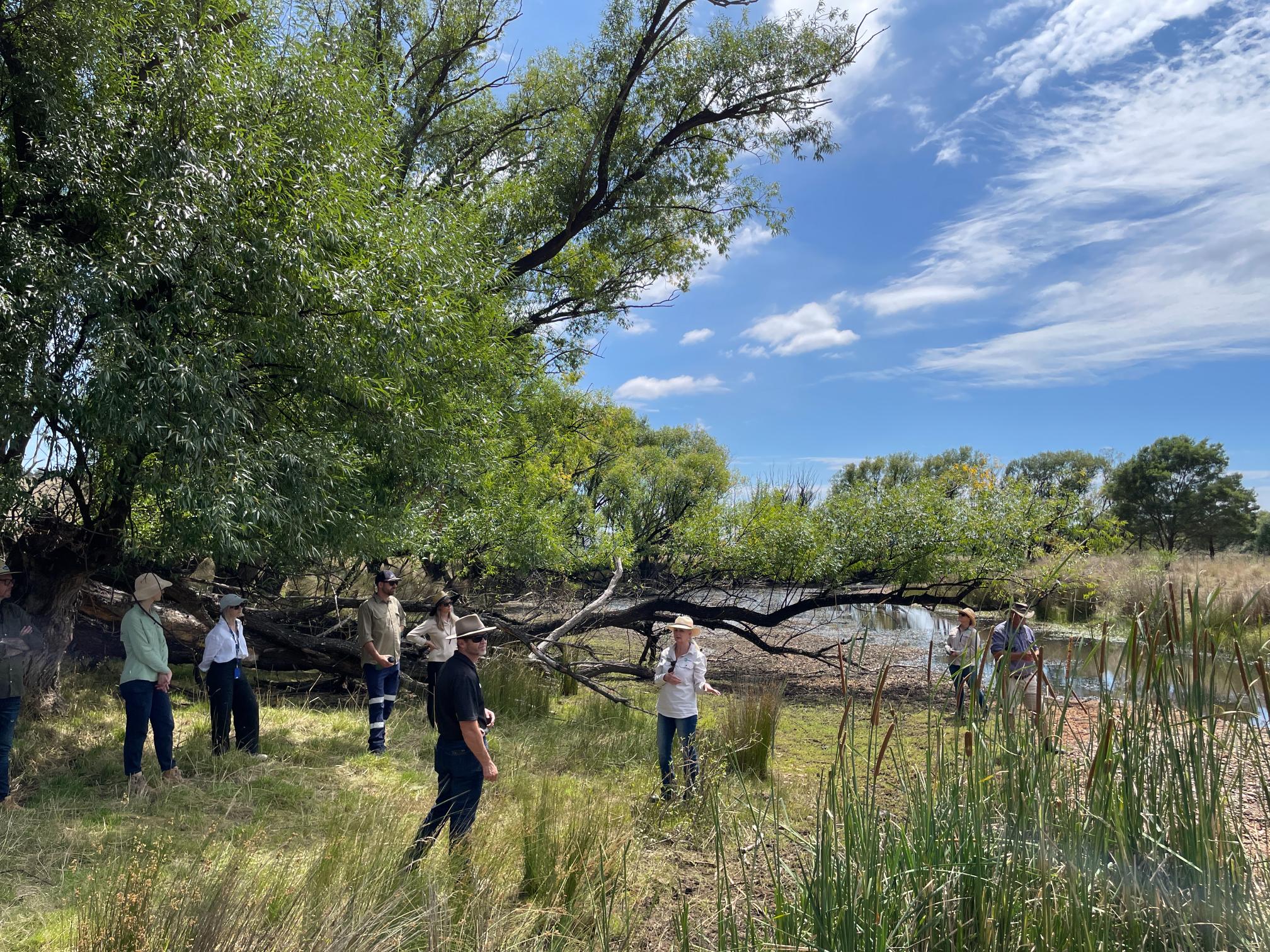
After a lively introduction to the principles of landscape rehydration, the group turned its focus to Kerosene Creek – a valley community nestled below Mount Victoria where the creek flows into the River Lett. This catchment has endured the impacts of the 2003 and 2019 bushfires. While natural regeneration and weed management have supported recovery, challenges remain: head cuts, incision, and erosion continue to threaten the otherwise intact temperate swamp and surrounding environment.
Field walks revealed both the resilience and vulnerability of the system. Participants saw healthy, functioning wetlands alongside priority erosion sites and gullies carved by historic draining. Mulloon’s Landscape Planners shared proposed on-ground designs to restore degraded sections, sparking rich conversations about how nature-based solutions and natural infrastructure can build resilience across the landscape.
The spirit of collaboration was strong. Discussions turned to how communities can work across property boundaries to achieve catchment-scale impact, and how raising awareness in rural areas is key to healthier waterways.
The day was made possible by the Lithgow Oberon Landcare Association (LOLA).
“Lithgow Oberon Landcare are very happy to be involved with the Water Stewardship program. We believe that Healthy landscapes create healthy communities. Workshops like the Hartley Vale Landscape rehydration workshop bring communities together to learn about landscape function which in turn leads to healthy waterways, wetlands and communities.” – Steven Fleischmann, Local Landcare Coordinator.
A heartfelt thank you goes to Angela and Lydia for hosting the walks, and to Greg, Malcolm, Imre, and Biata for their ongoing partnership with Mulloon. We also acknowledge both LOLA and Blue Mountains City Council for their continued dedication to restoring degraded waterways and managing weeds in the Kerosene Creek catchment.
Together, we are rehydrating landscapes and strengthening communities – one creek at a time.
If you would like to learn more about Mulloon’s Water Stewardship Program or the opportunity for on-ground works and events in your community, please visit our project page.