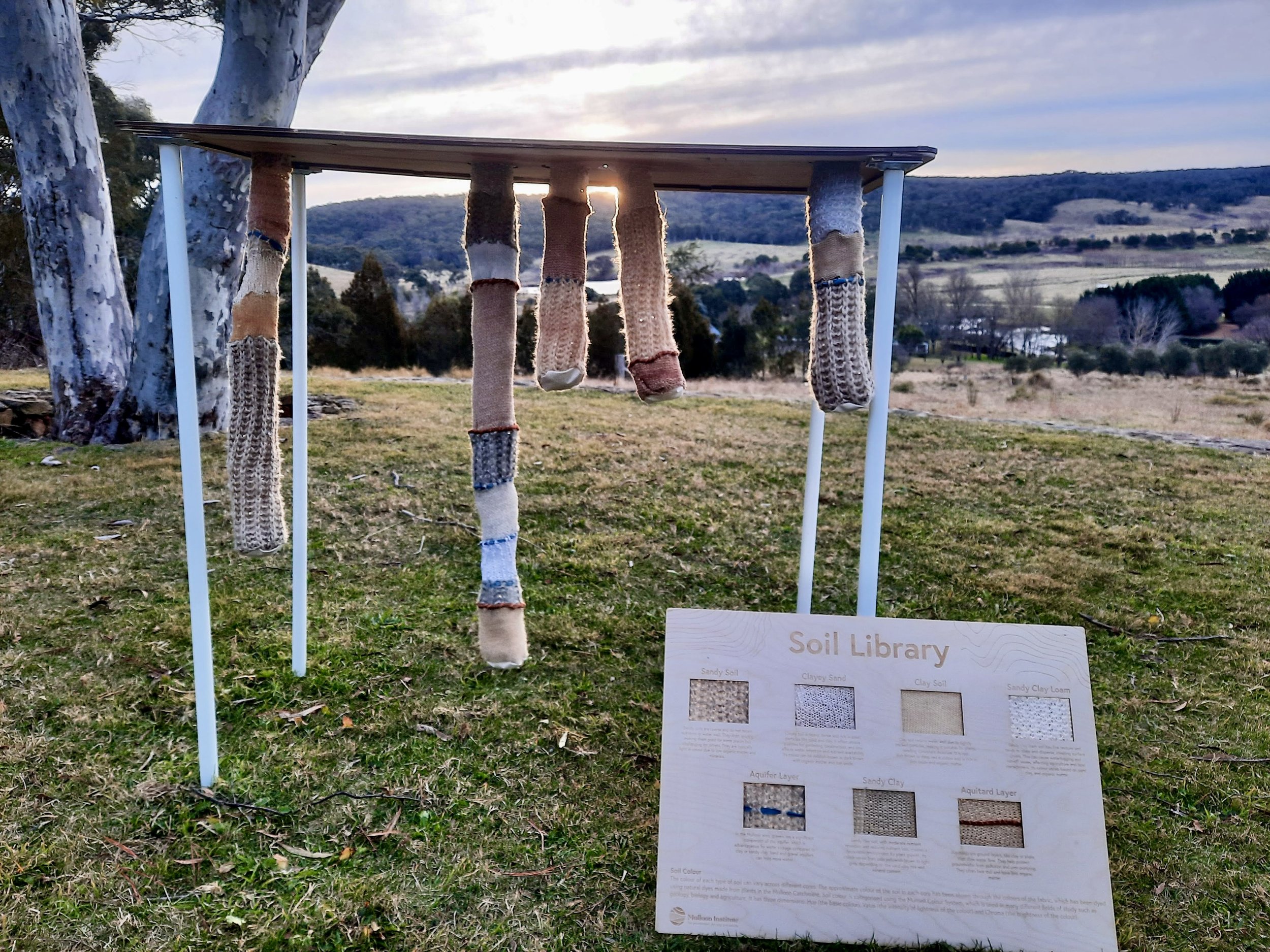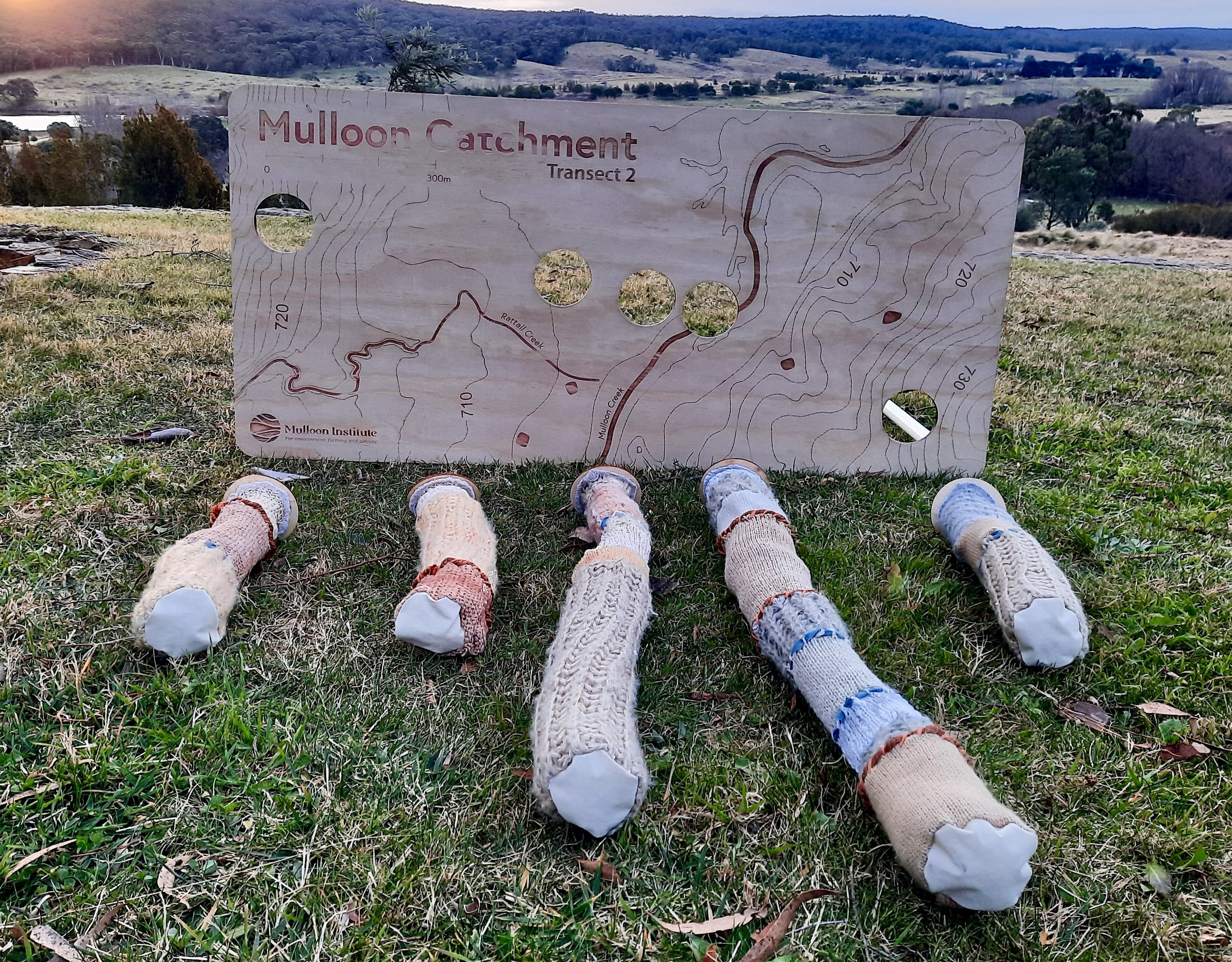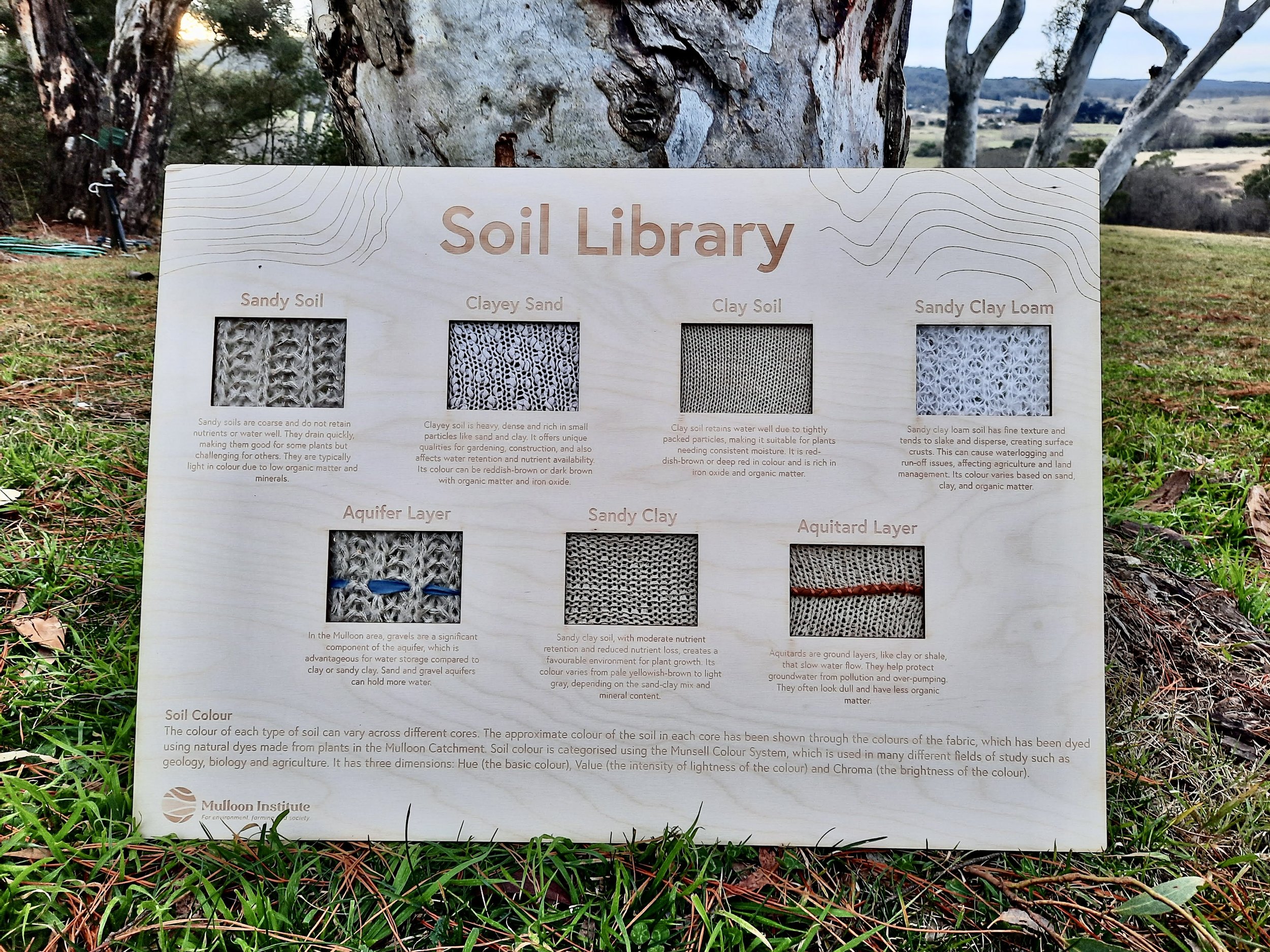
The descriptive library showing the variety of cores, using the Munsell Colour System.

Knitting Soil: a unique design project about the Mulloon floodplain. 


A hydrologist, a GIS specialist, a landscape planner and 6 designers walked into a bar… 

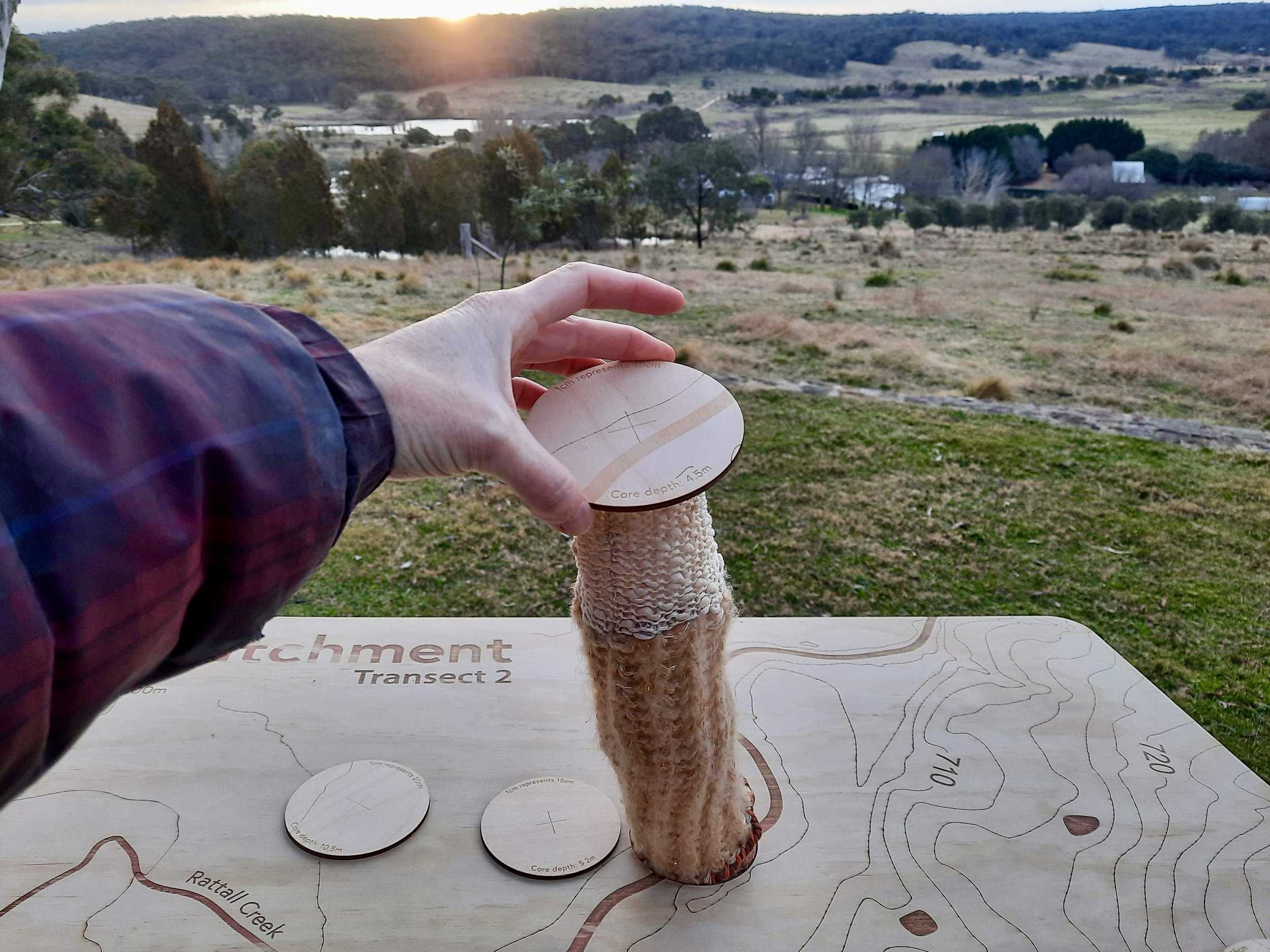
What is this gorgeous, tactile object? It’s a soil library and textile model illustrating the sedimentary layers of the Mulloon floodplain. It’s the outcome of our ongoing relationship with ANU School of Art & Design (thanks lecturer Naomi Hay!), and the creative brainwork of students Laura D’Arcy, Jiaming Zhao, Ankita Unnikrishnan, Mia Garland, Duncan Currie and Yasmina Muldoon. 

The Mulloon research team provided the students with data from four soil core samples ranging from 4.5 to 30 metres deep, and GIS information about the full monitoring transect. We also hosted the students at the farm, where they witnessed our research in action and gathered native plants, which they later used to dye the knitted fabrics. The originality of this crafty object has taken us all by surprise: what a way to share the story of floodplain geology, geomorphic history and water storage capacity! 

This project shows that when imaginative students are given the opportunity to engage with live scientific inquiry, beautiful things happen. It certainly breaks down barriers between disciplines, knowledge-holders and the public. The designers and artists we work with at Mulloon are opening the door to a much wider community participating in the science of land restoration and climate change adaptation – we love it.  

Thank you to the design team, and to lecturer Naomi Hay, for your inspiring contribution to our work at Mulloon Institute! 

(Click on the images below to see them in larger format)
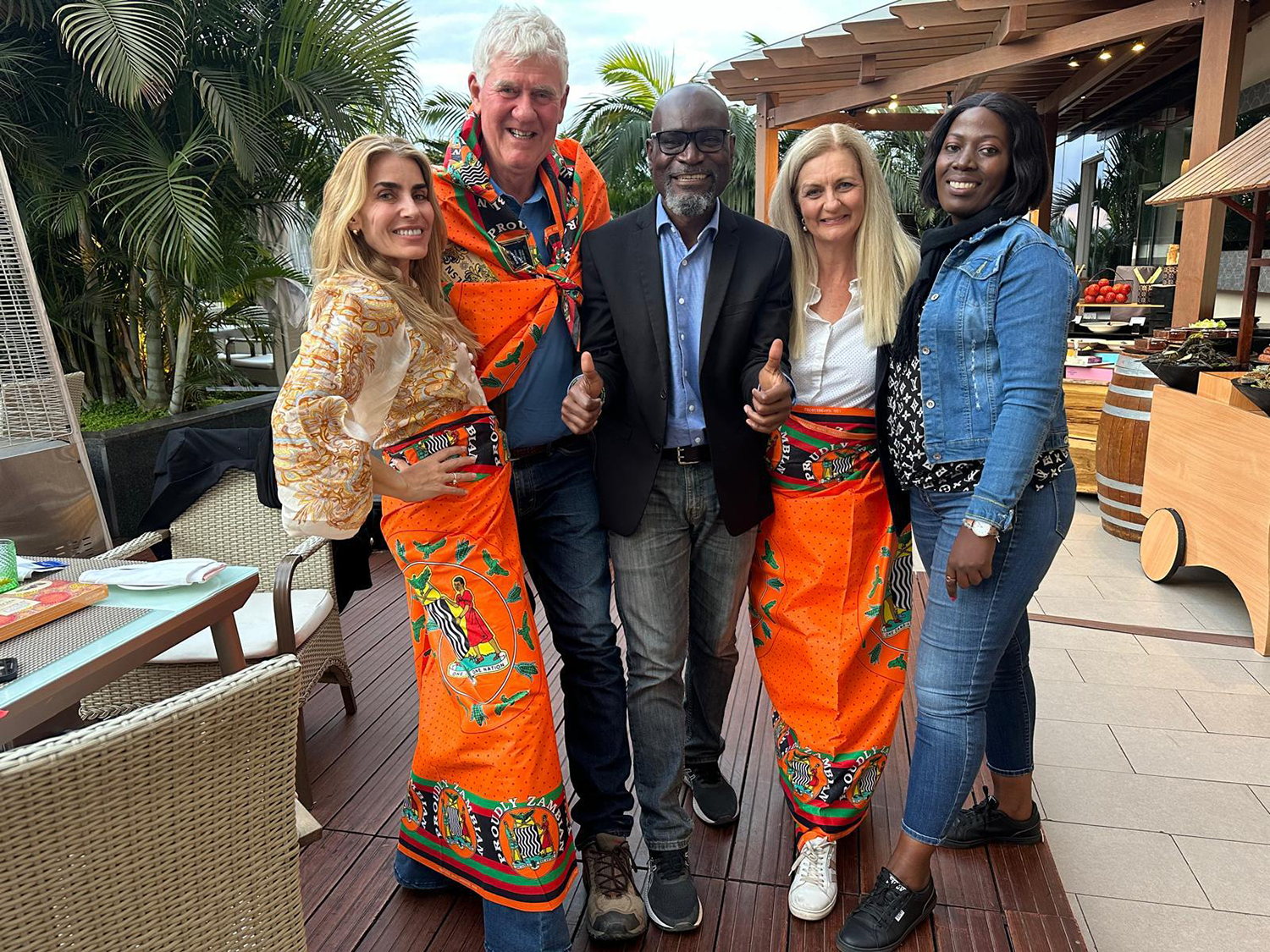
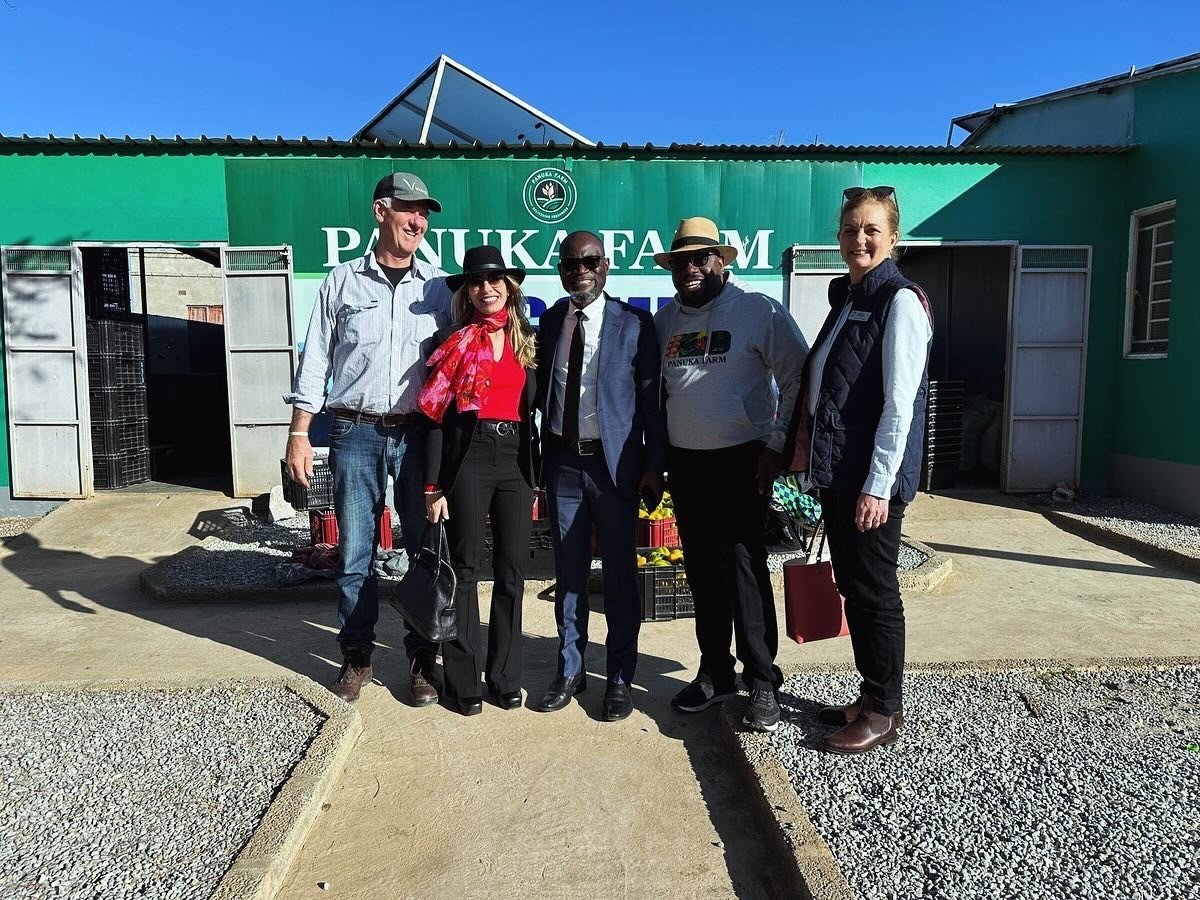
The Regenerative Agriculture and Livestock Delegation from left to right: Cristina Talacko, CEO of Coalition for Conservation, Deane Belfield, a regenerative farmer and Director of Regenerative Farmers Australia, His Excellency Ambassador Dr Elias Munshya, Carolyn Hall, CEO of Mulloon Institute and Miss Felistus.

PArt 1 of A blog series by CEO Carolyn Hall on her visit to Zambia in July, 2024.

Amazing things happen when you say yes. In June 2024 following agreeing to be on a webinar discussing landscape rehydration and regenerative agriculture for a drought-impacted Zambia, I was invited by the Coalition for Conservation to join a Regenerative Agriculture and Livestock Delegation (the delegation) to Zambia.  Zambia is a landlocked country in southern Africa experiencing the worst drought in 40 years. 

The impact of the drought is being felt across the region as Zambia is the second largest maize-producing country in Southern Africa after South Africa. No rains in February 2024 saw the maize crop across southern Zambia fail, leaving parts of the country in famine and a shortfall in maize exports to countries in the region. This brings a new perspective to food security when nursing mothers can no longer feed their babies.

Funded by the Bill and Melinda Gates Foundation, The delegation included His Excellency Ambassador Dr. Elias Munshya, High Commissioner for Zambia to Australia and New Zealand; Cristina Talacko, CEO of C4C; Carolyn Hall, CEO of the Mulloon Institute; and Deane Belfield, a regenerative farmer and Director of Regenerative Farmers Australia. Our mission was to share knowledge, engage with local stakeholders, and explore potential collaborative solutions to combat climate change’s impact on agriculture.

We met with Government Ministers and Departments, policymakers, a range of Non-Government Organisations, Indigenous Chiefs and farmers to strengthen relationships between Zambia and Australia and share knowledge about Australia’s experience in regenerative agriculture and landscape rehydration can contribute to Zambia’s food and water security in the face of the devastating drought.

What we discovered was a vibrant energetic country openly looking for knowledge and strategies that can contribute to the development of agriculture in Zambia in the face of climate change. Currently, agriculture is dominated by small-scale, subsistence farmers (largely women) producing maize, soybeans, wheat and vegetables on 1 or 2 hectare lots, using largely conventional methods based on costly synthetic inputs.  Their produce not only feeds their own families but is aggregated into a national maize crop for sale across Zambia and for export.  Education and capacity building through demonstration sites focused on building soil health and improved landscape-scale water management will contribute to climate-resilient agriculture in Zambia.  

Meeting with Hon. John Mulongoti, Permanent Secretary for Agriculture, who detailed the Ministry’s drought response and current challenges.

PArt 2 of A blog series by CEO Carolyn Hall on her visit to Zambia in July, 2024.

Meeting with the Ministry for Agriculture

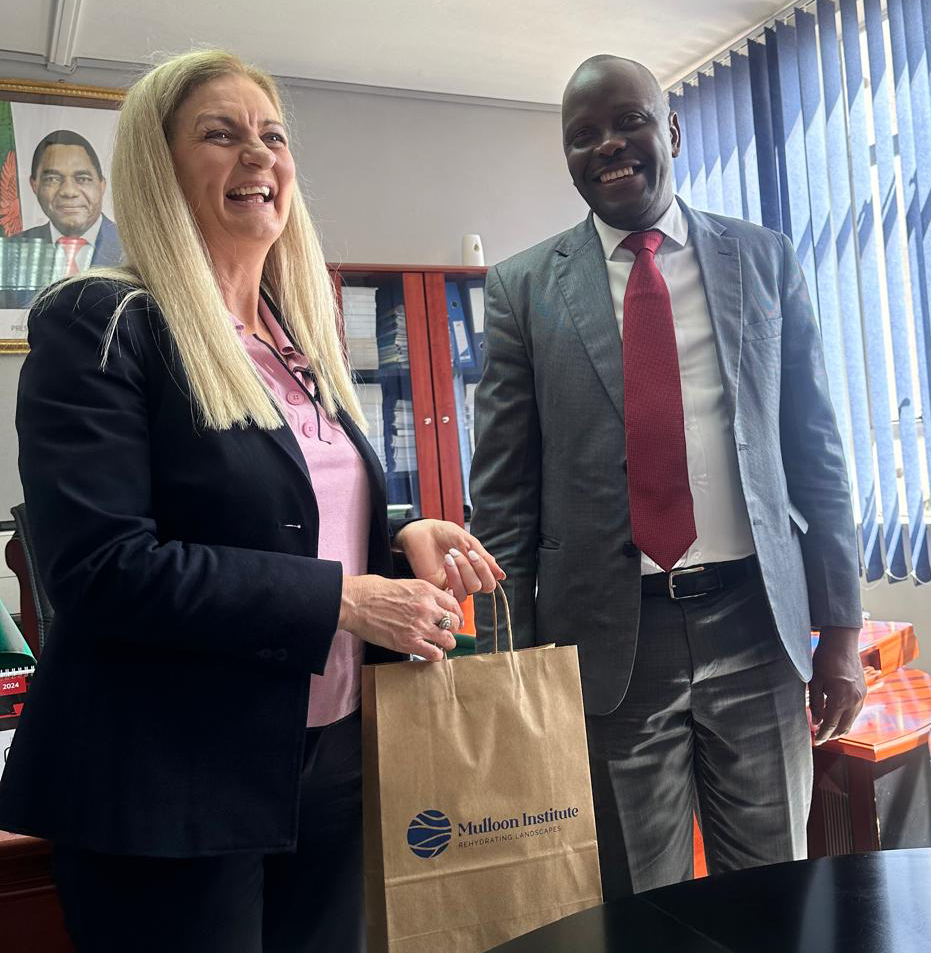
We met with Hon. John Mulongoti, Permanent Secretary for Agriculture, who detailed the Ministry’s drought response and current challenges. Discussions included policies to improve water catchment, landscape restoration, regenerative practices, and other sustainable agriculture techniques to drought-proof dry regions. We also explored soil carbon capture and potential income from natural capital and carbon offsets.

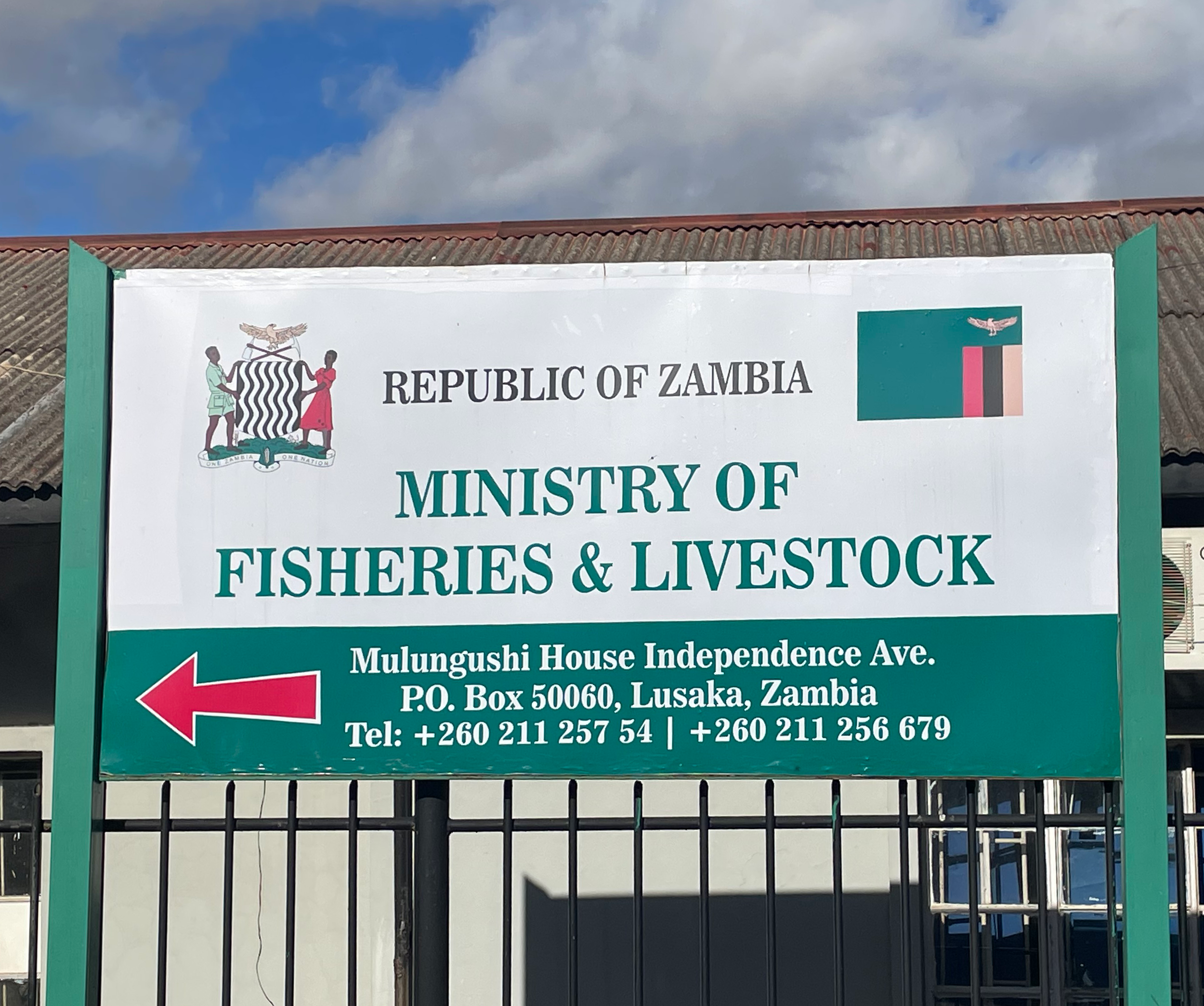
Meeting with the Ministry for Livestock and Fisheries

Discussions with Minister for Livestock and Fisheries The Hon Makozo Chikote and his technical team focused on the interventions and aid offered by the government to mitigate the impacts of the severe drought and its challenges. The Zambian government aims to increase cattle production from 4.5 million to 7 million by 2027. We identified opportunities for collaboration in sustainable agriculture, livestock management and drought resilience.

Supporting SMEs in agriculture

SME’s in Zambia, like Australia make up over 90% of the economy. During our meeting with Ms. Subeta K. Mutelo, Permanent Secretary of the Ministry of Small Medium Enterprises Development, she detailed initiatives supporting small farmers. These include loans for equipment, improved supermarket access, and market entry support. Despite these efforts, remote farmers face challenges. We also explored how Australian agencies assist with exports to draw parallels and insights for Zambia’s agricultural sector.

Meeting with The Honorable Princess Kasune Zulu, Minister for Justice

We had the privilege of meeting Hon Princess Kasune Zulu, the Zambian Minister for Justice, to explore the intersection of conservation and environmental protection with social justice. The Princess is internationally recognised for her work on climate change and expressed her admiration for Australian farmers, highlighting her personal linkages with Australia.

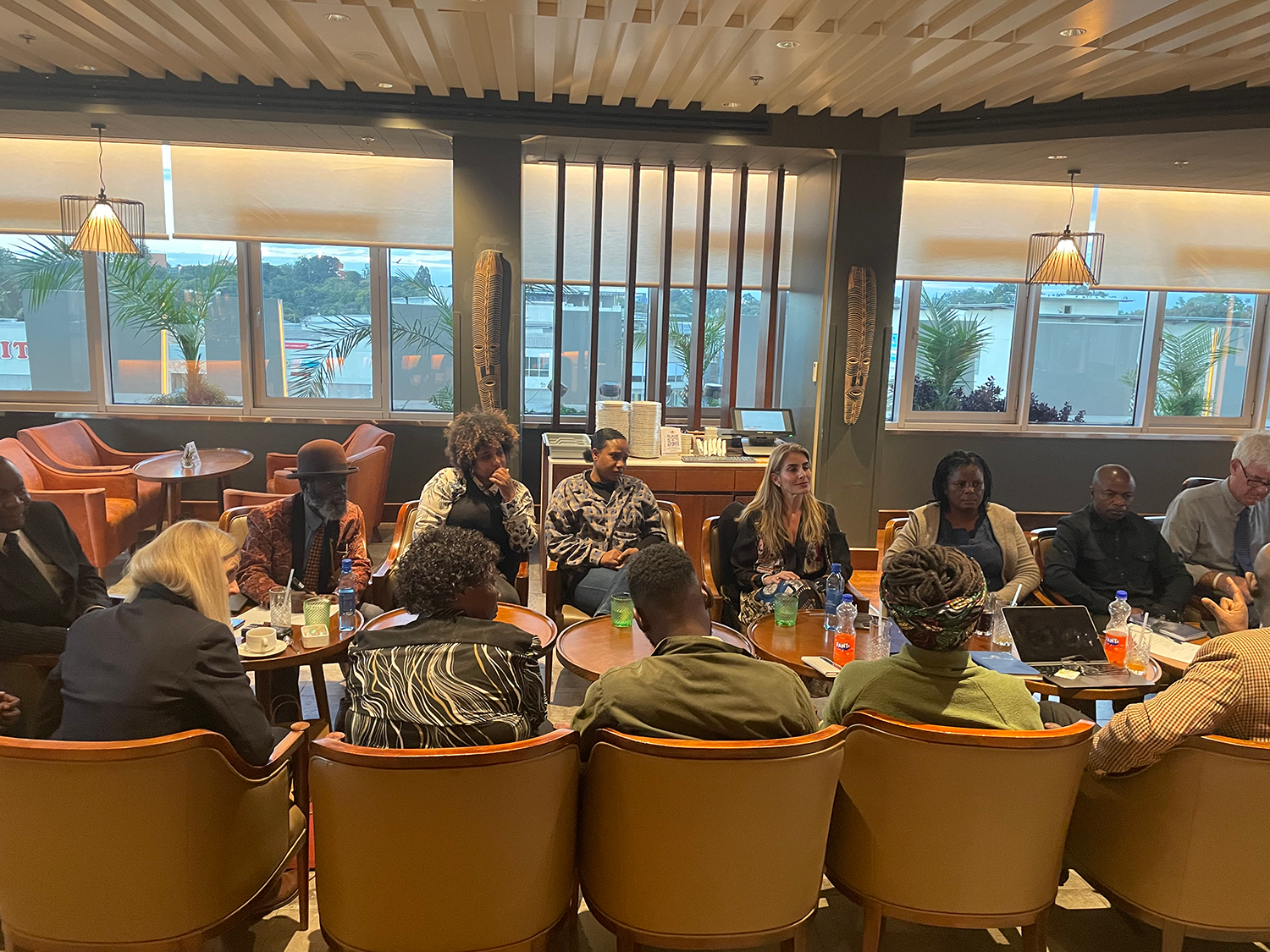
Key international stakeholders at the strategic workshop.

PART 3 IN A BLOG SERIES BY CEO CAROLYN HALL ON HER VISIT TO ZAMBIA IN JULY, 2024.

Strategic workshop with stakeholders

As part of our visit, we hosted a strategic workshop uniting 30 Zambian and international key stakeholders, including Sylvester Kalinge from iDE Zambia, Peter Lungu from Medeem, His Royal Highness Chief Ishima Sanken’I VI, Phelly Mubila Mooga from the Ministry of Green Economy and Environment, and distinguished Zambian author and social activist Mulenga Kapwepwe, who was instrumental in organizing the event. Representatives from local NGOs and government agencies were also present.

The workshop focused on:

  • Demonstration Farm Development: Establishing a demonstration farm to showcase regenerative agricultural practices.

  • Policy Exchange: Sharing effective policy models to enhance agricultural productivity and sustainability.

  • Boosting Production: Strategies to increase production in small mixed farming enterprises.

  • Tackling Challenges: Addressing climate change, drought, water availability, power supply, and land tenure issues.


Engaging with environmental youth groups

The strategic workshop included a meeting with leaders of various environmental youth groups, including the Agents of Change Foundation, the Young Emerging Farmers Initiative, and the Youth Project. This meeting focused on hearing from young leaders about their climate change concerns and exploring effective models for incorporating youth voices into policymaking and advocacy efforts.  The leaders knew of the Mulloon Institute and we discussed using the communities of practice model for education and capacity building for regenerative agriculture and climate resilience.

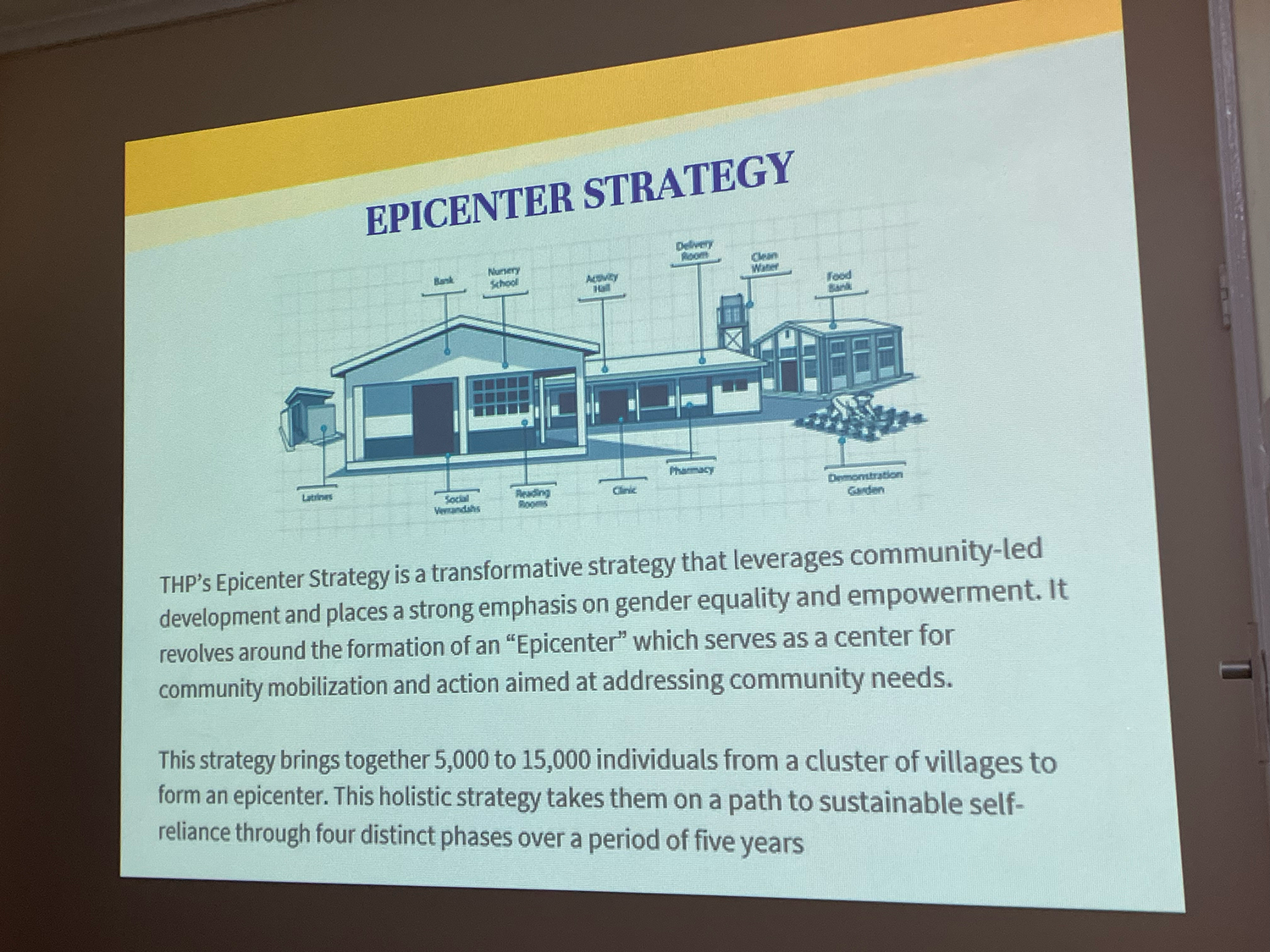
Exploring collaboration with The Hunger Project’s Epicenter Strategy

Meeting with The Hunger Project team, we learned about their work across nine African countries using the Epicenter Strategy, which empowers communities by promoting self-reliance through local development. Discussions included potential collaborations in regenerative agriculture and Australian farming practices utilising their existing community farms.

PART 4 IN A BLOG SERIES BY CEO CAROLYN HALL ON HER VISIT TO ZAMBIA IN JULY, 2024.

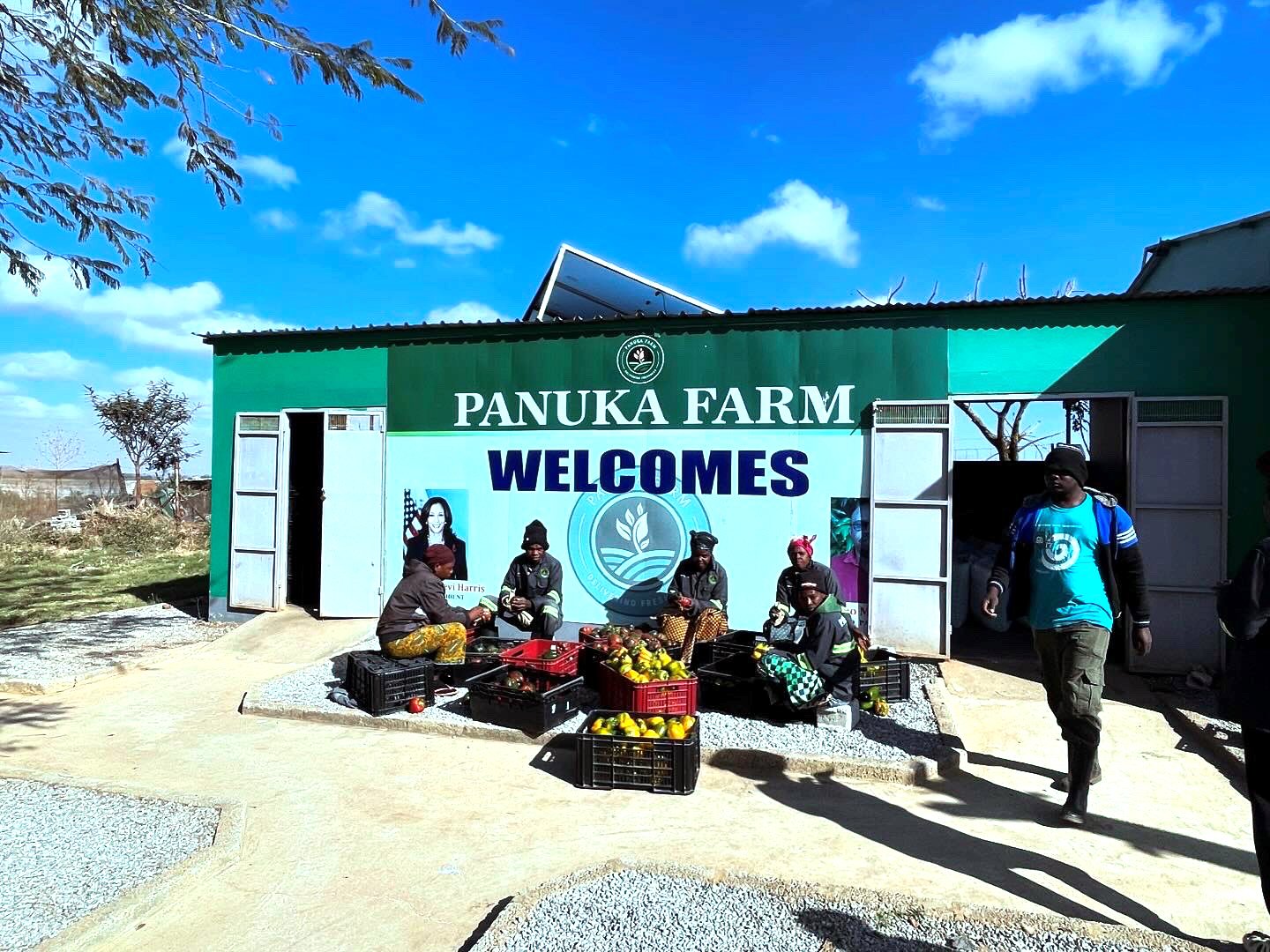
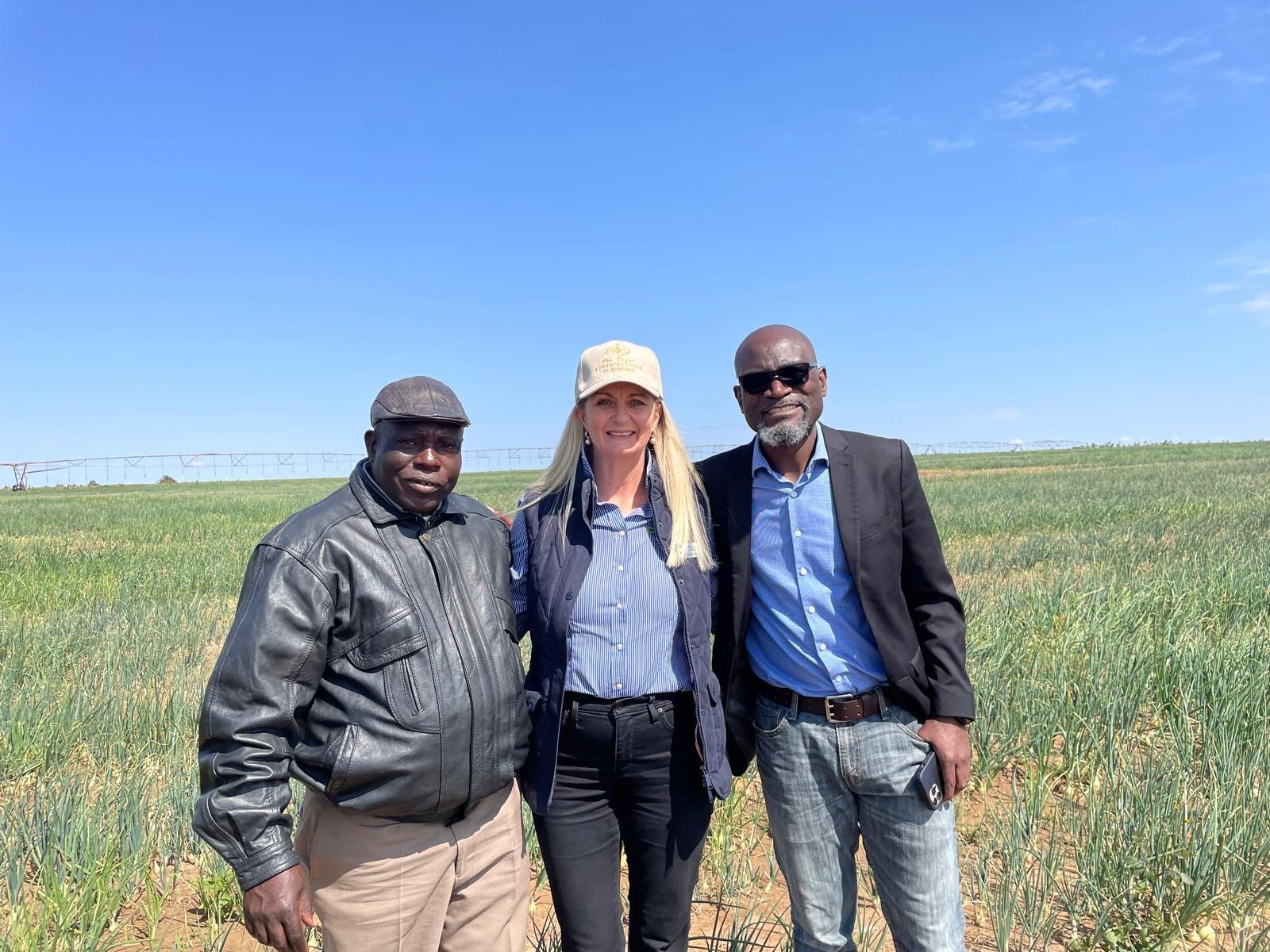
Touring Panuka Farm (pictured above)

We saw the emerging development of high-value horticultural crops at Panuka Farm in Chibombo, driven by CEO, Bruno Mweemba. This innovative farming operation is also delivering business education to farmers, reflecting Brunbo’s extensive qualifications and experience in finance and governance. We discussed positioning Panuka as a demonstration farm to set an example for regional farmers. Panuka’s partners include Shoprite and Pick n Pay, and their solar-powered irrigation system mitigates grid energy reliance and load-shedding disruptions.

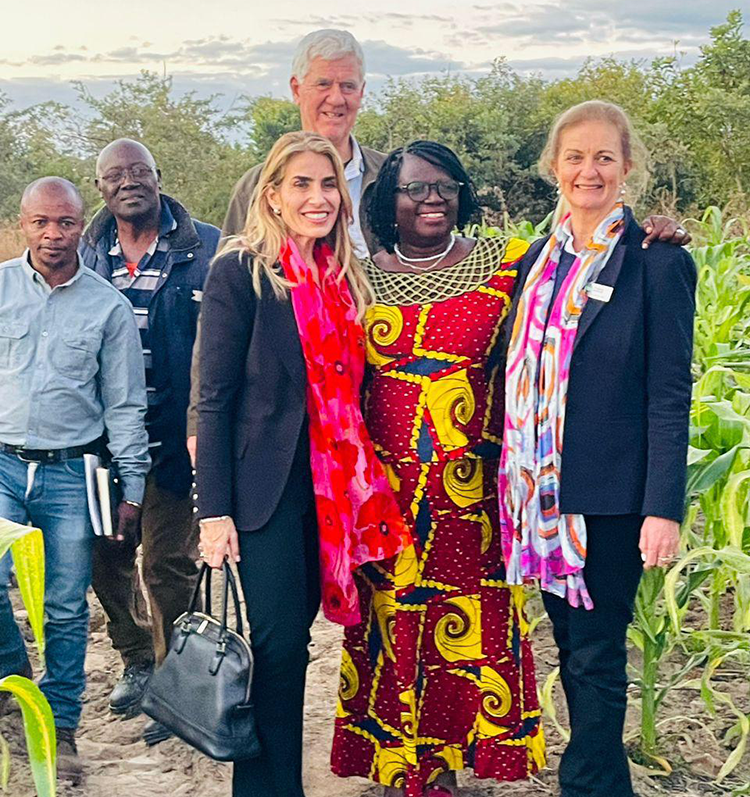
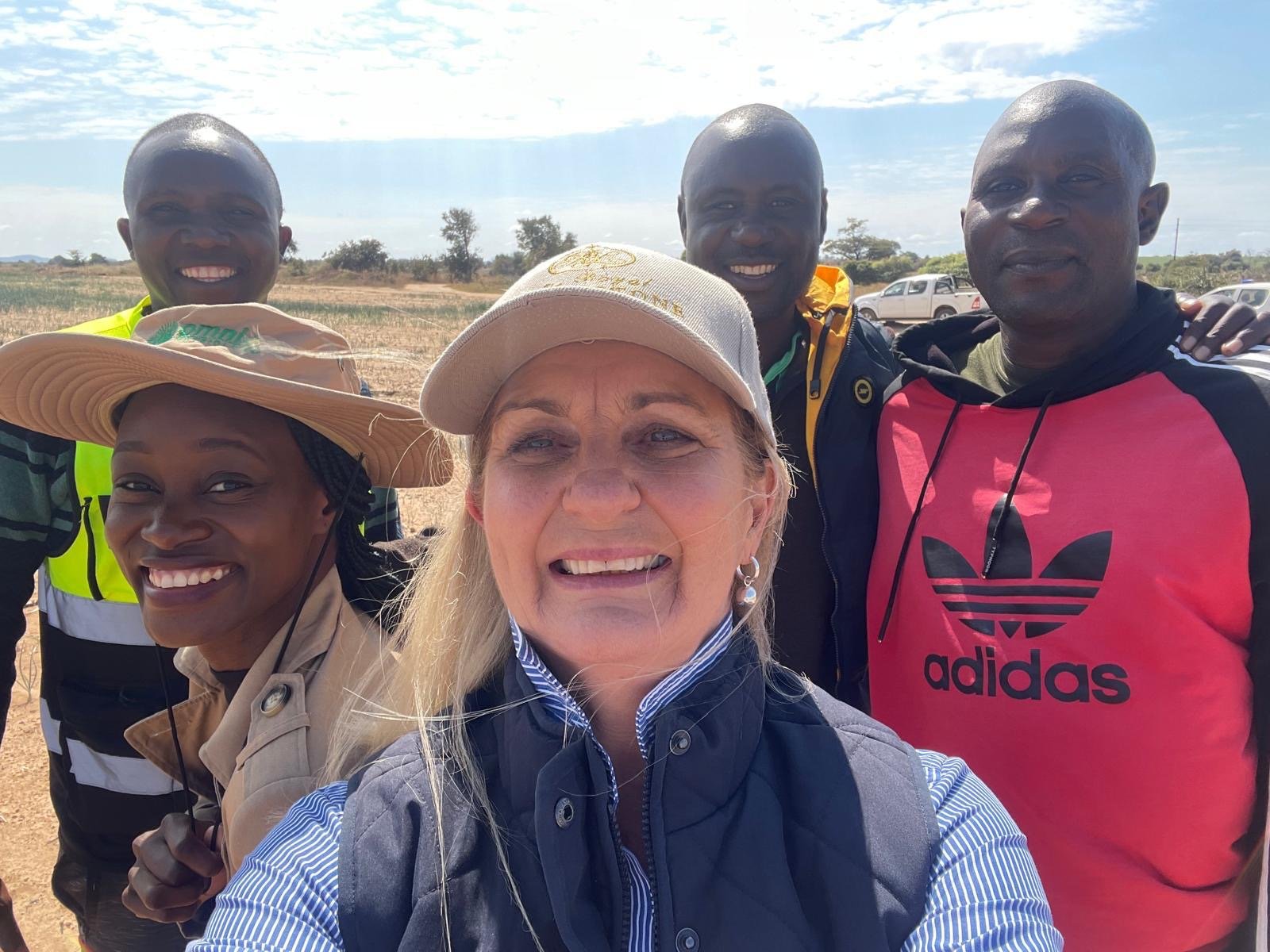
We also witnessed firsthand a fully diversified small holding at EllySam Farms in Chongwe with maize, vegetables and small-scale aquaculture.  CEO Elly Siakasasa Mtaja is grappling with the devastating drought that has resulted in a failed maize crop, significant financial losses and drained working capital. 

Touring Elly Sam Farms in Chongwe (pictured above)

We also witnessed firsthand a fully diversified small holding at EllySam Farms in Chongwe with maize, vegetables and small-scale aquaculture.  CEO Elly Siakasasa Mtaja is grappling with the devastating drought that has resulted in a failed maize crop, significant financial losses and drained working capital. 

Agriculture and the Zambia Correctional Services (pictured above)

We were honoured to meet Director General Fredrick Chilukutu at the Zambia Correctional Centre, which manages over 38 farms producing approximately 3,500 tonnes of maize annually. This initiative rehabilitates inmates by teaching them agricultural practices. We visited one of their farms in Mwomboshi and discussed agricultural practices, soil health and the costs of synthetic inputs.

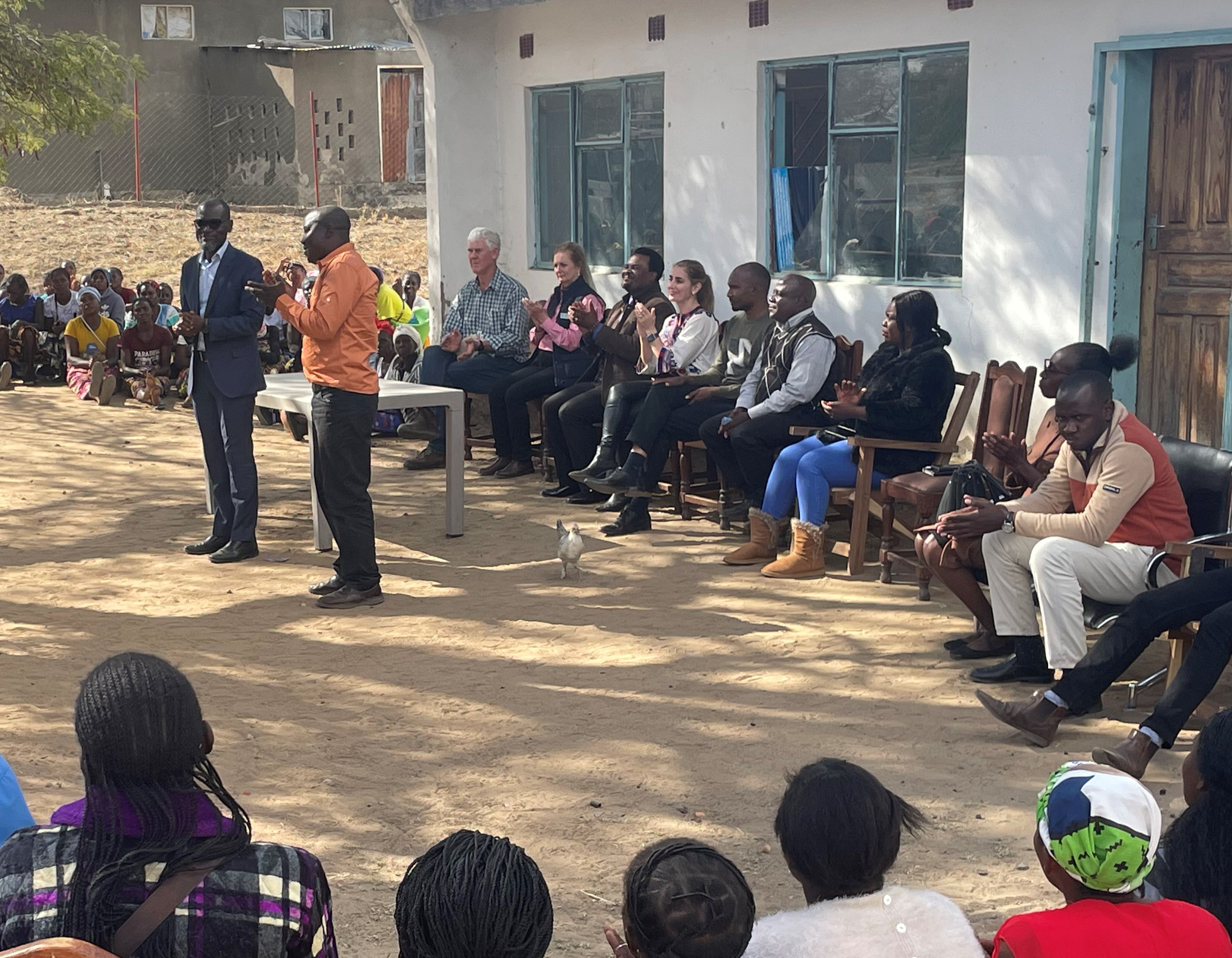
Community gathering in Sikaunswe (pictured above)

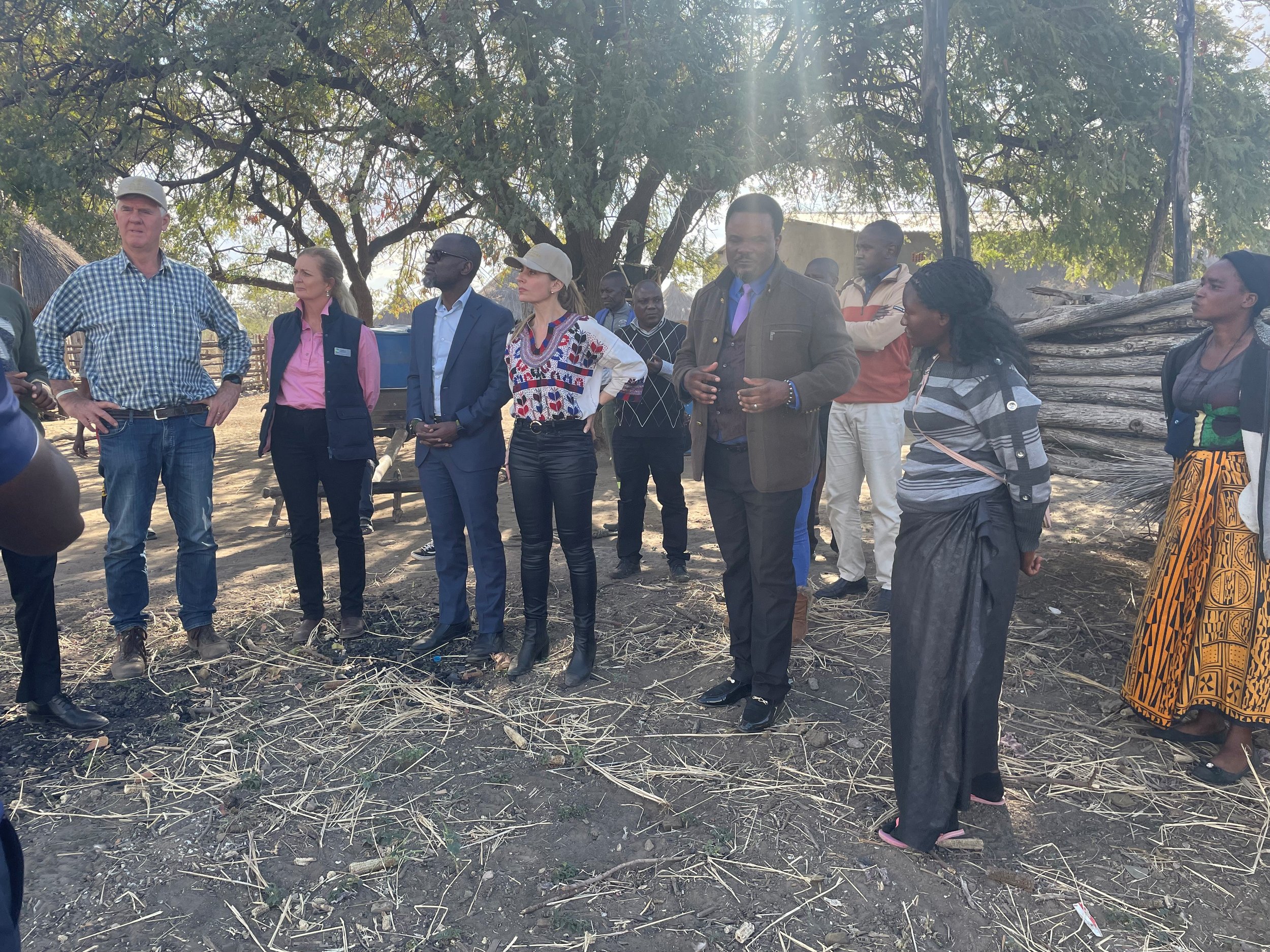
Our delegation joined a large gathering of community members and farmers in the drought-affected Sikaunswe area in the Kazungula District.  This community has been devastated by the drought losing crops and livestock due to water scarcity. The community warmly welcomed the delegation and was eager to learn from Australia’s experience with drought.

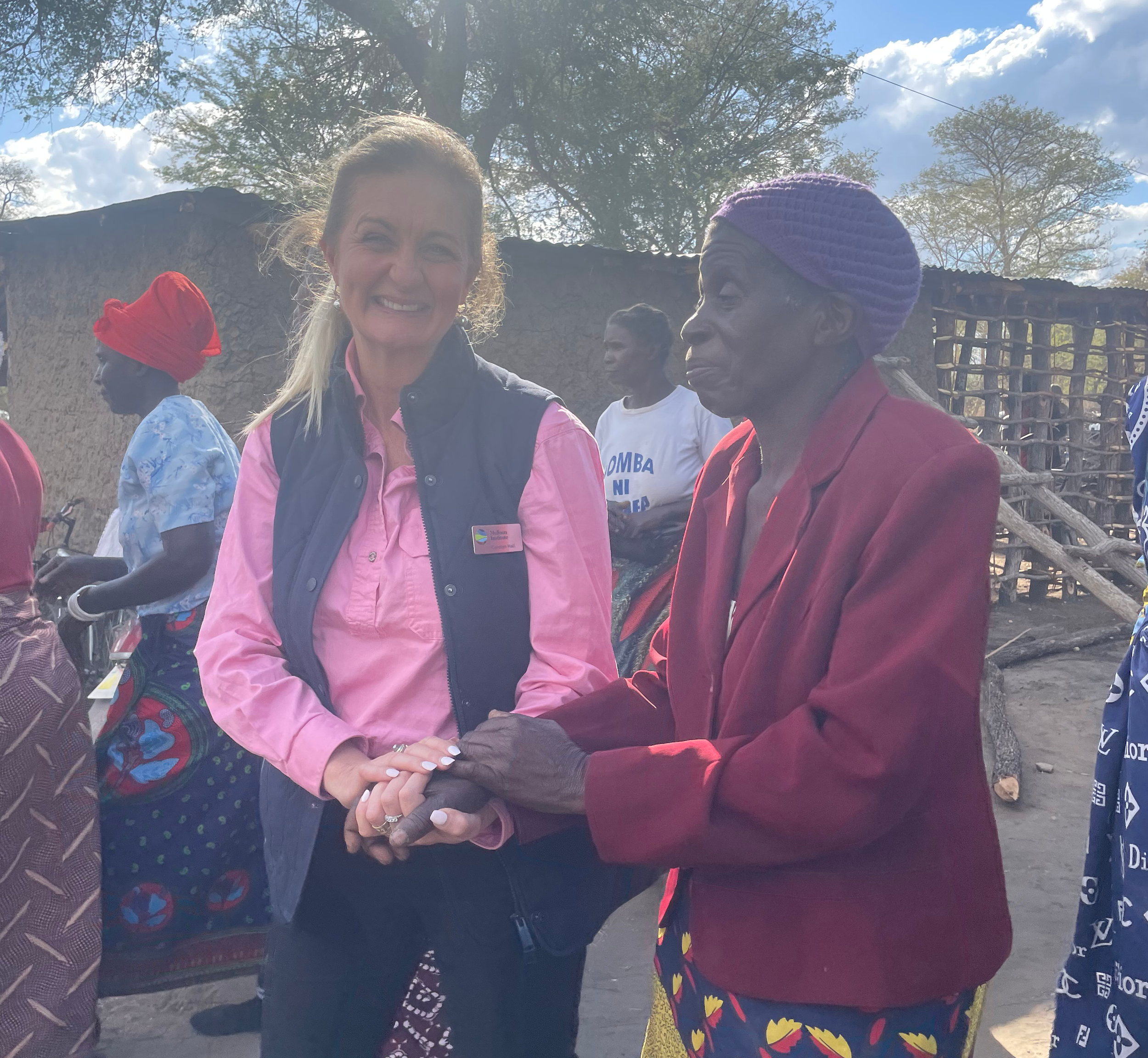
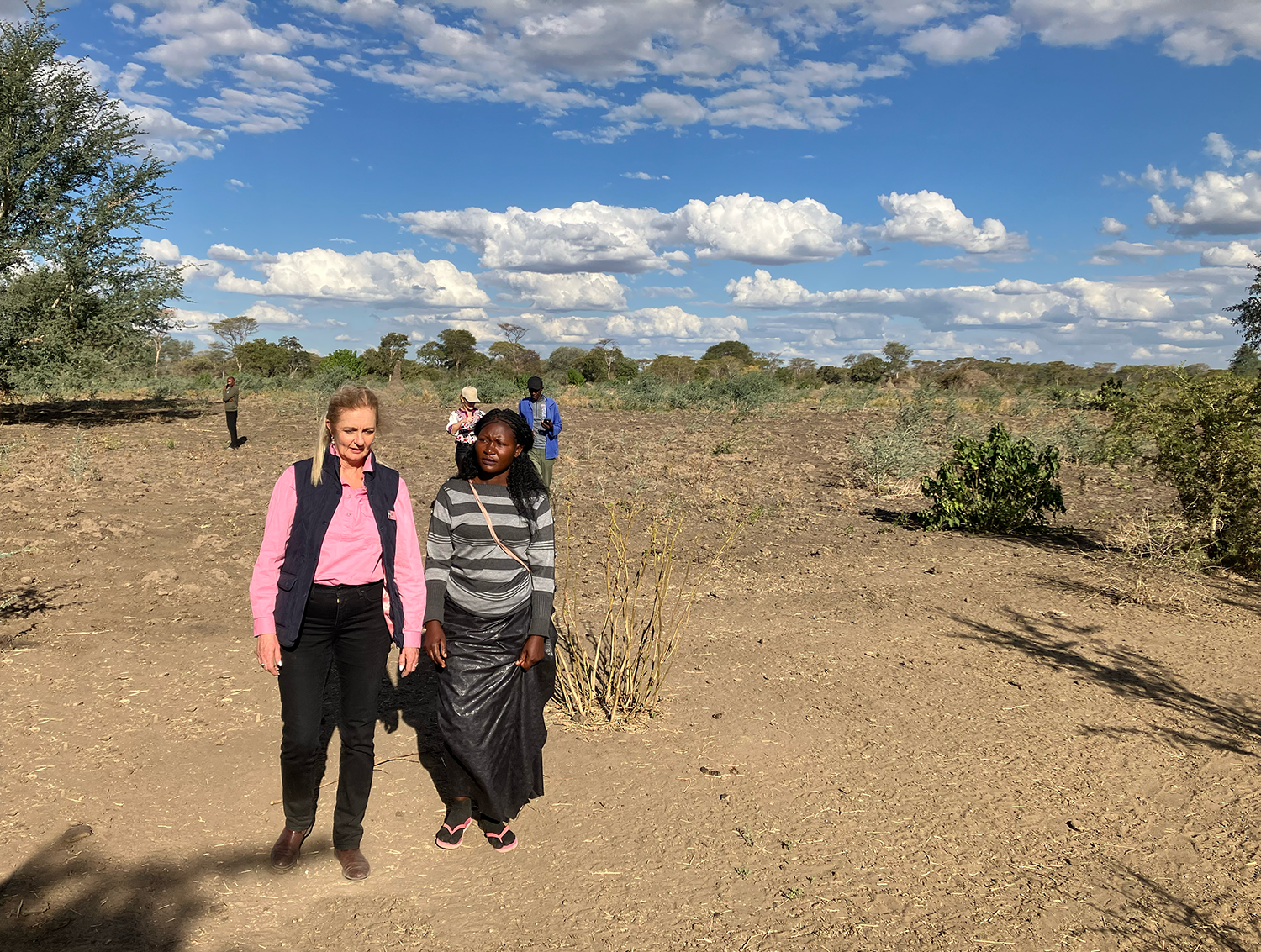
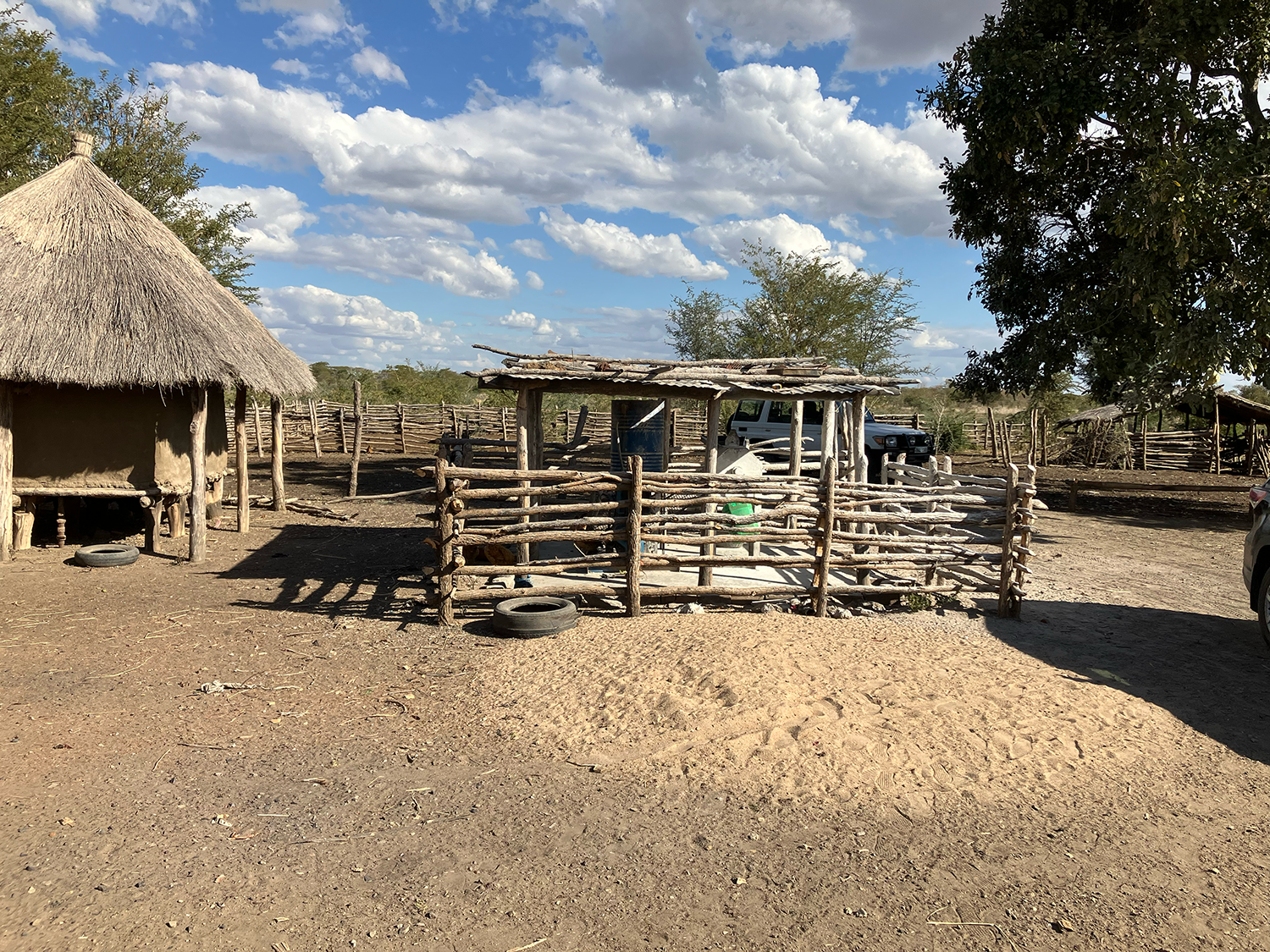
Carolyn Hall with Zambian farmer Teifla on her drought-stricken land.

Part 5 in A blog series by CEO Carolyn Hall on her visit to Zambia in July, 2024.

Our visit to Kazungula included a very sobering tour of Teifla’s farm and learning about her journey through the drought.

Production

Teifla historically has enjoyed successful harvests from her 7-hectare plot. Rotating maize, soybeans, groundnuts and sorghum. This has involved the application of costly synthetic herbicides and fertilisers to maintain production. The result has been the development of a hard crust on the cleared, tilled soil, no soil structure and little water-holding capacity.

Climate extremes

Teifla recounted her recent experience. Initially, heavy rains led to flooding, which has been followed by an extended period of drought. This erratic weather pattern has made farming increasingly challenging, and despite spending the last of her money on more fertilizer the rains did not come, and her crops have failed. This has left her with nothing, dependent on minimal assistance from the government.   

Looking forward

Despite the challenges Teifla has faced she remains determined to rebuild. She will replant her crops and hopes to restore her farm’s productivity. Her resilience and perseverance are remarkable. 

Soil health and water management for climate resilience

Landscape rehydration infrastructure that allows Teifla to benefit from the rain when it does come and holds more of it in the soil carbon sponge will provide resilience to future droughts. Education and capacity building around soil health and how cover crops and subsequent microbiology in the soil can improve soil condition and structure and enhance water holding capacity will provide alternatives to the current cycle of costly synthetic inputs.

Demonstration and knowledge sharing   

Regenerative farming methods are largely unknown to Teifla. The devastating drought has left her with nothing. A demonstration site showcasing landscape rehydration infrastructure and regenerative farming techniques can inspire Teifla to try different approaches that can contribute to drought resilience.

Teifla (second from right ) welcoming the Delegation, the District Commissioner and the Ambassador to her farm

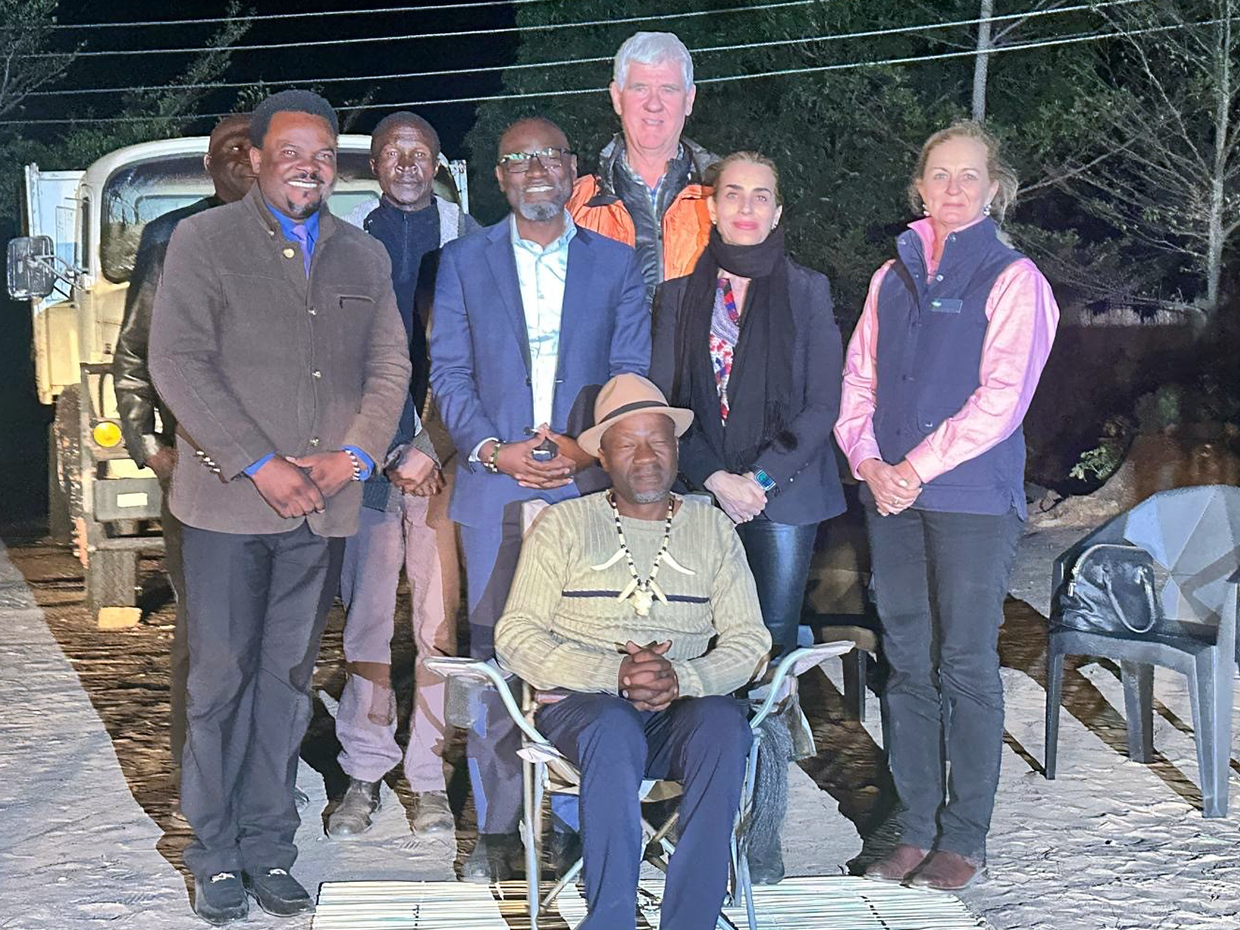
The Delegation and their hosts meet with the local Chief at a ceremony in Kazungula.

PART 6 IN A blog series by CEO Carolyn Hall on her visit to Zambia in July, 2024.

Our visit to Kazungula was made possible by His Excellency Dr Elias Munshya, whose efforts paid off. We were warmly welcomed by the District Commissioner Elias Samibila and his team at his office. We were treated as honoured guests and we received a thorough briefing from the Commissioner’s Officers that left a lasting impression and ensured our commitment to knowledge exchange and support for the people of this district.

Kazungula district

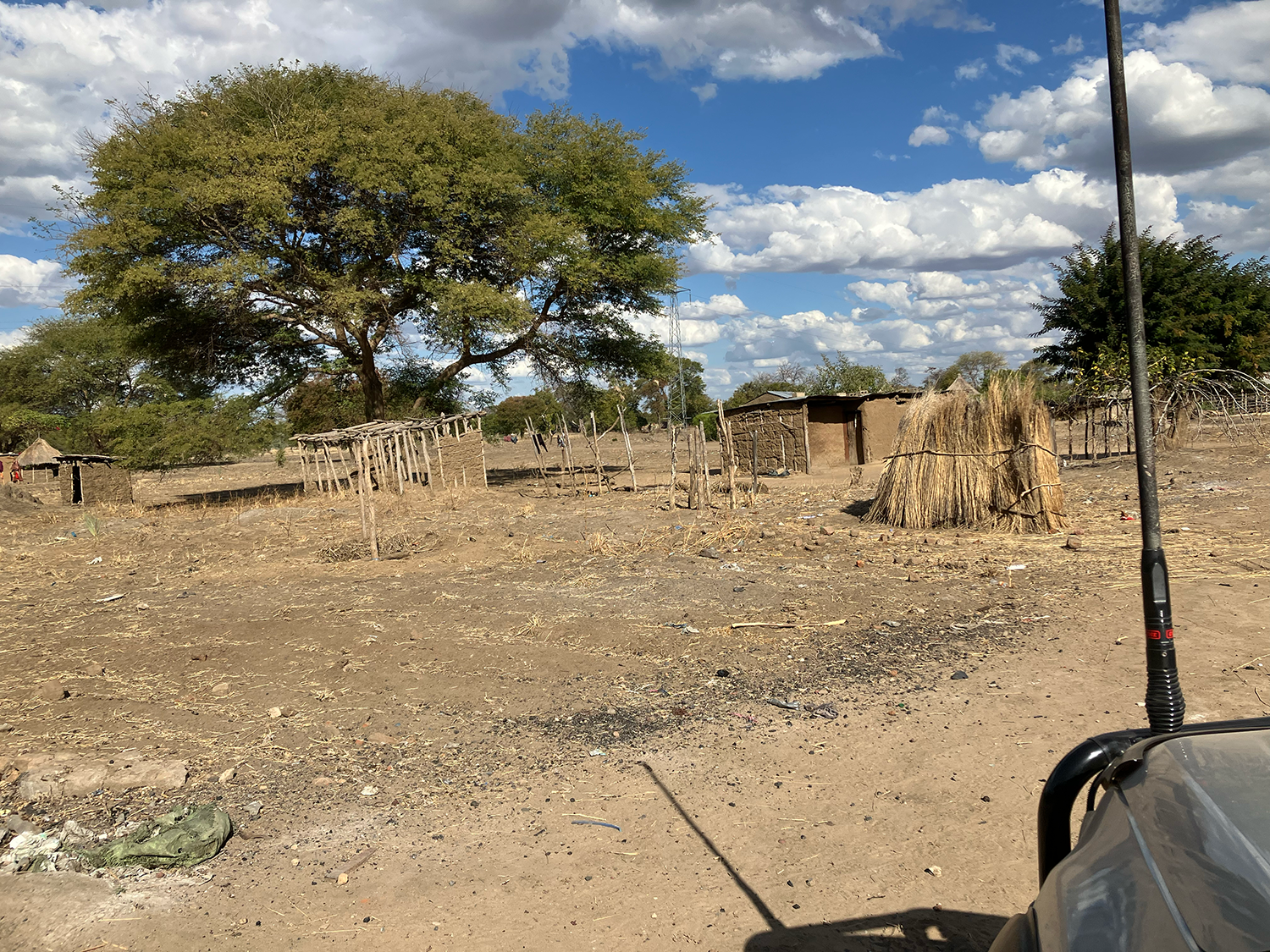
Kazungula is an agricultural district, predominantly made up of small and medium farmers who practice mixed farming with both crops and livestock. Over 70% of income comes from agriculture and that is predominantly rainfed. Kazangula has been the worst hit district by the drought, with this season over 70,000 metric tonnes of maize predicted and over 90% of that crop lost to the drought conditions.  Irrigation and crop diversification are seen as a key response to the drought. 

Livestock and crops

Livestock and crops are linked in Kazungula, almost all maize produced and livestock in the district have been impacted by drought. Overgrazing has put livestock at risk of malnutrition and diseases, with the soil-borne disease anthrax a major impact of overgrazing along with tick-borne disease that impacts livestock and humans. Long distances to water and interaction with wildlife also impact on productivity of the animals. 

Drought impacts exacerbated

Drought issues have been exacerbated by understaffing in critical government positions, staff undertaking multiple roles and a lack of veterinary officers. Transport challenges are also present that restrict the movement of key staff around Kazungula. The Ministry is taking action with increased veterinary services.  

Drought impacts human health

The drought has had major impacts on human health in the Kazungula district.  The district is seeing a concentration of famine even in the urban areas. 

The Department of health is seeing a change in trends in disease with underweight in under 5 year olds and nursing mothers unable to feed their babies as their milk supply has vanished due to malnutrition.  The right nutrition in the first 1000 days of life from the start of pregnancy to the baby’s second birthday influences survival rates and his or her ability to grow and learn.

The impacts on the population’s mental health are also significant when they cannot afford basic supplies. Treatment for HIV is not occurring, ironically the drugs are there but the food supplement is crucial to successful treatment.

Frontline Officers recognised

The important role of the frontline officers in delivering services and developing partnerships that are important are readily acknowledged by the Government. Frontline Officers are recognised “we see you, see your efforts, you are our true heroes”.

A shared future

Australia and Zambia although separated by long distances share many challenges, including developing sustainable agricultural sectors in the face of drought and climate change. Developing relationships that foster trust and collaboration are crucial for understanding and addressing shared challenges in the global village. 

The effects of drought add to the hardship when farming in Kazunlgula.

Many hands making light of a heavy job!

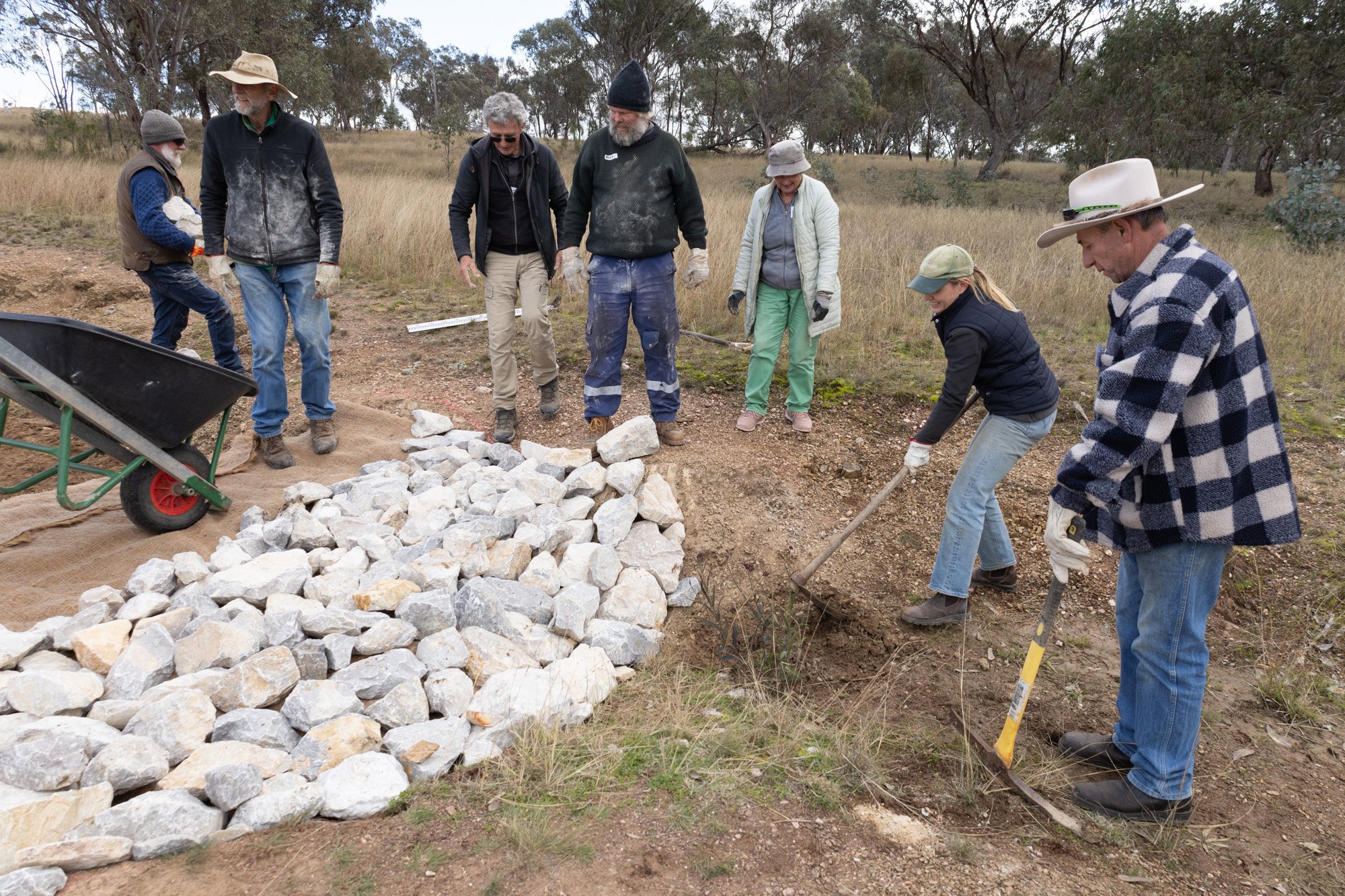
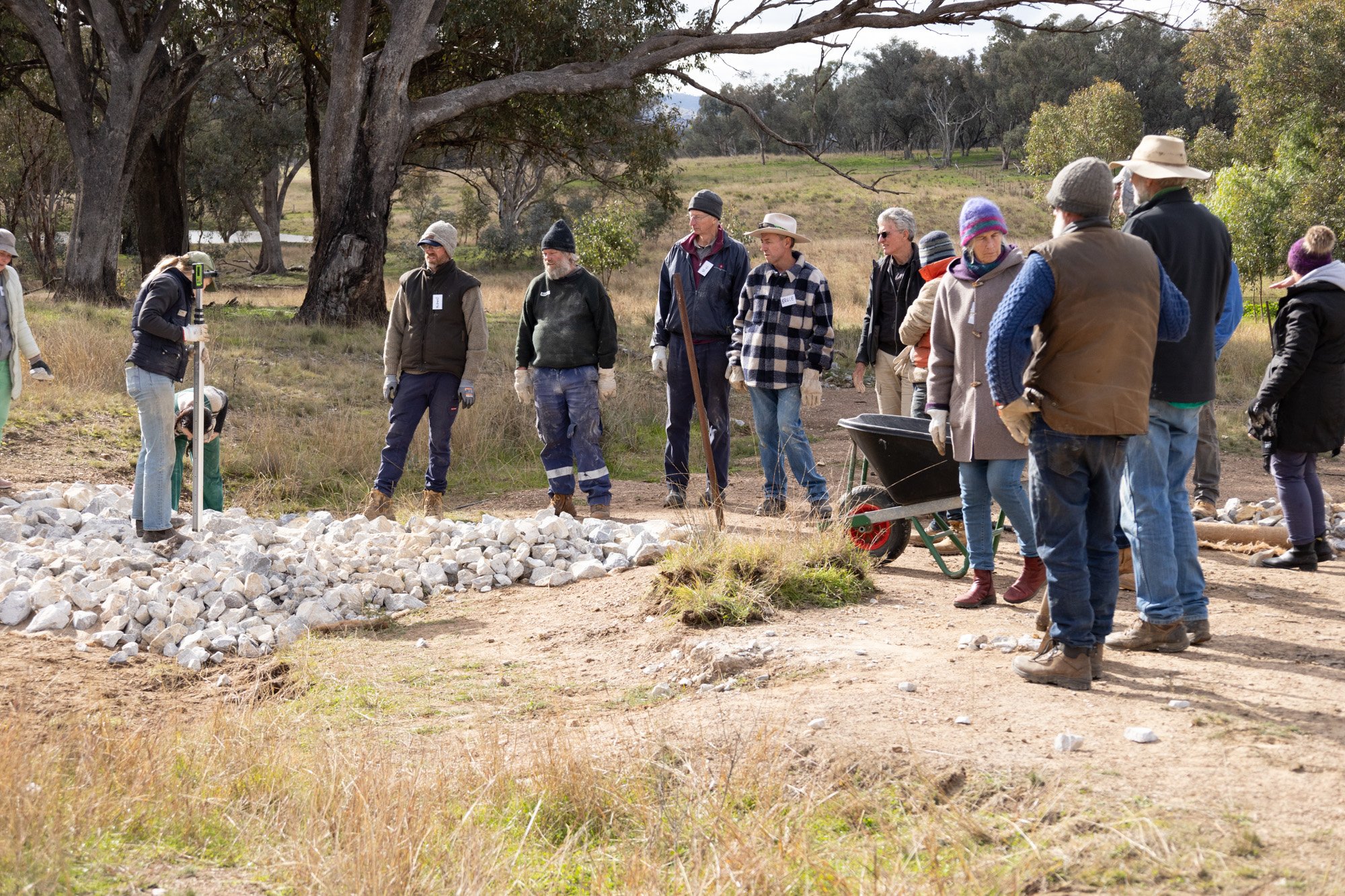
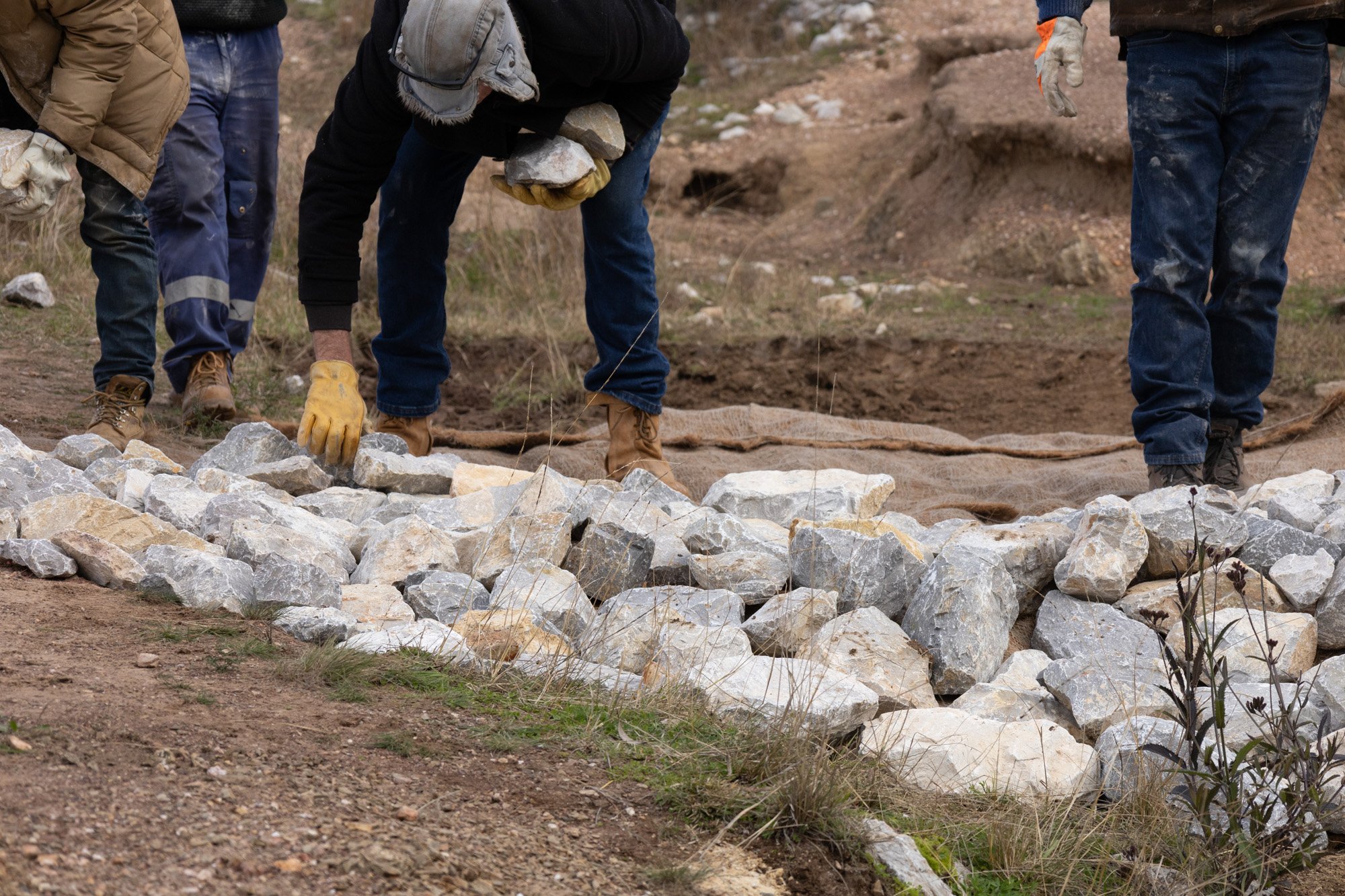
Ten years ago, on a gully erosion site at Coffin Creek near Mudgee, a project with an inspired title ‘Sticks and Stones’ began. Twenty volunteers led by restoration practitioners Craig Sponholtz (visiting from the US) and Cam Wilson built a range of structures with rocks and timber including zuni bowls, rock weirs and splash-downs. In 2024, Watershed Landcare extended an invitation to Mulloon to lead a follow-up project day. There was much that could be learnt from this historic site, and an opportunity to build more small structures to address ongoing issues. Mulloon’s Erin Healy and Laura Fisher grabbed at the chance, with over 20 community members joining them.  

It was a rewarding and enlightening day for everyone, with a great blend of knowledge-sharing, detective work and creative construction! Bruce Christie and Hunter White, who were part of the original workshop, were there to share their observations and memories as well.  

As Maddison O’Brien, Watershed Landcare Coordinator, writes in her beautiful blog post about the day: 

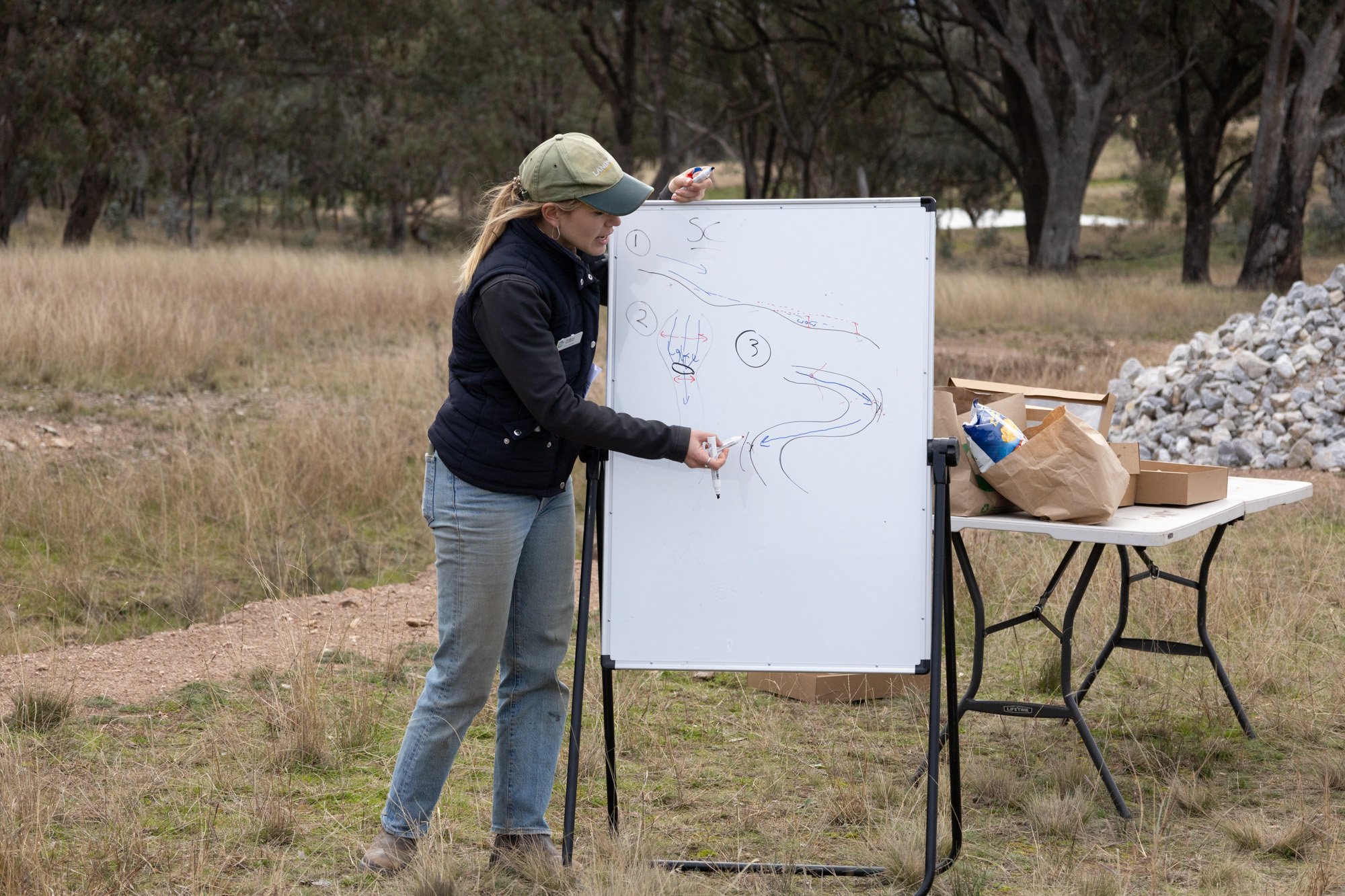
“After a quick planning session, the team set to work on a small rock weir and three rock flumes to treat headcuts, all designed to armour bare soil, slow water and catch sediment. We focused our efforts on one large headcut and in no time the site was transformed, the tractor made light work of moving the rocks where we needed them! Erin directed the team as we dug out and stacked rocks, coir matting and soil, imparting the tips, tools and details that could make or break such a project. 

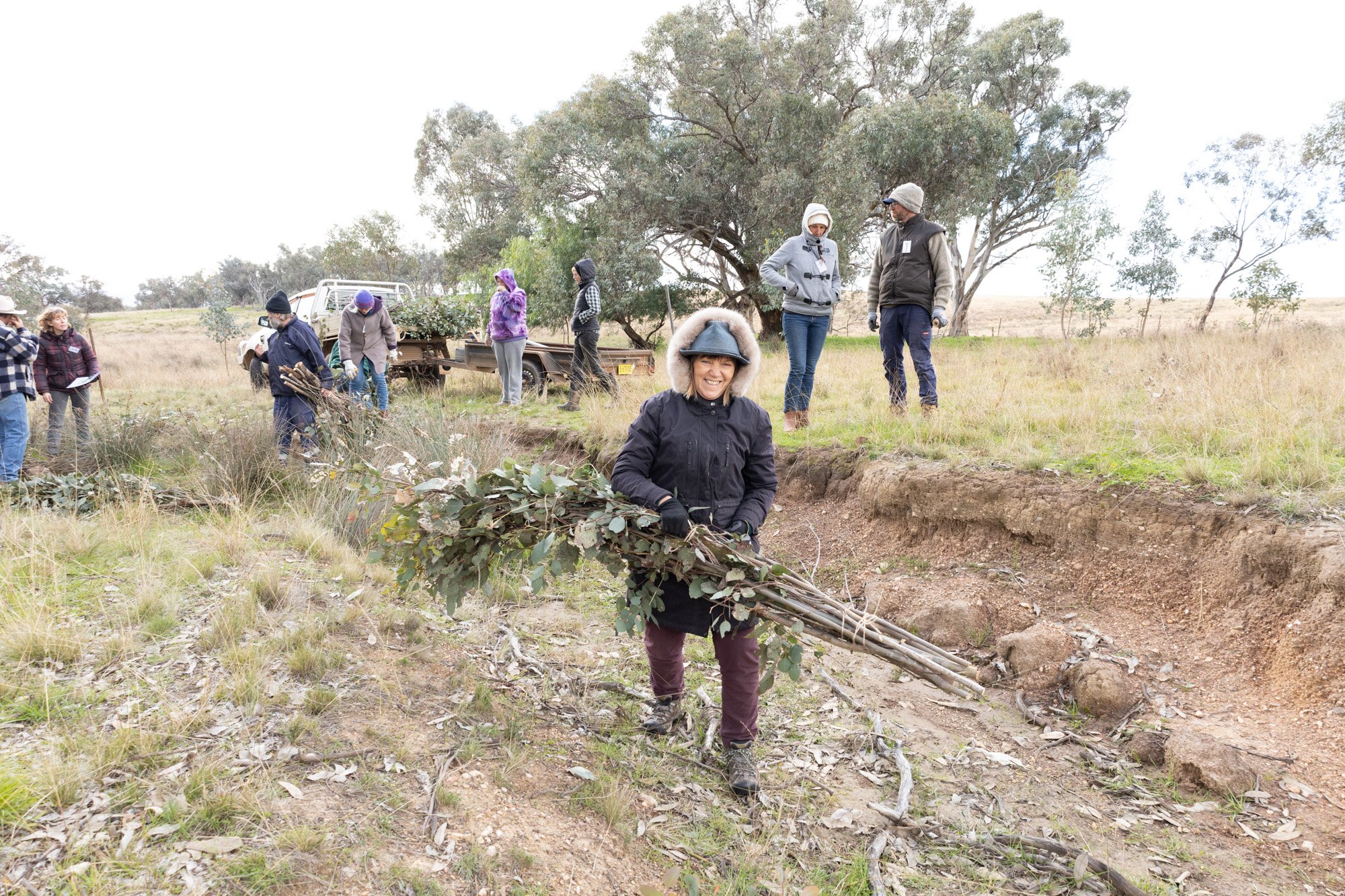
Meanwhile, another team of volunteers worked with Laura making brush packs and pin weirs out of collected plant saplings… The structures act to slow water and trap sediment before it gets flushed away, this also allows plants to start to germinate and colonise where there once was bare ground.” 


The Mulloon team are thrilled to be collaborating with Watershed Landcare and affiliated community in the Central West on many fronts these days. Thank you to Maddison, Bruce, Hunter, Cheryl Neilsen and Lewis Statham for making this such a fun and smoothly run event where so much was achieved.  

To see original videos of the 2013 project, see these links:  

https://youtu.be/vifFoFSB6-k?si=MgNh-qsMx26Veraj 

https://youtu.be/r2c731BFGss?si=oXpAIHBURXQNrPFC  

https://youtu.be/9VgosAZOKSU?si=XklyyDciz6A9KnhA  

Erin working through the planning process

 This project was made possible thanks to Glencore, their community support fund and the NSW Environmental Trust. 

Volunteers creating brush packs with Laura

Volunteers creating brush packs with Laura

Erin working with the team on the small rock weir

Erin working with the team on the small rock weir

For keen citizen scientists and users of iNaturalist the Mulloon Research and Monitoring team have set up an iNaturalist Project for the Mulloon Rehydration Initiative.

We have been using this for our annual frog surveys and to record sightings of flora and fauna in the field.

iNaturalist allows users to capture audio, video and images and even have them identified by other online community members to create research grade sightings and records.

These sightings feed into national databases like the Atlas of Living Australia (ALA) and international databases such as the Global Biodiversity Information Facility (GBIF).


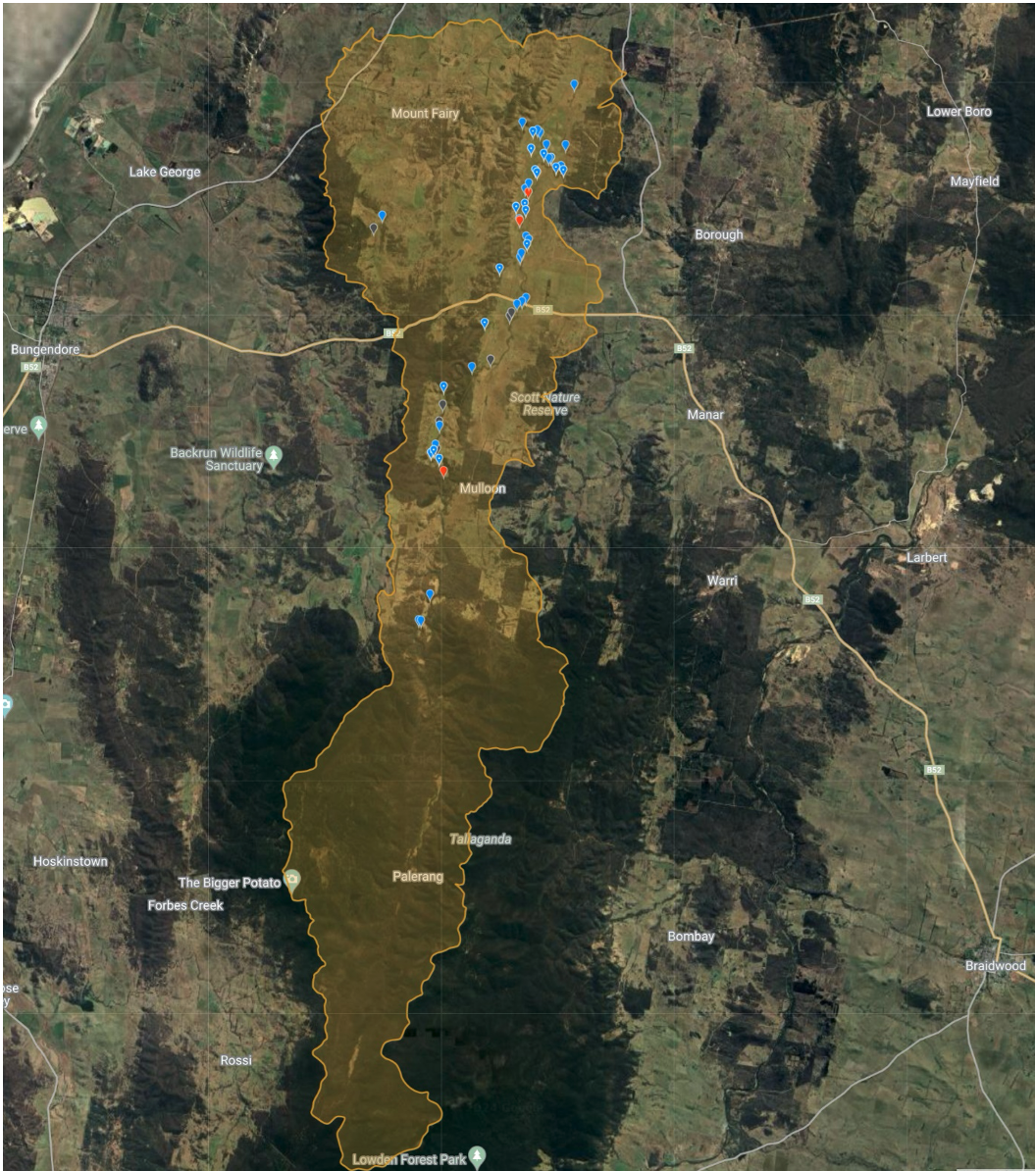
You can view the current sightings in Grid, List and Map View.

Grid view


List view


Map view


A geographic layer of the Mulloon Creek Catchment has been added so that users who are recording sightings within this area can have their sightings automatically added to the Mulloon Rehydration Project and added to our sightings.

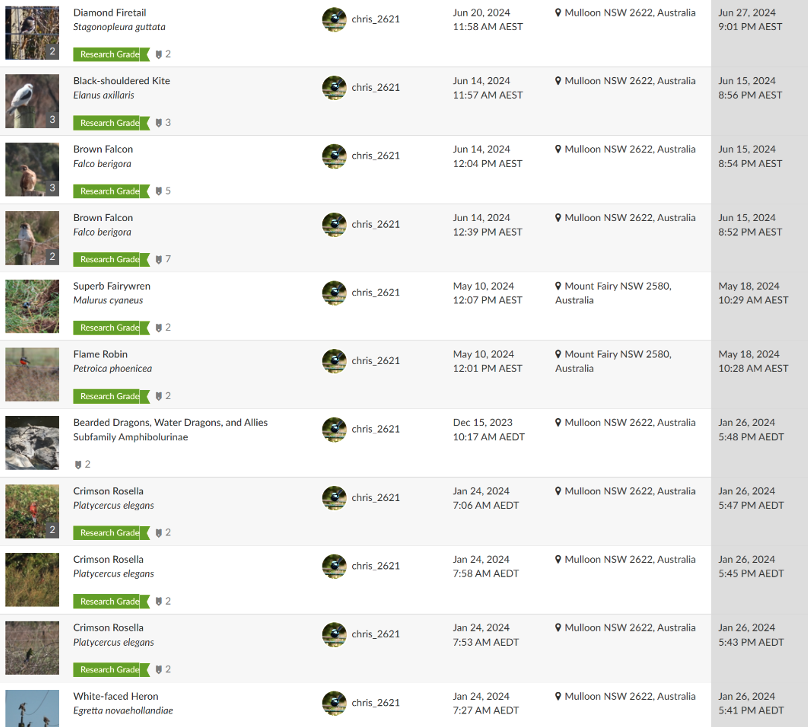
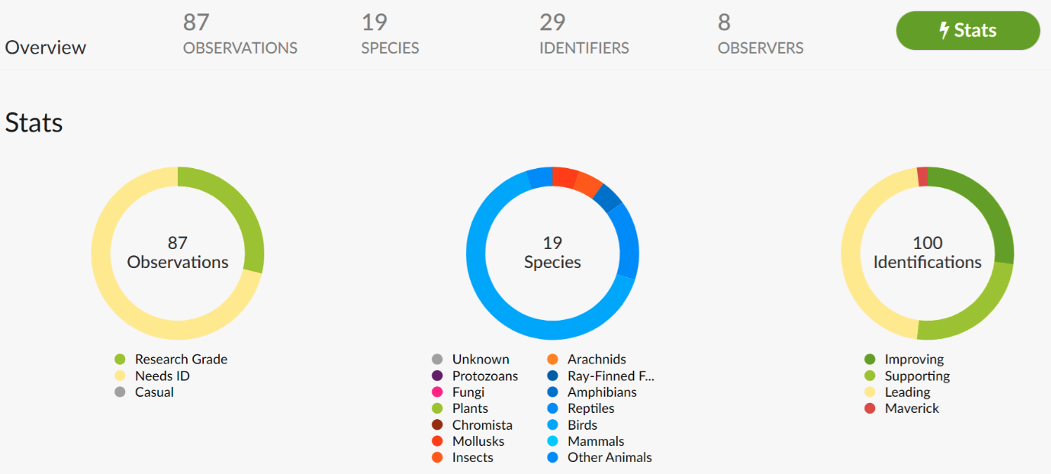
The iNaturalist Mulloon Project currently has the following stats and highlights:

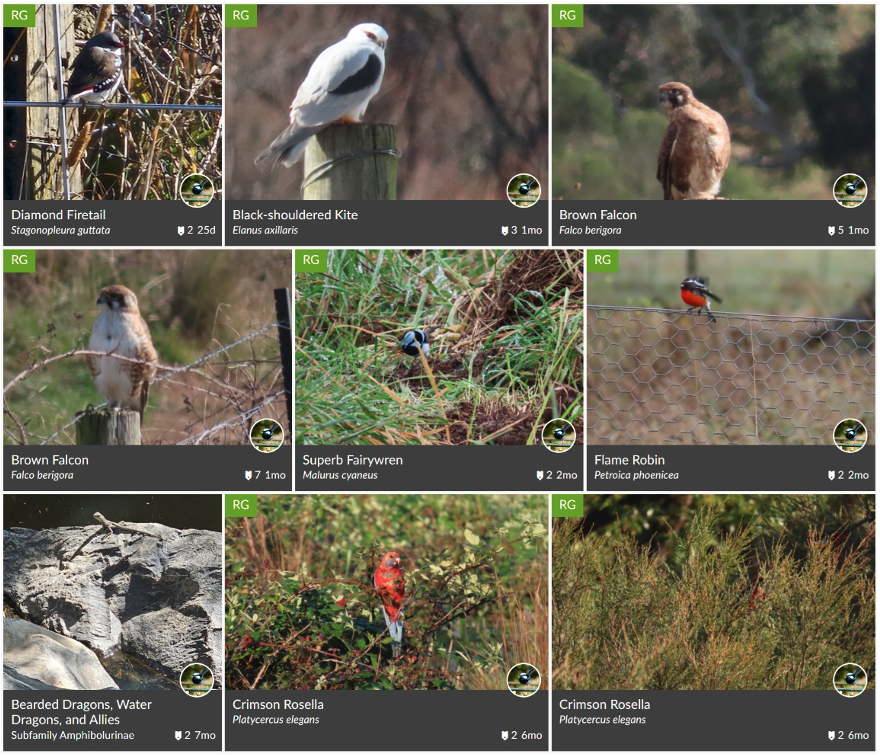
One of the highlight species recorded so far was a Diamond Firetail, a species classed as Vulnerable on the IUCN Red list.

We have recorded these in recent Bird Surveys and sightings like the one below:

Earlier this month, we reported the sad passing of our Inaugural Board Director and previous Chairman, the Hon Gary Nairn AO.

This week in the Australian Parliament, Motions of Condolence were passed in both the House of Representatives and the Senate to acknowledge Gary’s wonderful legacy.

We now have these Motions celebrating Gary’s life available for your viewing.

The Official Motion of Condolence in the Australian House of Representatives for the Hon Gary Nairn AO.

24 June 2024.

(15.33 mins)

The Official Motion of Condolence in the Australian Senate for the Hon Gary Nairn AO.

24 June 2024.

(38.27 mins)


Gary was elected as Federal Member for Eden-Monaro in 1996 and served as Parliamentary Secretary to Prime Minister John Howard, with responsibility for water reform. In January 2006 he was promoted to the front bench as Special Minister of State which included responsibilities with Ministerial and Parliamentary Services, the Australian Government Information Management Office and the Australian Electoral Commission. In 2018, he was appointed as National Chairman of The Duke of Edinburgh’s International Award-Australia. Gary was also a Board Member of the Biodiversity & Conservation Trust of NSW. He was appointed an Officer in the Order of Australia in 2015, for his contribution to spatial sciences, NSW and NT communities, Federal Parliament and disability support services.