Did you know Mulloon Institute is an environmental charity with Deductible Gift Recipient status in Australia?

Philanthropy made the Mulloon Institute a reality and it remains critical to our survival.

It is with financial assistance from our supporters that we can continue our important work.

Donations for the Mulloon Institute over the last few years have been invaluable, enabling us to put in place the foundational blocks for scaling landscape restoration and rehydration across Australia.

With the help of our valuable supporters, over the past year we have:
• Expanded our education and capacity-building program to a national program.
• Stepped up our campaign for regulatory reform for landscape restoration.
• Delivered demonstration sites in NSW, WA and the NT.
• Shared our scientific data at the Mulloon Rehydration Conference.
• Launched CReST to support scaling landscape rehydration.

As we approach the end of the financial year, we are reaching out to you to consider supporting our ongoing work across Australia.

Please visit our DONATION page – online donations and EFT payments are accepted and are tax-deductible

The bumper winter edition of our eNewsletter Resilience is now available. Catch up on all the inside news about our Conference, bootcamps and field days across Australia, our latest science reports, education updates and Mulloon Consulting news too.

Previous editions of Resilience can be accessed here.

Mulloon Institute Board Directors L-R Carolyn Hall (CEO & Managing Director), Matt Egerton-Warburton (Chair and Law Committee Chair) and Kathy Kelly (CFO).

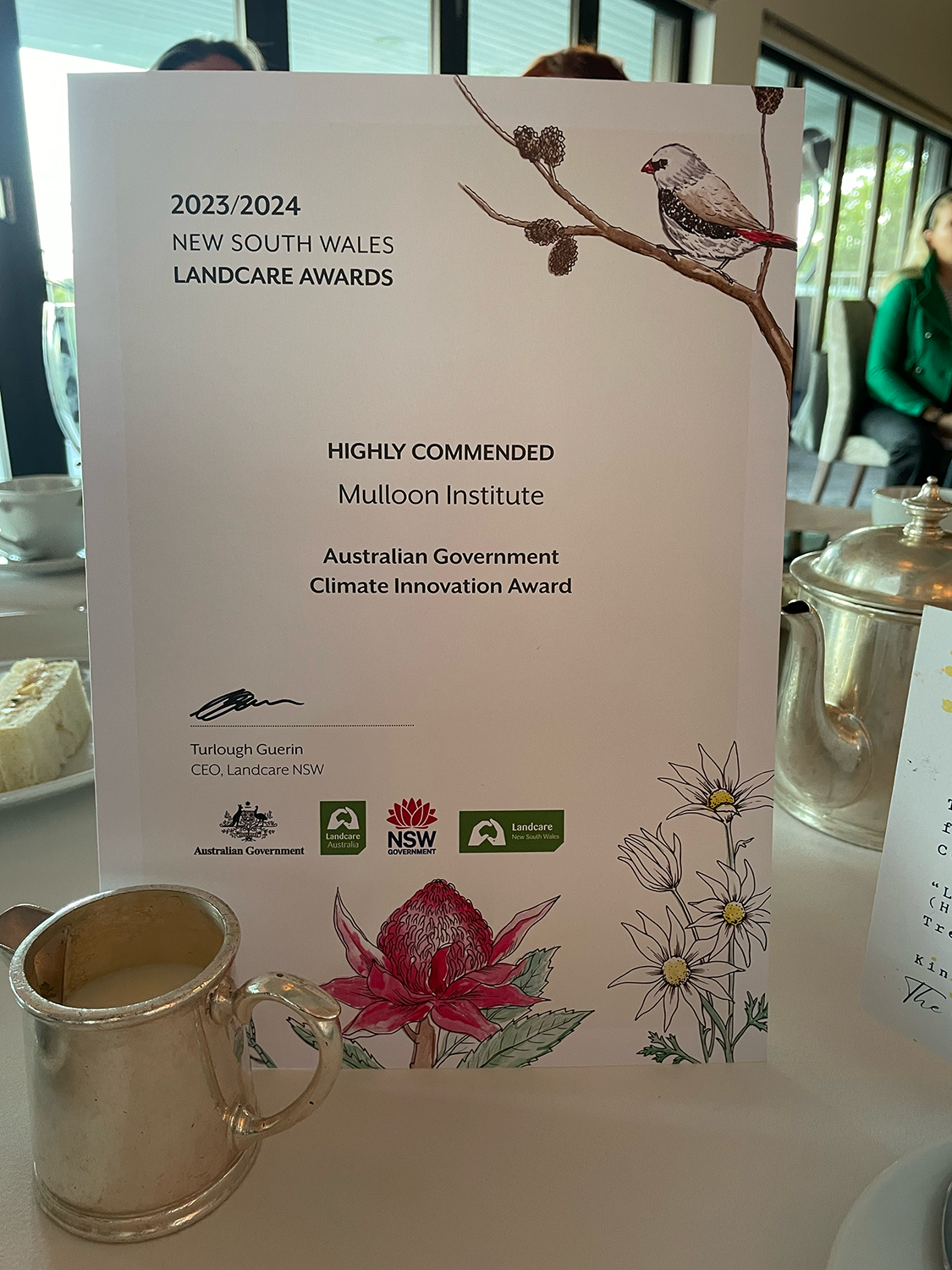
Mulloon Institute was up against some strong competition in the 2024 NSW Landcare Awards in the Climate Innovation category, and whilst our nomination was ‘Highly Commended’, we congratulate Wallabadah Community Association for taking out the top gong on the day.

Stunning illustrations on the certificates for finalists from Landcare NSW.

Participants attending Day 1 of the CoPP-NT event at Old Cameron Downs outside of Bachelor, NT. 

“The Mulloon Institutes landscape rehydration boot camp in Bachelor was an amazing experience. The hands-on nature of the course made it a memorable experience for all. 

We were especially lucky to have the bootcamp on a property that had already implemented some landscape rehydration principles,  so it was fascinating to see firsthand the positive changes this has on the landscape.” – Jack Farthing, Territory NRM. 

In April this year, 25 of the Northern Territory’s station managers and NRM professionals came together at Old Cameron Downs station to kick off the Mulloon Institute’s Community of Practice Project (CoPP) for NT.

Led by Mulloon’s Landscape Planner and Environmental Engineer Erin Healy alongside WA Landscape Planner and Hydrologist Lance Mudgway over three days, participants built their skills and confidence in landscape rehydration principles and practices through a series of creative, hands-on and practical activities. The group were lucky enough to be hosted by Fiona and Pete McBean who also openly shared their lived experience with successful landscape rehydration works and the beneficial impacts witnessed on Old Cameron Downs.

This event would not have been possible without the support of Jack Farthing, from Territory NRM.  

A special thank you to our gracious and enthusiastic host Fiona McBean, a long-time friend of Mulloon. Fiona travelled to Queanbeyan and the Home Farm as a guest panellist at the Mulloon Rehydration Conference on the ‘Our Landscape Restoration work across Australia’ panel, sharing the benefits of her experience with engaging Mulloon Consulting in the Northern Territory.

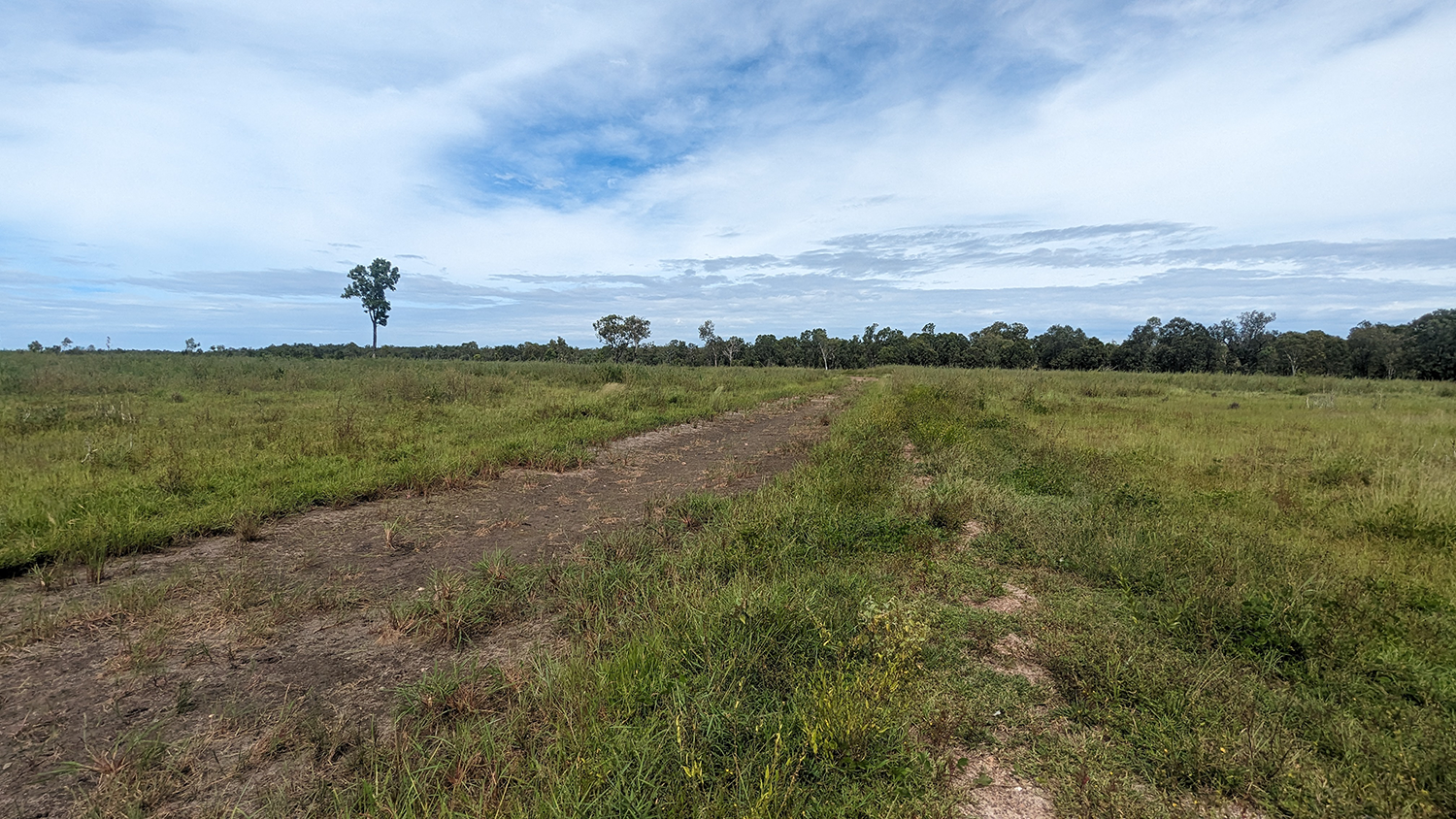
Previous landscape rehydration efforts at Old Cameron Downs station completed after an initial workshop with Peter Hazell in 2021 show how low-risk natural infrastructure can naturally manage weeds in pastures and create biodiverse aquatic environments.  

Previous landscape rehydration efforts at Old Cameron Downs station completed after an initial workshop with Peter Hazell in 2021 show how low-risk natural infrastructure can naturally manage weeds in pastures and create biodiverse aquatic environments.  

The CoPP-NT Participants were able to see a well-established series of in-stream rock weirs constructed by Pete and Fiona McBean on their property Old Cameron Downs. These structures have extended water availability and green plant growth for months into the typical NT dry season.  

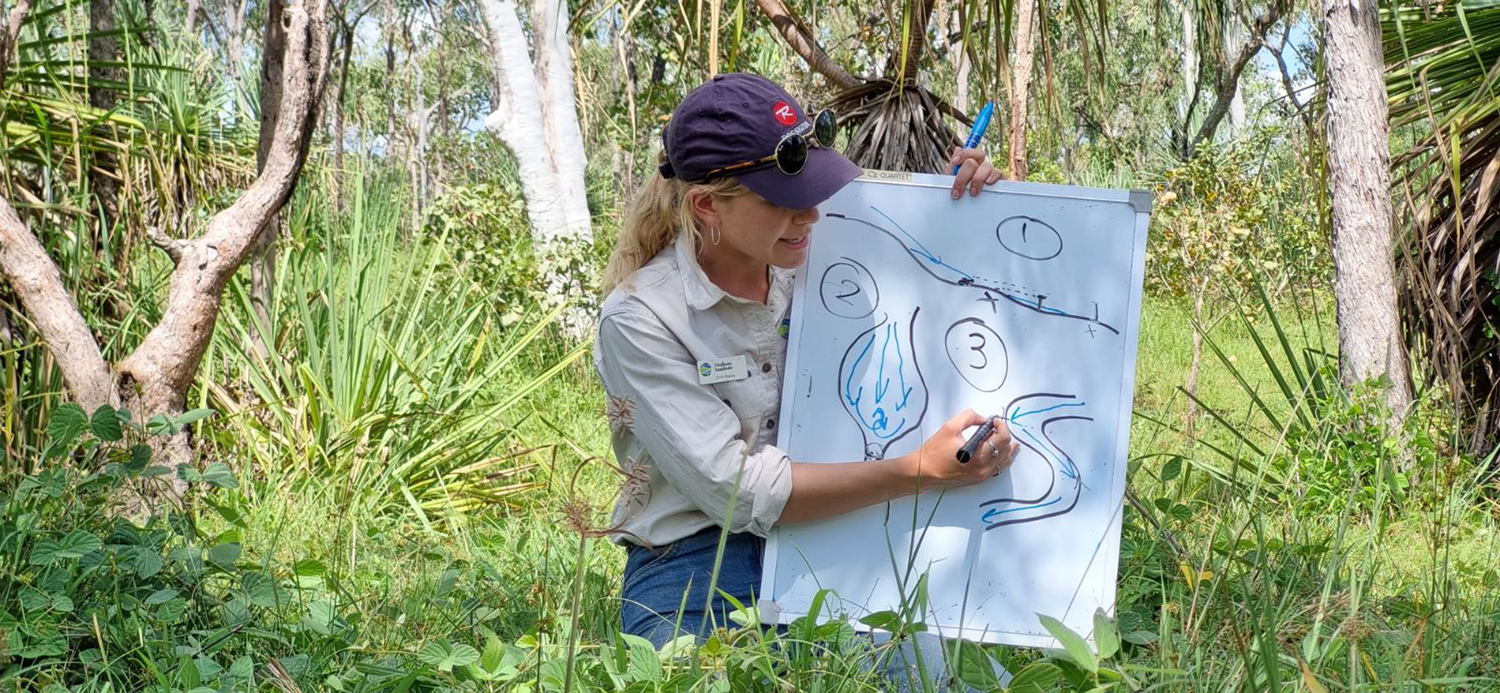
Over the course of three days, Erin and Lance delivered a series of short, informative presentations to build an understanding of how to restore the movement, storage and cycling of water in the NT landscapes.   

On Day 3 of the course, the group worked through a real-life case study and pulled together their learning and surveying skills to conceptualise and then design a project.  

On Day 3 of the course, the group worked through a real-life case study and pulled together their learning and surveying skills to conceptualise and then design a project.

This event received funding from the Australian Government’s Future Drought Fund. 

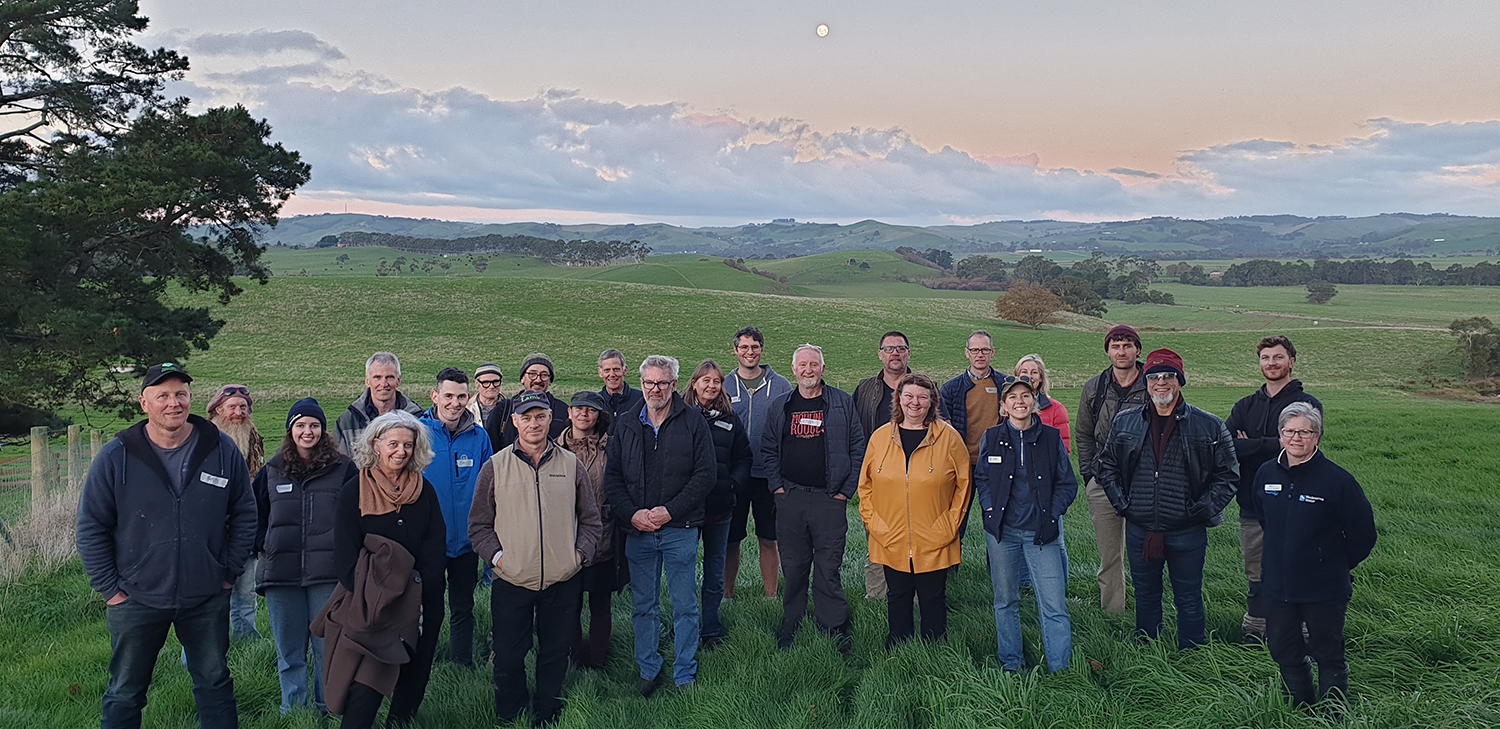
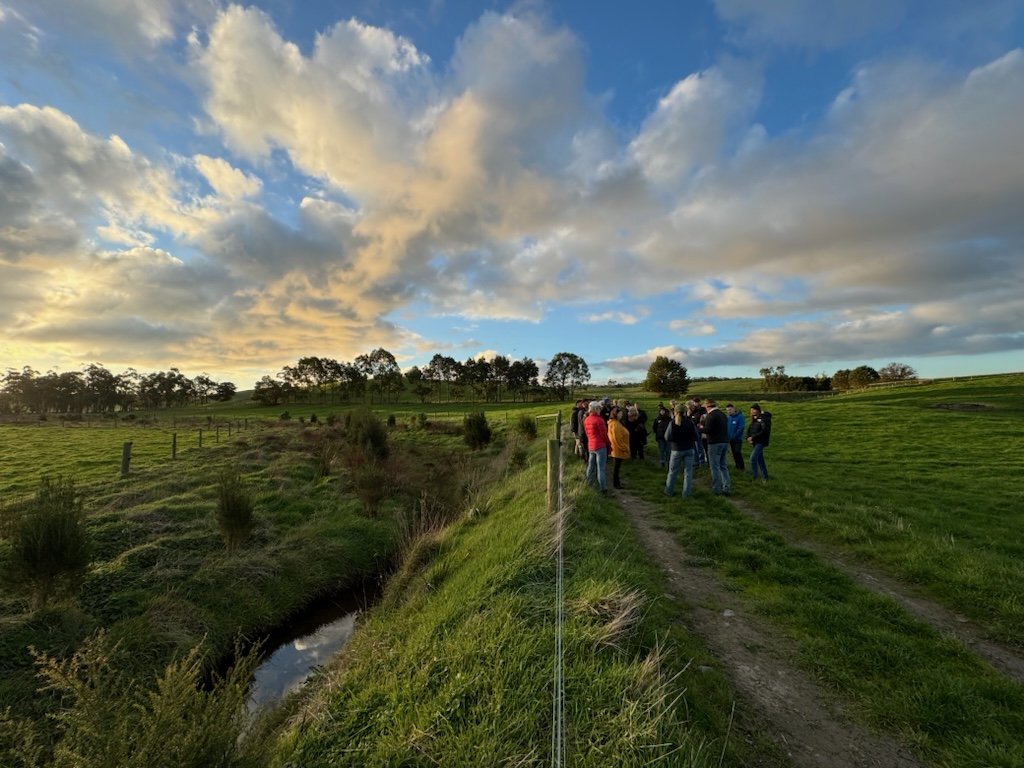
The CoPP-VIC Bass Coast Community group stands together at Joby and Camilla Grave’s beautiful property, Mount Pleasant with an impressive view of the sunset and the Bass River Valley behind.  

The most recent of the Mulloon Institute’s Community of Practice Projects, CoPP-VIC, started with a field day and then a 2-Day Bootcamp held at Kernott in the Bass Coast region presented by Mulloon’s Principal Landscape Planner Peter Hazell and Landscape Planner and Environmental Engineer Erin Healy.

Project partners Bass Coast Landcare helped to make the event a fantastic success. The event was filled with interesting, intelligent, and engaged land managers, a mix of creative and diverse activities and strong community enthusiasm. Peter and Erin look forward to working more with this community into the coming year! 

Thank you to our wonderful hosts, Joby and Camilla Graves at Mount Pleasant. A big shout out to Joel Geoghegan from Bass Coast Landcare for his steadfast and invaluable support in getting this project successfully off the ground at Bass Coast.

Over the three days, Joby and Camilla Graves opened up their farm, Mount Pleasant, to host the group.  

The Bass Coast attendees were a diverse and enthusiastic group of land managers with a wealth of collective community knowledge.  

Natural infrastructure solutions start to look a bit different where the natural resources available are play dough, pipe-cleaners and paddle-pop sticks!

The group had the opportunity to ‘deep dive’ into property mapping, focusing on their visions, goals, priorities and key issues regarding water in their landscapes.  

To finish of the third and final day of the event the groups gathered for a ‘tough mudder’ challenge, where natural infrastructure solutions (at miniature scale) were put to the test against our largest flood events.  

This project received funding from the Australian Government’s Future Drought Fund.  

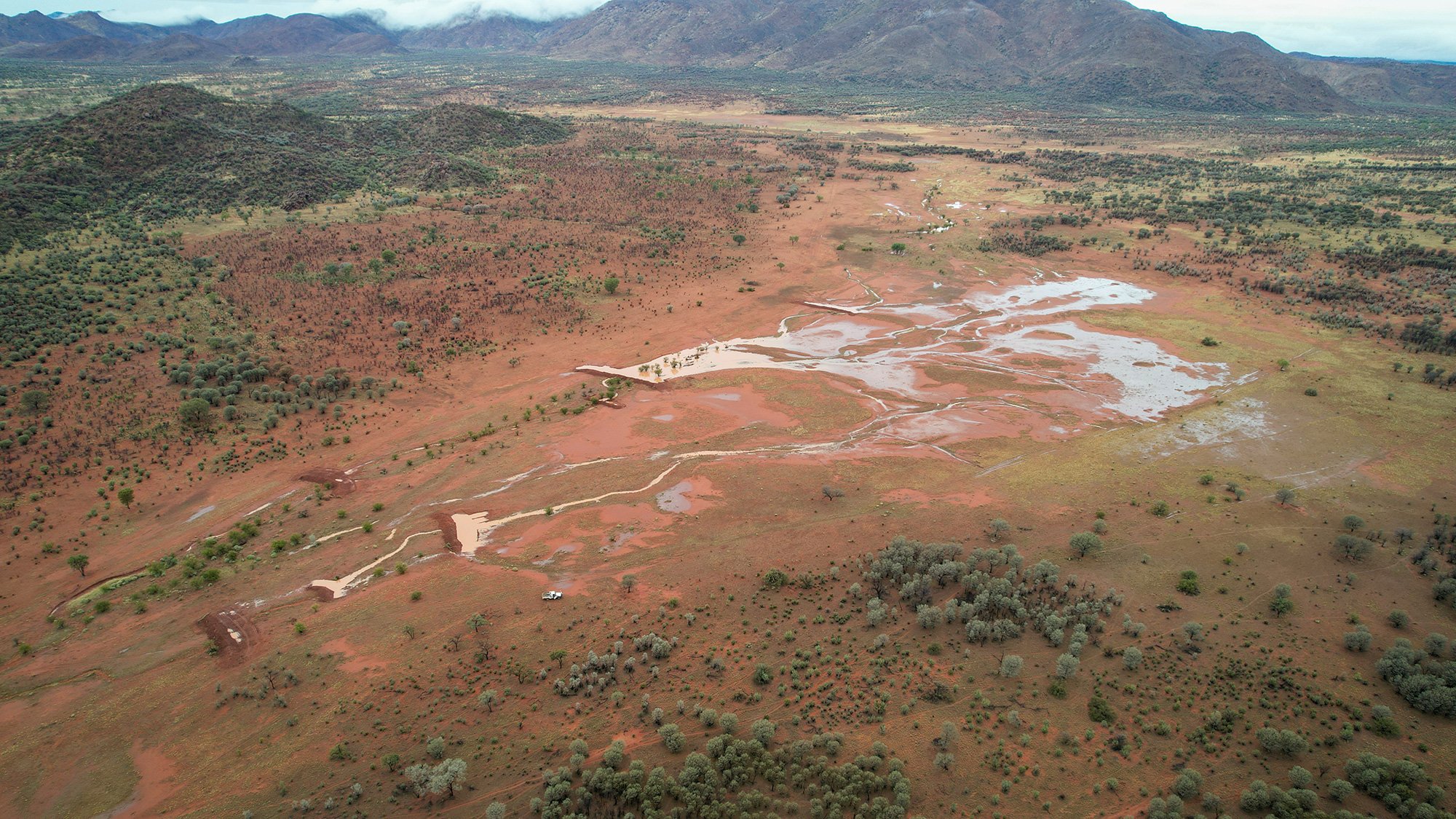
Glen Helen Station NT, showing landscape interventions in action following rainfall

In addition to the myriad Communities of Practice (CoPP) activities, other Learning Programs we’ve been delivering around the country, and attendance at the Mulloon Rehydration Conference, our Mulloon Consulting team have been busy working on various other projects for the last couple of months, including the following:

  • Completion of design work for a site at Roma, Queensland, and discussing next steps with the client;

  • Completion of design work for a property on the Molonglo River, southern NSW;

  • Completion of a desktop assessment for a site in the NSW Riverina;

  • Completion of construction work at a site near Crookwell, southern NSW;

  • Completion of design work for a property on Flinders Island, Tasmania;

  • Ongoing work on reports for a sub-catchment project in South West WA;

  • Completion of construction work at a site near Braidwood; and

  • Ongoing collaboration with clients for past and upcoming projects.

The MRI Conference created a significant amount of interest with new inquiries and we’re looking forward to working with these potential clients in the future to deliver our services around Australia.

The inaugural muddying of the boots for this groundbreaking project was the culmination of community effort for CoPP mentorship participant Codie Law. As one of nine properties receiving mentoring, Codie is a member of the vibrant and active GWYMAC Landcare community.

For the last six months Codie has been working with landscape mentors Erin Healy and Peter Hazell, GWYMAC Landcare’s Byron Norman, and community leader in landscape rehydration Johannes Meier, propelling this project from concept to construction.

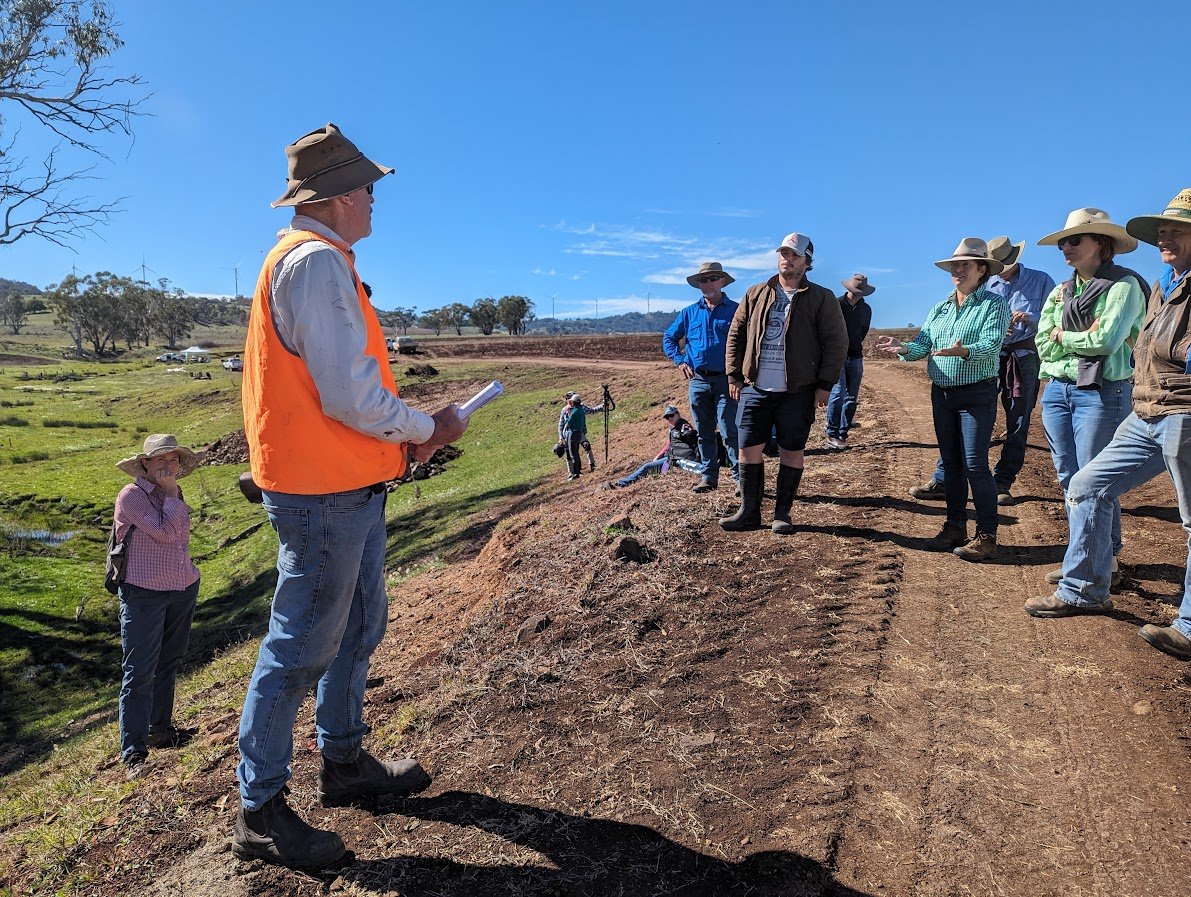
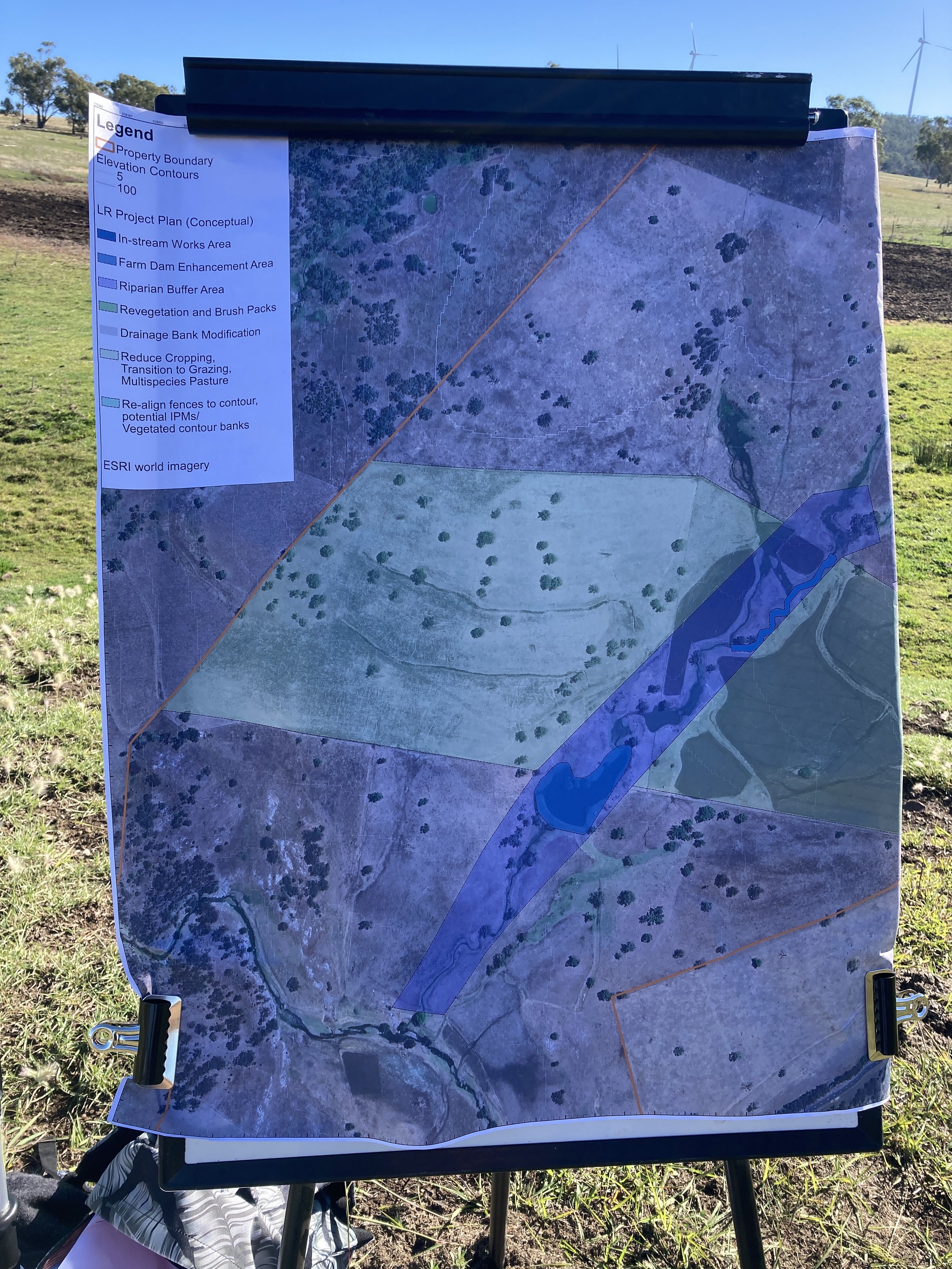
Peter Hazell and land managers discussing the project plan

As a second-generation farmer in a livestock grazing enterprise and with the next generation fast coming up the ranks, Codie was eager to undertake his first landscape rehydration project that integrated with his broader regenerative vision across the property. Codie’s vision is to manage water more effectively, improve water reliability and quality, and reduce run-off from cultivated paddocks which are causing the active erosion of waterways and threatening a dam structure.

Guidance and support were aplenty throughout the program to assist Codie in identifying and prioritising locations for project sites using desktop and field-based assessment tools. When it came to selecting nature-based structures, the community pitched in to find locally sourced rocks, logs, branches and equipment.

Under a perfect blue sky in May, the community gathered to learn, share and help. The morning was spent refreshing collective knowledge of landscape observation skills and best-practice design for natural infrastructure. Before long, the group was well underway overseeing and participating in the construction of four different types of structures.

The build crew was led by Peter Hazell who shared his knowledge of structure design, purpose and the Mulloon construction process. Peter was joined by Mulloon’s Manager of Learning and Development, Tam Connor. It was fantastic to have her out in the field with ‘boots on ground’, engaging in the wonderful program she has worked so hard on to develop with her team.

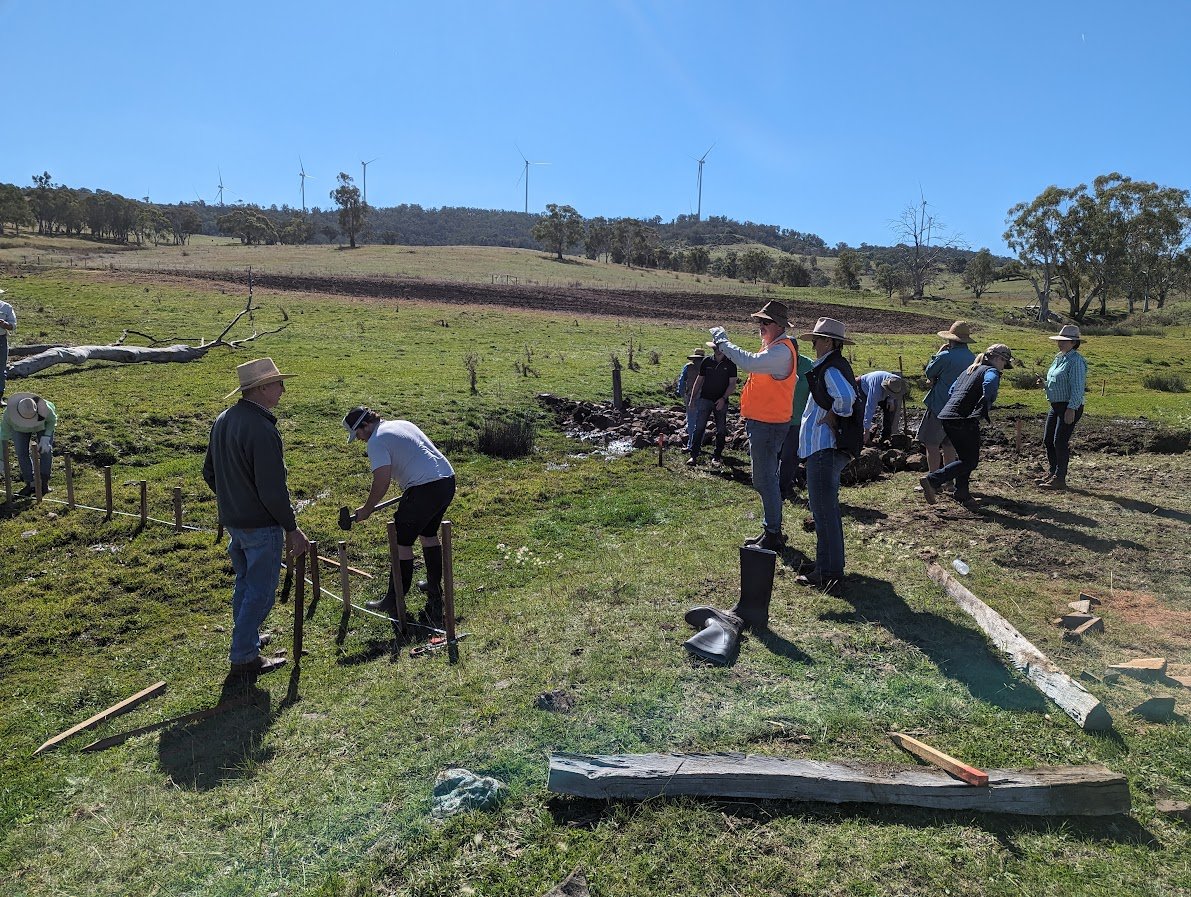
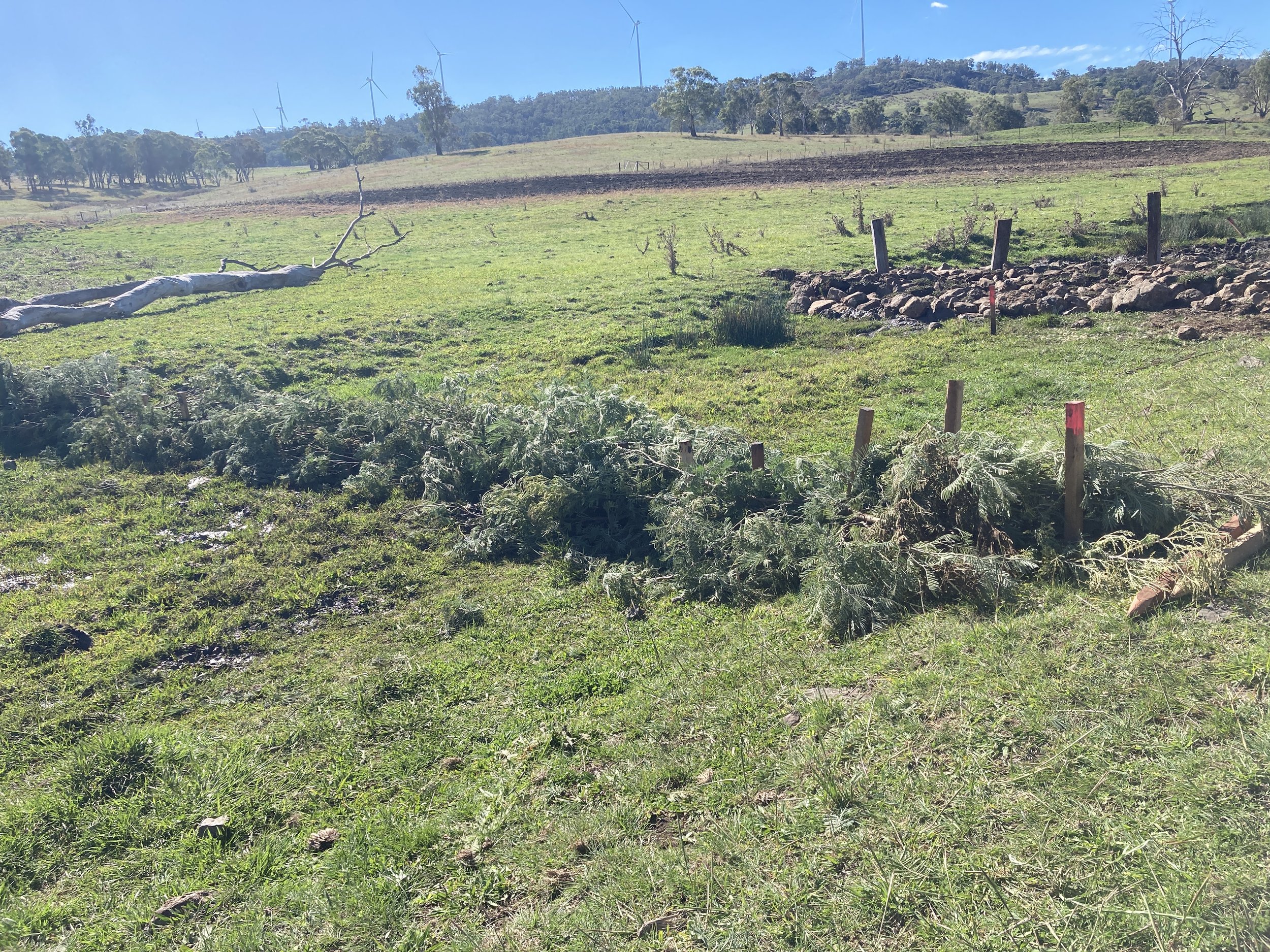
The build team pitching in to move rock, soil and peg stakes

Pin weir and Log sill structures

When it was time to begin, local machinery operators were eager to volunteer on the tools and move earth and rock. Others donned boots and gloves to help with the final stages. Then, together, the group got down to the muddy fun of setting rocks in a log sill ramp, weaving branches in a pin weir, setting out coir rolls and transplanting cumbungi in the ponds, before hearing how to retrofit old soil banks to reinstate overland flow.

Looking back on the excitement and enthusiasm of the ‘Boots on Ground’ day, it was a clear showcase of the community momentum that has been gathering in the Swan Brook catchment and wider Northern Tablelands. The community of land managers and NRM professionals banding together to make landscape rehydration widespread practice, is a bright and hopeful window into a sustainable and resilient future, for environment, farming and community.

Log sill pond with planted cumbungi to kick start plant growth

This project received funding from the Australian Government’s Future Drought Fund.

Project plan

The National Landcare Program-funded component of the Mulloon Rehydration Initiative (MRI) came to a crescendo last month with the Mulloon Rehydration Conference in Queanbeyan, NSW.  The two-day conference was an opportunity for Mulloon Institute to showcase its centrepiece project in all its catchment-scale glory to around 180 delegates from throughout Australia.

Eighteen years worth of monitoring data was presented, which clearly demonstrated that the condition of Mulloon catchment is improving. The most contentious issue has always whether the 60 or so instream structures would reduce water availability downstream. Analysis of 18 years worth of flow monitoring data shows there is no evidence of this being the case. On the contrary, based on the numbers, it is more likely that flow downstream of the works has increased, suggesting that water banking is actually occurring.

“Water banking” is a term first coined by Mulloon Institute’s Founder, Tony Coote. Water banking means that more water is held within the system (ponds, groundwater and soil) during high flow periods. This water is then released slowly when the system begins to dry out – say, an extended dry period or even a drought. Like we would deposit surplus money into our bank account during the good times and withdraw that money when times got a bit lean, in the same way, nature does so with water. This trickle flow during the dry times can keep natural systems alive and able to rebound quickly once the good times return.

All the biodiversity and productivity measures are positive:

  • Water quality has improved.

  • Riparian and instream plant assemblages and species richness have shown a significant improvement, providing complex habitat and moderation of high streamflows.

  • Aquatic Invertebrate numbers have exploded, representing major nutrient capture and export from the ponds back into the landscape.

  • Frog species richness in some cases has doubled.

  • The balance between native and introduced fish species appears to have flipped in favour of the natives.

  • Bird numbers have remained high. Over 80 species have been recorded including 12 rare and endangered species.

  • Rakali are returning and platypuses have been seen for the first time in decades.

  • A key productivity measure, Total Standing Dry Matter (TSDM) on the floodplain, has in some cases doubled since the instream works, possibly due to the increased frequency of over bank events.

The results are indeed exciting. The task ahead for the science team, along with the Science Advisory Committee, is to begin synthesizing the data into published reports and peer reviewed papers. There is also a bigger task of integrating all the data sets in such a way that we can categorically say landscape function of the Mulloon catchment has (statistically) significantly improved since the work first commenced.

See also:

Sharing the hydrological story at Mulloon.

MRI conference Presentations

Peter Hazell – Mulloon Institute
Download slides (PDF, 10.1 mb)

Phil Tickle – CIBO Labs
Download slides (PDF, 19.7 mb)

Dr Leah Moore – Mulloon Science Advisory Committee/Australian National University
Download slides (PDF, 3.9 mb).
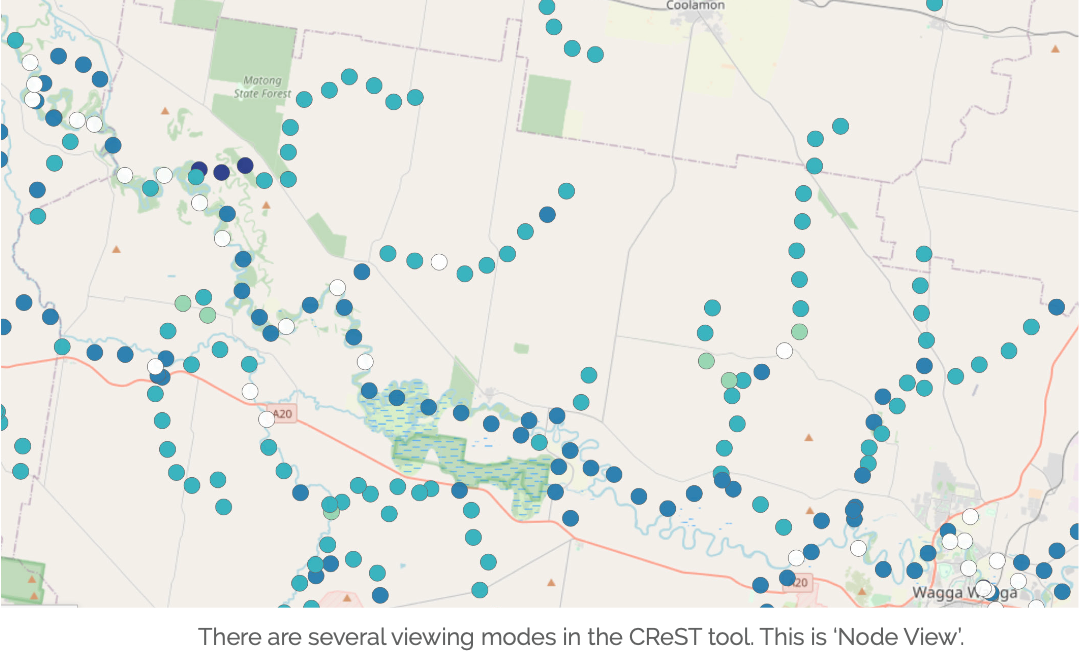
The long-awaited Catchment Rehydration Selection Tool (CReST) was officially launched at the Mulloon Rehydration Conference in May 2024.

The CReST model is designed to prioritise catchments across NSW, offering high-level guidance for selecting agricultural areas for potential landscape rehydration infrastructure and practices at the catchment scale.

Focusing on the suitability of infrastructure within watercourses (such as leaky weirs) and riparian zones (such as revegetation), the CReST model highlights the potential agricultural and environmental benefits of these rehydration practices.

CReST has been developed in partnership with HydroTerra, with valuable input from JB Pacific.

Developing CReST included:

  • identifying and prioritising criteria for landscape rehydration (by 50 experts in the academic and natural resource management sectors)

  • analysing data sets to create data behind CReST model and online portal (by JB Pacific)

  • developing a roadmap for optimising large-scale adoption of landscape rehydration across NSW.

Intended users

It is expected that CReST will be used by government agencies, regulators, industry, farming communities, natural resource managers and private organisations.


Landscape Rehydration:

The process of restoring the natural movement of water through rural landscapes.

NSW Department of Planning and Environment, 2023


Future

This initial iteration of CReST is expected to be dynamic. Ground-truthing and validation efforts will be undertaken with changes to modelled rankings anticipated in the future. As improved spatial datasets become accessible they may also be incorporated.

Where further field validation and refinement is needed, additional grant and philanthropic funding will be sought to support its testing and expansion into a national tool.

For any detailed queries in regards to CReST, email Chris at chrisinskeep@themullooninstitute.org

Autumn seasonal conditions have been outstanding with above average rainfall and mild to warm conditions. The rolling average rainfall remains close to 1000mm for Duralla and 1060mm for Mulloon Creek. Subsoil moisture levels are near saturation with very little loss of moisture occurring over the past 3 months.  The BOM has indicated that we are likely to experience above average temperatures for both day and nights during winter while the rainfall is likely to trend towards slightly above average. There is a LaNina watch current which could see even more rainfall. Let’s hope not!

Our weaner steers presented in good condition at the Yass sale in March. Cattle prices kicked slightly, and our weaners sold to strong competition on a dearer trend. Prices received while below last year were 20-40c/kg stronger than recent sales.

All the cows and heifers have enjoyed the abundance of autumn feed and are in very good condition as winter approaches.

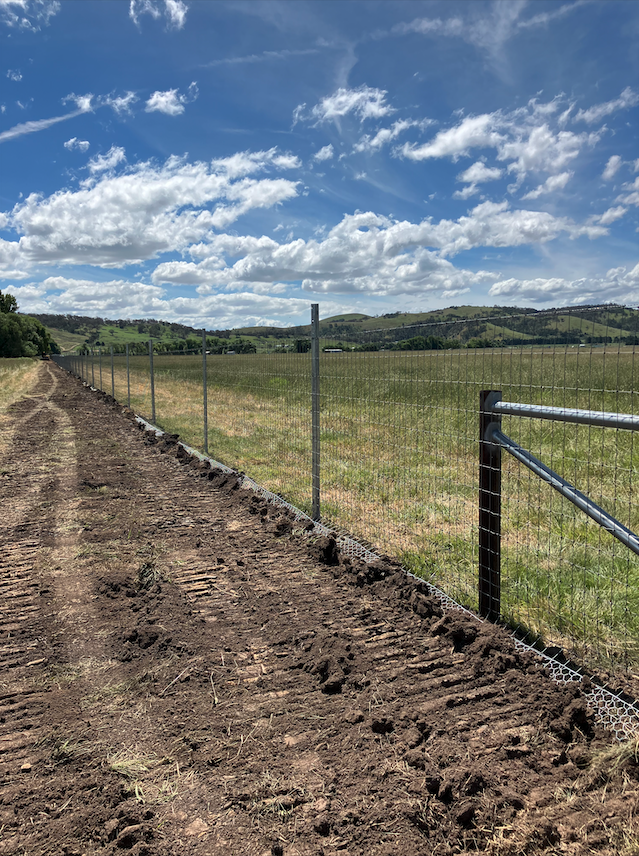
The redevelopment program continues at Duralla with new fencing being installed to help protect the poultry from the large fox population that has exploded due to the years of good seasonal conditions.

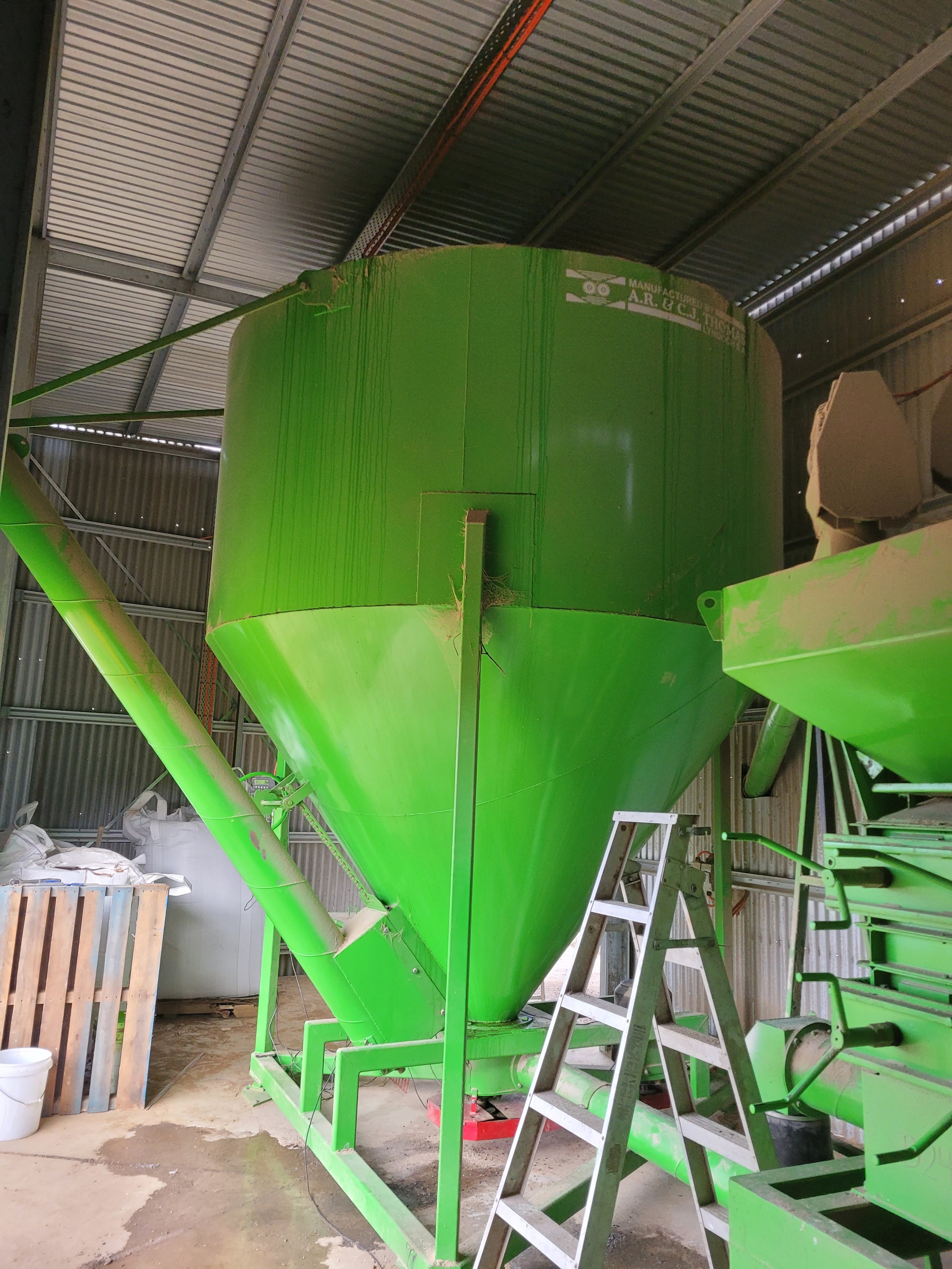
Our new grain mill is in full operation with all our poultry feed now being milled on-site in the form of a chemical-free mash. Mulloon Creek eggs are now free of any commercial feeds, and we have finally full control over what our hens consume.

In other news Matt Narracott after three years as Farm Manager of Mulloon Creek and Duralla has taken a position as a consultant with Integrity Ag in Toowoomba. We wish him well in his new role.

As of 1st July Cecil Lang will take on the role of Farm Manager and we welcome Cecil to the MCNF team.

On-site grain mill

Post Boxing Day-flood fencing continues