This year started off at a rapid pace with the planning of our Mulloon Rehydration Conference. We are excited to bring the results of the Mulloon Rehydration Initiative to life on the 1st and 2nd of May at Queanbeyan Bicentennial Hall and at Mulloon Creek. The changes in hydrology, the increased biodiversity, and the improved production of biomass despite the weather conditions are all part of the rich tapestry of scientific monitoring results that provide real-world evidence for landscape rehydration as a Nature-based Solution. As our prospectus states:  The world is thirsting for solutions to the impact of climate change – nowhere more so than across the sphere of agriculture. Amongst the noise being generated by well-intentioned groups, there is a crucial requirement for tangible evidence highlighting actual measured progress and impact. This conference focuses on exactly that.

We have secured Phil Mulvey, CEO of Ryzo and co-author of Groundbreaking: Soil Security and Climate Change. as a keynote speaker along with Rob Stokes, the former NSW Minister for Planning and Stuart Naylor Catchment program coordinator from Water NSW. These speakers understand our work and the role it plays in restoring landscape function and so empowering communities to build climate-resilient landscapes. We will also have several panels with landholders from the Mulloon Rehydration Initiative (MRI) and from locations across Australia where our work is now demonstrated. A panel with those from the finance and natural capital sector focussed on bringing the financial resources to scale this approach will be one to watch out for.

Statistics from the Australian Bureau of Meteorology show we have experienced our third-hottest summer on record and third-wettest summer during an El Niño phase. It certainly has been a hot wet summer over east with Tropical Cyclone Kirrily crossing the coast in Townsville on the 25th of January. In Western Australia, heatwaves have presented a health risk. We have seen bushfires in Victoria and the Hunter in NSW. Our farms have not escaped the challenging conditions with clean up required after a major flood on Boxing Day that saw fences, farm infrastructure and livestock impacted. The challenges just keep coming for Jim Steele and our farm management team. Climate-resilient agriculture has never been more important for our country, and we welcome the new grants focussed on this from the Department of Agriculture Fisheries and Forestry.

The interest in our work continues to grow. We have had the opportunity to garner publicity for the Institute with our Chair Matt Egerton Warburton speaking on 2CC “Talking Canberra” on Sunday 25 February with Nichole Overall – former member for Eden-Monaro and Ian Meikle. We also had an article in the Australian on the 3rd of February, Changing the nations rivers for sustainable agriculture, after Rob Langtry, and I had a chat with journalist Helen Trinca on the 26th of January. I had the privilege of delivering a webinar with friend and colleague Richard Campbell Director at HydroTerra and master of their Friday webinar series to around 200 participants on the 16th of February. It was titled Leading the Way: The Mulloon Institute’s Vision for Sustainable Agriculture and Environmental Restoration and can be viewed here.

With so much going on across the Mulloon group our strategic planning process that we initiated toward the end of 2023 is a critical tool in helping us focus on key areas where we can make a real difference. As we have expanded rapidly, we are taking this opportunity to refocus our efforts and resources in building a broad range of partnerships with organisations and groups that share our vision of the role rehydration can plan in accelerating the build-up of Natural Capital. As is the Federal Government, we will be working to educate the Australian public on just how important rehydration is to our future

During my holidays I headed off to Queensland and visited with our outgoing Chairman Gary Nairn AO while he was in hospital over the Christmas break. It is always inspiring to see Gary, and this was no exception. I had a second opportunity early in the new year to visit with Gary and Rose at their home in Mount Tamborine. I can confirm that Gary has not stopped advocating on our behalf despite challenges with his health.

Finally, I am thrilled to announce that Mulloon Institute has been chosen as a finalist in the 35th National Banksia Sustainability Awards in the Nature Positive Award! The winners will be announced at the Awards Presentation on April 4th, 2024 in Melbourne so stay tuned to our news page and social media for all the updates.


Carolyn Hall – CEO, Managing Director, GAICD

A rehabilitated saline valley floor of the Gabby Quoi Quoi creek

Last week Lance Mudgway visited the Gabby Quoi Quoi catchment south of Wongan Hill in the Wheatbelt of WA. A literal translation of Gabby Quoi Quoi, Lance was informed, is “water plenty plenty”.  On a couple of the properties he visited, this was definitely the case, with one property home to a nice permanent freshwater soak, and another a creek system that flows for nine months of the year, even in the drying WA climate. 

There is actually plenty of water across the whole catchment, though much of it is saline. Valley floors are significantly impacted by secondary salinity (salinity caused by clearing and raising of water tables). The Gabby Quoi Quoi catchment group has been beavering away for over 30 years to address the salinity issues, with massive plantings of native trees and bushes as well as surface water management (absorption, interceptor and grade banks). Although this work has largely stopped the spread of salinity and established vegetation cover on the saline valley floors, it hasn’t addressed the root causes – clearing of the land has upset the water balance, increasing runoff which recharges in the valley floors and removing the organic pumps to maintain a low water table.

A view upstream of the catchment from the lookout established by the group in the 1990s

The current project, sponsored by Wheatbelt NRM with funding the WA State NRM is about adapting the existing land management plans with a rehydration lens to start restoring the water balance. A short presentation on landscape rehydration was given at the group’s AGM.  Six properties across four land-owners were visited with each property having specific sites with ongoing issues. Conceptual plans will be provided for those sites together with broader catchment recommendations. Four more landowners came on board after the AGM and will be visited in the coming months.

The sign at the lookout showing a map of the area and work done

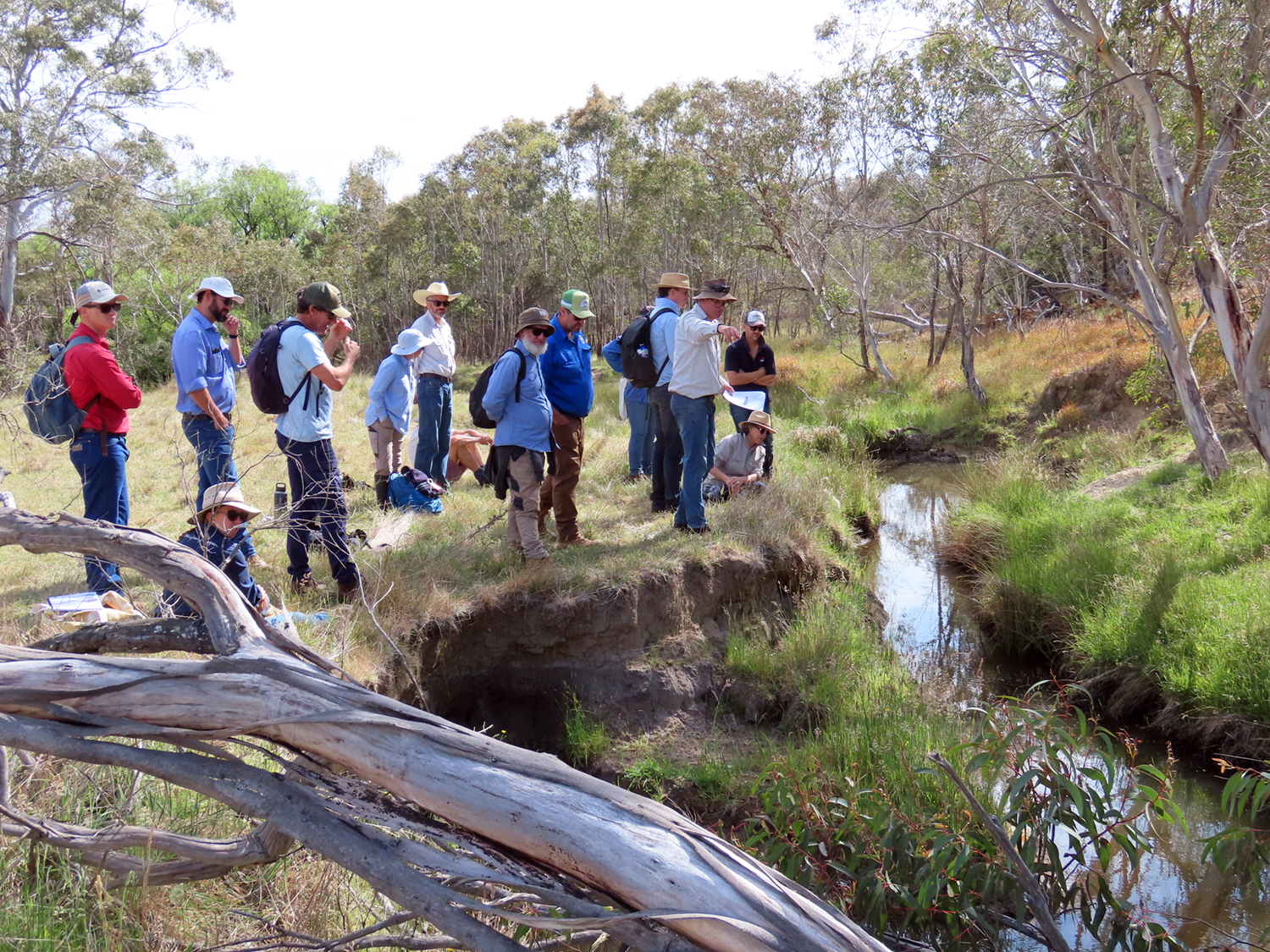
Assessing landscape trajectory on Sandhills Creek as part of the Professionals Intensive

Mulloon’s Communities of Practice Project is making great strides in fostering knowledge-sharing among producers across different regions. The flagship Bootcamp course in Central Queensland had a full house of producers engaging in discussions and capacity-building activities aimed at enhancing landscape resilience.

The Mentoring Program in NSW is progressing well with the Mulloon team supporting land managers in their project aspirations through property visits and via the online program. We launched our online community forum for graduates of the bootcamp and Eastern Professionals’ Intensive as a platform to continue sharing knowledge, exchange ideas and celebrate successes. 

Looking ahead, the project has exciting events lined up in various community locations, including Carrolup WA, Eva Valley NT, and the Bass Coast region VIC. These events are in partnership with organizations – Perth NRMTerritory NRM, and Bass Coast Landcare Network.

Two Professionals’ programs are planned for NT and WA in 2024 with a focus on developing advanced technical skills for professional development and provide valuable opportunities for further sharing and networking among natural resource managers. For those interested in participating, keeping an eye out for program dates here.

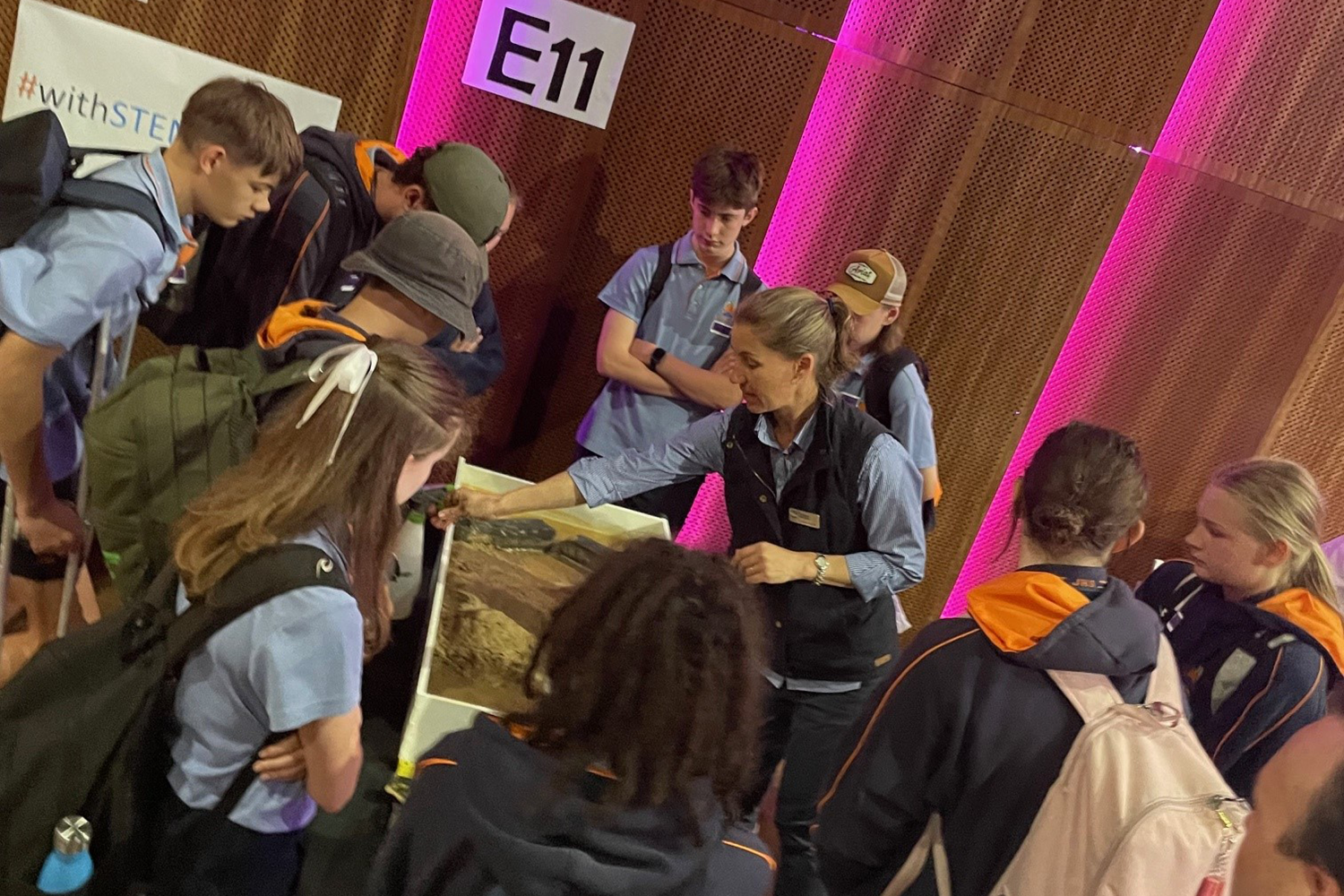
Penny and students creating the model at the CSIRO STEMfest

Given the festive season, a lot of our team took the opportunity to take a well-earned break and recharge their batteries!  Having said that, we’ve been busy working with many groups and individuals around the country on project proposals and are excited about the ongoing delivery of our work in 2024, while also use the quieter time for upskilling on some new spatial data and modelling tools.

The unexpected wet weather over December and January in the southeastern part of the country has further delayed some of our on-ground projects, however we were able to round out the year with the completion of design work at various sites including the Central West and Southern Tablelands of NSW and the ACT. 

We’ve continued working with Bush Heritage Australia on a project at Turnip Creek in northeast Victoria with planning for monitoring of the site and utilising our knowledge and experience from years of monitoring the Mulloon Rehydration Initiative sites. 

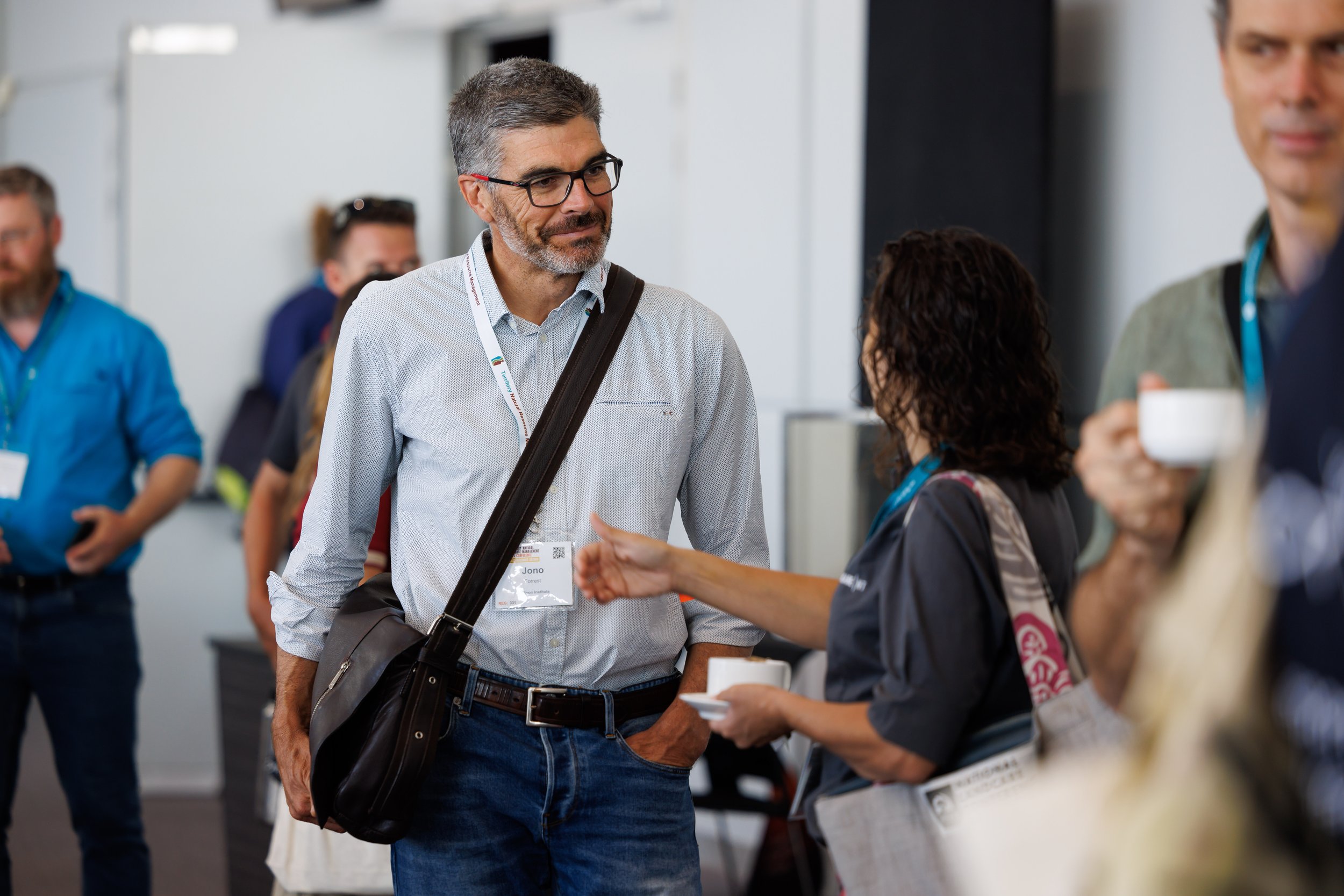
Our General Manager, Jono Forrest presented at the Territory NRM conference in Darwin, covering the Centralian project and our upcoming Communities of Practice events in the NT.

Our GM Jono Forrest networking at the Territory NRM conference.

The last couple of months saw some good external collaboration with our involvement in the CSIRO STEMfest at Bicentennial Hall in Queanbeyan, hosing a Soil Properties Observation Test (SPOT) workshop at Home Farm with Phil Mulvey from Ryzo, and holding a tour of the Mulloon Rehydration Initiative for a group from the National Youth Science Forum, as well as other smaller and private group tours.

Our team were also busy with the delivery of the mentoring component of our FDF grant-funded Communities of Practice Project and planning for 2024 events. 

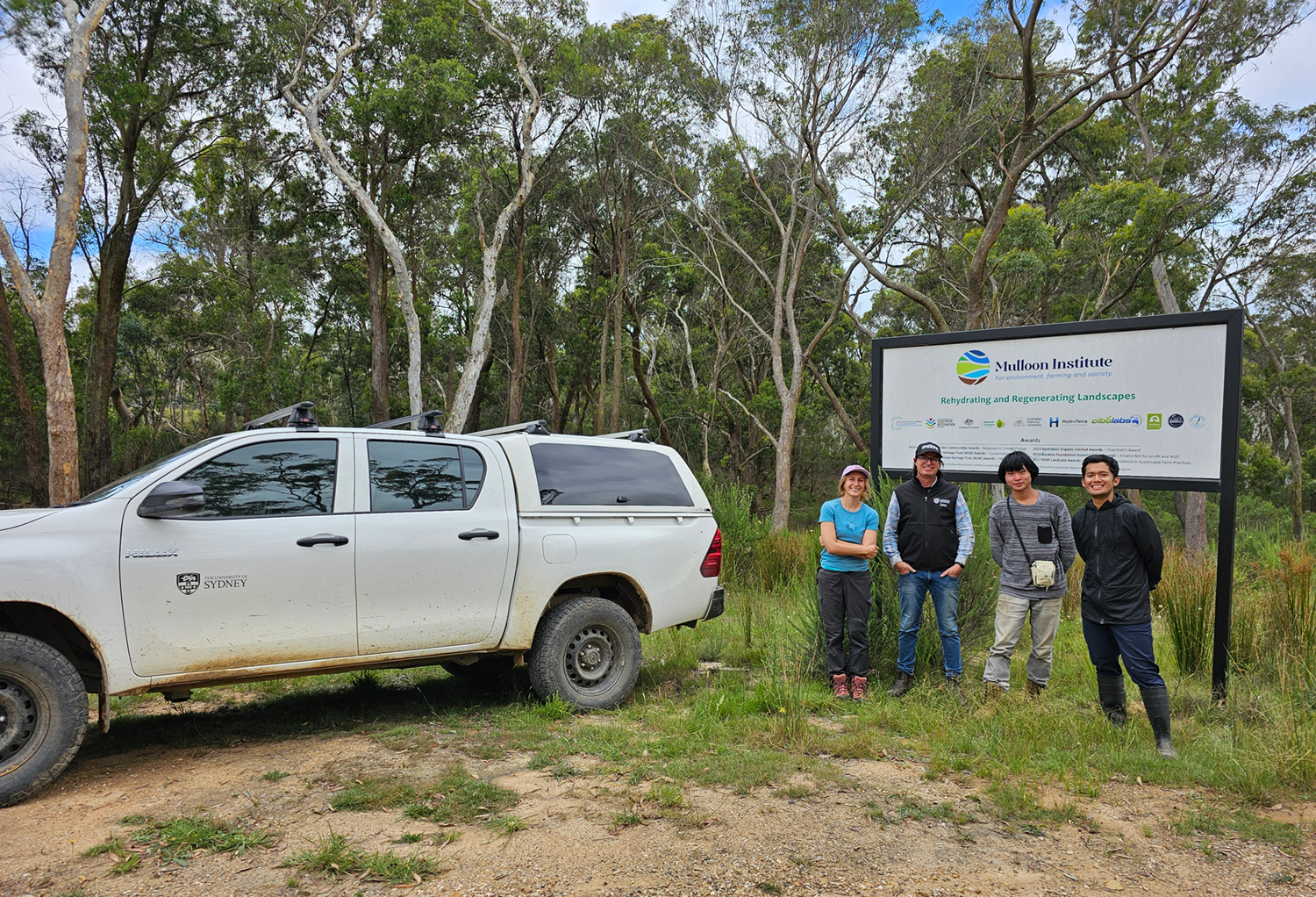
Sydney University’s Lilly, Floris, Alex and Wiyanda (left to right)

Summer has been a busy time for the science and monitoring team at Mulloon. The flood event at Duralla (reported here) took out our stream gauging station and all the infrastructure at Sandhills Creek, however has resulted in some valuable data captured.

In February we hosted a team from Sydney University including Associate Professor Dr. Floris van Ogtrop and a group of research students; Alex Sun, Lilly Holding and Wiyanda Aflah.

Alex expressed interested in either macroinvertebrate and/or veg surveys/data (BACI/Paired catchment). Alex’s background in biology and mathematics means he will be comfortable with crunching spatial and temporal data. Alex has been looking at the Mulloon Rehydration Initiative (MRI) Rapid Assessment of Riparian Condition or RARC datasets.

Lilly is an honours student interested in looking at fish/water quality and how landscape changes might affect the dominance of endemic versus exotic fish.

Wiyanda will complete his PhD with Prof. Willem Vervoort and Mulloon’s Chris Inskeep. He will develop hydrological models for Mulloon Creek and Llara Farm (Narrabri) that will most likely focus on understanding landscape/ hydrological impacts of NSF/Conservation Ag. He is funded through the One Basin CRC.

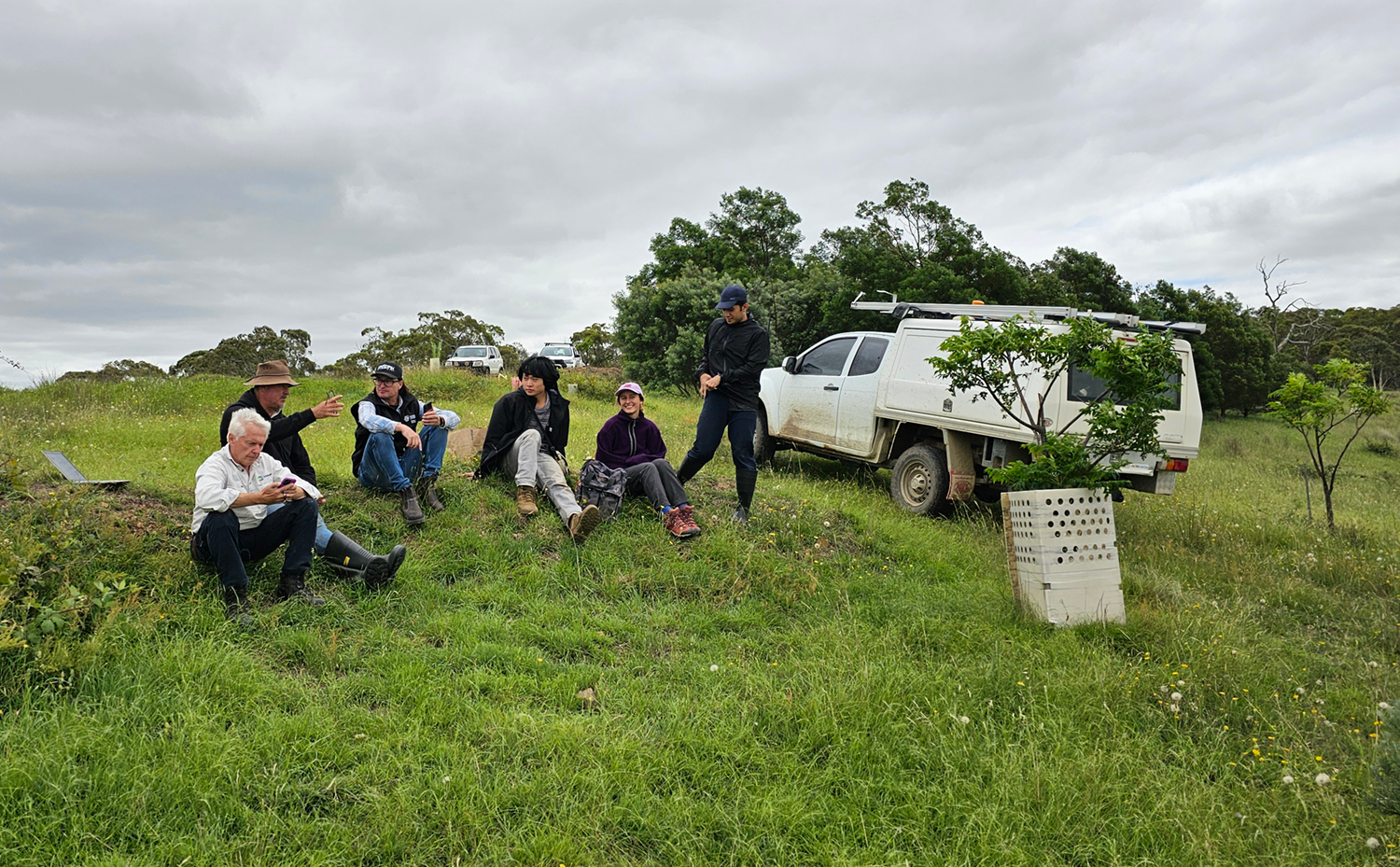
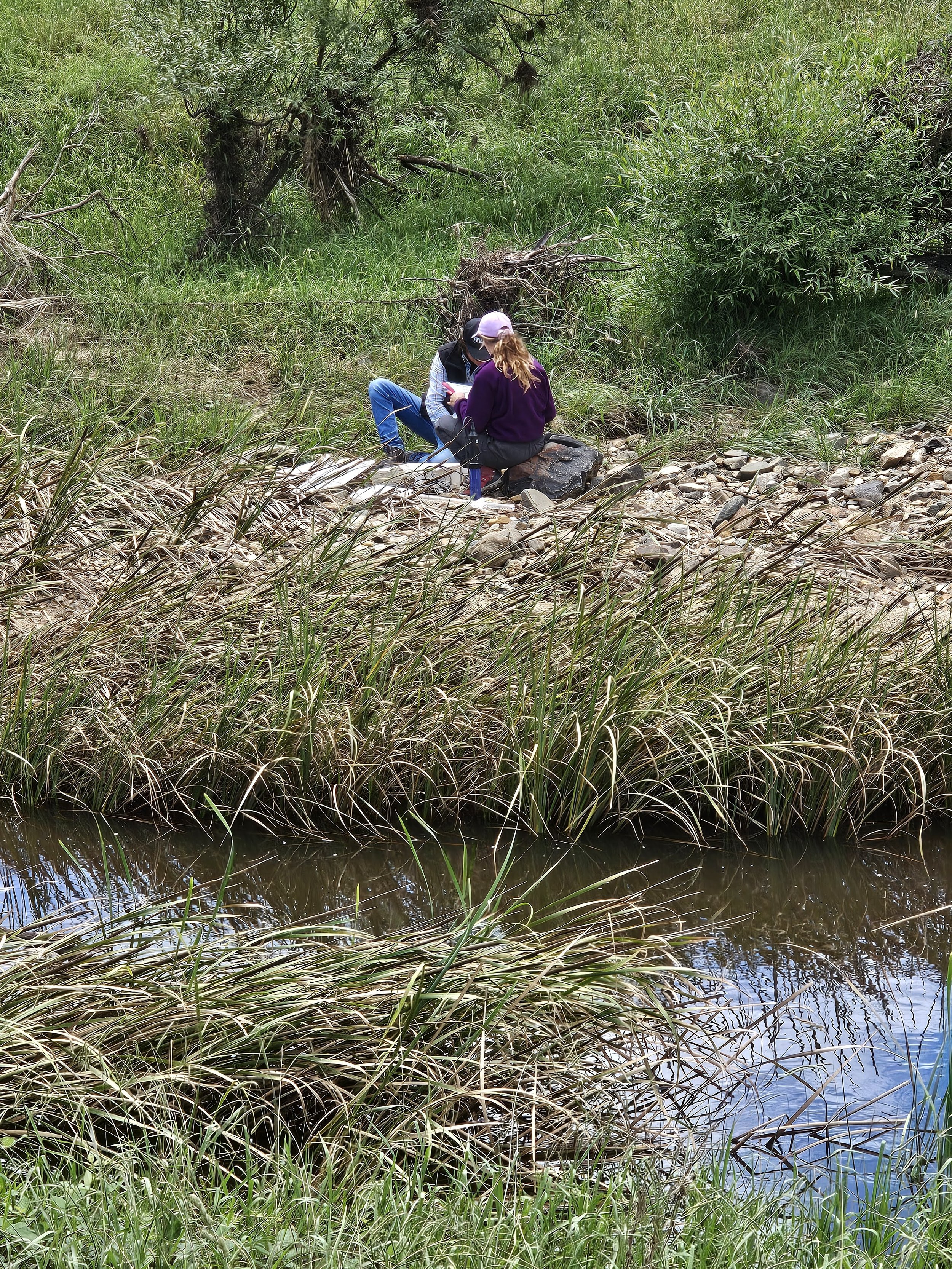
Alex and the MRI team conducted field surveys as well as analysis of existing data while Lilly conducted invertebrate sampling at these sites and Wiyanda got a feel for some of the hydrological instrumentation we use while assisting with manual readings, downloads, and maintenance.

The visiting monitoring team with Mulloon’s Tony Barnardi and Peter Hazell, at left.

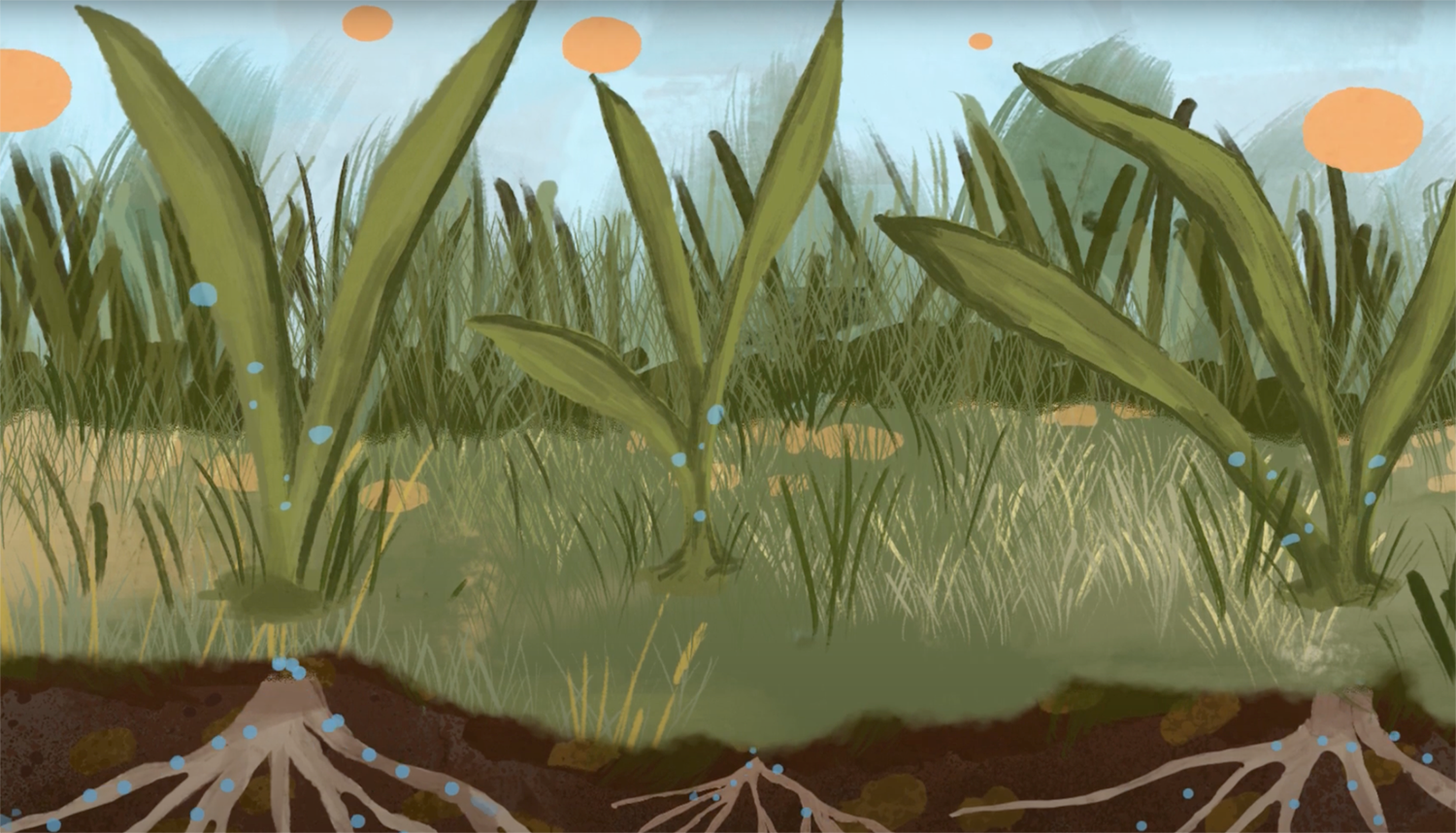
A stunning new animation series developed by Mulloon Institute tells the story of Water in Healthy Landscapes

Animation enables powerful storytelling. Mulloon Institute has been wedding science and story in recent months, working with talented artists Timothy Lee and David Lobb, both graduates of UNSW Art & Design in Sydney. They were new to environmental science communication. We were new to the ruthless task of distilling principles from physics, hydrology, geomorphology and soil science into digestible parts! Out of this generative relationship have emerged five eye-catching animations that bring to life water’s interaction with solar energy and heat, gravity, land surfaces, soil, plants and climate.  

Each contains a kernel of truth vital to building resilience in the landscapes we love. They’re raw and original, and we’re thrilled to be sending them out to enliven your imagination! 

Steered by the Institute’s ‘artist in residence’ Dr Laura Fisher and narrated by our own Peter Hazell, this project has been a rich collaboration involving many Mulloon staff in scripting and conceptualisation. And then Justin Hewitson tied it all together with gorgeous sound design. 

We are excited to say we have three more animations in the works. These ones are being developed with Supervisory Research Scientist Laura Norman at the US Geological Survey, informed by her expertise in healthy watersheds and aridland water harvesting. The journey continues!  

This project has been assisted by the NSW Government through its Environmental Trust, and the Australian Government through Citizen Science Grant funding. 

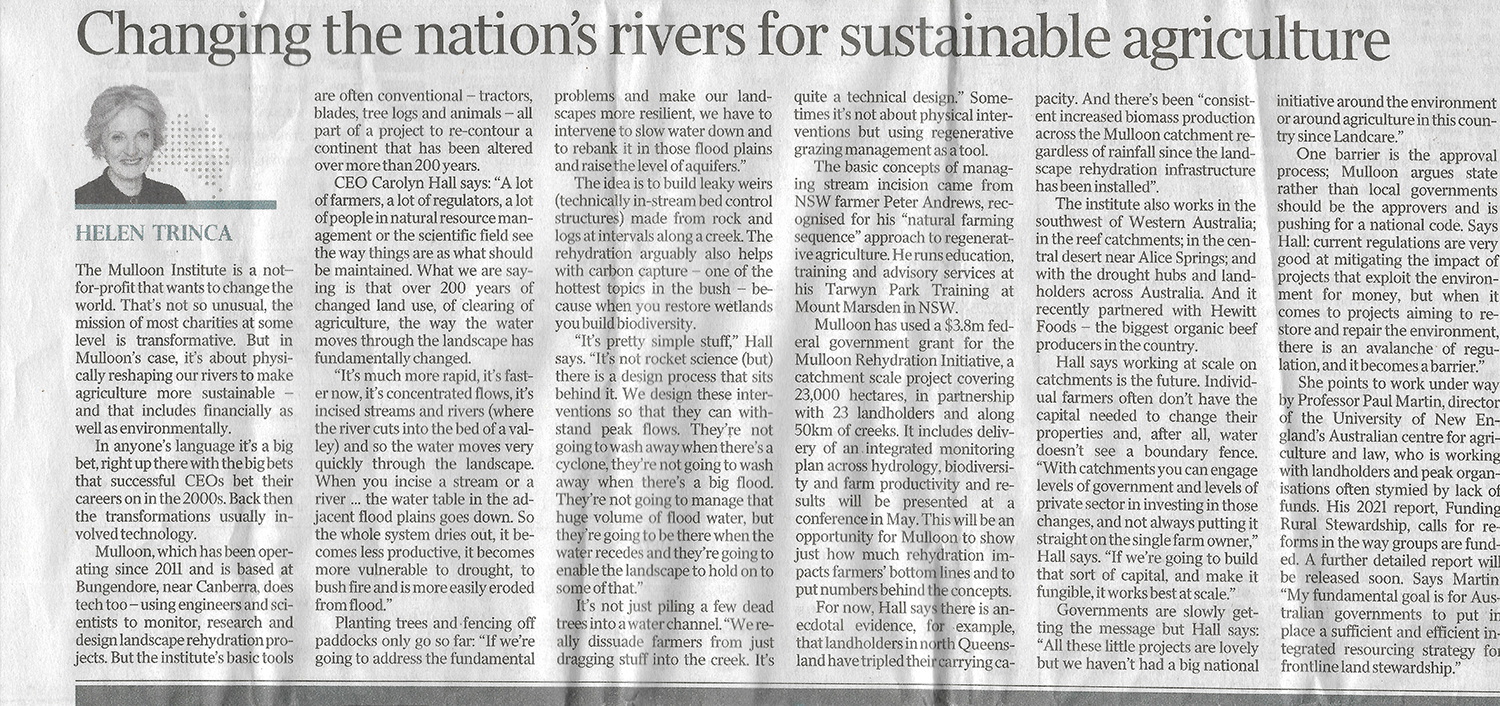
Mulloon Institute’s CEO Carolyn Hall was recently interviewed by Helen Trinca for The Australian, the story ran in the Business Review on Saturday 3 February 2024.

Helen’s article showcases the history of the Institute and the Mulloon Rehydration Initiative, looks into the engineering and science behind building in-stream structures, and why our work is so important in halting erosion, rehydrating landscapes and improving agricultural productivity across Australia.

 READ THE ARTICLE


“If we’re going to address the fundamental problems and make our landscapes more resilient, we have to intervene to slow water down and to rebank it in those flood plains and raise the level of aquifers.”

Carolyn Hall CEO

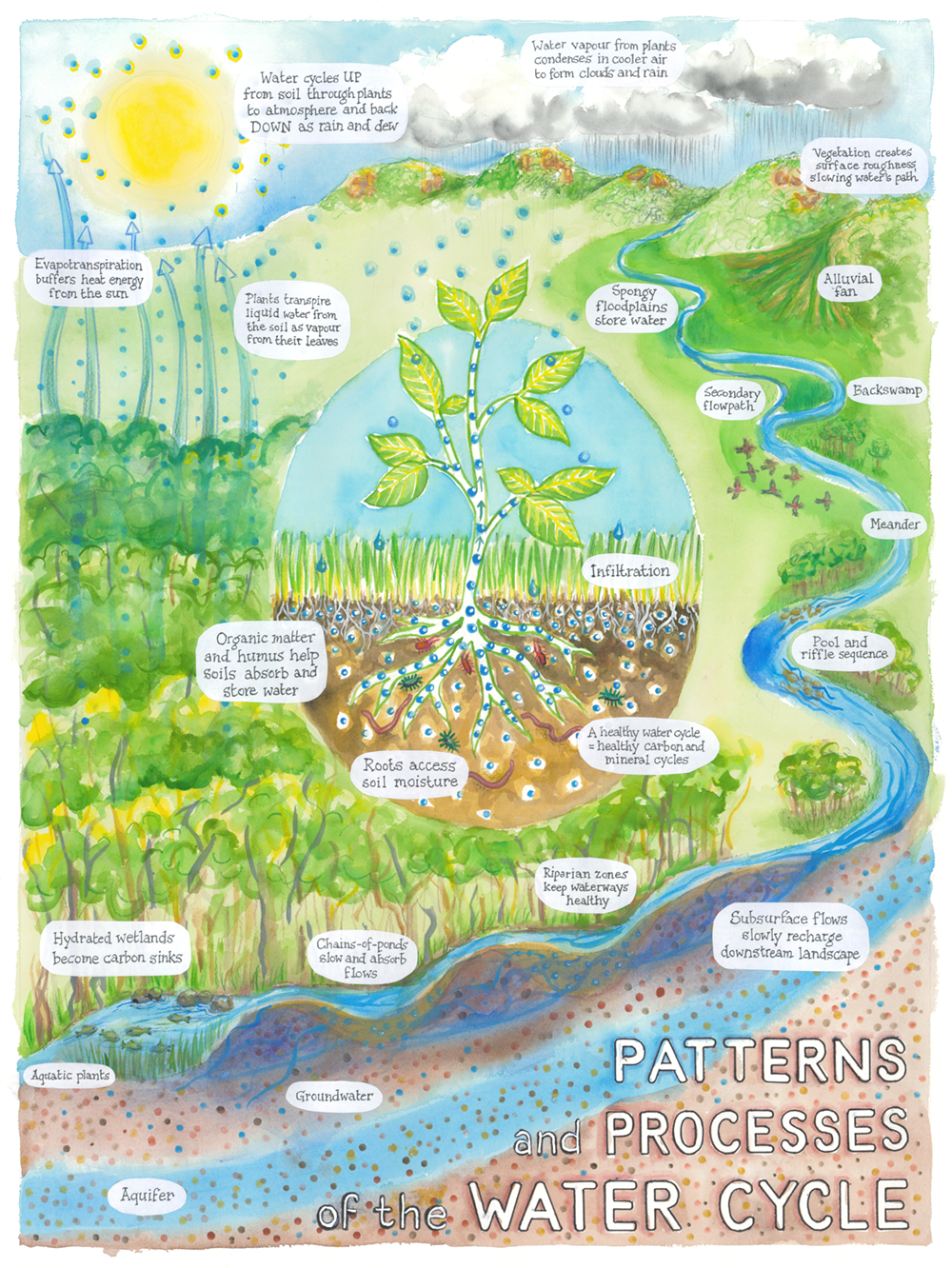
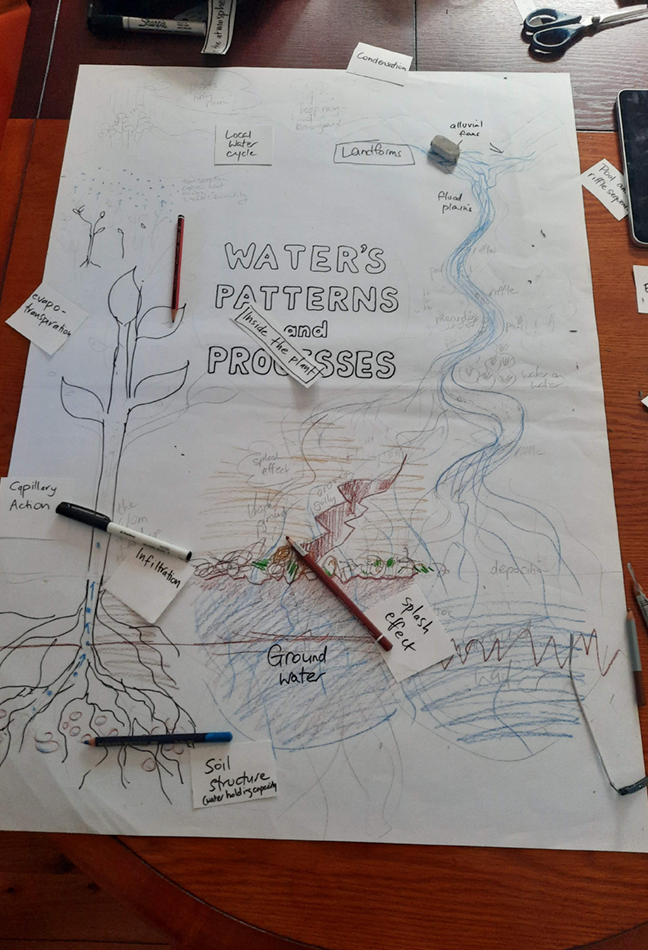
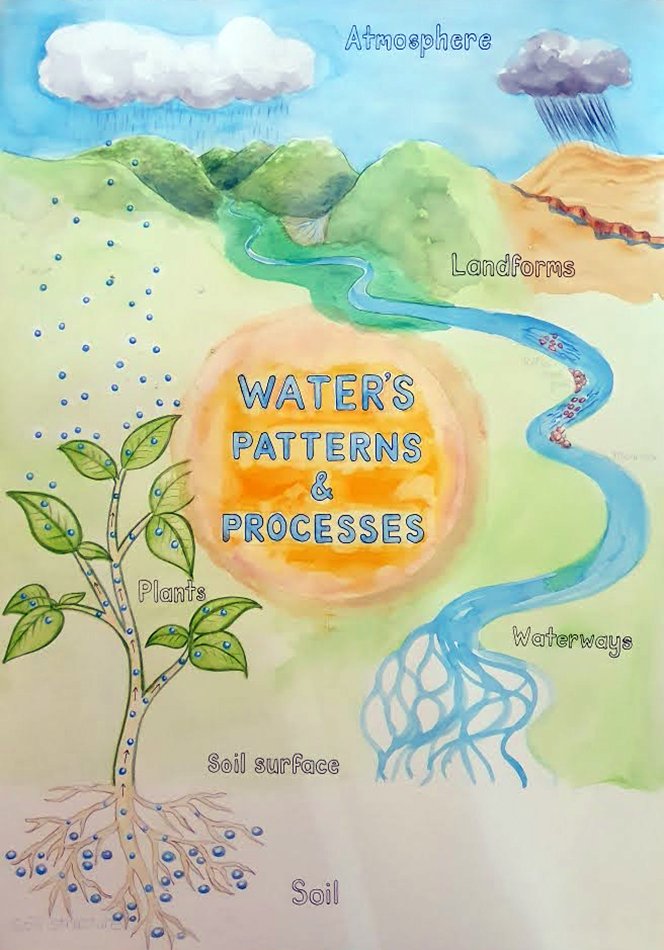
The final poster is a beautifully designed and illustrated depiction of the water cycle – the central focus of our work at Mulloon.

There are plenty of water cycle diagrams out there, but none quite like this one.

Mulloon Institute is thrilled to launch this new poster depicting water’s magical patterns and processes. We have a pile printed and ready to share with the world!  

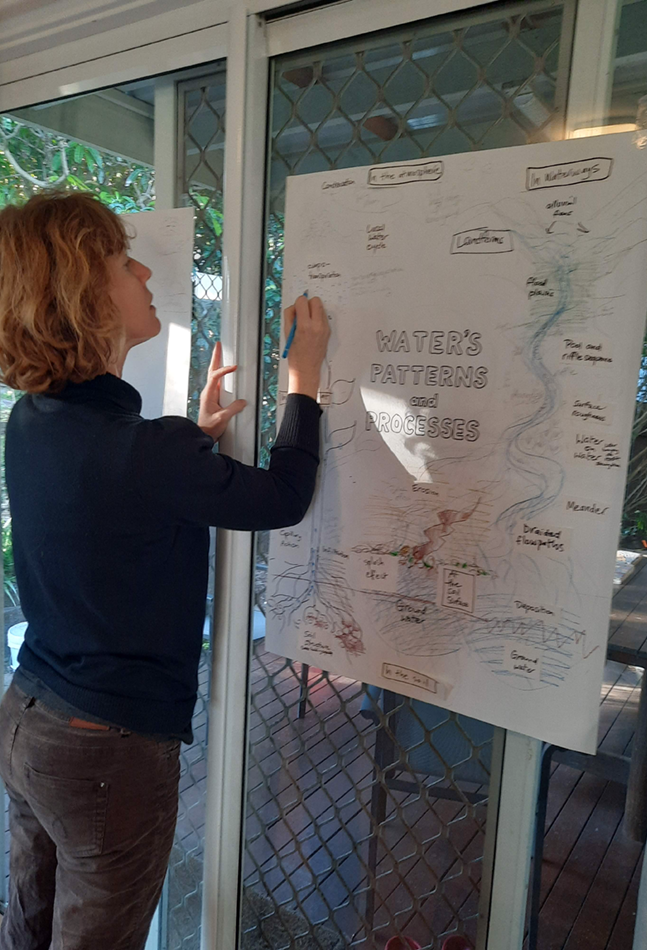
The poster was designed by Mulloon Institute’s Dr Laura Fisher with artist Kim Williams, and lovingly painted and annotated by Kim. Its blend of art and science went through a few iterations, with Kim and Laura ultimately deciding the plant belonged at the heart of the image. It feels fitting that we celebrate the plant’s vital role in healing broken water cycles, central to all our work at Mulloon.  

This poster is launched in honour of World Wetlands Day, 2 February 2024. Mulloon is proud to work alongside so many dedicated organisations and communities globally to protect and restore wetlands. Research led by USGS scientist Dr Laura Norman has proven that wetlands, and wetland-like environments that natural infrastructure can create, are ‘soil-water-carbon sinks’, which says so much about their importance for resilience and regeneration. 

Reach out to laura@themullooninstitute.org – if you help to cover postage, we would be delighted to send you one for your classroom, office or living room!  


Kim Williams, pictured left, is an incredibly talented artist who has been known to write ‘zines about surfing, books of poetry and produce all manner of wonderful art about environmental change – thank you so much Kim for bringing this vision to life!  

This poster was developed with the support of the Australian Government through the Citizen Science grant ‘Modelling Landscape Rehydration for Catchments, Communities, and Curriculum’. 

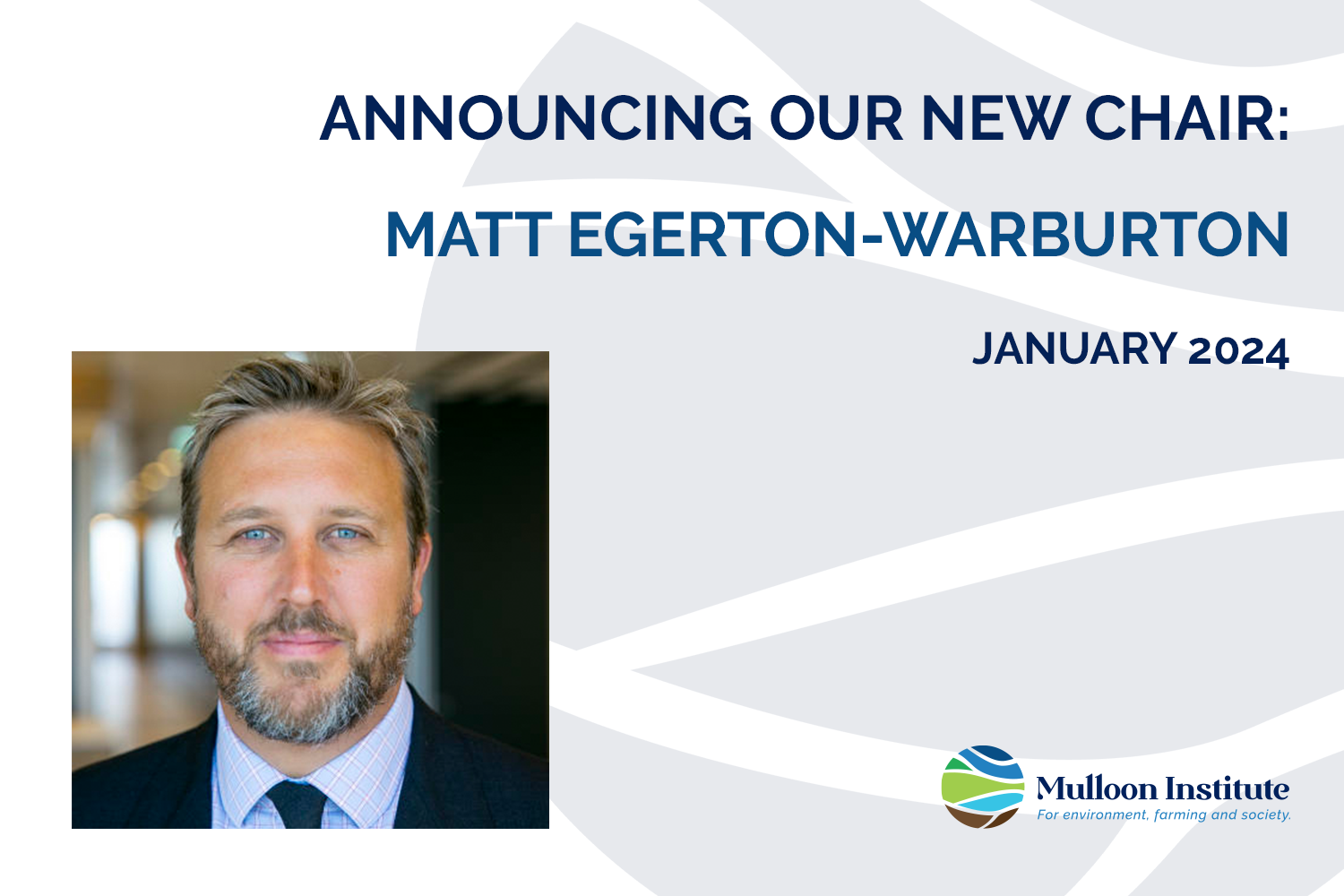
A Message from Matt Egerton-Warburton to our Members, Donors and Supporters 

25 January 2024 

I am happy and humbled to accept the position of Chair of the Mulloon Institute. 

On behalf of the board, we acknowledge the fantastic service that Gary has provided as Chair since 2016 and we hope this new era for the Mulloon Institute will be as successful and transformative. 

While we will miss Gary’s leadership, we are grateful that he has chosen to continue to serve as a director so we can continue to access his experience, knowledge and networks. 

We welcome Wilfred Finn as a new director. I have known Wilf for over 20 years and he has the right temperament, experience and knowledge for our organisation. Wilf comes from illustrious stock – his mother Justice Mary Finn (retired) was a leading Judge on the Family Court of Australia for 26 years and his father, the Honourable Paul Finn, was a significant federal court Justice, author, academic and scholar. Since 2019, Wilf has been providing the Mulloon Law Committee with expert legal counsel in environmental regulation and governance. We will benefit from his counsel and his large government, academic and corporate networks. 

The new board is committed and excited at the opportunity we now have to make a significant contribution to helping regenerate and rehydrate Australia. The late Tony Coote and Gary Nairn have provided us with a well organised, efficient organisation ready to grow.

Our priorities in 2024 are to: 

  • provide significant funds to Carolyn and our excellent research, education and media teams so we can continue to prove the science, improve our techniques and educate and work with schools, communities, government and other organisations on environmental issues with our proven solutions;

  • lobby governments across Australia to make significant regulatory change to facilitate the rapid implementation of our interventions into Australia’s waterways; 

  • support Jono Forrest and Mulloon Consulting to work with landholders across Australia to slow the flow of water on their land, and protect, revitalise and regenerate their landscapes; 

  • support Jim Steele and the operations of the Mulloon Creek Natural Farms as it provides first rate, nutritional eggs and beef to the public; 

  • finalise and publish our strategic plan for the next five years (which is being expertly managed by Rob Langtry); and 

  • grow our membership, corporate sponsorship and philanthropy programs. 

To our members, donors, clients and staff – please re-double your efforts to support us at this time. The Mulloon Institute is uniquely placed with a transformative solution to a significant environmental and productivity problem. Let’s band together, work hard, have fun and increase our efforts, energy and focus to rehydrate and regenerate Australia. 

On a personal note, I would like to thank John Nerurker and the partners of Mills Oakley for supporting me in this role. While lawyers and law firms consistently receive (some deserved) criticism, many lawyers and law firms provide hundreds of pro bono hours of service and take seriously their oaths to faithfully serve their community. I hope that I am playing a small part in this great tradition.

Regards, 

Matt Egerton-Warburton 
Chair, Mulloon Institute

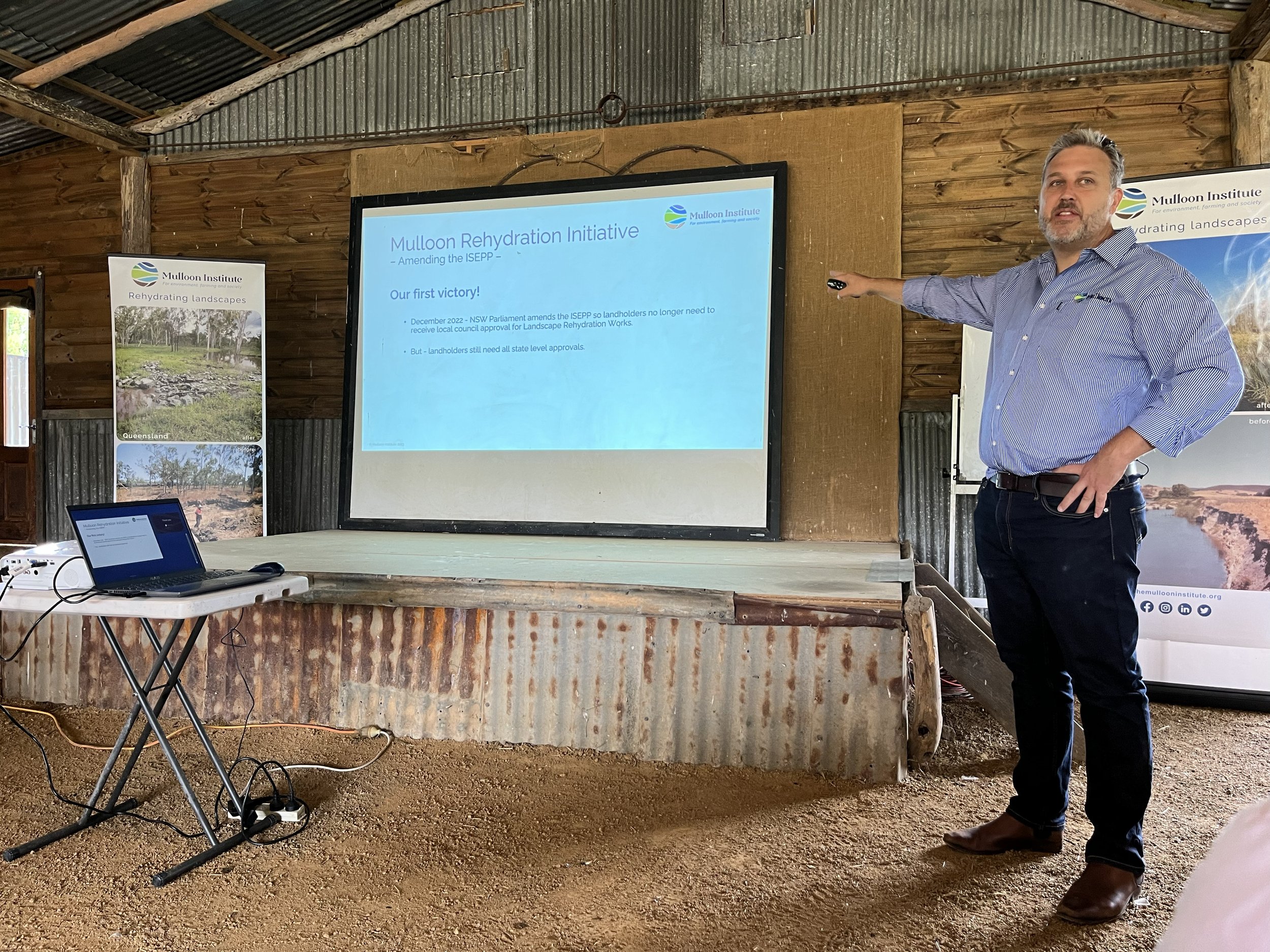
Matt presenting at the Barn on the Home Farm to the Mulloon Creek Landholders and ABC’s Landline, Febrary 2023.

A Message from Gary Nairn AO to our Members, Donors and Supporters 

24 January 2024 

You may be aware that over the past six months, I have been battling a serious health issue that continues to be a challenge. During that time, the Deputy Chairman of our Board, Matt Egerton-Warburton, has been steering our very proficient ‘ship’. I have continued to have input as and when I was capable. 

However, due to the nature of my challenge, and after 8 years as the Board’s Chairman, I stepped down from that role at last Friday’s Board meeting. Change is never easy, but it is made so much easier when you have such competent people as Matt, Carolyn Hall and Kathy Kelly as your fellow directors. 

Friday’s Board meeting unanimously elected Matt as our new Chairman. I will remain as a director and continue to participate in Board deliberations and decisions as my health permits. Friday’s meeting also unanimously elected Wilfred Finn as a director. Wilf is well known to many within the Mulloon Institute community. He was an inaugural member of the Mulloon Law Committee that has achieved regulative change and continues to prosecute more reform such as our National Landscape Rehydration and Restoration Code. While a lawyer by professional training, his experience in the water and environmental sectors will add great value to our Board’s expertise. Wilf also has been involved at the cutting edge of the many emerging environmental markets. 

It was an immense privilege to take over as Chairman from our Founder, Tony Coote AM, in early 2016. He very much laid the foundations for our organisation and on his passing in 2018 left an incredible legacy, one that we have built on during the ensuing five and a half years. I know just how proud he would be of the Mulloon Institute, Mulloon Creek Natural Farms and Mulloon Consulting, as they collectively stand today. 

The extent of our projects throughout Australia, alone, demonstrates our growth over that period. But probably more importantly, our profile and standing in Government, within the environmental sector, the agricultural sector and the broader community is something we are very proud of. 

For me personally, it has been quite a journey from my very early involvement as the local Federal Member of Parliament when Tony embarked on the original demonstration project on Mulloon Creek in 2006 to now as I hand the Chairman’s baton to Matt. I do so with great confidence that Tony’s vision, to take landscape repair and rehydration to a national acceptance as the key to solving environmental degradation and to reducing climate change impact while improving agricultural output, will continue as our focus. 

I will continue to give my total support to our new Chairman, Matt Egerton-Warburton, and my fellow directors, Carolyn, Kathy & Wilf, as we collectively make a great organisation even greater. 

Kind Regards 

Gary Nairn AO