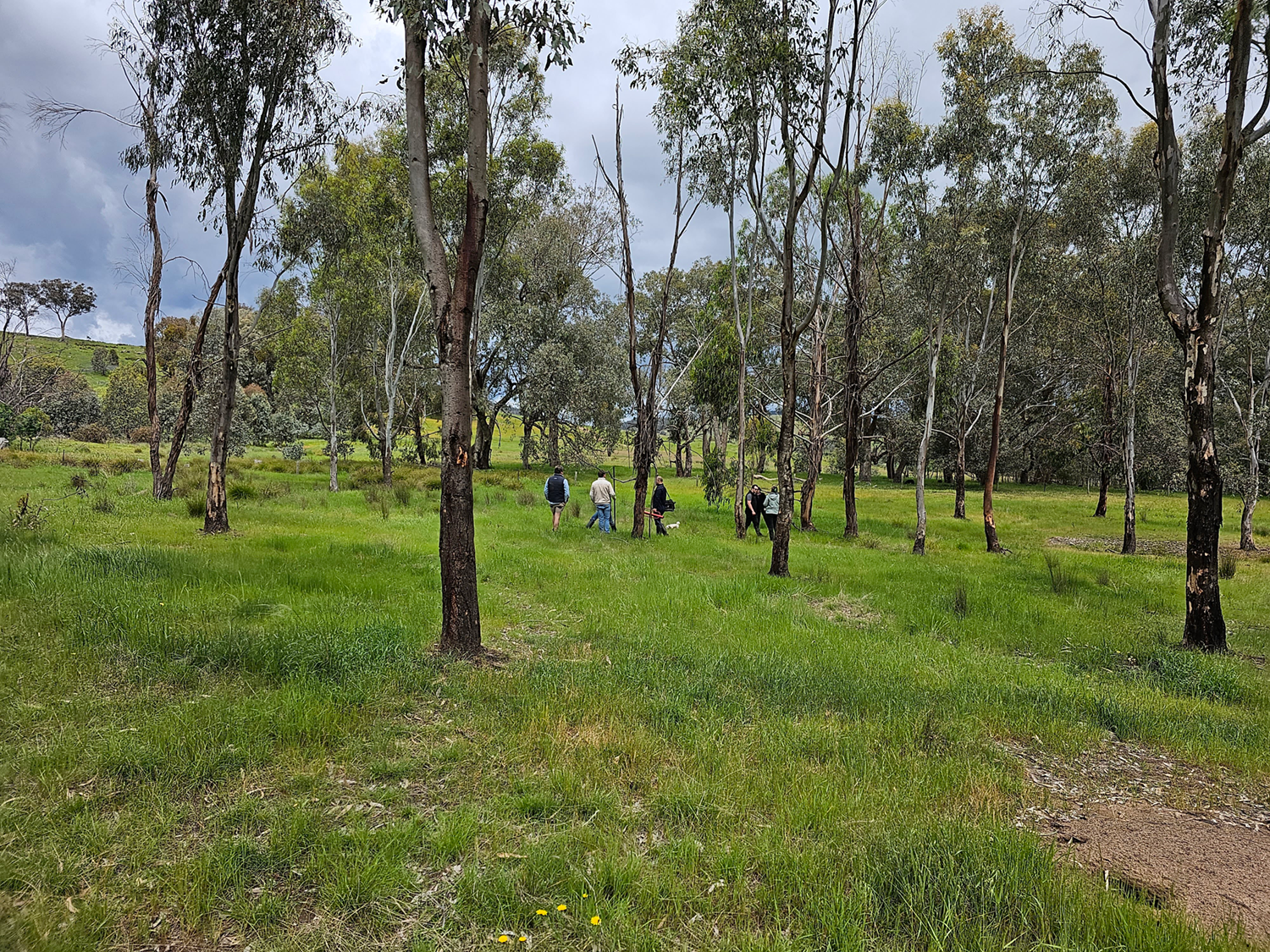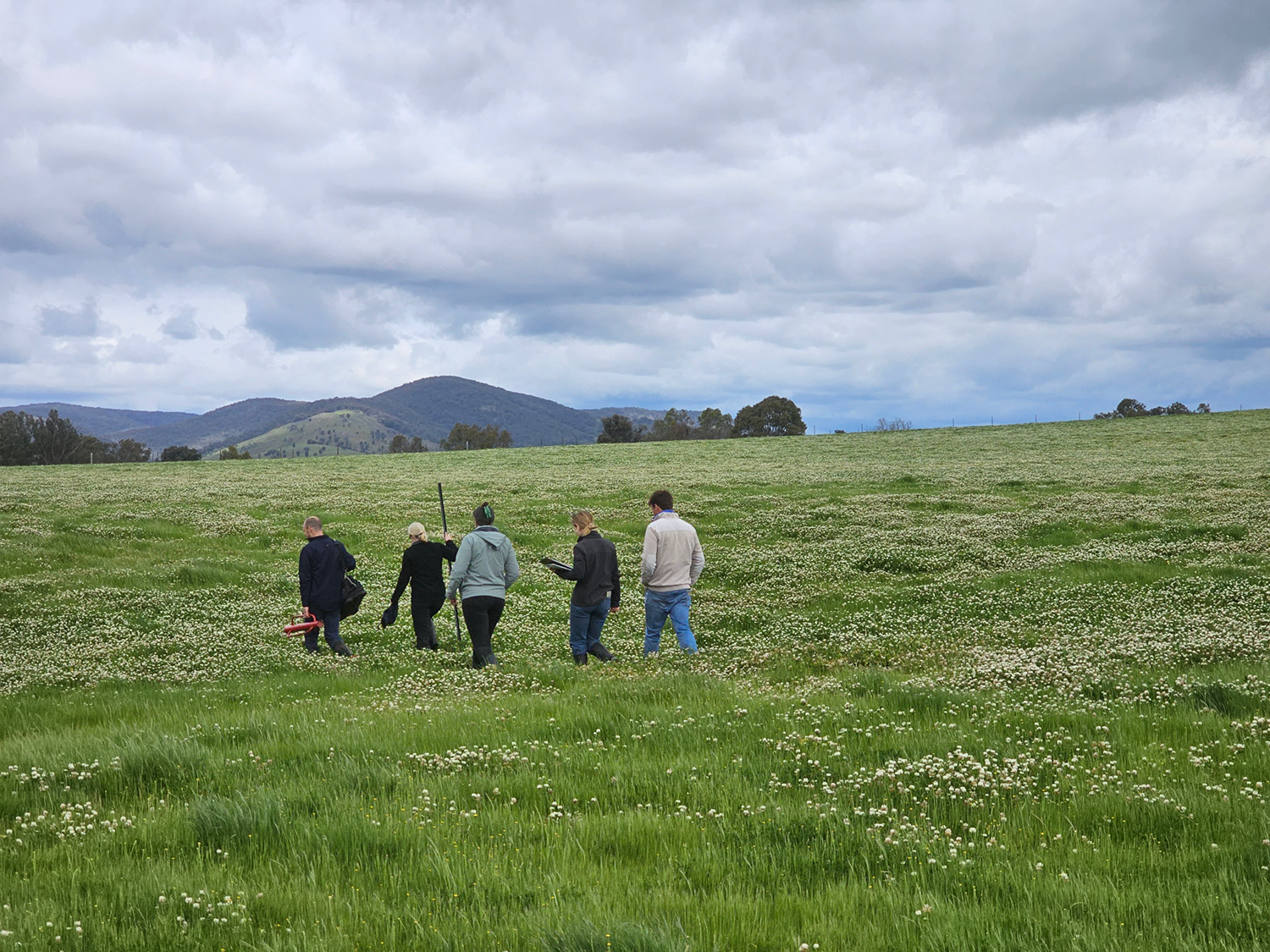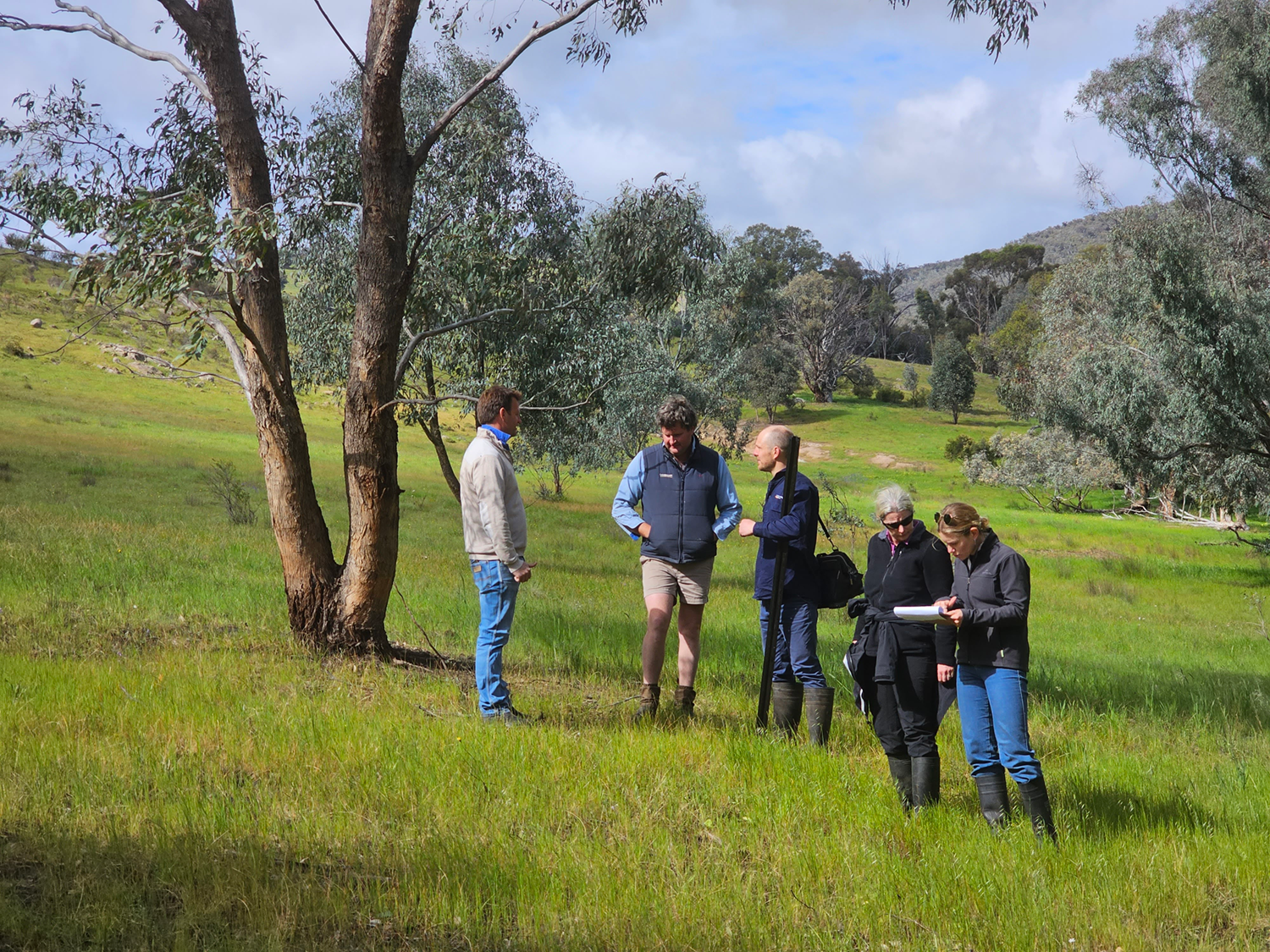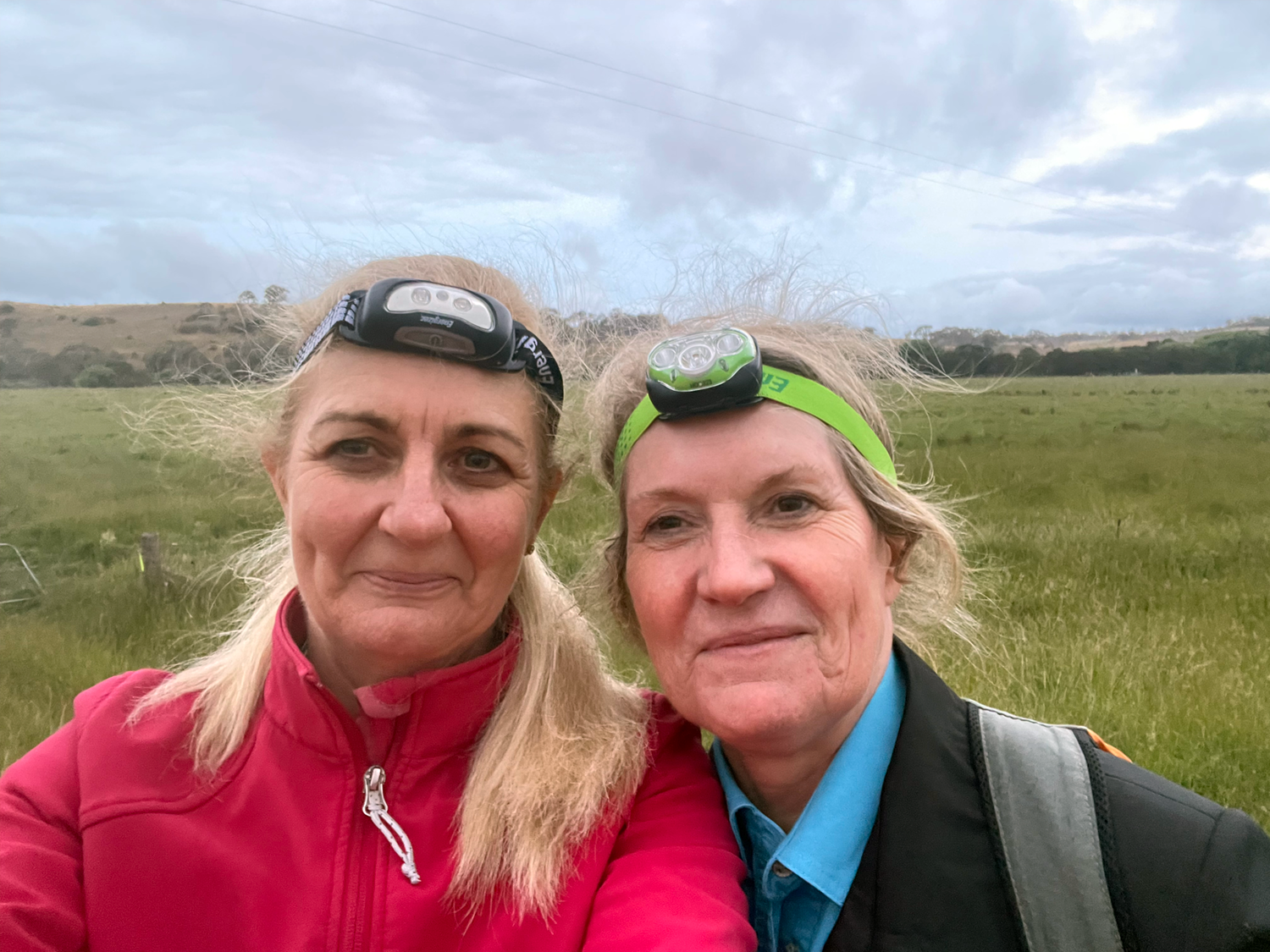
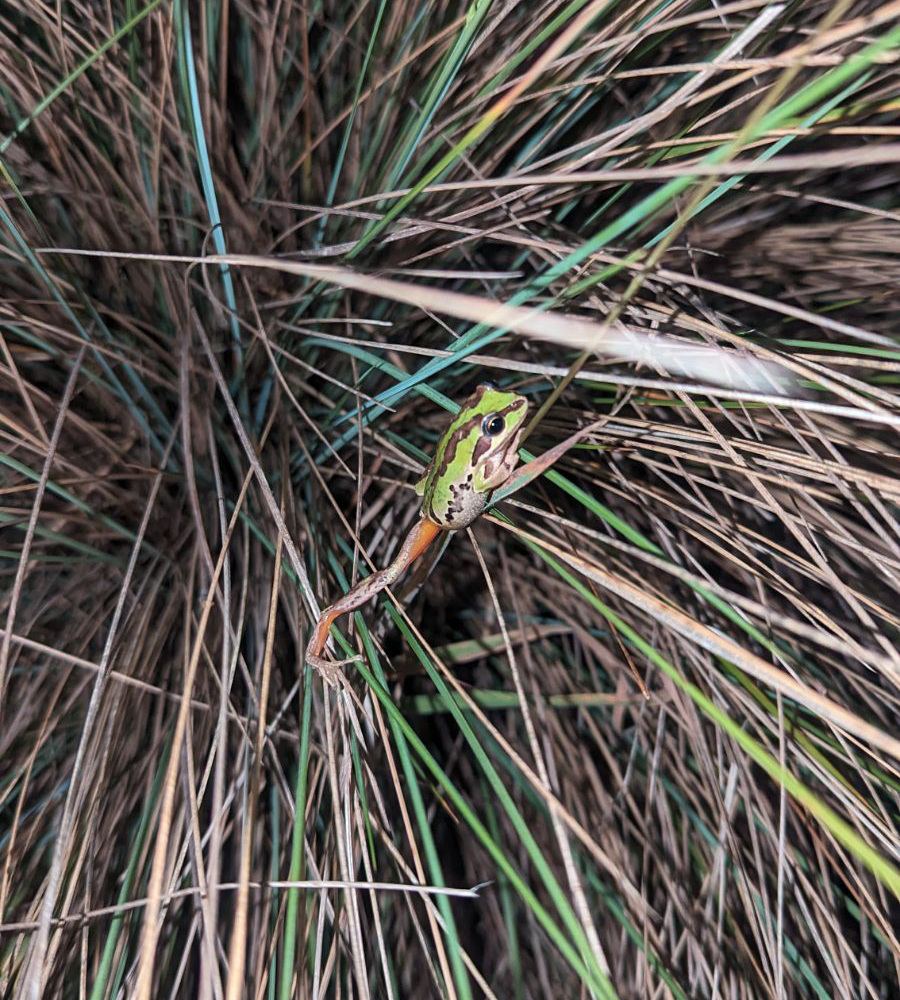
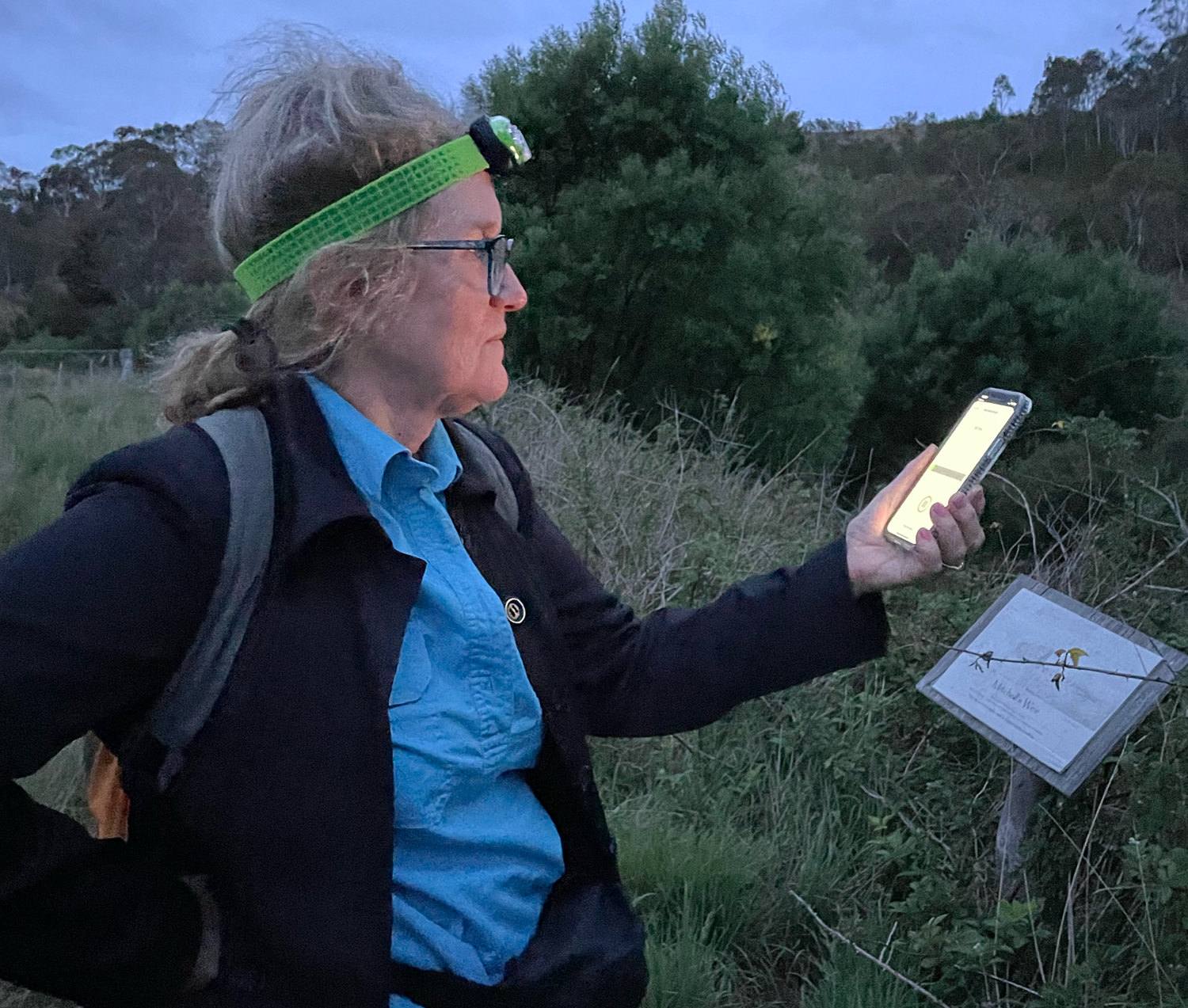
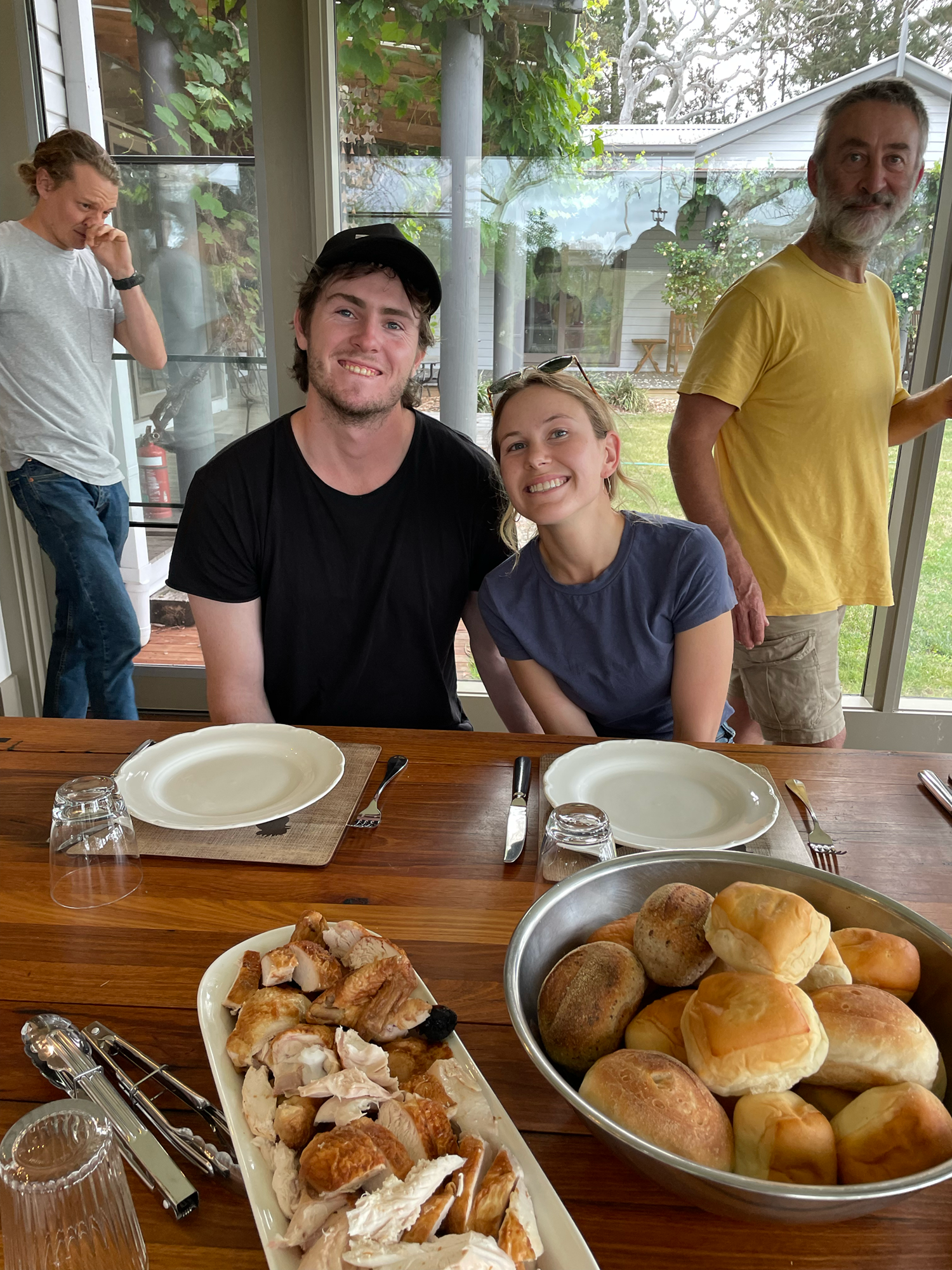
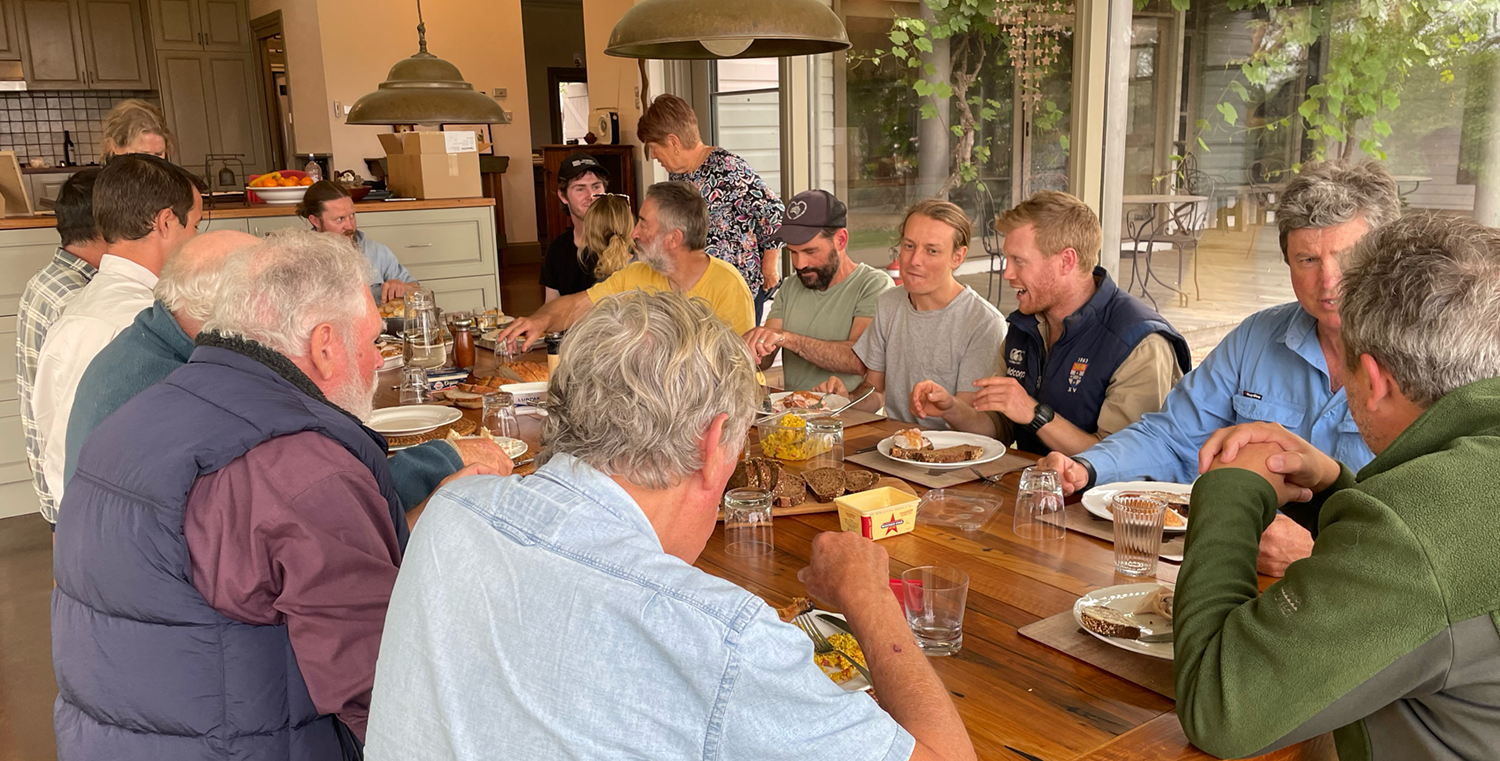
The 2023 Annual Frog Survey was a great success. Mulloon staff, along with a passionate group of volunteers, completed the data capture after dark on the evening of 23 November. Some great interactions between old friends of the Institute, old and new staff members and landholders were created over a convivial meal and spilled out into the field after dark. An increase in frog numbers was observed/heard at each site and no people were lost in the dark in the process!  

We hope this year to work with our frog expert Sam Patmore to tie the previous frog surveys into an overall summary and make recommendations regarding the ongoing frog monitoring at Mulloon. Watch this space (and our social media) for more information as it comes to hand.

We also set up an iNaturalist project to assist in the field data capture this year which can be found here: https://www.inaturalist.org/projects/the-mulloon-institute. This can continue to be used by the Science and Monitoring team along with landholders and the public to build an encyclopedia of the flora and fauna within the Mulloon catchment. 
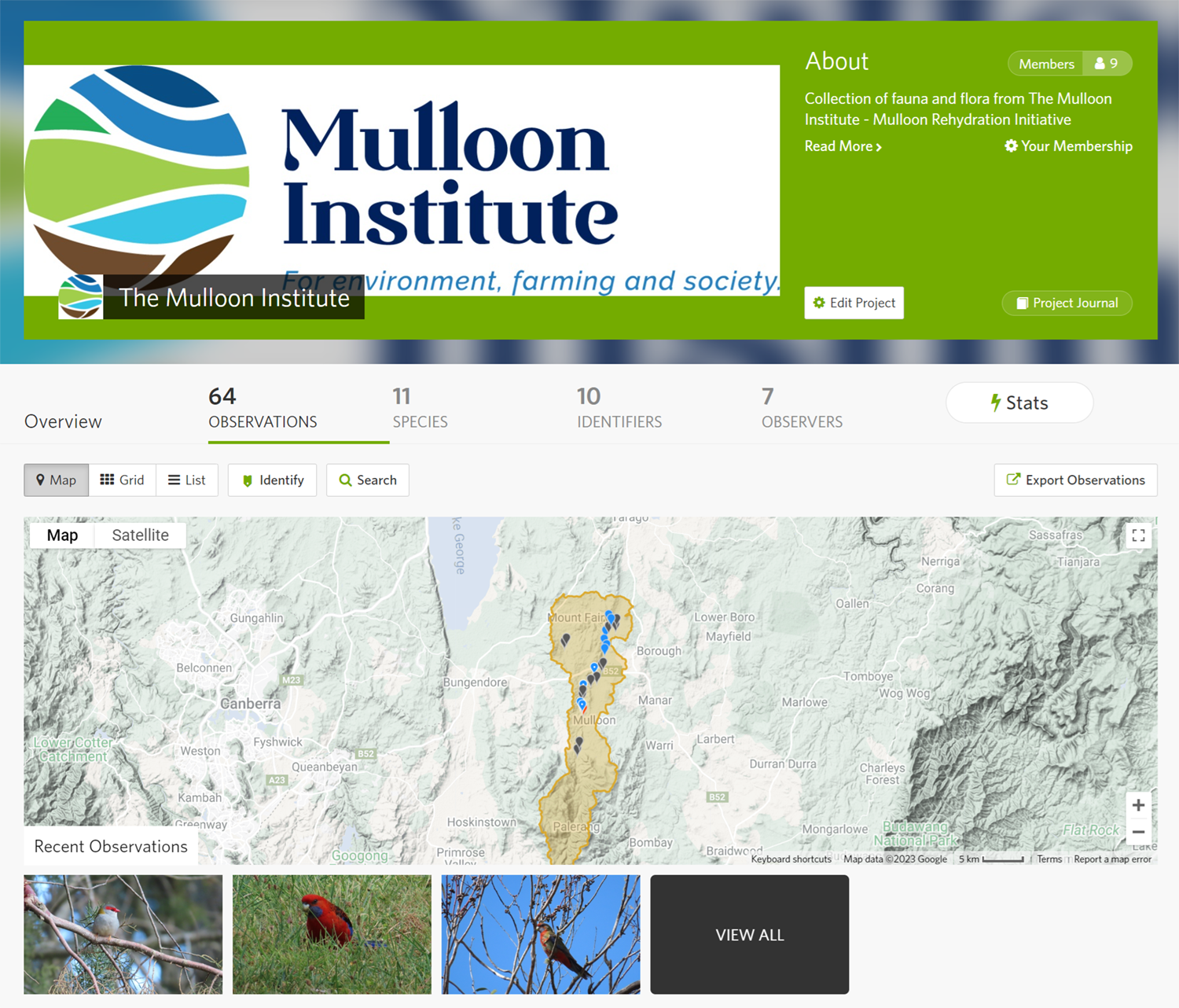
Visit the iNaturalist project set up for the Mulloon catchment here: https://www.inaturalist.org/projects/the-mulloon-institute
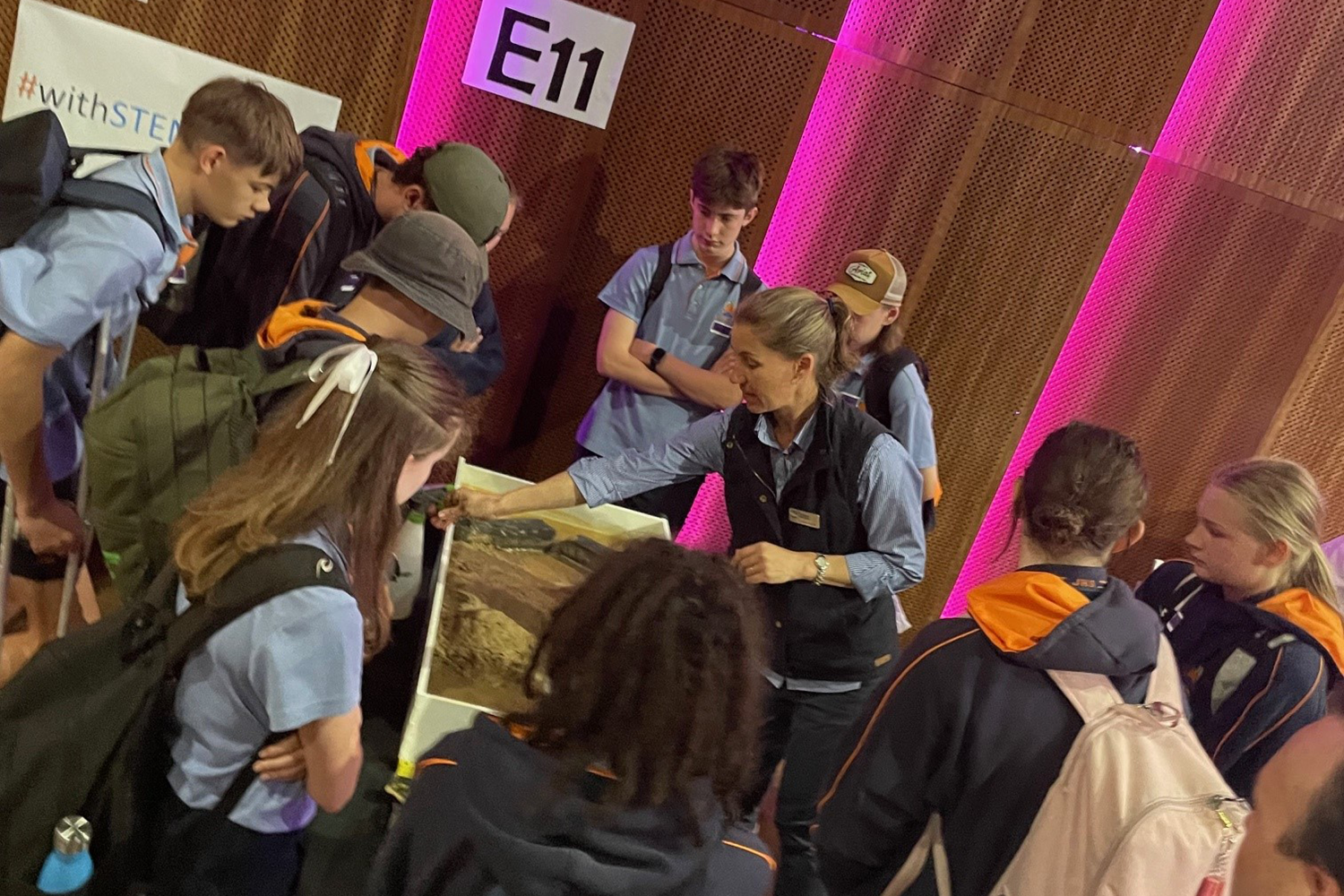
Mulloon Institute’s Penny Cooper and Chris Inskeep spent the day with local secondary students sharing the scientific monitoring and engineering practices of the Mulloon Rehydration Initiative through a range of fun hands-on activities at STEMfest. Geared towards sparking secondary students’ curiosity in pursuing STEM careers in the region, this event was a collaboration between NSW Regional Development, the CSIRO Generation STEM program, local industries and schools. Other exhibitors explored environmental science, robotics, engineering, spatial and drone technology. Opening the event was a Welcome to Country included a smoking ceremony and traditional dancing. 

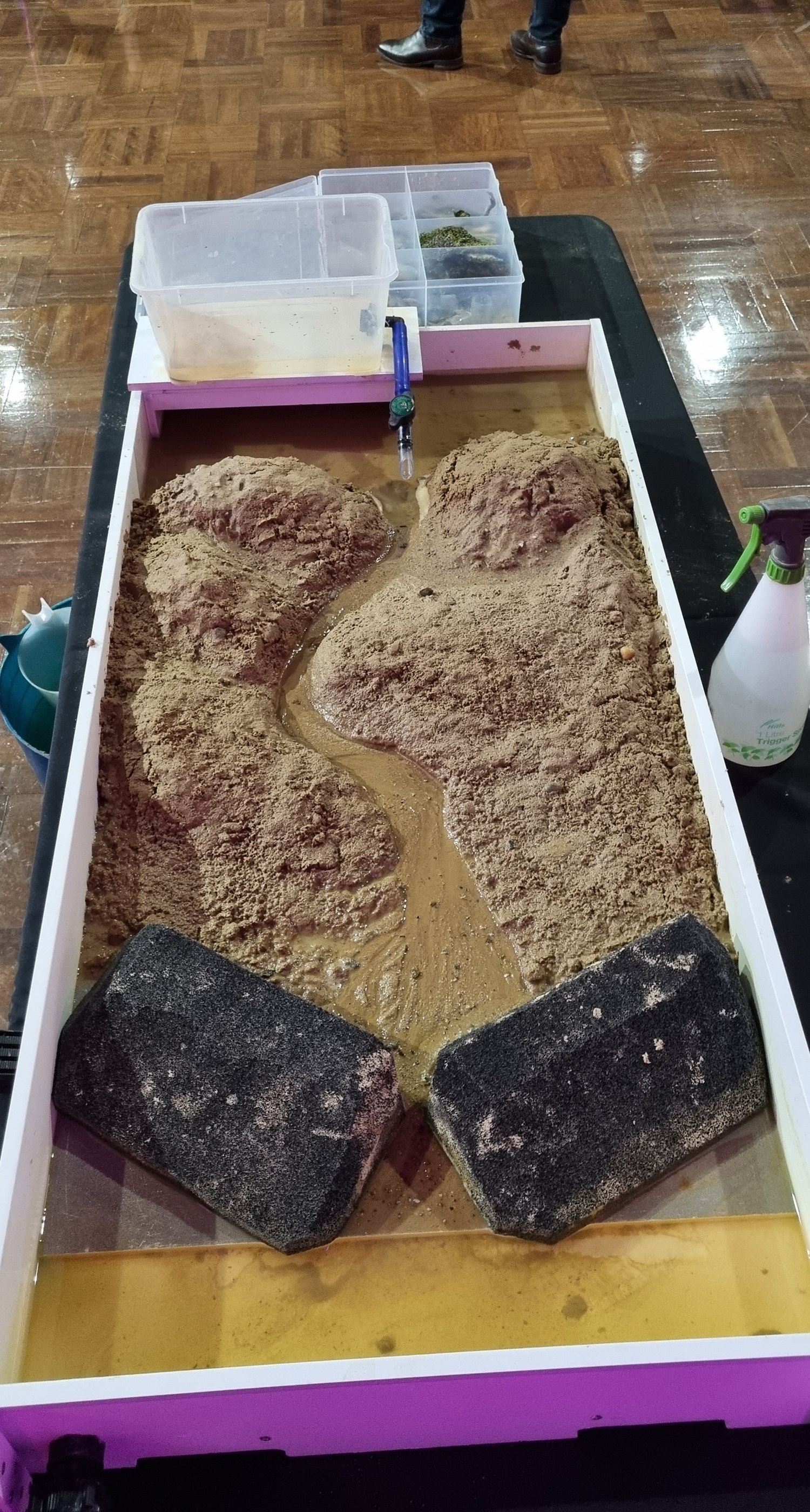
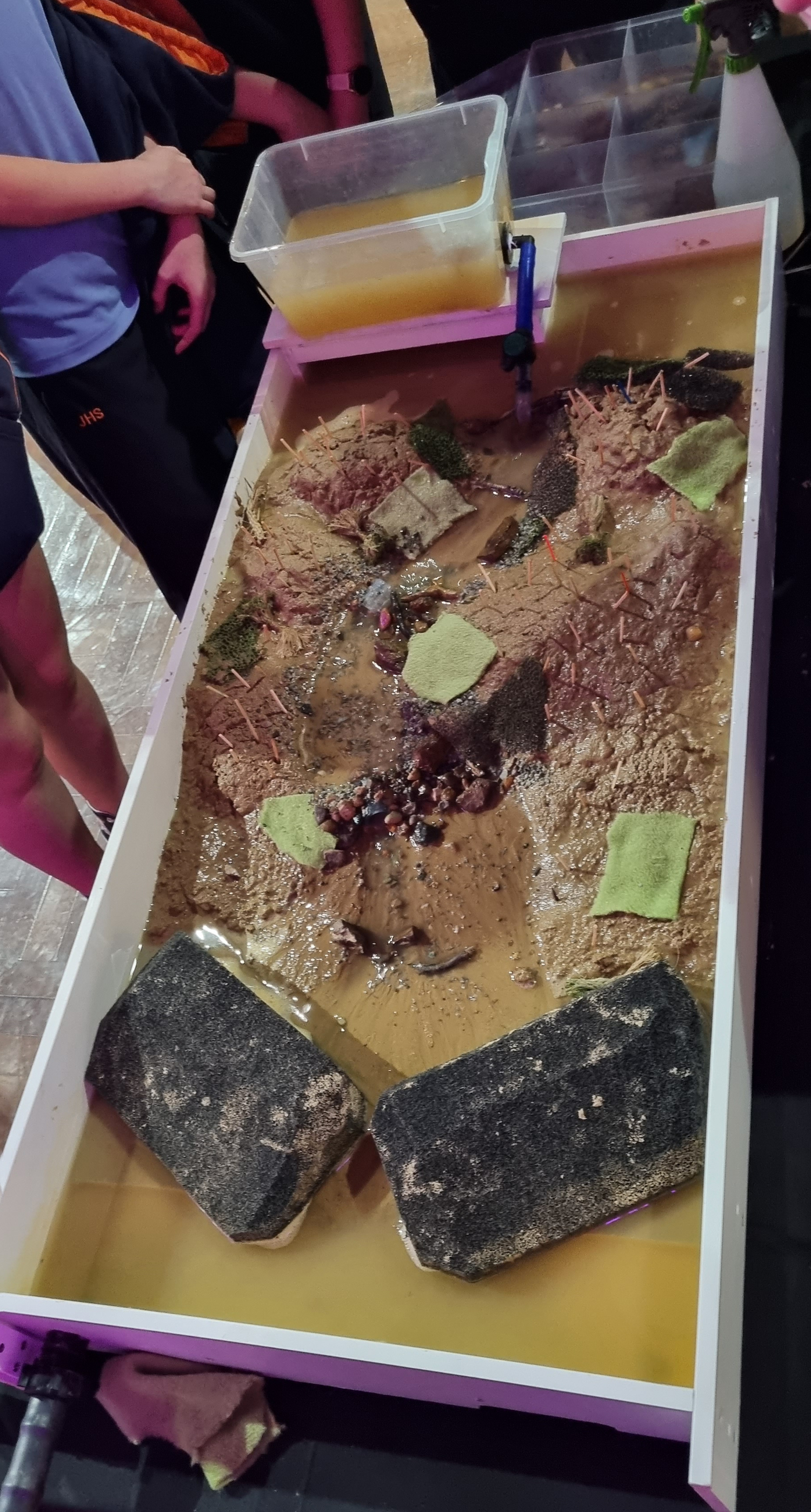
Students were invited to ‘dabble in the creek’ with our stream table model using silt and buckets of water! Sculpting landscapes using tiny tools and scaled materials, they observed how water moves in landscapes, the erosive force of water and experimented with ways to restore eroded and degraded creeks. Instream structures based on Mulloon Institute’s design principles were made to simulate how to slow and spread the flow of water to rehydrate the landscape.  

Above left is a model of a degraded landscape with bare hills, poor groundcover and an incised creek. The second picture is after the student group did some restoration work and planted trees on the hills (toothpicks), restored groundcover (felt etc) and installed leaky weirs in the creek system. Students could visualise how the stream flow has now spread and slowed. 

They enjoyed looking through before and after photos of the Mulloon Institute’s rehydration work which gave some perspective on the real life, on-ground outcomes of interventions and landscape rehydration practices.    

 Another big hit was the Mulloon Catchment Interactive Map, a visualisation of our scientific monitoring data that highlighted the extent of the science monitoring across the catchment. Students were able to see the results by zooming in on locations of flora and fauna monitoring transects, weather stations, piezometers, and instream structures.  

We were delighted to share with the next generation of land stewards the vital role we all play in repairing our creeks and catchments that are informed by science and engineering principles.  

Penny and students creating the model

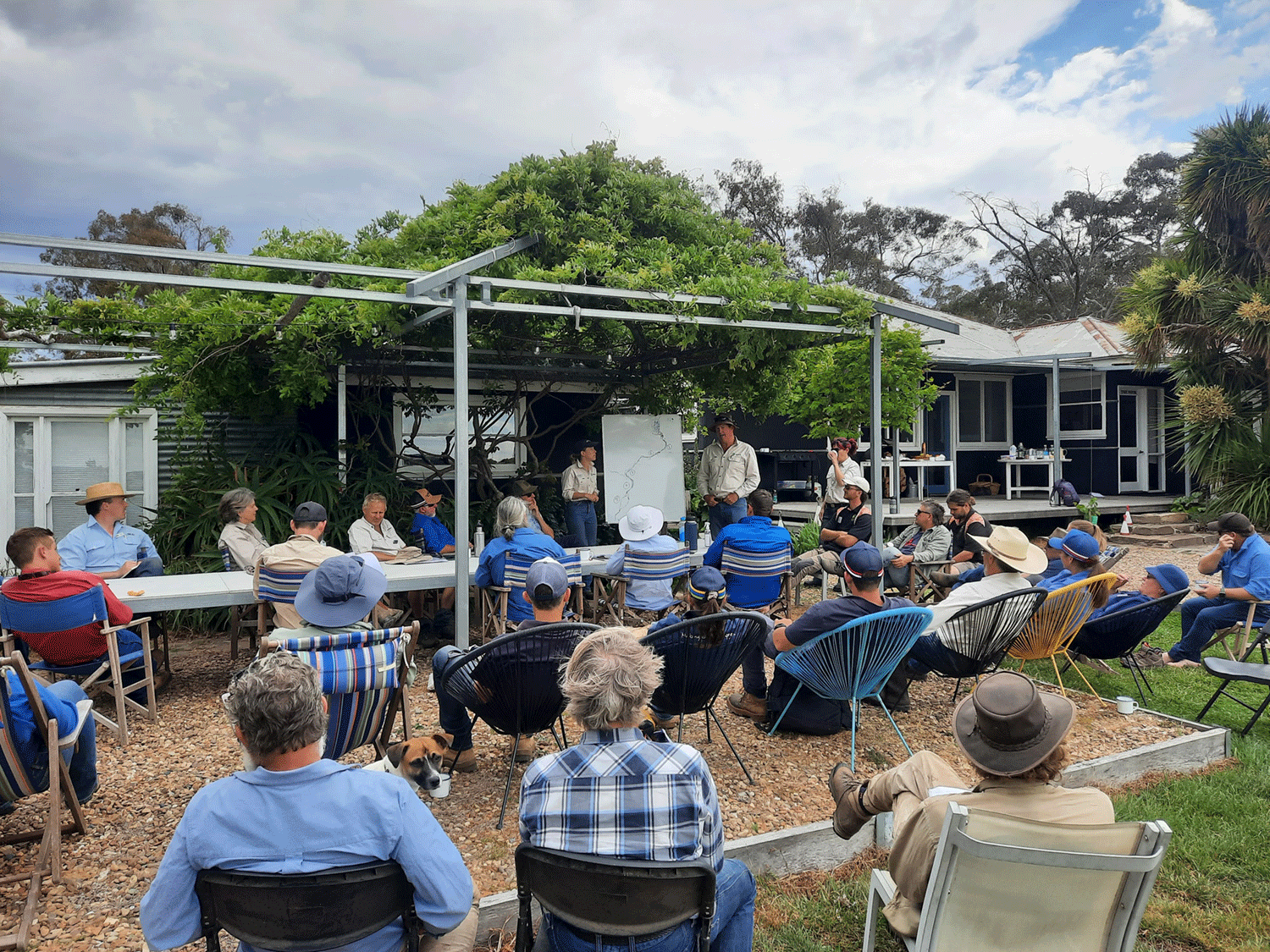
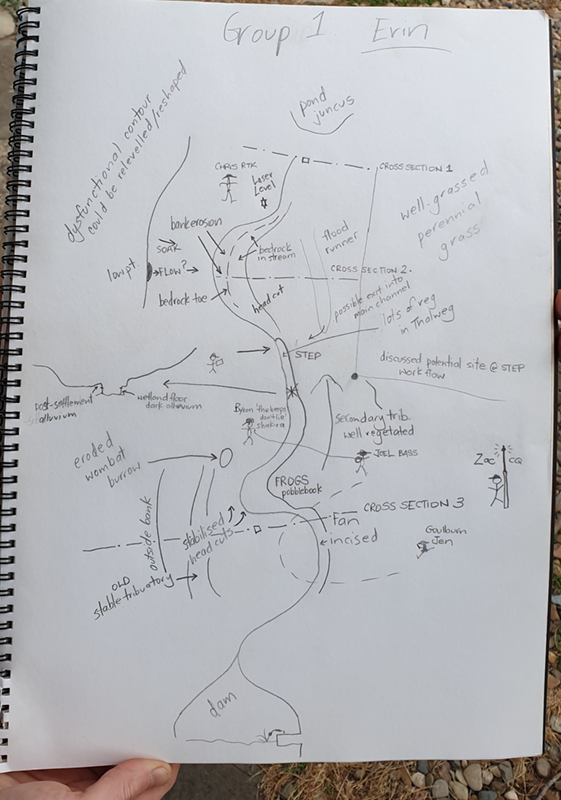
The group gathers to brainstorm the reach of Sandhills Creek they’ve surveyed at Birkenburn Farm. 

In the second week of November, Mulloon Institute hosted more than 30 professionals and delivered the first iteration of our new course: a 4-day intensive for professionals, landcare leaders and others who engage directly with landholders and communities to improve landscape health and resilience. Attendees came from far and wide, bringing considerable expertise and experience to the event. They included partners from our Communities of Practice Project in Victoria, NSW and Queensland, and practitioners from Landcare, Rivers of Carbon, Local Land Services, Melbourne Water, Water NSW, RCS and many others.  

“An extremely dedicated team who worked hard to facilitate an informative and interesting course” 

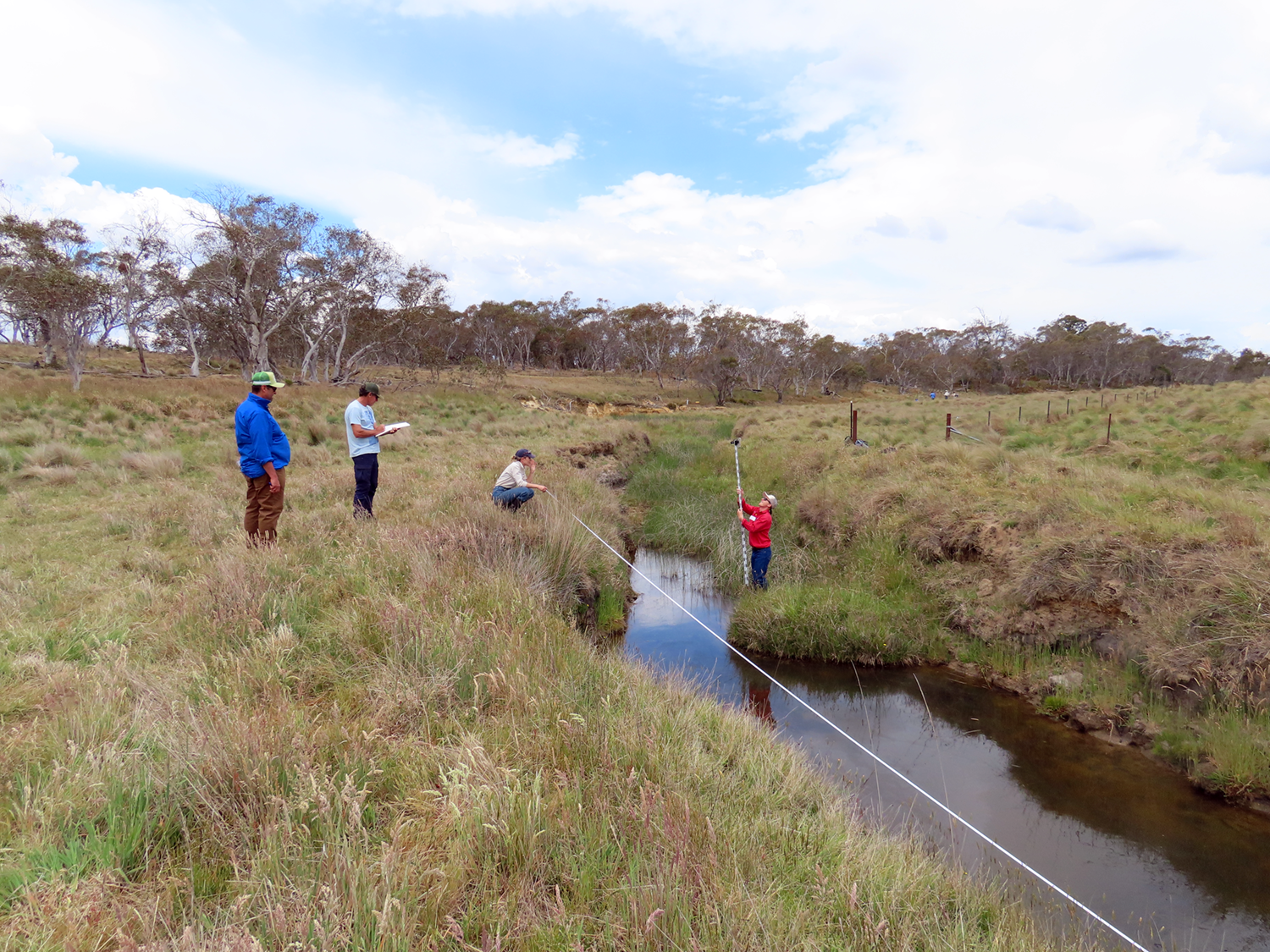
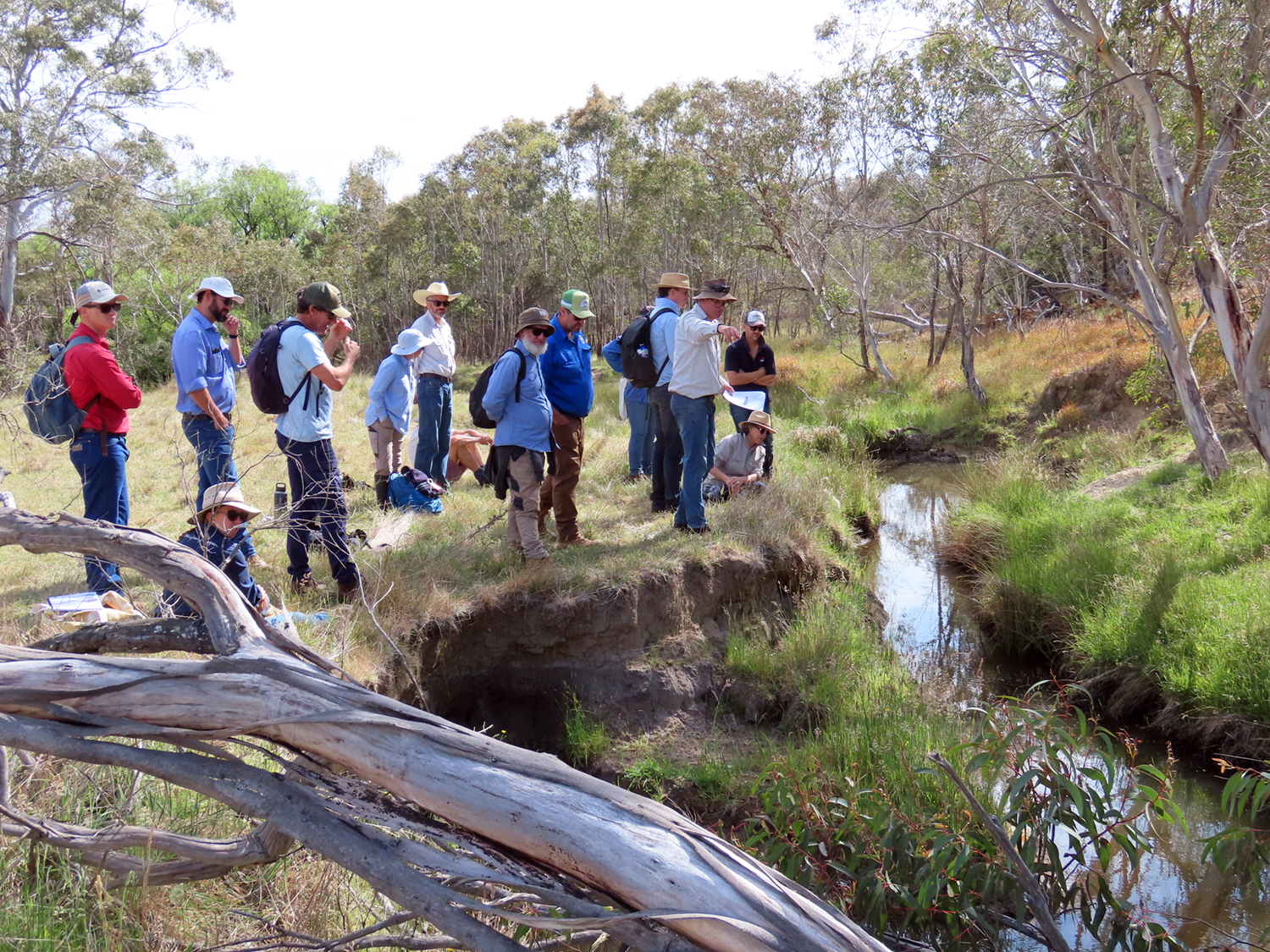
The course blends the scientific, technical and social dimensions of landscape-scale restoration, reflecting the multi-faceted nature of the Mulloon approach. We spent a day surveying a 1000-metre reach of Sandhills Creek at Birkenburn farm, a regenerating, biodiverse landscape resonating with the deep stewardship values of Martina Shelley and Tom Gordon. We also visited Hazelwood, the market garden property of Wayne and Sarah Merriman to see a terrific example of major gully repair and landscape rehydration achieved through small scale, inexpensive actions over many years. The indomitable Cathy Harrison and Penny Hayman shared the admirable outcomes of the Araluen Creek Restoration Project, achieved despite multiple natural disasters and other obstacles that too-frequently impede grassroots projects in rural communities. Many lessons emerged around the barriers that need to be addressed so that more such projects can take place, some of which we were able to brainstorm during David Hardwick’s valuable sessions on the social dynamics of capacity building.  

“Good things were created that will benefit everyone and ripple out for a long time. The level of effort and creativity that went into making the week was fabulous.”

Assessing landscape trajectory on Sandhills Creek. 

Healing Country in the context of farming requires many tools and tactics, as well as intricate, supportive connections between land managers, government agencies, custodians, conservation organisations and community groups. The Mulloon team are immersed in this challenge every day, as we, alongside many others, try to progress projects that can greatly improve water cycling and storage in our fragile catchments. Designing a scientifically-grounded curriculum around these goals isn’t easy! We were blessed with this pilot to share that journey with an astute and passionate group of practitioners and presenters from the local community. To all of them, way say a heartful thank you!! 

“I love what the Mulloon Institute is doing and look forward to mainstreaming the landscape function restoration philosophy in the Bass Coast” 

Wayne Merriman at Hazelwood Farm describes the small but effective steps taken over time to return this gully to health. 

“Mulloon Institute and MCC are clearly a bunch of passionate professionals hellbent on helping the landscape and the people that live in it” 

The Professionals Intensive curriculum has been developed with the support of the NSW Government, through its Environmental Trust. The delivery of this pilot was supported by the Federal Government’s Future Drought Fund, through the Communities of Practice Project (CoPP).  

Gavin Tinning brings artistic flair to landscape observation.

This Friday 17 November is National Ag Day and we’re proud to announce we’re celebrating by showcasing our landscape regeneration work to a national audience on Channel 7’s The Morning Show!

Our CEO Carolyn Hall, Principle Landscape Planner Peter Hazell, and local Mulloon Rehydration Initiative landholder Gerry Caroll, recently welcomed David Tyack from Vitasoy and spoke with Karen Ledbury at the Home Farm about the benefits of landscape rehydration methods and their ability to rebuild the natural landscape function of the Mulloon catchment and boost its resilience to climatic extremes for more reliable stream flows, improved ecosystem functioning and enhanced agricultural productivity.

Mark in your calendar to watch between 9 – 11.30am – The Morning Show on Channel 7, Friday 17 November.

From our Deputy Chair, Matt Egerton-Warburton

Phew, what a year…

We are a busy little organisation – 24 staff, $21m in assets and revenue from eggs and cattle (Mulloon Creek Natural Farms), consulting (Mulloon Consulting), education programs, bequests and grants.

Our goal is to rehydrate and restore landscapes and to create sustainable, profitable and resilient agricultural and environmental systems across Australia. We are conducting projects with governments, landholders, aboriginal land trusts, foundations and universities in many places including Bungendore, Burdekin, Narwietooma, Boyup Brook, Glen Helen, Tidbinbilla, Burren Junction and Turnip Creek.

This year at the home farm we hosted National Landcare Network, Australian Conservation Foundation, American Embassy staff, Malcolm Roberts of the Productivity Commission, Staff from Tanya Plibersek‘s office, Kristy McBain MP and Matt Burnell MP from the House of Representatives Standing Committee on Agriculture.

We partnered with Vitasoy Australia, the Future Drought Fund, Northern Hub, the NSW Government‘s Environmental Trust, NQ Dry Tropics, Government of Western Australia‘s Natural Resource Management Program, Southern ACT Catchment Group, Climate Friendly, The William Buckland Foundation, Bush Heritage Australia, TDM Foundation, Harris Farm Markets, Hewitt Foods, Charles Darwin University and Ahakeye Aboriginal Land Trust (amongst many others).

Congrats to Kelly Thorburn, Carolyn Hall and the team for putting together another outstanding report and Kathy Kelly for whipping our financials into shape.

And finally “hope”… we can do this, we can turn this around. With diligent work and good cheer we have the tools to restore and rehydrate our land. Join us!

Happy reading!

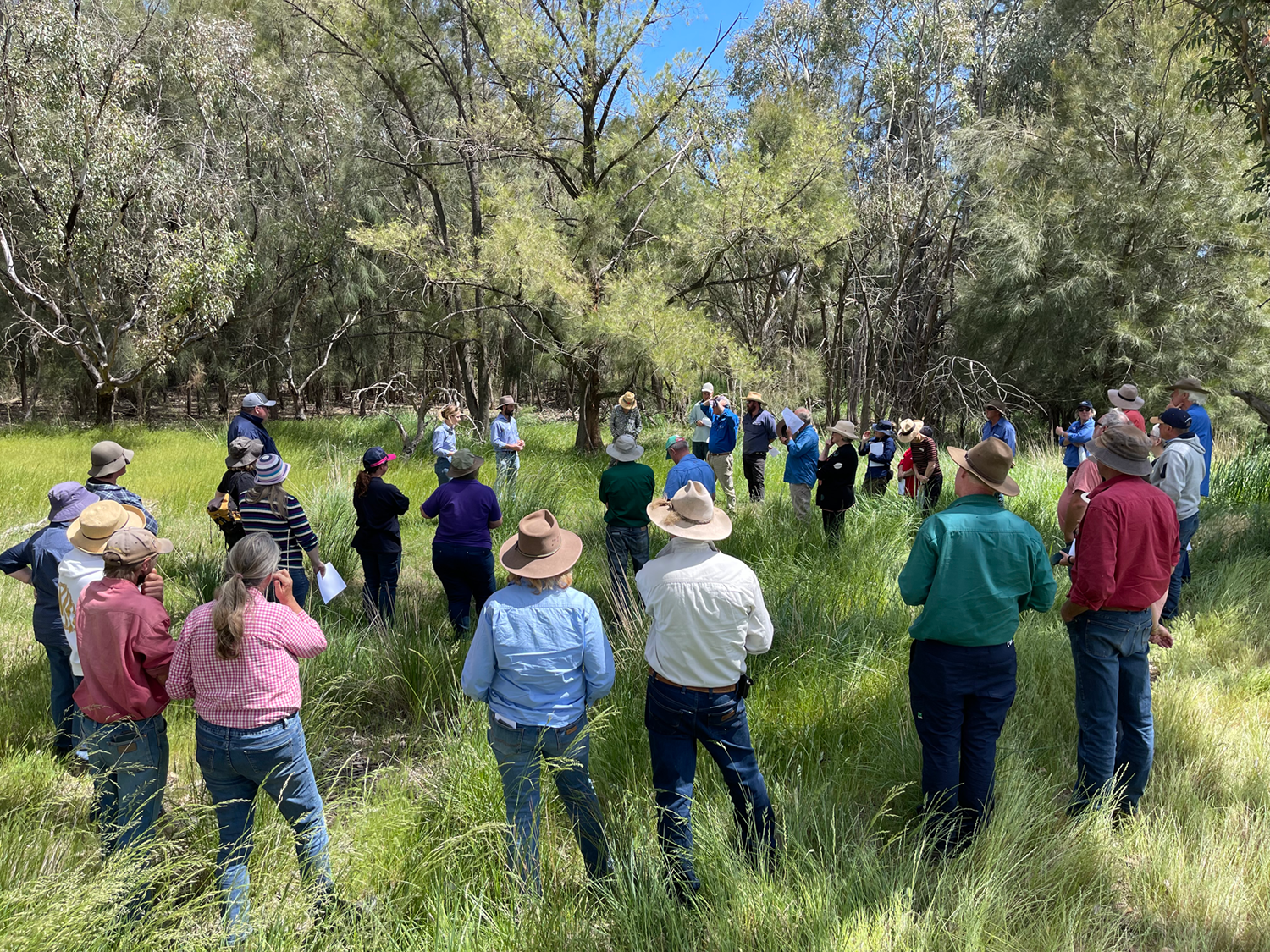
Eugowra district landholders at the workshop last month.

Our most recent workshop, held at Mandagery in the Central West of NSW, was a fitting location given its Aboriginal origin meaning ‘chain of water holes’.  The event was hosted by the Institute of Sisters of Mercy of Australia and Papua New Guinea, and also supported with funding from South Coast Rural Relief who were keen to support farmers in a flood-affected community.  The Sisters of Mercy’s aim is to make a positive and lasting difference in this region at a landscape and community level, following the devastating impact of the floods in November 2022.  A number of the Sisters were present at the workshop.

Erin and Jack presenting at Eugowra

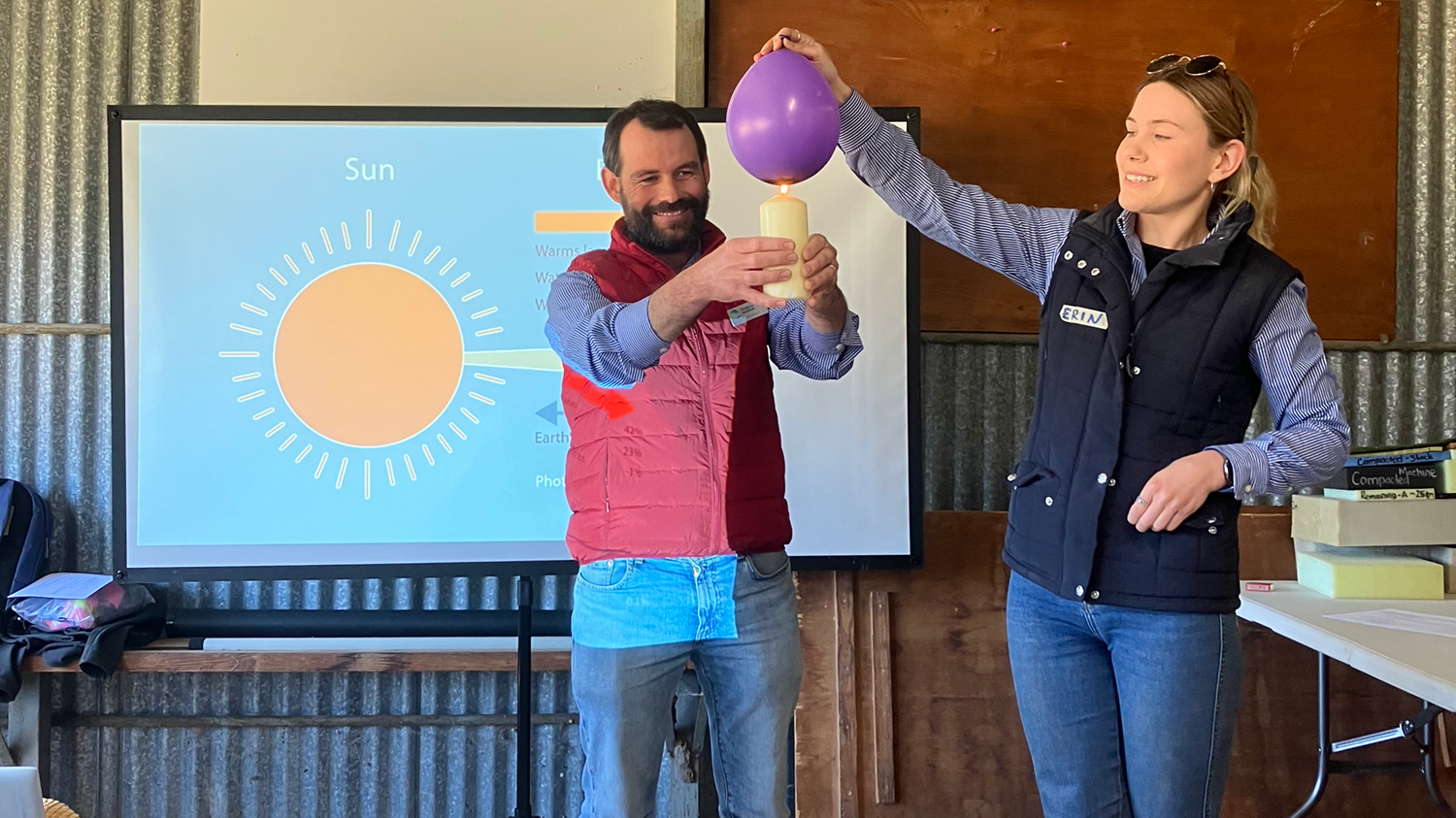
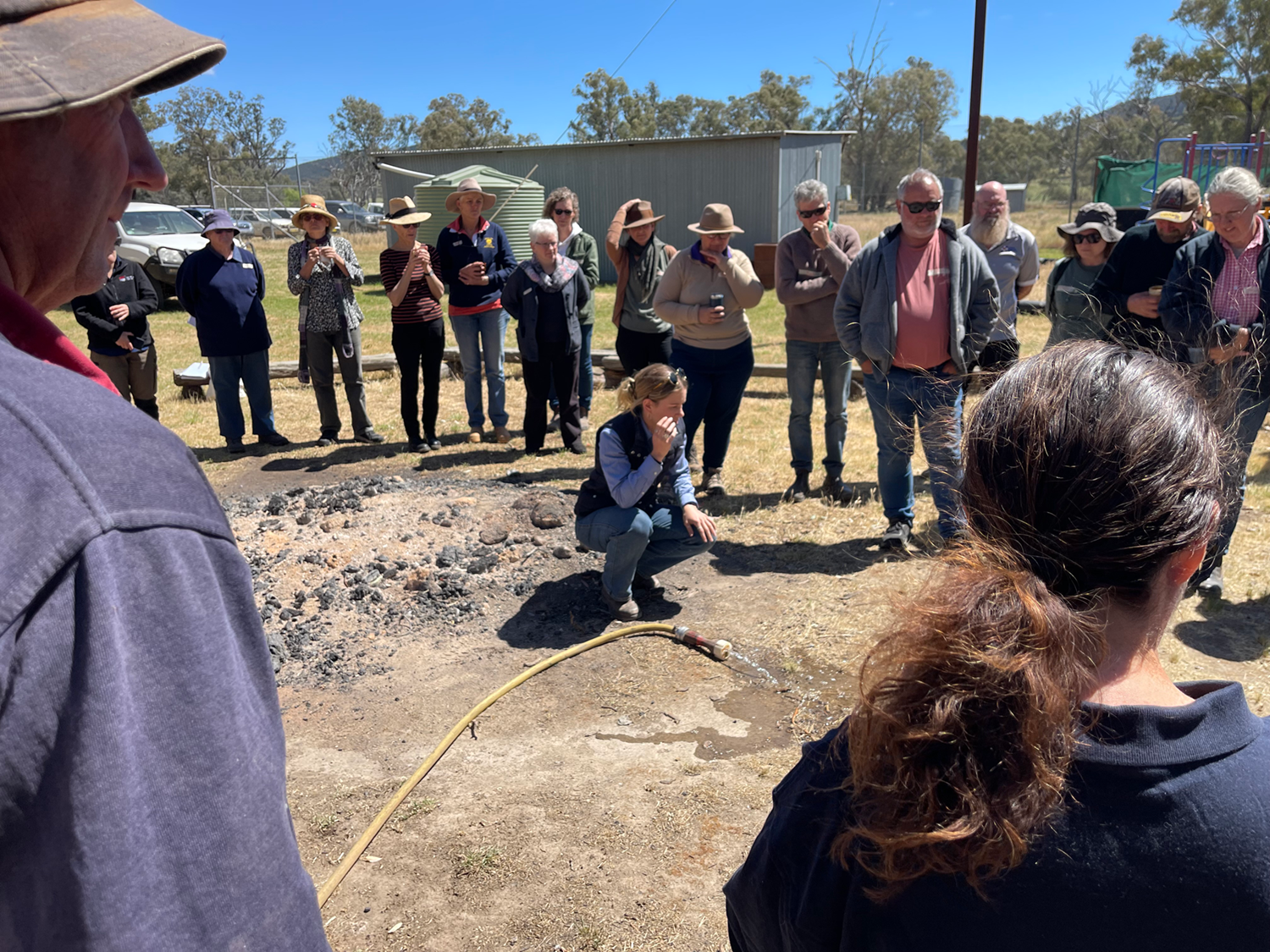
Our team Erin Healy and Jack Smart lead participants at the workshop through water cycle processes; opportunities for reducing runoff and retaining more water in their landscapes to increase crop and pasture production; natural capital benefits associated with landscape restoration; prioritisation processes; and potential landscape rehydration natural infrastructure. 

Thanks to the Dunn family at Reedy Creek and the Wright family at Eugowra we had the opportunity to observe previous restoration work that has been undertaken and is having positive production and ecological benefits, and further apply what had been learned during the workshop. 

Tim Wright also provided a great demonstration during the workshop about the impact of land management practices on soil and geology, which linked nicely to the landscape rehydration presentation.

Erin demonstrated techniques to slow the flow of water with a variety of interventions that can be scaled up to farm and catchment scales

Our heartfelt thanks to Sally Neaves and the rest of the Sisters of Mercy team for making this event possible for this community, and providing the opportunity to build increased awareness of landscape restoration possibilities in the region. It was also great to have representatives from Central West LLS, Landcare and John Fry contributing on the day.

Image ©Sustainable Table

Many thanks to regenerative change agents Sustainable Table for our recent inclusion on the Australian Regenerative Food & Farming Map.

The map gives visibility across regenerative, change-making businesses, allowing for connection and collaboration in ways never before possible, and is catalysing the transformation of food and farming systems in Australia.

It is enabling the industry to connect, collaborate and share knowledge, conscious eaters to find regenerative businesses they can support, and funding partners to discover new philanthropic or investment opportunities.

Sit down with a cuppa to enjoy the map and explore how Sustainable Table are creating connections, and providing funding options, while you’re there.

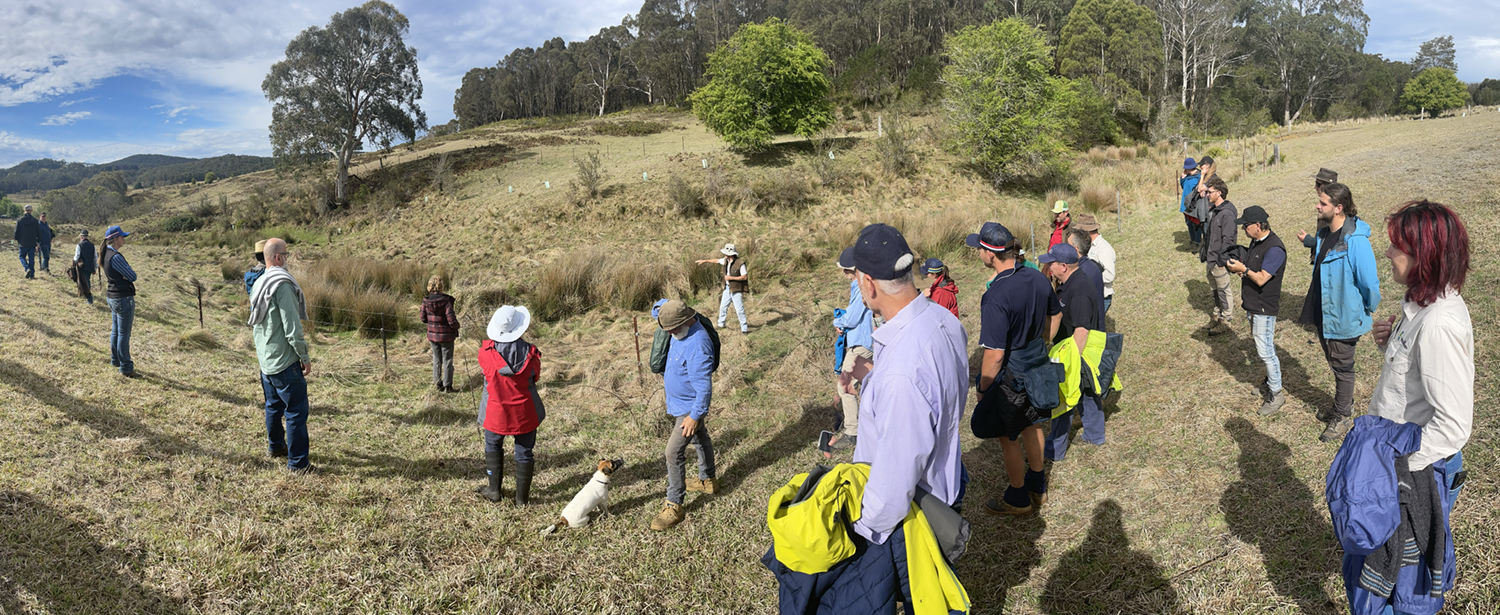
Bush Heritage Australia, Deakin University and Mulloon project staff determining research plot locations. 

Erin Healy and Chris Inskeep recently returned from a site visit to Turnip Creek. This is the Mulloon Institute’s second visit to Turnip Creek, the first being in May 2022 where Peter Hazell visited the community.  

The Turnip Creek catchment is located between Euroa and Benalla in Victoria, east of the Hume Highway in the foothills of the Great Dividing Range. The landholders of Turnip Creek have been working towards a catchment-scale project for close to four years. The region is home to one of the first Landcare groups in the country, and their passion and desire to enable change is unmistakable. 

This most recent project at Turnip Creek is a collaboration between Mulloon Institute and project partners Bush Heritage Australia and Deakin University. The project is sponsored by The William Buckland Foundation, with key support from the Victoria Drought Resilience Adoption and Innovation Hub.  

The focus of this collaboration is a large-scale research project, focusing on trialling the impact of land management practices on landscape hydration. Twelve different locations will trial one of several land management techniques including contour ripping, managed grazing, improved pasture, and canopy cover. 

The findings from these pilots will provide the basis for the development of a commercial model, enabling pilot insights to be rolled out on a broad scale, providing broad application for the research findings. This will increase landholder knowledge and capability and lead to improved sustainability of agricultural production. 

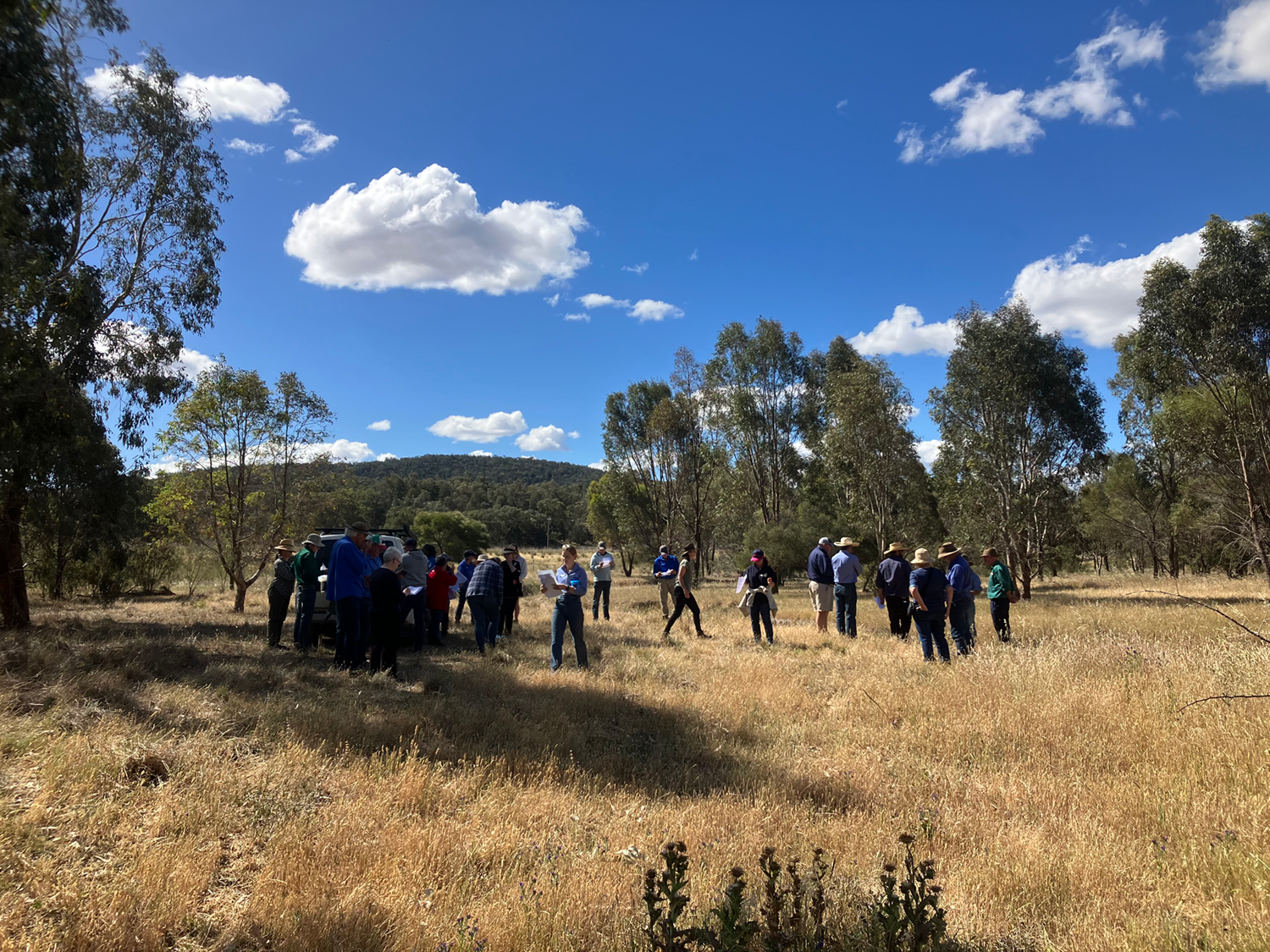
On the day, members from each organisation met in the upper catchment on a surprisingly blue sky, spring morning. Joel Fitzgerald from Bush Heritage was an excellent tour guide providing some great project context and local knowledge. Chris and Erin provided technical insights for on-ground works and advice on scientific monitoring equipment and systems. Professor Rebecca Lester headed a group from Deakin University and together the group walked the properties with each landholder to establish test and control sites and mark them out in the field. 

Highlights from the day included engaging conversations with landholders; Chris, Logan, Michael and Callum, and a lovely morning tea hosted by Jean and Roger. Thank you again to the Turnip Creek landholders for hosting the group. The Mulloon Institute looks forward to continuing this exciting collaboration with Bush Heritage Australia and Deakin University.  


The project is sponsored by The William Buckland Foundation, with key support from the Victoria Drought Resilience Adoption and Innovation Hub.  

Jono takes a Q&A overlooking the Mulloon Creek at Duralla

Jono Forrest, General Manager of Mulloon Consulting had the pleasure of hosting a group of Operations Managers from Drought & Innovations Hubs from across Australia alongside a couple of members of the Department of Agriculture, Fisheries and Forestry. 

This was a great opportunity for us to demonstrate the rehydration work that has been undertaken within the context of the landscape at Mulloon and Duralla, discuss our Communities of Practice Project that is being partly funded through the Future Drought Fund Extension and Adoption Grant, and the importance of landscape rehydration to building the resilience of landscapes and communities around the country to drought and other climate extremes.

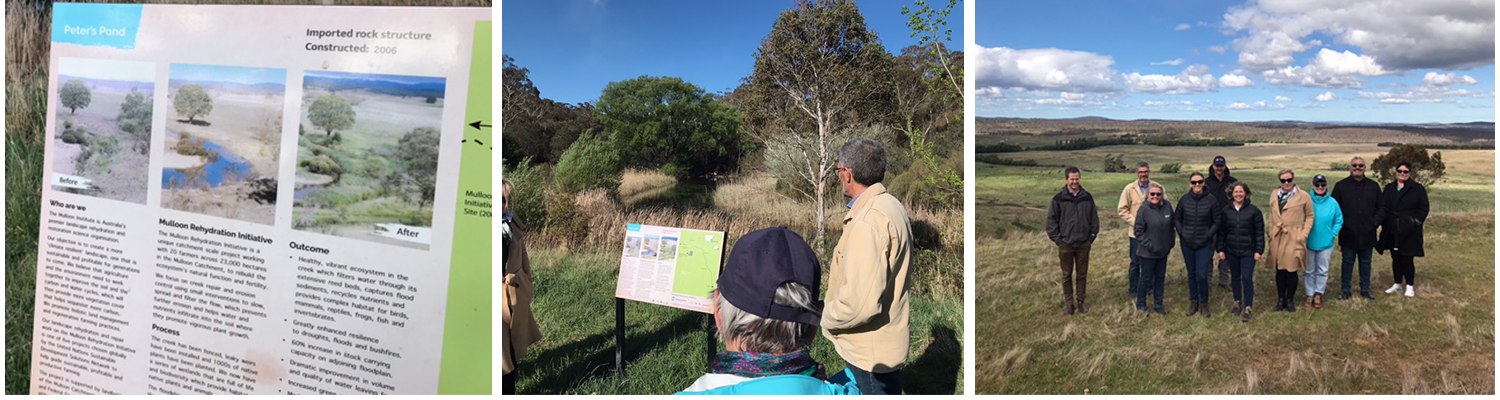
The group visited Peter’s Pond as well as elevated viewpoints at Duralla overlooking the floodplain

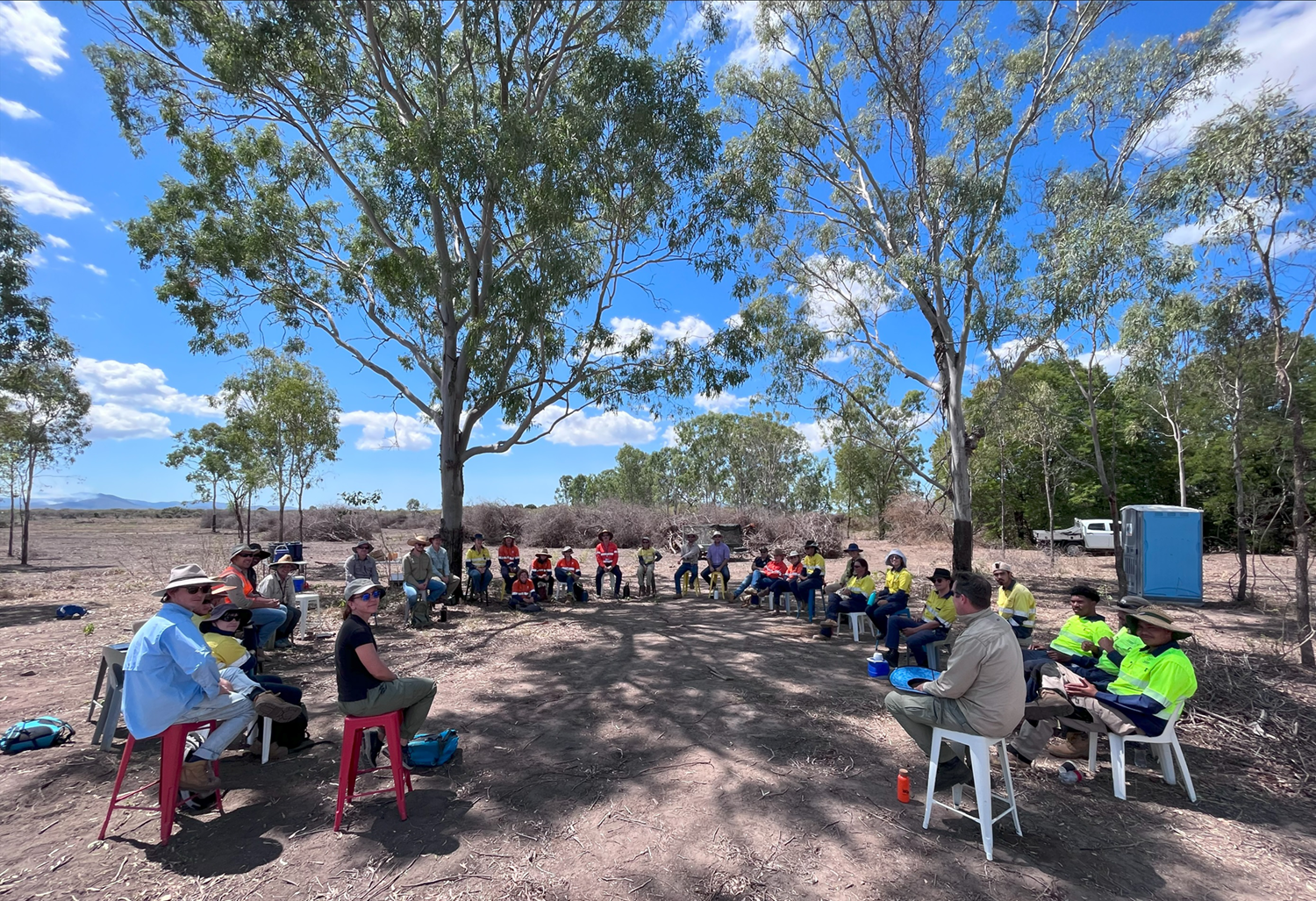
Ecological Fitness workshop participants, gathering where Bindal (to the south) and Wulgurukaba (to the north) Countries meet.

Within 1km of Townsville’s drinking water supply, an impenetrable thicket of the woody weed chinee apple (Ziziphus mauritiana) has been transformed from a noxious nuisance into a profitable resource. An innovative 1ha trial began in early 2022, which has been so successful, the area designated for the phase two trial is ten times larger and already underway. The promise continues to multiply as we consider the nearby biodiversity offset area approximately 600ha in extent, that is secured as an important refuge for the endangered black-throated finch (Poephila cincta).

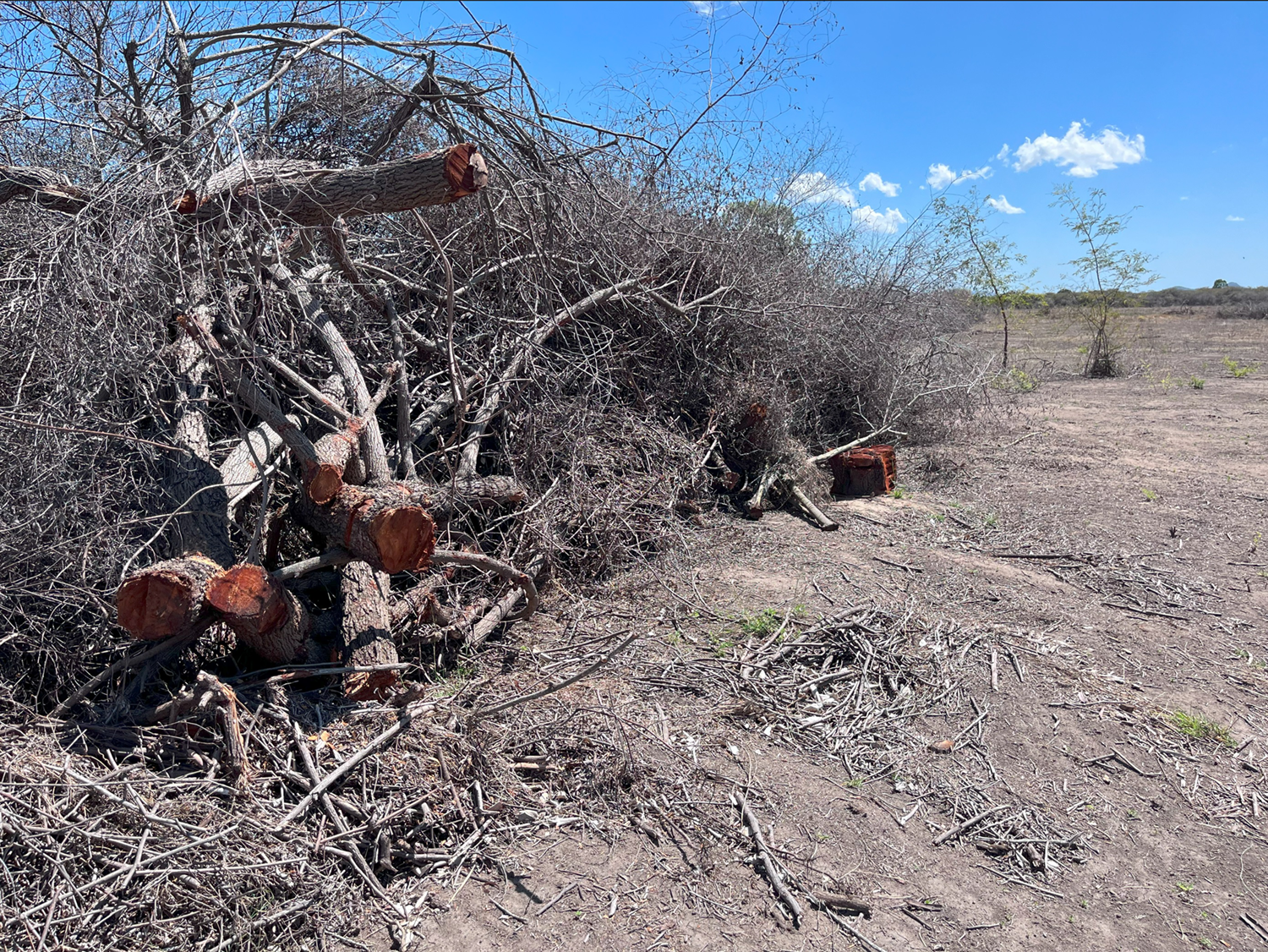
Windrow of cleared chinee apple (Ziziphus mauritiana) timber on 10ha trial site

The aims of the trial are multifaceted. Sustainability has been deeply embedded in the fabric of the project to ensure the delivery of social, economic, and ecological outcomes. Social capital has been built by investing in land restoration businesses through strong partnerships between Townsville City Council and the Queensland Government’s Reef Assist program. Economic value has been generated from processing the carbon-rich biomass of the chine apple trees into a variety of products with minimal external inputs. Ecological benefits have been many and include beginning the re-establishment of an open grassy woodland habitat favoured by the Black-throated finch, Sheath tail bat and Koala.

Innovative land management systems and entrepreneurial business models do not come without their fair share of risk. The project is designed to uncover important lessons through a safe-to-fail framework. This means during the proof-of-concept stage, the small-scale pilot or trial allows for failures as opportunities to learn. With an enhanced understanding of the challenges and opportunities, an improved strategy can then be applied at a larger scale. An ambitious and long-term vision is now one step closer.

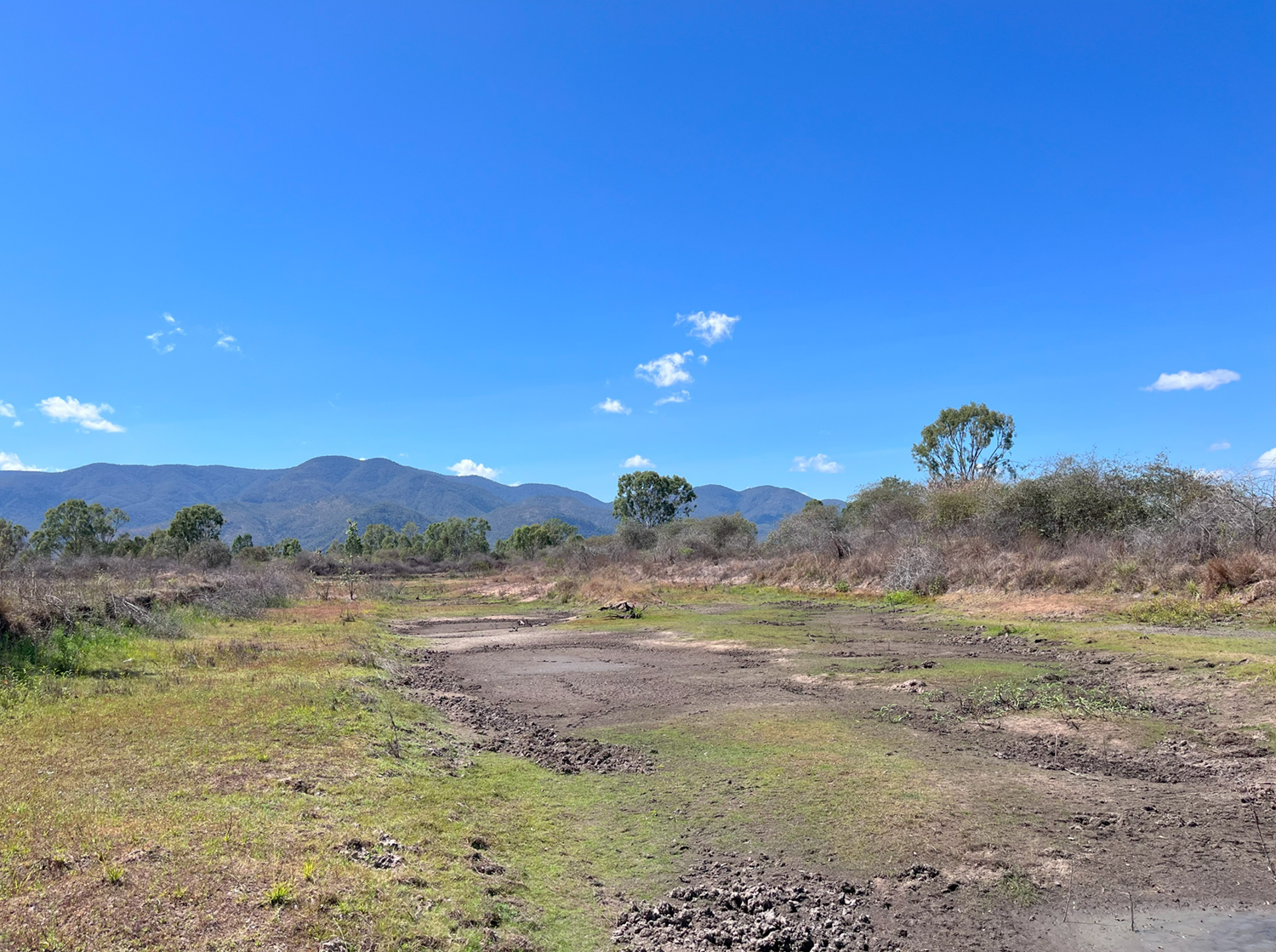
A legacy topsoil ‘borrow pit’ beyond the edge of the trial site, where chinee apple (Ziziphus mauritiana) stands are still evident on the right-hand-side

As part of this next step, a collaborative workshop was held on-site in mid-September 2023, with many organisations represented. The Mulloon Institute was proud to participate in the conversations around land restoration and Ecological Fitness. This new paradigm holds much promise in guiding regenerative land management, acknowledging the powerful and positive role of people in caring for Country. The workshop gathering was held where Bindal (to the south) and Wulgurukaba (to the north) Countries meet.

The project is actively listening to and blending knowledge from First Nations’ and scientific perspectives. With no final end state or fixed destination, the Ecological Fitness paradigm encourages us to embrace an ongoing commitment to attaining and sustaining a healthier environment and society as two sides of the same coin.


On-site works and Ecological Fitness workshop facilitation delivered by Townsville City Council and Queensland Government’s Reef Assist program.