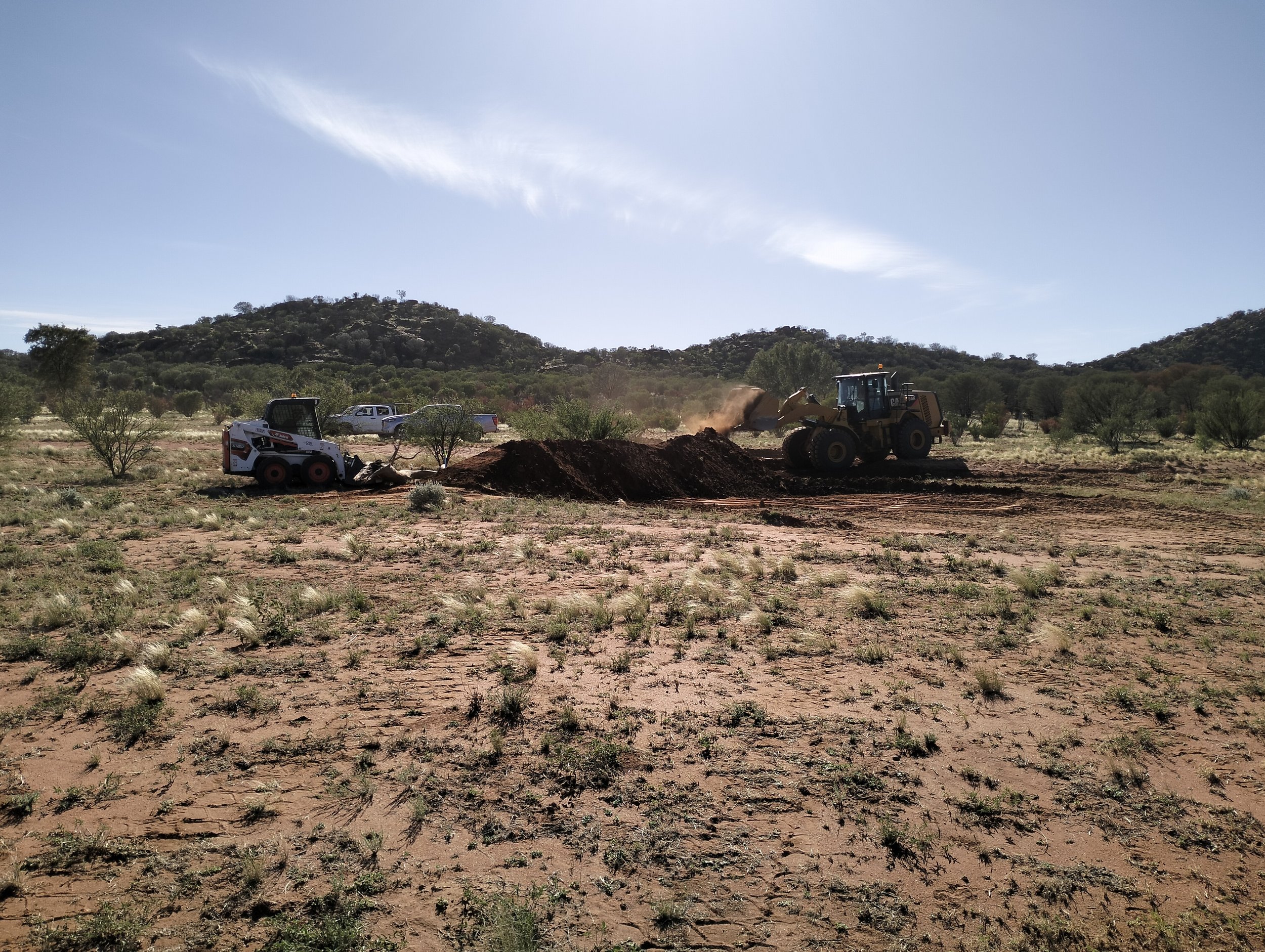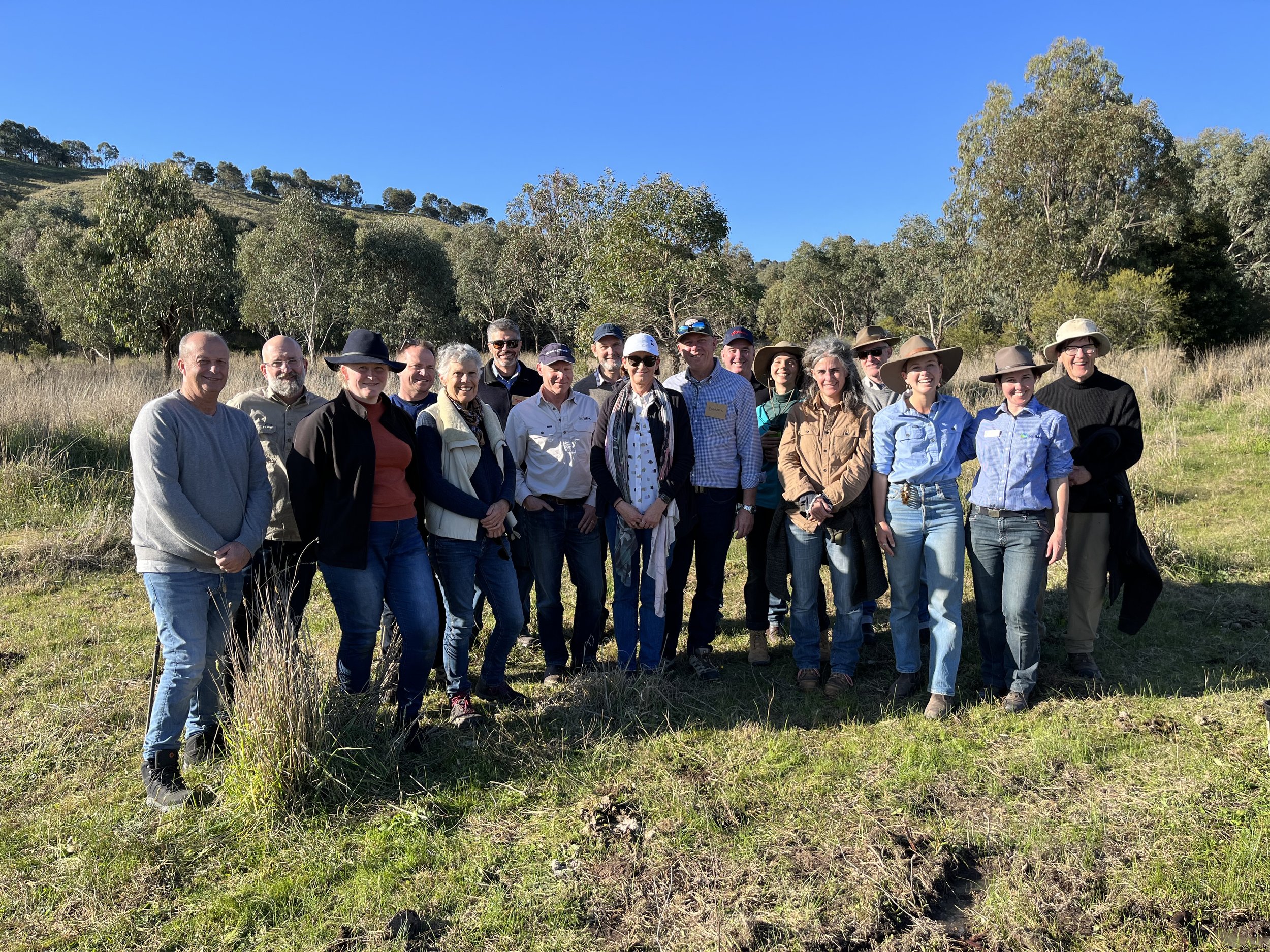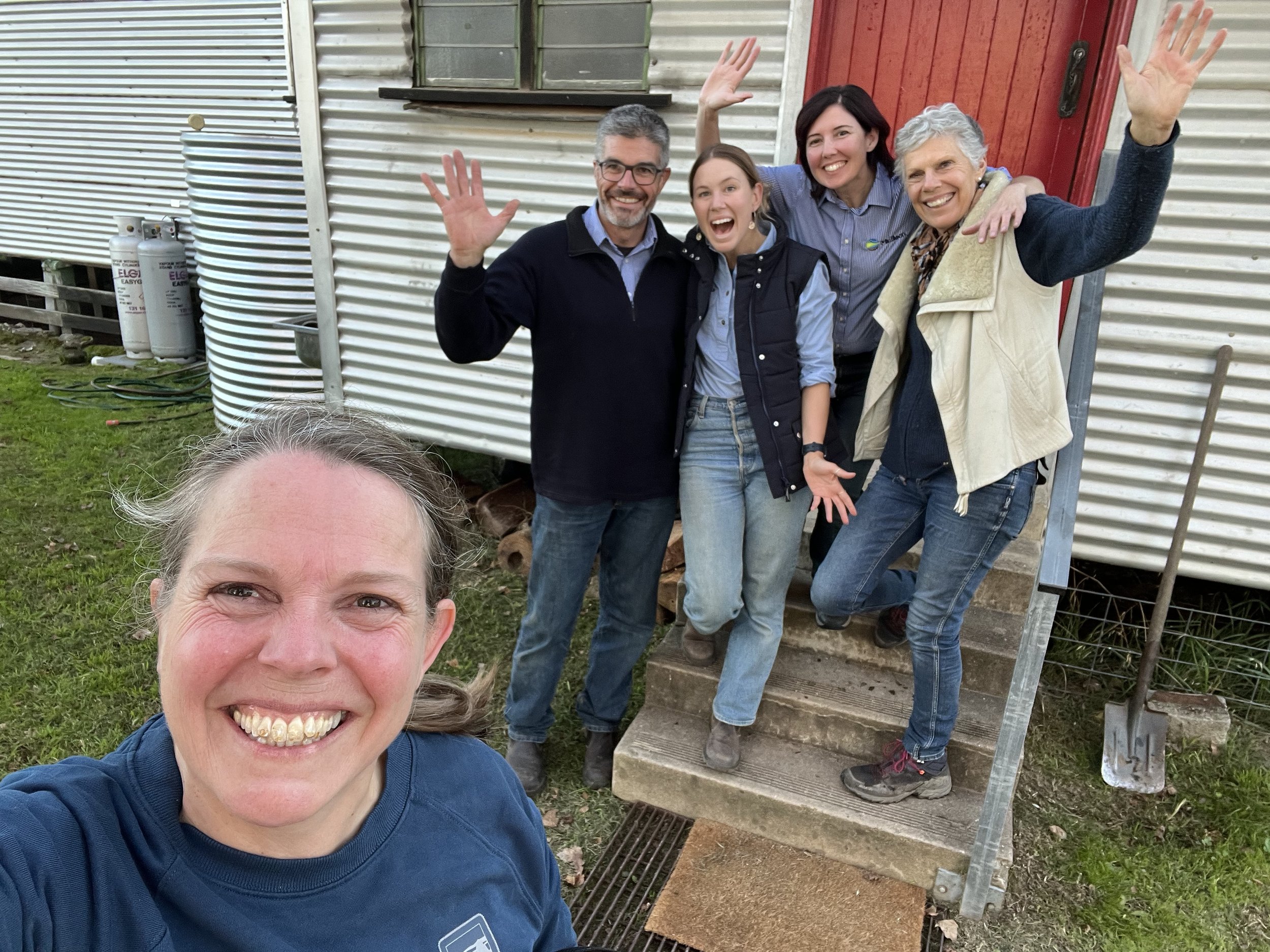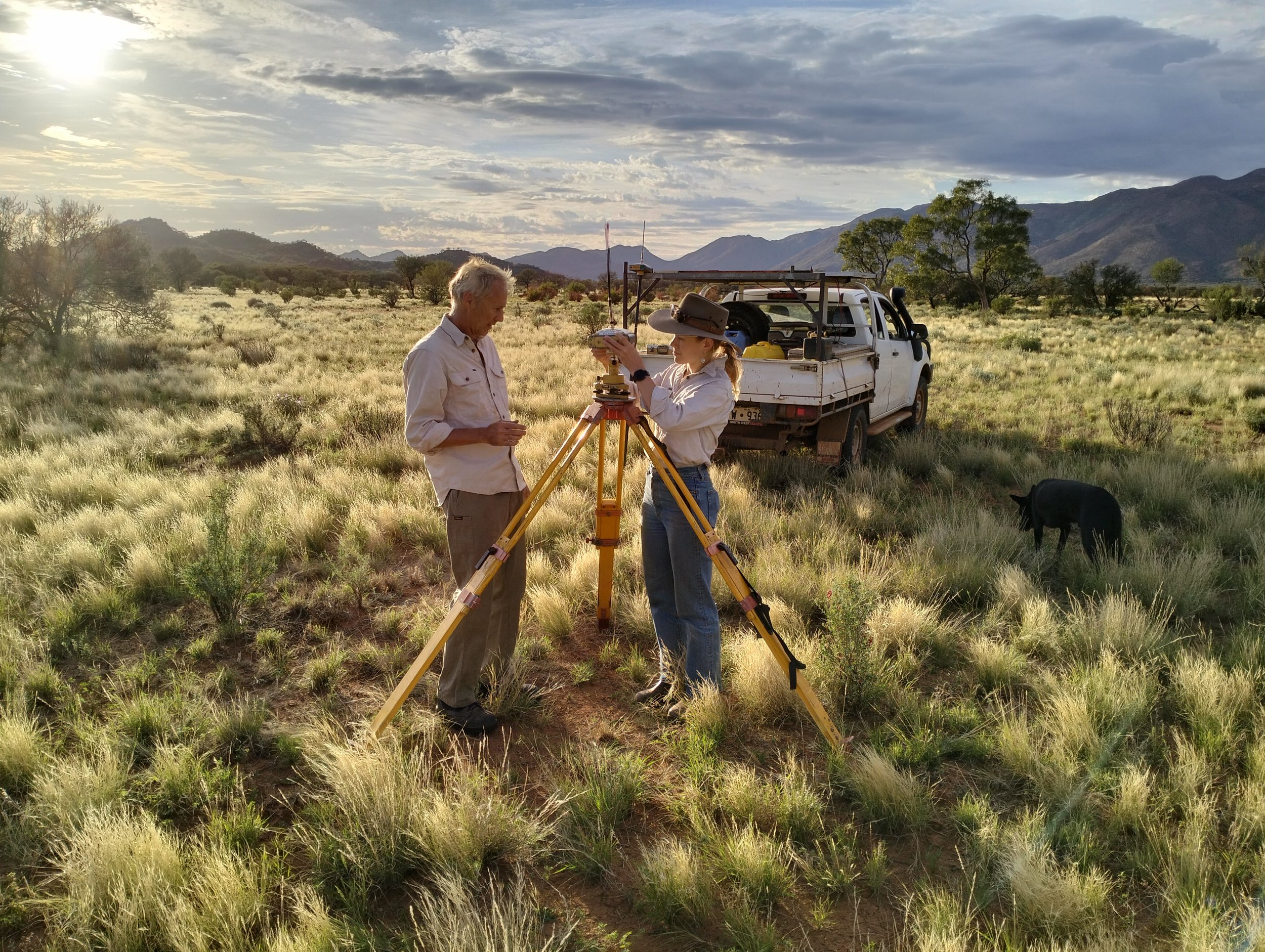
Mulloon Institute Landscape Planners Erin and Lance set up survey equipment in the early morning sun at Glen Helen station.

As Mulloon Consulting’s Lance Mudgway, Erin Healy and Shane Hunter arrived in Alice Springs and drove out to Glen Helen Station, the first of four stations that make up the Centralian Landscape Rehydration demonstration project, they were greeted by a vibrant green landscape teeming with life. It is amazing how much difference a decent amount of rainfall makes in this usually dry bioregion. Our team last undertook a field trip to implement works on the Centralian project in November 2022 when the landscape was well and truly dehydrated with bare, exposed soil and large, scalded areas typical of the arid rangelands of Central Australia. After extensive rainfall earlier this year, the obvious changes highlight the imperative for the Mulloon Institute’s advocacy of landscape rehydration and repairing the terrestrial water cycle. By capturing and storing water in the soil during the good times, we can build the resilience of pastures and natural ecosystems in preparation for inevitable periods of drought. 

Working across Glen Helen, Narwietooma and Aileron stations as well as the Ahakeye Aboriginal Land Trust (formerly known as Ti Tree station), Mulloon Consulting’s team partnered with the Northern Western Australia and Northern Territory Innovation Hub (NWANT) and Tierra Australia to survey and construct Landscape Rehydration structures and other interventions. These works will slow and spread the flow of water to increase soil infiltration and reduce erosion at each of the demonstration sites. This project scales proven landscape rehydration and sustainable management practices to restore the landscape function of a catchment within each of the four stations. These sites will be used to trial, demonstrate and widely communicate the benefits of landscape rehydration and sustainable management practices to pastoral landholders in the NT and WA. 

Working in remote locations certainly provides some unique challenges, particularly around accessing the right machinery, and avoiding breakdowns. To successfully complete their work, the team had to think on their feet to work through inevitable issues such as flat tyres and the unavailability of preferred machinery. These challenges emphasised the importance of understanding site context, adaptive management and working with the limited resources that are available. It was also a wonderful opportunity to involve station managers and Traditional Custodians in the survey and construction process. The field trip was an amazing experience and the Mulloon Consulting team can’t wait to get back there to monitor the results of their hard work after the next major rainfall event, and further educate land managers about landscape rehydration. 

The Centralian project is funded by the Australian Government’s Future Drought Fund – Drought Resilient Soils and Landscapes Program through Charles Darwin University

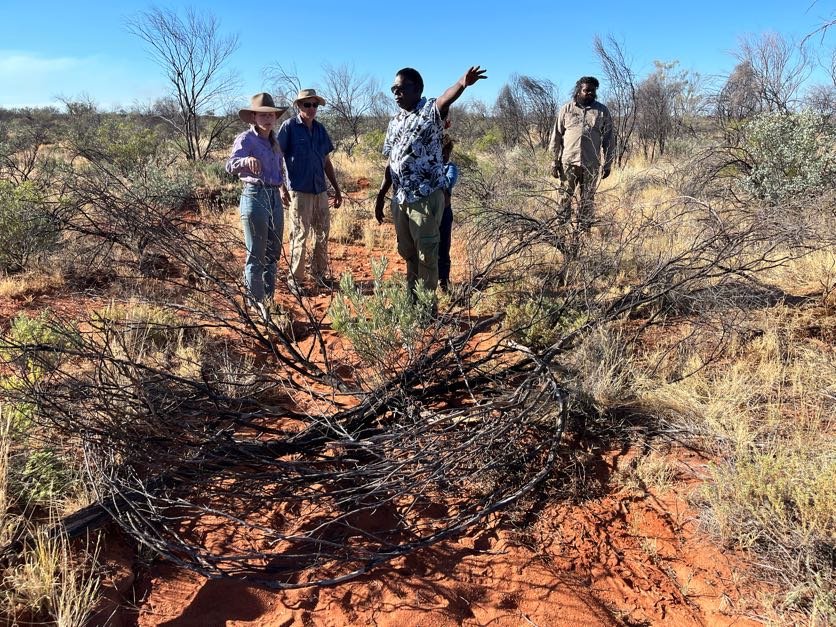
Lance and Erin work with James and Clayton, Aboriginal Rangers from the Central Land Council to construct a simple brush weir.

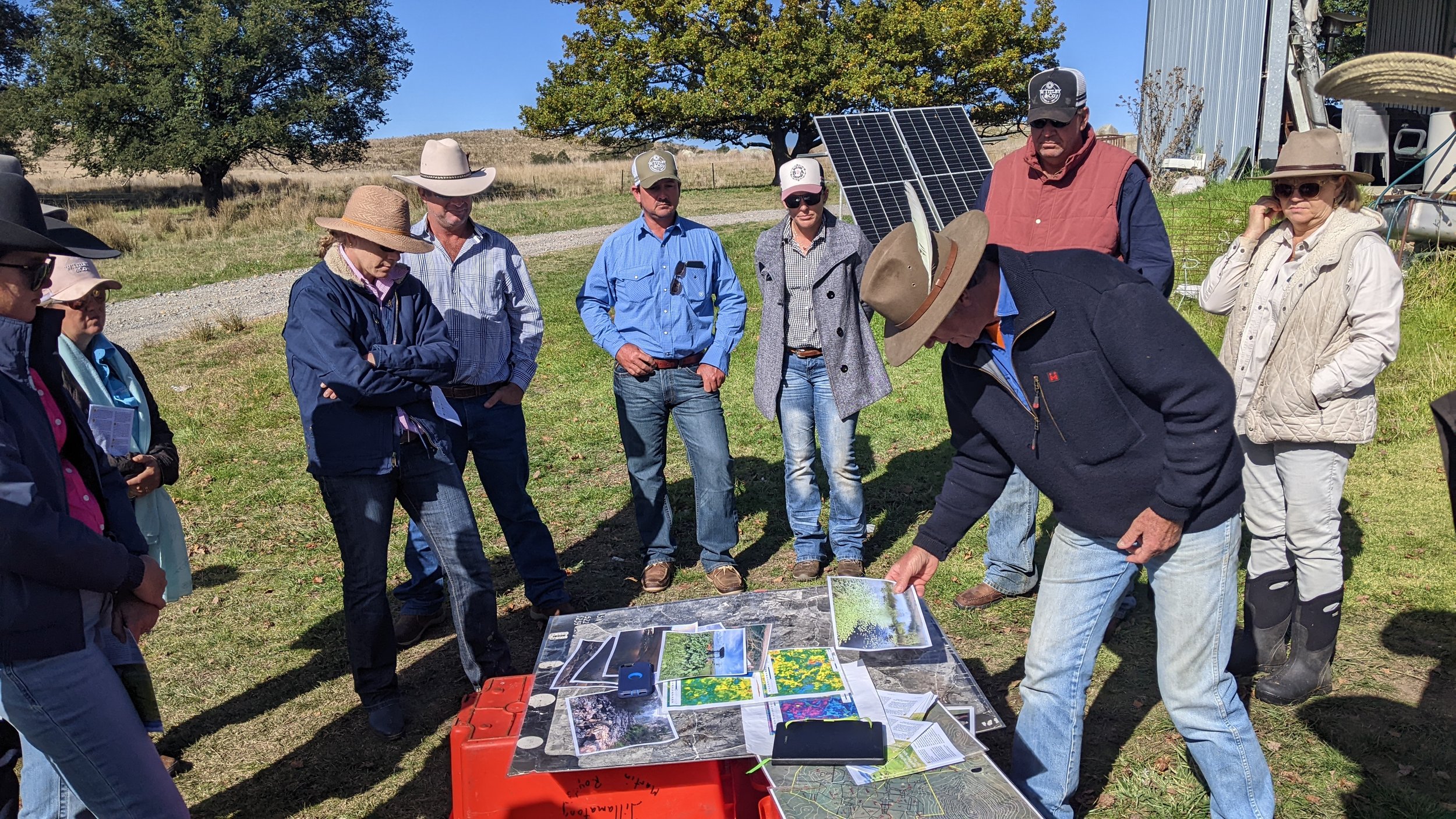
NQ Dry Tropics Bootcamp participants at the Mulloon Home Farm garden.

In April, a wonderful group of graziers from across the Burdekin catchment recently came to the Mulloon Institute to learn about landscape rehydration. Hosted at Home Farm homestead, the weeklong event included a return trip from Townsville to Canberra, a signature two-day educational Bootcamp, plus tours of diverse properties demonstrating principles of regenerative agriculture in and around central NSW. This event was organised in collaboration with the NQ Dry Tropics natural resource management group.  

On Monday afternoon, once we had settled into the homestead, we were off again, racing the remaining daylight on a tour where we could appreciate the impact of the Mulloon catchment scale rehydration work. From the bed-control structures known affectionately as leaky weirs to the tree-lined contour banks upon the hill we climbed at dusk, we quickly gained a broader perspective of the Mulloon Creek floodplain. Seeing the Mulloon Creek system from the micro to the macro gave us an immediate grounding in the realities of a catchment-scale rehydration project. 

Over the next two days, we learned about the fundamental patterns and processes that can be influenced by landscape rehydration projects. We oscillated between classroom and field activities to practice observing and interpreting signs of landscape function. This gave us the necessary foundation to begin thinking about interventions, considering the many options we could potentially apply to our suite of challenges back in North Queensland. How to prioritise an action plan was then an explicit focus for the remainder of the event. 

Properly considering what our specific goals, limitations and opportunities are, is fundamental to beginning the process of designing an action plan that can successfully address even the most basic landscape issue. Touring three additional properties provided a great showcase of how successful enterprise management does not sacrifice landscape function. The great value in seeing these three properties back-to-back was how they all contrasted greatly with each other, and from Mulloon’s Home Farm. Yet, across all the example systems we witnessed, an appropriate application of general principles and fine-grained decision-making was obviously delivering great landscape rehydration benefits within a framework of regenerative agriculture. 

Funding for this event was provided by NQ Dry Tropics. 

The Mulloon Institute’s Bootcamps have been developed with the support of the NSW Environment Trust.

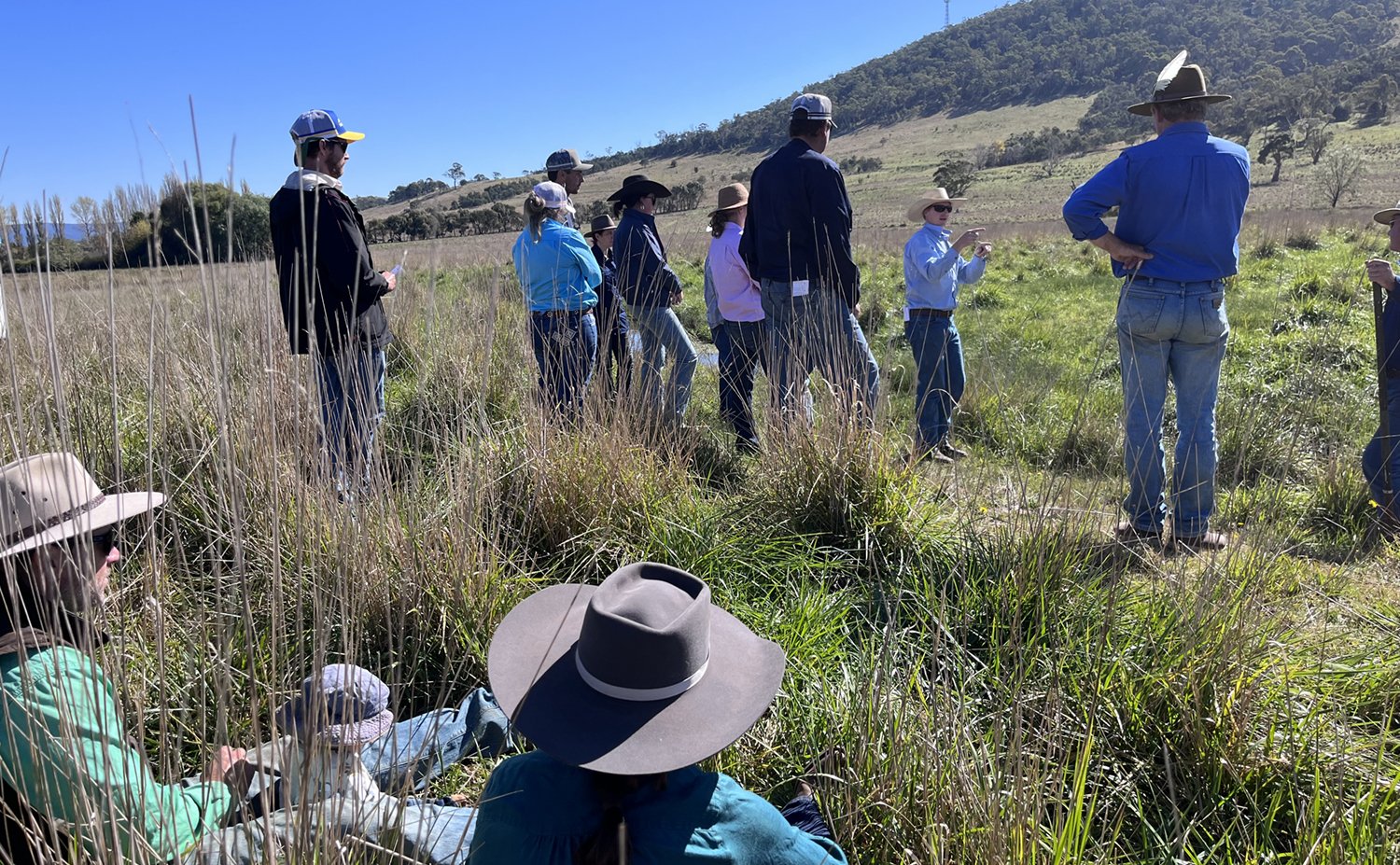
Martin Royds’ Jillamatong was one of the regenerated showcase properties the group visited during their stay.

A warm welcome

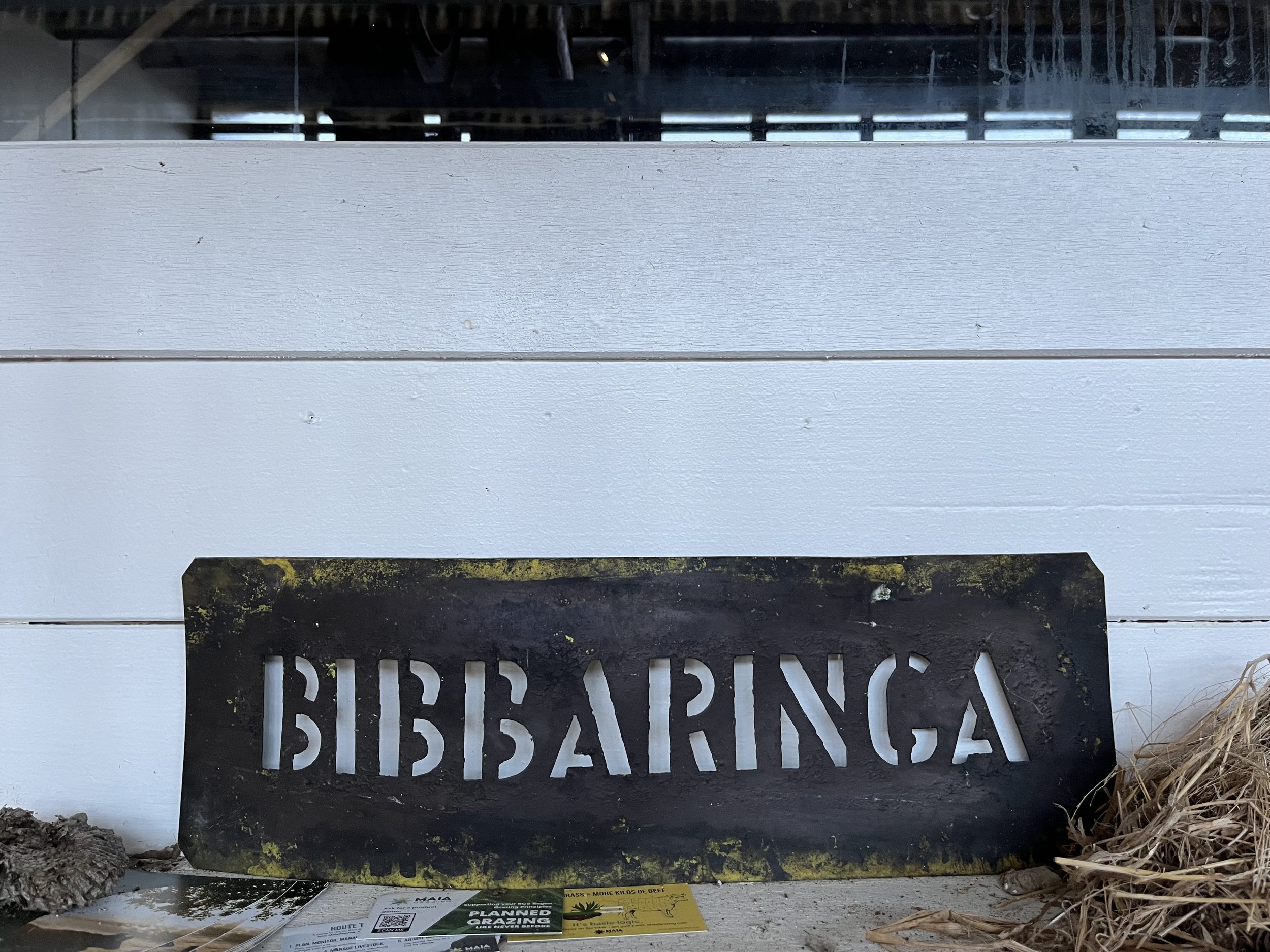
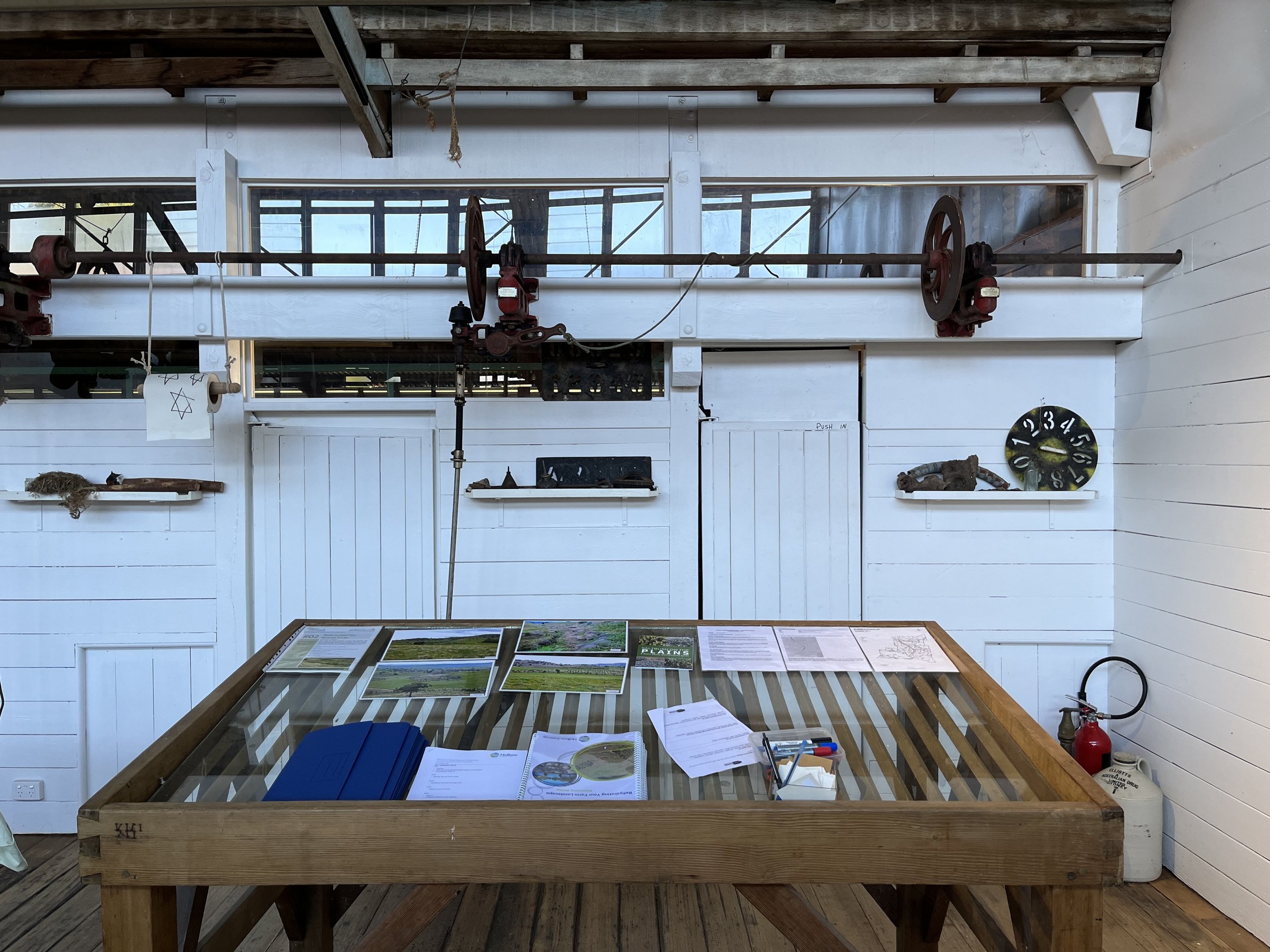
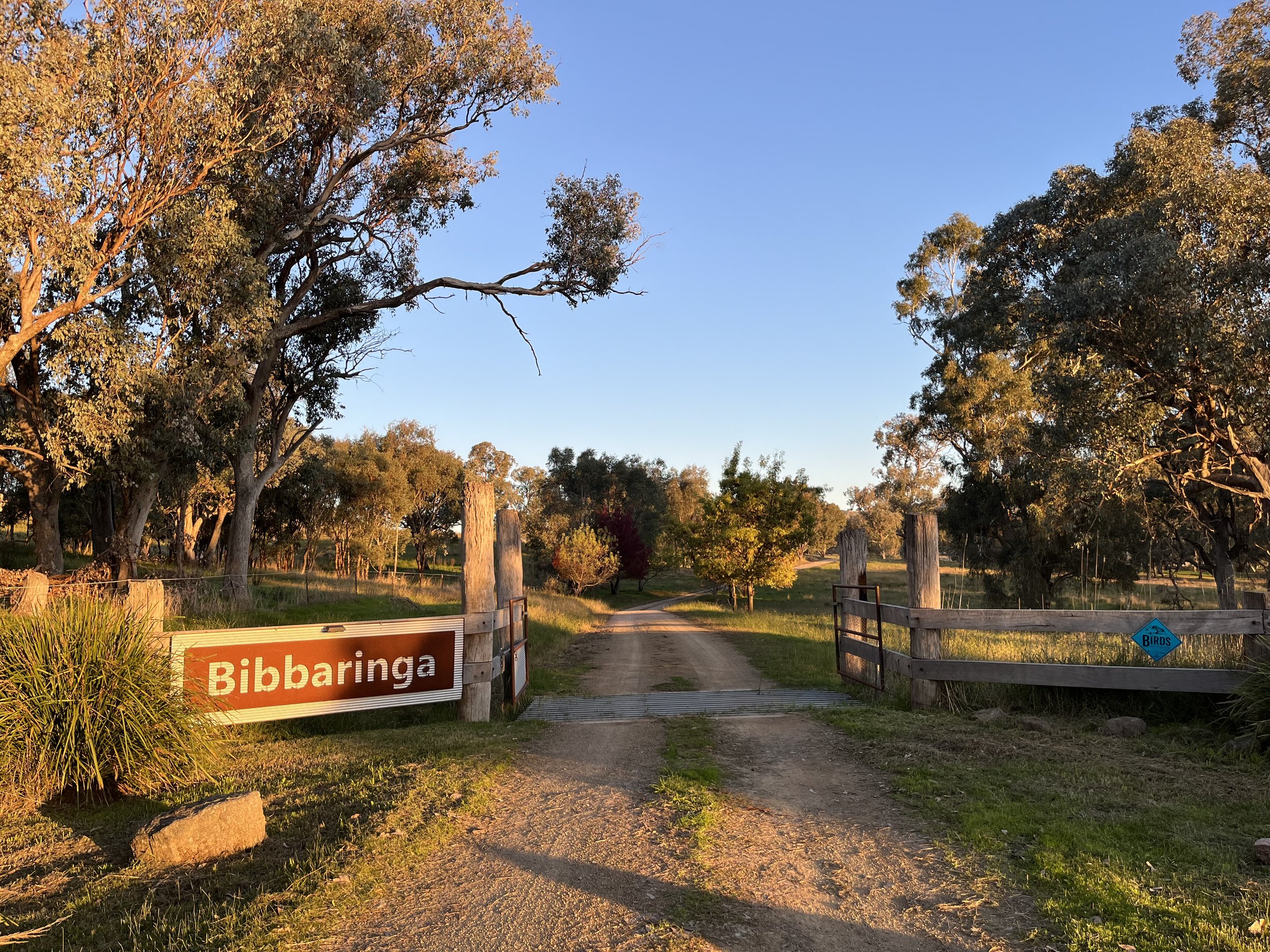
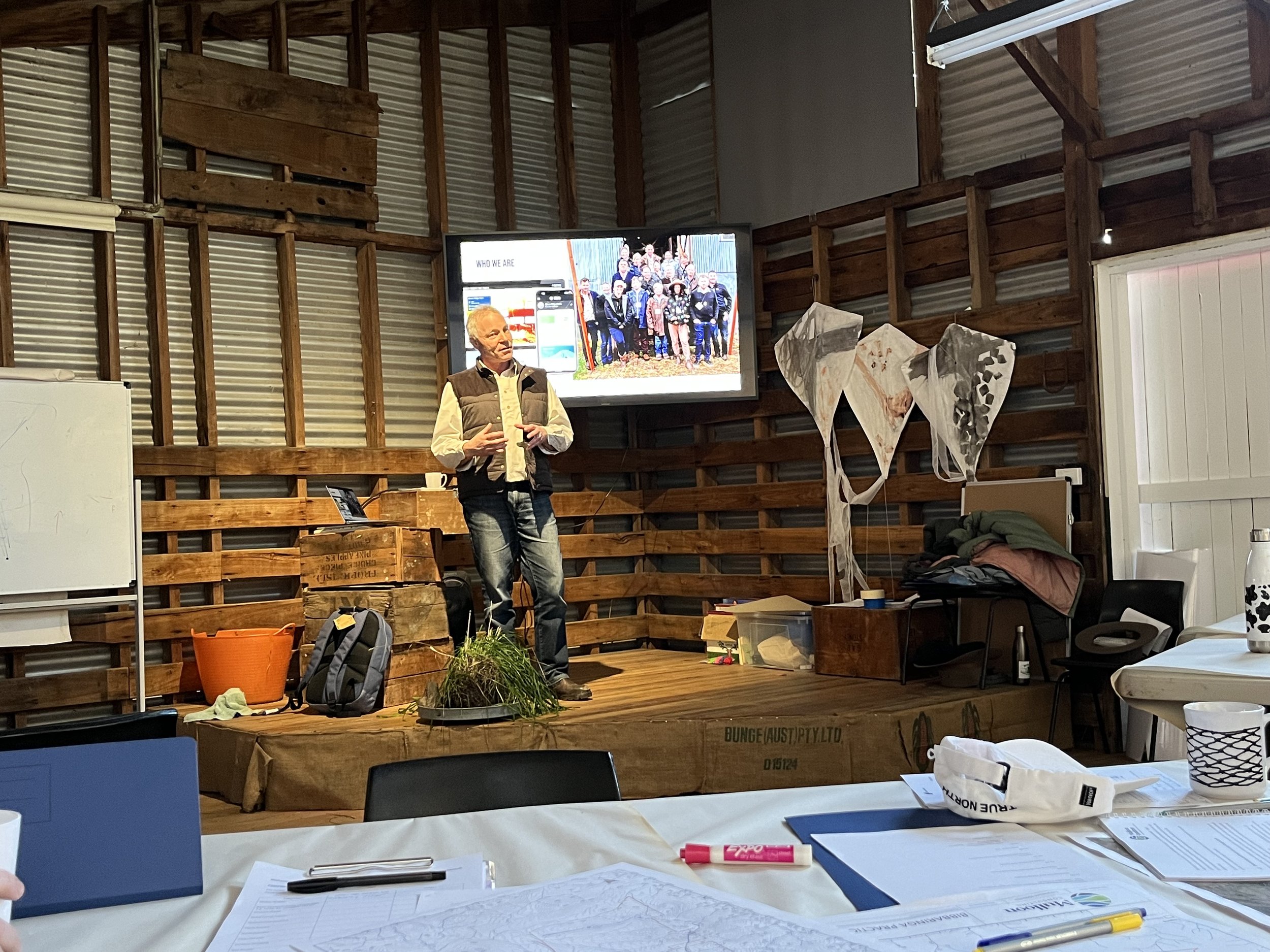
The frost was thick on the ground and the vast, quiet valleys were full of fog when we entered the Bibbaringa Shearing Shed at 7am for day one of a 2-day Rehydrating Your Landscape Bootcamp. Our generous host Gill Sanbrook already had the fire going and the kettle boiled to warm the frozen fingers and toes as excited participants arrived and settled in before the day was underway.

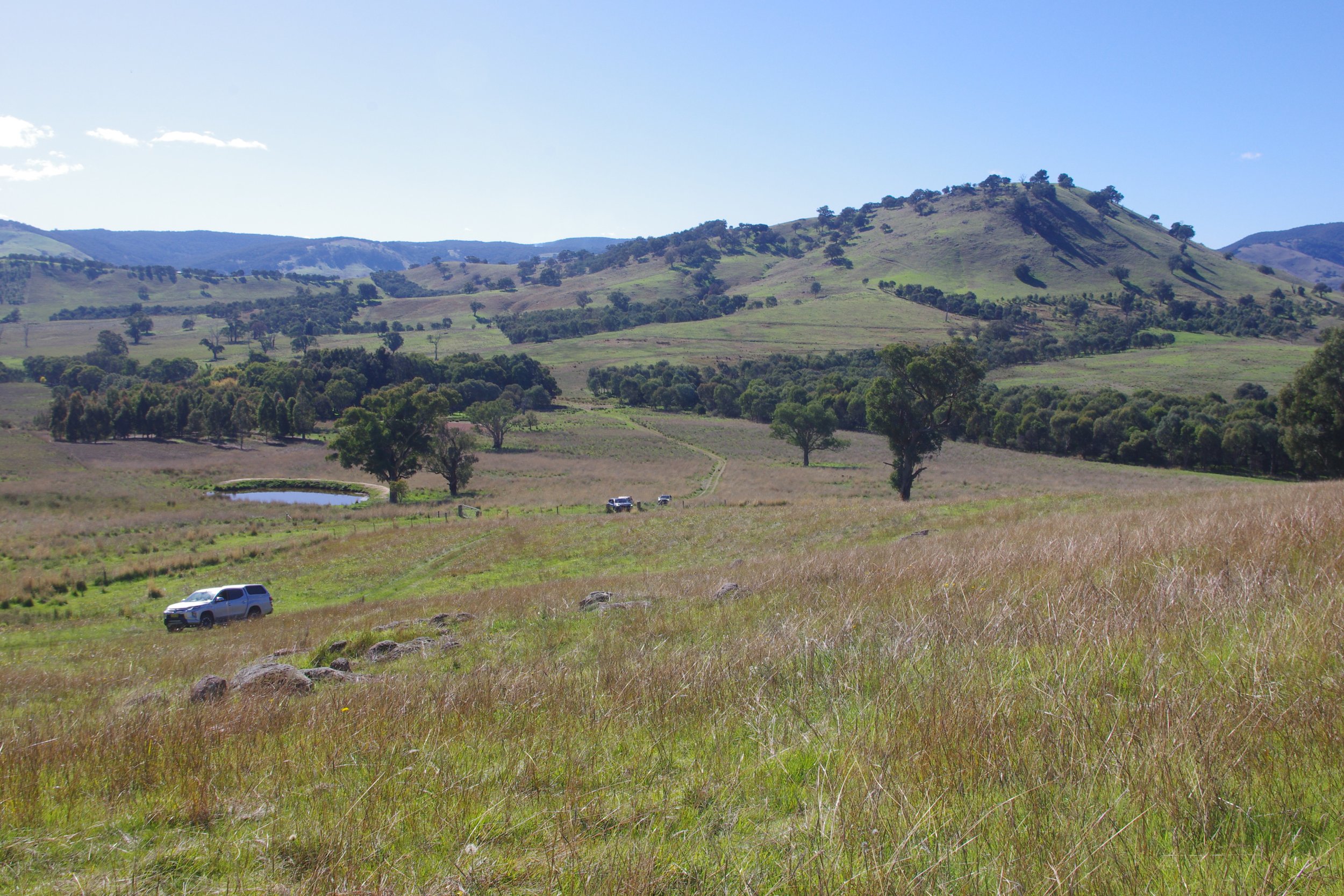
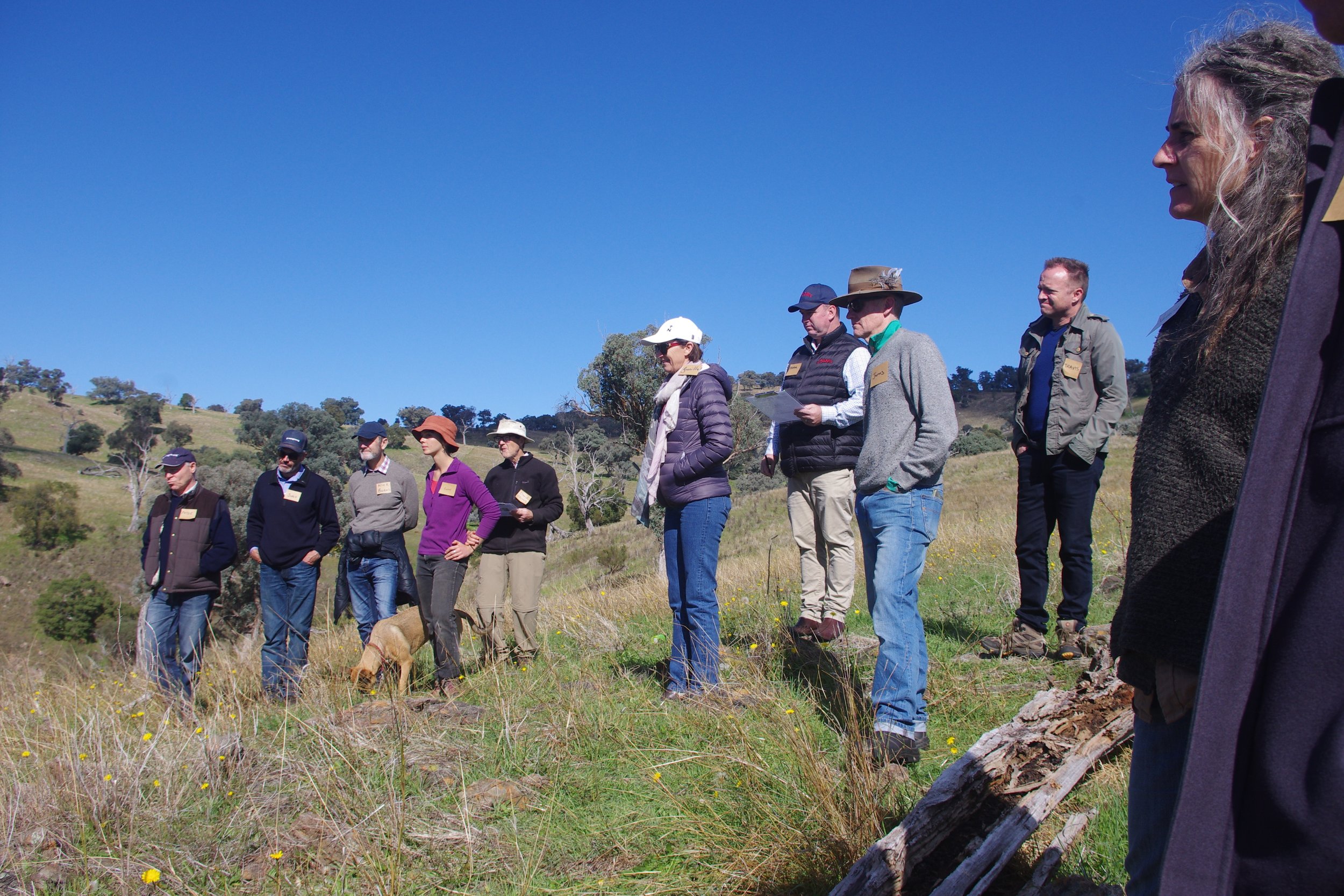
Gill welcomed us to her farm with an Acknowledgement of Country and acknowledged her place as the current custodian of the very old, rolling hills of the Waradjuri Country farm. Gill bought the overgrazed, drought-stricken property in 2007 and immediately set to work in the first year planting 60,000 trees along riparian lines, and has since continued to plant thousands of trees annually along further waterways and slopes to retain moisture and prevent erosion in the hilly landscape. Gill also arrived with a head full of holistic management principles and drew a map of how she wanted the landscape to look in 100 years’ time. This was an ‘a ha’ moment for participants, as over the next two days we visited several sites across the property and now, 16 years later, we can already see the outcomes of this work in place and we too, can envision how the property might look 2107.

Finding symbiosis in landscape management

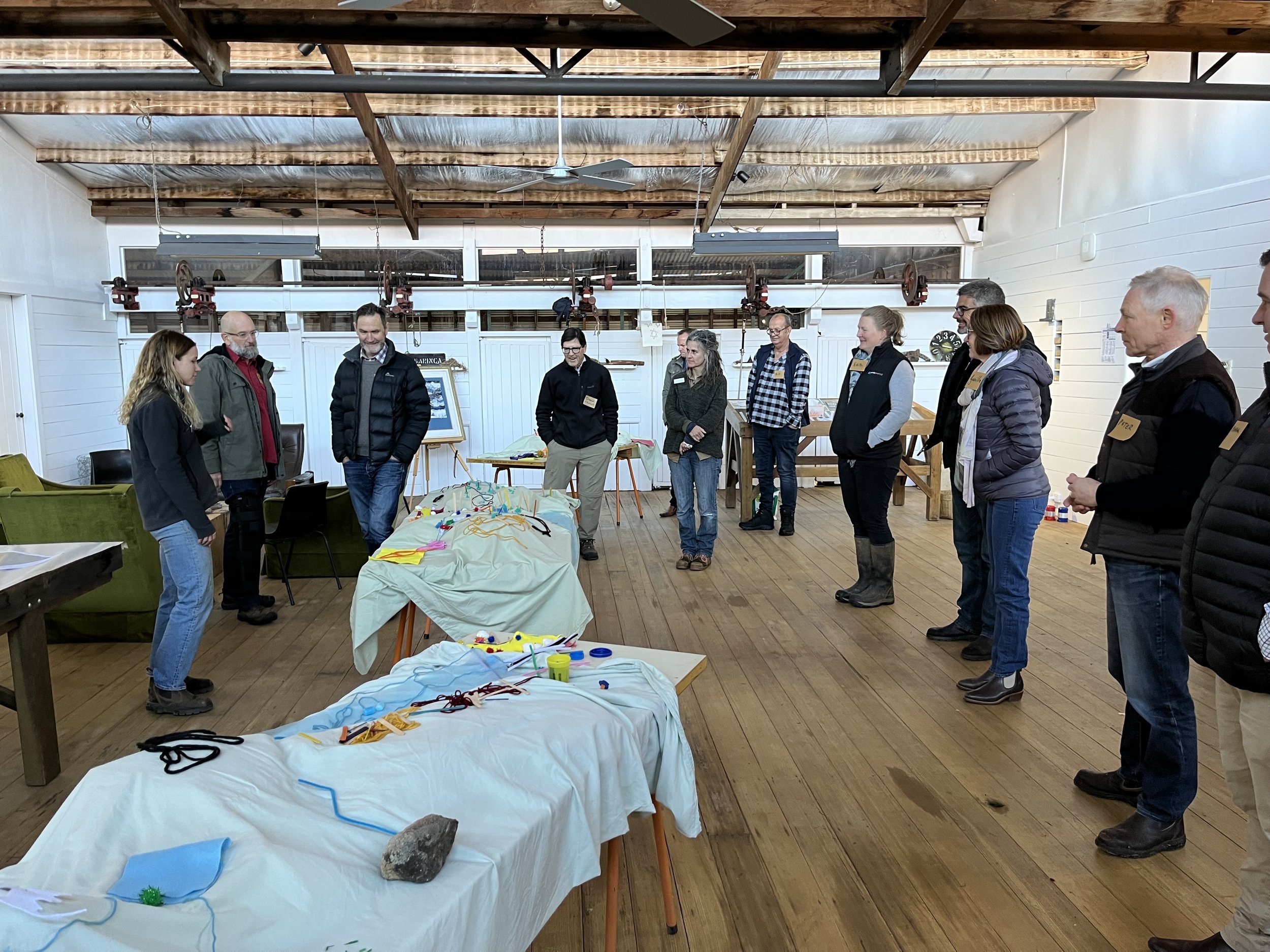
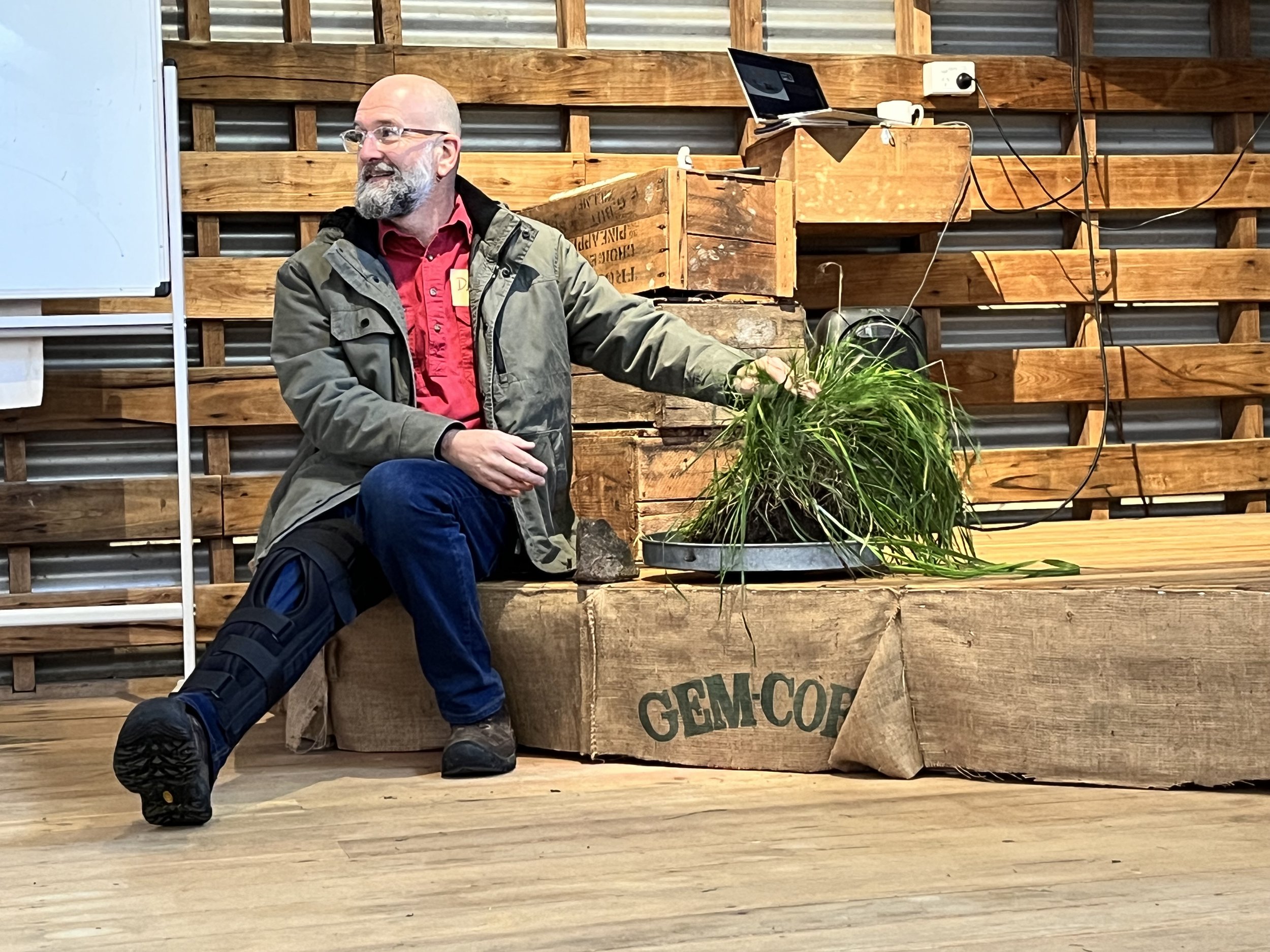
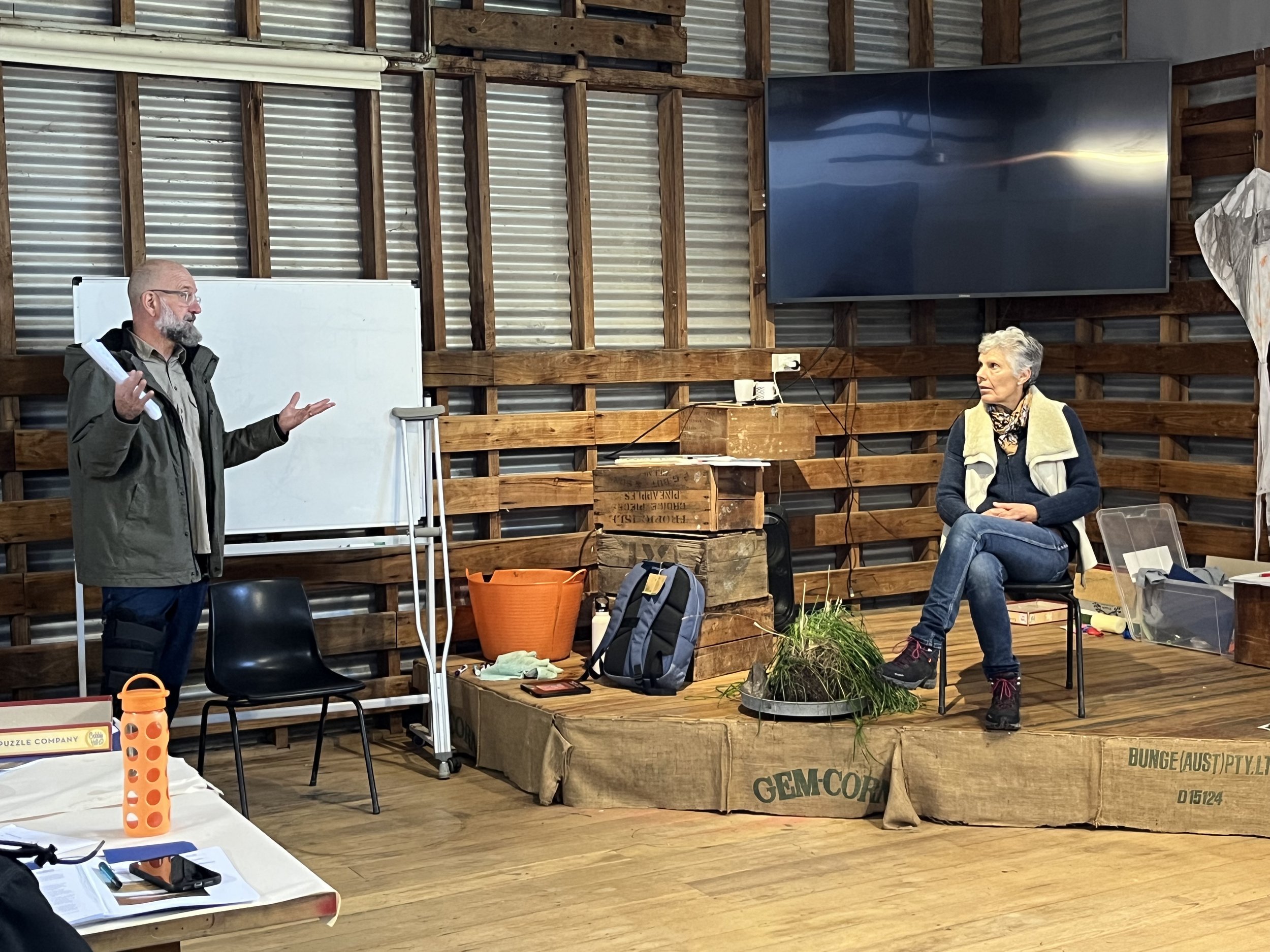
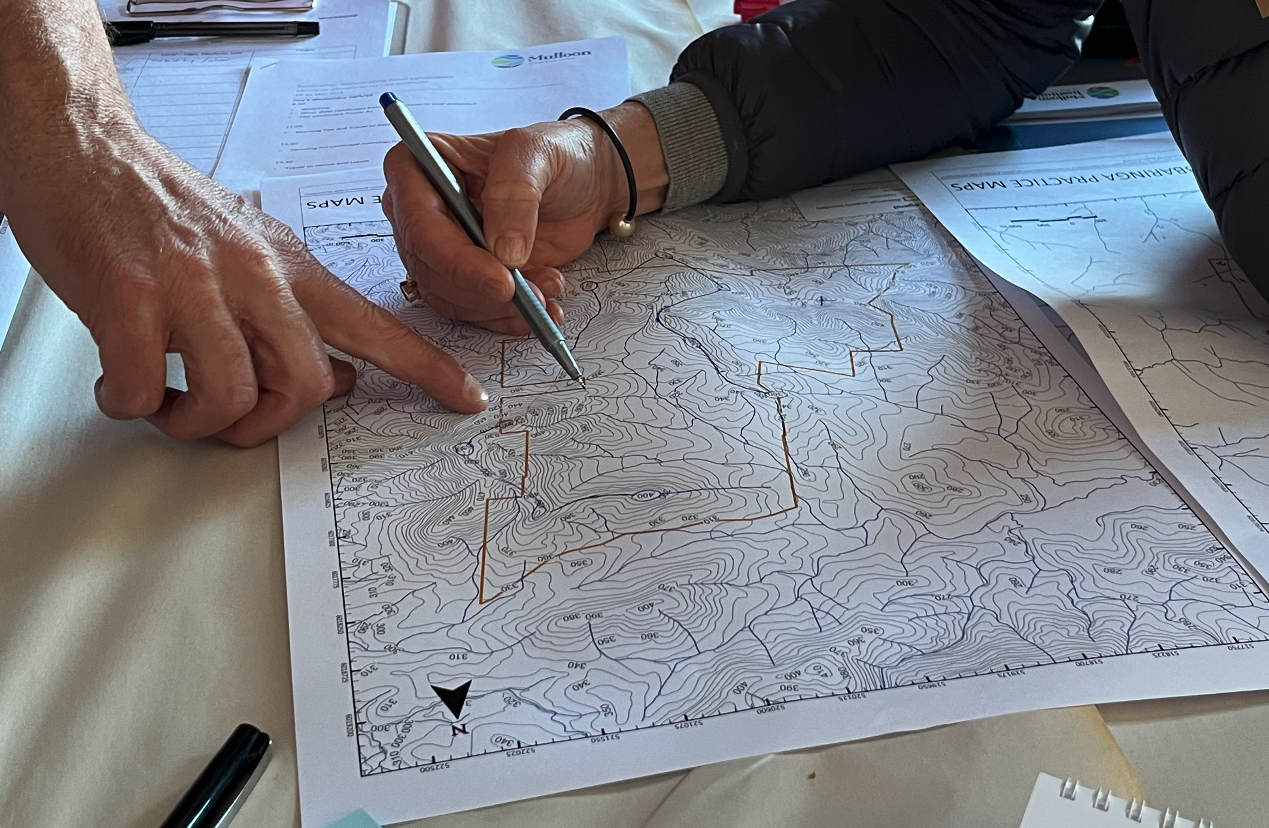
Mulloon Institute’s Landscape Planner Erin Healy and Soil Land Food Agroecologist David Hardwick explained the effects of large and small water cycles, gravity, plants and the sun on our environments, we explored the ‘landscape puzzle’ and learned of the relationships between the different pieces, and we workshopped stream orders, flows and measurements via models, maps, discussions and site visits around this beautiful, regenerated property.

The day was rounded off looking at the evidence linking the synergy between grazing management on rehydrated landscapes with an inspiring talk by Peter Richardson, CEO of Maia Grazing using the case study of Bibbaringa as the perfect example of this symbiosis in action. The talk also took us into the realm of using data for financial and ecological goal-setting. As Peter said, “If you don’t know what the goal is, how do you know if you’re getting closer to it?”.

Unpacking the Landscape Rehydration Toolbox

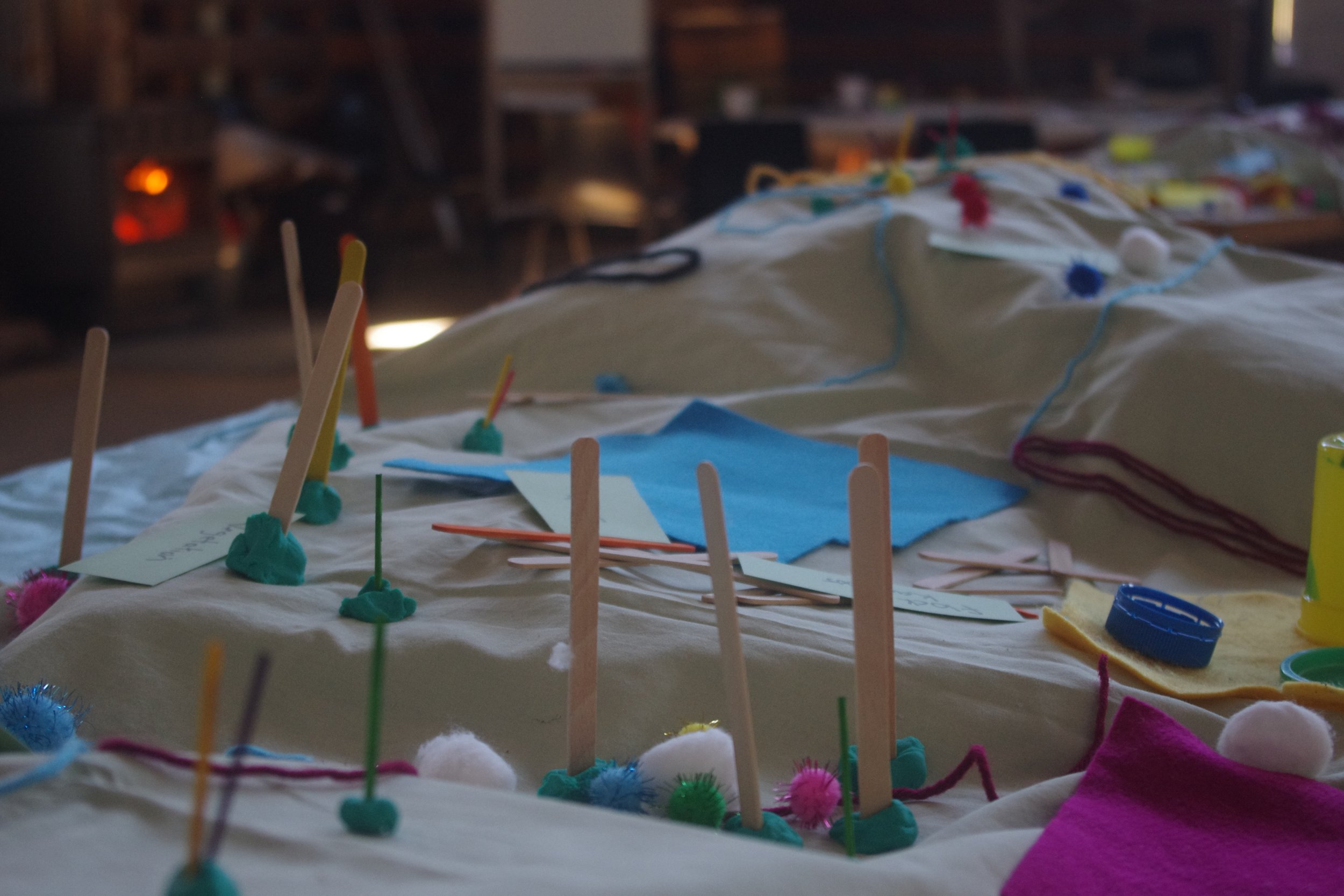
Day two warmup was a game of Jenga in the shearing shed! A fun way to keep active on another chilly morning, with a lesson in environmental tipping points at its core. We then reviewed the models we had created inside the day before – full table landscape models which we first set up as how we envisioned Australian pre-colonial landscapes might have looked. We then remodelled them to current-day land uses, and our final round at the model tables was to take the knowledge we had learned on day one to rehabilitate and regenerate the current-day land uses with our new regeneration toolboxes. This activity brought the three groups together creatively, and the hands-on approach encouraged some great discussion on the techniques and encouraged the ‘why’ and ‘how’ of what we were learning.

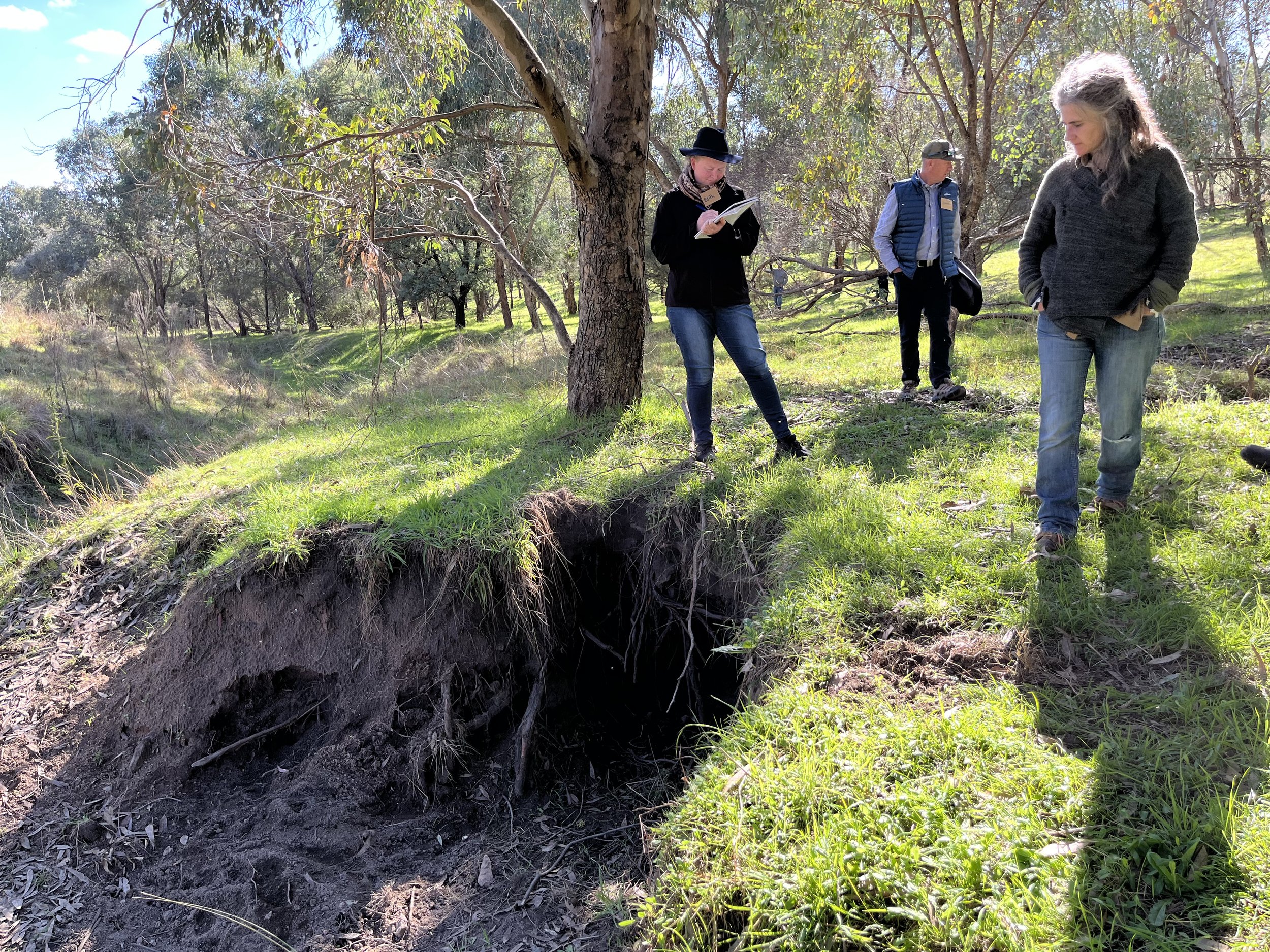
Theory followed, and we delved deep into the Landscape Rehydration Toolbox, unpacking the differences and effects of ‘flow through’, ‘flow over’ and ‘flow around’ structures. Following another wonderful lunch by Gill and her neighbour, we jumped in the vehicles and headed out to more sites on the farm to see how some of the regenerated riparian areas had coped with the floods of 2022. Two areas we visited had indeed suffered erosion blowouts under intense water, aided by a large network of wombat holes and an early contouring experiment which had worked well until the ‘1 in 100-year’ floods came gushing down the high streamlines. The group worked together with Erin, David and Gill to discuss the best way forward to repair these weak spots, with the collective learning of the two days culminating in an educated discussion with realistic outcomes for rehabilitation.

Taking the learnings into the field

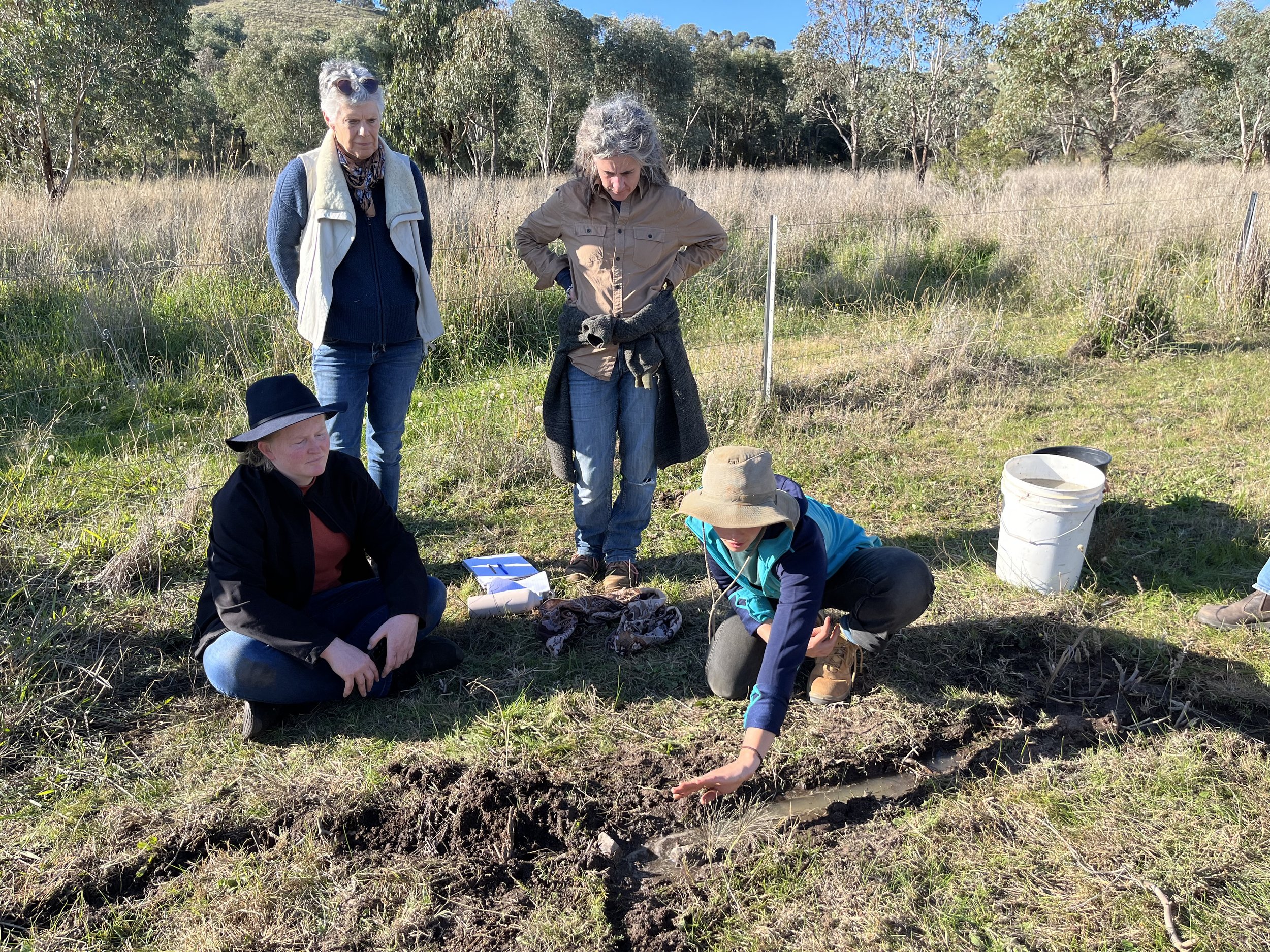
Our final modelling activity for the weekend saw the three groups rehabilitating small cuttings in the land created by Erin and Mulloon’s Education Coordinator Tam Connor – planning and organising what structures should go where, and then testing with buckets of water. Oh, the thrill of seeing the water slowing down and fanning across the miniature landscape, all the learning of the past two days succeeding with our efforts.
The group headed off to their homes from far and wide at the end of day two, buoyed with newfound knowledge to take home and apply to their own properties, and warmed by Gill’s generous spirit of sharing her property and hospitality with us all.

This project has been assisted by the New South Wales Government through its Environmental Trust. 

“At Bibbaringa I look at the landscape from a creative perspective. Land managers are artists of the landscape. Every mark I make on the land is a pattern on the land. Every fence line, subdivision, contour or water storage has an effect on something else in the landscape. We need to be mindful of our impact on the land we manage.”

Gillian Sanbrook

2023 Bibbaringa Bootcamp graduates

L-R: Mulloon team Cass Moore, Jono Forrest, Erin Healy and Tam Connor with Bibbaringa custodian Gill Sanbrook.

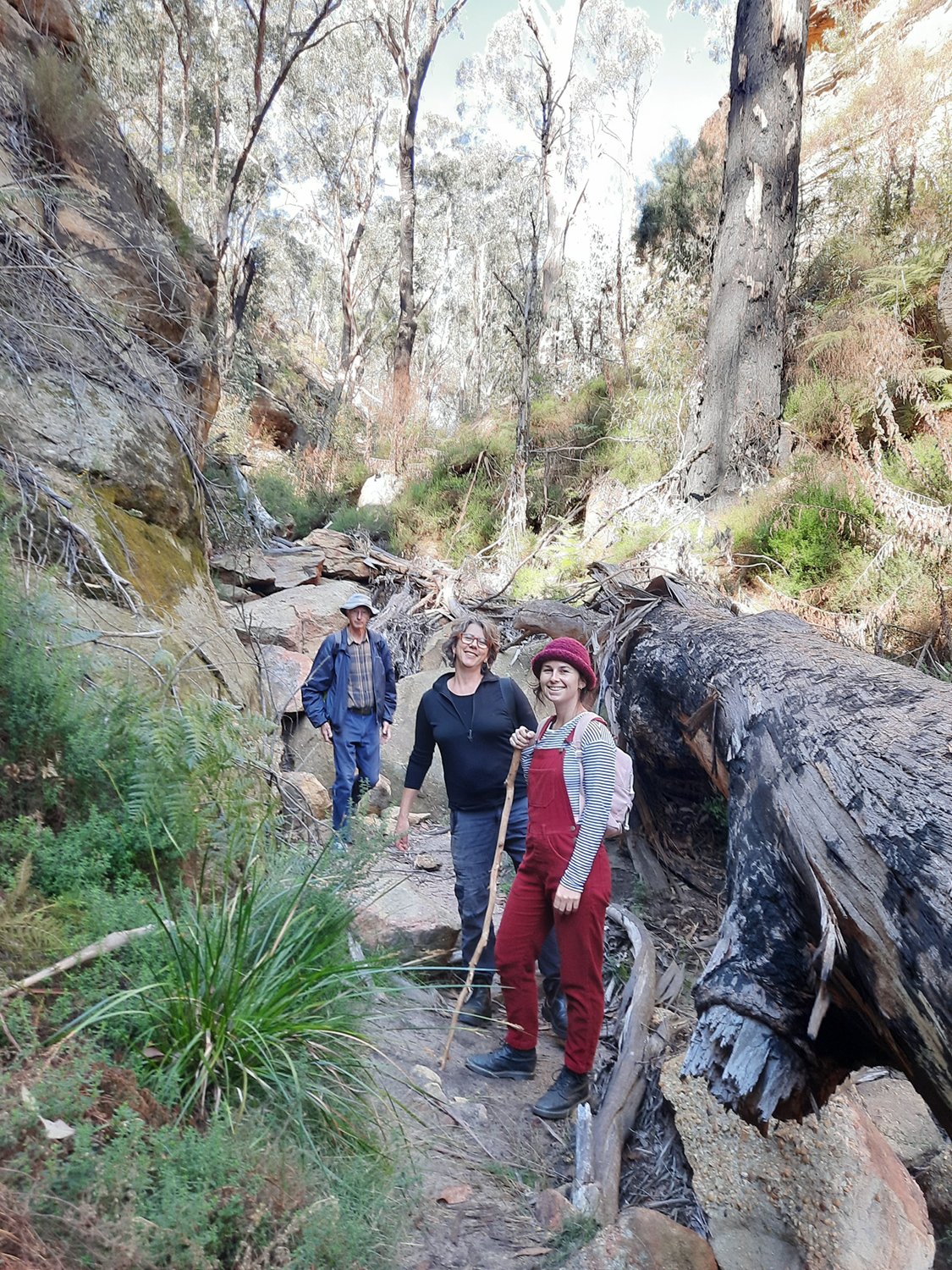
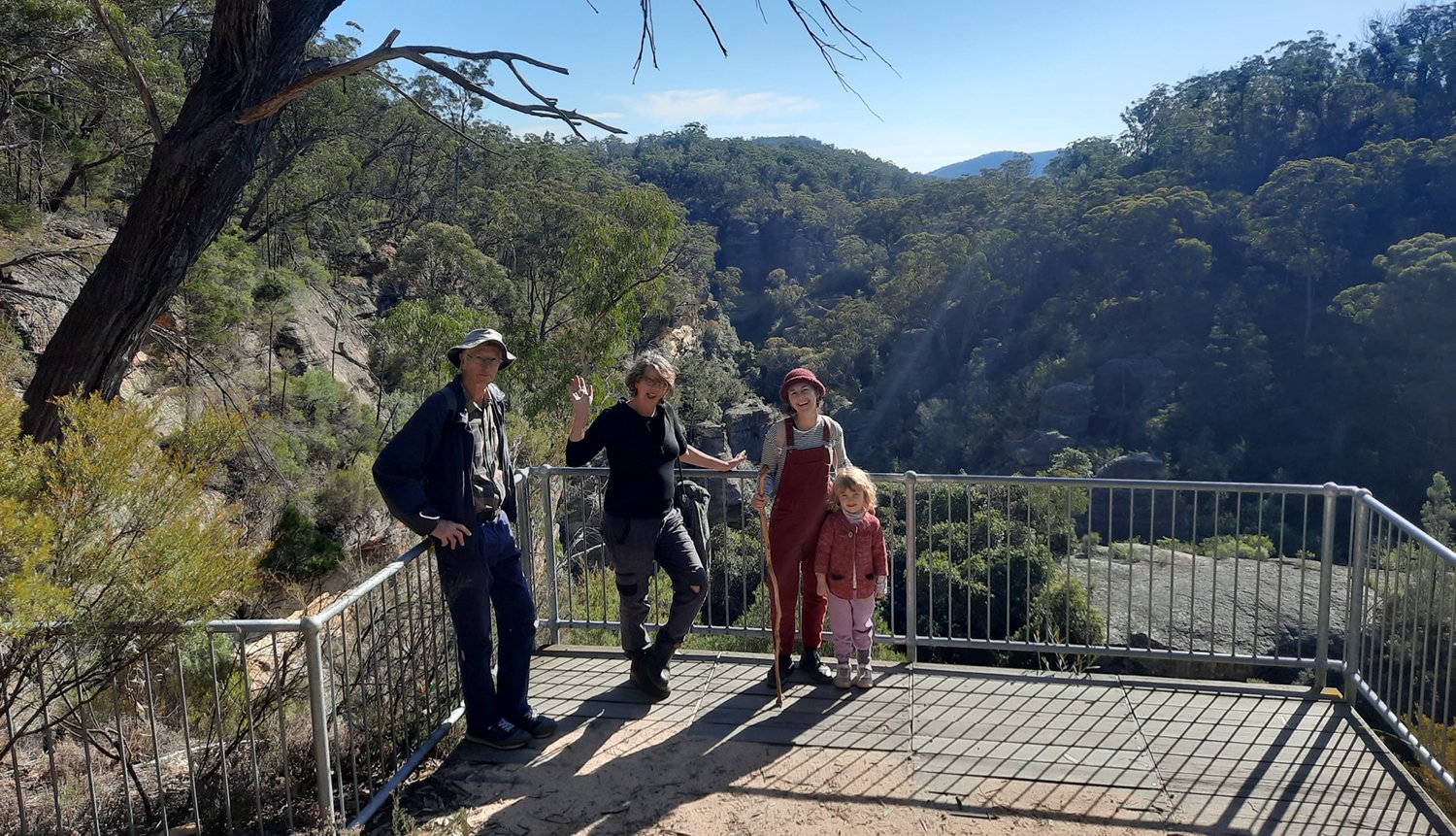
Last weekend Mulloon Institute’s Laura Fisher joined Maddi O’Brien from Watershed Landcare, artist Leanne Thompson, and Mal Stokes of the Ferntree Gully Reserve Trust, and her daughter Bonnie to scope out the site for the Mycology Mystery Tour happening on 27 May at the Ferntree Gully Reserve near Rhylstone in NSW.

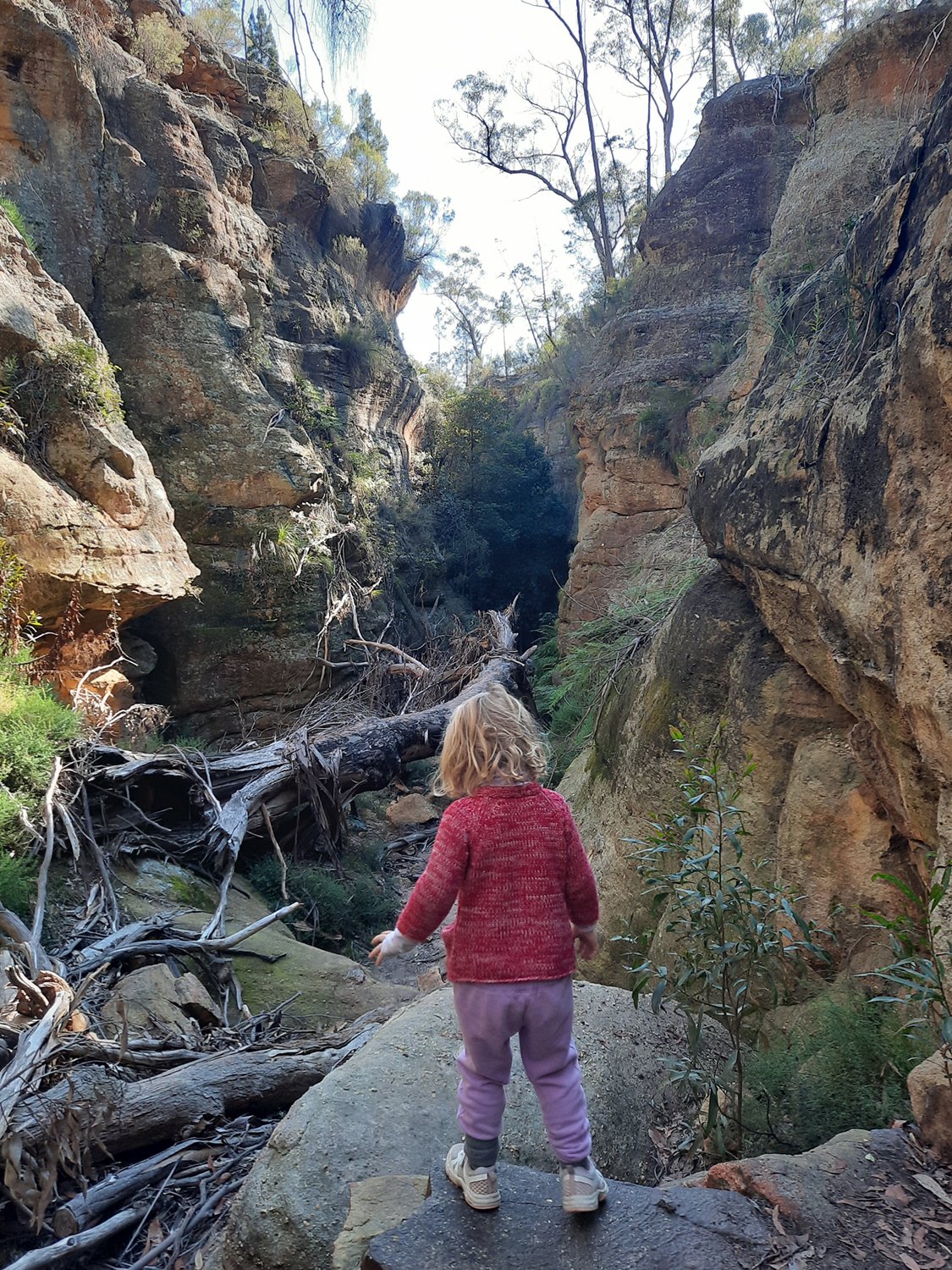
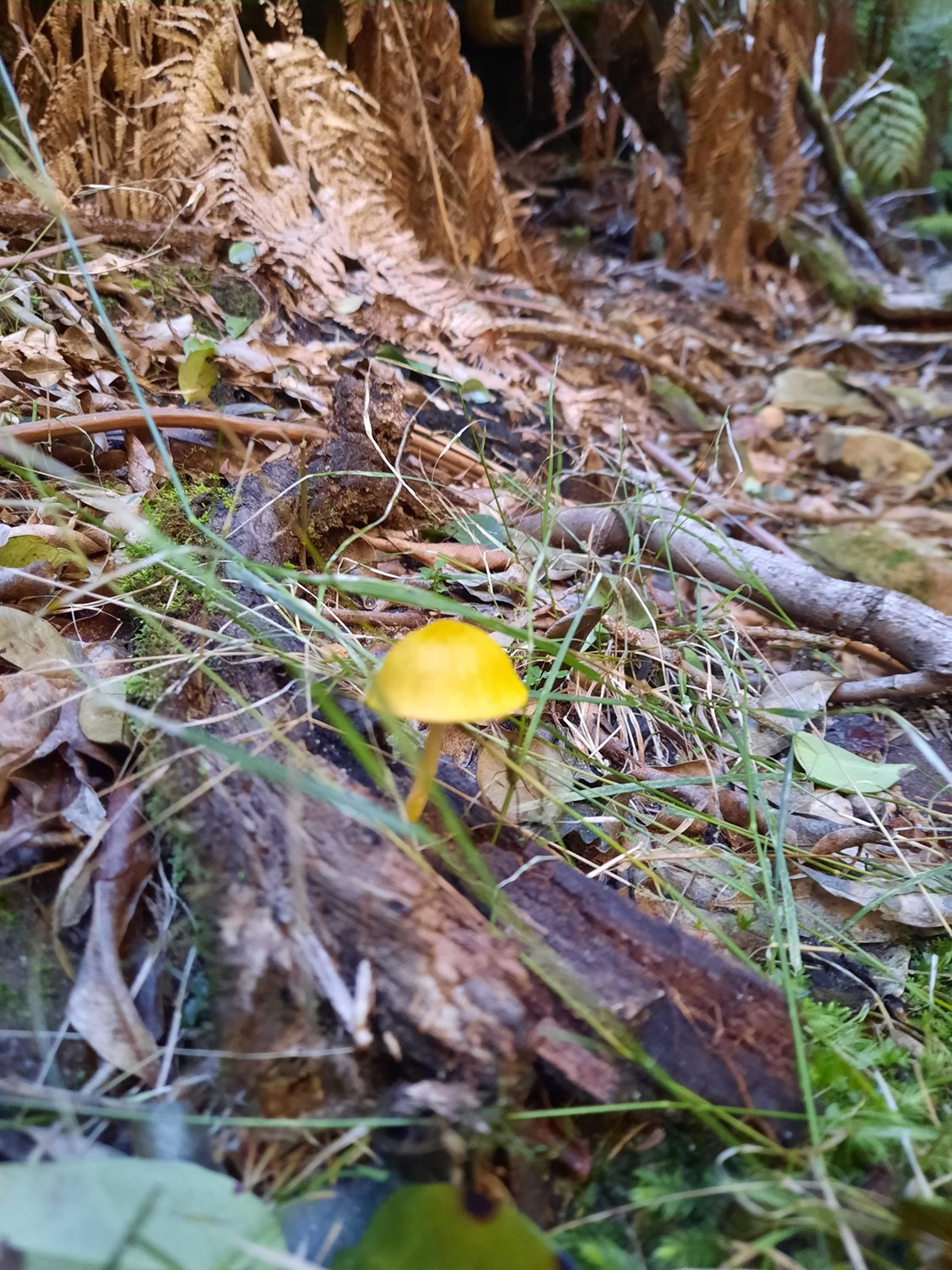
There is an abundance of fungi to be found nestled in this beautiful hidden canyon.

Participants on the tour will descend into the gully on a treasure hunt bushwalk. There they will discover surprise creations celebrating the magnificent role fungi play as agents of health and hydration in our ecosystems. After a picnic lunch, Leanne will also lead a collaborative mycelial sculpture project. There are still a couple of spots left on this tour!

Mycology May is an initiative run by Local Land Services in partnership with the Central Tablelands Regional Landcare Network.

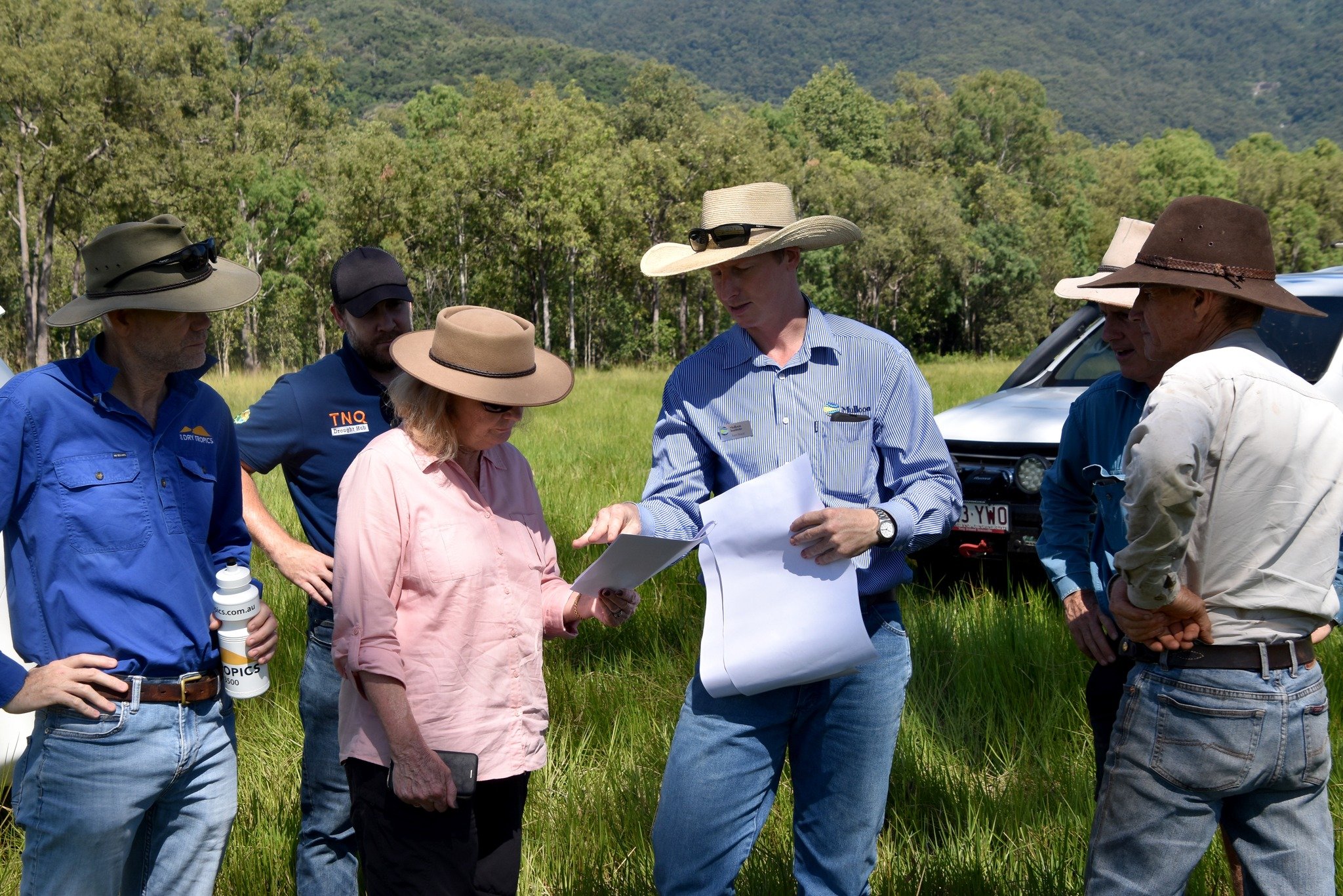
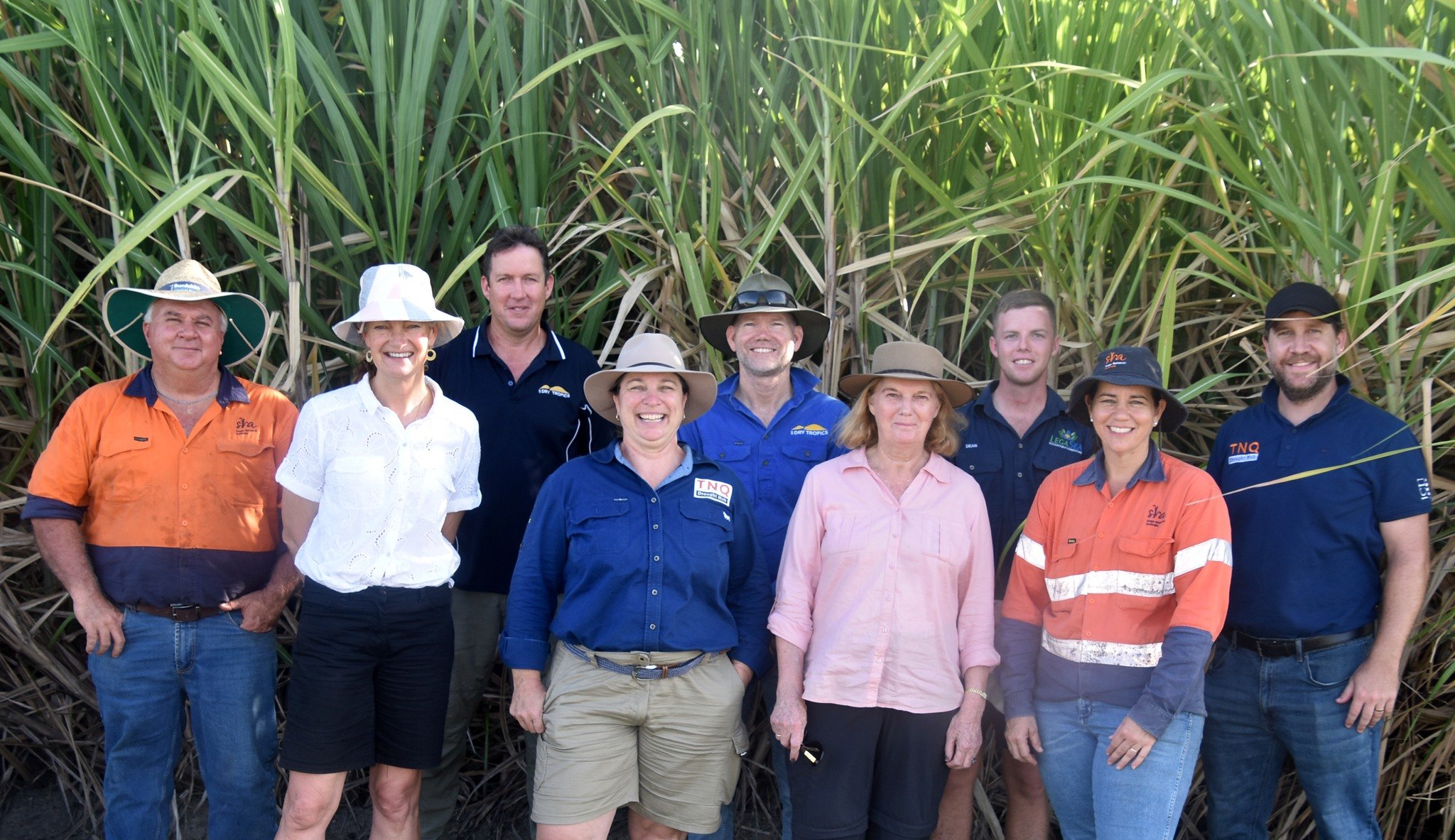
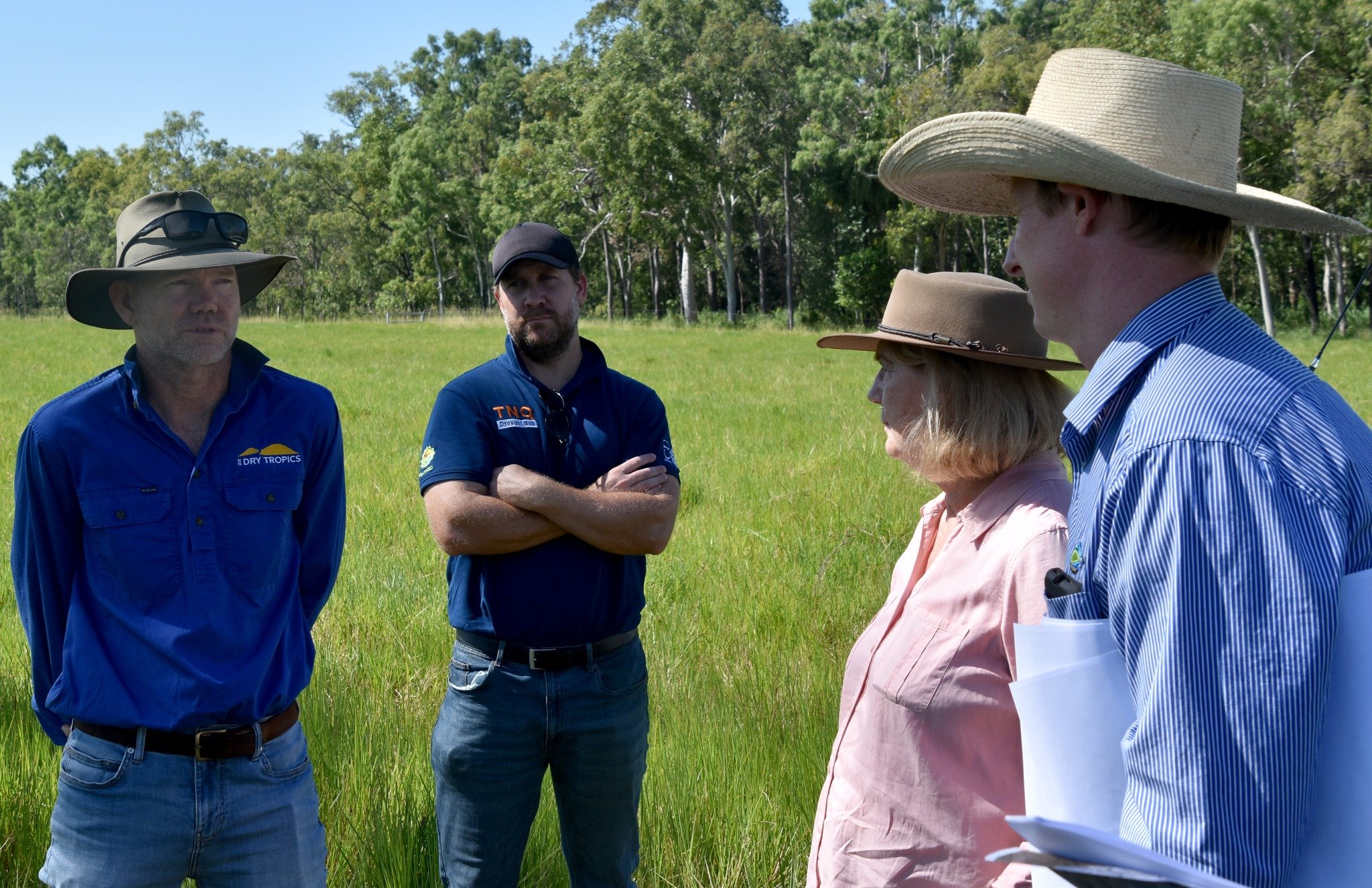
Mulloon Institute’s Sam Skeat recently joined NQ Dry Tropics to welcome National Soils Advocate, the Hon Penny Wensley, to the Burdekin in North Queensland. Dr Wensley was on a fact-finding trip to explore how Mulloon Institute and NQ Dry Tropics have been supporting local landholders to improve their soil health through various strategies including landscape rehydration, cultural burning, and improving practices around grazing management.

Dr Wensley visited cane farms, wetlands and grazing properties in both the Upper and Lower Burdekin in her role to raise awareness of, and the importance of, improving soil health in agricultural landscapes.

Local Waterways, Wetlands and Coasts team leader Scott Fry also presented an initiative comprising turning aquatic weeds into compost for crop use as an alternative to traditional fertilisers.

It was a wonderful opportunity for Dr Wensley to see the regional efforts going into improving landscapes in the northern tropical region, and for Sam to showcase the work the Institute is doing to assist local landholders with landscape rehydration techniques.

The visit was facilitated by the TNQ Drought Hub.

Tune in to this month’s CFF educational webinar with special guest Carolyn Hall from Mulloon Institute to learn about the rehydration strategy and tactics implemented at Paraway Pastoral in Boyup Brook.

Join our CEO and General Manager, Carolyn Hall as she connects with the Carbon Farming Foundation for a feature webinar, Blending Carbon Farming and Landscape Rehydration to discuss the landscape rehydration model in action at Paraway Pastoral in Boyup Brook, Western Australia.

Taking a holistic approach to carbon farming presents the opportunity to not only benefit your farm’s productivity and profitability but also the health and function of your whole farm landscape and ecosystem. Recently, Carbon Farming Foundation (CFF) and Mulloon Institute collaborated on a  project at Paraway Pastoral in Boyup Brook, Western Australia. The Mulloon Institute helped develop their whole farm plan, with landscape rehydration at its core. The CFF helped to design the carbon farming approach within that whole farm plan.

Landscape rehydration focuses on restoring hydrological processes, the way water moves, is stored and is cycled in the landscape.  Various interventions can be used on-farm to restore hydrological processes and contribute to farm productivity and management. This informs planting design to enhance nutrient flow, and integrates livestock and rehabilitates salt scalds strategically. The flow-on effects of the project have been extraordinary, with the property becoming a global standard for holistic land management and carbon sequestration outcomes.

Deciding to undertake a carbon farming project presents the opportunity to step back and take a big picture approach to improve your whole farm landscape function. Tune in to this month’s educational webinar with special guest Carolyn Hall from Mulloon Institute to learn about rehydration strategy and tactics implemented at Paraway Pastoral in Boyup Brook.

Webinar day: Thursday 27 April 2023

Webinar time: 2pm AEDT / 11am AWST

Registrations are essential.

Bureaucratic red tape continues to hinder vital landscape regeneration works that will bring back biodiversity, boost community resilience to climate-induced drought, bushfire and flood; and improve farm productivity. 

“Farmers and landholders are keen to regenerate millions of kilometres of eroded and degraded watercourses throughout this country, but environmental and planning regulations are preventing many of them from undertaking this valuable work, due to the time and cost of submitting multiple applications, special reports and detailed designs to multiple government authorities for permission to undertake on-ground works,” says Mulloon Institute Chairman Gary Nairn A.O. 

The Mulloon Institute works with landholders across Australia to reverse widespread land degradation by rehydrating and regenerating their landscapes.  

“While it is relatively easy to build leaky weirs and other ‘landscape rehydration works’ in degraded catchments – the problem is getting approvals to build such structures,” says Matt Egerton-Warburton, Mulloon Institute Board and Law Committee spokesperson. 

 “So right now, we’re developing a proposal to encourage the Federal Government to work with the States and Territories towards producing a National Code that will help landowners more easily implement landscape rehydration works,” Mr Egerton-Warburton said. 

The National Code would work by creating a streamlined compliance process that integrates the many environmental safeguards which currently protect water quality, biodiversity and cultural heritage.  

“If the climate science is right, we have no time to lose in getting this vital rehydration initiative rolled out right across the nation,” says Gary Nairn. 


The Mulloon Institute is recognised globally for its catchment-scale, Mulloon Rehydration Initiative which aims to rebuild the natural landscape function of a 23,000 hectare catchment and boost its resilience to climatic extremes. It involves 23 landholders and is resulting in more reliable stream flows, improved ecosystem function and increased agricultural productivity. It is jointly funded through the Mulloon Institute and the Australian Government’s National Landcare Program, with support from the NSW Government’s Environmental Trust, and has been recognised by the United Nations Sustainable Solutions Network as being one of five projects globally, as a demonstrator of sustainable, profitable and productive farming.  

– ENDS –

For media queries, please contact:  

Cass Moore, Communications & Media Officer
cass@themullooninstitute.org 

Gary Nairn AO, Mulloon Institute Chairman
garynairn@themullooninstitute.org 

Carolyn Hall, CEO
carolyn@themullooninstitute.org 

Mulloon Creek, March 2018

Mulloon Creek, April 2020

The NSW Government has defined Landscape Rehydration Infrastructure Works as, ‘works involving placing permeable structures on the bed of a stream to reduce erosion and maintain or restore flows for ecological purposes’. It is likely this will be a tipping point, leading to reform in other states.

Following on from our first and highly impactful advocacy win last December where the NSW State Environmental Planning Policy was amended to smooth the path for installation of natural structures to repair degraded streams, known as ‘Landscape Rehydration Infrastructure’, the Mulloon Institute Law Committee is now lobbying for a National Code of Practice for Landscape Restoration and Rehydration.

The ground-breaking landscape rehydration research of Mulloon Institute has identified an urgent need for national action to reverse almost 250 years of agricultural damage to our native ecosystem services through vegetation clearing leading to incised and eroded rivers and tributaries, and the decreased mechanisms of our soils to hold water, carbon and microbial activity.

The objective of a Code of Practice is to support farmers and farming communities, who manage 61% of the Australian land mass, to successfully navigate the task of producing food and fibre while also being stewards of our natural assets.

The internationally recognised work of the Mulloon Rehydration Initiative is the evidence-based blueprint for the solution offered by Mulloon Institute. Landscape rehydration offers the capacity to transform vast areas of degraded landscapes in just a few years, using inexpensive techniques that utilise rocks, logs, vegetation and adaptive management to repair the landscape function.

Environmental Law Scholar Dr Gerry Bates is contributing to the draft Code: “There is such urgency now, as the State of Environment Report tells us. If we want to heal our environments, we need an outcomes-focused approach that is easy to navigate. What we have now is a tangled spaghetti of approvals processes stalling hundreds of worthwhile projects. Many other sectors have a Code-compliant approach, why don’t we have one for Environmental Restoration?” he asked.

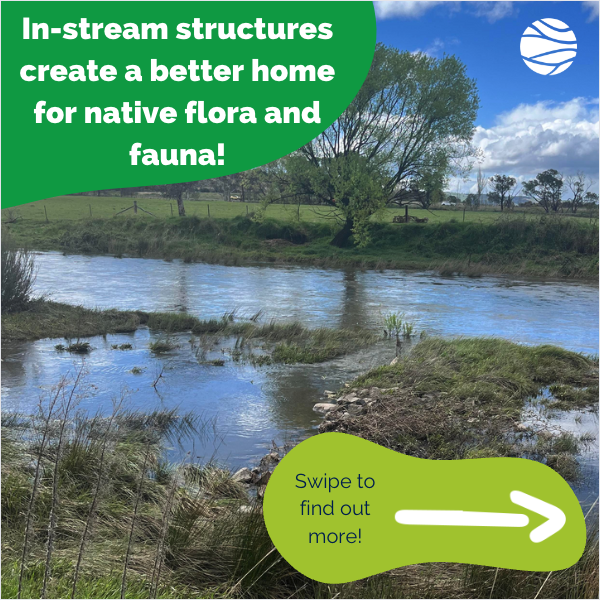
One of the suite of new social media tiles created by some skilled Institute for Water Futures students at ANU.

We will share science in style in 2023 on Mulloon’s social media, thanks to a successful ANU student project. The project was part of our ongoing affiliation with the Complex Environmental Problems in Action course at the Institute for Water Futures, ANU. This collaboration is all about testing digital tools to engage the community in how waterways and catchments are transformed by rehydration.  

This group drew on their terrific design and science communication skills to build an Instagram carousel we can use for future series. Sharing science in the fast-paced environment of social media is a fine art. The students focused on eye-catching aesthetics and short compelling narratives in their approach.  

With thanks to Jahnavi Samprathi, Inga Mueller, Luke Farrow, Miranda Kennedy-Hine and Reina Katsumata for their fantastic work, and for a great report full of useful insights on effective science communication.  

Gary McGuigan with students from Kandos Public School demonstrating one of his small catchment models during the Waterland workshop series in 2022. Photo by Laura Fisher.  

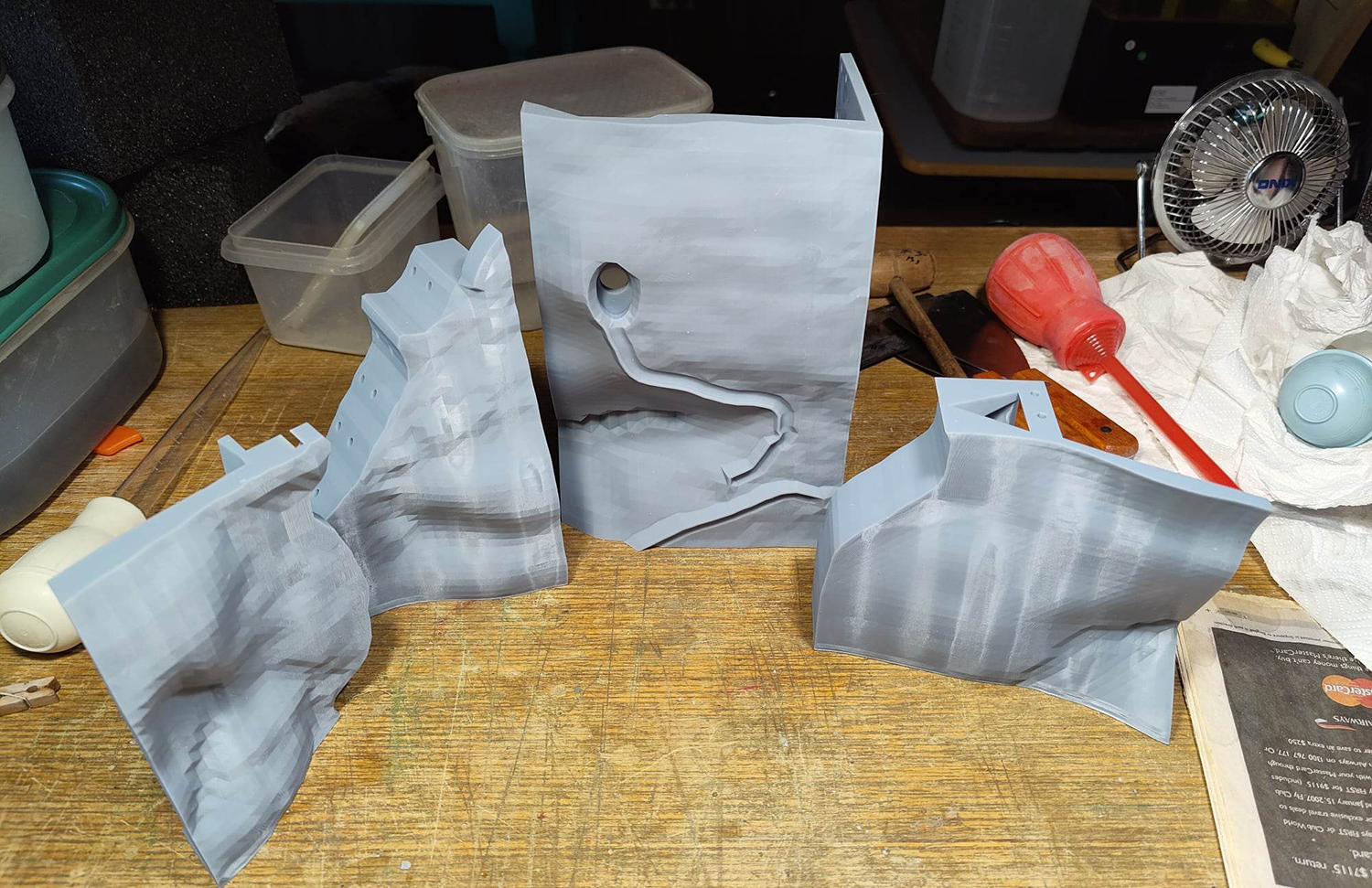
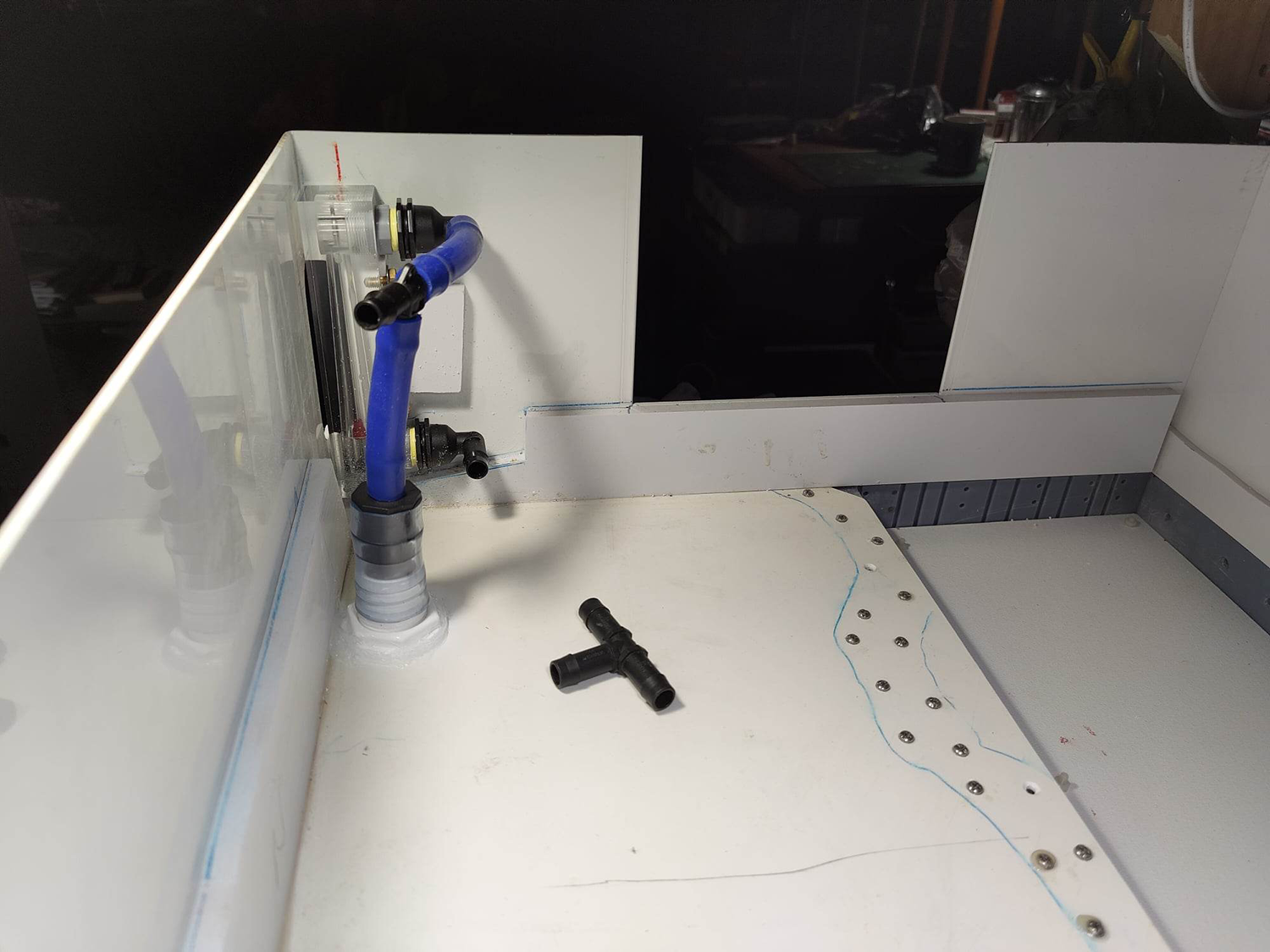
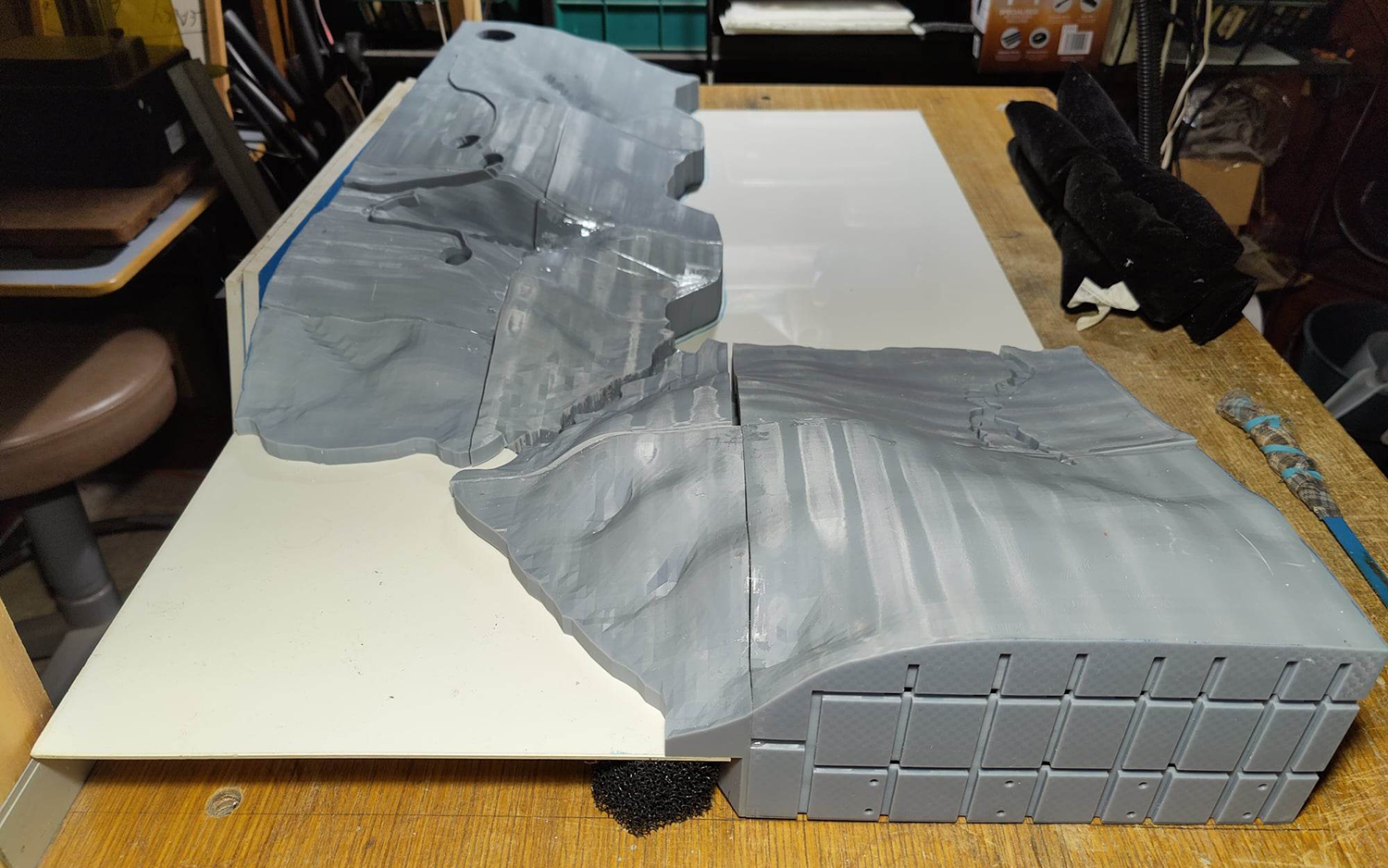
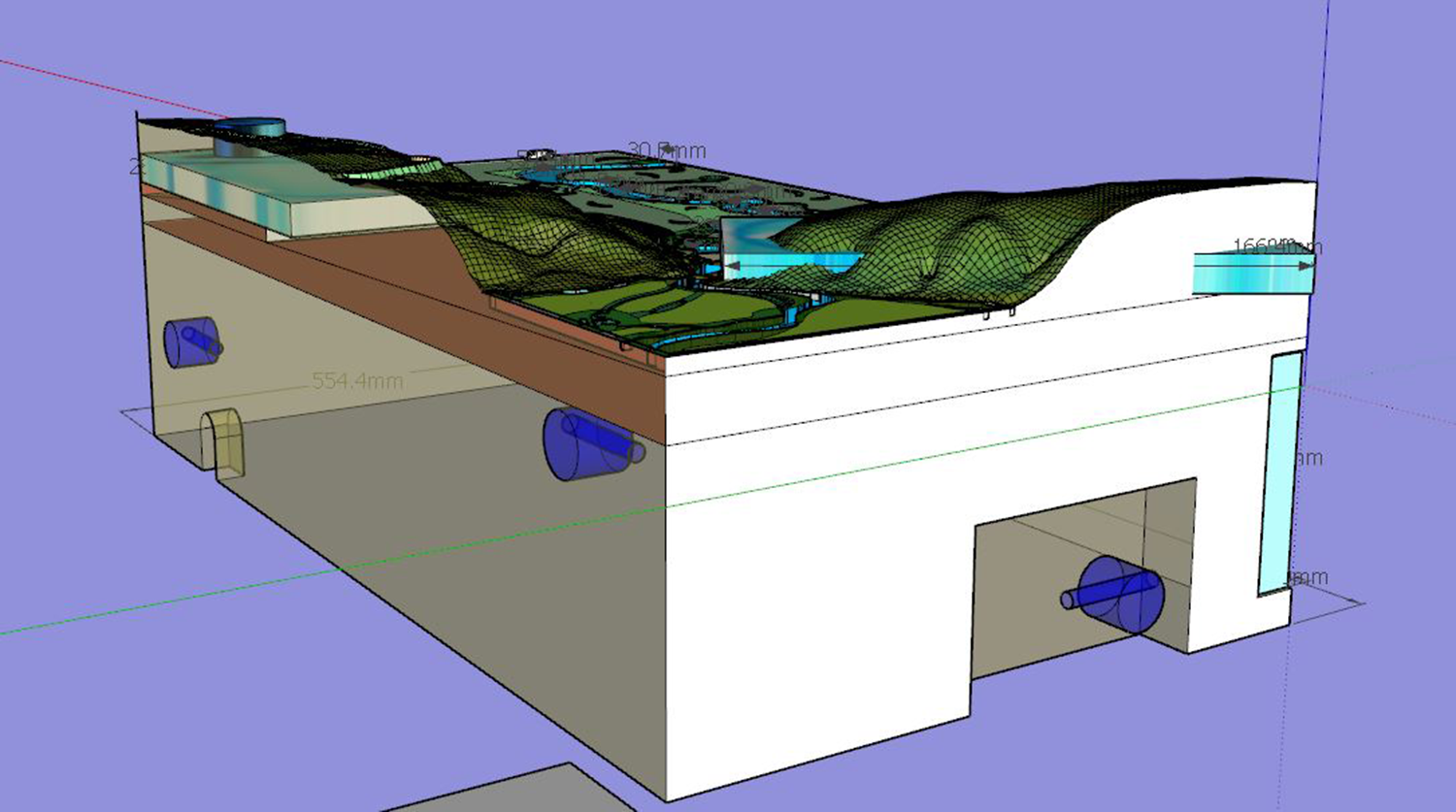
It’s amazing to see an expert model-maker at work. Plumbing, carpentry, 3D printing and the skills of a stop-motion animation set maker all come into play, along with rigorous CAD design work. We are watching with great interest as Gary McGuigan begins constructing all the layers, inserts, bells and whistles we have squeezed into the design. 

Gary wants his models to be as interactive as possible, and to provide an authentic representation of how water flows through a spongey, hydrated landscape. They also need to withstand being poked by many tiny fingers! 

We can’t wait to see the next phase of construction, good on you Gary! 

This catchment model is part of the Citizen Science project ‘Modelling Landscape Rehydration for Catchments, Communities and Curriculum’, funded by the Australian Government. 

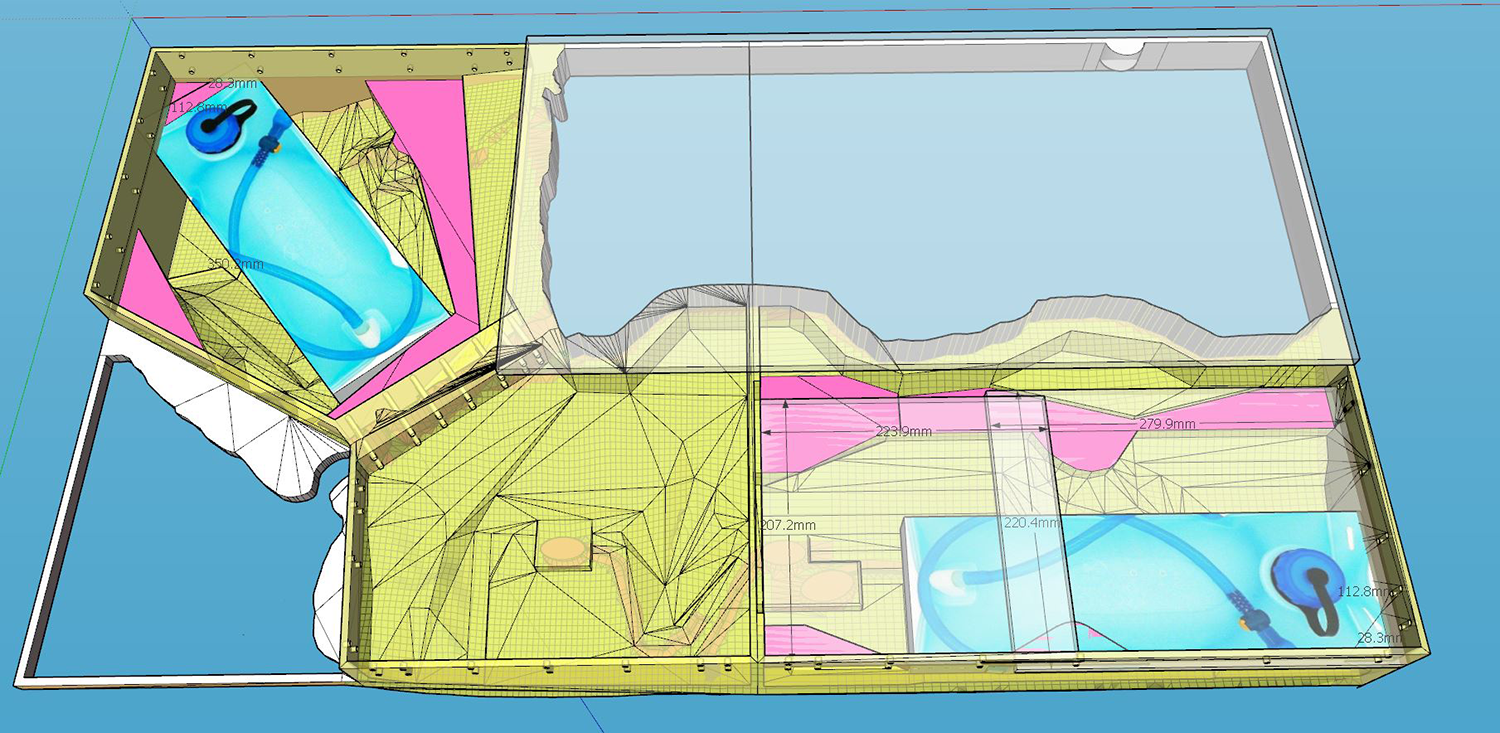
First, it starts with a plan and some 2D CAD design work.

Next is the 3D CAD design.

Then the segments are 3D printed.

The all-important hydration feature is installed.

The 3D model is built over the hydration unit.

All coming together.