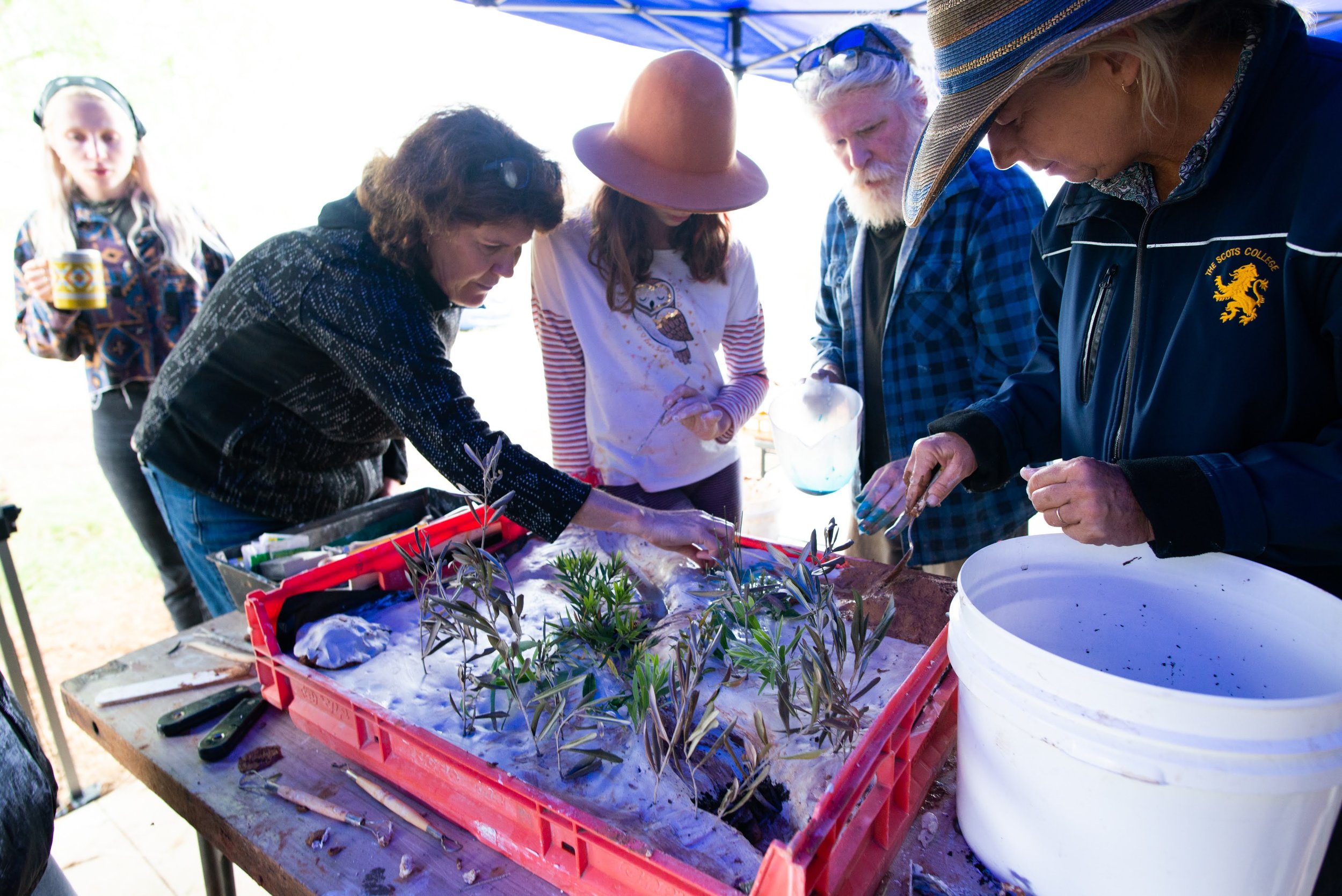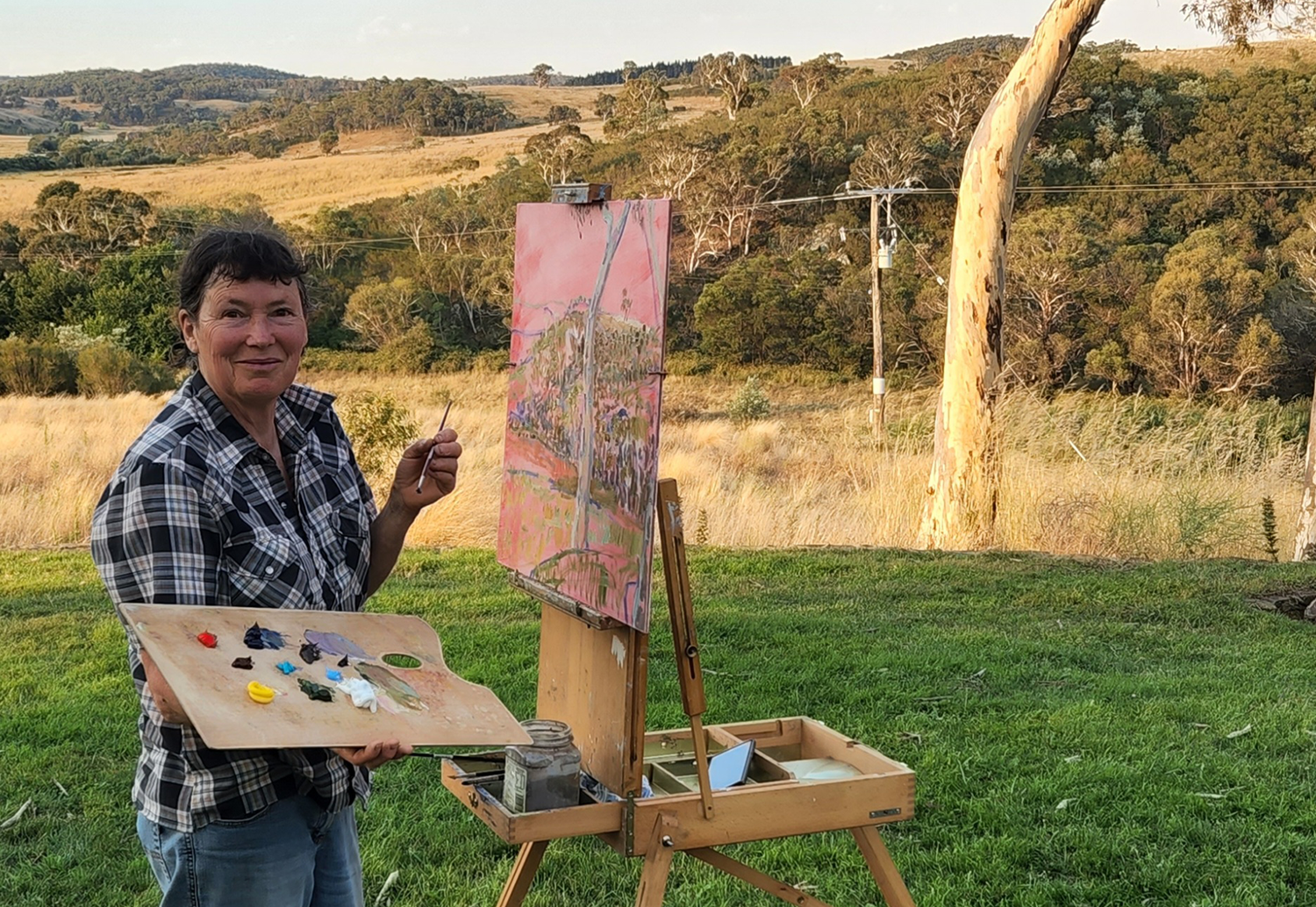
Renowned Australian artist Lucy Culliton was the artist in residence for the weekend at our Mulloon Rehydration Initiative Landholder’s BBQ (image: Matt Egerton-Warburton)

The Mulloon team welcomed Mulloon Rehydration Initiative (MRI) landholders, Member for Monaro Nichole Overall and renowned landscape artist Lucy Culliton to Mulloon Creek Natural Farms for a celebratory BBQ in February 2023.

The Mulloon Institute’s Chairman the Hon Gary Nairn AO hosted the event, with a presentation on the latest on-ground and scientific monitoring updates for the MRI by Principal Landscape Planner, Peter Hazell, followed by Mulloon Law Committee members Matt Egerton-Warburton (Chair) and Dr Gerry Bates explaining the NSW Planning regulation and implications, and the need for a Code of Practice, and our CEO Carolyn Hall rounding up with the vision of where the Mulloon Institute is heading with the National Rehydration Initiative and our national education programs.

Then followed a Q&A panel with the presenters, with great support for the Code of Practice to roll out Landscape Rehydration and Regeneration nationally by both landholders, including an enthusiastic Nichole Overall who is driven to support our groundbreaking work in Parliament every step of the way.

Everyone came together over great food under a brilliant bluebird sunny day, and we then headed off to neighbouring farm Palerang to see leaky weirs built in 2006 in action – the crystal clear Mulloon Creek running through the flood plain, flanked by healthy vegetation with no sign of the erosion and dry soils that dominated the landscape 20 years earlier.

The BBQ was a culmination of a busy week for the team, several of whom were interviewed by ABC alongside MRI landholders for a special screening to be broadcast in March. Stay tuned!
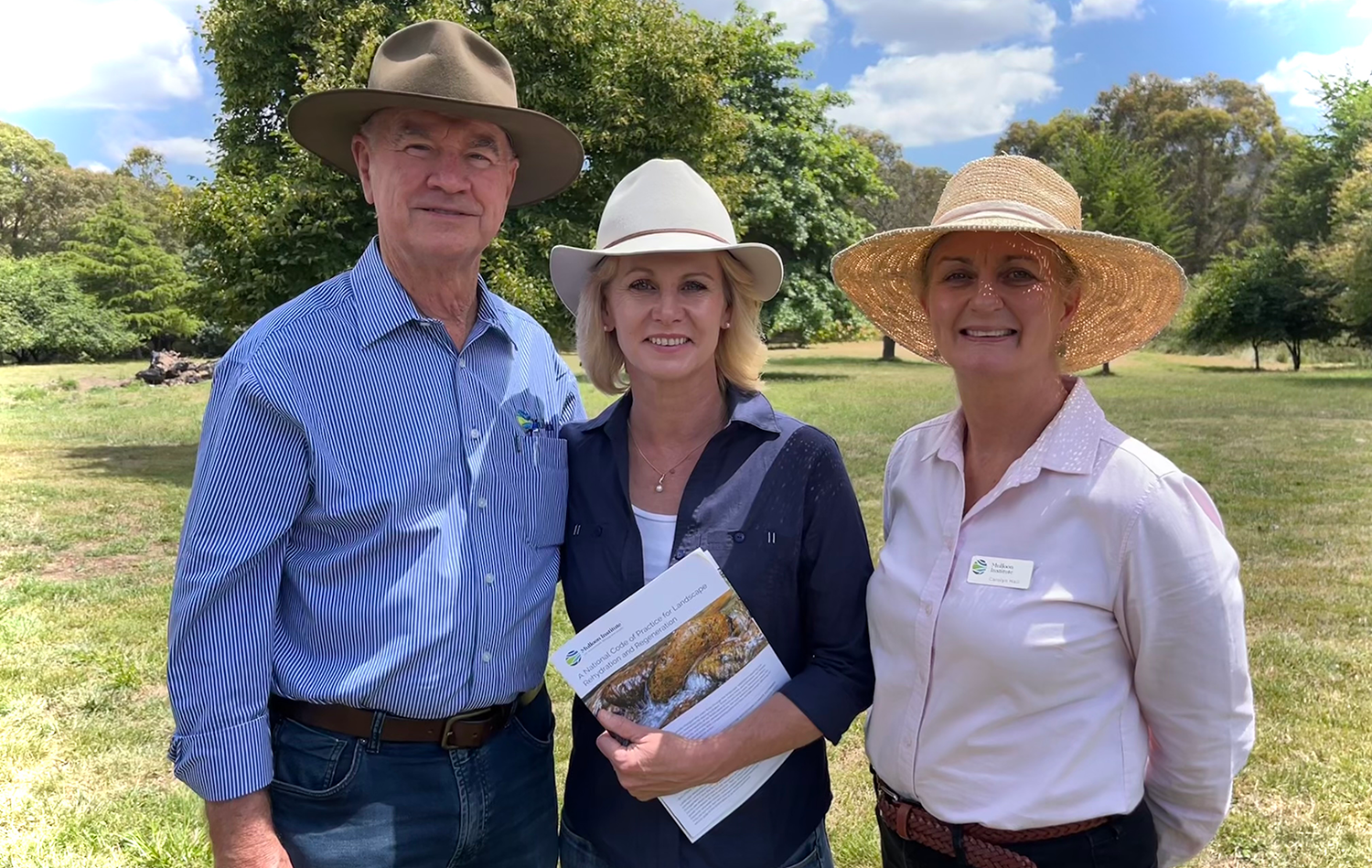
The Hon Gary Nairn AO, Member for Monaro Nichole Overall and Carolyn Hall.
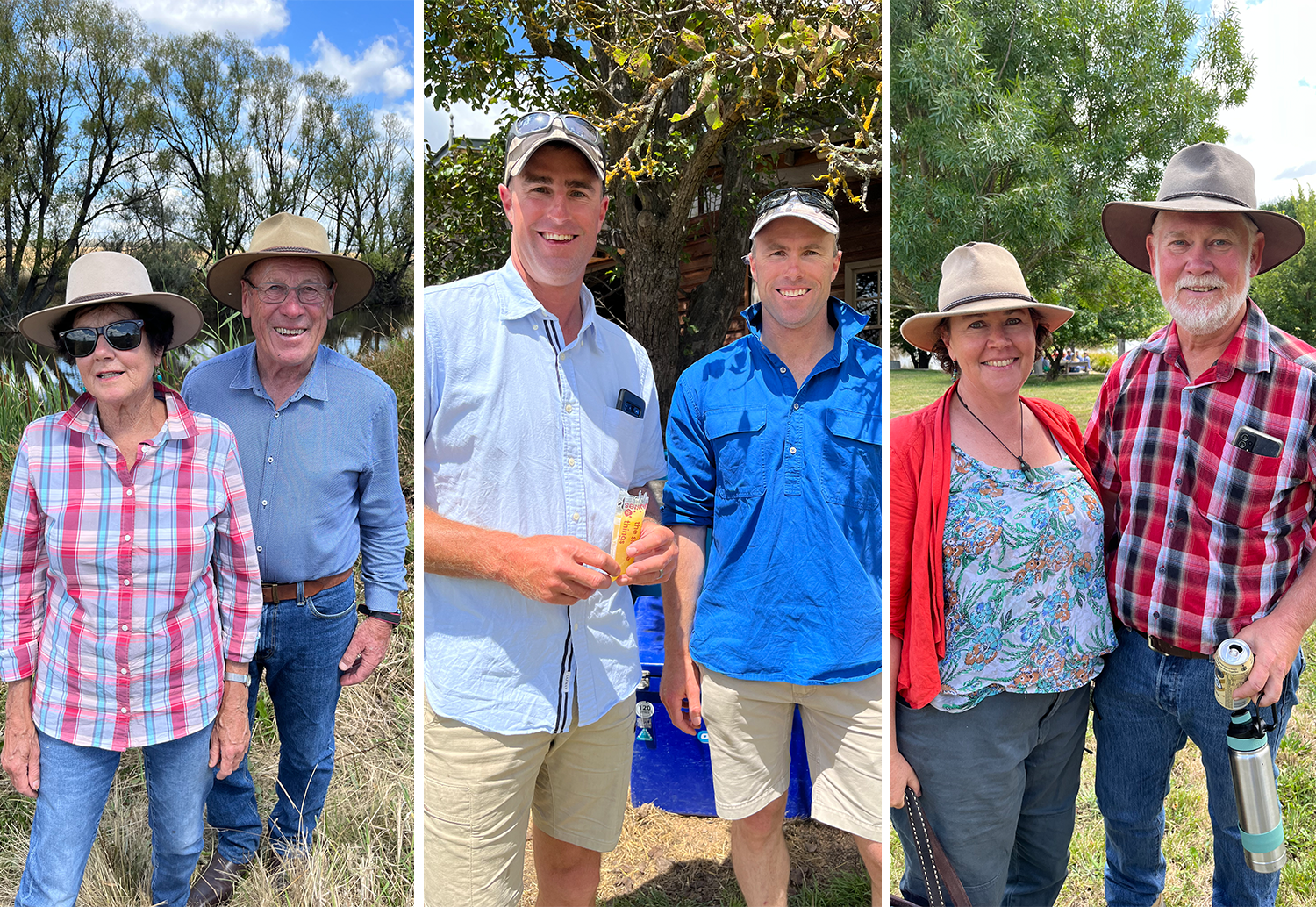
Mulloon Rehydration Initiative landholders Sue and Ulli Tuisk, Ben and Alex Lynch, and Leisa Porter and James Innes.

Carolyn Hall, Peter Hazell, Gerry Bates and Matt Egerton-Warburton with The Hon Gary Nairn AO during the panel discussion with local landholders.
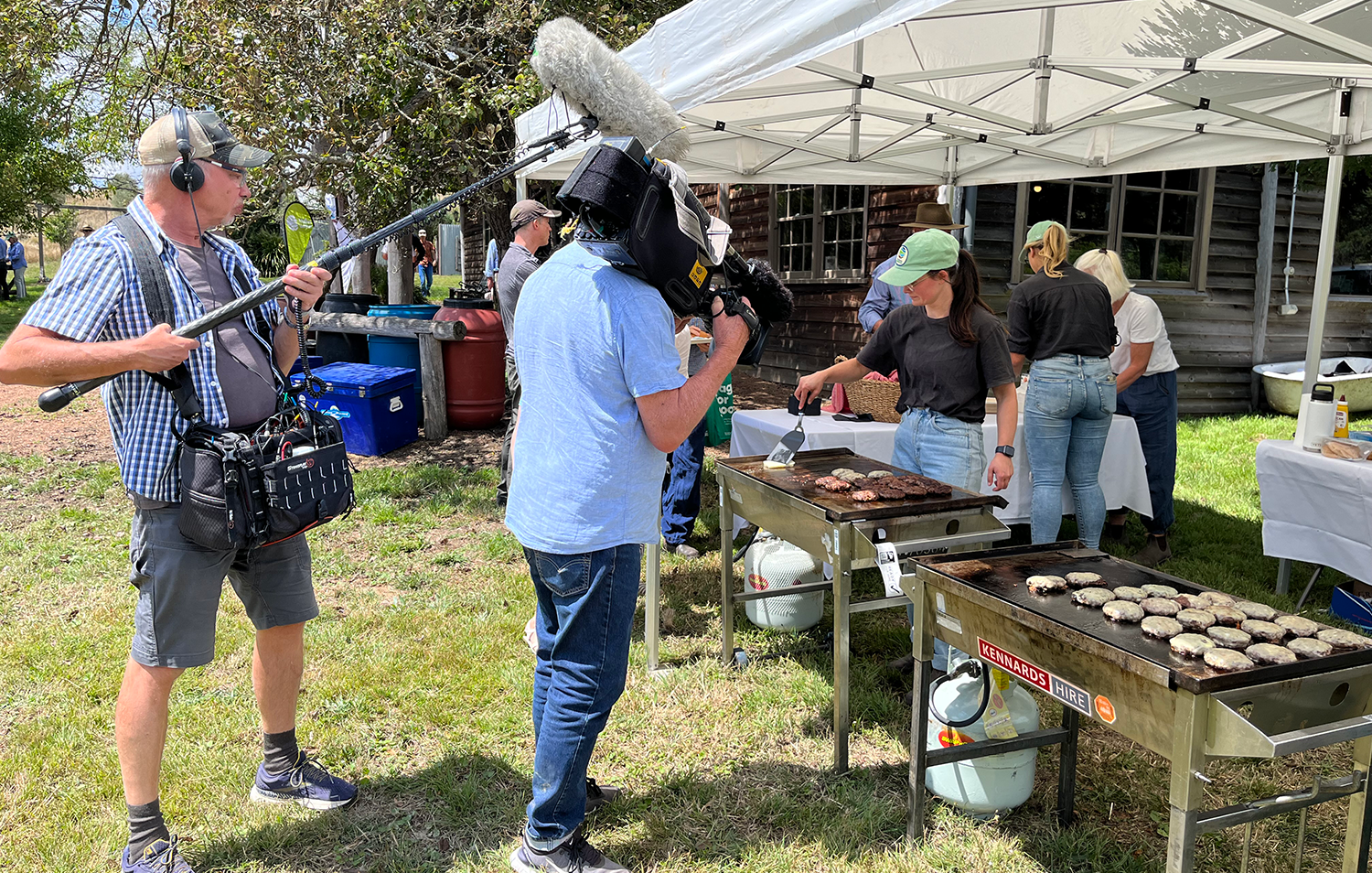
The Mulloon Creek Natural Farms team provided a wonderful lunch for everyone at the Barn under the watchful eye of the ABC camera crew!
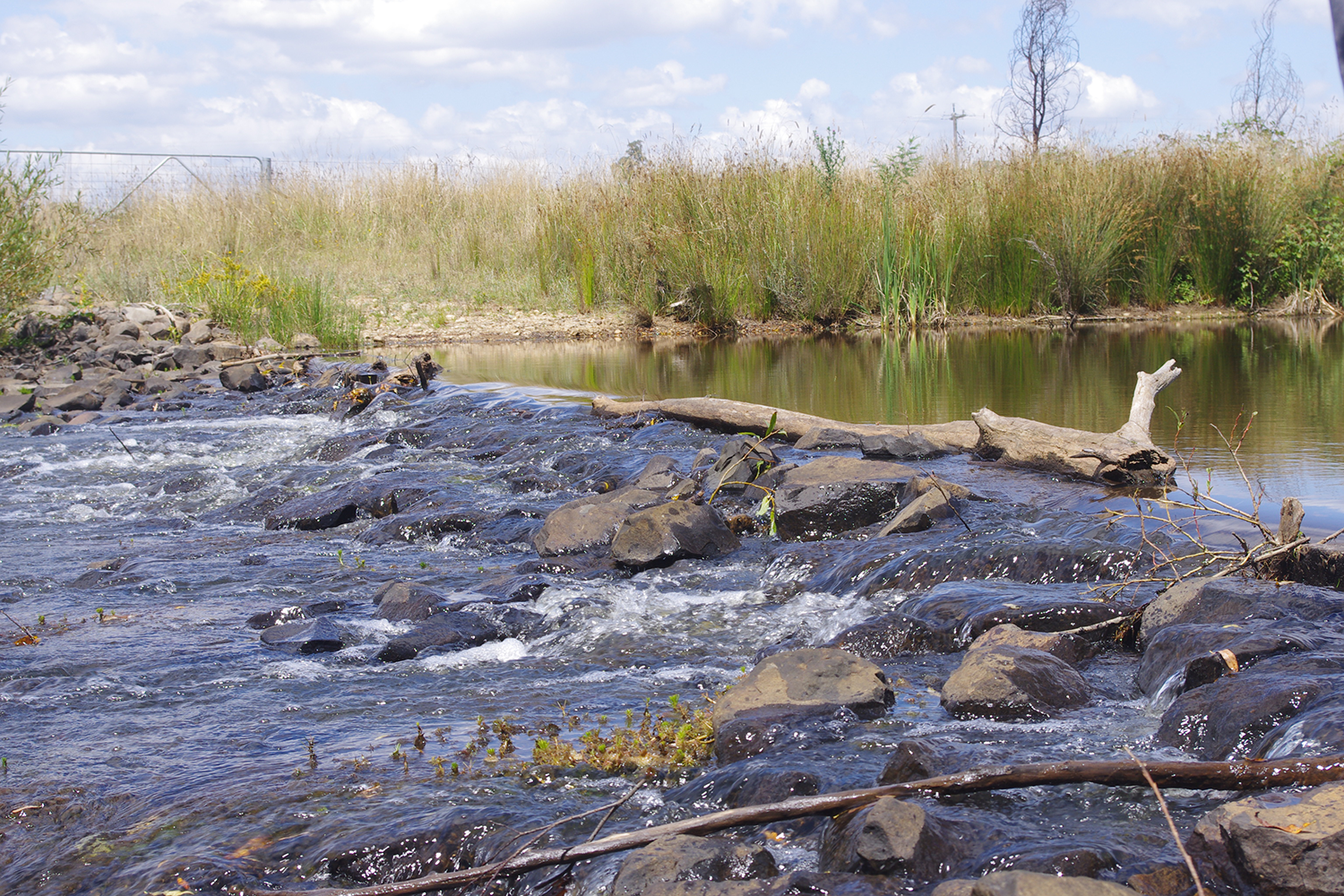
Crystal clear waters in the Mulloon Creek at Pelarang flowing through a leaky weir built in 2006.


The Mulloon Rehydration Initiative is jointly funded through the Mulloon Institute and the Australian Government’s National Landcare Program, with support from the NSW Government’s Environmental Trust.
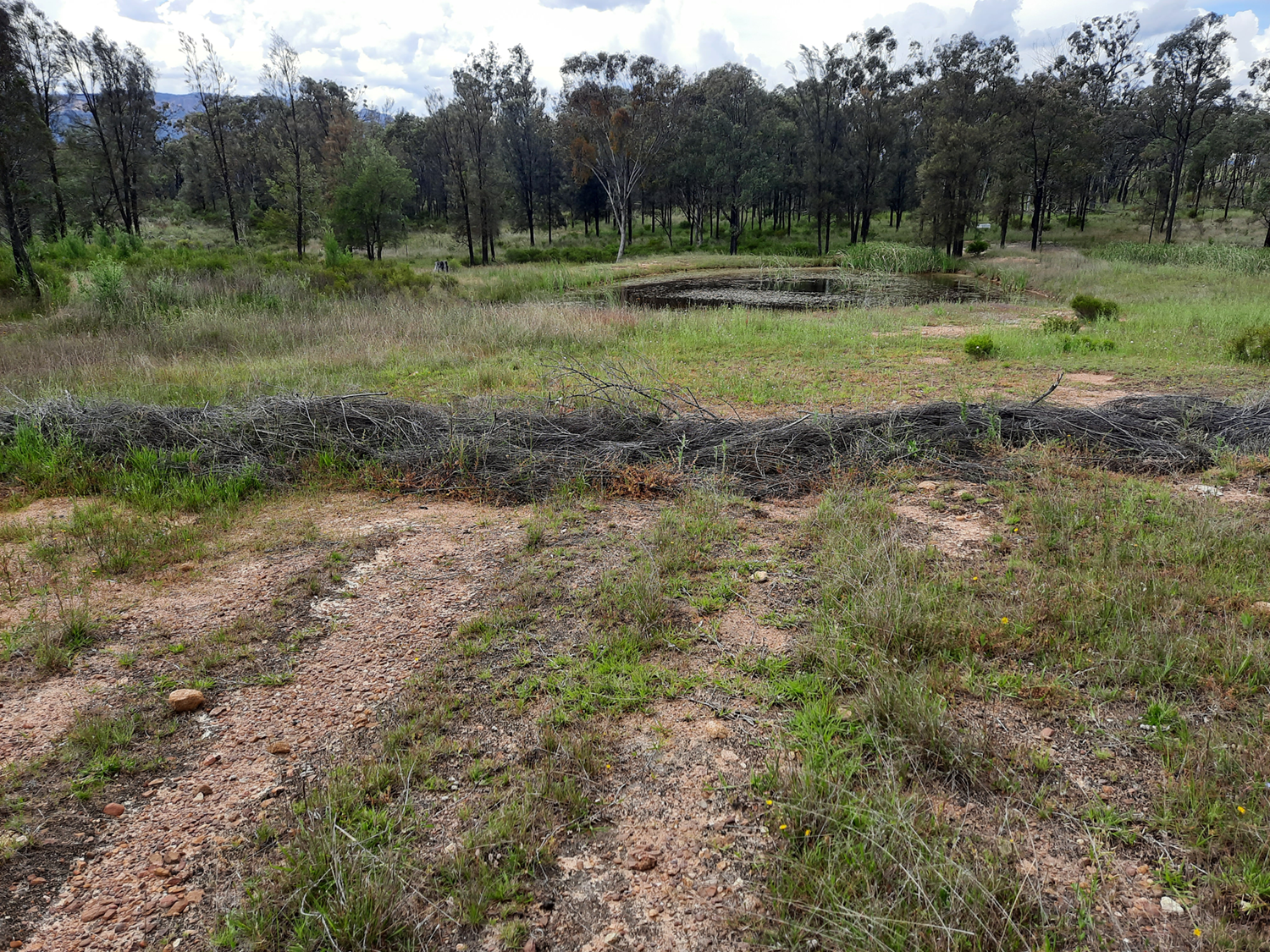
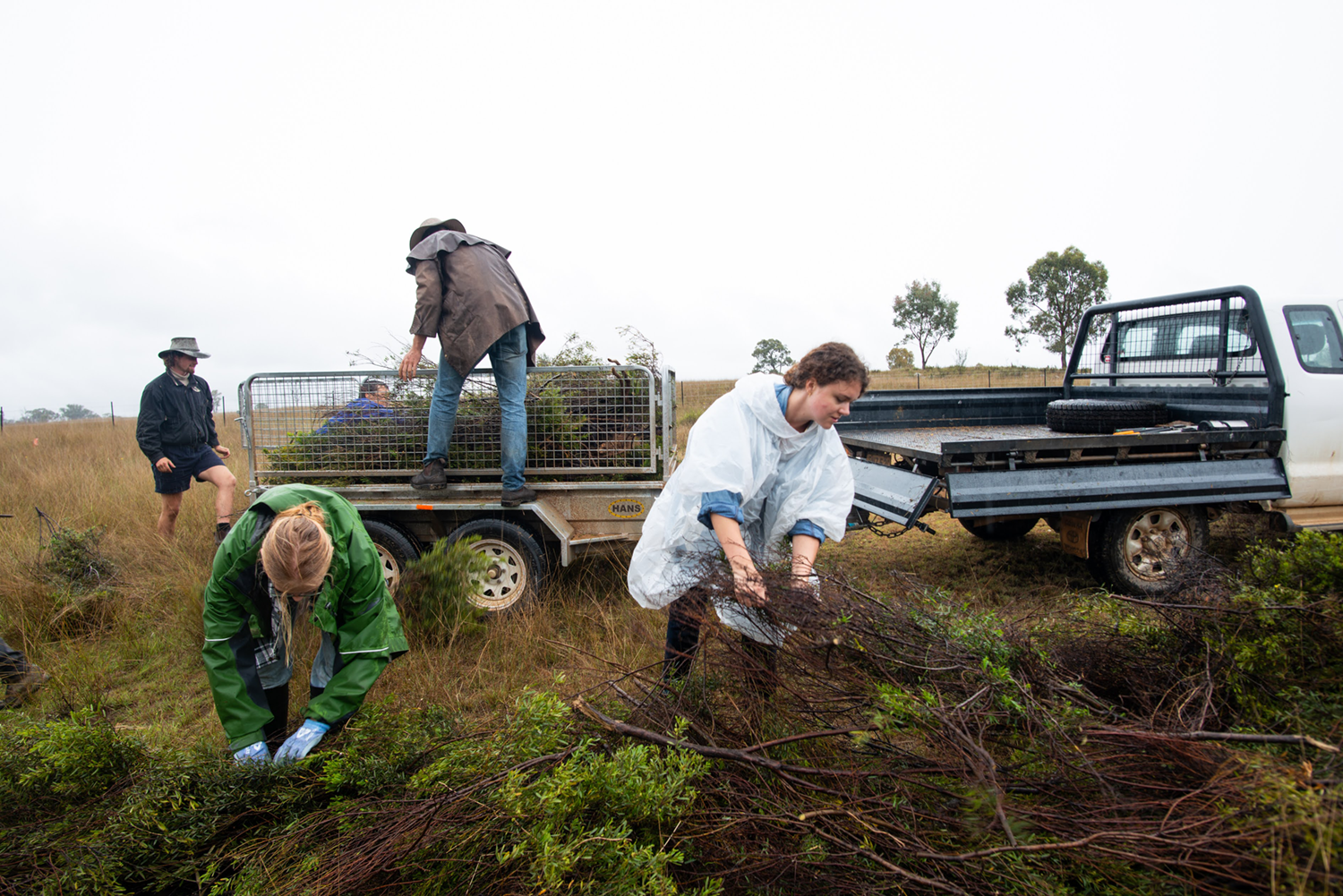
One year after the Brushpack Workshop at Bimbimbie Farm, the compacted land above the dam is showing healthy signs of regeneration.

Back on 4 November 2021, Joe Skuse led an enthusiastic group in a Brushpack Workshop at Bimbimbie Farm, the property of Alex and Charlie Bogle, in the Capertee Valley. The event was Land Studio, an artist-led land restoration camp. Alex and Charlie, new owners of the property, had just fenced off a degraded site for regeneration, consisting of a cluster of dams they wanted to return to a more natural state. There were many areas of bare and compacted earth around these dams and some unsightly erosion gullies, most likely caused by overgrazing in the past. 

On that day we created three brushpacks from harvested olive tree prunings, melaleuca and wattle. They all straddled erosion areas, and in one case the brush was woven through short stakes. As Joe explained, these piles of brush would protect exposed areas from the elements, slow water flows, hold moisture, and provide refuge and habitat for little critters, whose presence would also contribute to the capture of nutrients. 

Almost a year to the day later, on 12 November 2022, Laura Fisher and Peter Hazell from Mulloon Institute revisited the site. We were immediately struck by how the area had been transformed by the rains and the rest. The dams are now wetlands with flourishing aquatic vegetation surrounded by healthier stands of grass and other plants. Many erosion spots were stabilising, though the floods had certainly made their mark on some gullied areas – highlighting where a future workshop might take place.  

We inspected the brushpacks closely, all of which had remained firmly in place despite the powerful flows they must have experienced in the last year! Their height had reduced substantially, so they were now dense snakes hugging the ground. A variety of plants were sprouting around them, taking advantage of the captured moisture, sediment and fertility. We wondered whether in one case where more melaluca brush was used, there was less plant growth – melaluca may have similar allelopathic properties to eucalyptus (which means that the biochemical compounds it releases can inhibit the germination and growth of other species of plant). But it was also a steeper slope with no topsoil at all, so perhaps it will take a bit longer.  

We also noted the effectiveness of combining coir matting with rocks in a steep gullied area the Bogles are repairing. We could clearly see that where the coir had captured some sediment passing through, plants were sprouting courageously, whereas where there were only rocks and boulders this hadn’t happened.  

We hope to run a follow-up workshop at Bimbimbie Farm in the future, in which we treat some of these gullies with sequences of mini-weirs using a combination of earth, rock and coir. As a fenced off regeneration site that is easily accessible, it lends itself well to being a demonstration site for others in the Capertee Valley aiming to implement low-cost solutions to their degradation issues!  

Brushpacks being installed, November 2021. Image: Alex Wisser.

A close-up of the brushpacks one year after installation – slowing water flow and providing habitat for small critters as the soils around them regenerate.

Peter Hazell, Principal Landscape Planner at Mulloon Institute revisiting Bimbimbie Farm in November 2022, one year after the initial Brushpack Workshop.

Brushpacks being installed in November 2021 as part of the Brushpack Workshop. Image: Alex Wisser.

This workshop and monitoring process forms part of the Mulloon Institute’s Landscape Rehydration Capacity building project, which is supported by the NSW Government through the Environmental Trust.
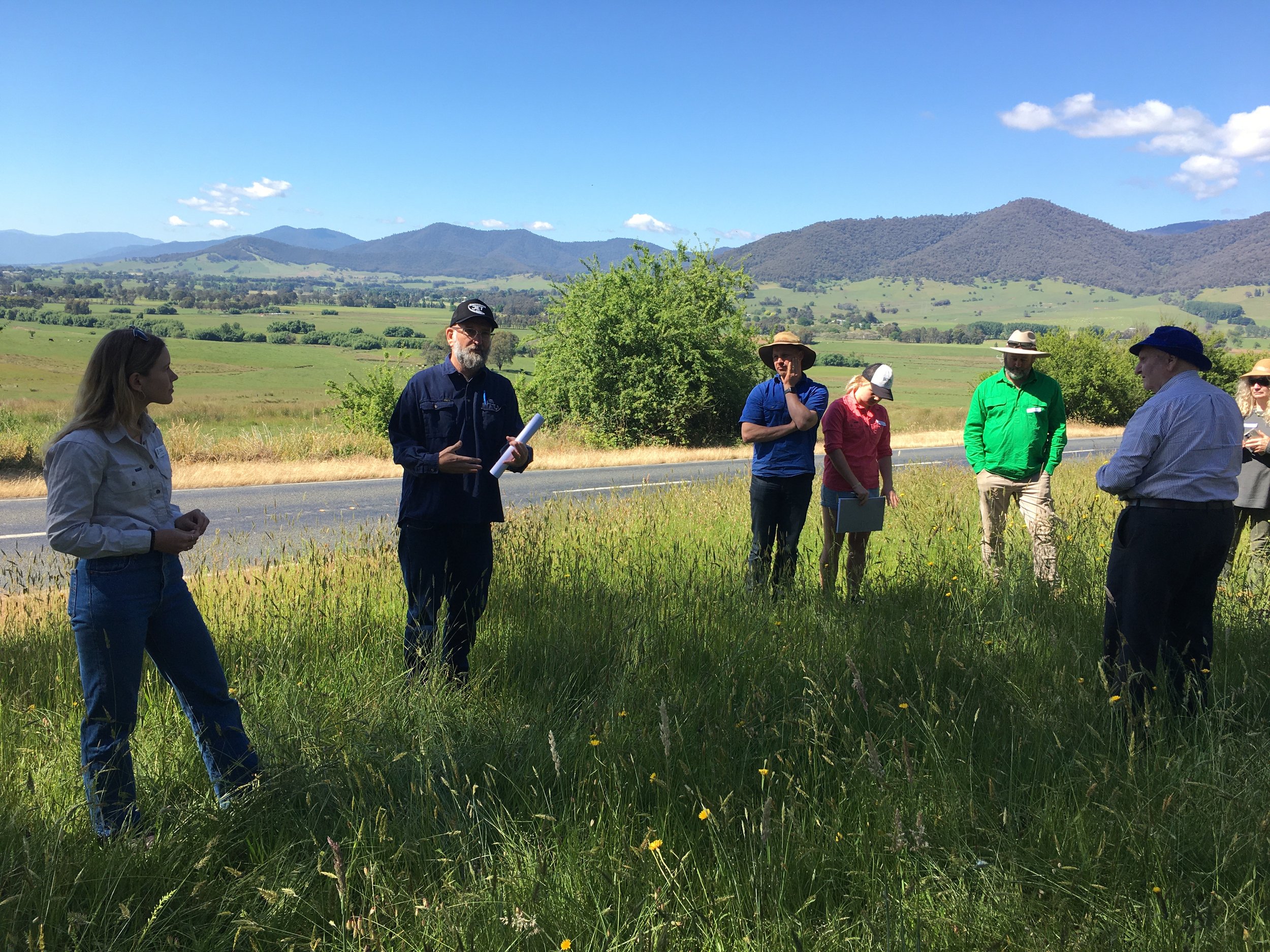
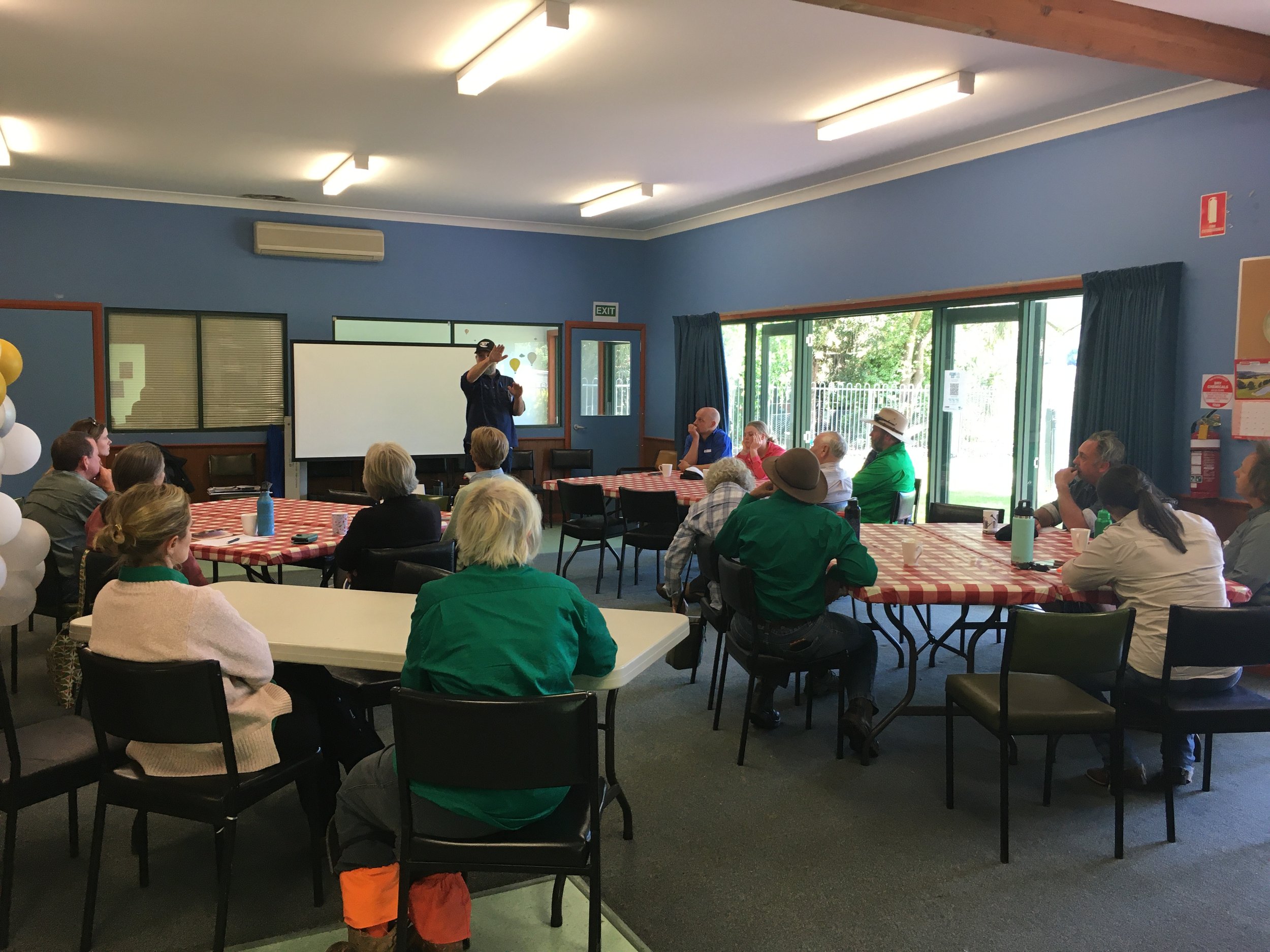
Erin Healy from Mulloon Institute (left) joined Soil Land Food’s David Hardwick (second from left) to present an Introduction to Landscape Rehydration workshop with the Kiewa Catchment Landcare Groups on a glorious late spring day.

In November, Mulloon Institute’s Erin Healy joined Soil Land Food’s David Hardwick in a 1-day Introduction to Landscape Rehydration workshop with the Kiewa Catchment Landcare Groups.  

David brought together a great group from the Kiewa community for an engaging day spent understanding the importance of the water cycle and the role of water in healthy, functioning landscapes.  

The Kiewa Catchment is home to an impressive history rooted in conservation. Since the 1980’s, the Kiewa Catchment Farm Tree Group has evolved into a network of Landcare groups focused on preservation, protection and enhancement of the environment.  

Twenty-five workshop participants met at Dederang Gap overlooking the beautiful Kiewa River before travelling to the Kergunyah Memorial Hall to dive into all things Landscape Rehydration.  

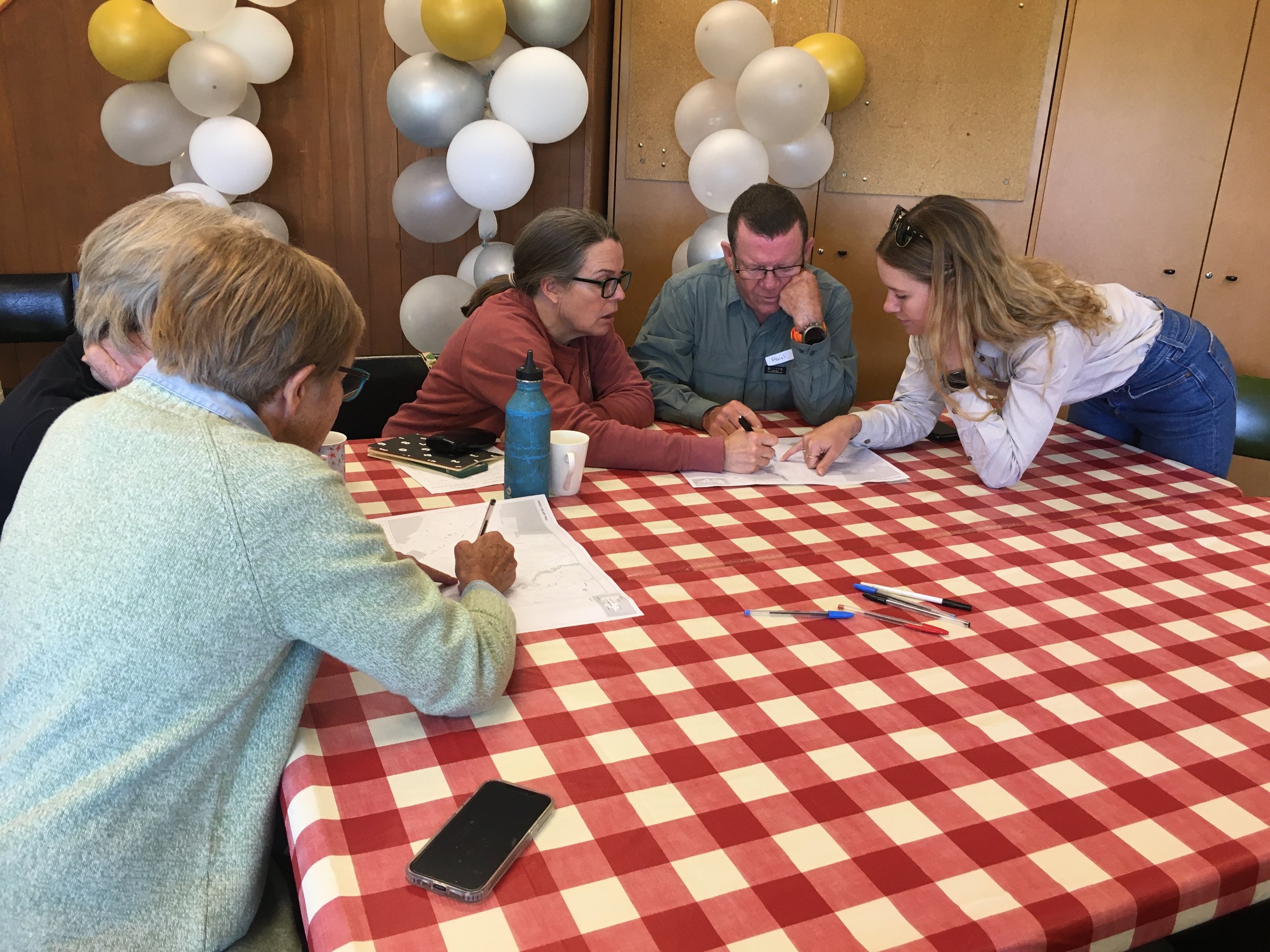
The afternoon was spent with Erin Healy in great conversation about the ways to assess landscape function and disfunction and exploring the tools that landholders can use to help manage, store and cycle water on their properties.     

This workshop was organised by David Hardwick, Soil Land Food, and hosted by Kiewa Catchment Landcare Groups.  

Erin assisting participants to learn how to read the Strahler system of Stream Orders from maps.

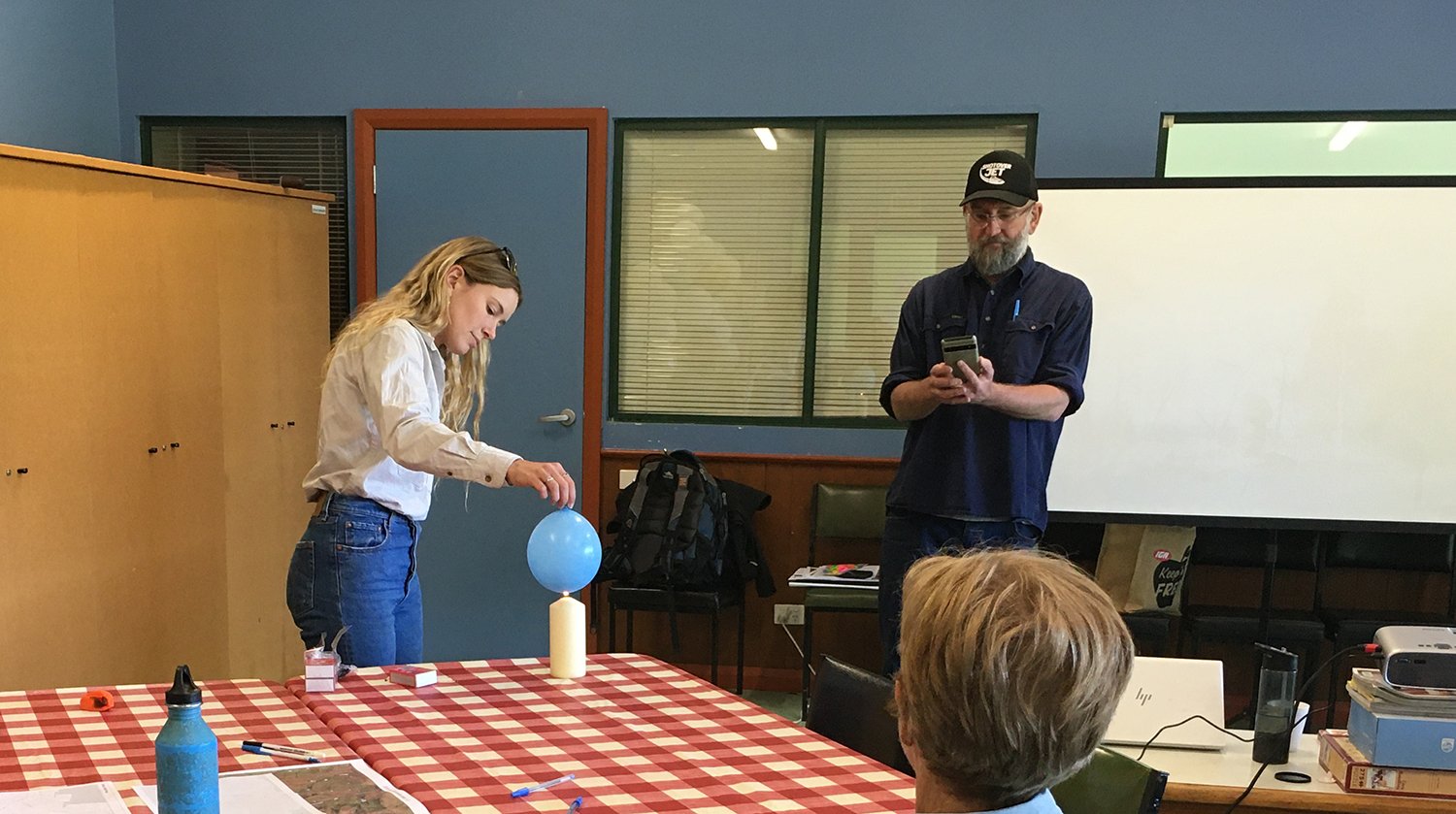
The Hydration Test – David timing how long the water-filled balloon takes to burst.

The Kiewa Catchment Landcare Groups had a fun and engaging day exploring the importance of water in healthy, functioning landscapes and the tools that landholders can use to help manage, store and cycle water on their properties.

Flexible workplace, Townsville, North Queensland preferred 

The role: 

At Mulloon Consulting (MC) we believe in Regenerative Agriculture. Our innovative approach works to re-establish the natural function, fertility and resilience of agricultural landscapes and incorporates the work of a range of ground-breaking regenerative farmers and landholders.  

MC is a wholly owned subsidiary of the Mulloon Institute, a world-class research, education and advocacy organisation.  We provide technical advice to landholders on restoring natural landscape function, landscape rehydration and rebuilding soil fertility. We have a national vision for landscape rehydration, including building the capacity of landholders through our education offerings. 

You will be part of a small close-knit team that works with landholders, NGOs, Industry and government to generate innovative management solutions including detailed designs for surface and groundwater management.  Key tasks will include: 

  • Engaging with landholders and other stakeholders to build and maintain strong working relationships. 

  • Preparing information and documentation for on-site work and supporting the Project Manager with report writing. 

  • Undertaking field visits with senior team members including taking note of key points for reports, capturing photos and assisting with other field measurements and monitoring. 

  • Supporting with the documentation of landscape rehydration design and farm plans, and working with the design team on producing project designs. 

  • Assisting with the development and delivery of presentations (including education programs) as required. 

  • Assisting with the delivery of on-ground works. 

You will have the opportunity for mentoring from our key senior technical team and for developing your skills and working independently. Reporting directly to the Queensland Manager and General Manager of MC, you will become a key team member building our reputation for technical excellence and helping to deliver the goals of Mulloon Consulting and the Mulloon Institute.   

If you are passionate about effecting change in regenerative environmental and agricultural practices, you would be well-suited for this role. 

  • Permanent part-time or full-time (negotiable). Initially 6-month probationary period with a review every 12 months. 

  • Be part of a team working to deliver innovative landscape rehydration to the broader community in a consultancy setting. 

  • Work directly with landholders and government organisations to progress their goals and build knowledge of regenerative landscape management.  

  • Undertake occasional travel including interstate; this will necessitate travel outside standard hours with nights away from home. 

Selection criteria: 

  • Appropriate qualifications and experience in natural resource management and/or agriculture. 

  • Empathy with landholders and demonstrated interest in helping them to achieve goals in improving ecological health. 

  • Demonstrated knowledge of the fundamentals that underpin regenerative landscape management. 

  • Two years or more of relevant experience. 

  • Well-developed written and oral communication skills. 

  • Demonstrated skills in the use of GIS mapping tools (or the ability to quickly learn these tools). 

  • Demonstrated delivery of projects within budgets and timeframes. 

  • Demonstrated skills in the production of high quality technical reports and proposals. 

  • Demonstrated understanding of WH&S and risk assessment frameworks. 

  • Capacity to work un-supervised. 

  • Current drivers’ licence and own vehicle. 

Don’t have all the skills and experience needed to apply but you are motivated, keen to learn, and have recently graduated?  Then we’d like to hear from you too! 

Remuneration:

We’ll gladly negotiate a competitive, tailored remuneration package with the successful candidate. 

How to apply: 

If you are interested in applying for this position you are encouraged to apply by forwarding a cover letter, outlining your skills and experience against the above criteria, and your resume to our General Manager, Jono Forrest jono@themullooninstitute.org

For more information about the role, please contact jono@themullooninstitute.org 

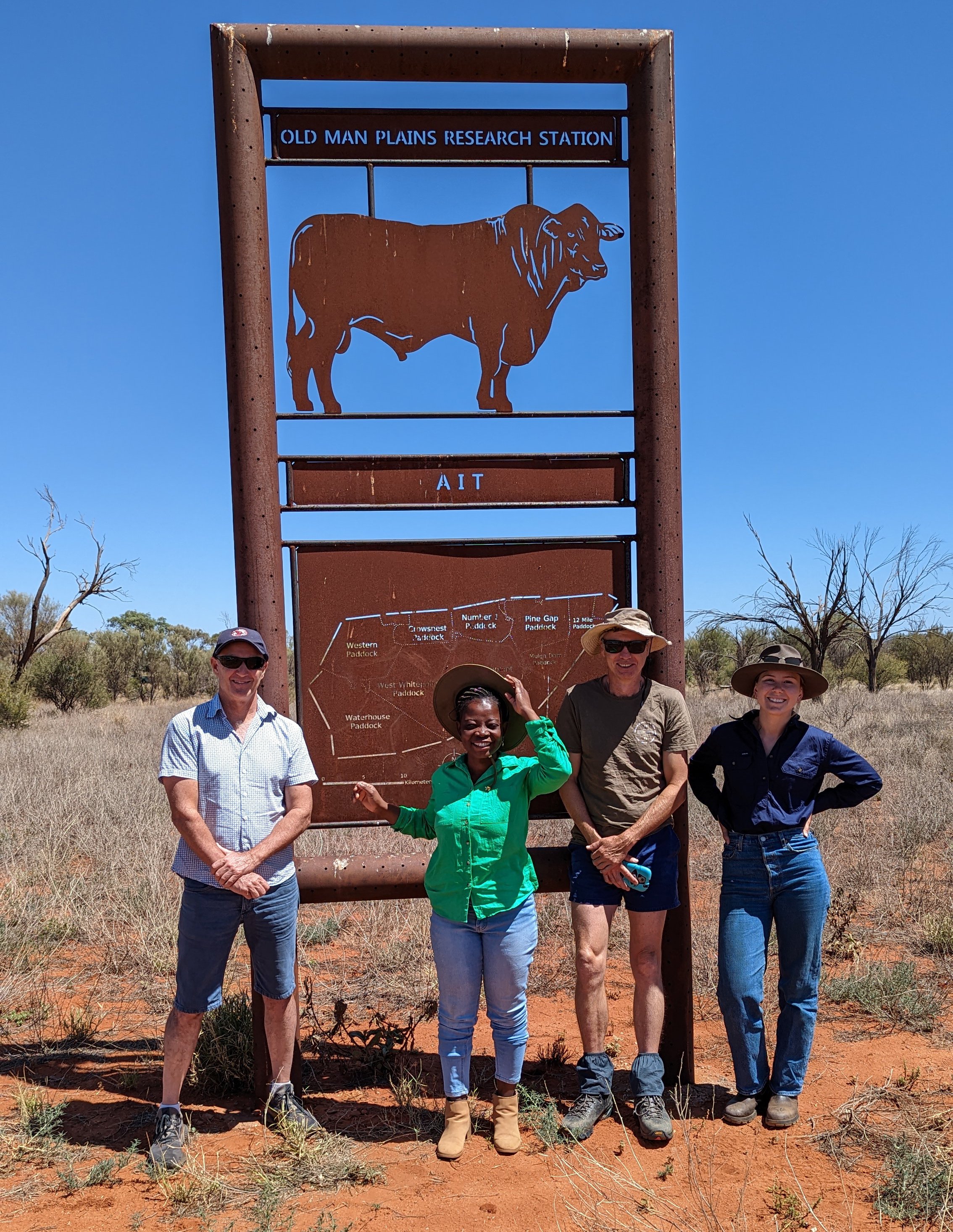
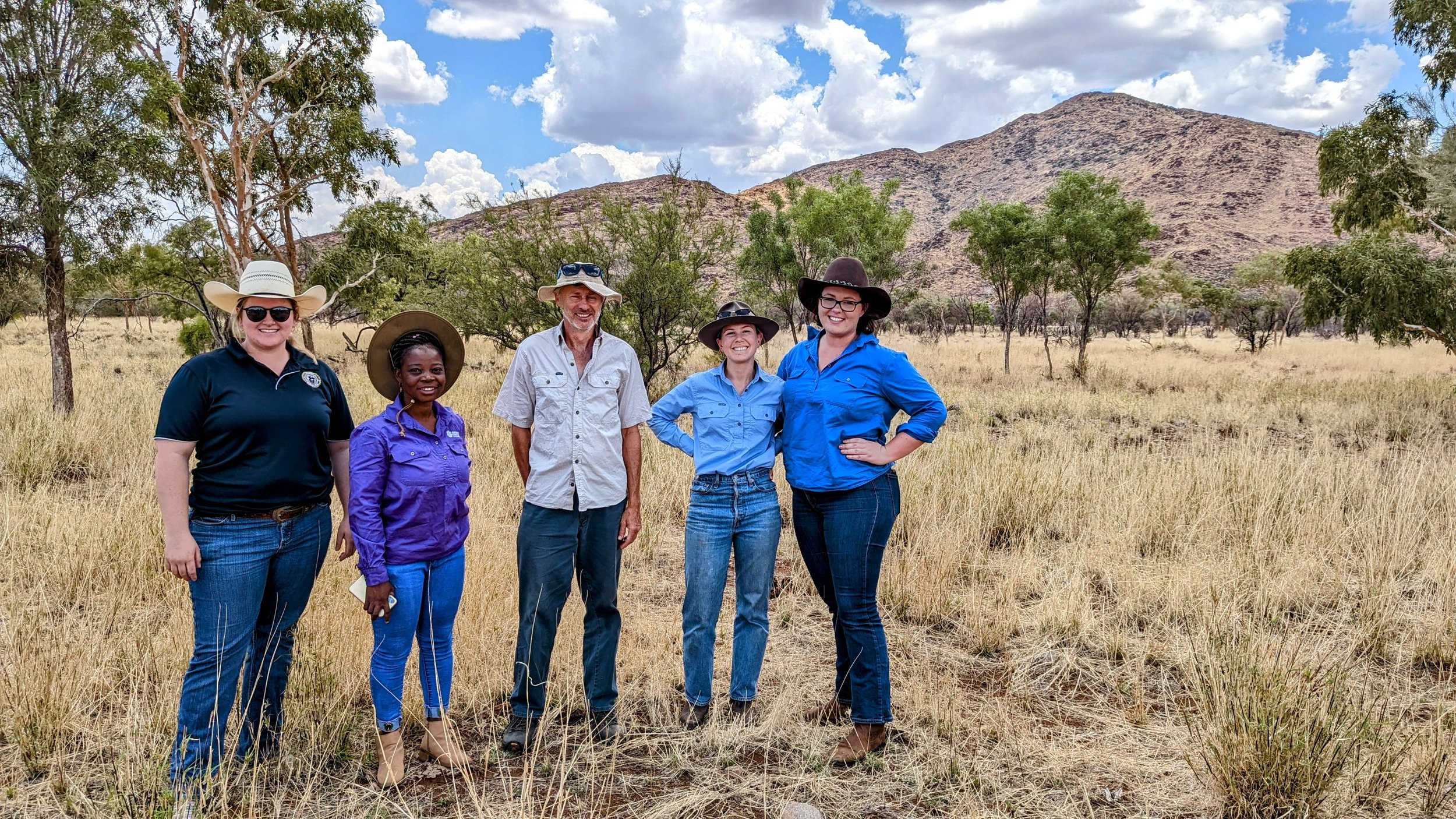
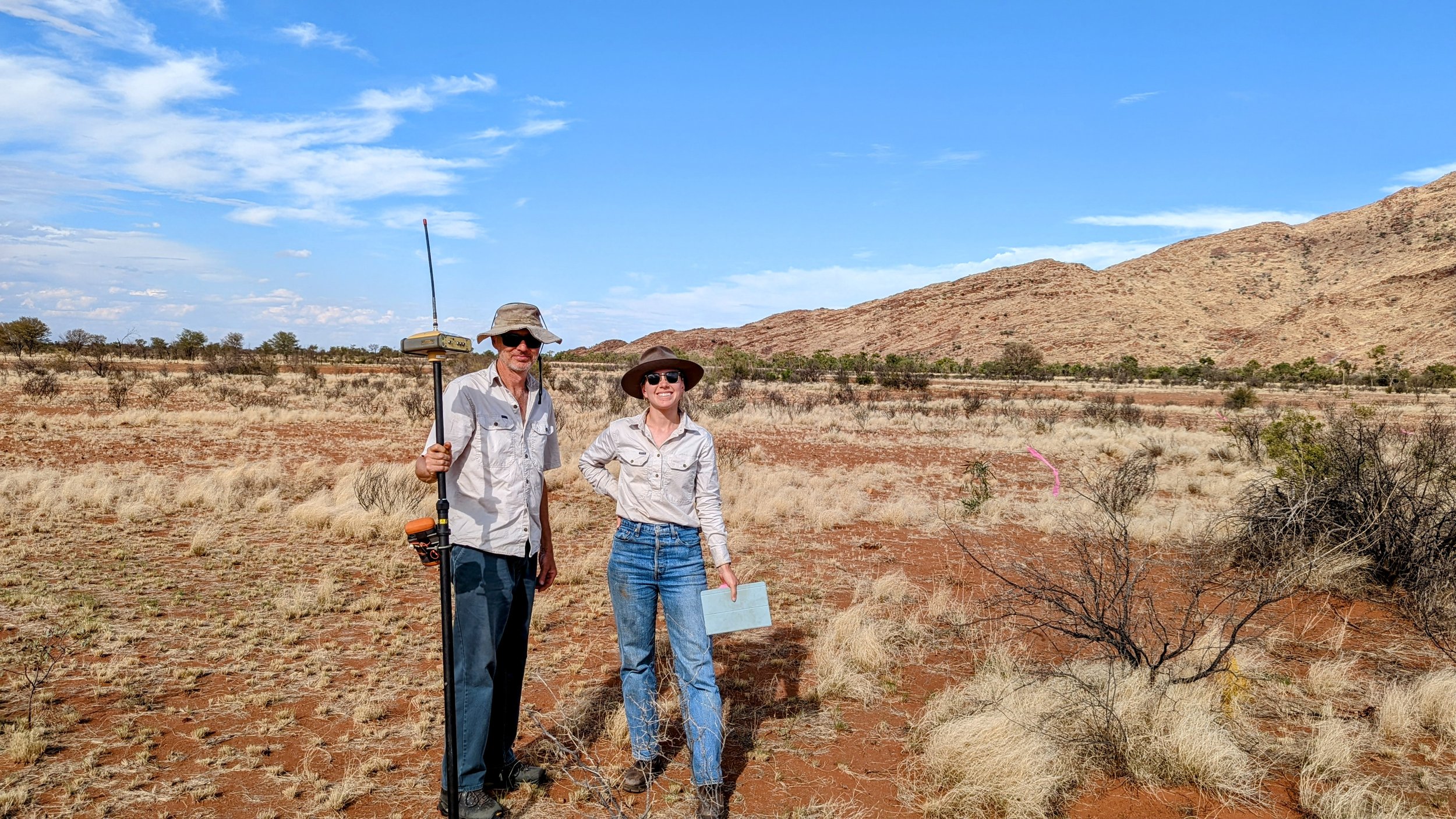
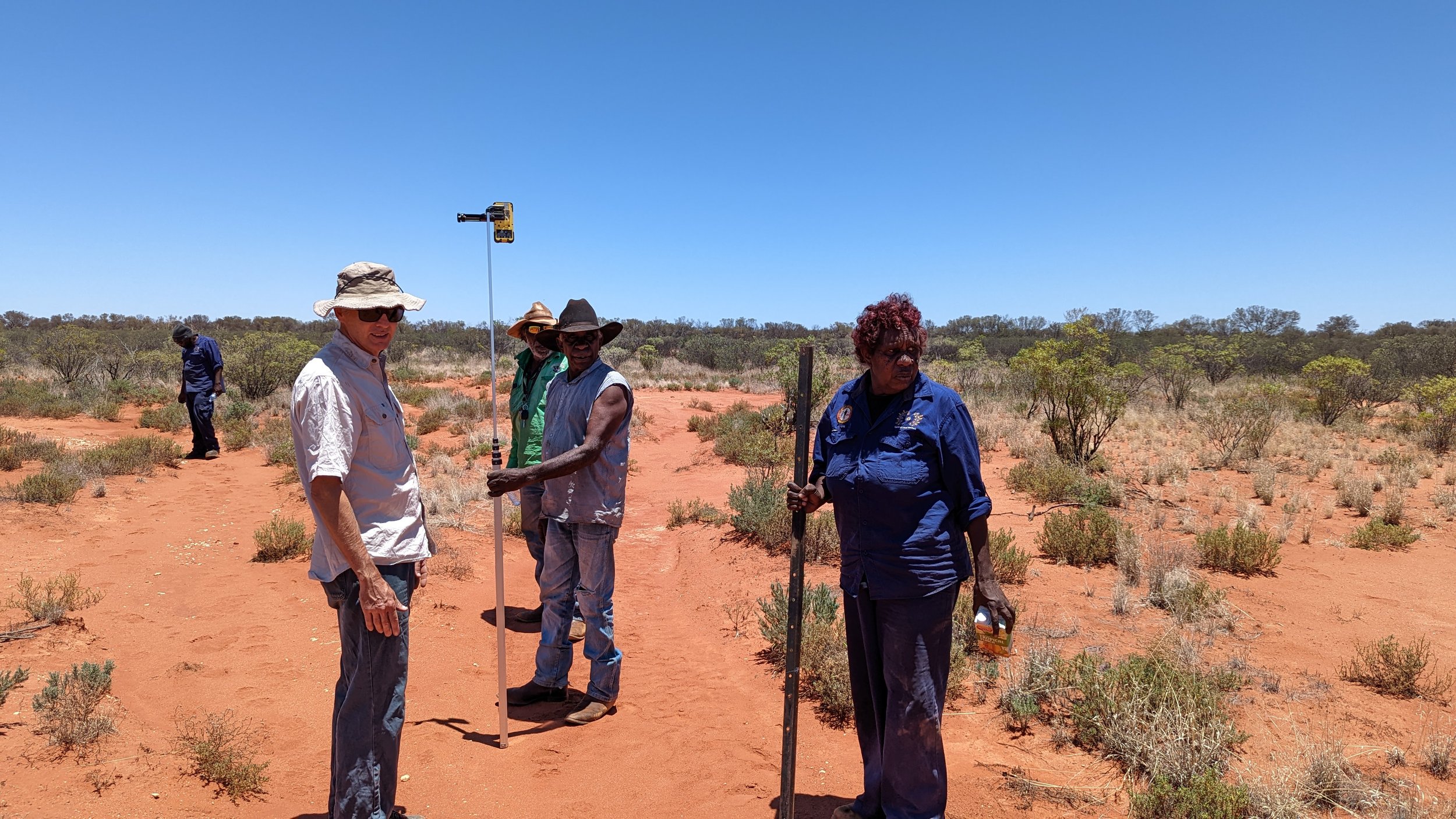
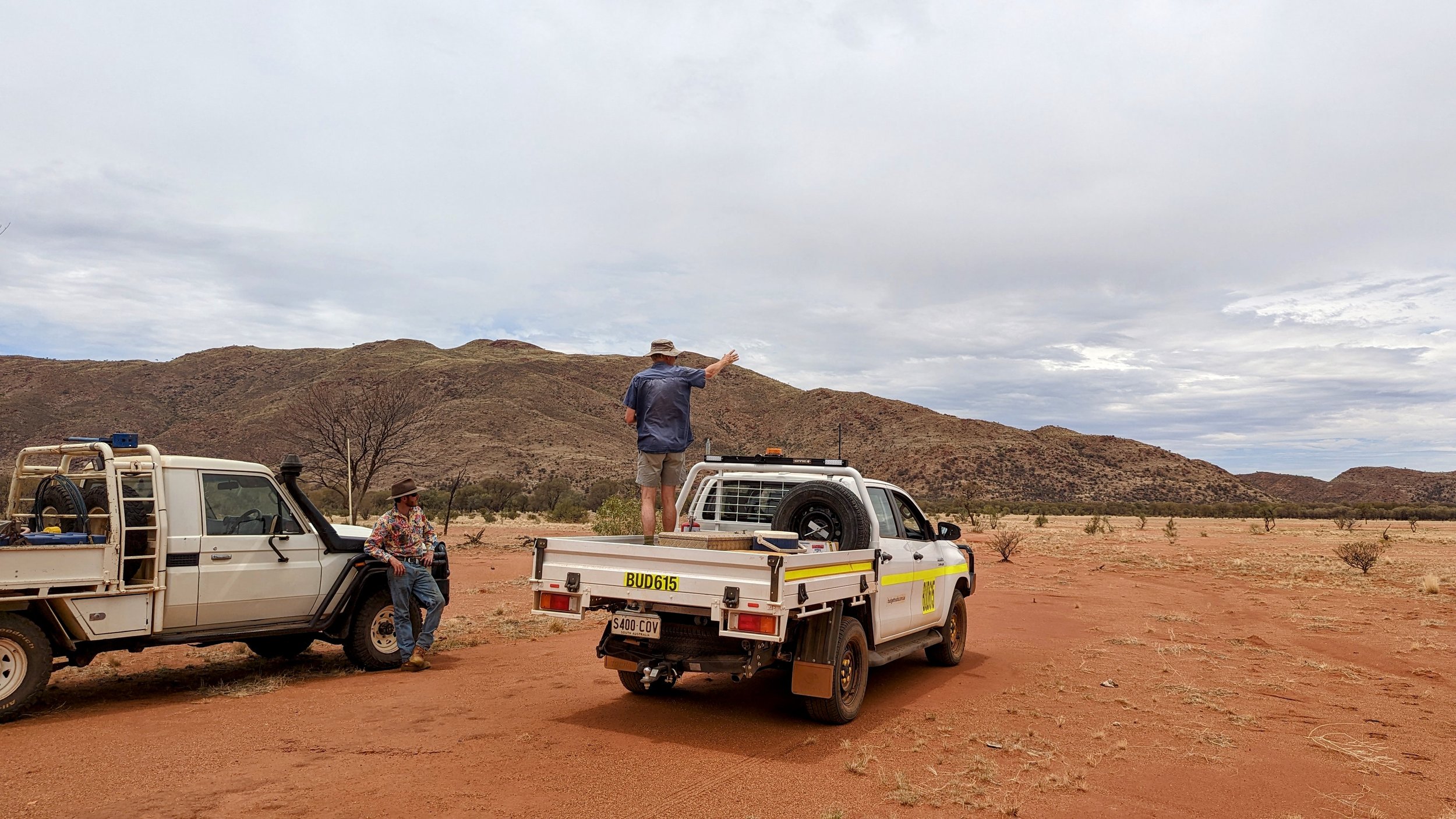
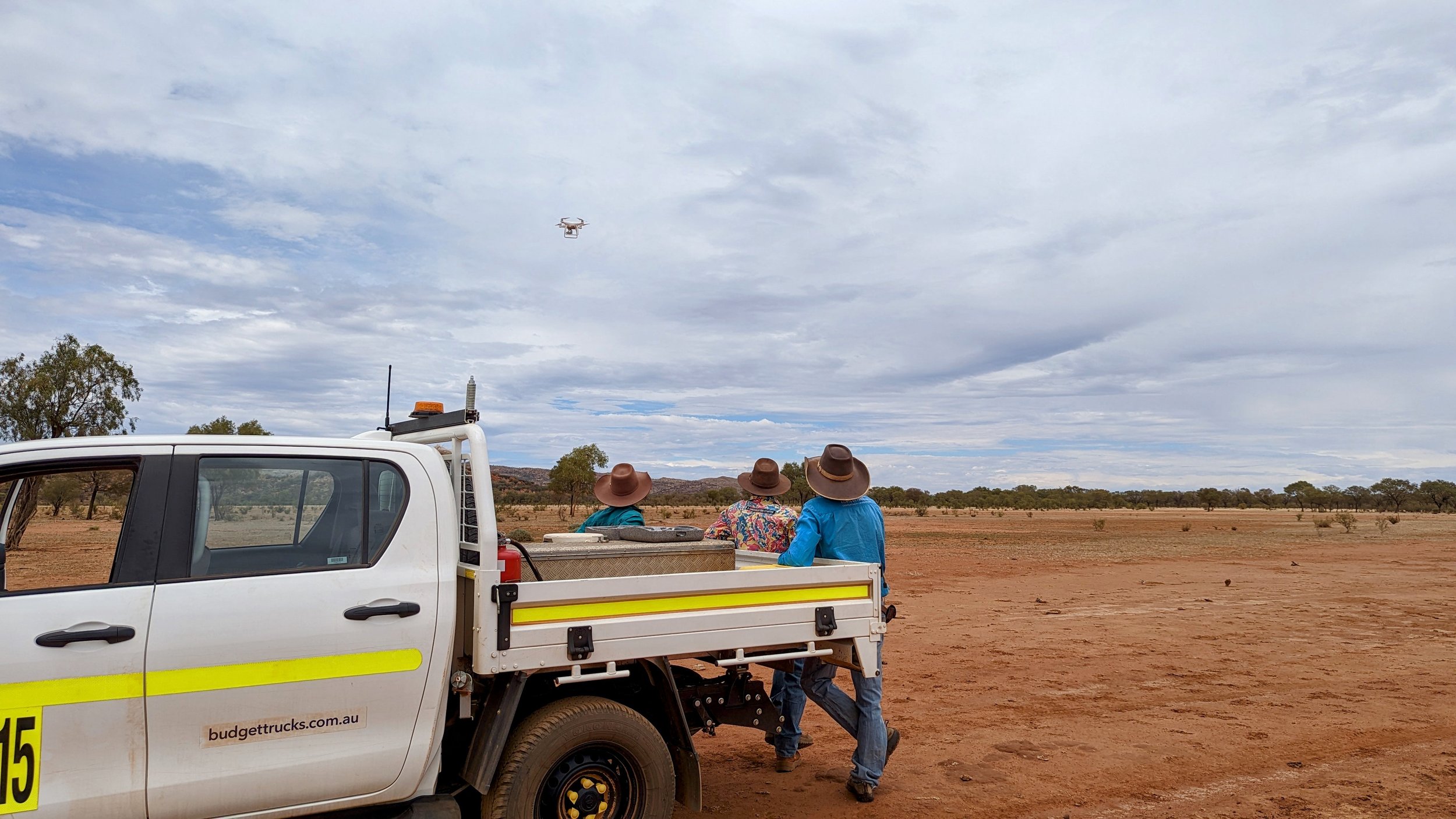
Pastoral Production Officers Chris Materne and Lakota Taber, and Pastoral Extension Officer, Farida Abubakari recently gave Mulloon Institute’s Lance Mudgway and Erin Healy a tour of the Old Man Plains (OMP) Research Station outside of Alice Springs. The OMP Research Station was established in 2004 and now serves as an impressive demonstration site for cattle husbandry, technological advances, and land management practices, all in accordance with the best practice principles for Central Australia.

The Mulloon Institute’s Lance Mudgway and Erin Healy recently hosted the Arid Zone Research Institute’s Pastoral Production and Extension Officers, Lakota Taber and Farida Abubakari, and Shannon Hayes from the Northern Cattleman’s Association at Narwietooma Station in Central Australia. Narwietooma Station, owned by the Hewitt Cattle Company, is home to one of the four Landscape Rehydration demonstration sites for the Central Australian Rangelands Project.

Lance and Erin have finished the first stage of design works and construction oversight for four Landscape Rehydration demonstration sites in the Central Australian Rangelands in the Northern Territory. They have been busy setting out works at Ahakeye Aboriginal Land Trust, Glen Helen Station and Narwietooma Station and building the capacity of station managers and rangers to continue undertaking Landscape Rehydration works.

The Centralian project is funded by the Australian Government’s Future Drought Fund – Drought Resilient Soils and Landscapes Program through Charles Darwin University.

Mulloon staff recently met with landholders, Wiradjuri custodians and Landcare members to brainstorm planned restoration projects in the magnificent waterways of the Capertee Valley and Cudgegong River.

TMI’s Peter Hazell, Laura Fisher and Paris Capell were back in the Capertee Valley on 12 November to meet with landholders, Wiradjuri custodians and Landcare members. It was an opportunity to share the scoping report of the Emu Swamp sub-catchment project, and exchange information about two other land restoration projects in the valley and on the Cudgegong River to the north. All of the projects concern the health of rivers and waterways and speak of the impact of drought, bushfire and floods in recent years. 

There was a strong sense of shared purpose and values: the need to stabilise river banks and hillslopes, create healthy aquatic ecosystems, support regeneration on farmland and adapt to the challenges of a volatile climate. The meeting highlighted how much Wiradjuri leadership is shaping land restoration in the region. Emma Syme, Peter Swain and Crackers (Craig) McConnell spoke of the importance of building skills and incorporating cultural activities in these projects, and saw them as generative, healing journeys for both people and Country. From the Paddock hosted us in a lovely setting – thank-you Terrie, Kerrie and Gabrielle! 

The weekend was also an opportunity to capture Wiradjuri custodial activities in the Valley: nearly a dozen Water Ceremonies have taken place in the last two years at community events, as well as some cultural burns involving Indigenous land managers. Emma Syme showed Laura the white box trees near Emu Swamp where two coolamons were recently cut from the thick bark of the trunk, with the raw part of the tree cured with mud. Coolamons are traditional vessels used by Aboriginal women to carry water, food and to cradle babies. These ones were created for Wiradjuri babies born recently, who nestle between two possum-skin cloaks and can be rocked gently in the coolamon due to its concave shape.  

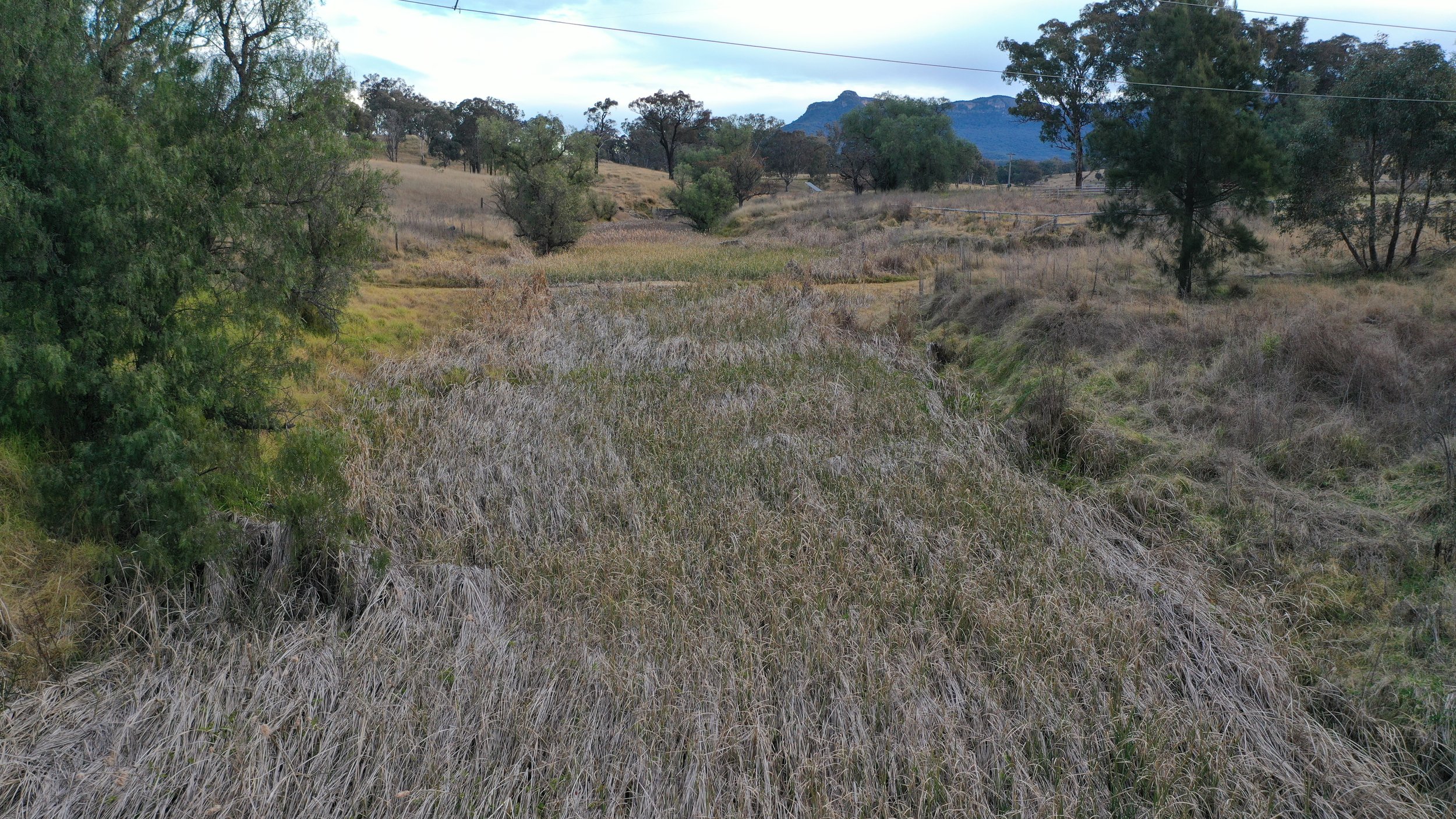
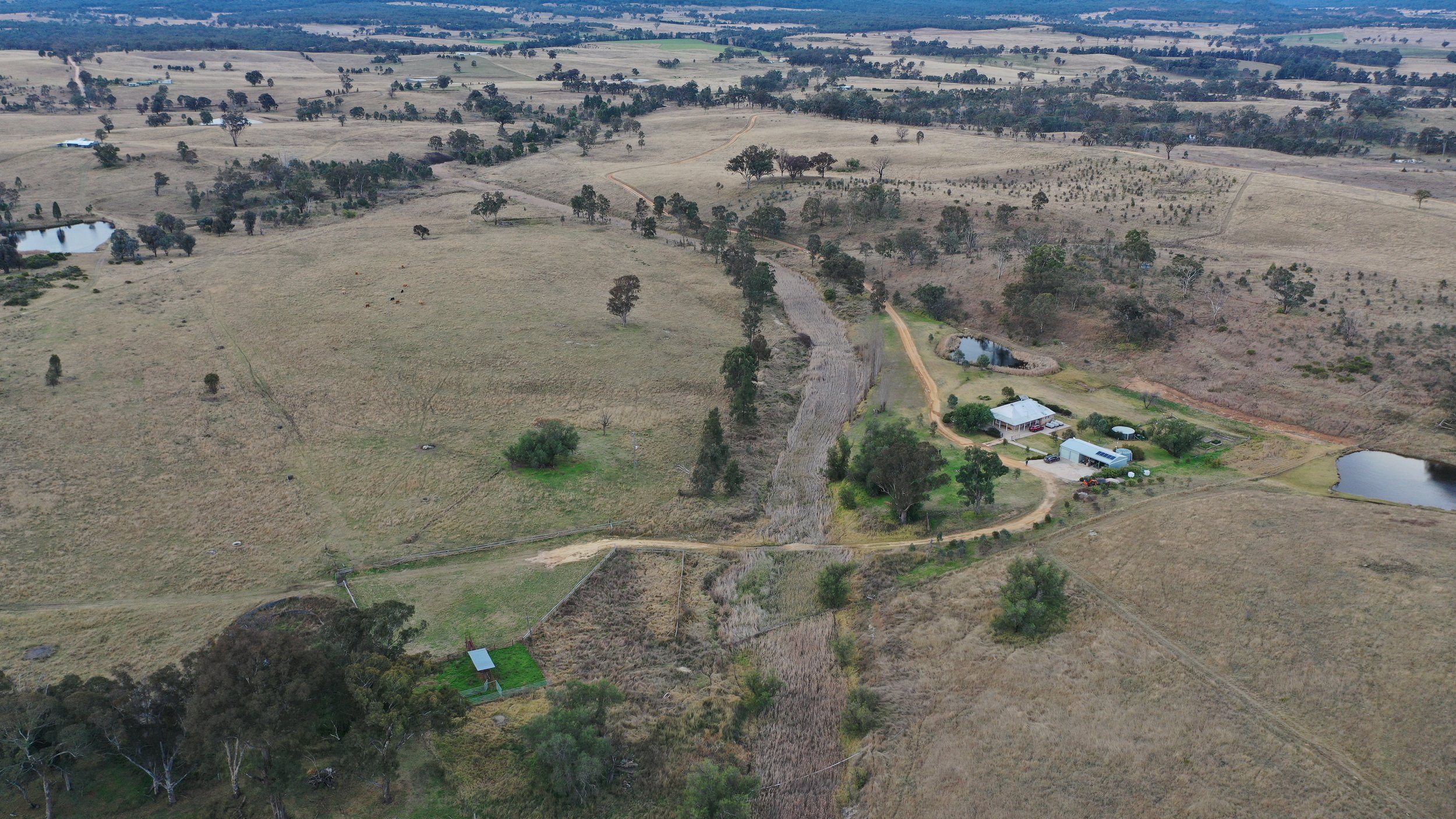
Pete and Laura also visited the property of Alex and Charlie Bogle, Bimbimbie, where last year’s brush pack workshop occurred, led by Joe Skuse. The brush packs were in great shape, and supporting thriving plant growth on eroded areas which was terrific to see. A visit to Warramba to look at Emu Swamp Creek, with its extraordinary reedy recovery, topped off the visit.  

This stakeholder gathering was supported by the NSW Environmental Trust, through the Mulloon Institute’s Landscape Rehydration Capacity building project.  

Emma Syme and Ray Agnew with the Coolamon carving.

Reeds dominating a recovering Emu Swamp creek at Warramba, July 2022.

Reedy Emu Swamp Creek at Warramba, July 2022

Congratulations to Louise Duff, MidCoast Council Catchment Manager, on her fantastic thesis ‘From Landscape Rehydration to water resilient farming: Supporting practice change’.  

Louise undertook the Master of Integrated Water Management at the International Water Centre, Griffith University, and was co-supervised by Mulloon Institute’s Laura Fisher. Her thesis was awarded a High Distinction, an outstanding result! It brings together an extensive review of scientific literature as well as interviews with farmers and professionals in the field.  

Louise’s key findings include: 

  • The innovators and early adopters of Landscape Rehydration have diverse aspirations across social, economic and environmental dimensions 

  • Farmers are using Landscape Rehydration to solve a range of problems including drought resilience, land degradation and wet and dry extremes 

  • They are using site-specific, holistic programs of integrated practices to improve hydrology, native vegetation, soil, grazing and pasture management from top to bottom of their farms 

  • Landscape Rehydration has good trial-ability with small-scale, low risk interventions achieving observable relative advantage across production and environmental indicators; cost-benefit is more difficult to quantify 

  • For farming to transition to more nature-based, regenerative and water resilient practices, an enabling environment and removal of barriers will need to happen at multiple scales. 

The thesis can be downloaded here, and we hope it will be read and shared widely! We wish the ever-tenacious Louise all the best with her future work, knowing that she now brings terrific expertise to the projects she is pursuing in the Manning River Catchment.  

Louise passes on her thanks to the farmers and NRM practitioners who participated in her research project, sharing their knowledge and experience. 

Laura Fisher co-supervised Louise Duff’s thesis as part of Mulloon Institute’s Landscape Rehydration Education Project, which is supported by the NSW Environmental Trust.  
Louise Duff at a workshop in the Capertee Valley, 2021, co-hosted by TMI and Kandos School of Cultural Adaptation. Photo by Alex Wisser.

Louise Duff. Photo by Leanne Thompson

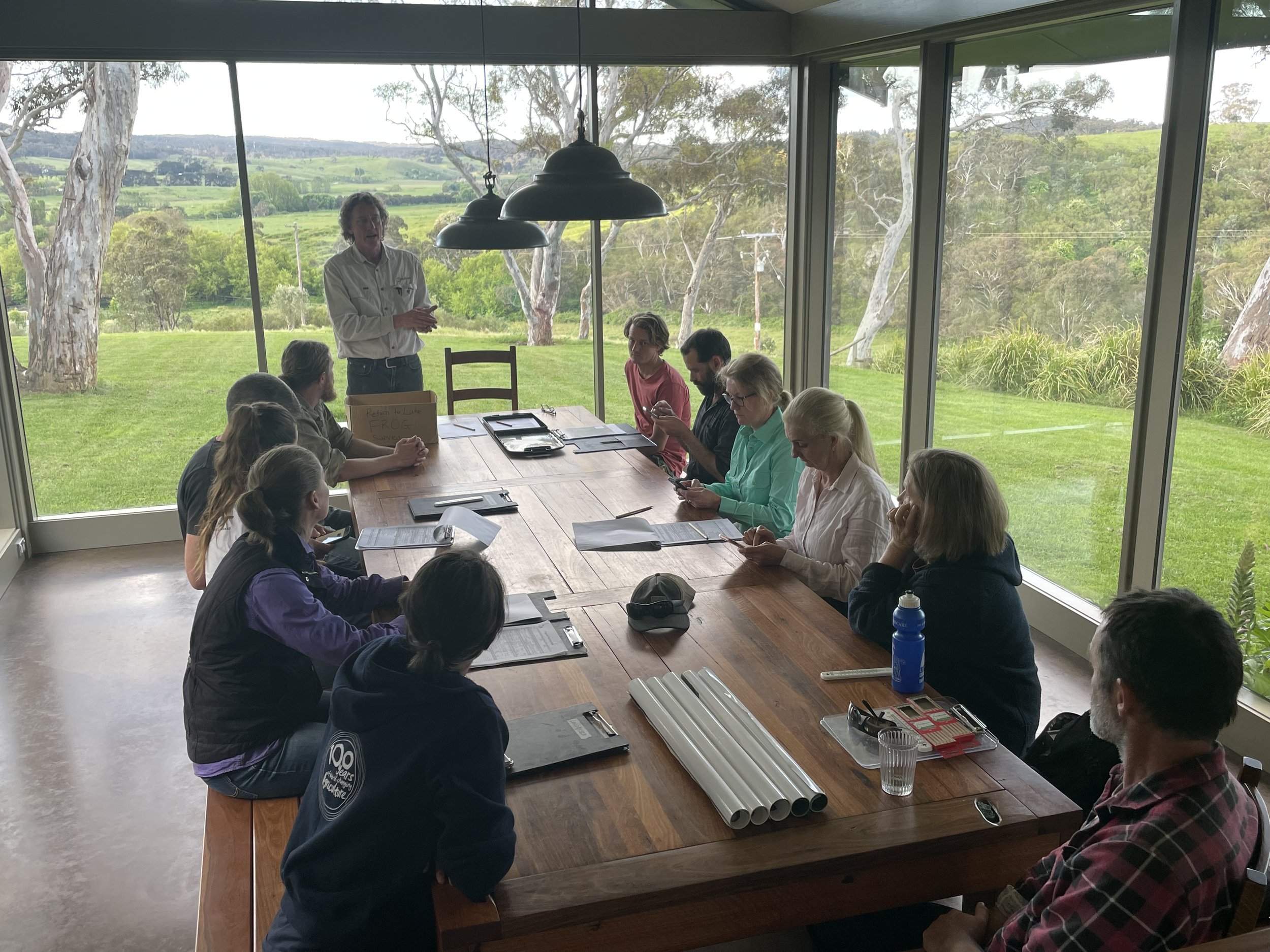
Pre-survey discussions with the survey team checking out the Australian Museum’s Frog ID app.

This week, 11–20 November is Frog ID Week.

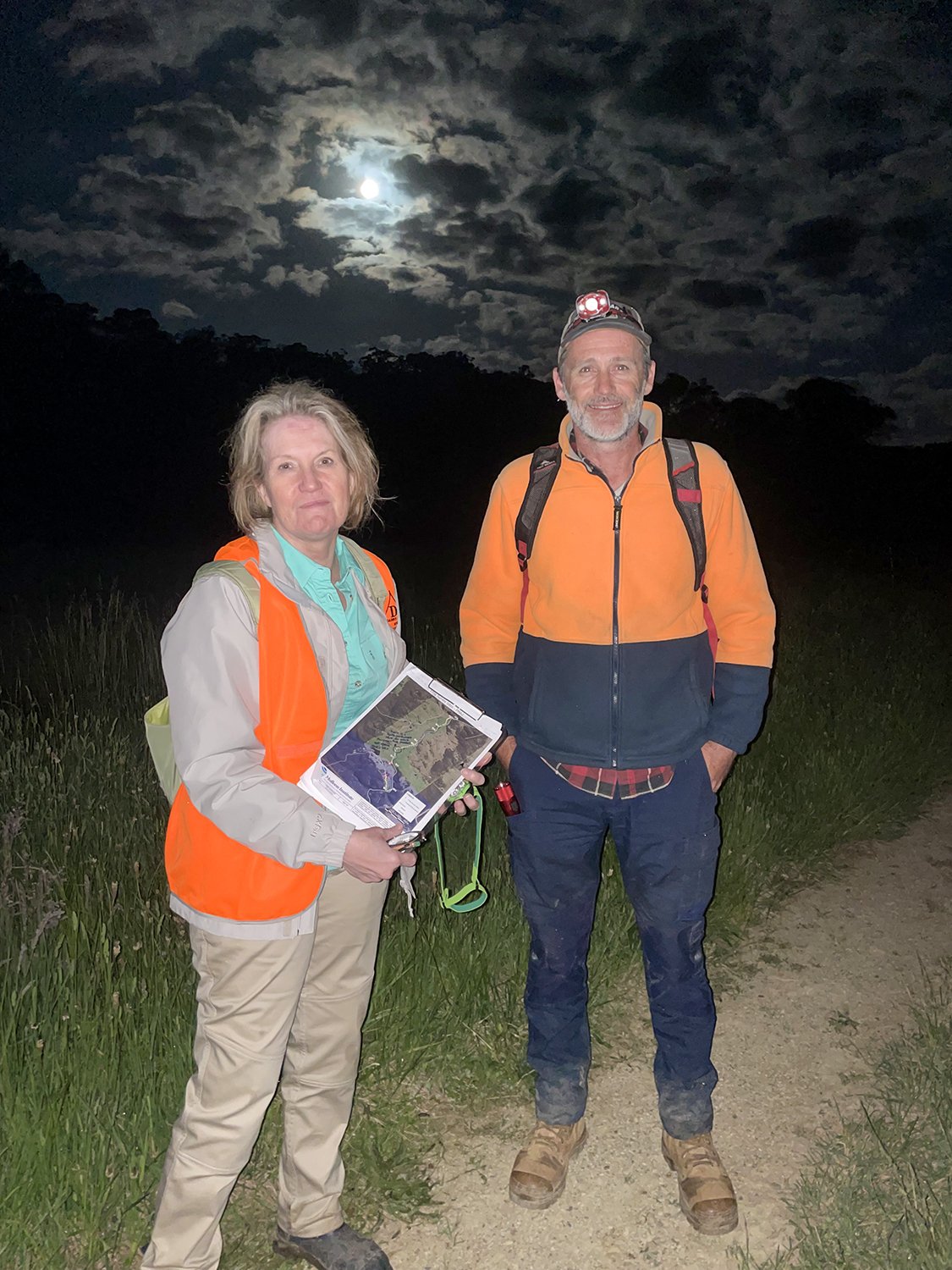
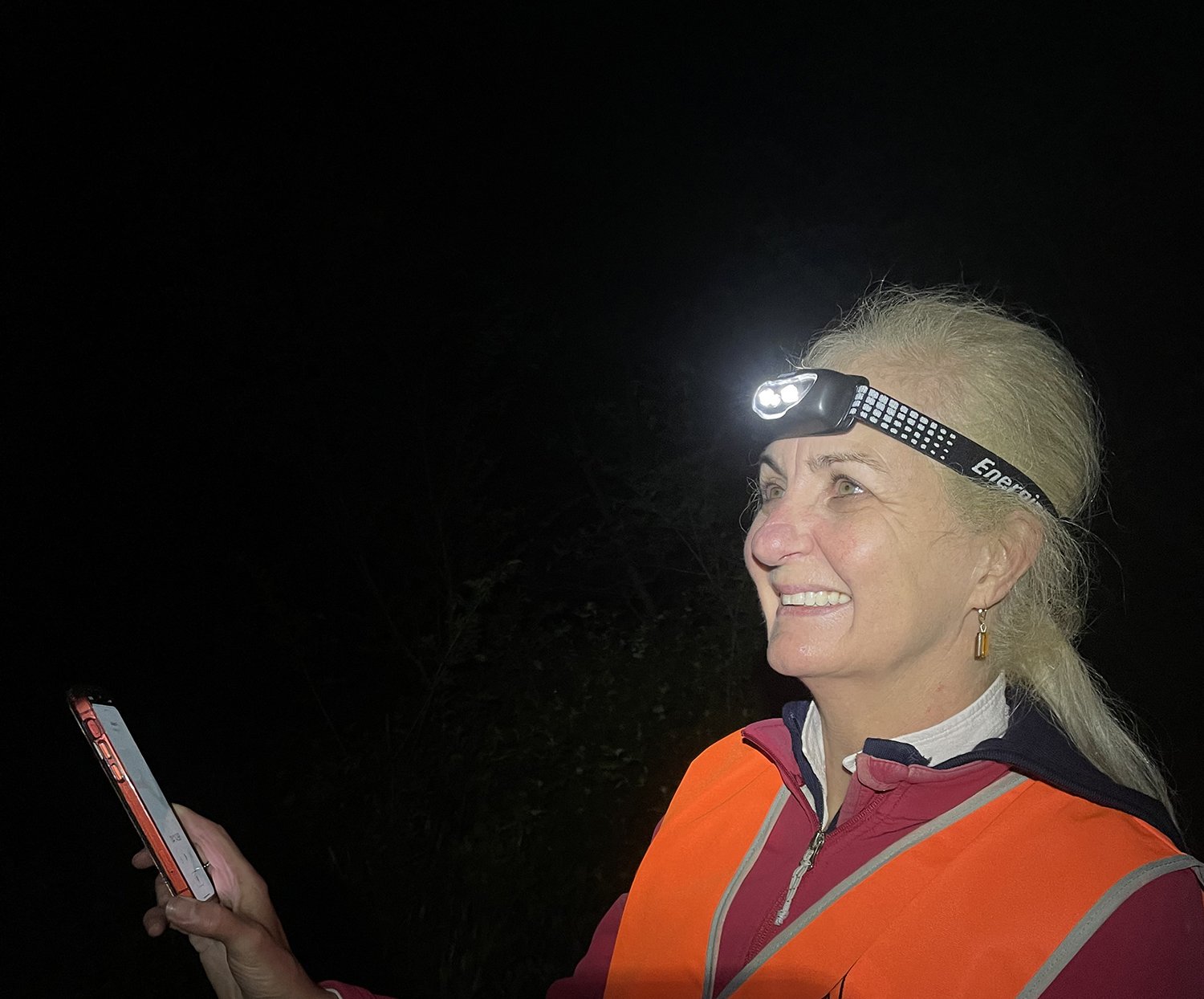
As one of the more beautiful sunny days Mulloon has seen in a long time drew to a close (blessed be the rain!), a group of intrepid (and brave!) volunteers and staff from the Mulloon Institute met for a debriefing about the frog survey they were to conduct that night, 9 November 2022. Amongst food and laughter, the possible dangers of ‘island-hopping’ through marshy swamps and avoiding wombat holes (more palatial than a simple hobbit hole) were discussed. Navigation, maps, scientific data sheets and use of mobile phones to record frog calls using the Australian Museum’s Frog ID app were also discussed in detail. With some helpful advice on the importance of allowing the frogs to settle after being disturbed by we clompy-footed humans trying to find the identified site in the night, we set out in seven groups, spread throughout the Mulloon catchment. 

After much rain this year, we were pleased to be greeted by a cacophony of frogs singing in all the 64 sites we visited. It was of interest to note however, it seemed more voices were coming from the rain-inundated paddocks with numerous ponds and wetlands, than from the flowing streams. Regular flood and pulse events in the creek may have also contributed to the frogs spreading out from the main waterways. 

Having now completed three successful frog survey evenings in 2017, 2021 and 2022, we look forward to the scientific results from the 2022 frog survey to assess where change is happening along the Mulloon Creek catchment. 

A big thank you to all the landholders for their ongoing assistance and support of the work of the Mulloon Institute. Also, we wish to extend our gratitude to Sam Patmore for joining us on the night, and his ongoing work in analysing the many recordings the team collected in the catchment. 

The Mulloon Rehydration Initiative is jointly funded through the Mulloon Institute and the Australian Government’s National Landcare Program and with assistance from the NSW Environmental Trust. 

Practice your frog identification skills here with this range of individual calls and frog choruses.