We are again blessed to be working with inventive ANU students on a new Science/Design project!

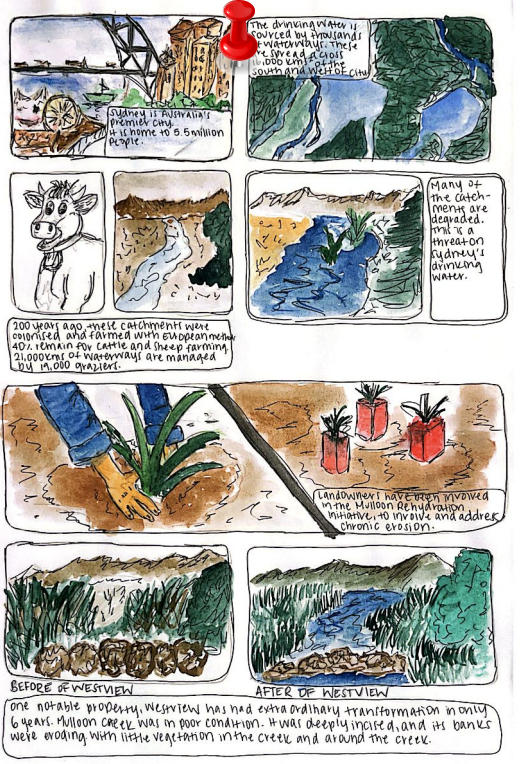
Eddie Conde, Anne Wen, Oonagh O’Dwyer and Kayla Wade-Lehman are tackling some multimedia storytelling about the ponds that form behind in-stream structures, which become a haven for diverse life. 

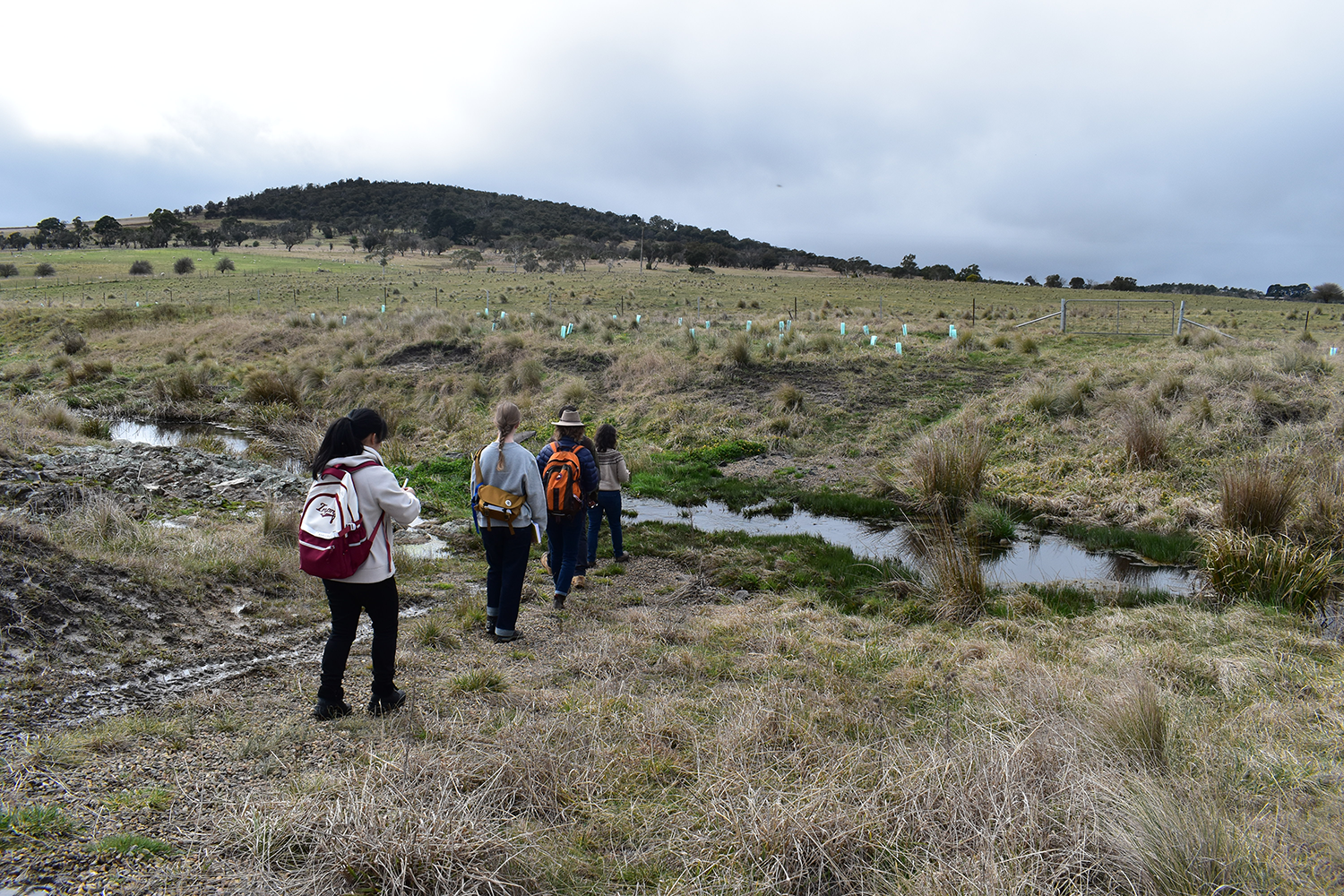
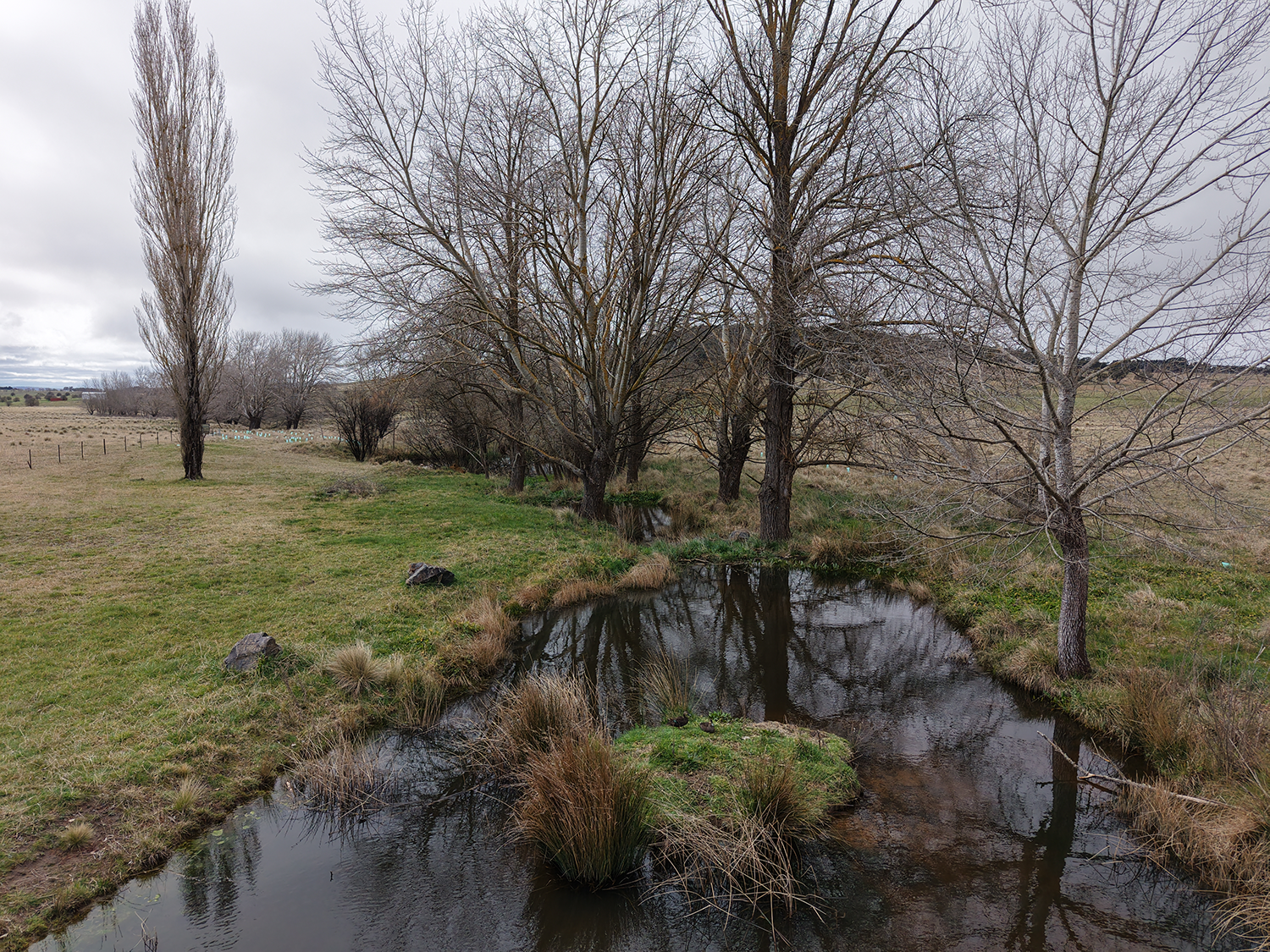
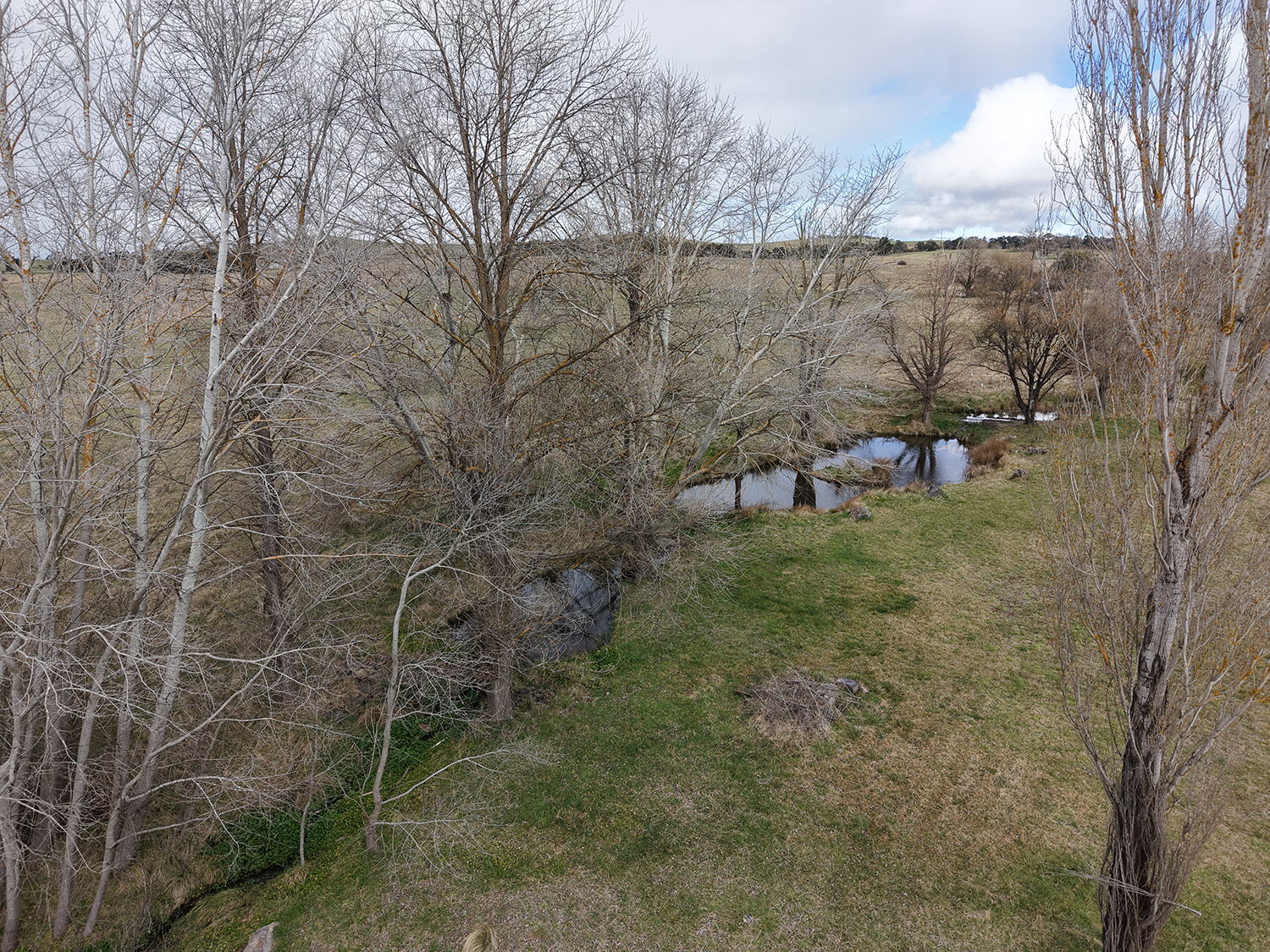
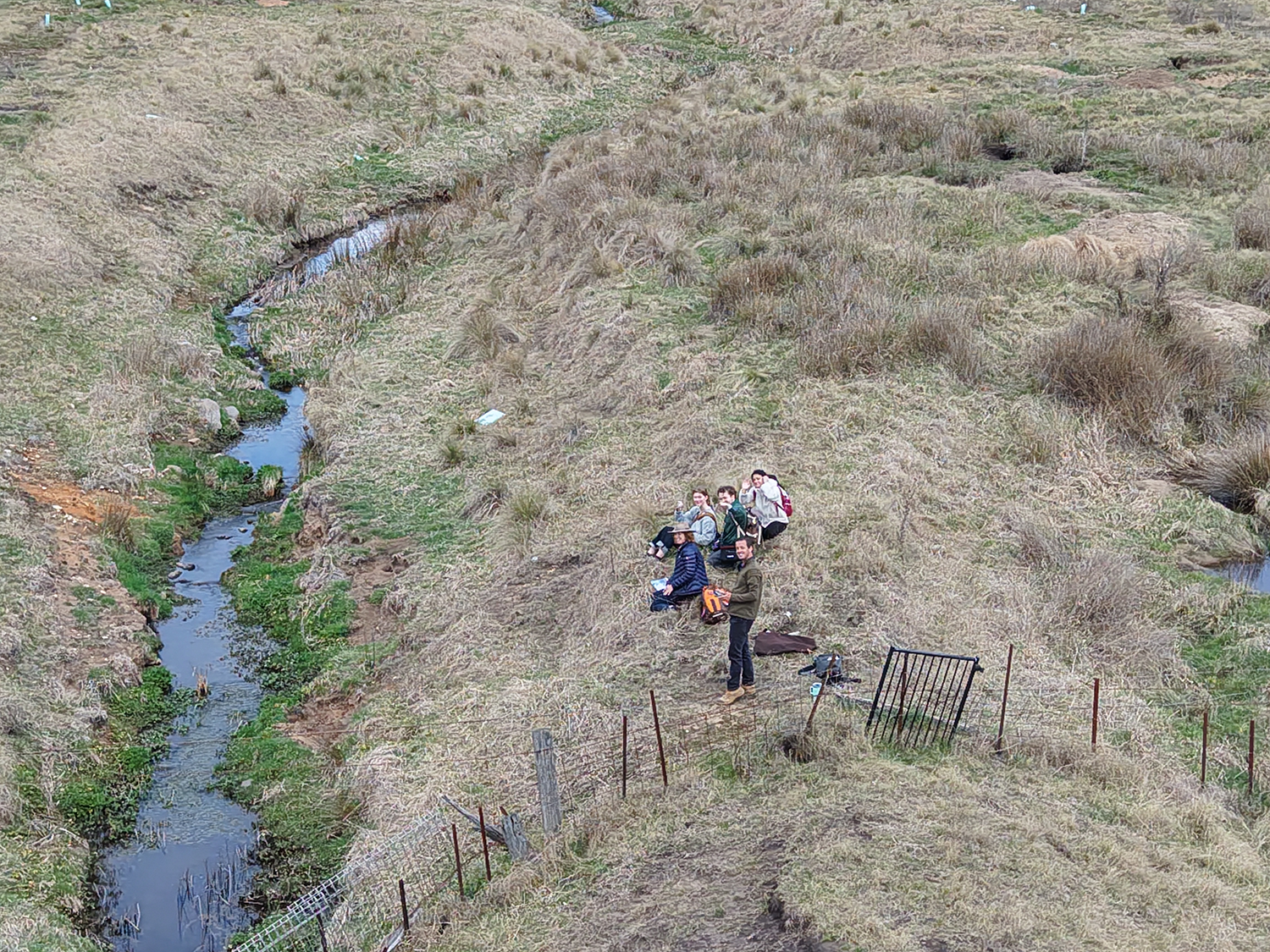
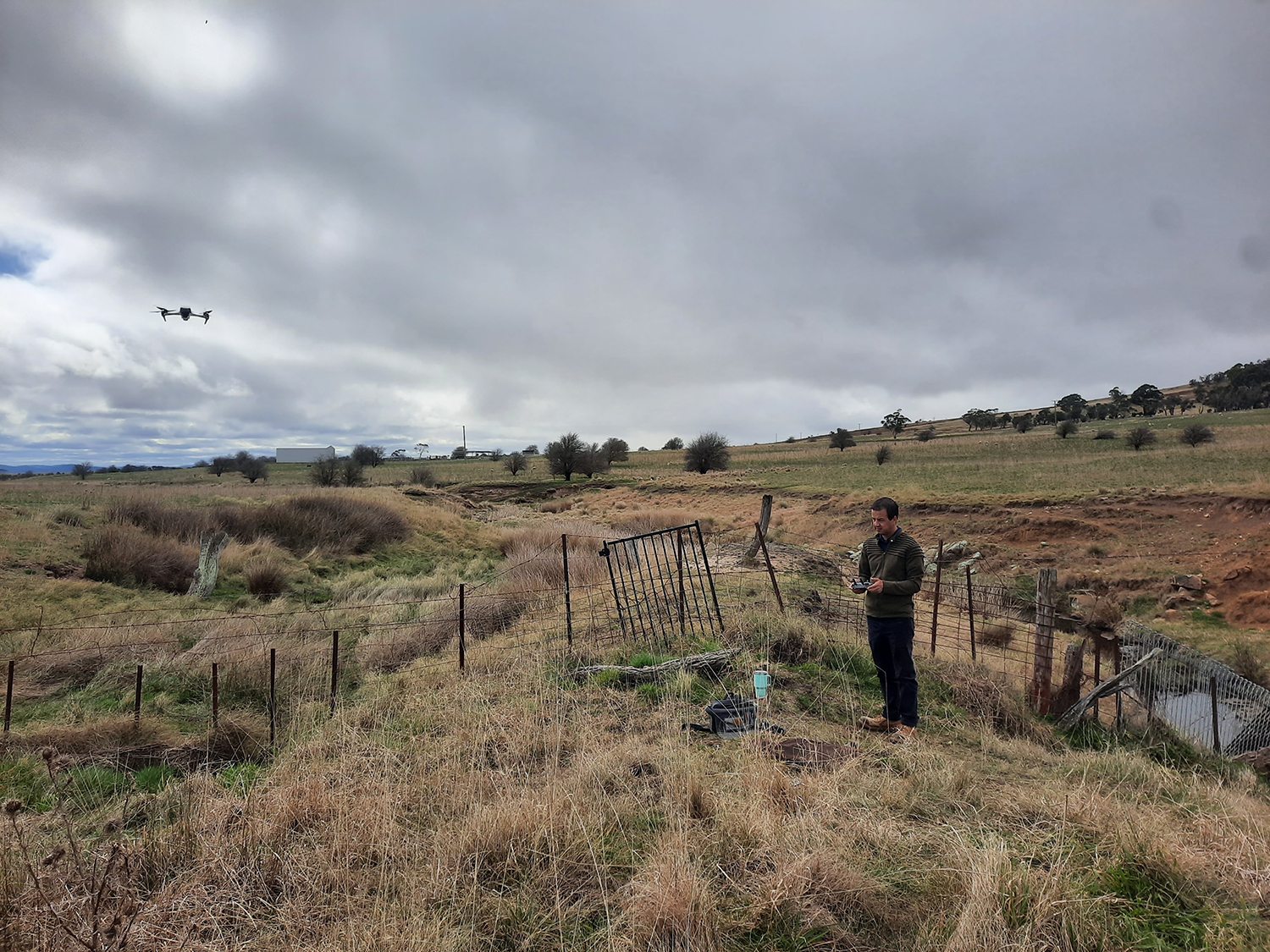
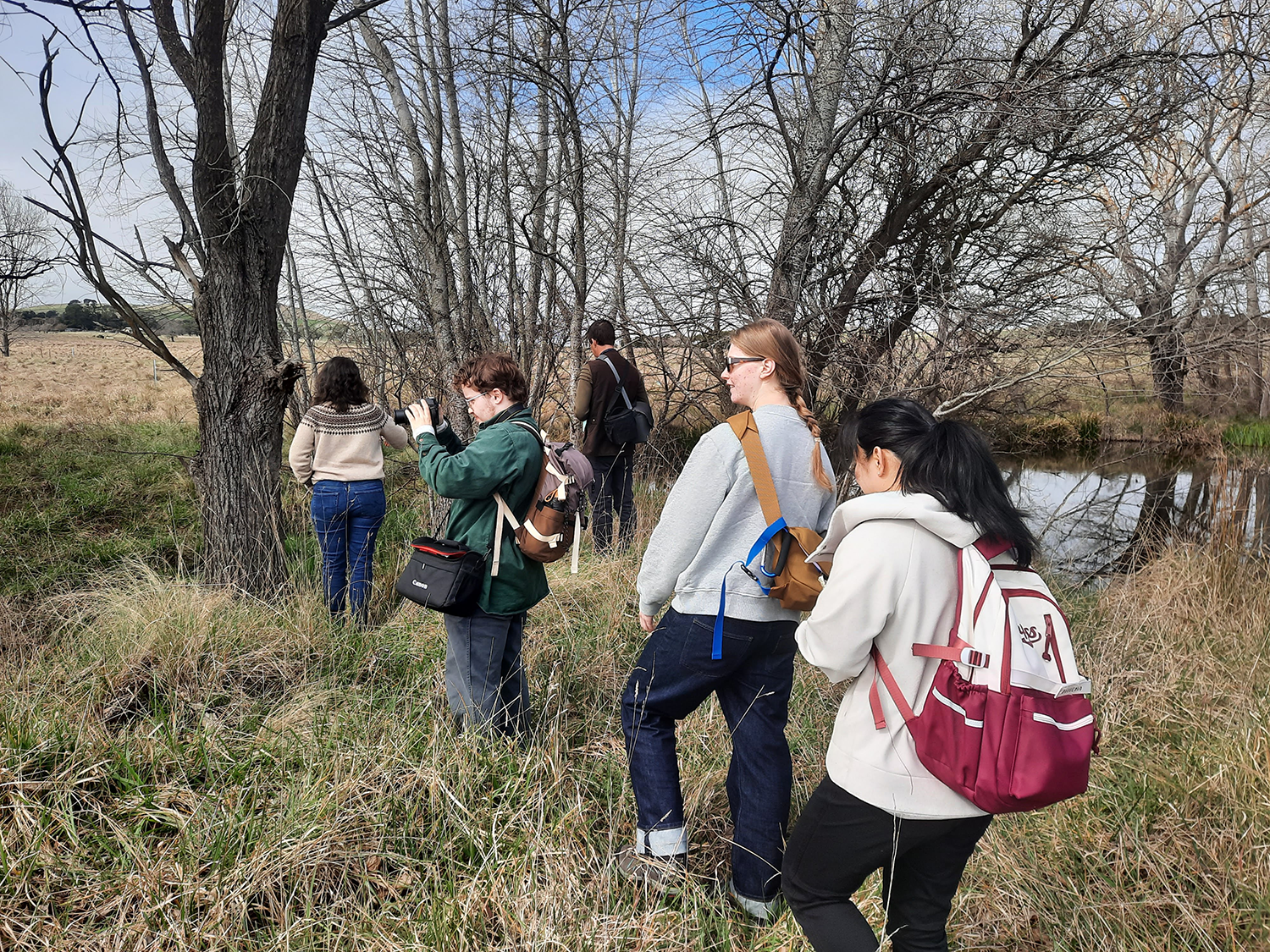
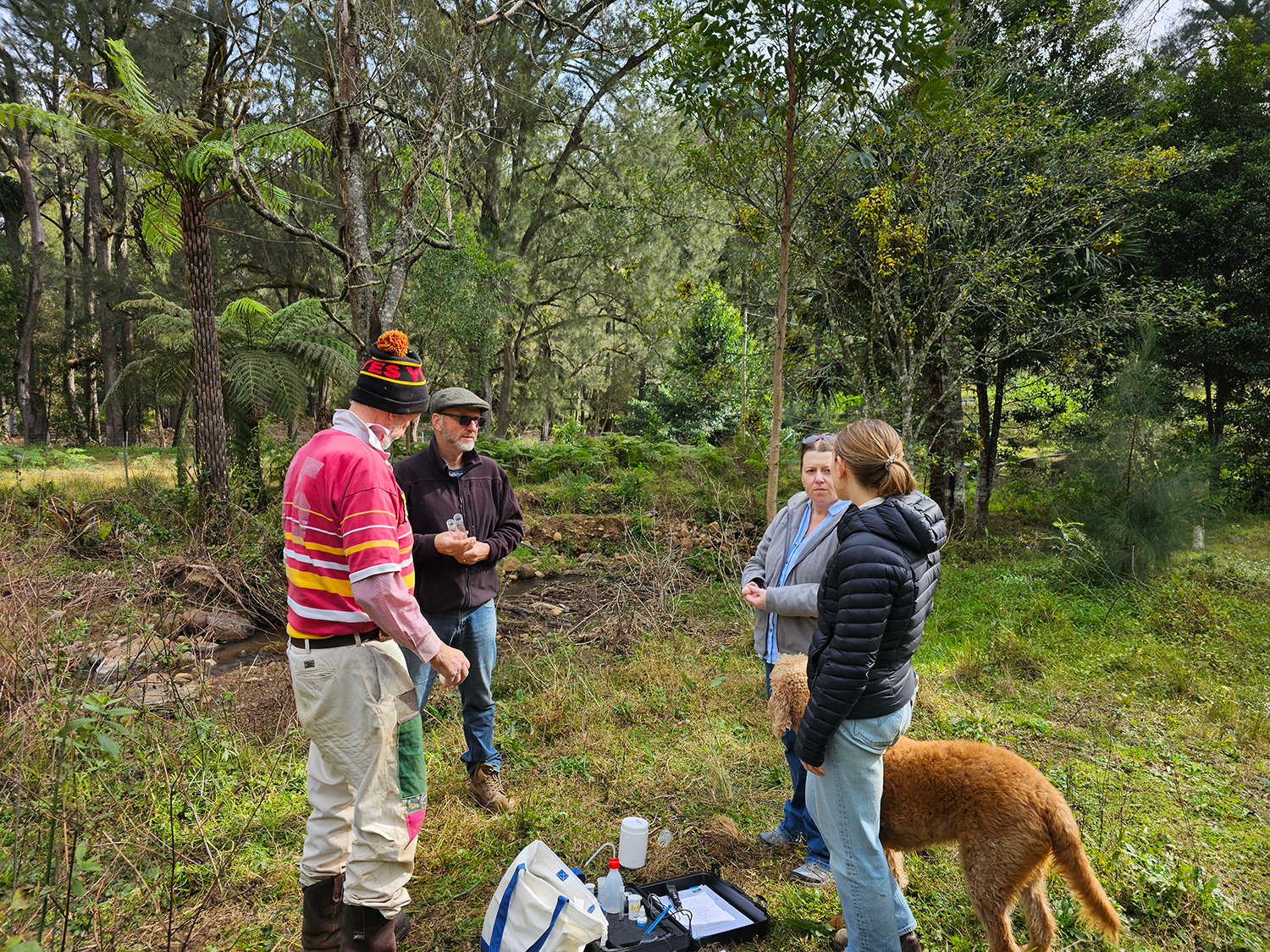
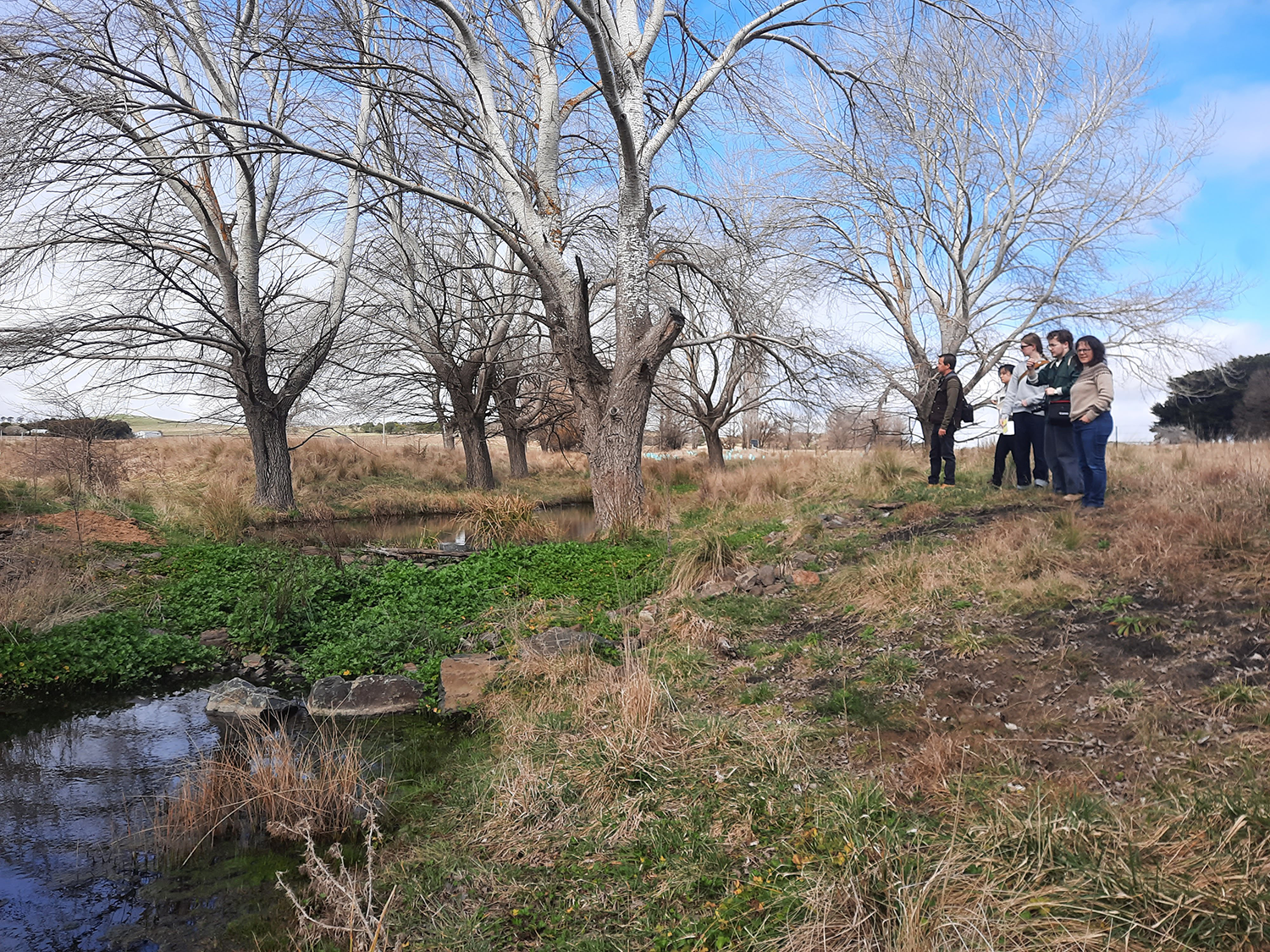
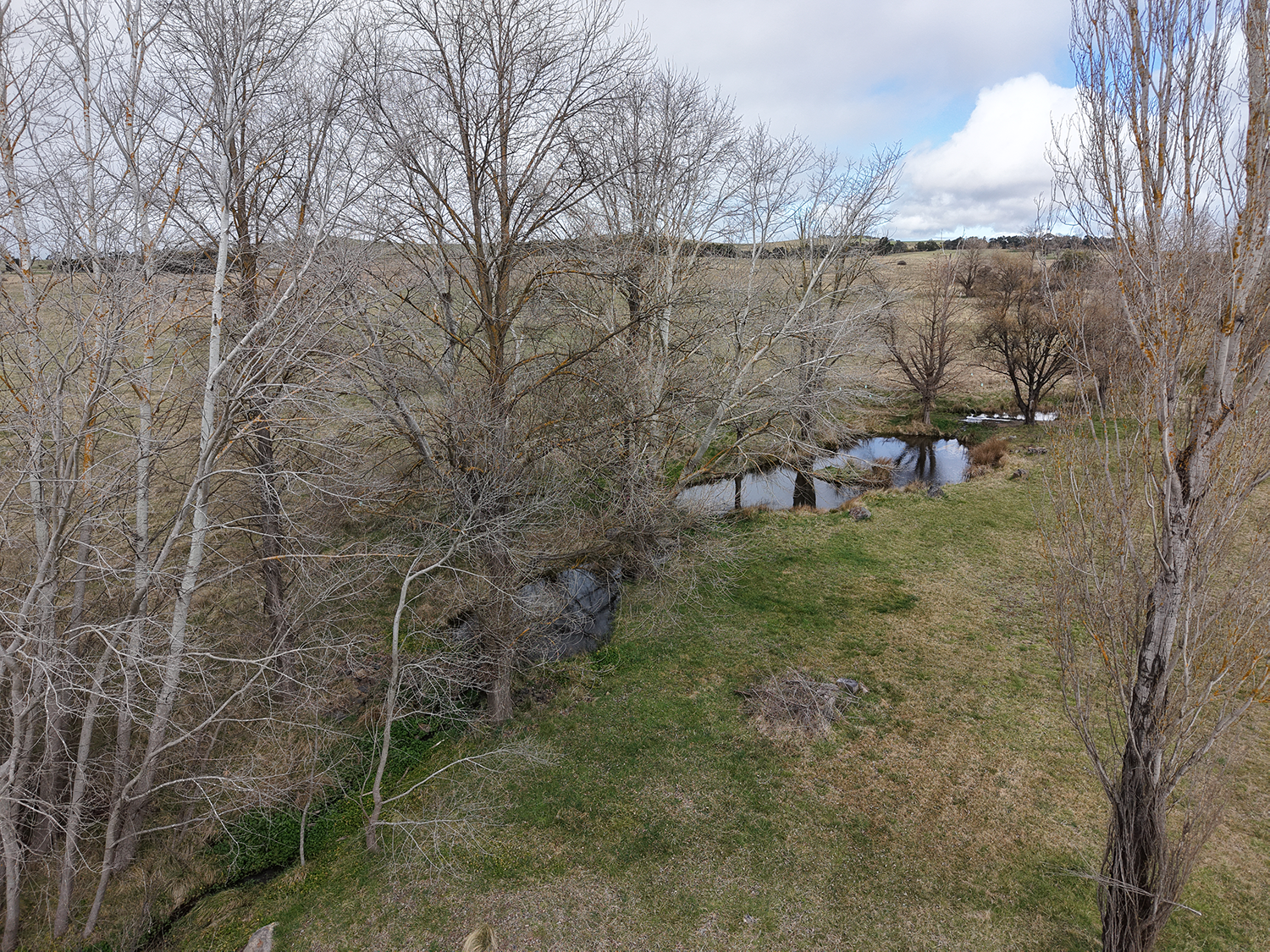
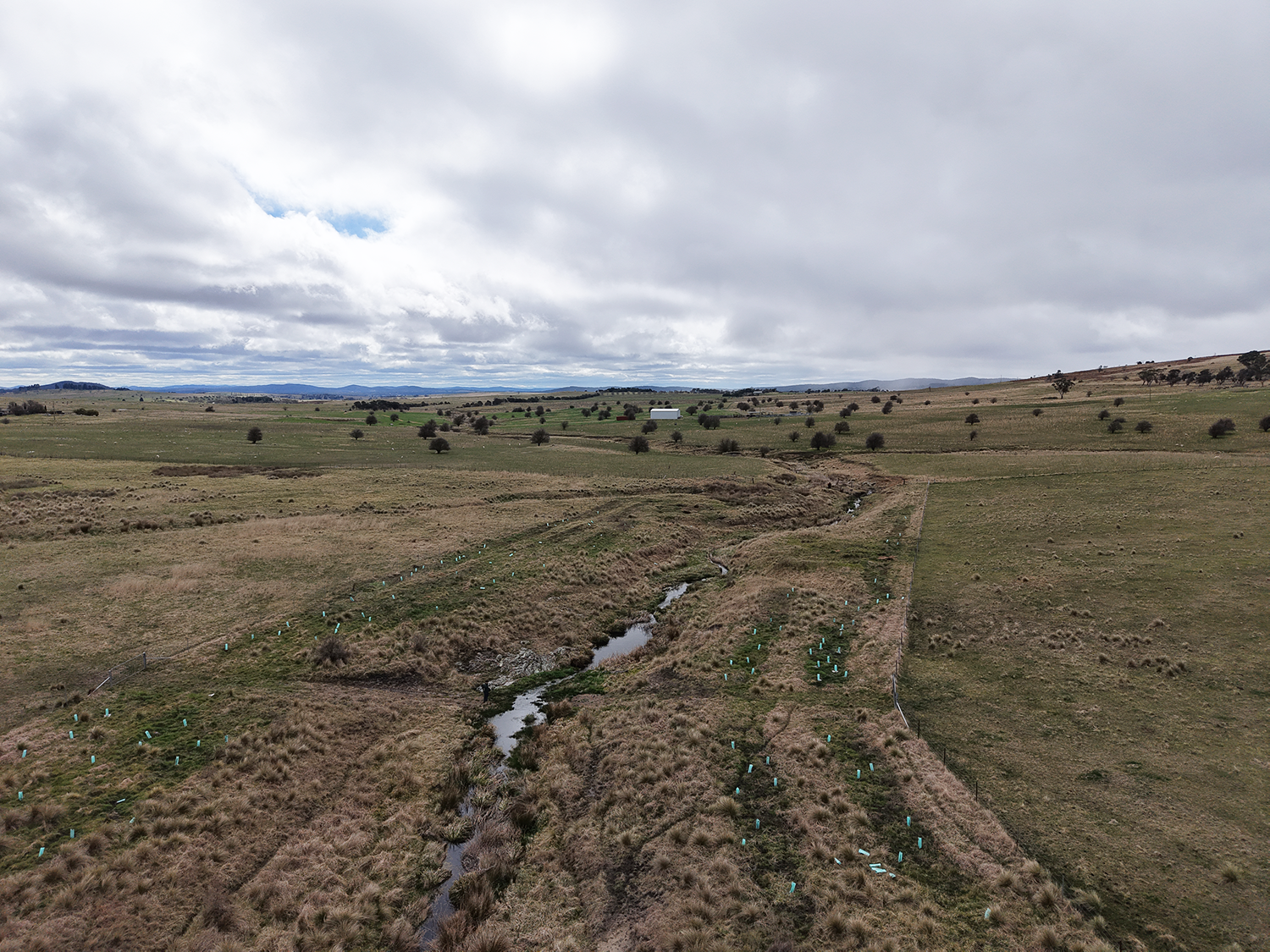
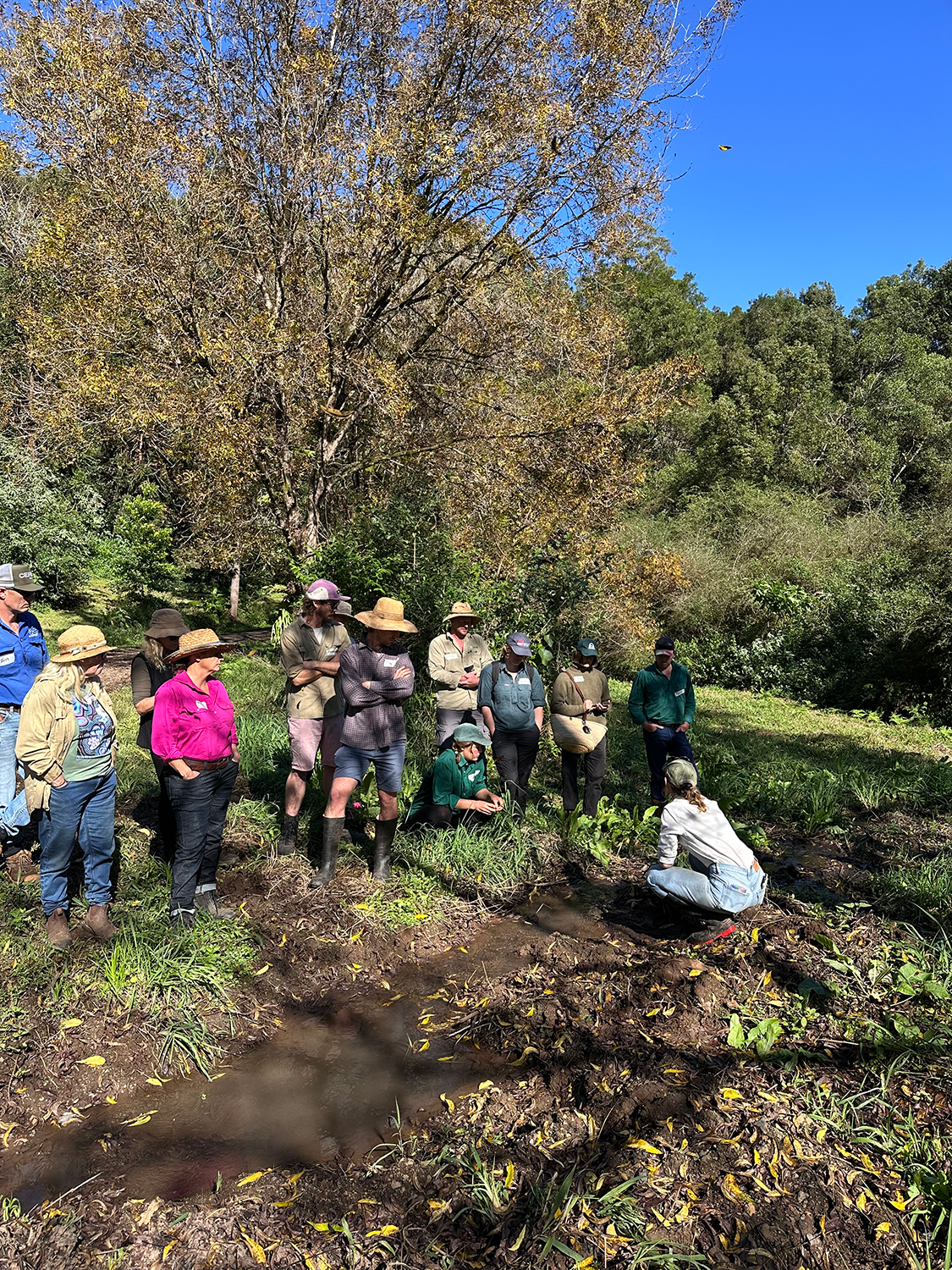
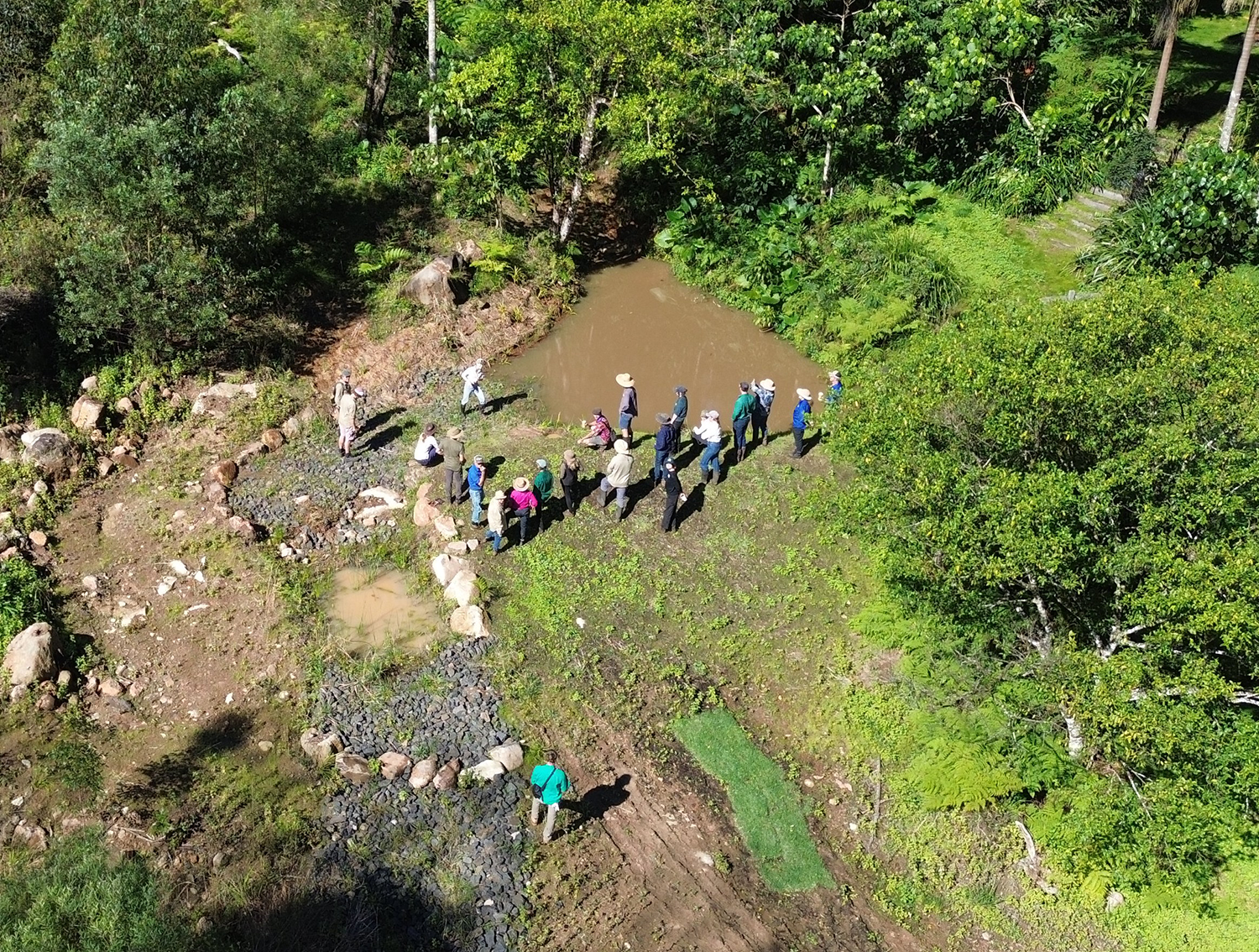
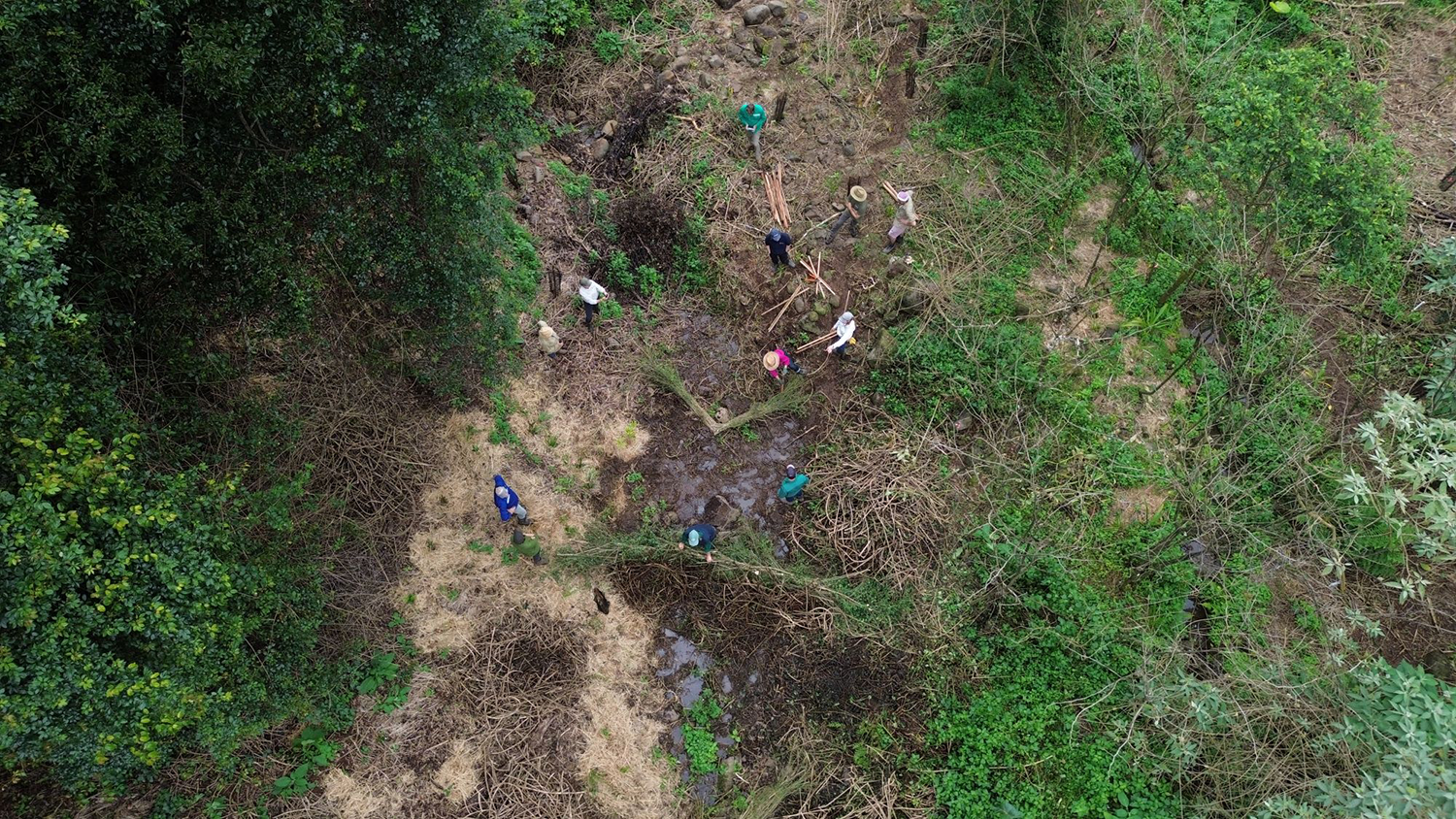
Last week, Mulloon’s Chris and Laura joined the students and landowner Justine Isemonger at the Lorrina property – one of our standout case studies – for some documentation of Brushy Hill Creek. It was a terrific experience, seeing up close how the structures and ponds along this reach have enabled vegetation to re-establish, and ensured slower and more consistent flows, thus vastly improving habitat for biodiversity and clearer, cleaner water moving downstream. Chris also put the drone up to get some birds-eye shots! 

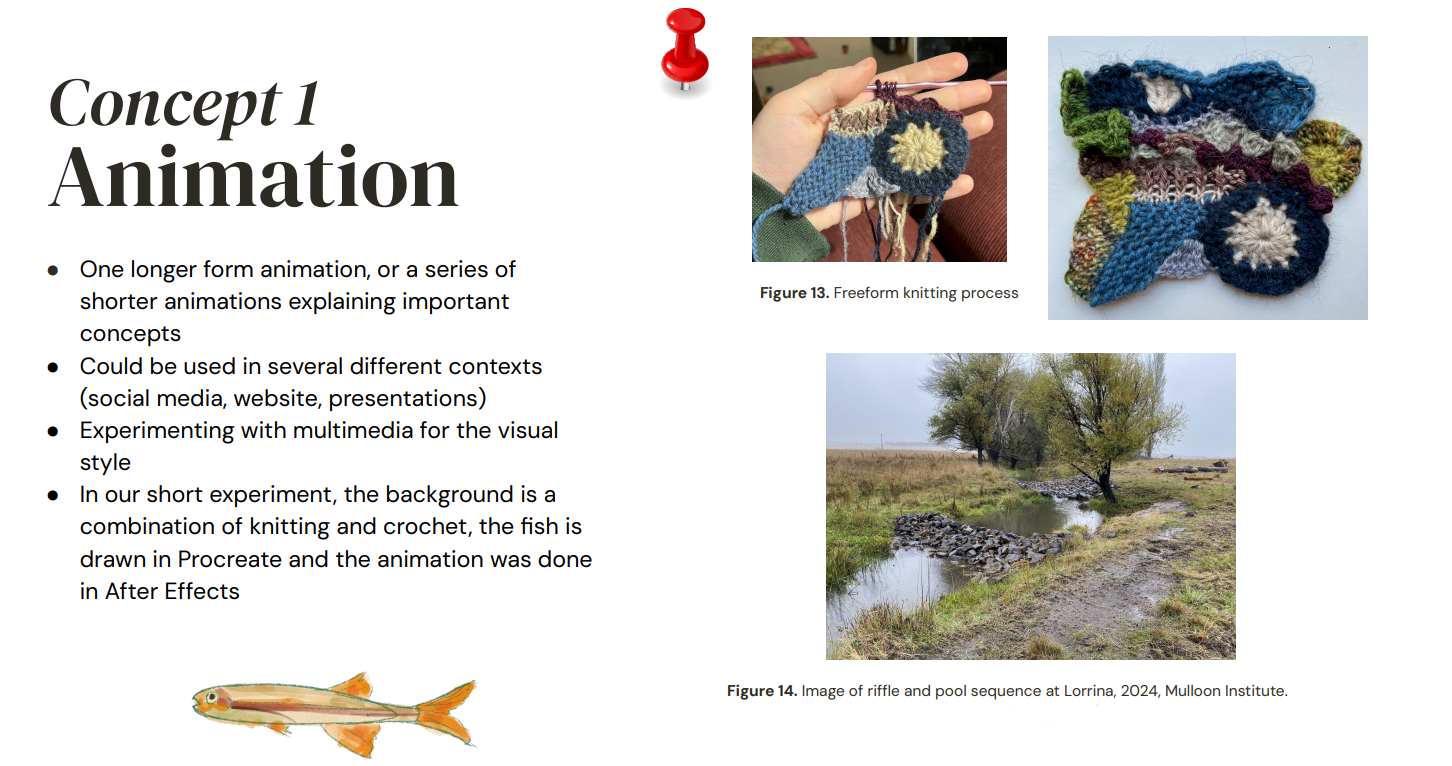
Edde, Anne, Oonah and Kayla are keen to integrate comic strip storytelling and animation, harnessing the varied skills of the group – we love these first concepts. 

We’re excited to see what a few more weeks of creative dedication will bring! 


Pictured right: Storyboarding a new animation.
Images below: More concept ideas, and out in the field documenting Brushy Hill Creek at Lorrina, 

This quarter has been a busy and exciting one at Mulloon, with progress across our science, monitoring, technology and research.

The Science and Monitoring team have been busy hosting and supporting important visits.

In June, we welcomed the Friends of Grasslands (FoG) to Mulloon for a site tour and discussion on grassland restoration. Shortly after, the NSW Biodiversity Conservation Trust (BCT) team joined us to continue assessing grasslands and wooded areas for biodiversity and conservation management. Both visits highlight the importance of collaboration and shared knowledge in restoring and rehydrating landscapes.

Pictured right are the Friends of Grasslands team in action.

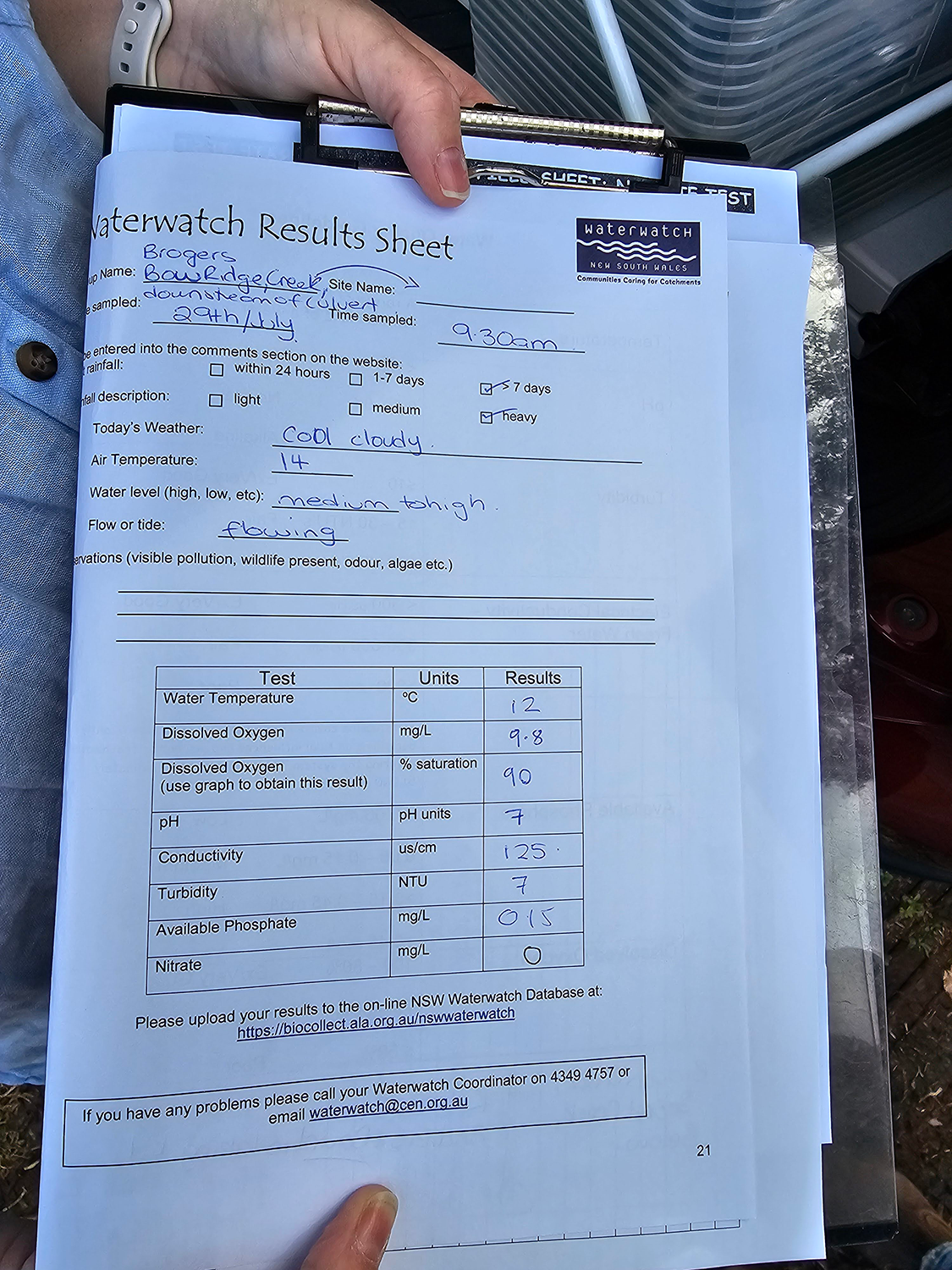
We’ve also been out in the field, assisting the Water Stewardship Project at Brogers Creek, Kangaroo Valley. Working alongside Rachel Kneeves (NSW WaterWatch), local Landcare members, and the broader community, we explored opportunities for community water monitoring and provided support through drone mapping here and at Lorrina near Braidwood.

Pictured right: Brogers Creek monitoring. 
Pictured below: Brogers Creek monitoring, and the team mapping at Lorrina. 

The team has been pushing forward with new tools and workflows. We’ve developed an automated Groundwater Piezometer Workflow, streamlining the journey from raw sensor downloads through naming conventions, processing, and quality assurance/quality control checks. Alongside this, we released a suite of automated terrain attribute tools, which can generate 13 landscape measures from a single Digital Elevation Model – including Contours, Slope, Aspect, Hillshade, Flow Direction, Flow Accumulation, Curvature (both Profile & Plan), REM (Relative Elevation Model), LS Factor (Slope Length and Steepness factor), TPI (Topographic Position Index), VBF (Valley Bottom Flatness), and Flow Length – all designed to support catchment-scale monitoring and restoration planning.

Our research team is continuing work on the second Mulloon Rehydration Initiative research paper – watch this space for updates on what promises to be another landmark contribution to the science of landscape rehydration.

 
READ THE FIRST PAPER

 
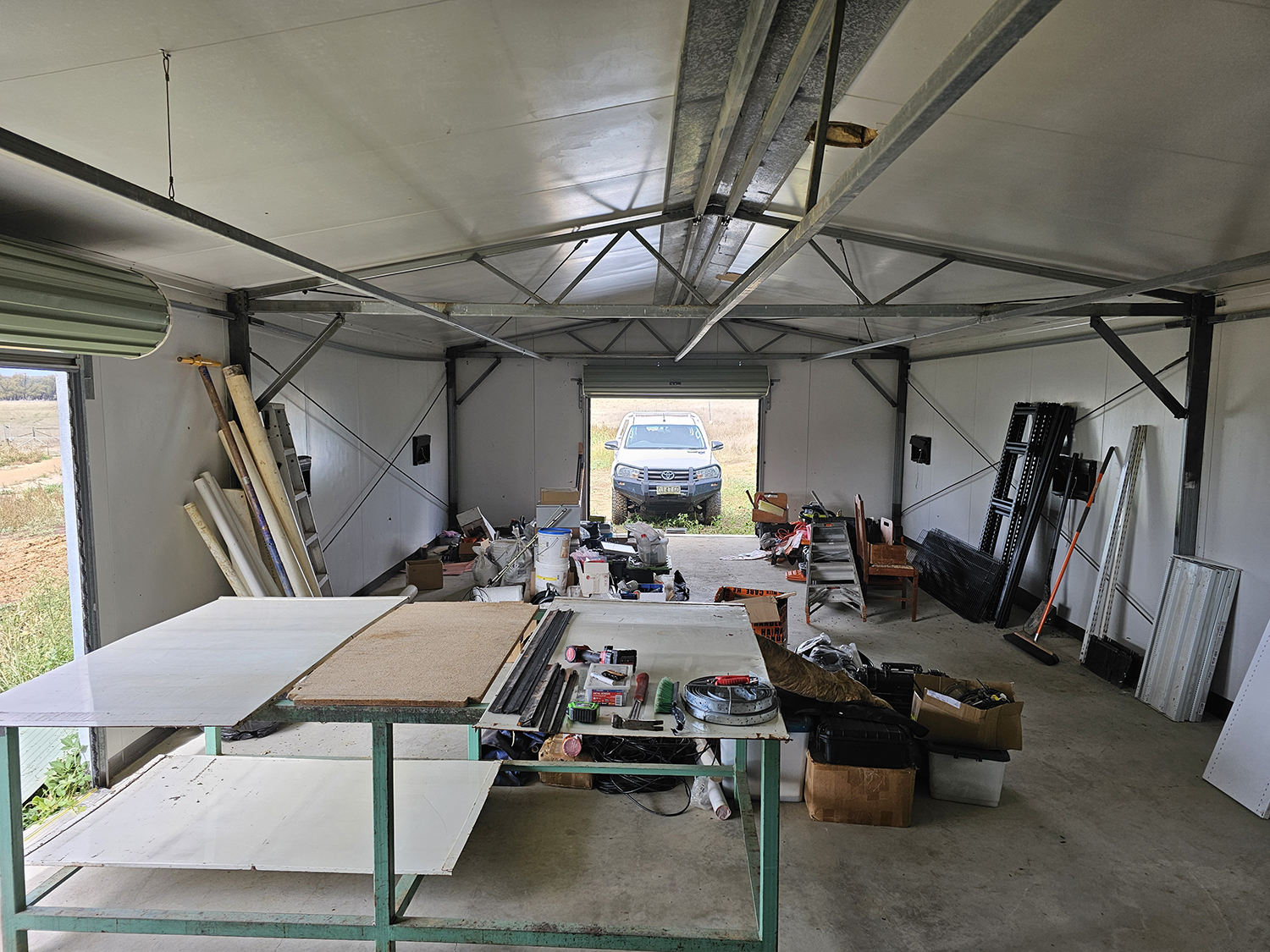
Finally, at Mulloon Creek, the transformation of the old brood shed into the new Mulloon Lab Hub is well underway. The refurbished space is fast becoming a dedicated centre for research, monitoring, and collaboration – keep an eye out for our official launch later this year. Pictured right: Mulloon Lab Hub transformation underway.

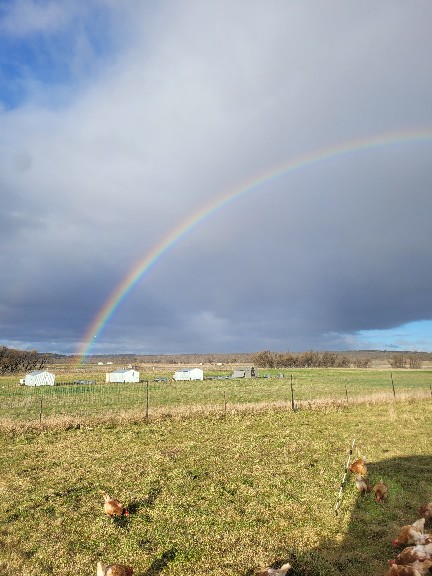
Winter seasonal conditions have been a mixed bag this year.

June opened with well below average rainfall and very cold temperatures. Records were under threat with 21 nights dropping below -5°C and a very cold and icy low of -10.8°C recorded at 7 am on 21 June. Fortunately, July and August brought milder days and well above average rainfall, and this has left paddocks very wet underfoot.

Our new SKA mobile layer sheds, commissioned in April, are already proving their worth. They have boosted efficiency and provided resilience against these weather extremes. For the first time in winter, egg production has increased, a positive trend that we expect to continue well into spring.

In late July, we purchased a new batch of day-old chicks, which are thriving with body weights already above standard.

Calving is well underway with no significant issues to date. The untimely loss of our paddock feed reserves to feral animals has caused the cows to lose slightly more condition than planned. However, they are milking well, and the calves are strong and looking very sappy.

We are also pleased to introduce Jason Maloney, who has joined Mulloon Creek Natural Farms as Farm Manager at the Home Farm. With more than 25 years’ experience in regenerative and biological farming, Jason brings expertise in formulating and brewing biological teas and related products. Jason is a fantastic addition to our team.

Back in June, Mulloon Institute partnered with North Coast Landcare’s Caring for Catchments program to host a Field Day at Tuntable Creek near Nimbin in Northern NSW. The day brought together local landholders, NRM professionals and community members to learn practical skills for managing water and restoring landscapes.

The day began with an introduction to the theory and principles underlying Mulloon’s approach to landscape restoration. Participants engaged in lively discussions, asking thought-provoking questions that centred on managing the overland flooding, excess surface runoff and soil saturation that is typical of the Northern Rivers region.

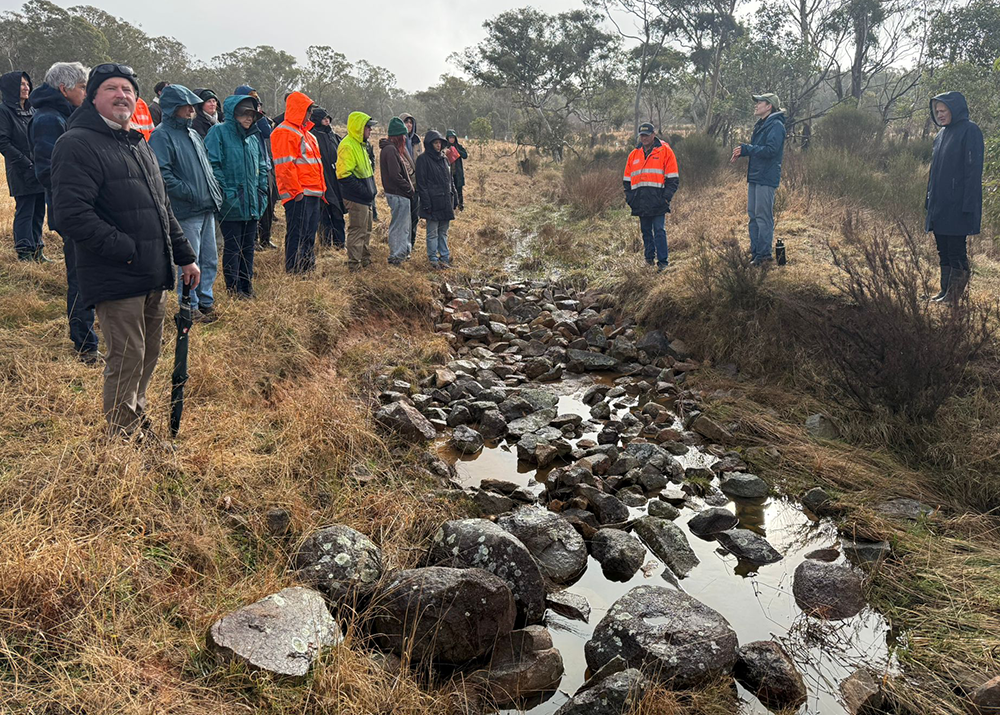
Participants were guided on a waterway walk and talk on Mulloon’s proven approaches to restoring water cycles, with a focus on reading the land, understanding hydrology, and applying well-designed natural structures such as rock weirs to slow and spread water. Through interactive sessions, they explored the fundamentals of water in landscapes, learned how to diagnose the health of a farm’s hydrology, and gained insights into strategies that improve both productivity and ecological outcomes.

The event reflected Mulloon Institute’s commitment to learning by doing – delivering robust science in an engaging and accessible format. Attendees left with practical tools to apply on their own properties and a deeper understanding of how healthy water cycles underpin resilient landscapes.

In addition to the Field Day, Mulloon shared information about further learning opportunities, including the three-day Bootcamp, Mentoring Program, and Boots-on-Ground sessions – pathways for landholders to continue building skills and confidence in landscape rehydration.

Dear Valued Members and Friends,

Spring is a time of renewal, as we see our landscapes come to life after a dormant winter.  The emergence of new life in nature inspires us all to embrace fresh starts, set new goals and feel a renewed sense of hope.

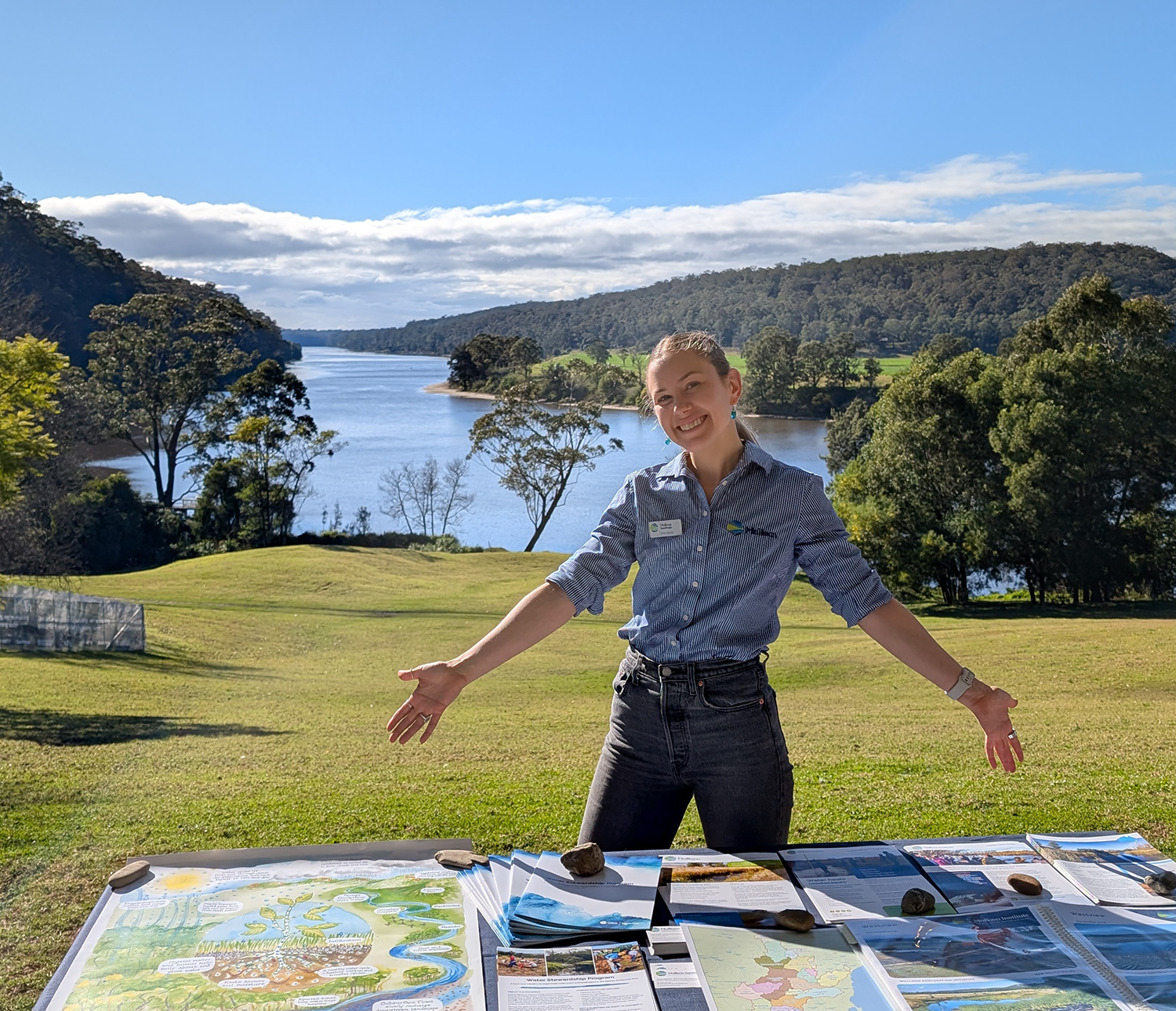
Through our partnership with WaterNSW, Program Manager Erin Healy has been leading our Water Stewardship team in engaging with communities across Sydney’s Drinking Water Catchment. I had the pleasure to join Erin on two of these occasions at Hartley and then in Bowral. The response of communities when they understand they can engage with Mulloon and repair their landscapes certainly provides a renewed sense of hope for many who have experienced climate extremes of bushfire, drought and flood.

The program offers an opportunity for landholders to work with Mulloon Institute to restore local water cycles and improve water quality, security and catchment health. This pilot phase delivered in partnership with The Ian Potter Foundation, WaterNSW and Mulloon Institute includes a series of funded sub-catchments scale on ground works. This grass roots program is empowering communities to take action in the face of land degradation and climate change through the use of nature-based solutions.

The Water Stewardship Program also represents one approach to funding landscape scale restoration. We know from our work with the Economics of land Degradation Initiative that a nature-positive economy could generate up to US$10.1 trillion annually in business value and create up to 395 million jobs by 2030. The numbers stack up, and Mulloon Institute is at the forefront of delivering nature-based solutions and in upskilling land managers to do the same.

I had the opportunity to share some thoughts on the benefits of a restoration economy with the Australian Government via an interview on the Sustainable Agriculture Investment Review with ThinkPlace. We discussed that progress will require regulatory reform to more easily enable landholders to take action to restore the function of their landscapes.

We eagerly await the outcomes of the recent productivity roundtables hosted by the Australian Government in Canberra, that considered how to progress the long awaited reforms of the national Environment Protection and Biodiversity Conservation (EPBC) Act 1999.  I recently wrote to Ministers Murray Watt and Julie Collins inviting them to our farms in Bungendore to tour the Mulloon Rehydration Initiative. We look forward to their response and taking the opportunity to brief them on the great potential of our work to boost agricultural productivity and environmental and conservation outcomes.

We have also been through the first round of reporting to the Department of Agriculture, Fisheries and Forestry (DAFF) on the First Nations Water Skills Project and LiFT (Landscape function monitoring toolkit). It has been impressive to explore the progress that has been made on these projects and we are excited about the next steps including collaboration with our consortium partners.

Over winter we have also embarked on a farm planning process that will see us set fresh goals for the farms. The process has seen team members from Mulloon Creek Natural Farms, Mulloon Institute and Mulloon Consulting come together as parts of the whole that make up the Mulloon Group. Such an important opportunity to explore the issues we face in running a commercial egg enterprise, an emerging regenerative grazing operation and an organisation recognised globally for landscape repair and sustainable farming. We were ably supported by David Hardwick, Imogen Semmler and Suwanna Thananupradit from Soil Land Food, and we enjoyed a guest appearance by renowned Northern tablelands grazier Gordon Williams.

Spring also brings a fresh start for two very important Mulloon team members. Jono Forrest, our General Manager of Mulloon Consulting, is moving on from the role and thus allowing new leadership to guide Mulloon Consulting through its next chapter. We are so grateful to Jono for his diligence in taking Mulloon Consulting from a start-up to the successful and profitable business it is today. Thank you, Jono, yours are big boots to fill and the entire team look forward to “seeing you around.”

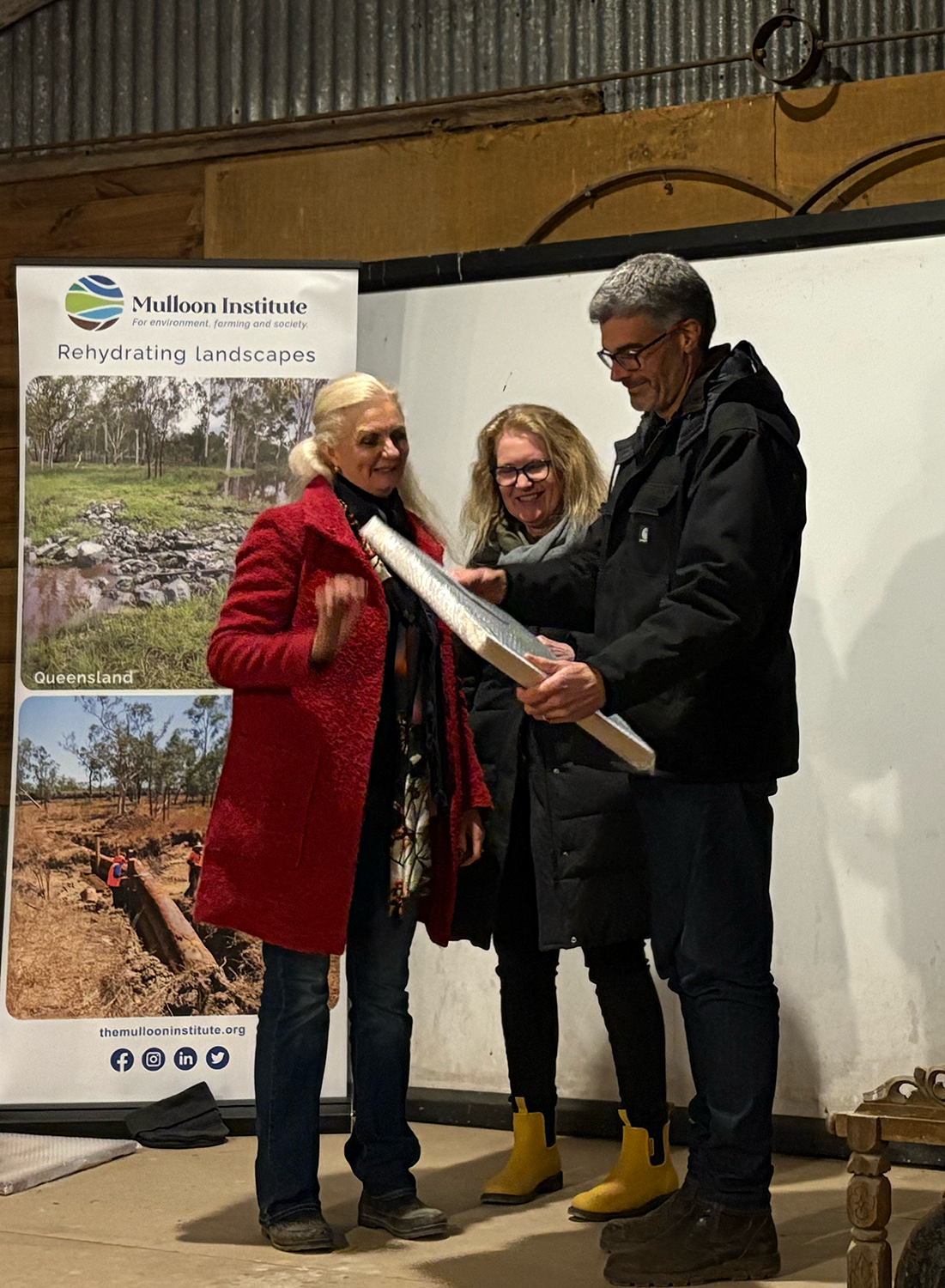
Peter Hazell, our Principal Landscape Planner is hanging up his boots after close to 20 years of service to Mulloon Institute. Peter has been our guide and travel companion on the journey of taking the Institute from a local, project-based organisation focused on Mulloon Creek to a globally renowned organisation with a national footprint across Australia. Pete’s kindness, generosity of spirit and technical skills have fostered a new generation of Landscape Planners and a landscape rehydration education curriculum. He leaves a great legacy and will remain a member of our Science Advisory Committee. Farewell Pete, we are so grateful for your contribution and look forward to working with you on the SAC. (Pictured above from L-R: Peter Hazell, Carolyn Hall and Jono Forrest the Barn on Home Farm at the recent farewell event).

As we head into spring we are excited to build on the success of our grant wins.  We welcome a new Interim Board who are embarking on a public recruitment process for a new Board for Mulloon Institute who will take us through the next stage of evolution of this amazing organisation. This is a time of fresh starts, new goals and brings a renewed sense of hope.

Carolyn

Carolyn Hall
CEO
Welcome to the Spring 2025 edition of Resilience and my first report as Interim Chair.

Since our Winter edition in June, the Board of Mulloon Institute has commenced a director renewal process that will involve a public recruitment process in the coming months. In July, the Institute publicly announced that as part of that process: Matt Egerton-Warburton, Carolyn Hall and Kathy Kelly had stepped down as Directors; while Rose Nairn OAM, Robert Purves AM and I had been appointed as Interim Directors.

On behalf of the Institute, its members, partners and supporters, I would like to thank Matt, Carolyn and Kathy for their tireless work as Directors of the Institute over many years. Thank you for welcoming me to the board in January last year, and for your very significant contributions to landscape restoration and rehydration in Australia – and increasingly overseas also.

By way of introduction to the Interim Board, please return to our last Resilience newsletter (Winter 2025), which featured Rose – following her being awarded the Medal of the Order of Australia (OAM) in recognition of her outstanding service to the community: National recognition for Rose Nairn OAM: A Lifetime of Community Service and Impact.

Similarly, Robert brings wonderful experience to the Institute’s Interim Board as both a businessman and environmentalist, who, having had an active business career in public companies, has for the last 20 years spent much of his time on environmental issues. He has served as Chairman/Director of a number of public companies in both health and industrial sectors. Currently, Robert is a board member of Landcare Australia and the Wentworth Group of Concerned Scientists, and a Trustee of Lizard Island Research Station. He is also a former President of WWF-Australia, and a former board member of WWF-International and the Climate Council. In 2004, Robert established the Purves Environmental Fund, which funds numerous environmental initiatives. Robert farms in the Southern Tablelands of NSW, where he has consistently worked to improve degraded landscapes.

Finally, aside from clearly needing to work on achieving the post-nominals of my fellow Directors, I have worked as an environmental lawyer for 25 years in public and private sector roles, focussing on water, carbon, energy and environmental markets and regulation. I joined the inaugural Mulloon pro-bono Law Committee in 2019 and was invited to join the Board in January 2024. I have also been a director of Australia’s first independent environmental markets administrator – Eco-Markets Australia since 2021, and its Chair since August 2024. As my choice of photo, above, reflects, I am passionate about water: whether paddling a canoe on the pond at the Home Farm (or further afield on longer trips), completing a Masters in Environmental Science at the ANU in 2010 or working in Australia’s water and environmental industry.

As noted above, the Institute is currently seeking applications to join its board, (applications are now closed). We look forward to that board and business growth in coming months.

Best wishes for the spring ahead and dare I say, a slightly dryer few months for those of you impacted by the recent winter deluge.

Wilf

Wilfred Finn 
Interim Chair

Mulloon Institute was pleased to take part in the Bowral Co-op Grower Information Series, a great local initiative that helps landowners and community members stay up-to-date with all things agriculture.

These free community events bring together expert speakers to share insights on topics ranging from pasture management and cropping to bushfire risk planning and sustainable land practices. The Co-op’s commitment to supporting local agriculture is evident in the diversity and relevance of its programming, making it a trusted hub for knowledge exchange and collaboration. 

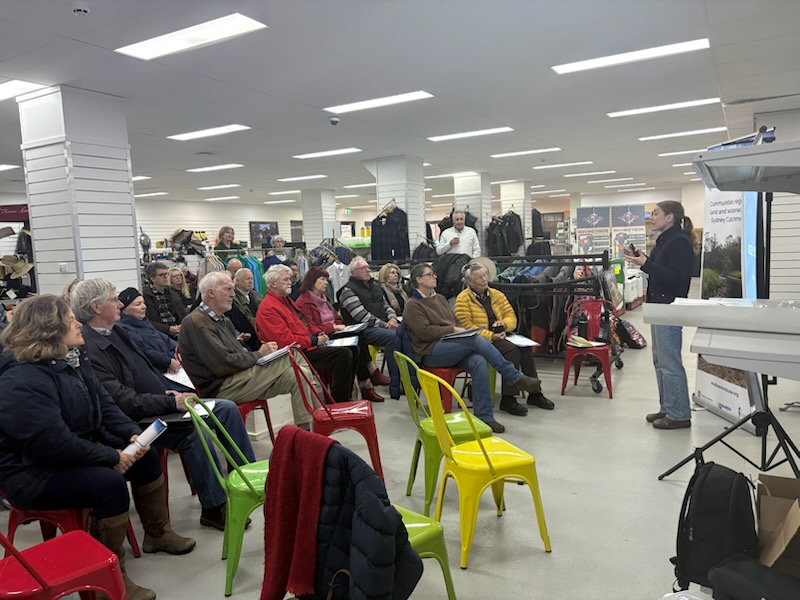
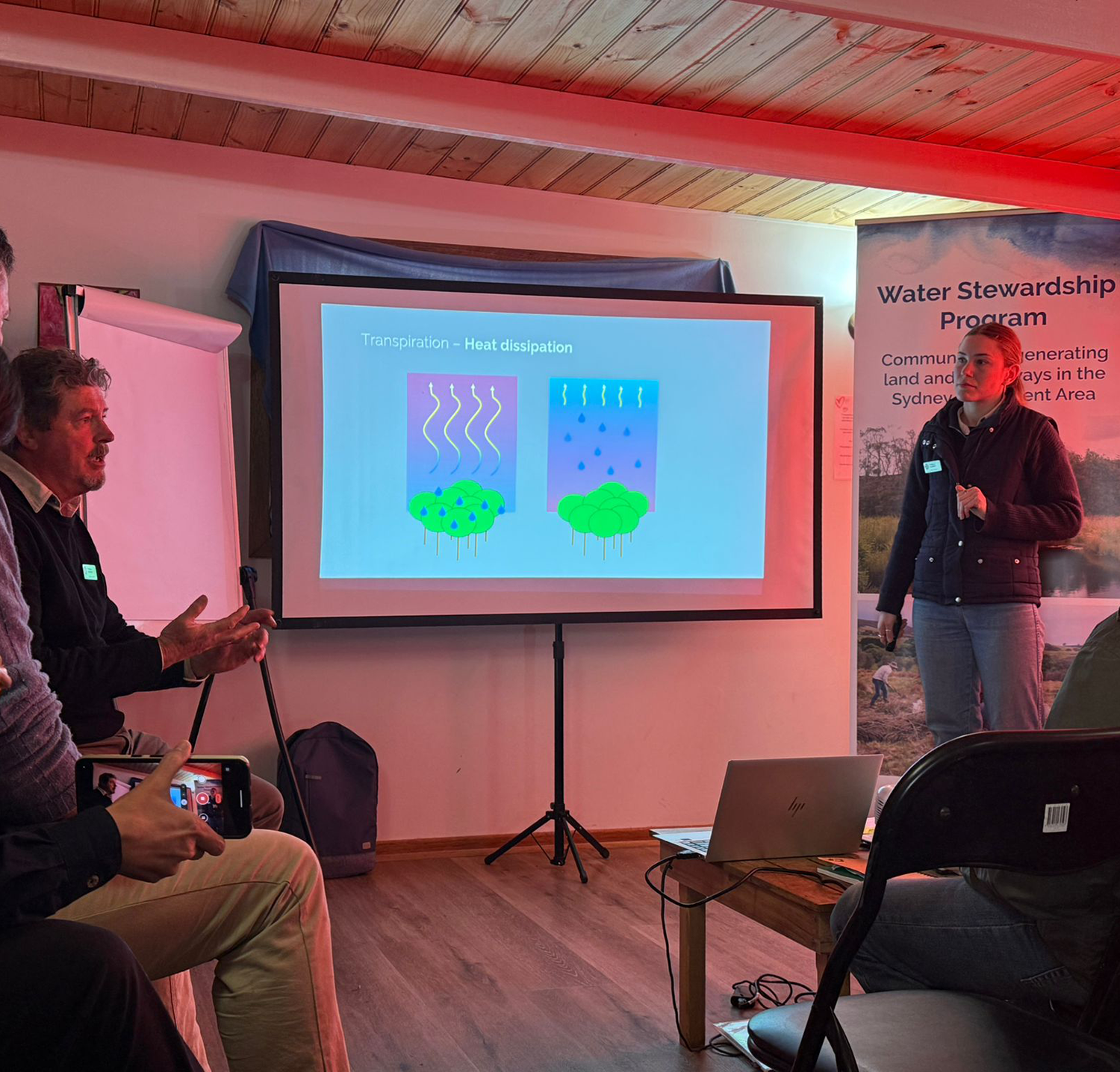
On a wet Saturday in early August, around 35 people – farmers, landowners, and town residents – gathered inside the Bowral Co-op to hear about the Water Stewardship Program, presented by Erin Healy, Program Manager at Mulloon Institute. The session explored how community-led, catchment-scale projects can support water quality, security and catchment health in the region. 

The Bowral Co-op shared their thoughts: 

“It was great to see such strong interest in the work you’re doing and the Water Stewardship Program. We enjoyed an excellent presentation from Erin Healy, Program Manager, and the opportunity to engage with Carolyn Hall, CEO. It’s an impressive initiative with exciting opportunities for Highlands landowners.” 

It was a great opportunity to connect with locals and discuss how collaborative stewardship can shape a healthier future for our landscapes and waterways. 

The Water Stewardship Program is supported by funding from WaterNSW and The Ian Potter Foundation.

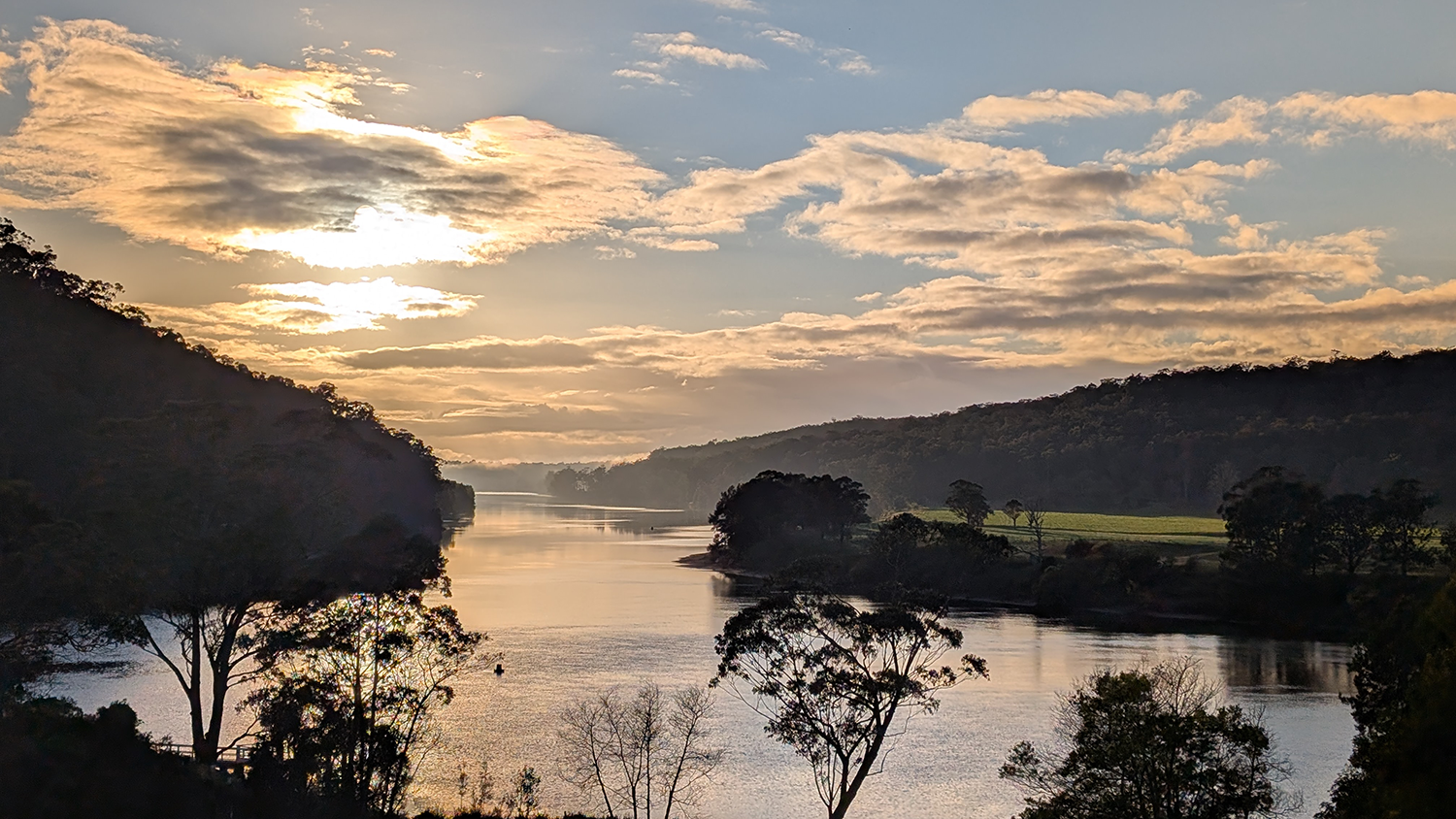
With the mighty Shoalhaven River as its backdrop, Mulloon Institute’s Erin Healy and Nolani McColl joined the Bundanon Art Museum’s 2025 Science Week Symposium — a day of ideas, connection, and celebration of Country.   

Invited by Michael Andrews, Bundanon’s Natural Resources Manager, we were welcomed with generosity and a moving smoking ceremony from Bob, a First Nations Burrawong dhunna gam waglpa man.   

The everengaging Clarence Slockee guided the day with warmth and humour, making everyone feel at ease.   

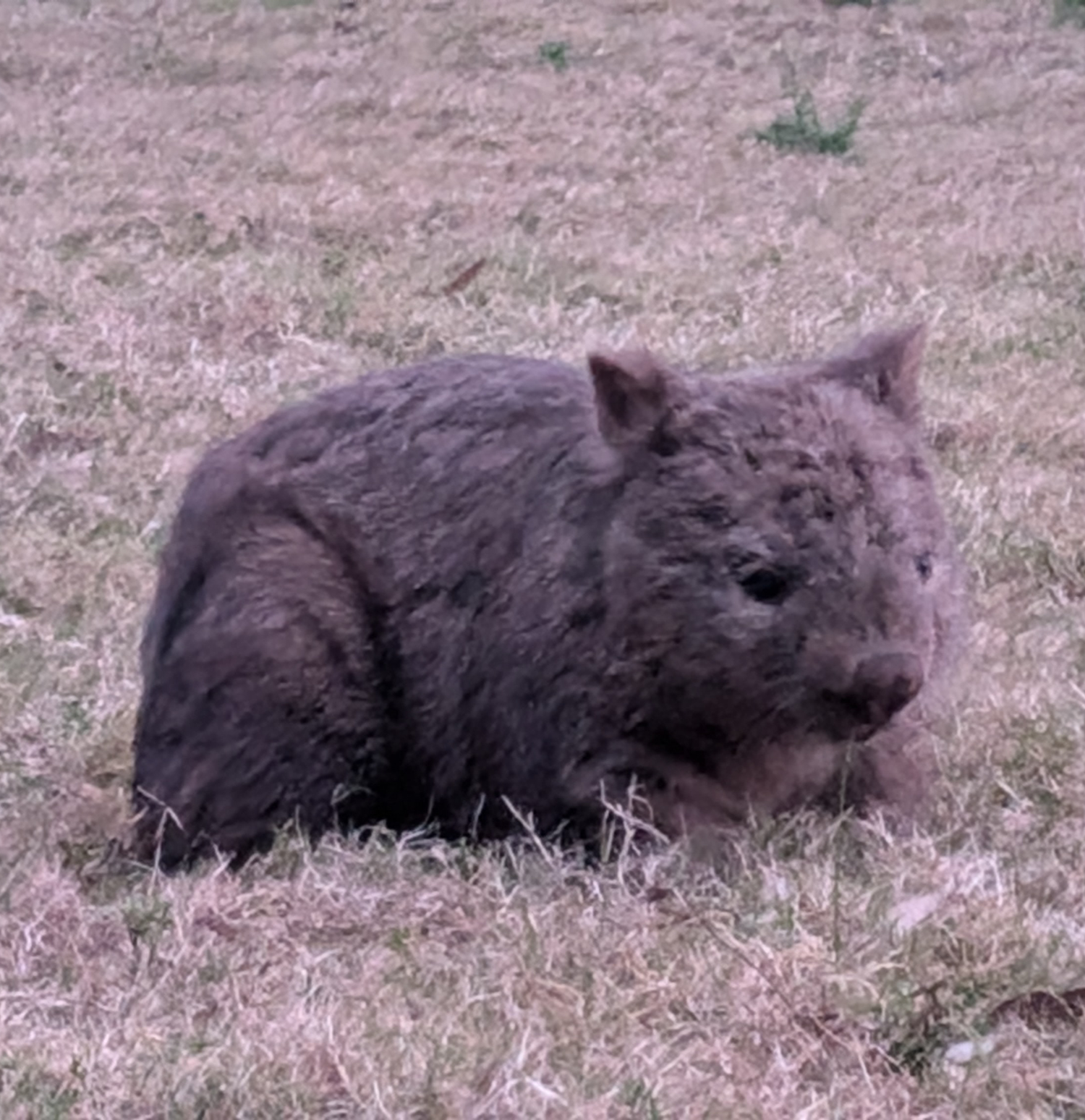
This year’s theme, Hidden Messages from the Shoalhaven’s Ecologies, brought together leading scientists, landscape managers and cultural practitioners to share insights “from bees and bristlebirds to moss, wombats and water” — exploring the deep connections between species, ecosystems, and cultural knowledge.   

Pictured top right of page: from L-R Clarence Slockee, Nolani McColl, Erin Healy and Bill Gammage standing together in front of the Shoalhaven River.  

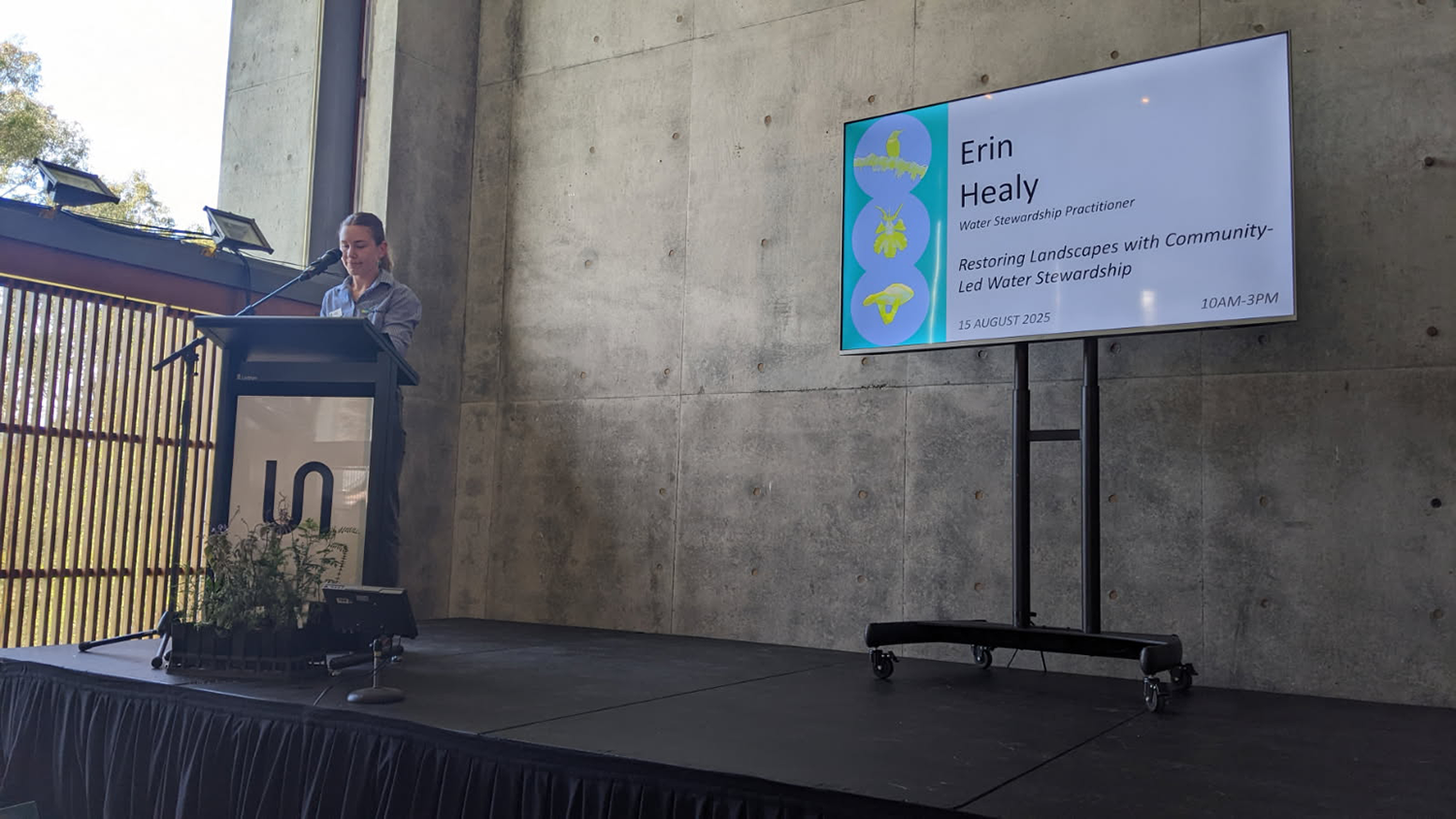
Pictured right: Erin Healy’s presentation on community-led water stewardship. 


Erin Healy, Environmental Engineer and Program Manager at Mulloon Institute, presented Restoring Landscapes with Communityled Water Stewardship, weaving in the dynamics of feedback loops and tipping points that shape community momentum in restoration. She also shared the success of the Communities of Practice approach across the Mulloon Rehydration Initiative, the Communities of Practice Project, and our new partnership with WaterNSW.   

With blue skies overhead, delicious local catering, and the chance to join bushwalks and birdwatching, the day was as nourishing for the spirit as it was for the mind. Highlights included meeting specialists in wombats, koalas, mosses, and native bees, and conversations with Bill Gammage — author of The Biggest Estate on Earth — and his wife Jan, about landscape function and the profound landuse changes of the past two centuries.   

A heartfelt thanks to Andrew and Millie for being such generous hosts and for the opportunity to be part of this special gathering at Bundanon.   

The Water Stewardship Program is supported by funding from WaterNSW and The Ian Potter Foundation.

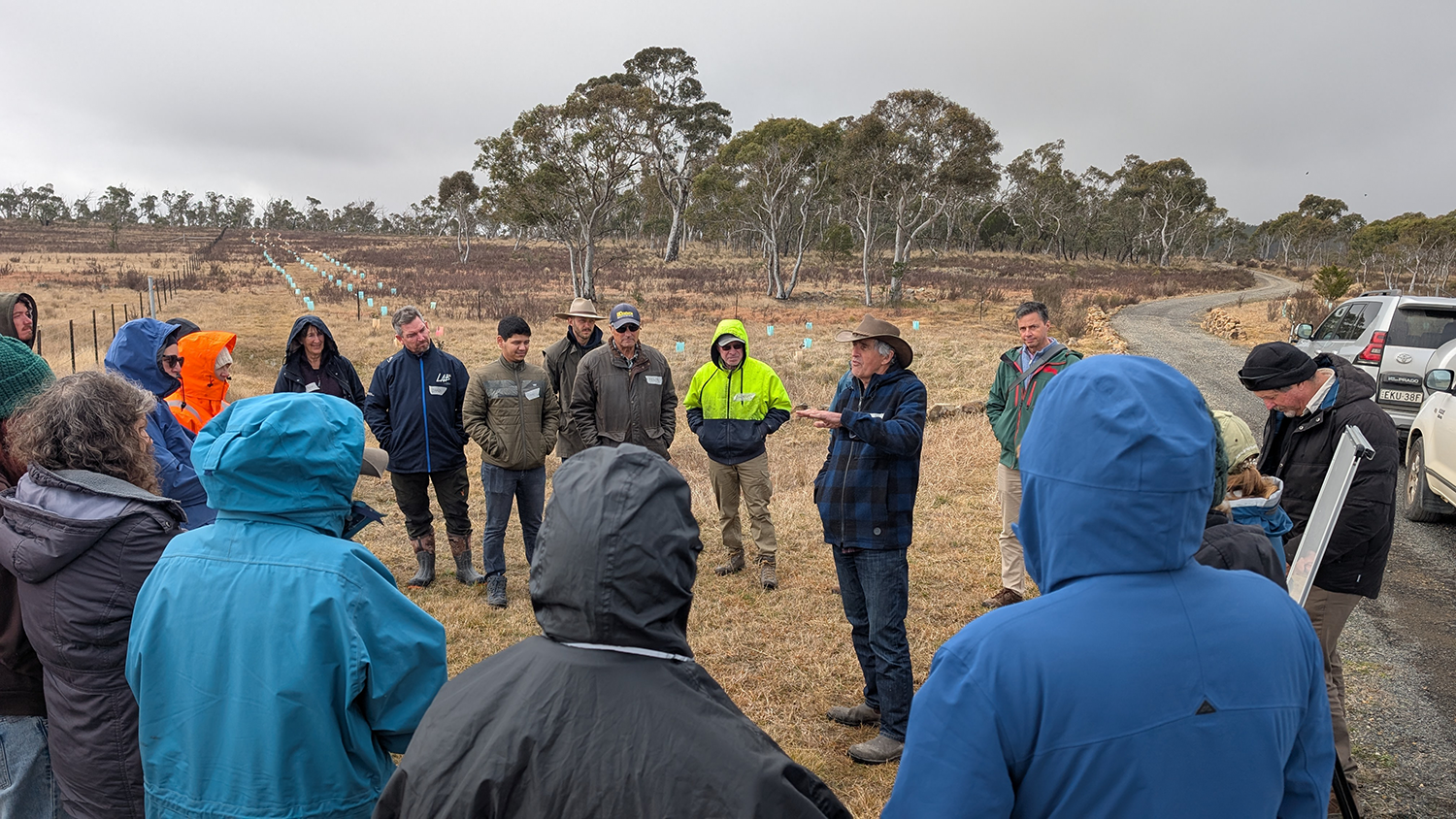
Despite some typical cold and indecisive weather, the Landscape Rehydration Field Day held on Friday 1 August in the Bombay catchment near Braidwood was a warm and energising gathering of over 30 farmers, landholders, students, and community members.

Hosted by the Bombay Landcare Group, Erin Brinkley with Upper Shoalhaven Landcare, and the ever-welcoming Helen at The Saddle Camp, the day marked the beginning of a new chapter in landscape restoration for the Bombay Creek catchment and community.  

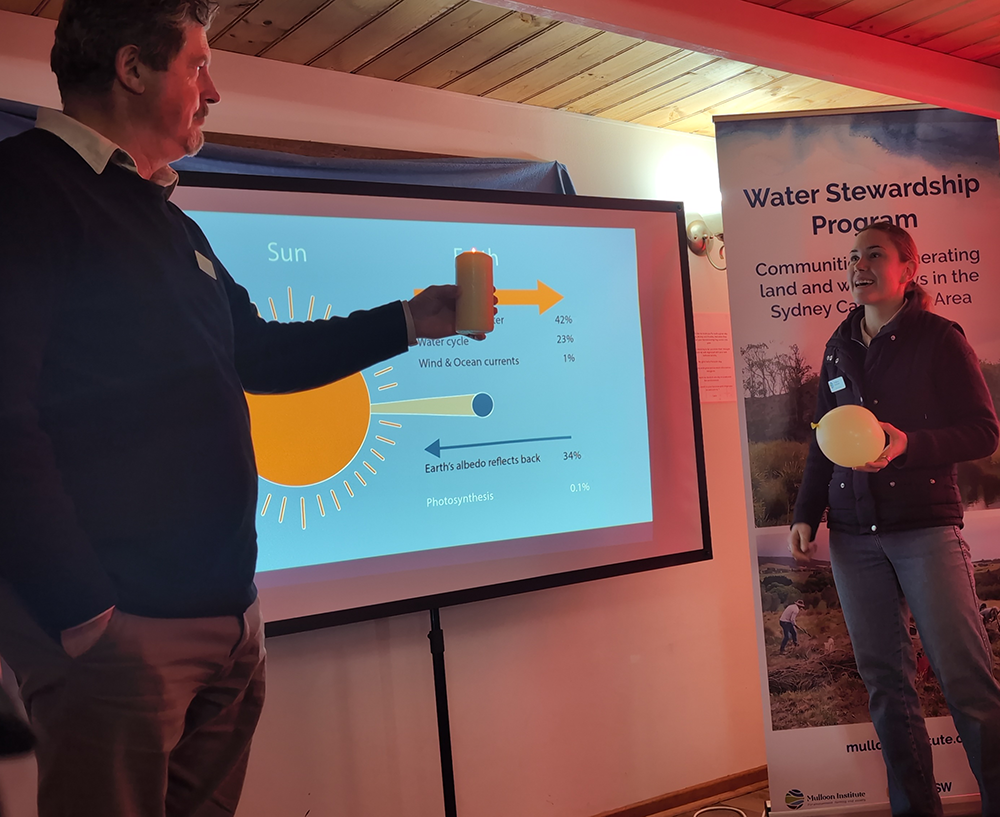
Presenters Peter Hazell and Erin Healy from Mulloon Institute led engaging indoor and outdoor sessions that explored the movement, storage, and cycling of water through our landscapes. Participants learned how to read water processes to interpret landscape health and discussed the challenges posed by the classic Bombay soil type – locally known as the “Bombay Spew!” 

Pictured right: Peter Hazell and Erin Healy doing the classic Mulloon-Balloon demo!

The weather danced between sunshine and drizzle, but spirits remained high. Even a soggy moment with the whiteboard couldn’t dampen the enthusiasm. The Saddle Camp provided a cozy space for connection and co-learning! 

This field day also marked the launch of a Landscape Rehydration Community of Practice and Demonstration Site in the Bombay Creek catchment. Supported by Mulloon Institute’s Water Stewardship Program, this initiative will empower local landholders to collaborate on regenerative water and land management projects over the coming years. Watch this space for more information on an upcoming Bootcamp (once the weather warms up) and a series of on-ground project sites in this area.

If would like to know more about Mulloon’s Water Stewardship Program or the opportunity for on-ground works and events in your community, visit out Projects page. 

This program is supported by funding from WaterNSW and The Ian Potter Foundation.  

Pictured right: The group explored the best-practice and key principles when it comes to halting active erosion.  

Pictured below: Don Woods shares their early introduction to Mulloon and their own Landscape Rehydration and biodiversity projects over the recent years.  

The winter months have been a very busy time for the Mulloon Consulting (MC) team.

We have been very pleased to have Matt Smith join our team, who comes to us with significant experience in project management and delivery, as well as a keen interest in agriculture, spending his spare time with family on his own property near Toowoomba.

June was the official completion month for the Communities of Practice Project (CoPP), and I would like to thank our Learning Programs Manager, Tam Connor, with the close support of Dr Laura Fisher, and the rest of the MC team who presented field days, bootcamps, provided mentoring support to landholders and delivered boots on ground days.  We also had the eastern and western Professionals Intensives for NRM professionals.  It has been a fantastic project, leaving five communities in NSW, WA, Victoria, NT and Queensland with increased capacity to keep undertaking landscape rehydration projects, as well as the completion of numerous on-ground works as demonstration sites to inspire other land managers.

The Water Stewardship Program (WSP) is in full swing with six communities in the Sydney Drinking Water Catchment committed and a lot of interest from others. Field days are being undertaken (with more Learning Programs activities to come), EOI’s are flowing in, and individual project plans are being developed for the demonstration sites.  We are looking forward to construction on some of these projects in spring.

Peter Hazell is on his last construction project, on Larry’s Creek to the west of Canberra at the Deep Space Communications Complex, and is joined by Jack Smart, Tony Wells and Mitch Lennon. Peter has pioneered the field of Landscape Rehydration, leading its technical design discipline, advancing the underlying science, and helping to drive regulatory reform to create more streamlined pathways for this vital work on Country. It’s been a privilege to work with him.

We also have construction happening on the second stage of the Carwoola Station component of the Molonglo Catchment Rehydration Initiative, the floodplain earthworks, which includes two constructed wetlands designed as part of the crucial habitat for the Green and Golden Bellfrog.  Congratulations to Jack on the final stages of this very important project.

Pictured right: Peter Hazell and Erin Healy presenting at the Water Stewardship Program field day in Braidwood. 

During winter, we have been relatively quiet on the Learning Programs front (with the exception of field days at Tuntable Creek and Braidwood), although Lance Mudgway has a number of field days coming up in WA, including one at Boyup Brook that is happening as part of the Regen WA conference activities. Keep an eye on our Events page as more Learning Programs activities are scheduled over spring and summer.

Work on our other major projects, LiFT, First Nations Water Skills, and TIMME have kept the rest of our team very busy.  A literature review for LiFT is in the final stages of review, the monitoring matrix has been developed, and the next step will be a thorough review of these outputs with consortium partners. Planning for the TIMME project is well underway, and initial engagement with a couple of the communities is happening. The co-design process with consortium members is the next step over the coming months. Sophie Hall-Aspland and Brooke Cunningham recently joined Lance in WA to meet with representatives of Noongar Land Enterprises and Boyup Brook landholders, Warren and Lori Pensini, as part of the LiFT and TIMME projects.

Lance and Henry Burt are currently in Darwin as part of a project that we are doing for Landcare NT, assessing the current state, function and potential for nature-based solutions across key waterways as part of their Darwin Harbour Catchment Waterways project.

There’s plenty planned as we go into the warmer spring months, so look out for the coverage of that in the next update.  We also have a new team member, Ryan Badowski, joining the team on the first day of spring!

This is my last report as GM of Mulloon Consulting. While my decision to move on has not been an easy one, the fact that the business is in good shape with a fantastic team and a good pipeline of ongoing work made me feel more comfortable with the timing. I remain a huge supporter of what Mulloon does and I wish the team all the best with continuing to do great work around the country, and our landscapes will be a whole lot better off for it.

Jono Forrest
General Manager
Mulloon Consulting 

Pictured right: Jono receiving a farewell gift from Carolyn Hall and Kathy Kelly on Home Farm at the recent farewell event.