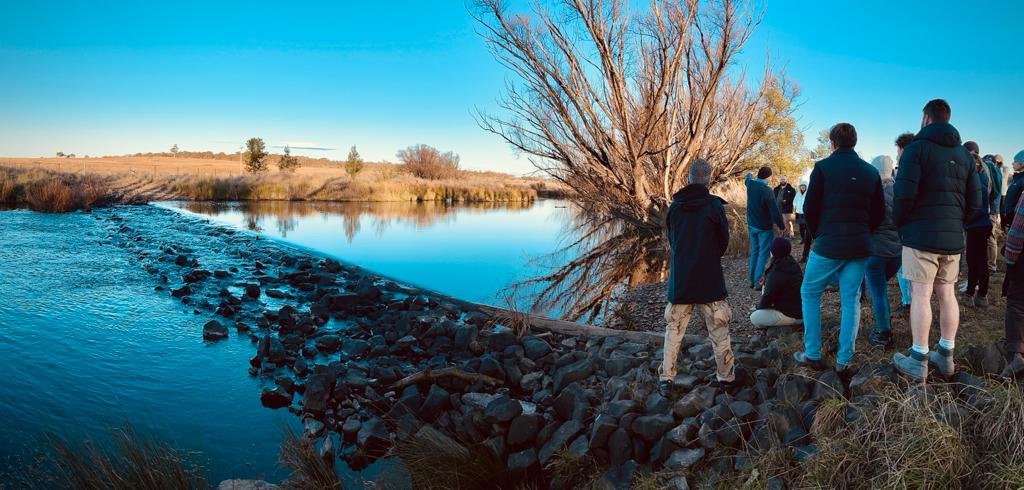
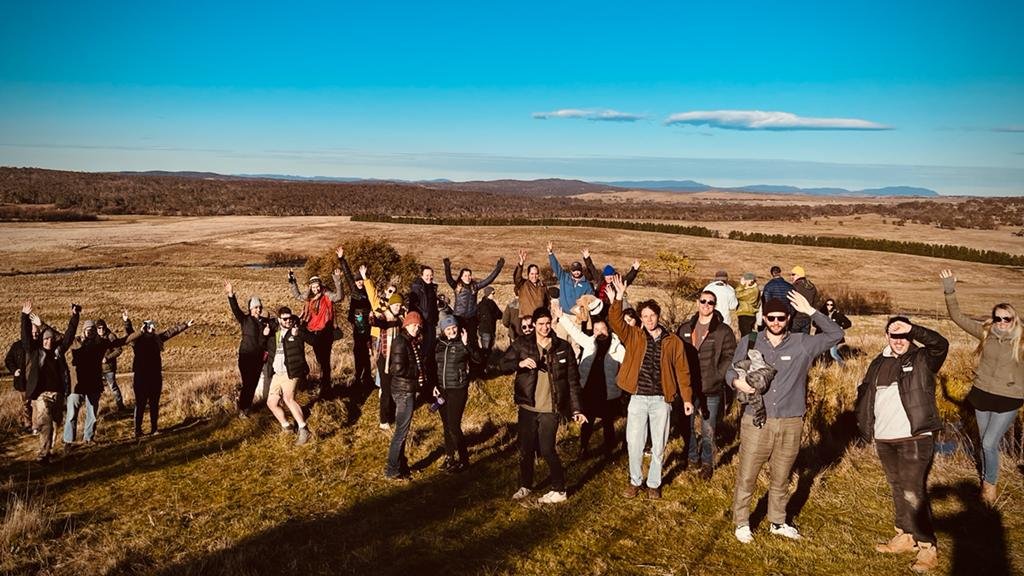
Laura Fisher (Research Officer), Tam Connor (Education Coordinator) and Penny Cooper (Trainee Director of On-ground Works) recently ran a jam-packed excursion for Years 9 and 10 at Kandos High School. The location was Franks’ Breakaway, a regenerative farm and farmstay on the western edge of the Wollemi National Park, 20 minutes from the townships of Kandos and Rylstone. The Cudgegong River, beloved by all those who visit the spectacular Ganguddy/Dunns Swamp campground, runs between magnificent sandstone pagoda gorges before meandering through Franks’ Breakaway. It was affected by ferocious floodwaters earlier in the year: uprooted trees floated over the farm’s floodplain and dead fish remained in some of the paddocks once the floodwaters receded. The water’s erosive force has dramatically changed the river, partly because it deposited large tracts of sand mobilised easily by the floods because of the Wollemi bushfires of 2019.

Cheryl and Michael Neilson had ordered 100 native trees to improve their Riparian Zones and stabilise the riverbanks. At the same time, Laura had been in contact with teachers at Kandos High School about our Citizen Science project. A fabulous opportunity presented itself to stage a ‘Riparian Recovery’ workshop. Teachers Leanne Besant and Shannon Pennell made it happen and Wirajduri Elder Peter Swain was also able to join us.

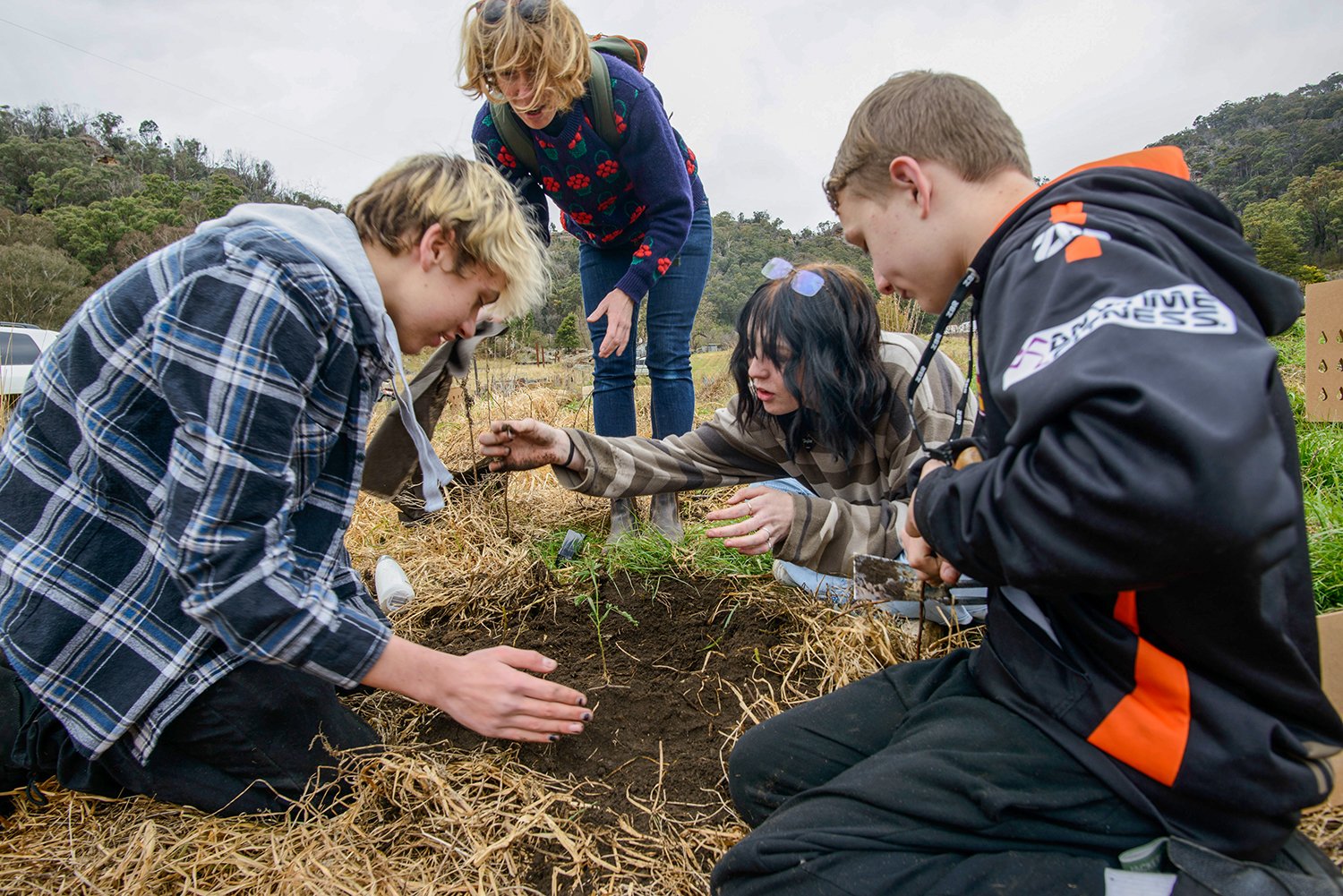
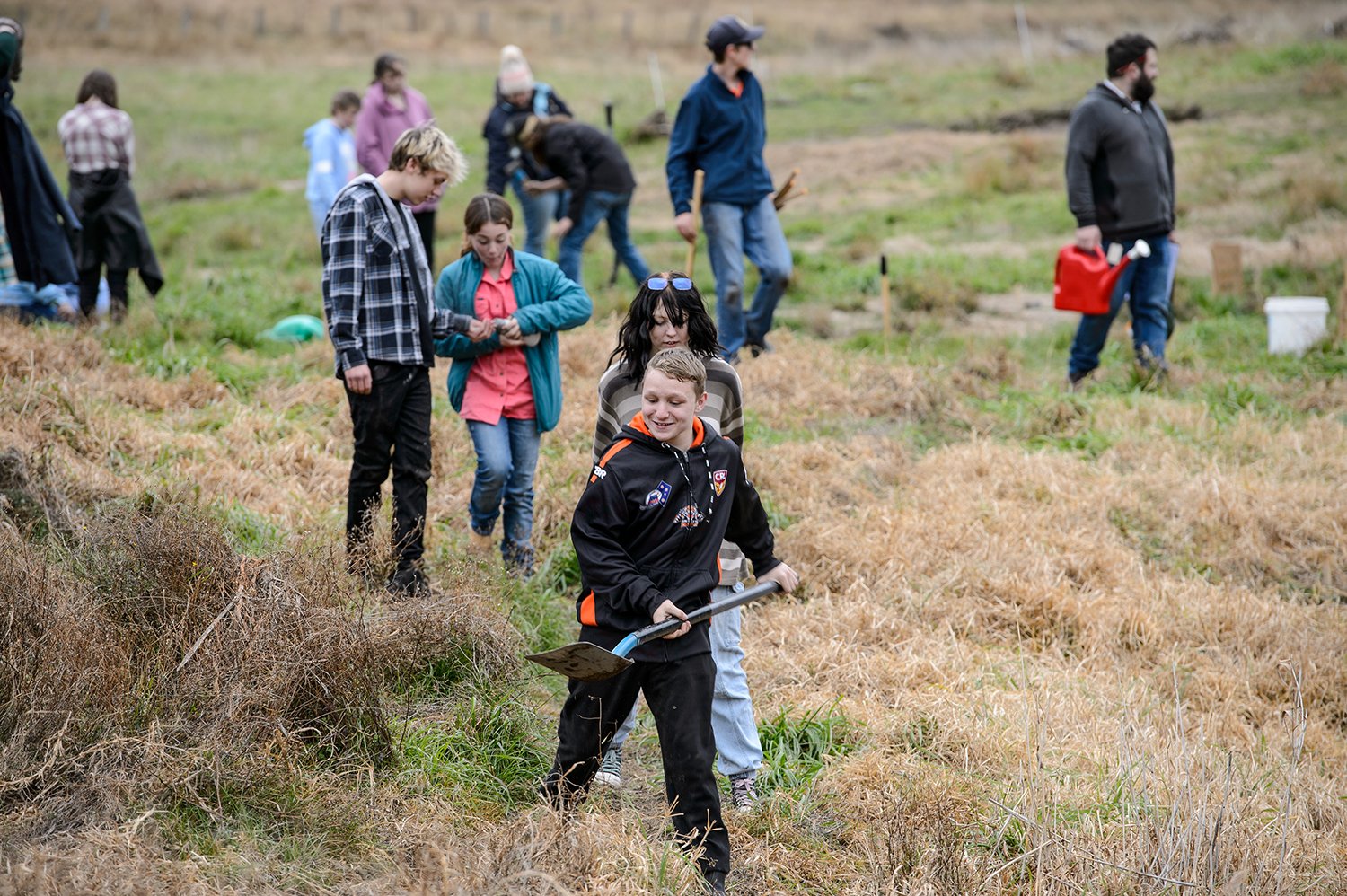
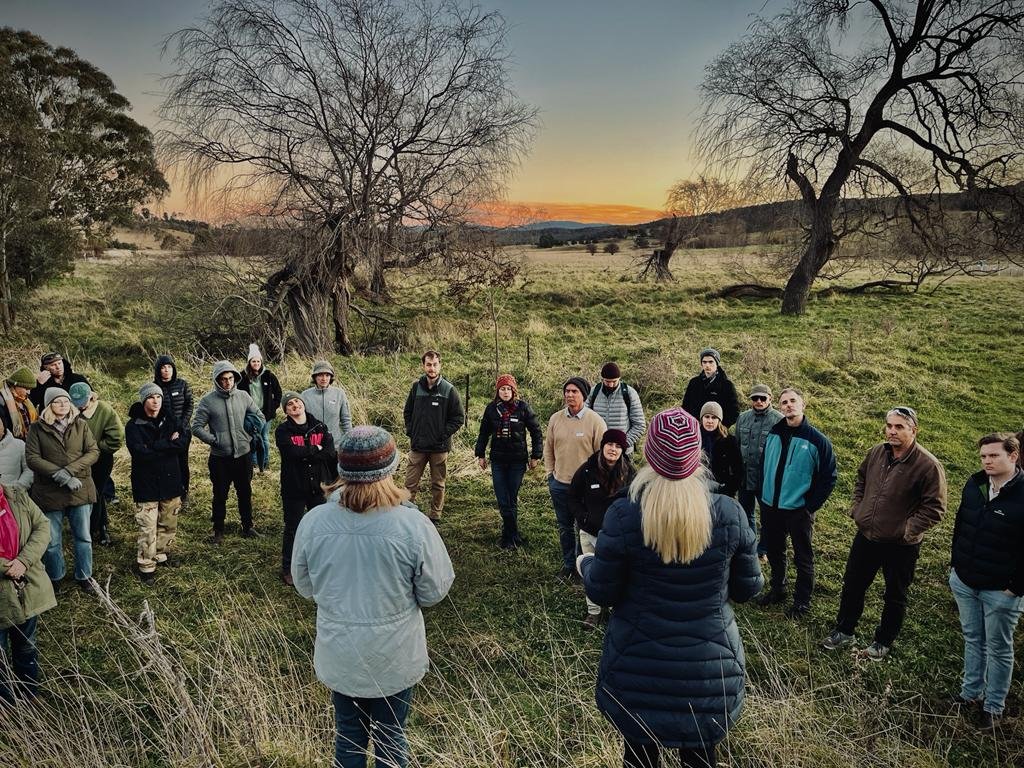
First the 40 students engaged with the healthier riparian zone of the Cudgegong River in the bush, observing the biodiversity over the three layers: canopy, under-story and groundcover. We discussed the web of life that makes a healthy river ecosystem and then walked to a section of the farm where the river’s erosion was dramatic. Here we analysed a degraded riparian zone and the first signs of recovery and stabilisation. Next, the students tackled the task of planting 90 trees with fantastic enthusiasm. Penny provided a thorough demonstration and the students keenly followed each step to give the plants their best chance of survival.

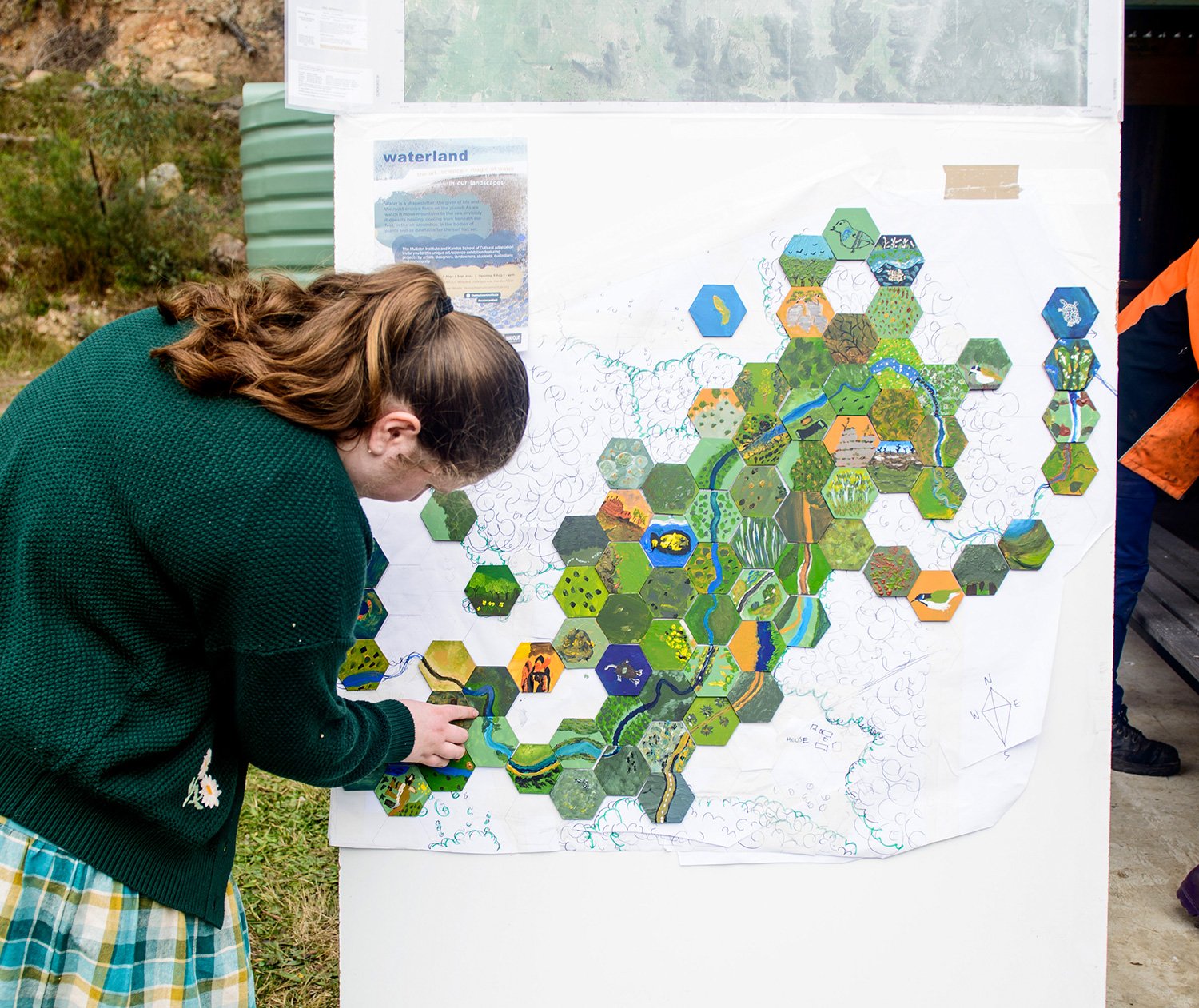
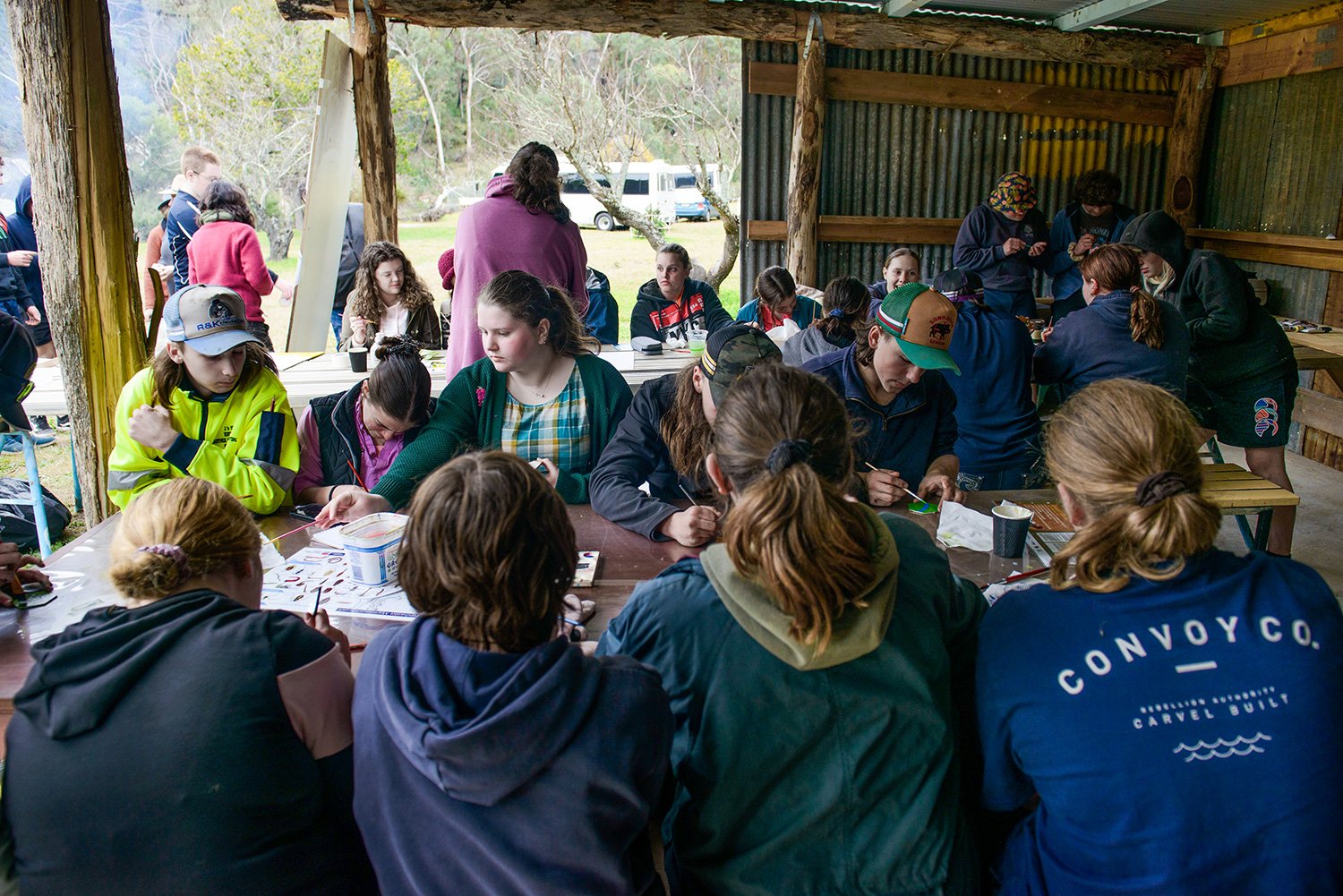
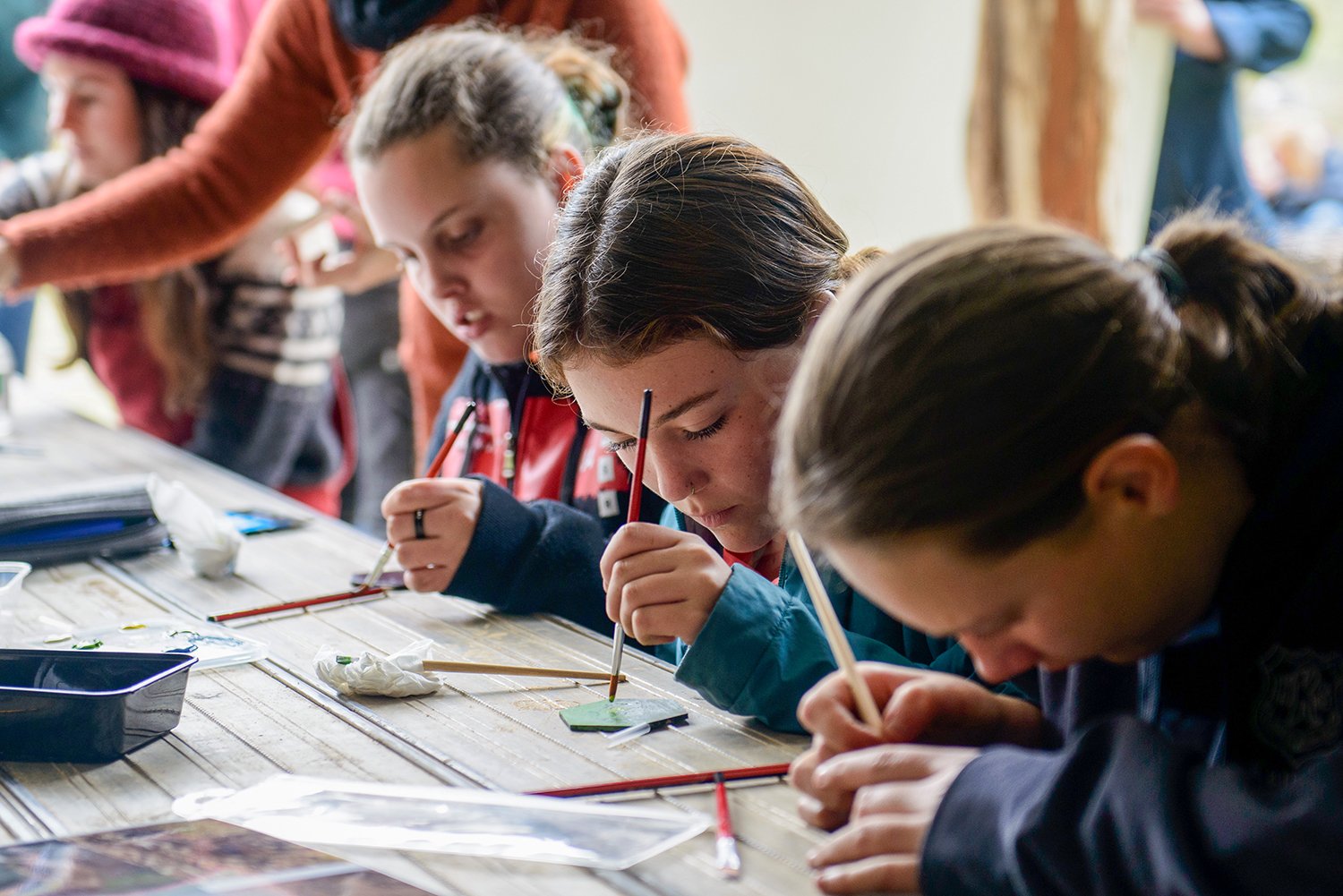
Back at the campfire the paintbrushes were primed with colour and the artmaking began. Students were invited to paint small hexagon tiles with features of the landscape and river ecology. Collectively the tiles came together to form a to-scale map of the section of the Cudgegong River we’d been custodians of that day. The students embraced the challenge and produced many striking tiles, as did the teachers, farmers and other artists. This allowed us to create another iteration of the hex tile puzzle – one of the educational tools being developed as part of our Citizen Science project. This depiction of the Cudgegong River will keep growing as we invite other people in the region to contribute, and it will be installed at our upcoming exhibition Waterland at WayOut Artspace in Kandos. It will be a special moment when the students visit the exhibition to rediscover what they created!

We’d like to thank Leanne and Shannon at Kandos High School for making this workshop happen as a Geography, Art and Creating Links to Industry Pathways (CLIP) excursion. Also big thanks to Peter Swain and artists Georgie Pollard and Bridget Baskerville for their valuable contributions, Alex Wisser for great photography and the Neilson’s for being brave enough to host us!

This workshop was supported by the NSW Environmental Trust. It also formed part of the project ‘Modelling Landscape Rehydration for Catchments, Communities and Curriculum’, which has received Citizen Science grant funding from the Australian Government.

Photos: Alex Wisser.
Climate Friendly staff hearing from Nolani and Carolyn at Peter’s Weir, MCNF.

Frost sparkling from each blade of grass as the sunlight peaked above the hills, was what welcomed the Climate Friendly team to the Home Farm on their winter tour of Mulloon Creek Natural Farms

Enjoying the comforts of our Barn before being sun warmed, the team planted native pioneer trees using Mulloon’s tried and tested method led by Penny Cooper (TMI, Trainee Director of On-ground Works). 

Continuing with the heartwarming activities, the group then ascended a very steep hill for a spectacular view of the Mulloon catchment. Here, Peter Hazell (TMI, Principal Landscape Planner) spoke of the benefits of landscape rehydration for communities at the catchment scale, using the Mulloon Rehydration Initiative (MRI) as an example.

The MRI is a catchment-scale project working to rebuild the natural landscape function of the Mulloon catchment and boost its resilience to climatic extremes for more reliable stream flows, improved ecosystem functioning and enhanced agricultural productivity. It is jointly funded through the Mulloon Institute and the Australian Government’s National Landcare Program and is supported by the NSW Government’s Environmental Trust.

Viewing a newer leaky weir at Duralla, MCNF.

It was a quick descent off the brisk hilltop to then view an in-stream, leaky weir structure where Peter spoke about engineering design, implementation, and the beneficial environmental outcomes, with improvements in habitat, water quality and riparian vegetation. 

Paying homage to our origins, we stopped by the first in-stream structure built at Peter’s Pond, where Landscape Planner Nolani McColl spoke of restoring landscape function and how iterative design is at the heart of our work. Finishing up, our CEO Managing Director Carolyn Hall, highlighted the critical research and education the Institute is undertaking to grow scientific and community capacities of the benefits of landscape rehydration.

As the sun set on the short winter’s day, Mulloon and Climate Friendly teams mingled over a hot cuppa to share stories and celebrate the good work being done in the regenerative space for environmental, environmental, social resilience and agricultural productivity. 

Getting a great view of the Mulloon catchment!

inside FMCG, Kaycee Enerva, 27 June 2022

Beverage manufacturer Vitasoy has partnered with Mulloon Institute to help growers use rainfall better and help ease water shortages. The company has has pledged $1.25 million over the next five years to help rehydrate Australian catchments, potentially restoring thousands of hectares of land.

While last year was the Australia’s wettest year since 2016, the storms offered a minimal reprieve for farmers. Research shows that up to half of rainfall on farmland is lost to evaporation and runoff.

The Mulloon Institute – a non-profit research, education, and advocacy organisation – aims to challenge the misconception that lands just need “steady, soaking rain” and help rebuild natural water reserves, one farm at a time.

The organisation works to resolve one of the pressing problems in agriculture, such as rain runoff, by restoring and hydrating landscapes, making them up to five times more absorbent. 

The rehydration projects have helped slow down water flow, minimise runoff, increase soil carbon, and create more biodiverse landscapes. In addition, it increased rainfall capture, providing an additional 10 billion litres of water in a 1000ha catchment – equivalent to adding 4000 Olympic-sized swimming pools worth of water to the landscape.

Vitasoy says it is committed to helping reduce the environmental footprint of its operations and supporting shifts to sustainable agriculture by partnering with organisations such as the Mulloon Institute, and it hopes to encourage other food companies to make similar pledges to futureproof Australian farms.

SOURCE: https://insidefmcg.com.au/2022/06/27/vitasoy-helps-growers-reduce-rain-runoff-easing-water-shortages/

Enjoy our latest news here: https://conta.cc/3OnXFvH

You know winter is upon us when you’ve had the fire going now for the past couple of weeks, like I have! To top that off, I’m currently in isolation with COVID, despite having dodged it till now, even when my wife had it a few months ago.

Federal Election

A change in Government always brings short term interruptions as new ministers get their heads around portfolios and the inevitable changes that take place within the various government departments.

Congratulations to the new Australian Government and new ministers appointed to portfolios where we have a special interest: Agriculture (Senator the Hon Murray Watt); Environment & Water (Tanya Plibersek); Climate Change & Energy (Chris Bowen); Industry & Science (Ed Husic); and Regional Development (Kristy McBain). Our landscape repair and rehydration work has always received bipartisan support, so we look forward to being able to brief the new ministers on our projects and their importance to meeting Australia’s climate challenge.

NEW Film launch!

We are excited to share with you our brand NEW VIDEO – ‘Resilient landscapes for a sustainable futures’ – which looks at how our work has grown out from the Mulloon Rehydration Initiative to become the National Rehydration Initiative, allowing us to engage and collaborate with farmers as we roll our work out across Australia! Thanks to Nviro Media for another quality production which we are very proud to share with you all!

2022 Tony Coote AM Memorial Lecture

The Hon Shane Stone AC QC, Coordinator General of the National Recovery & Resilience Agency, delivered this year’s lecture for our annual Tony Coote AM Memorial Dinner, which was held at NSW Parliament House. It was a great success with 200 people in attendance and was a very welcome re-gathering following the lockdowns over the past two years.

Shane has been very busy in recent times, with responsibility on behalf of the Federal Government for both community recovery following natural disasters and preparing communities for future challenges such as drought, flood and bushfire. Given the drought, floods and bushfires experienced across the nation over the past few years, Shane had plenty of stories to relate, including his experience of visiting some of our work in North Queensland and its success during massive flood events.

Vitasoy sponsorship

We were excited to have Vitasoy’s CEO David Tyack at the Memorial Lecture, to announce Vitasoy’s sponsorship of our work over the next five years in repairing and rehydrating landscapes. We are delighted to receive this financial support from a corporate that clearly understands the need to expand our work and its role in helping the agricultural sector become more sustainable.

SUPPORTING LANDSCAPE REHYDRATION

Finally, as winter commences, we are also edging towards the end of the financial year. Much of our work is made possible through the very generous support of individuals and philanthropic organisations. As a charity listed on the Federal Government’s Environment Register, our DGR status means your donation is fully tax-deductible. When considering end of financial year support, please consider our internationally recognised environmental work.

Donating $50 or more, towards our National Rehydration Initiative, will help our education team continue developing landscape rehydration curriculum so it can be rolled out across Australia, to different climates and bioregions. Together we can help build a new future for Australian farmers with landscape rehydration skills that build greater resilience in our landscapes.

Please donate today

Gary Nairn AO
Mulloon Institute, Chairman

Landscape rehydration restores biophysical processes which have been disrupted or degraded due to anthropogenic impacts.

The Mulloon Institute defines landscape rehydration as:

“Actions that encourage the retention and cycling of water in the landscape for the benefit of biodiversity and agricultural productivity.”

Initial Site Inspection

Initial site inspections are the first step in assisting landholders to better understand their properties through the lens of water. We spend time on-site with landholders assessing their property and discussing enterprises and goals. This is then condensed into a report with a conceptual design map and management recommendations for landscape rehydration and repair which are specific to the property.

Mulloon Consulting has been busy in the ACT/NSW region with Initial Site Inspections at Harolds Cross and a group of landholders in the Dungog region.

If you would like to arrange an Initial Site Inspection, please email info@themullooninstitute.org.

Landscape Rehydration Plan

Next, we work with landholders to scope out the best way forward. This includes preparing a comprehensive Landscape Rehydration Plan with detailed landscape rehydration designs.

Clients in Oallen, Wog Wog and Braidwood are currently receiving this service.

Scoping Report

Scoping reports for the Kyogle and Swan Vale regions in northern NSW have been completed.

Bill McAlister visited a very wet Roseberry Creek Catchment near Kyogle where he worked with the Border Ranges–Richmond Valley Landcare Network’s Gavin Tinning to choose a suitable site for a pilot project. His report and design for the pilot project were well received and are being considered at the moment.

The Swan Vale Catchment community are currently considering their scoping report, with Principal Landscape Planner Peter Hazell and new recruit and Landscape Planner Jack Smart visiting the catchment to present to the community and scope out a pilot project site. The project has philanthropic support from the Levins Family Foundation and is also supported by Gwymac Landcare, Northern Tablelands Local Land Services and the Danthonia Bruderhof Community.


MC have recently completed working on the ‘Project B Index for Landscape Hydration’ for the Lismore City Council with our partner Australian Holistic Management Cooperative (AHMC). This project focused on developing a landscape hydration index to measure the state and change of hydrated landscapes. The premise was biodiversity as a measure of ecosystem health. AHMC used their Ecological Outcome Verification framework as the main tool, with supporting hydrology measurements developed by the consortium.

Mulloon Consulting have also been working with North West Local Land Services, presenting on-property, hands-on practical field days to teach an enthusiastic bunch of landholders about landscape rehydration.

MC will soon be working with Climate Friendly who are similarly working in the Tamworth NSW region. We’ll be delivering field days with an overview of landscape rehydration, a paddock tour to identify sites and looking at potential repair techniques to improve function and rehydration, and then moving on to design and pegging out.

On the farms we’ve had a continuation of the extremely wet weather driven by the extended La Niña and negative Indian Ocean Dipole events. As a result, conditions in the paddocks have been quite poor for livestock and staff alike. Big thanks to our staff for continuing to hook in, rain hail or shine. One positive to the ongoing miserable cold and wet weather has been the amazing display of fungi across the region which hasn’t been seen for a very long time.

Back in April our weaners went off for sale with some good looking Angus and Angus cross steers and heifers performing well at the saleyards. We retained the majority of our Angus heifers and have brought in bulls with proven genetics from Bill Graham’s Bongongo Angus stud. Earlier in the year, we also purchased Rennylea Angus cows to further improve genetics in our breeding mob. We’re looking forward to another good season to consolidate our cattle numbers and see the progression of our mob.

Our biodynamics cow pat pit is all set up and cow horn manure in the ground where it will stay over winter. Come spring the cow horns will be dug up and brewed to make BD500 for spraying onto our biodynamic pastures at Duralla. 

Results are in from our most recent Ecological Outcome Verification monitoring event undertaken in January and improvements were seen across all 15 ecological health indicators and four landscape functions compared to the previous year. Mulloon Creek Natural Farms is proud to bear the verified regenerative Land to Market label on our products and are committed to improving landscape health and function across all land under our management. 

Thank you to Tony Hill and Harry Watson from Australian Holistic Management Cooperative for their ongoing partnership in this process. For more information on Ecological Outcome Verification and Land to Market, please visit their website.

To keep tabs of what’s happening on farm from week to week, please follow us on social media – Instagram and Facebook.

Contour 2 at Blackwood Valley Beef in Boyup Brook, WA.

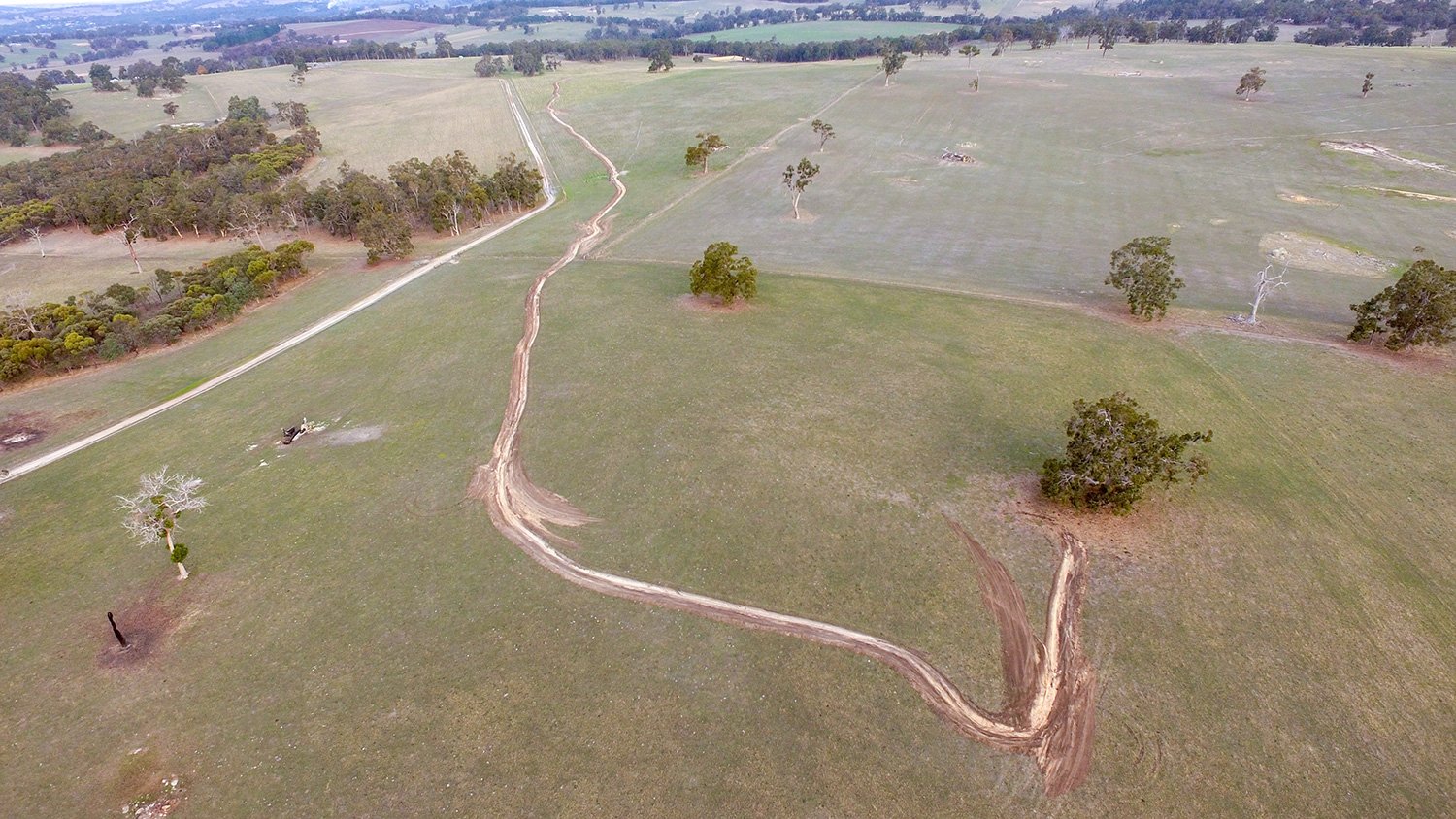
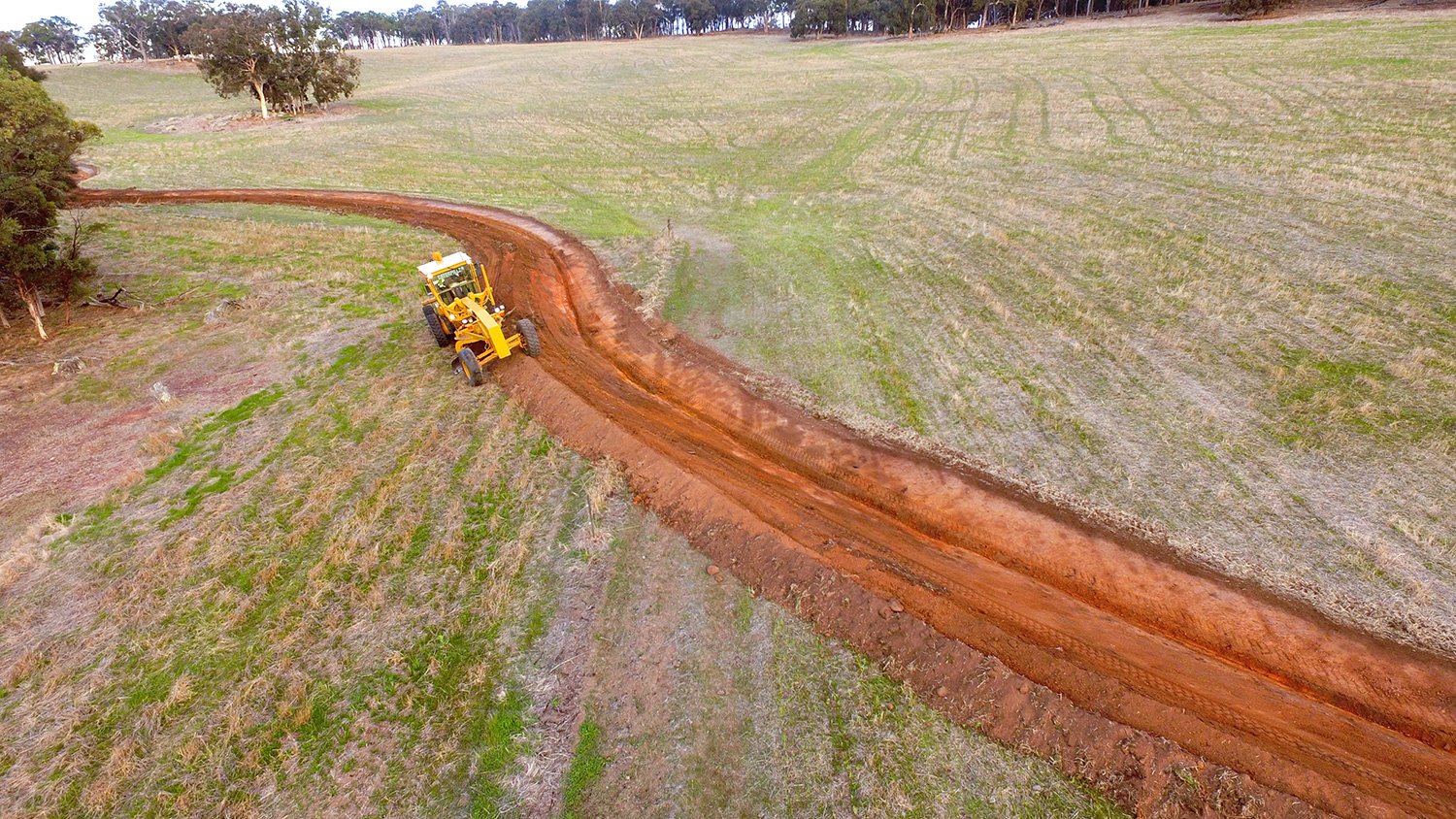
Work has started on constructing contours at Warren and Lori Pensini’s property ‘Paraway’ where they run Blackwood Valley Beef, a holistic planned cattle grazing operation in Boyup Brook, Western Australia.

The plan was developed by the Mulloon Institute and includes four contours which are placed quite high in the landscape, with two running above hillside seeps that are bare due to prolonged waterlogging. The contours will redistribute surface water away from these seepage areas. In one contour, a minor seep was encountered – the ground was soft but did not create any significant problem – so these locations will be observed over time to see if there is a concentration of flow out of the contour at these points. If so, clay will be compacted into the small areas. Contour placement has been strategic to manage surface water and allow the arrangements of paddocks more suited to landscape and soil. Luckily, a significant amount of rock outcrop was avoided in one contour.

Contour 4 after rain.

Works were about 80% completed when 35 mm of rain fell over two days, with water pooling in the contour trench and gradually moving along the contours, though it did not get to the point of spilling.

This winter, 25000 seedlings will be planted along the lower side of the contours and in blocks along the ridges to help restore the natural water cycle, as this area was predominantly tall woodland/forest with jarrah, marri and wandoo.

Contour 3 going in.

Tim Morrison (right) winning best poster at the Floodplain Management Australia National Conference with his ‘Weir Optimisation Tool’.

A ‘Weir Optimisation Tool’ that automatically optimises the position of weirs along a river reach to generate the greatest pool volume for the minimum number of weirs, has won best poster at the 2022 Floodplain Management Australia Conference in Toowoomba, QLD. The annual conference aims to promote wise floodplain development and help reduce the risks of flooding to life and property.

Presented by Tim Morrison from Catchment Simulation Solutions (CSS), the python-based, optimisation tool has been developed through a collaboration between CSS and Mulloon Institute to maximise the benefits of weirs while minimising the cost of their construction.

Tim is an accomplished flood engineer who has been working with Mulloon Institute to prepare hydrological modelling and planning for the Molonglo Catchment Rehydration Initiative. He and his team provide ongoing advice and support to Mulloon Institute, including designing the weir optimisation tool.

Weir here to help!

The optimiser starts with a set number of weirs and intelligently shuffles these around until the total volume is no longer increasing. It is typically run a significant number (e.g. 100) times for a given number of weirs and the top results analysed to determine how similar they are, and if there are common locations. It then progressively reduces the number of weirs used to see if an optimal, or close to optimal, result can be achieved more efficiently. The tool will make a real contribution to the design of catchment scale landscape rehydration projects across Australia.

We congratulate Tim and the CSS team for the poster win and look forward to putting the weir optimisation tool to work as we roll out the National Rehydration Initiative across Australia.

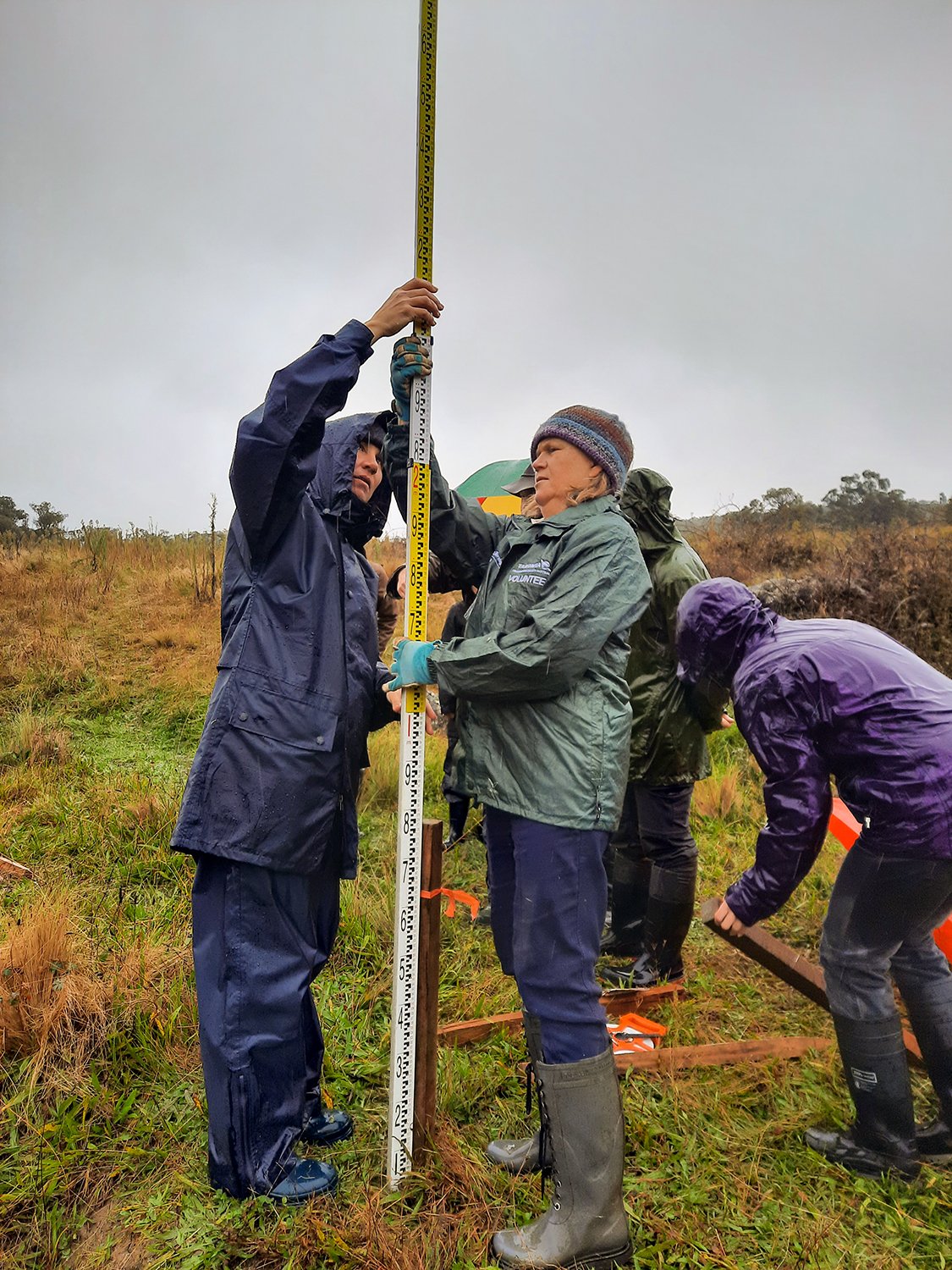
Peter Hazell (Principal Landscape Planner), Tam Connor (Education Coordinator) and Laura Fisher (Research Officer) have been eager to trial some of the newly designed modules from the Advanced Landscape Rehydration curriculum for some time.

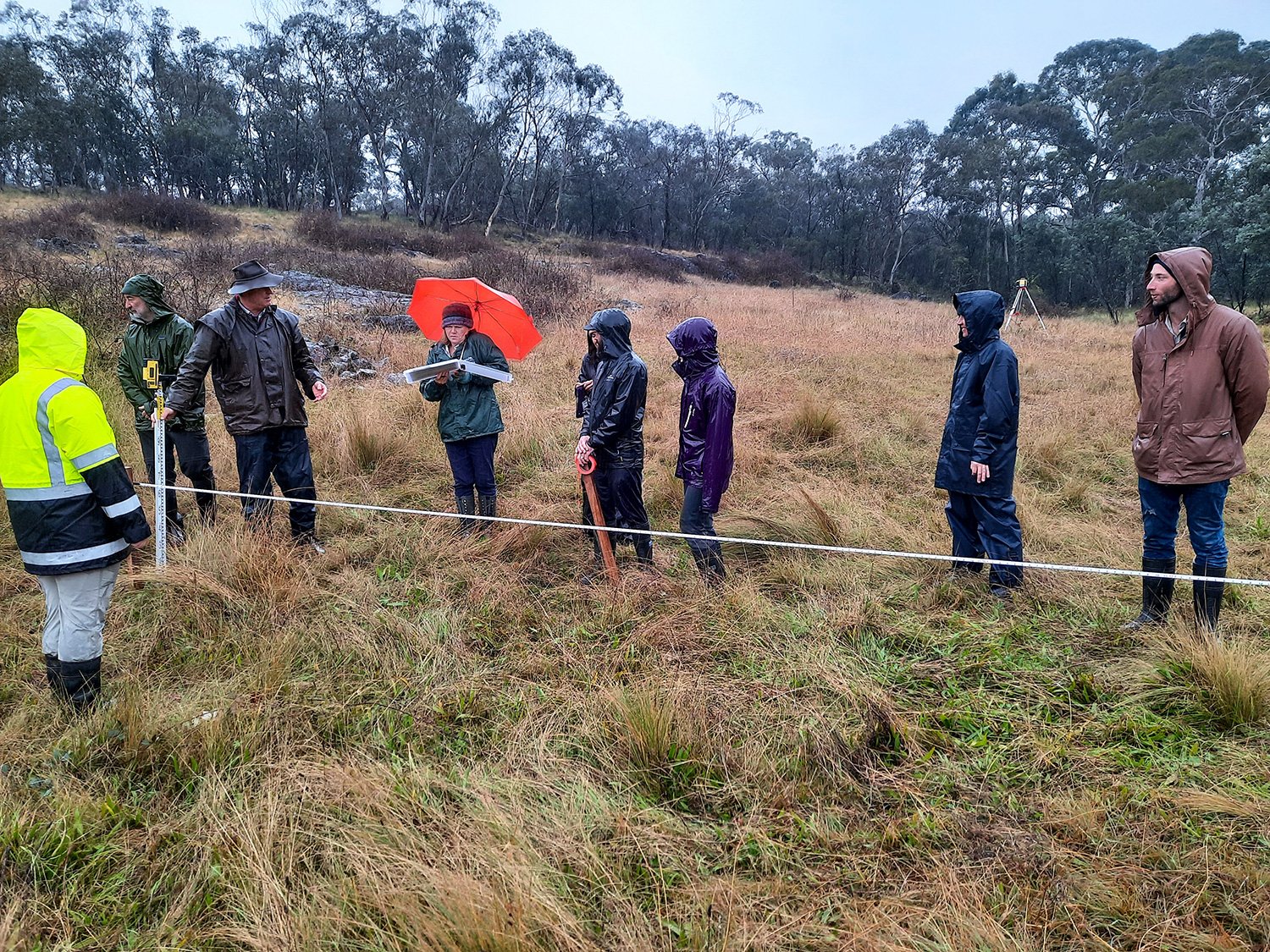
Finally in May 2022, the opportunity arose to gather a selection of our team together to try out various elements of the course and gain valuable experience in the process. This included our newest team members (Paris, Erin, Tony and Jack) and some of our more seasoned staff (Nolani, Angus and Penny).

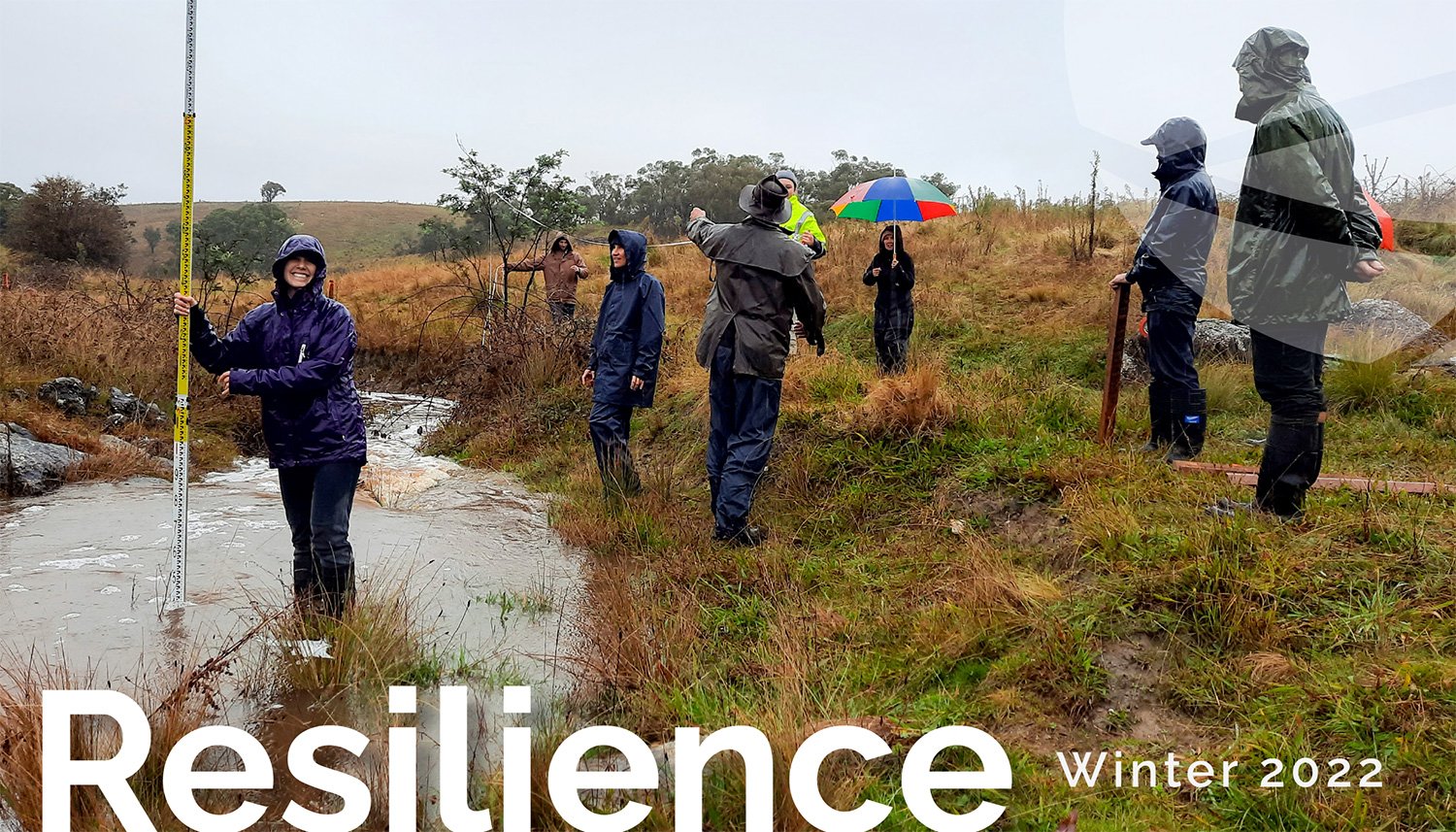
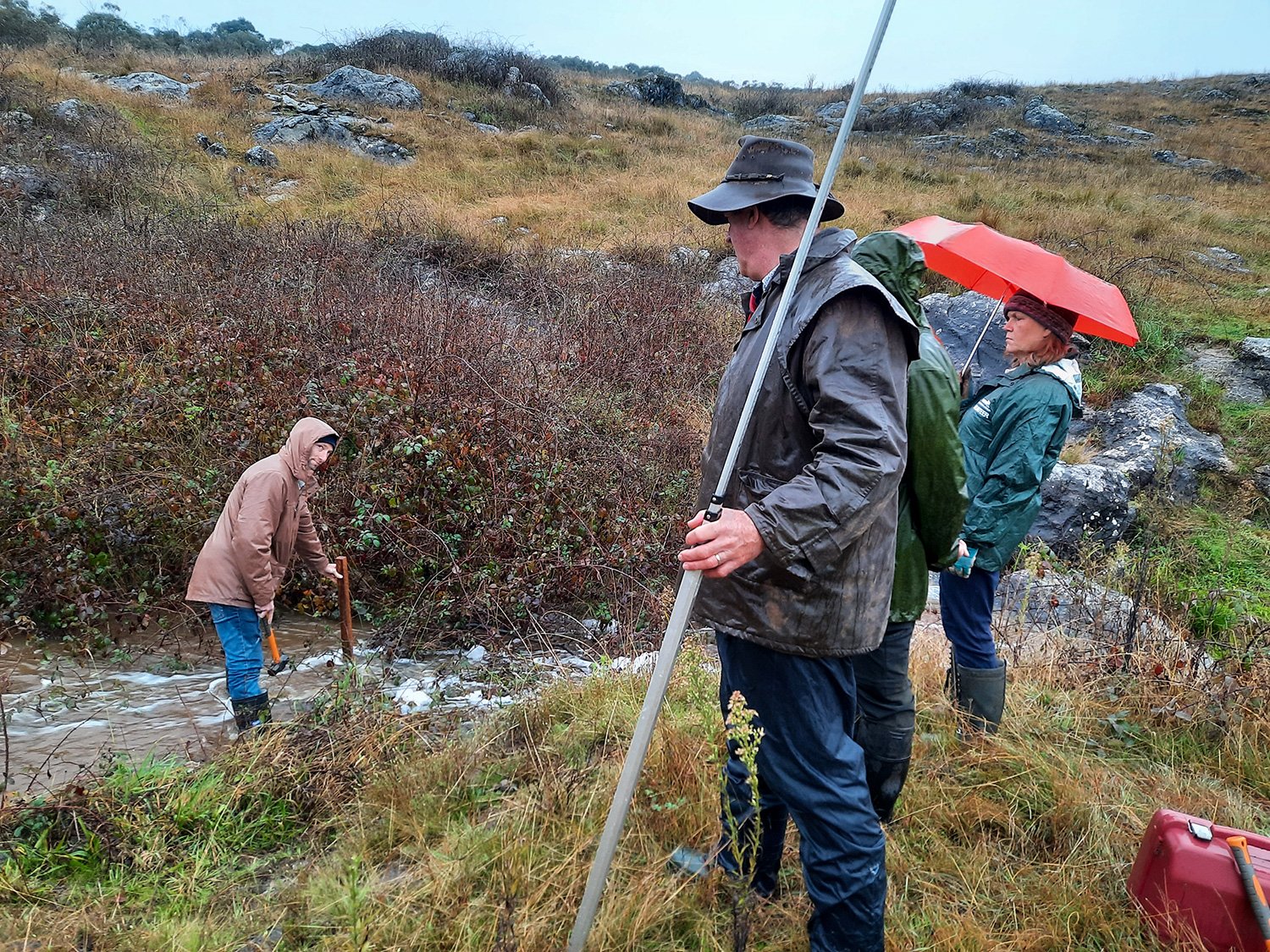
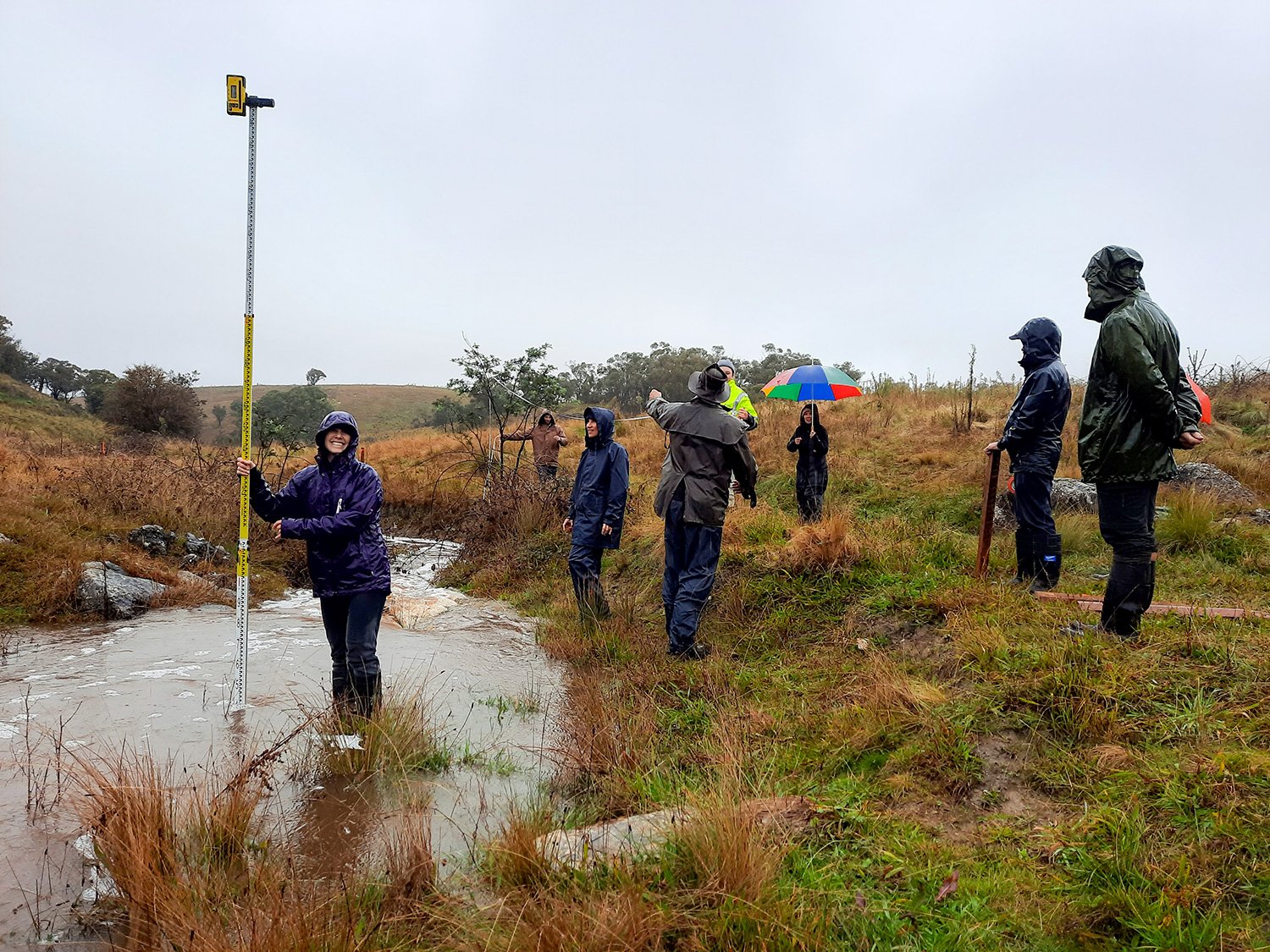
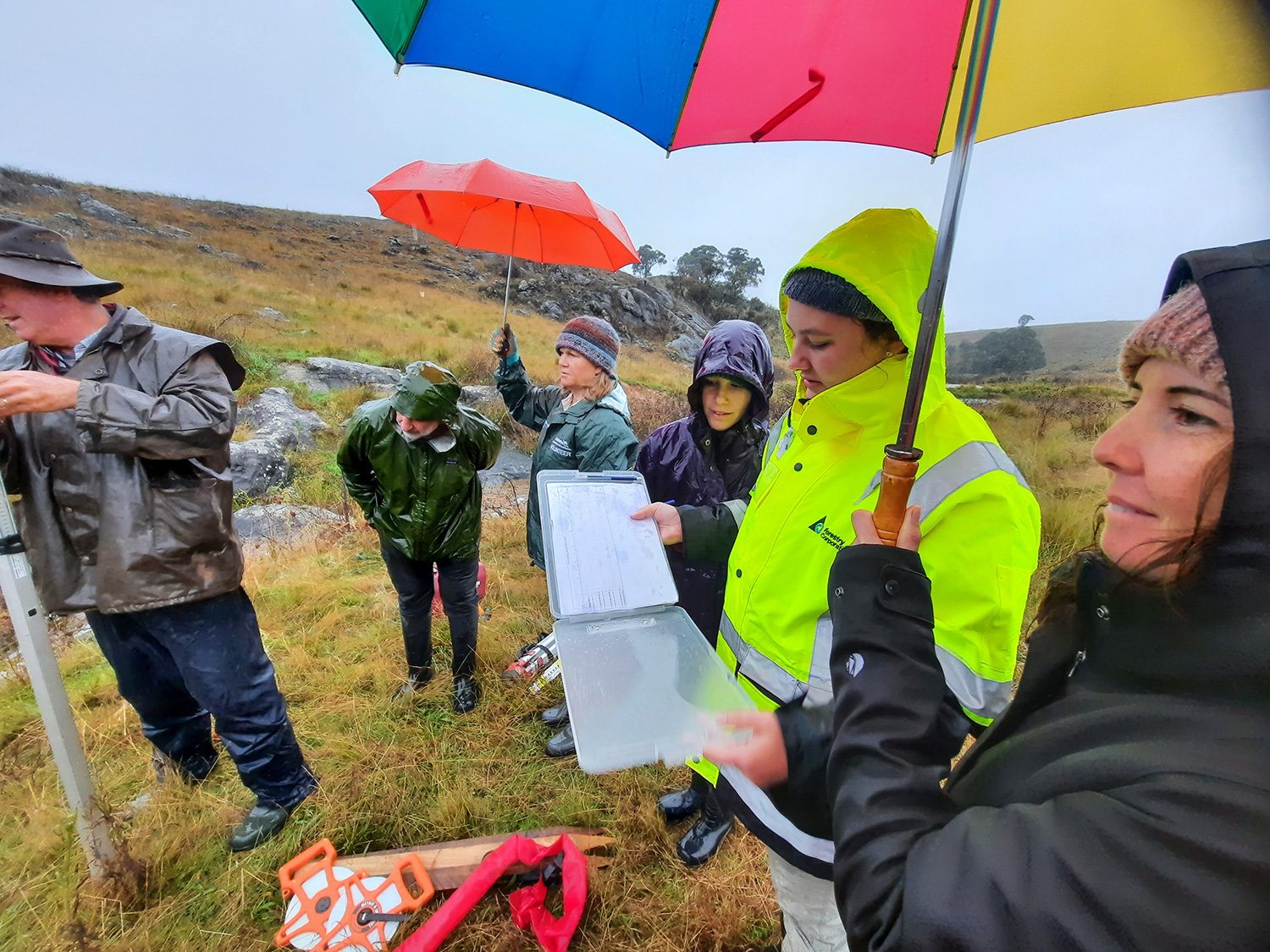
Persistent rain turned out to be a blessing during the two-day workshop at the Mulloon Creek Natural Farms’ Home Farm.

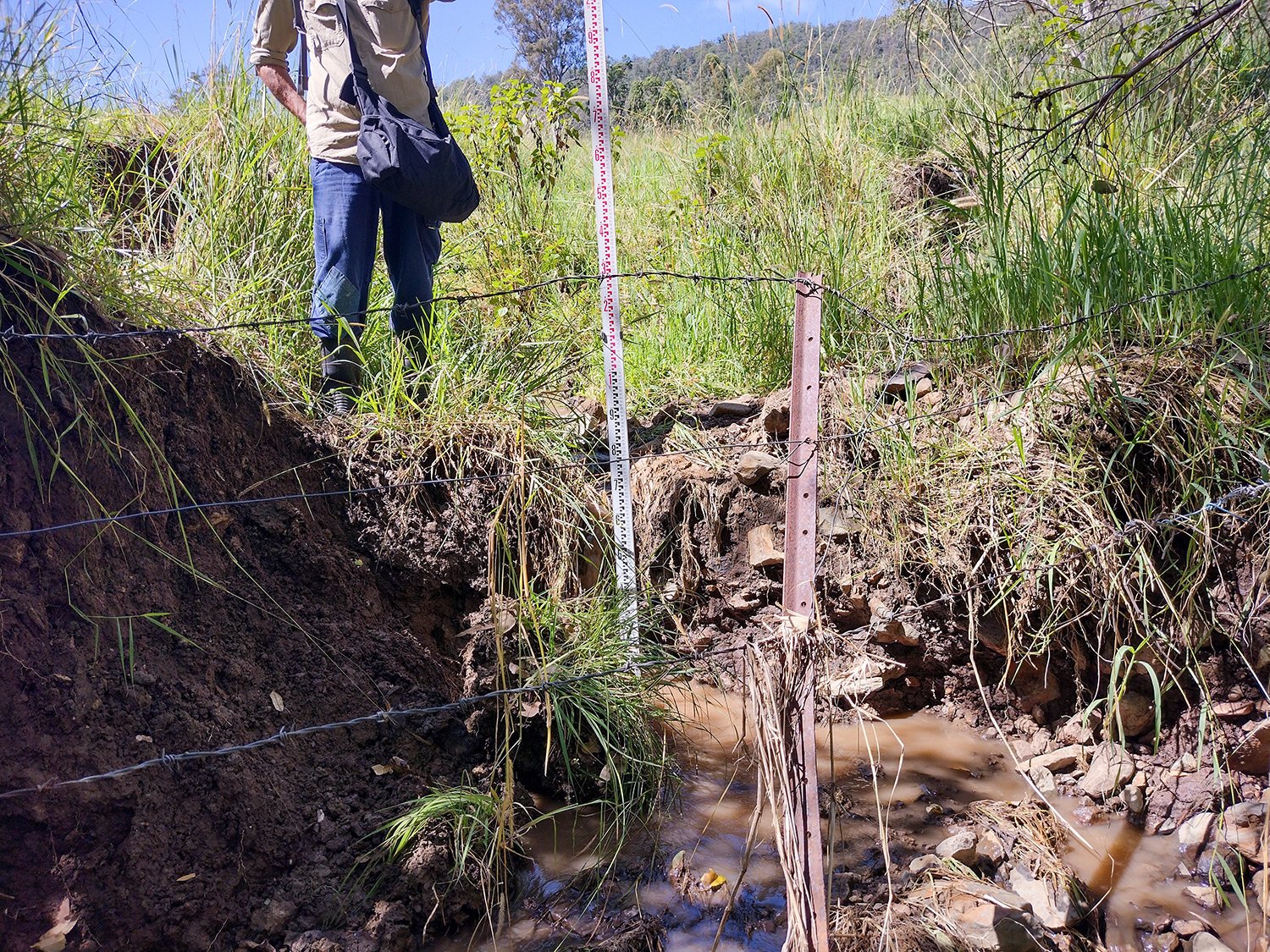
It was all smiles as we ventured out into the rain to practice the assessments and measurements that underpin our hydraulic modelling, structure designs and Controlled Activity Approvals. Doing this as the water flowed through the Mulloon catchment brought out the hydrology nerd in all of us and boosted our learning as well.

Further technical and GIS exercises in a cosier and drier environment rounded out the experience. Our new recruits will be using these skills to progress the Mulloon Rehydration Initiative over coming months. Plans are also afoot for a spring bootcamp at Mulloon for Landscape Rehydration enthusiasts, which will incorporate some of these technical modules – we can’t wait!

The Mulloon Rehydration Initiative is jointly funded through the Mulloon Institute and the Australian Government’s National Landcare Program. TMI’s curriculum project is being supported by the NSW Government through its Environmental Trust.