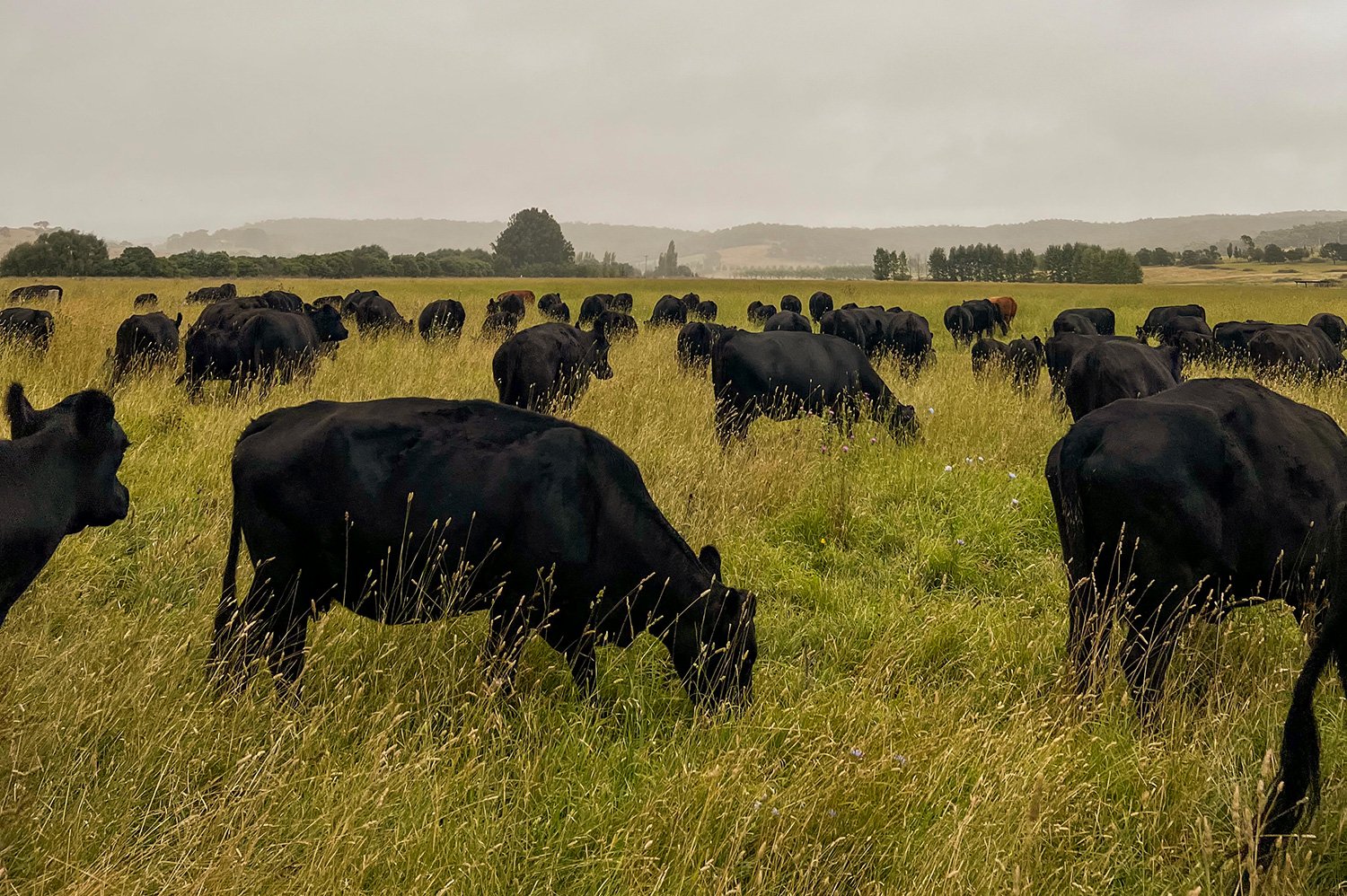
Off the back of the record breaking spring rainfall, both farms already had saturated soil profiles moving into the summer months – but the rain just kept coming! This eased slightly in February allowing pastures to begin drying out and generating vast quantities of quality feed for our growing mob of cows and calves. The sunshine was short lived though, with March bringing torrential rain and flooding, helping set a record 12 month, rolling rainfall for the farm of 1,371 mm.
Despite setbacks from the weather and pandemic, the farm team has shown great resolve in pressing forward with redeveloping ‘Duralla’. Upgrading the egg packing facility and workshop area began in February with bulk earthworks and a concrete pour, before more inclement weather halted works in early March. Over the next month, an additional slab will be poured for the packing room extension and brood shed upgrade. A massive thanks to the farm team who are cracking on with their day-to-day work despite challenging weather conditions and construction work going on around them.
Summer was also a busy time readying the farms to once again host guests and event from 2022 onwards. After a lengthy pause during the pandemic, we are very excited to be opening the Home Farm up again for events of all shapes and sizes. For more details please visit the MCNF website’s events page.
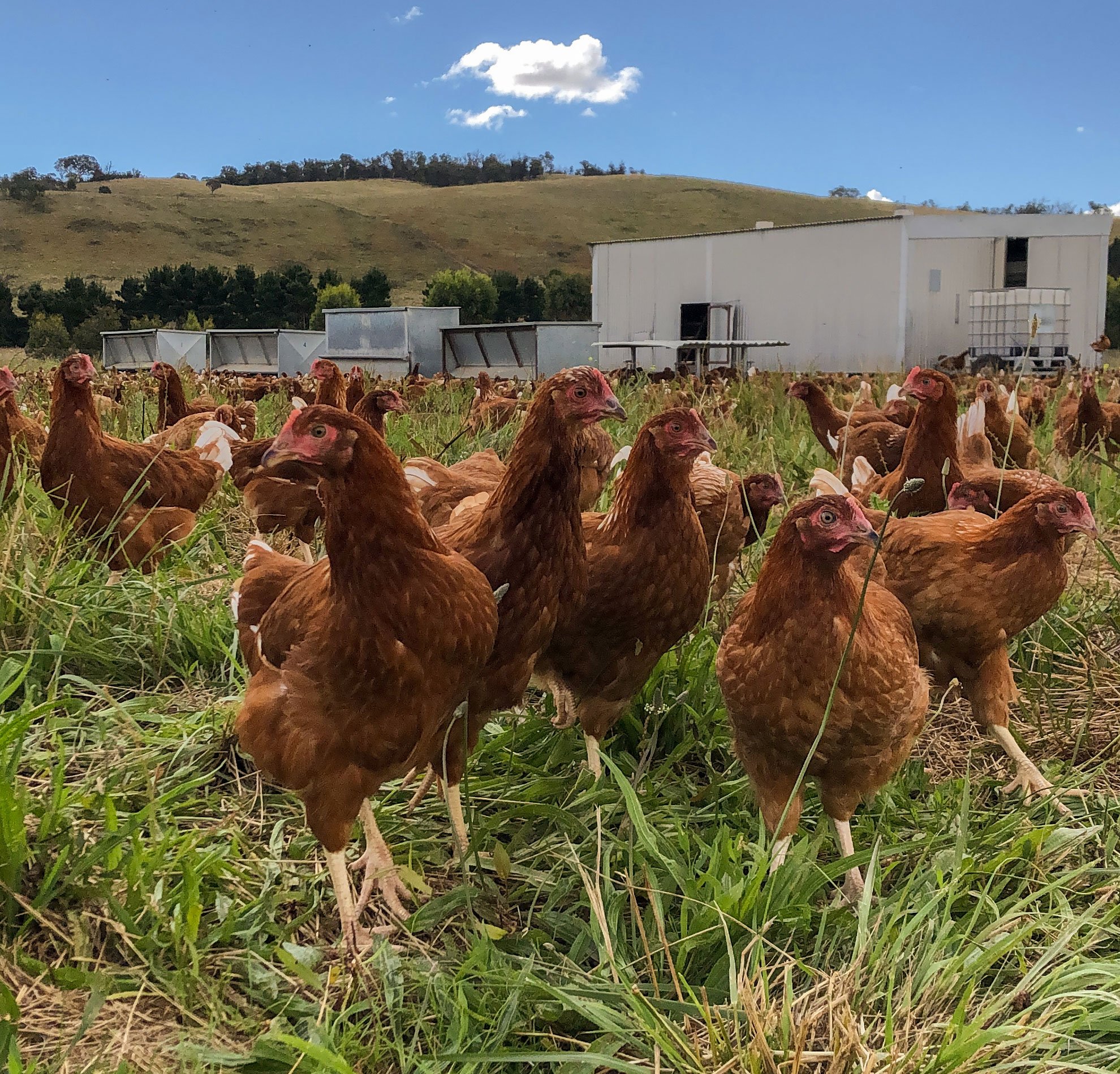
On the livestock side of things we look forward to welcoming a new flock of chickens and additional breeding stock to our mobs of angus cattle as we move into autumn. We will also be busily maintaining existing infrastructure at the Home Farm, with the option of adding a sheep enterprise in late 2022.
After a few early setbacks and with La Nina forecast to loosen her grip on the farm in the coming months, 2022 is poised to be a big year of growth for the farm. We look forward to seeing you out here soon.
Wedding reception venue at the ‘Barn’ on the Home Farm.
Mulloon scientists in the field
Date published: 17 March 2022
Mulloon hit the ground running in January. Despite the unseasonably wet summer restricting fieldwork, much has been achieved in conducting instrument maintenance and data downloads. During such a wet period it’s crucial to see how the environment responds to rainfall events. Of equal interest will be the next phase of dry weather and assessing how the land retains water to continue plant growth. The TMI team are working hard with partner HydroTerra to get data into their online database DataStream, allowing us to share the results and story of rehydration with the world.
View fullsize
View fullsize
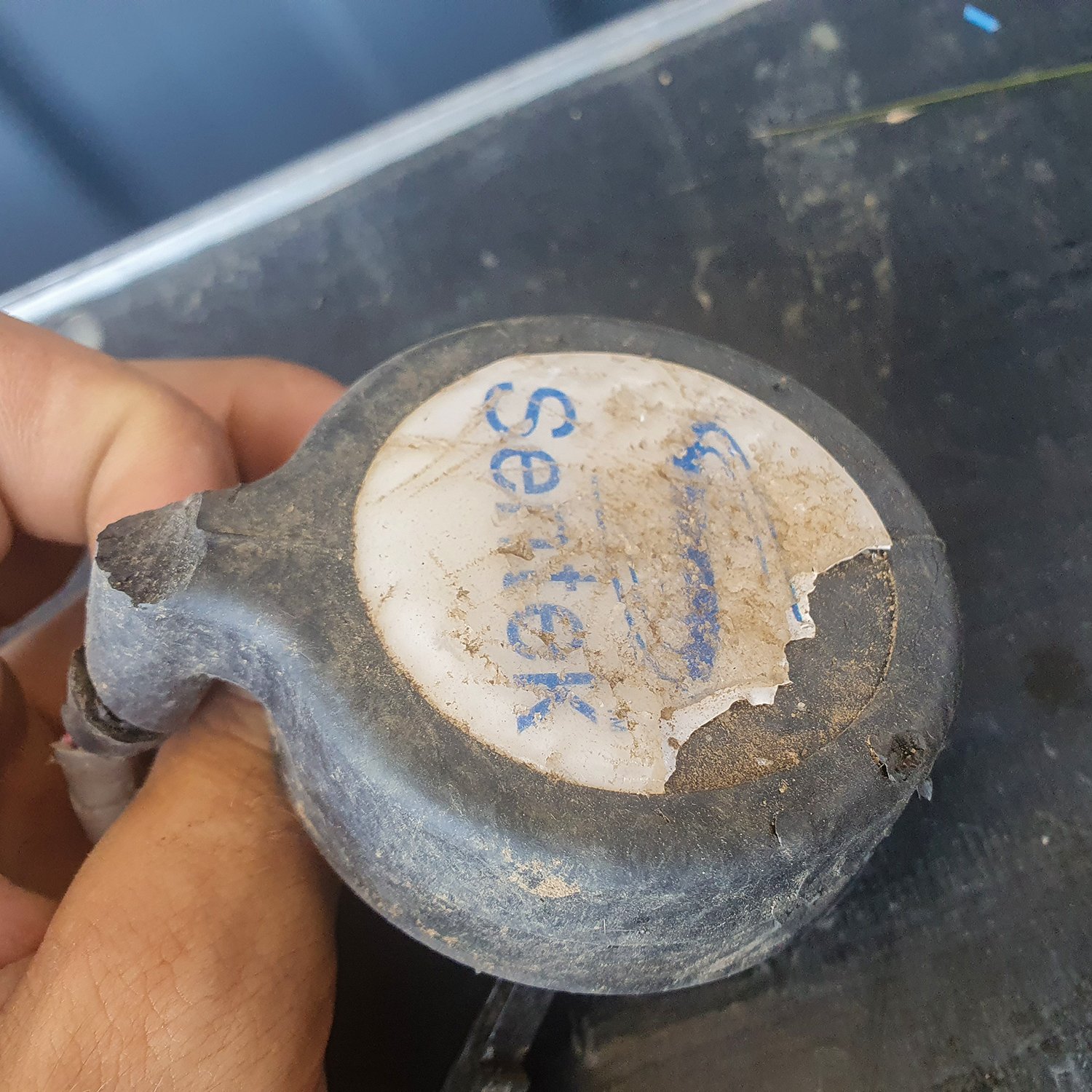
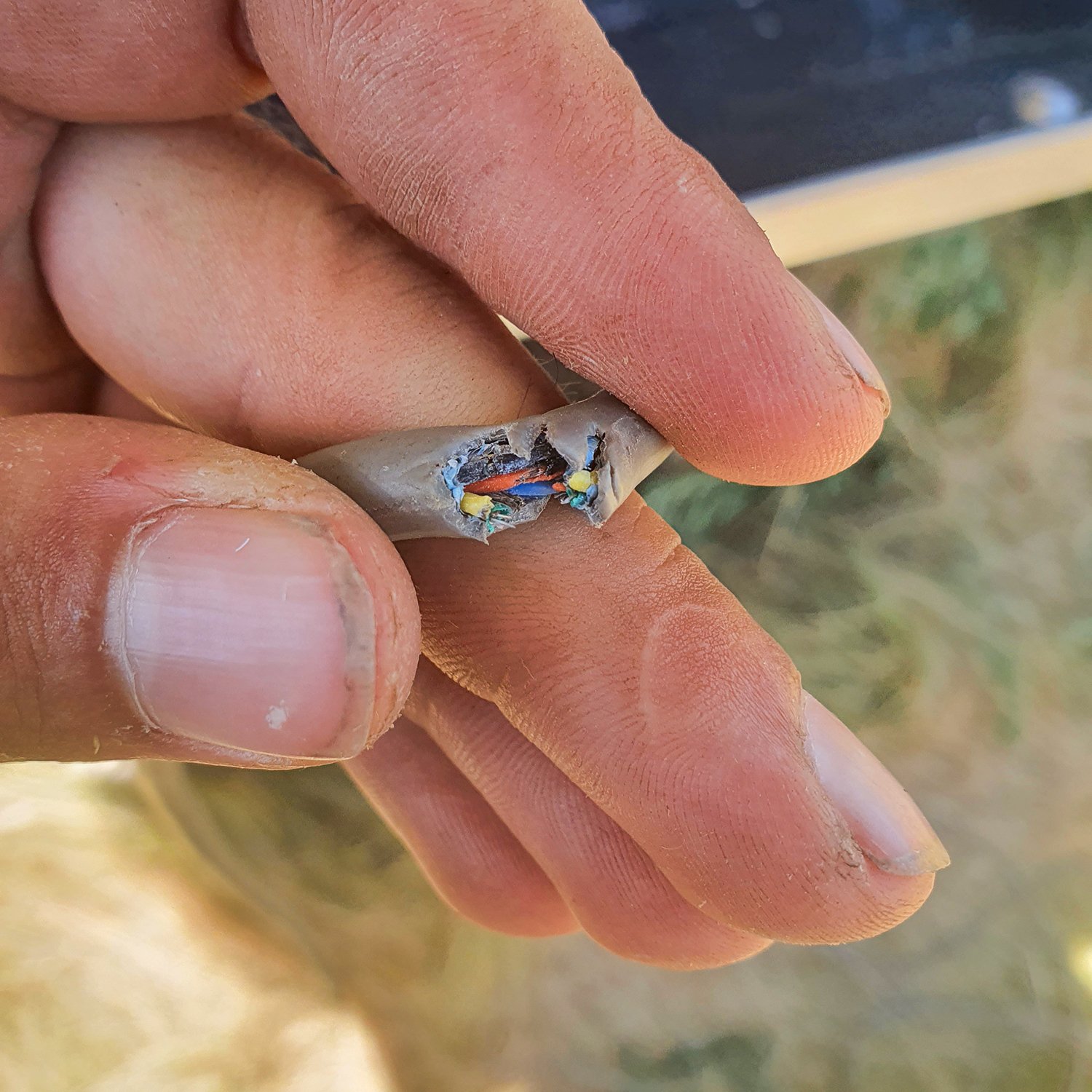
A feature of working on such an eco-friendly farm as Mulloon is the wide variety of creatures encountered while out and about. It seems that local Mulloon wildlife are keen to get their teeth stuck into learning about Mulloon’s hydrology! The wombats and foxes in particular have a fascination with our soil moisture sensors, dismantling three and biting clean through cables. A Peron’s Tree Frog was also found investigating one of the piezometers – possibly using the acoustic qualities of the bore hole casing to impress the ladies.
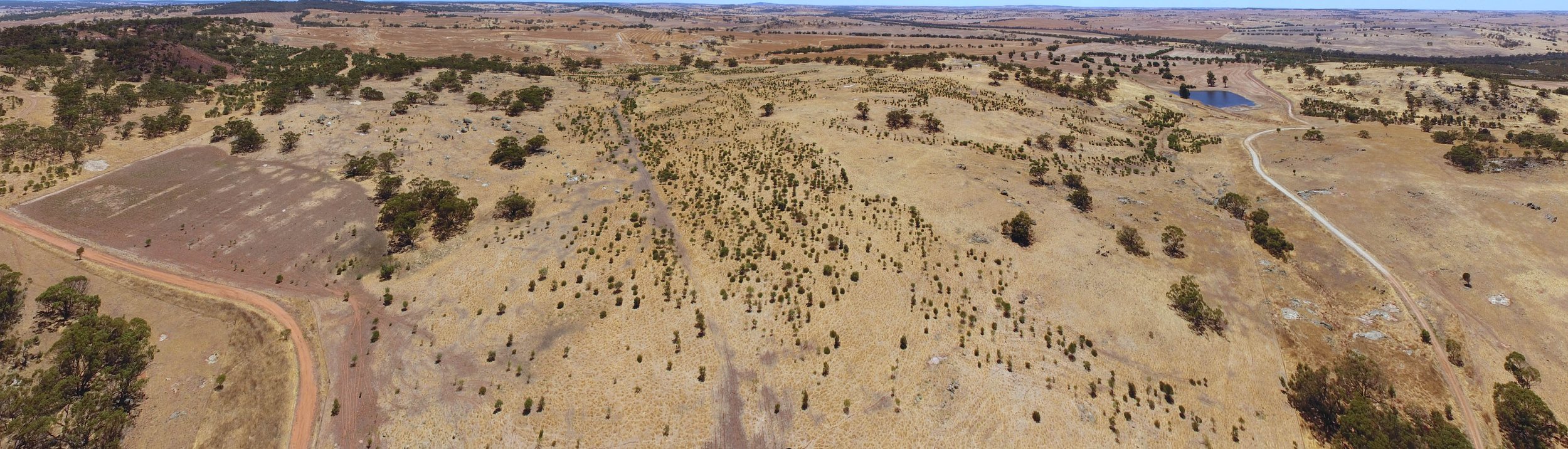
WA Landscape Planner Lance Mudgway has completed the final initial inspection report for Avondale, assessing it for participation in on-ground trials of landscape rehydration works in the Wheatbelt region.
The next stage will see three properties chosen from the seven that have been assessed, to ascertain which ones will move to the next stage and have the rehydration plans done for them.
REstore. REshape. REnew: This year’s must-see event for soil, business and farmer health
With the Talkin’ Soil Health Conference now postponed to 2023 due to Covid, we’ll instead be coming to WA to present as part of Wheatbelt NRM’s ‘Restore-Reshape-Renew’ event at the Muresk Institute on 31 March 2022. This one-day event will feature two exciting workshops about harnessing natural capital for sustainable farming futures.
In the morning, Terry McCosker OAM from RCS Australia will facilitate a discussion with local farmers about getting off the treadmill of high fertiliser and chemical costs with stories from some of WA’s most innovative broadacre farmers.
In the afternoon, the Mulloon Institute will deliver a practical, capacity building workshop on landscape rehydration taking farmers through tools and techniques to take back to their properties – reading the landscape, identifying current and historical water flows and seeing where opportunities lie in existing imbalances. This will be followed by a farm tour.
Penny Cooper from Marulan, NSW joined us during pre-COVID times to complete the work experience requirements of her Bachelor of Ecological Agricultural Systems with the Charles Sturt University.
During my studies, the Mulloon Institute caught my attention through its approach to landscape rehydration and as a unique organisation at the forefront of the regenerative agriculture movement.
In particular was TMI’s combination of practical land management practices with scientific study, research and evidence, and the willingness to demonstrate and share combined learnings of these.
Throughout my studies, I was often confronted with the challenge of presenting solid scientific material that backs up the claims of regenerative agriculture. While evidence exists its often difficult to find and access and is not always easily deciphered by those on-the-ground wanting practical changes to management practices that they can implement.
The main issue is that agricultural systems are complex, living and constantly changing. They are also influenced by a multitude of political, social, economic and environmental factors. Through my studies I came to understand that there is no prescription for the perfect regenerative system – something often demanded by reductionist paradigms prevalent in the agriculture sector. Far from being prescriptive, TMI’s holistic approach seeks to obtain evidence, demonstrate practice and educate others.
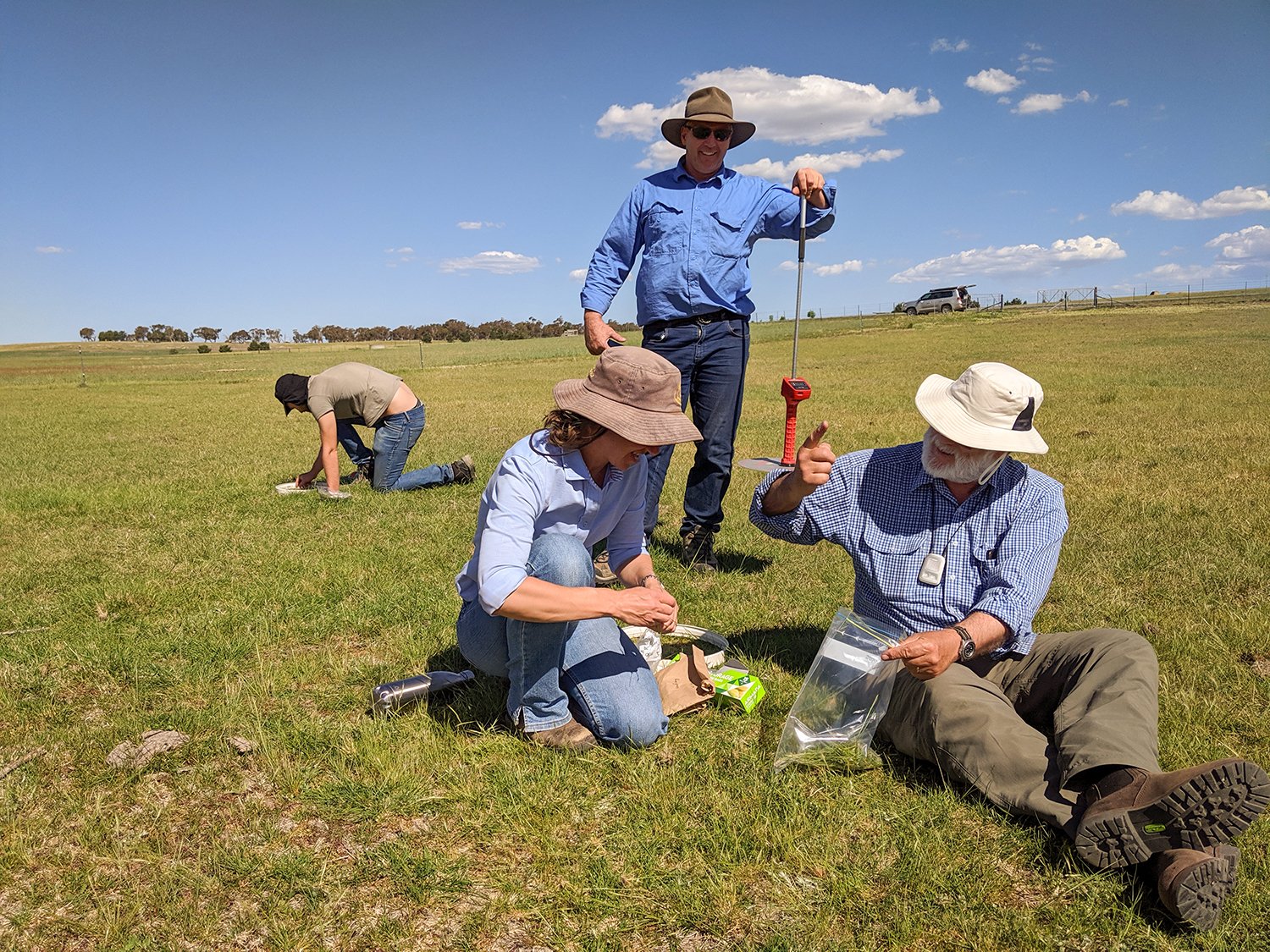
Biomass sampling in the Mulloon Creek catchment from left to right; Greg Hosking, Penny Cooper, Phil Tickle and Dr Richard Thackway.
I began my work experience in September 2019, conducting Rapid Appraisal of Riparian Condition (RARC) surveys along Mulloon Creek with Research Coordinator Luke Peel as part of the ongoing monitoring on the Mulloon Rehydration Initiative. Later I also worked on data consolidation and appraisal and took part in pasture biomass sampling with Phil Tickle of Cibolabs. After this I worked with vegetation experts Dr Richard Thackway and Greg Hosking from Soils For Life to ground truth the satellite mapping works conducted by Cibolabs earlier.
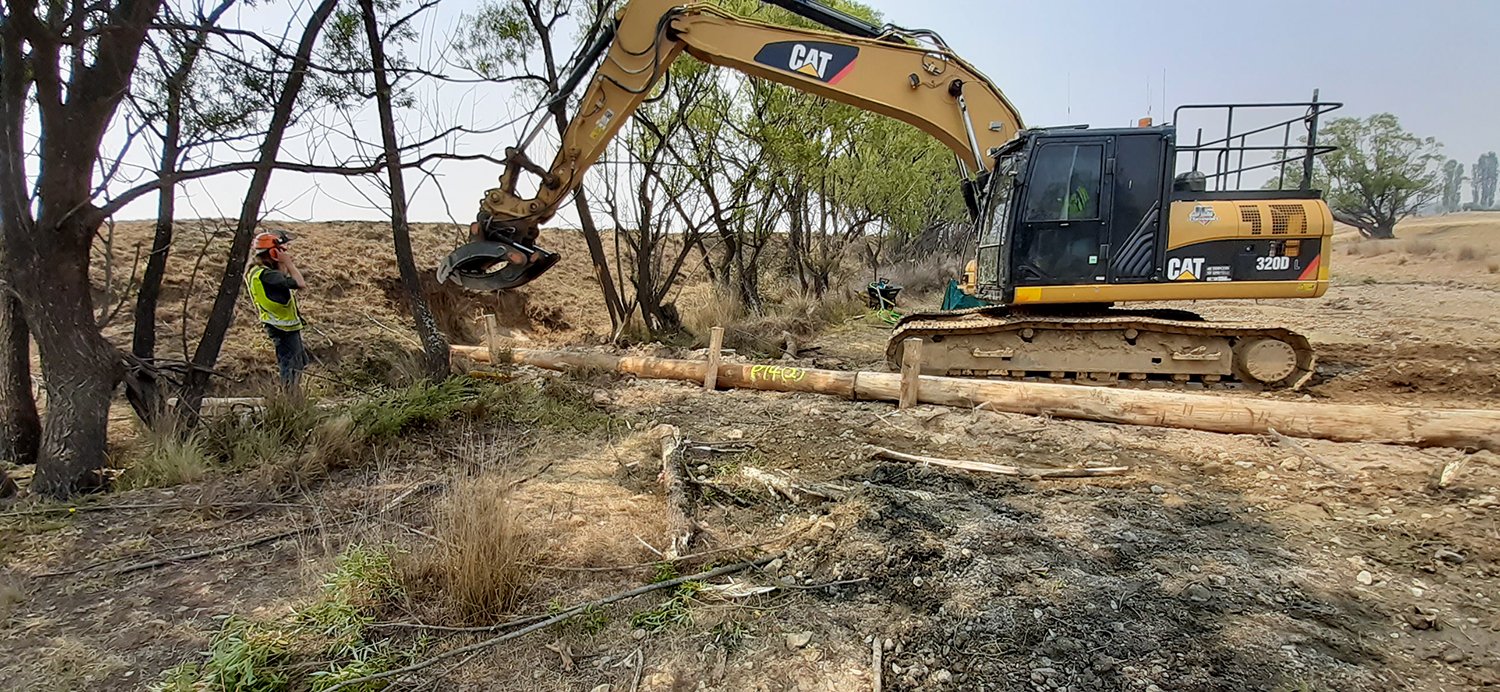
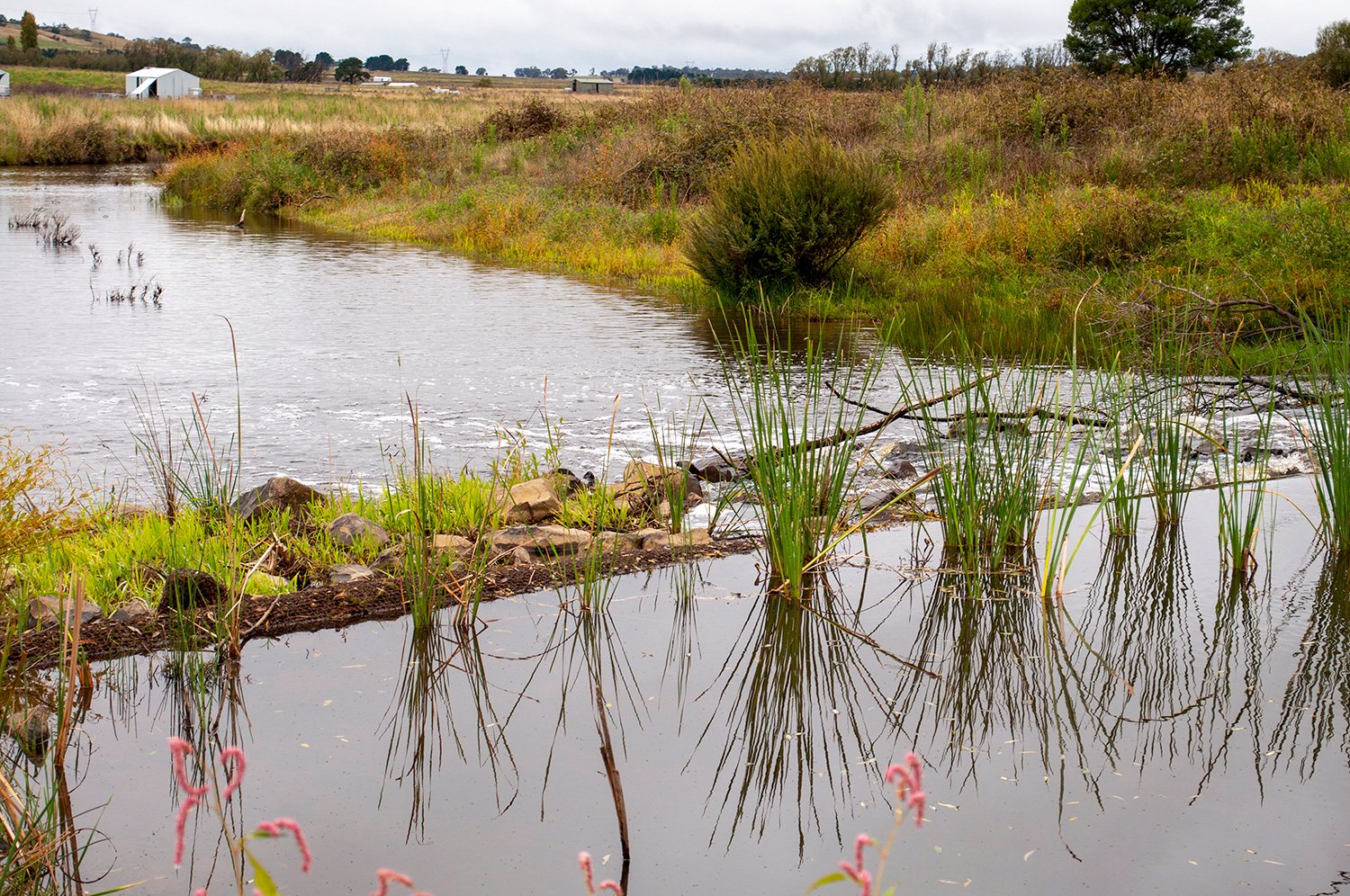
After 10 days with the Research team, I then began work experience with the Mulloon Rehydration Initiative’s Technical Officer, Max Brunswick. Despite the drought and raging bushfires in early 2020, it was fortunate timing that I was able to participate in constructing leaky weirs in Mulloon Creek. After the careful design and approval processes are complete the structures are installed using rock, logs and local materials. After installation, the next step is establishing vegetation on the structures to knit them together, allowing them to take on a life of their own and ensure longevity. I helped transplant reeds and other water plants to armour the structures, while riparian species were planted to fortify the creek banks.
Leaky weir construction with Max Brunswick in Mulloon Creek.
Before my work experience wrapped up in February 2020, I helped assess a new project site on Mulloon Creek with a private landowner and TMI’s Principle Landscape Planner, Peter Hazell.
My time with TMI was an amazing experience. All the team members I worked with were extremely accommodating and ensured I gained a breadth of experience that I was not expecting. Today I have gained employment with TMI and work amongst a broad range of passionate, creative and inspiring researchers, planners, educators, agricultural practitioners, and administrative and marketing coordinators. I’m still pinching myself!
Penny Cooper, Trainee Director of On-ground Works
Chairman’s Autumn Message
Date published: 15 March 2022
As you read this autumn edition of our Resilience newsletter, spare a thought for so many in Australia who have been struggling to literally keep their heads above water, particularly in Queensland and New South Wales. Once more we hear that overused word “unprecedented” in relation to this latest extreme weather event which has caused the tragic loss of lives, property and livelihoods. The recovery will be slow and difficult, and for some they may never regain what they had.
While the work of the Mulloon Institute (TMI) is known for its contribution to substantially enhancing the resilience of landscapes to ever-occurring droughts, it also builds the landscape’s resilience to floods and bushfires.
Flooding generally occurs when there are large amounts of rain over short periods of time and catchments struggle to cope with so much water. As a result, low-lying areas tend to flood first, and as rainfall continues, the extent and the height of the flood increases.
Unfortunately, in most flood prone communities much of the flood mitigation work has tended to be a band-aid solution, such as building levees to protect houses and infrastructure located in low-lying areas. Over many decades, we have seen billions of dollars allocated to such measures, only to witness higher floods rendering levees inadequate. “Build them higher,” comes the natural call from the community.
We need to move our focus away from band-aids and focus on the problem. More often than not, a major problem lies in the degraded catchments which deliver water flows at ever increasing rates. By repairing degraded catchments, the landscape is able to hold substantially more water for longer periods of time which helps reduce flow rates. It’s not rocket science. Reduce the energy of the water, slow the flow, store more water in the landscape, reduce the floods.
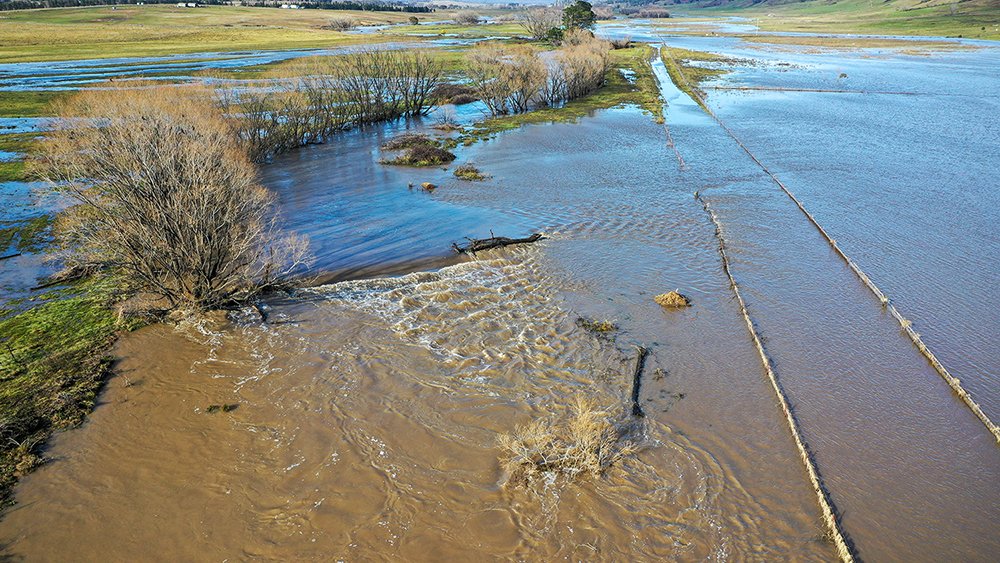
Floodwaters at ‘Duralla’ and ‘Palerang’ in August 2020.
Our work at the catchment scale gives landscapes a greater resilience to drought with more water held in the landscape during rain events. These same measures are also demonstrating their value during these very large rain events.
Our counterparts in the UK, like ‘Slow the Flow’, have also arrived at the same conclusion. Instead of building higher levees at the bottom of the catchment where vegetation has been replaced by English villages and intensive agriculture, this organisation works to prevent flooding by building structures like leaky weirs and is replanting vegetation to slow the water flow.
As with our drought resilience work, catchment scale repair has the added benefits of improved environments, increased biodiversity, better habitat for endangered species and more productive agriculture with improved soils and greater ground cover.
When it comes to decisions about being better prepared for the next flood (or drought, or bushfire), I suggest we invest taxpayers’ dollars into work that addresses the problem rather than short-term band-aid ‘solutions’. We need to repair the function of our catchments and landscapes.
Many will see these flooding events as another consequence of a changing climate. There is a strong argument that a properly functioning landscape with a repaired water cycle has a direct and positive influence on the climate. Through our monitoring work on the Mulloon Rehydration Initiative, data is demonstrating climatic differences at the micro level. With a larger repair to the landscape, there is a larger potential to influence the climate.
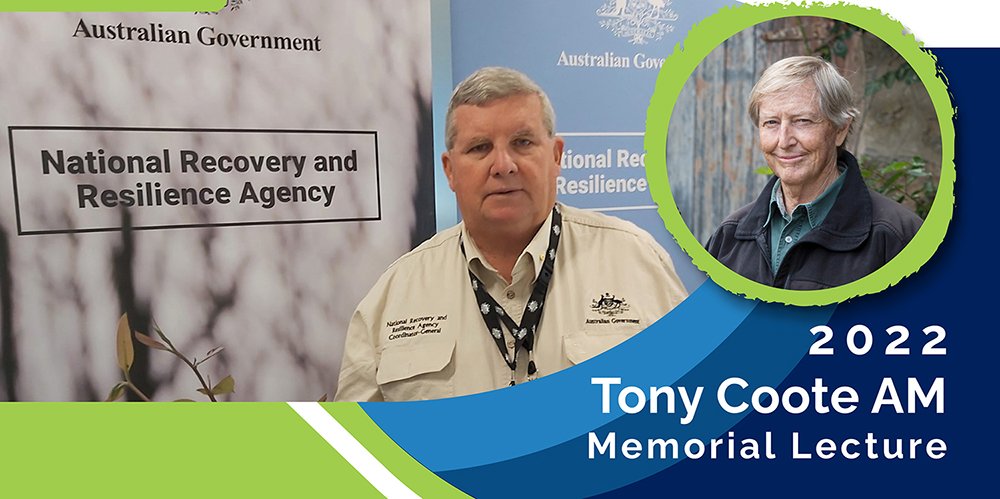
Finally, considering the current floods, it is very timely that 2022 Tony Coote AM Memorial Lecture will be delivered by the Hon Shane Stone AC QC, Coordinator General of the National Recovery & Resilience Agency. The event will be held at NSW Parliament House on Wednesday 23 March. If you have missed out on tickets, please keep an eye on our social media channels over the coming weeks for a short video recap of the evening.
I trust you will enjoy reading about our catchment scale work currently underway across Australia. As always, I am very grateful for your ongoing interest in what we do and the generous support you provide which allows us to expand our work even further.
Gary Nairn AO Chairman
Making model landscapes
Date published: 15 March 2022
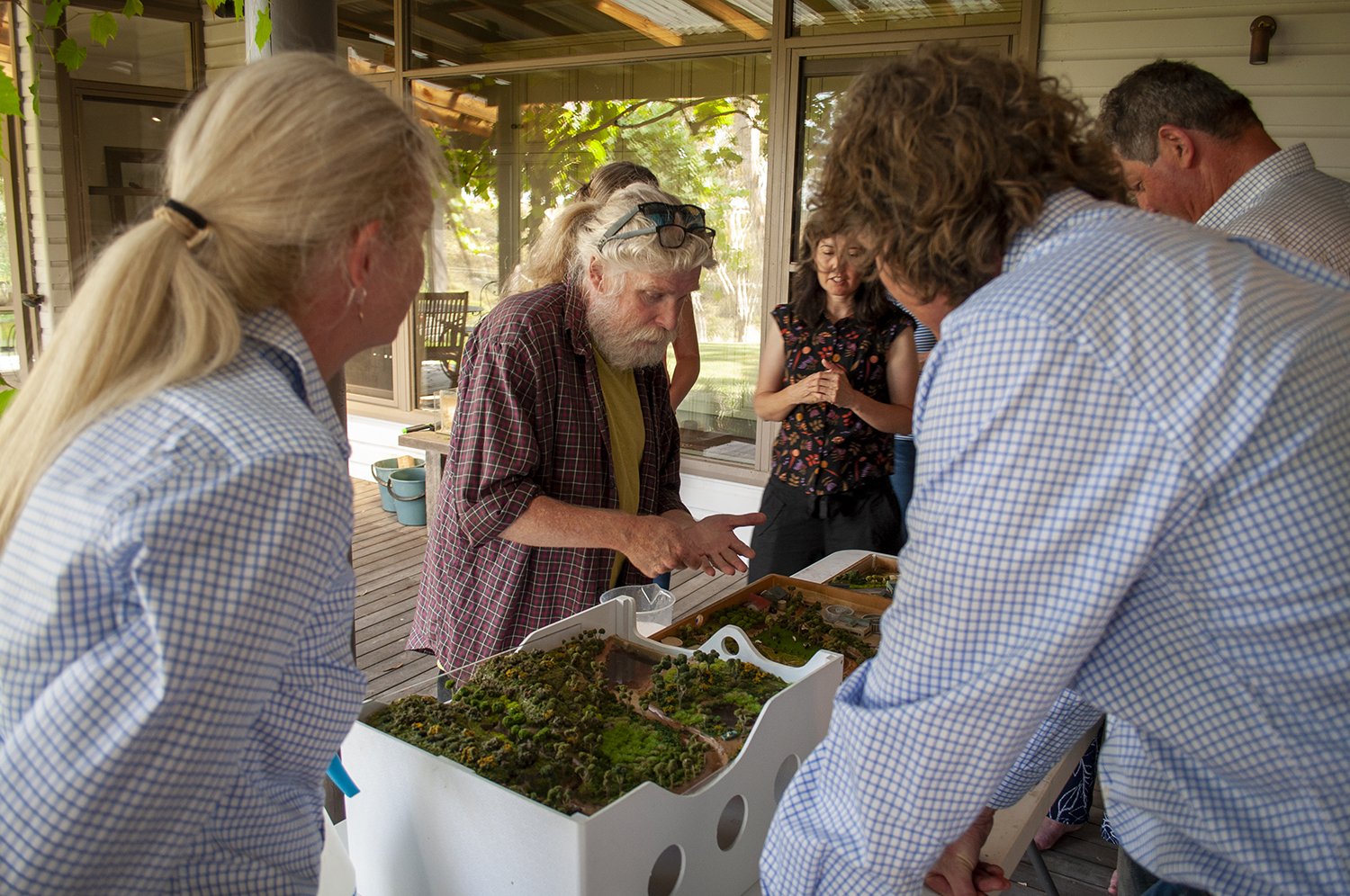
Gary McGuigan showing the TMI team how his interactive models work.
The Mulloon Institute is delighted to be working with Gary McGuigan – one of our artist collaborators on the Citizen Science project and a landowner in the Capertee Valley. Our team recently met up with him to workshops some different interactive features.
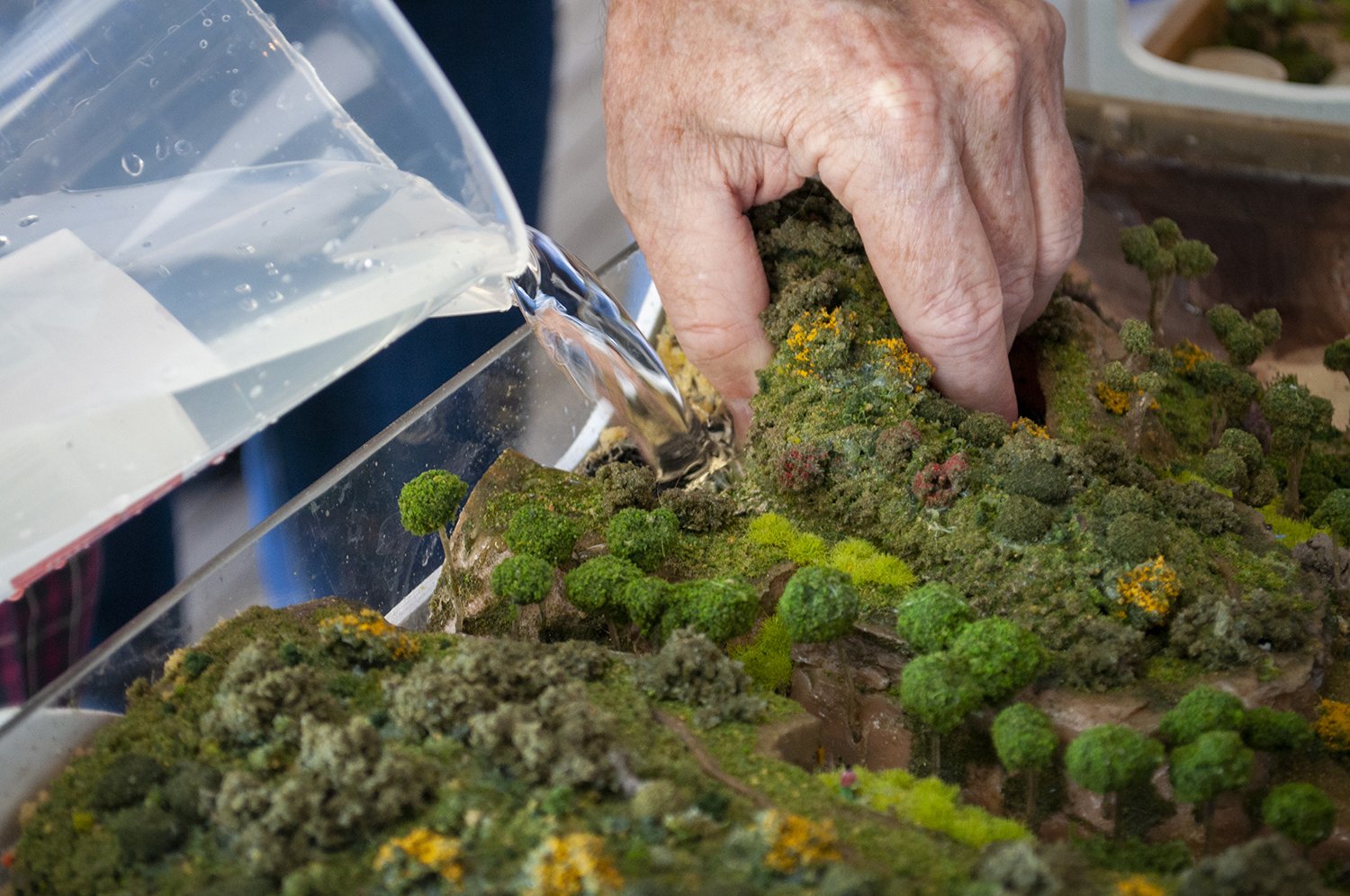
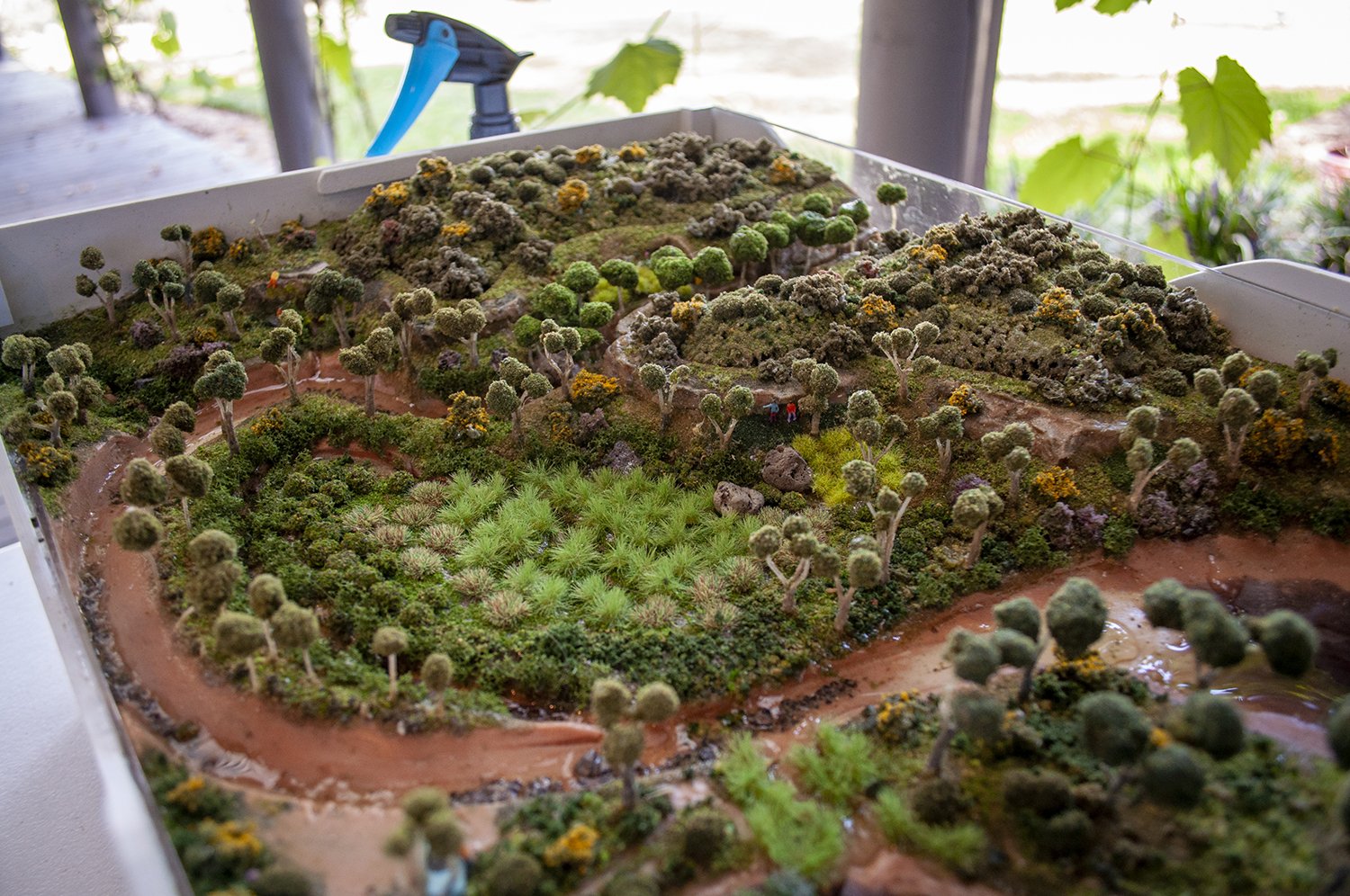
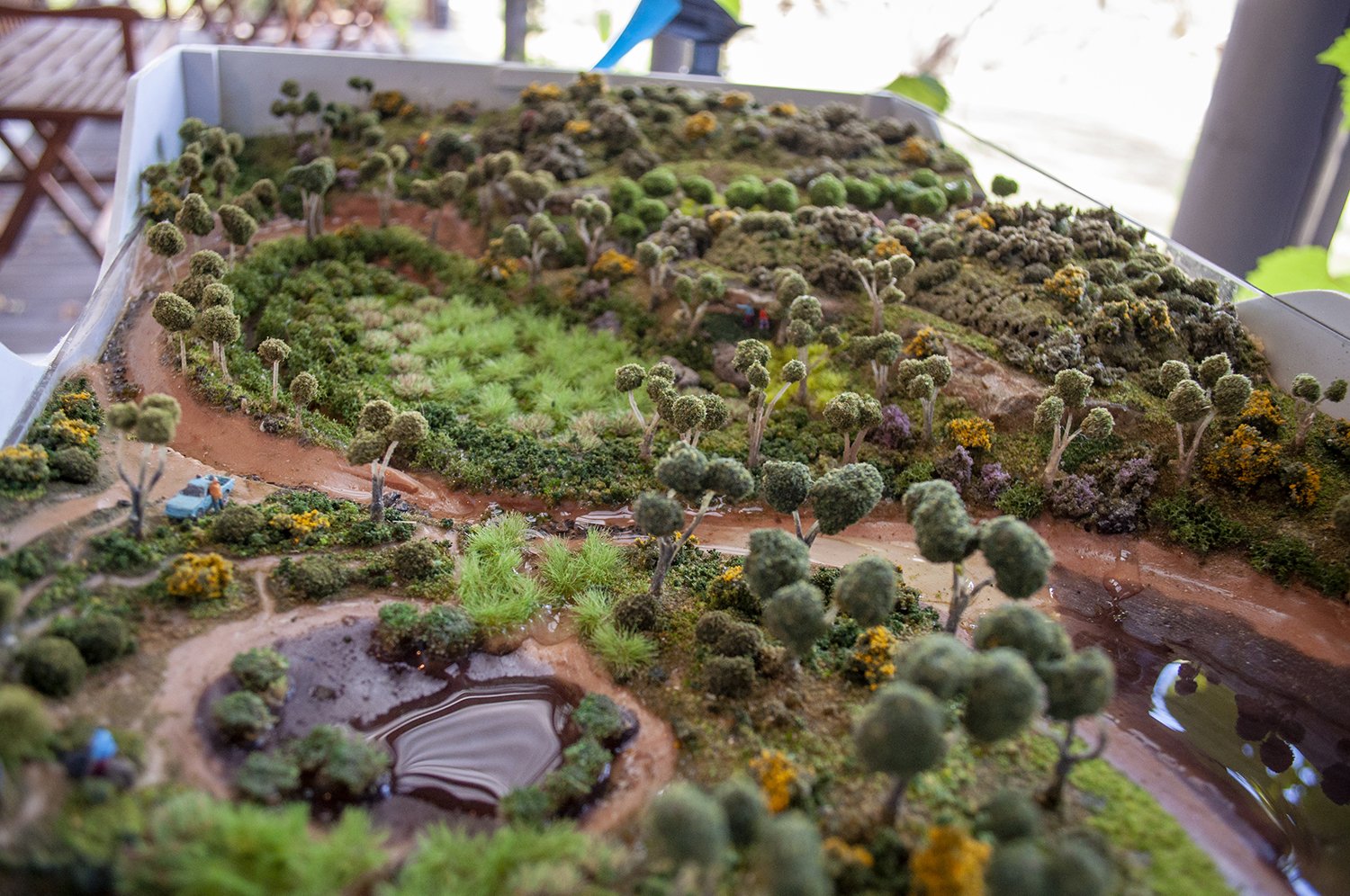
Gary makes intricate, interactive and surprisingly robust models of catchment landscapes which are designed to support all sorts of hydrological demonstrations. His current project is a model of the Mulloon Catchment, illustrating landscape rehydration strategies which have transformed the landscape. CAD designs are also currently being finalised. The completed model, which is being supported by funding from the Australian Government, will fit into the boot of a car, so it can travel with us as we work with schools and communities around Australia.
View fullsize
View fullsize
View fullsize
View fullsize
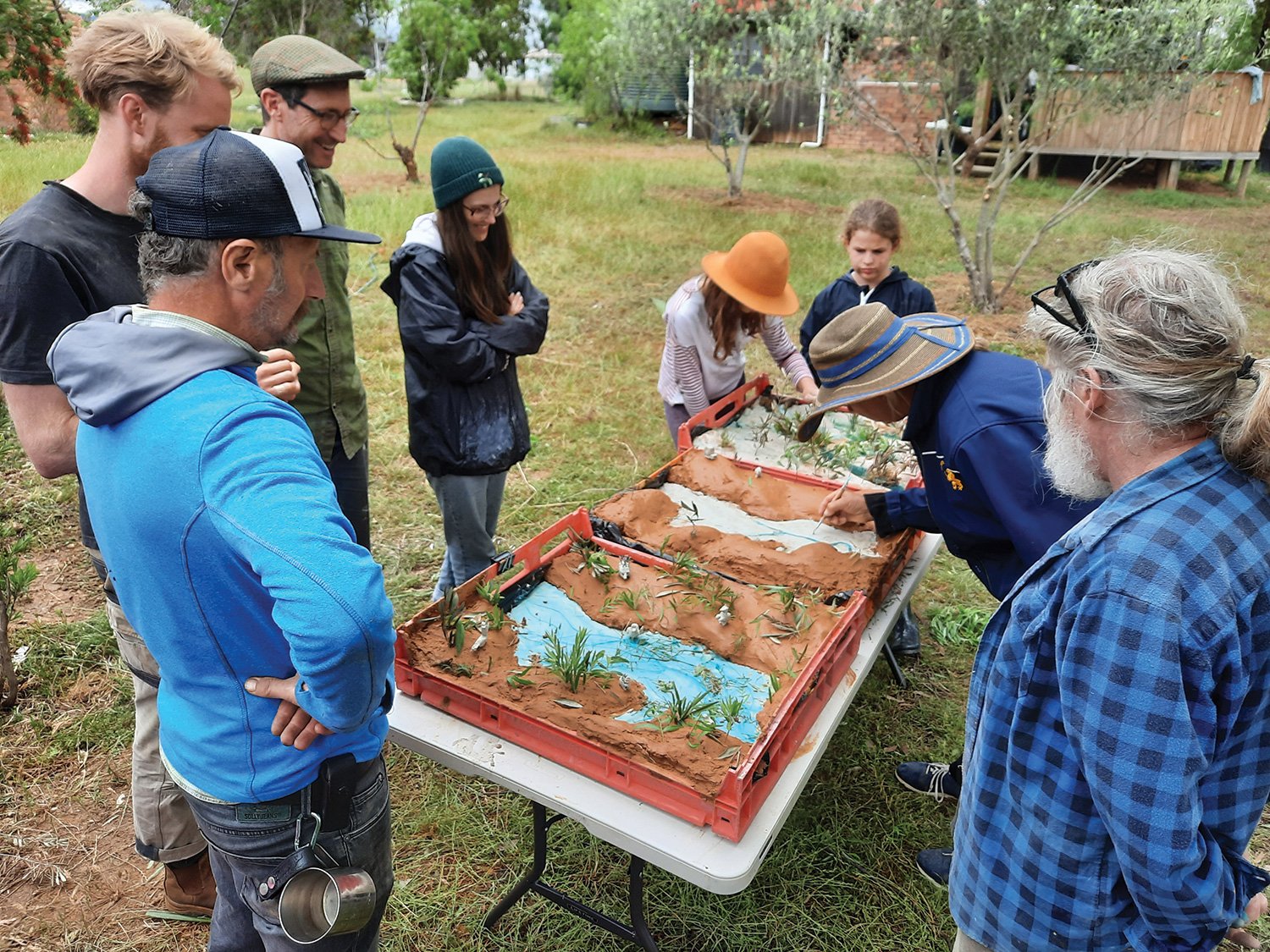
Last year a very eager crowd of catchment model-builders had a fantastic time working with Gary, Laura, Tam and Joe during our Citizen Science workshop in the Capertee Valley. Referencing satellite imagery, we made clay models of a degraded floodplain pocket in three states of being: as it is now, as it may have been pre-agriculture, and as we imagined it could be with some landscape rehydration. These activities make for terrific educational activities using natural materials, and we look forward to taking it out on the road.
Building interactive catchment models in Capertee Valley, NSW.
This Citizen Science project received grant funding from the Australian Government. The clay modelling workshop was part of a three-day Land Studio camp, which was funded by the NSW Government through its Increased Resilience to Climate Change Community Grants Program. Land Studio is an initiative of the art cooperative Kandos School of Cultural Adaptation (KSCA), of which Laura Fisher is a member.
Creating curriculum magic
Date published: 15 March 2022
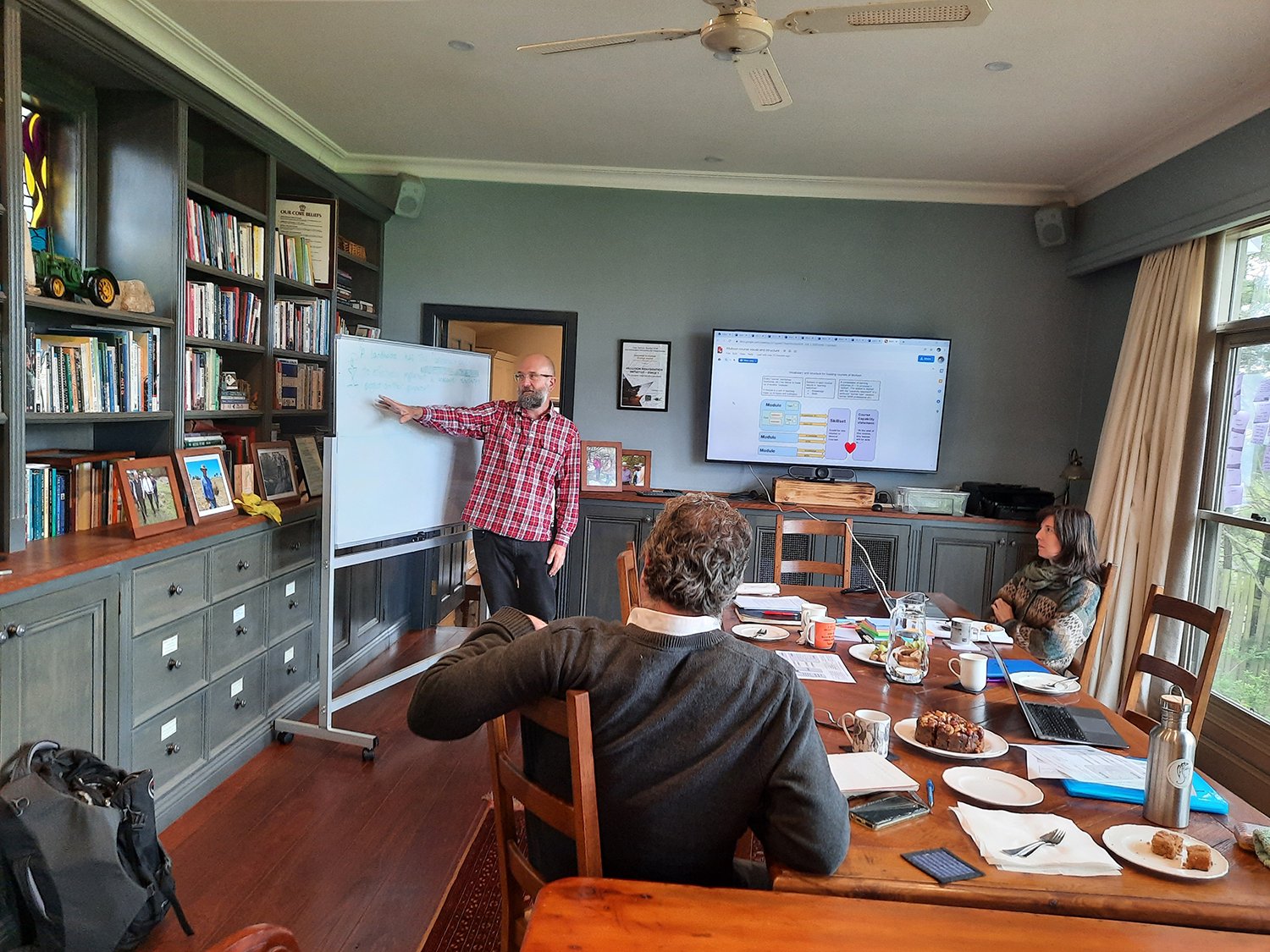
L-R: Tam, Laura, David and Pete take over the boardroom and cook up some terrific learning programs.
The Mulloon Institute’s new Landscape Rehydration Learning Programs are being developed through an exciting collaboration with Soil Land Food.
Ugg boots, mind maps, fruit cake, puzzles, capability statements and role play: when they converge it’s a sign that the dial has been turned up on developing our new Learning Programs.
Over the last six months an exciting collaboration has evolved between Tam Connor and Laura Fisher – TMI’s education team – and David Hardwick, soil educator extraordinaire from Soil Land Food.
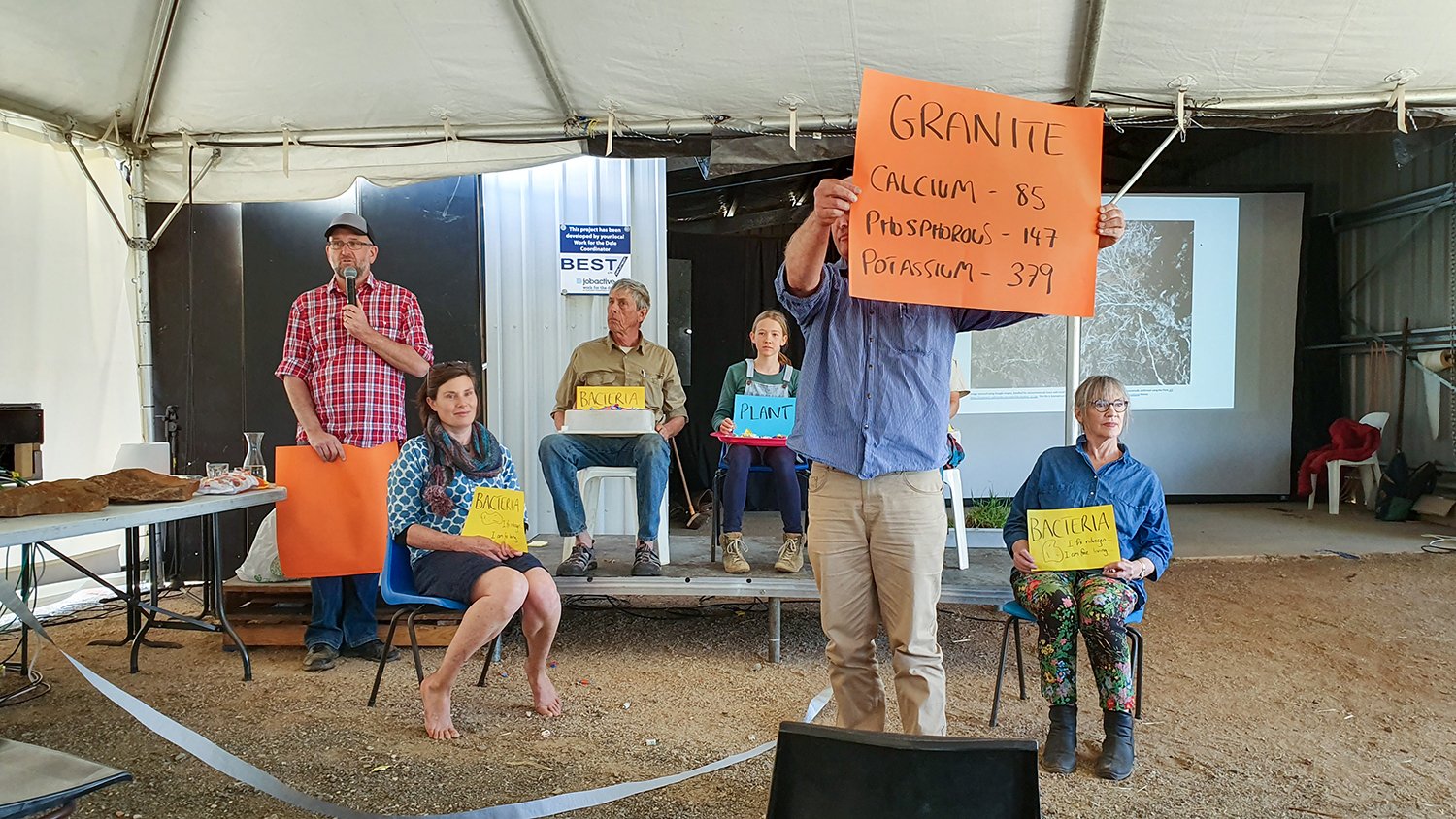
David has worked in agro-ecological extension for decades. He is known across Australia for his dynamic, hands-on approach that accelerates and deepens the learning experience, especially his unforgettable, ‘A Day in the Life of Soil’ role play. Having also done the hard yards developing TAFE curriculum, he brings invaluable expertise to the task of designing and sequencing Landscape Rehydration learning pathways.
Tam and Laura are bringing their experience as artistic and scientific educators to the project, while TMI’s Principal Landscape Planner Peter Hazell and Research Coordinator Luke Peel are the fourth, essential piece of the curriculum puzzle, plugging in serious content.
The first trials of our new Landscape Rehydration bootcamp are kicking off with Greta Valley Landcare (VIC) in March and April, and then at Mulloon over the coming months.
TMI’s Landscape Rehydration Learning Programs are being developed with the support of the NSW Environmental Trust.
Additional Resources
‘A day in the Life of Soil’ role play at ‘Groundswel’l’, Bingara, 2019. Photo by Lucas Ihlein.
Audio recording of activity presented at ‘Groundswell’ in Bingara in 2020.
Queensland update – autumn
Date published: 9 March 2022
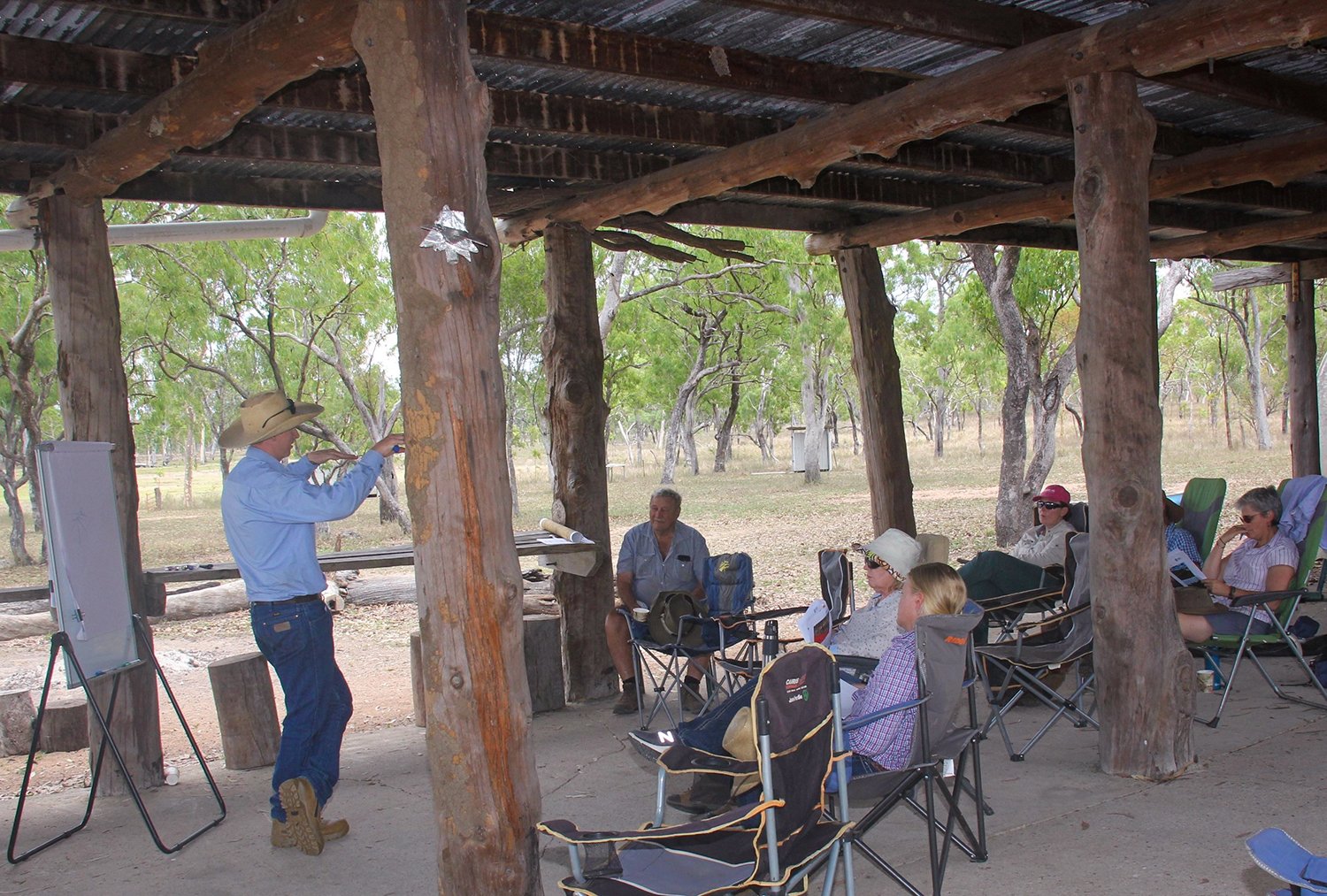
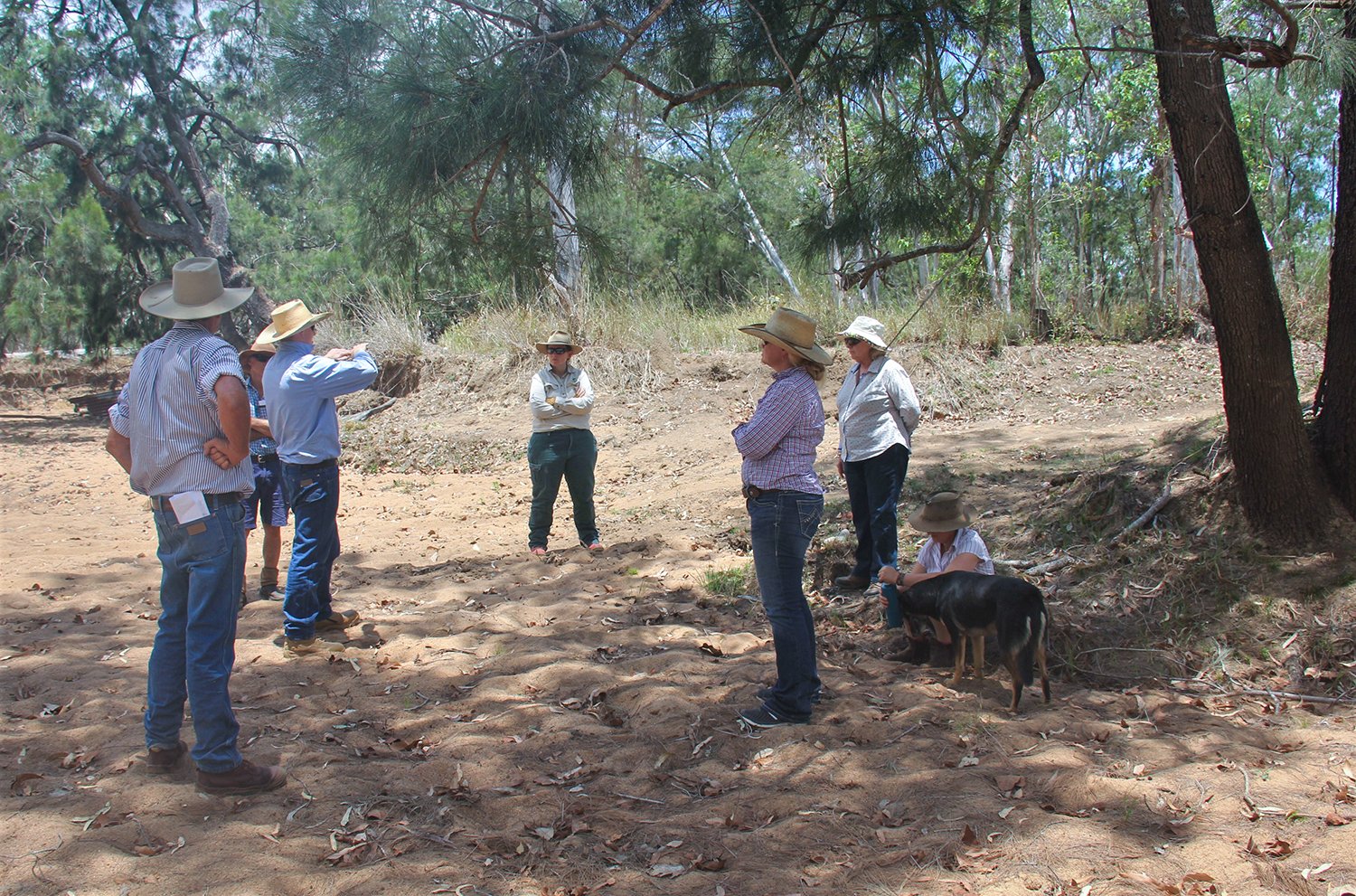
Staff from the Mulloon Institute spent time with station owners in the Mt Garnet area recently to deliver the first in a series of workshops as part of Terrain NRM’s Upper Herbert Sediment Reduction Project.
The three year project is working with landholders to stop thousands of tonnes of fine sediment from reaching the Great Barrier Reef each year through engineered erosion solutions and improved land management practices on cattle stations. This includes rock chutes, bank battering and revegetation, timber pile fields, whoa-boys and road drainage management.
Regenerative Agriculture Consultant Sam Skeat (Mulloon Institute) led the workshop and took landholders through looking for early signs of erosion, getting a better understanding of how water moves through the landscape and learning about simple, low-cost and environmentally-friendly ways to nip erosion in the bud, all while improving soil moisture in the process.
The Upper Herbert Sediment Reduction Project is funded by the partnership between the Australian Government’s Reef Trust and the Great Barrier Reef Foundation.
Scoping the site at Maules Creek before the workshop.
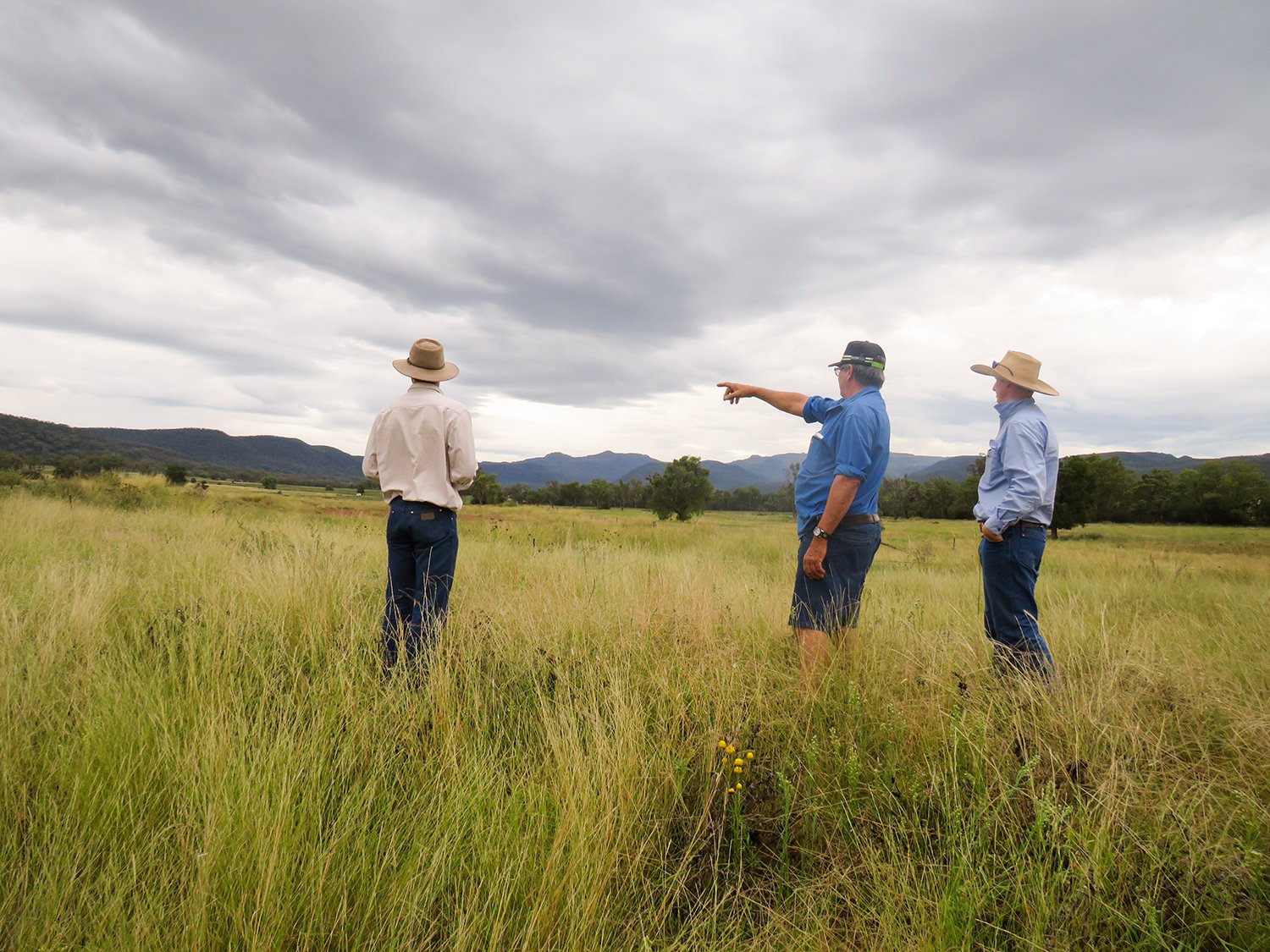
Regenerative Agriculture Consultant Sam Skeat and Landscape Planner Joe Skuse recently toured around north west NSW delivering a series of ‘Landscape Rehydration’ introductory workshops in partnership with North West Local Land Services. TMI’s Education Coordinator Tam Connor was also present, using the workshop content in the development of the Landscape Rehydration curriculum.
The workshops which were supported by NWLLS, focused on identifying and restoring function to degraded landscape features. A key take away from the workshops was the importance of overlaying Landscape Rehydration infrastructure over sound grazing management.
Identifying landscape features from afar.
Sheep and cattle graziers made up the bulk of the participants. It’s always inspiring to see communities come together in this fashion to share and build knowledge. As is always the way with these events, discussions over lunch afternoon tea were just as valuable as the formal workshop content.
The week was a bit of a marathon! Four workshops in three days with close to 2000km driven left the team a little worn out but all the more excited about the future of farming in NSW’s north west.
Using a headcut as an example of landscape degradation.
Changes to landscape rehydration infrastructure planning rules in NSW
Date published: 15 February 2022
Infrastructure SEPP amendments
The NSW Government has proposed changes to allow farmers to restore streams on their property through landscape rehydration techniques, without the need for council approval.
These proposed changes to the Infrastructure SEPP will:
define landscape rehydration infrastructure in relation to the Infrastructure SEPP
provide a consistent planning regime for the development and delivery of landscape rehydration infrastructure
identify appropriate zones where landscape rehydration infrastructure may be located.
An explanation of intended effect (EIE) has been prepared to provide further details of the proposed changes and the benefits.
A Landscape Rehydration Guide will be on exhibition at the same time as the EIE.
The purpose of the guide is to:
explain the planning and approval requirements for landscape rehydration infrastructure
set out the information requirements for the environmental assessment documentation commonly referred to as a review of environmental factors (REF) that is needed to accompany a controlled activity application or a Crown Lands license application.
The NSW Department of Planning, Industry and Environment welcomes your feedback on the proposed changes to the Infrastructure SEPP and the Landscape Rehydration Guide.
Submissions must be made during the exhibition period, which closes on 28 February 2022.
We strongly encourage you to provide your feedback using the online submission form.
Written submissions must be addressed ON BOTH THE LETTER AND THE ENVELOPE to
Ms Jennifer Richardson Director, Infrastructure Policy and Assessment Practice Planning & Assessment Department of Planning, Industry and Environment Locked Bag 5022 Parramatta NSW 2124