Mulloon Consulting is seeking a Landscape Planner / Project Manager with sound technical skills in hydrology for landscape rehydration, who is passionate about effecting change in regenerative environmental and agricultural practices.

Key tasks will include:

·       identifying and document planning goals

·       recognising management issues

·       generating innovative management solutions, including detailed designs for surface and groundwater management

·       achieving regulatory approval for projects

·       undertaking outreach, education and capacity building

·       identifying appropriate regenerative land management measures.  

https://nrmjobs.com.au/jobs/2021/20010917/landscape-planner-project-manager


Mulloon Consulting is seeking a Landscape Designer to generate innovative management solutions, including detailed designs for surface and groundwater management.  

Key tasks will include:

  • determining the current hydrological regime in agricultural settings

  • assessing how historical hydrological processes can be reintroduced to reinstate environmental values and restore productive agricultural systems;

  • managing and remediate erosion in agricultural and riparian settings

  • planning and design landscape interventions including permeable bed control structures and contours to a standard suitable for construction

  • overseeing construction of landscape interventions.

https://nrmjobs.com.au/jobs/2021/20010916/landscape-designer
Enjoy our latest news here: https://conta.cc/3m5qukK

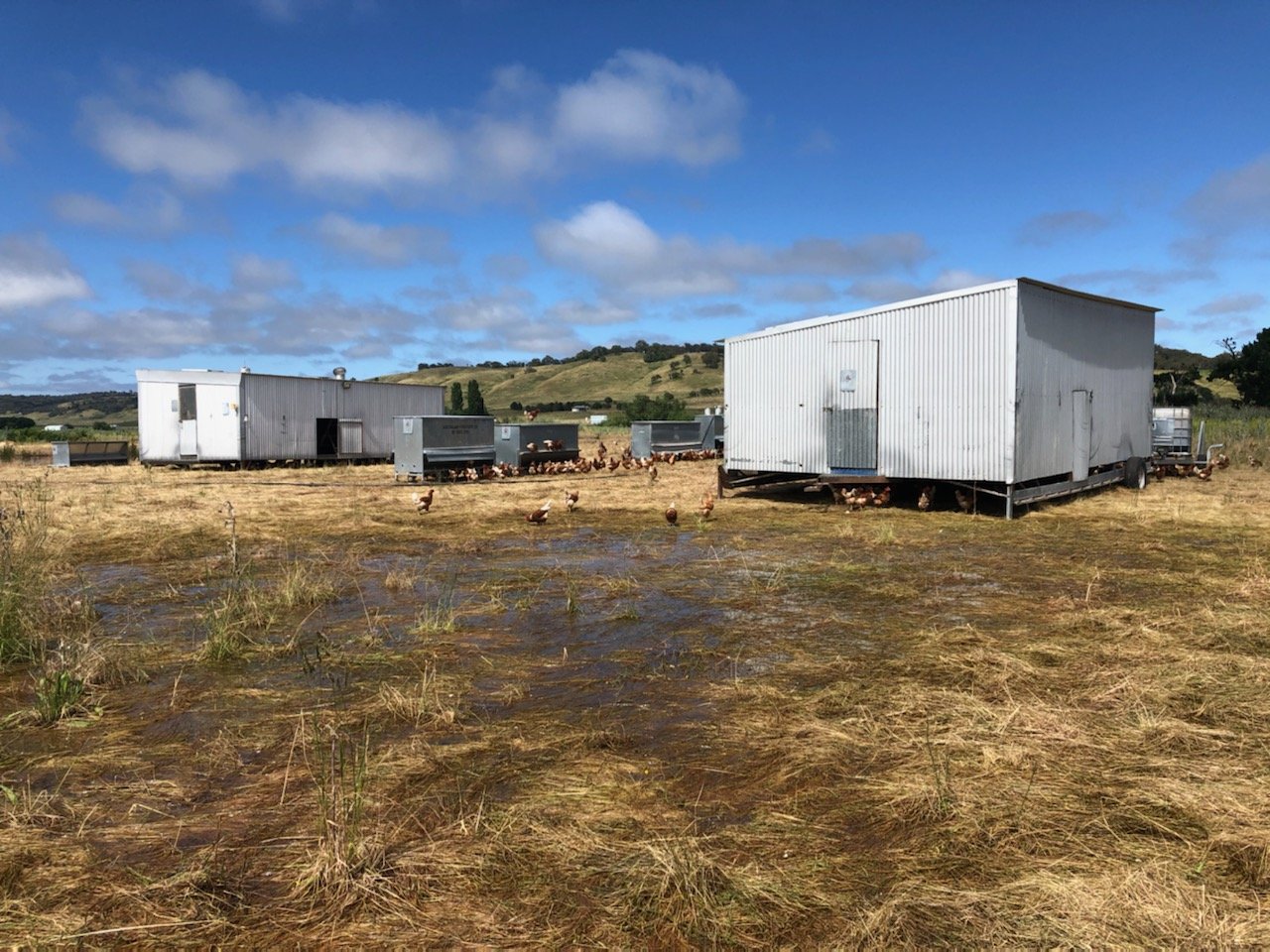
Chooks happy that their shed is above the high tide mark!

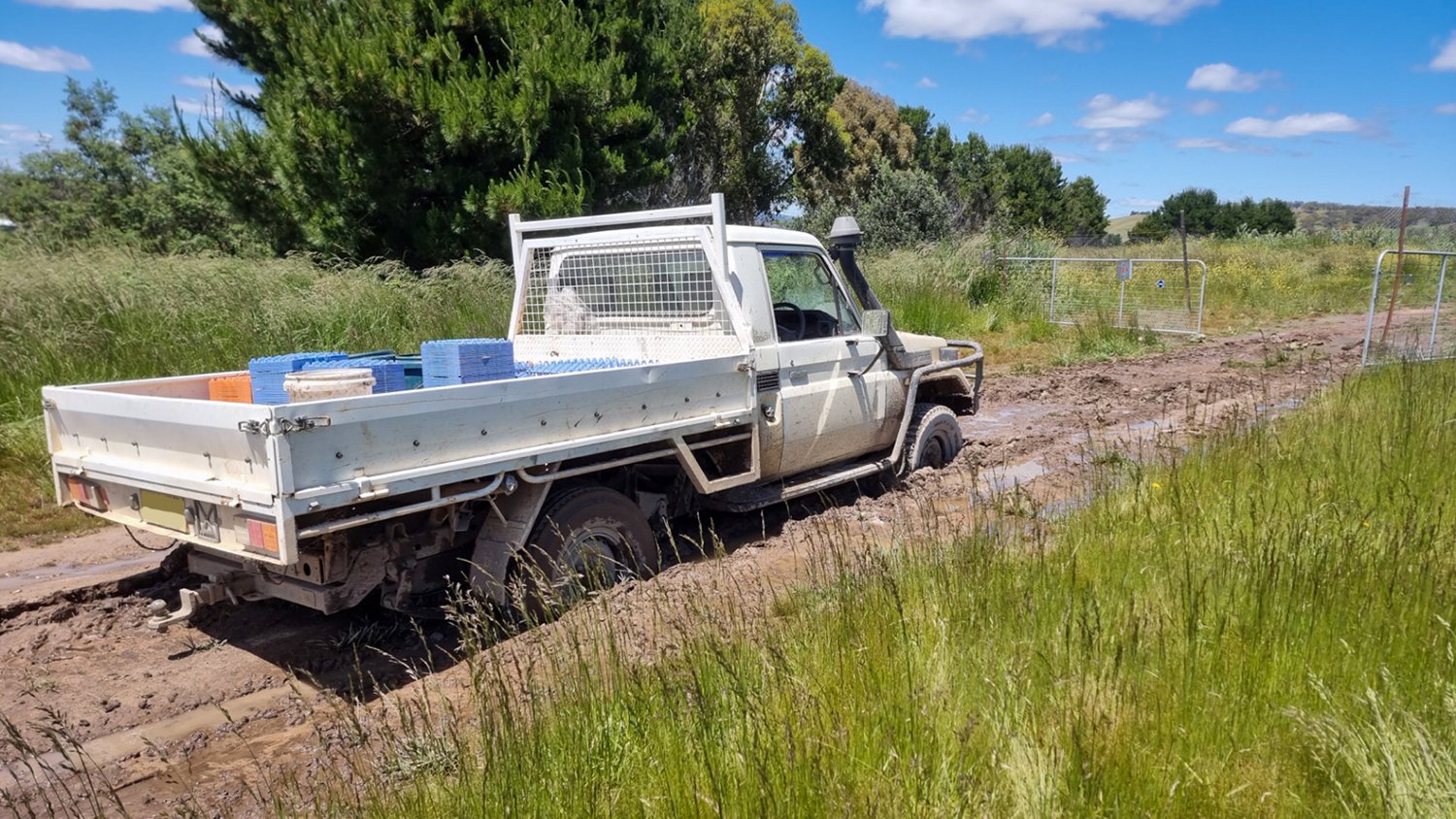
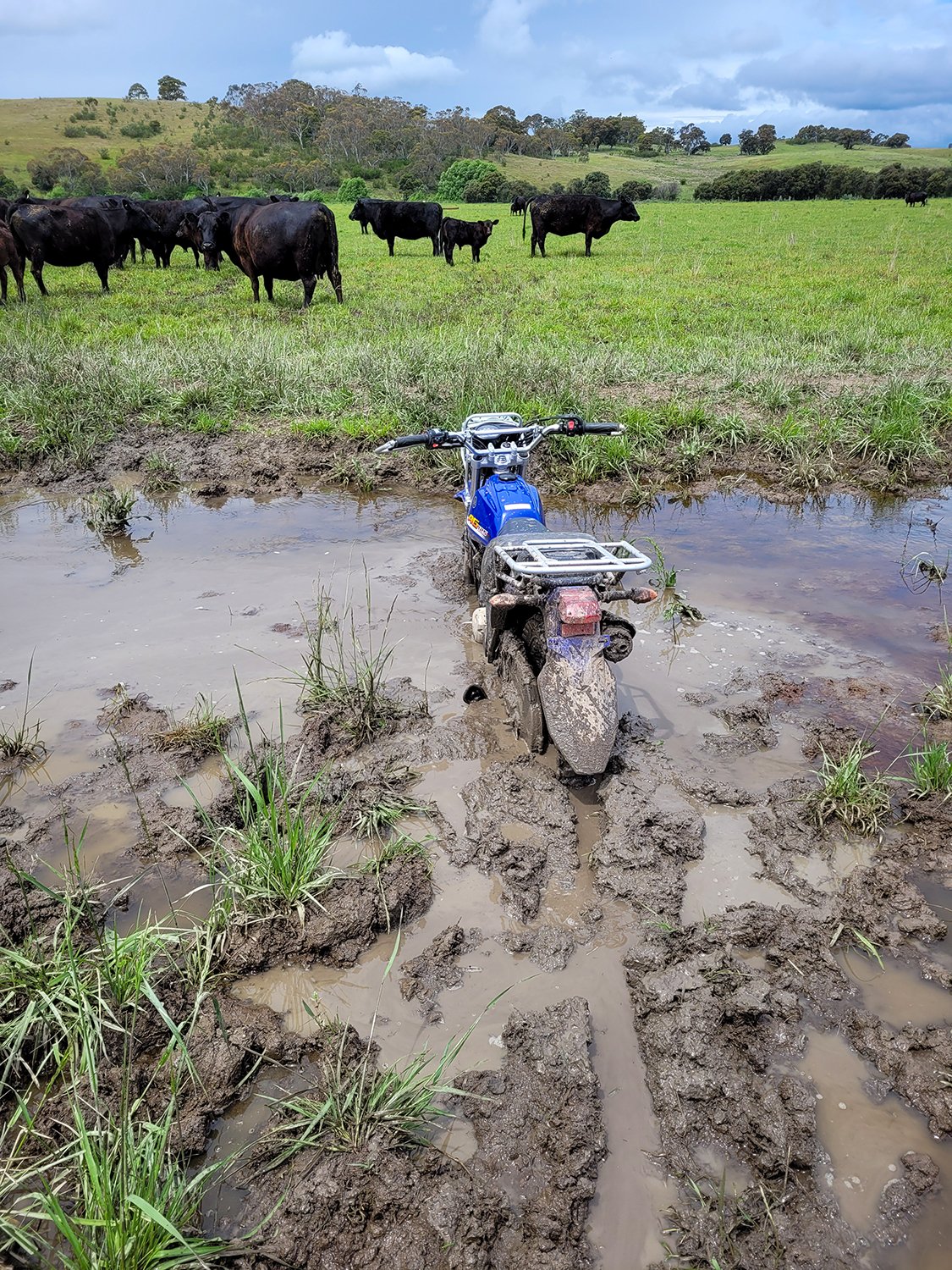
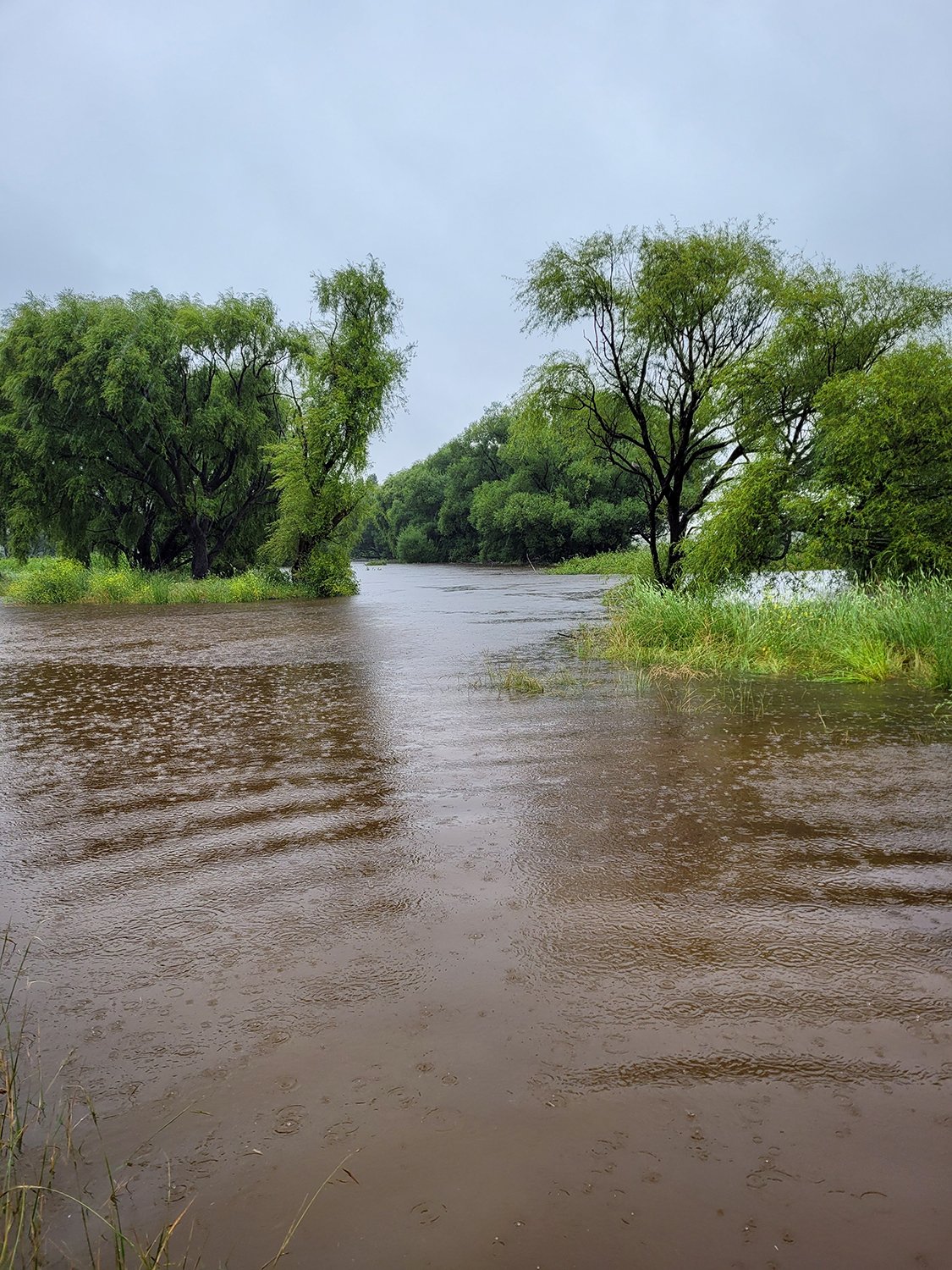
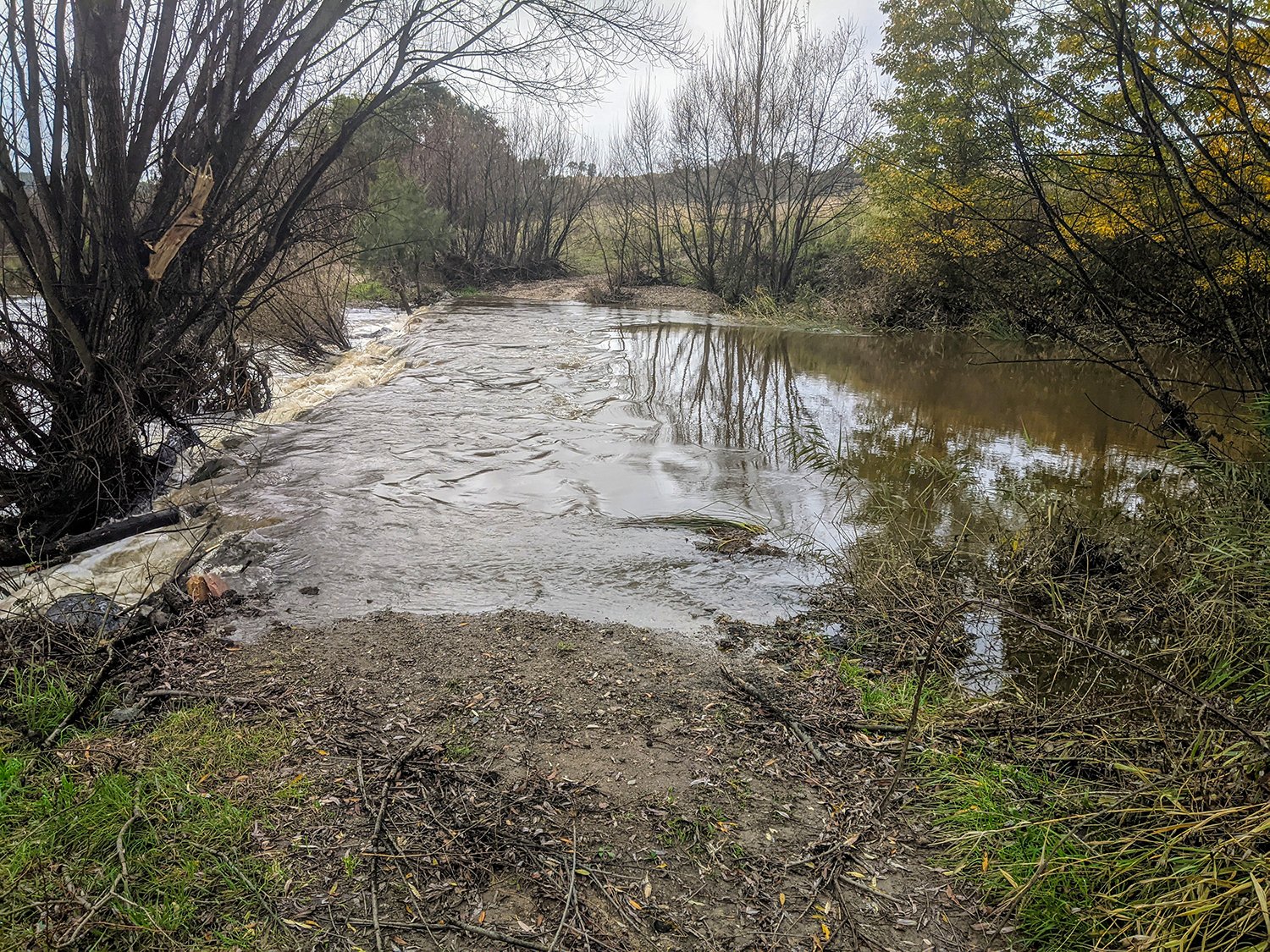
The farms continue to experience well above average rainfall this year to date 1120 mm, which is close to double the long-term average. November alone recorded more than 250 and 290 mm across Mulloon Creek and Duralla respectively, greater than four times the long-term averages for the month. The spring rain fell on already saturated soil profiles across the catchment which led to the generation of large volumes of run-off and consistently elevated creek levels leading to several floods. The photographs tell the true story!

Mulloon Creek eggs have continued to sell well through the period but with production down slightly due to the persistent inclement weather (and who could blame the chooks for that!) supply is expected to be tight leading into Christmas. The weather has been challenging for both the chooks and the staff trying to get to them through flooded and boggy paddocks, testing the limits of man and machine.

The cattle market remains strong with record prices being achieved. MCNF recently had a very successful sale of cows and calves selling to a high of $4,310. The high cattle prices are now being felt by the consumer which may not be too palatable, but as a farmer it’s been a long time coming to realise some hard-earned rewards for the good work that farmers do ensuring Australia is fed.

The MCNF team are looking forward to somewhat drier conditions to enable the completion of the upgrades to the packing shed, layer sheds and brooder shed that have all been held up by the excess rainfall. We are also looking forward to initiating plans towards becoming net zero carbon and continuing the holistic and regenerative developments across Mulloon Creek and Duralla. 

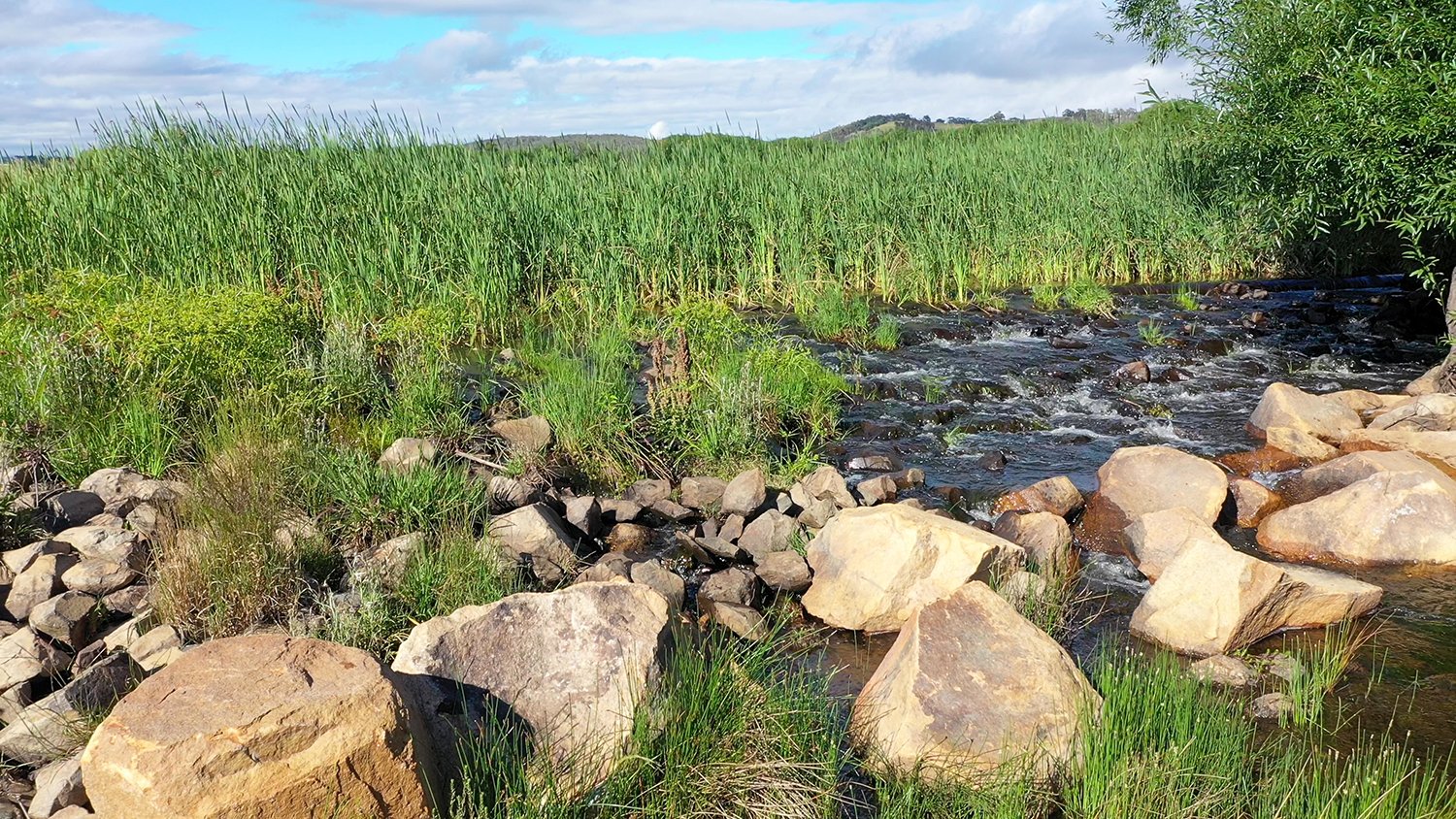
Water flowing over the weir at Peter’s Pond.

As wet as it gets

The past 12 months has seen record rainfall at Duralla with 1,272mm falling in the past 12 months. The nearest BOM weather stations with long term rainfall records are Lower Boro and Bungendore. Each recorded 1,238mm and 1,158mm respectively in the year 1950. Both weather stations have records that date back to the turn of the 20th century. 

Climate stations were installed by our hydrologists in August 2020 at both Duralla and the Home Farm. In just 16 months, each property has received 1,733mm and 1,643mm of rainfall respectively. 

In just the last three months Duralla has received 546mm.

In just the last month, Duralla has received 380mm. 

The point is – these numbers are staggering for this area. Less than two years ago, the east coast of Australia was in the midst of the worst drought on record and bushfires that would become the most widespread and destructive in Australia’s recorded history. 

It demonstrates how extreme the climate at Mulloon can be – when the average rainfall for Duralla, at 600mm, is really just the mid-point between these extremes. 

Needless to say, creek works have been on pause while we watch the flood waters pass under the bridge. But this hasn’t stopped the planning and it hasn’t stopped the planting. We aim to get about 2,000 plants in this summer along both the creek and the ridges. Once the flow subsides we’ll be back to work finishing off Stage 2 of the Mulloon Rehydration Initiative, which is the remainder of Duralla and also the Brolee property. Then, it’s onto Stage 3 at Landtasia, the most upstream property currently involved in the MRI. 

The Mulloon Rehydration Initiative is jointly funded through the Mulloon Institute and the Australian Government’s National Landcare Program. The initiative is also assisted by the NSW Government through its Environmental Trust.

Water flooding across Poplar’s Crossing at the Home Farm.

We are sad to inform you that Yuin Elder, Uncle Max Dulumunmun Harrison, passed away on the 11th December 2021. He was 85 years old. Uncle Max was a great friend to the Mulloon Institute, and especially to our founders Tony and Toni Coote. Uncle Max visited Mulloon Creek many times. As a water dreamer, he appreciated the importance of our work.

Uncle Max taught us of the significance of Mulloon to Aboriginal people. On its western flank is the Great Dividing Range. This part of the range is effectively the boundary of four nations – Yuin, Ngunnawal, Ngarigo and Gundungurra. It is message stick country – through which many clans would pass – and in so doing, would gain the permission of the clans into whose country they were entering. 

Uncle Max’s legacy will continue at Mulloon through the partnership that he has built between us and the Back to Country Gurundgi. We are all water dreamers. It is our calling to care for and to repair the rivers, creeks, and gullies – so that life can flourish.

Rest in peace Uncle Max.

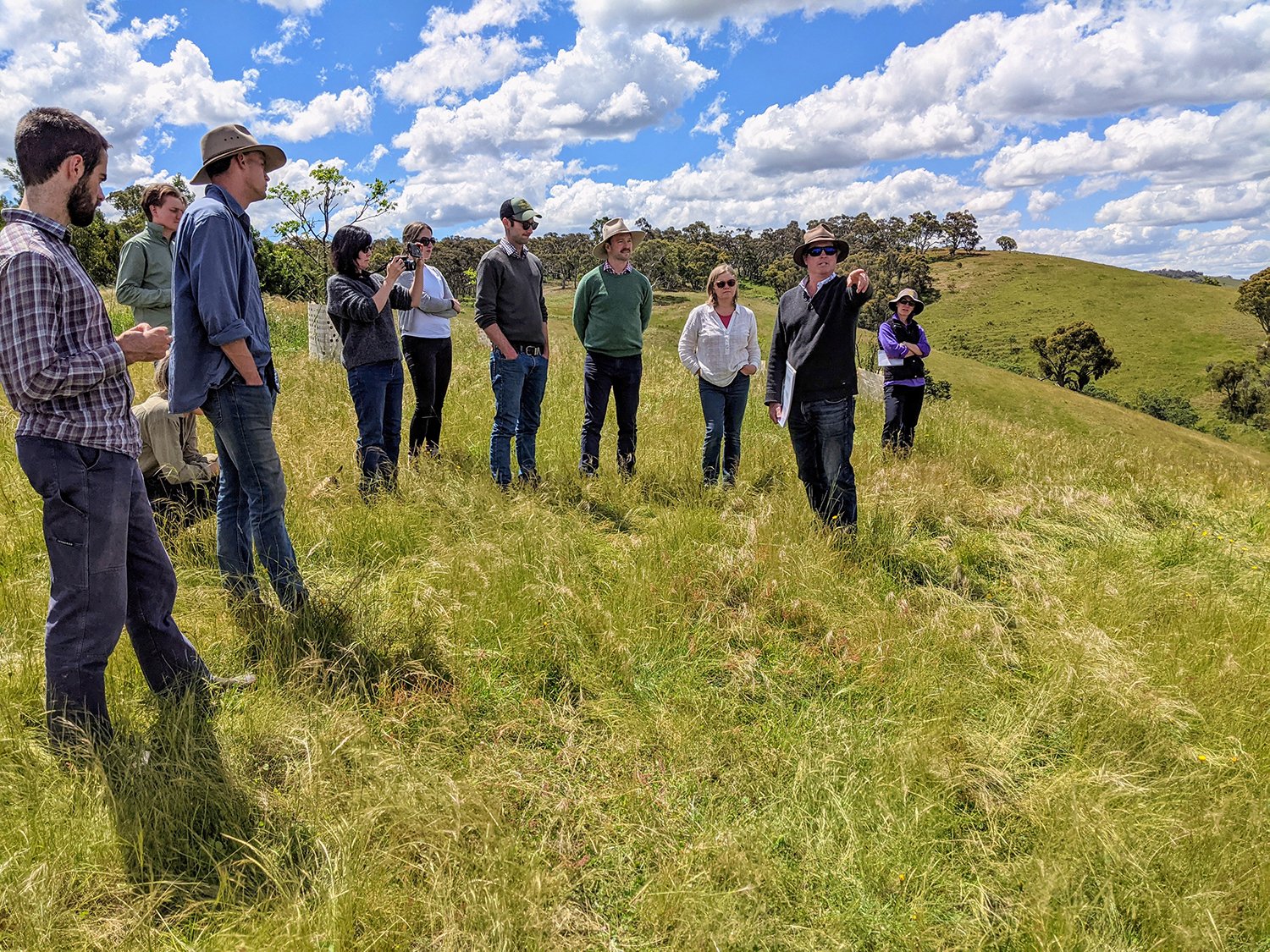
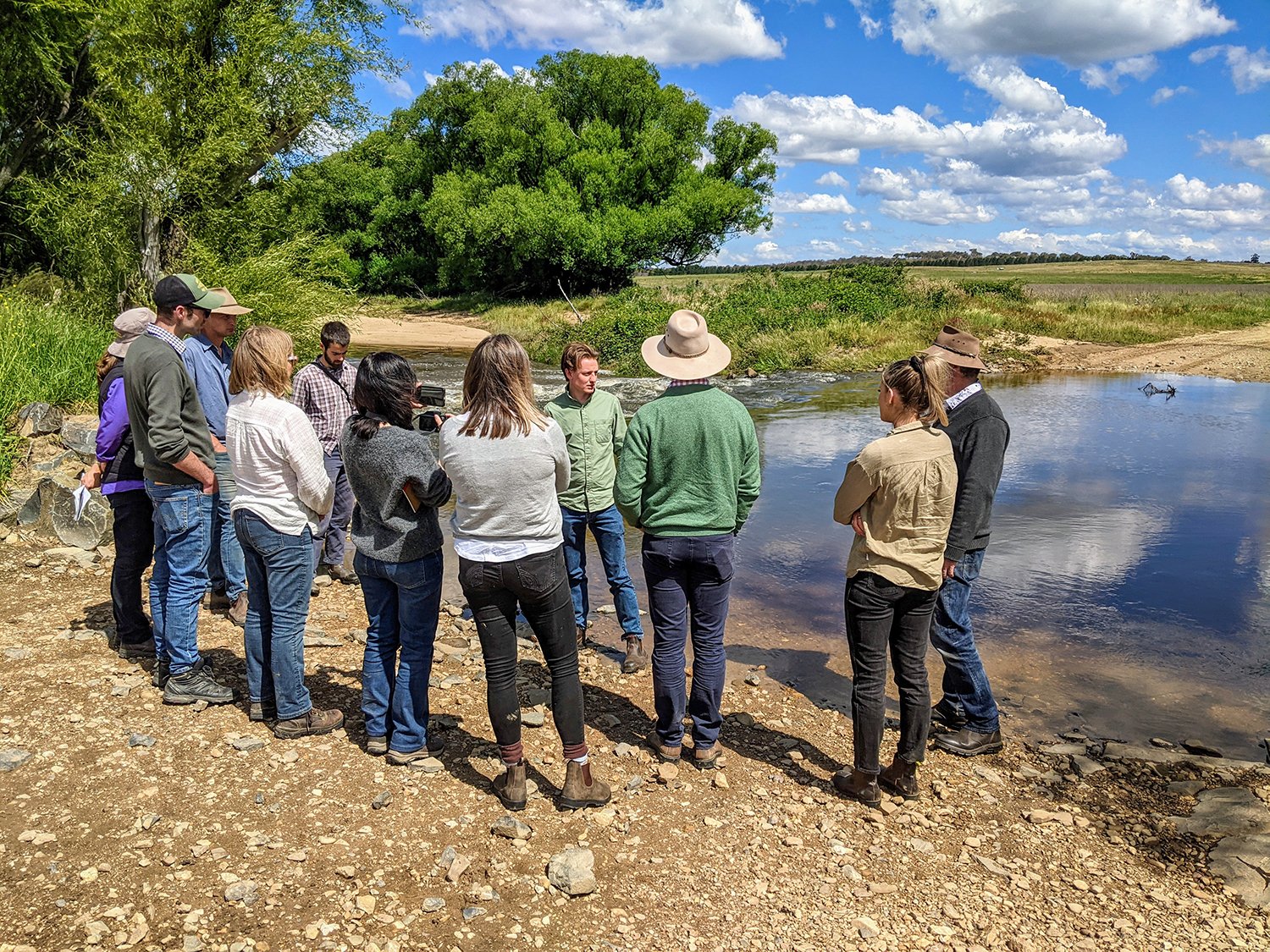
When restrictions on travel and hosting groups finally eased this year we took the opportunity to bring our expanding team together for a tour of the Home Farm and Duralla, allowing newer staff to learn more about what we’re doing on-ground in terms of landscape rehydration via the Mulloon Rehydration Initiative and more broadly about the Mulloon Institute’s story and journey so far.

Key sites that were visited included a newer leaky weir and the hilltop contour site at Duralla (where the volunteer tree planting day was held), and Peter’s Pond (leaky weir) and the Step Diffusion System (a hillside ephemeral waterway) both at the Home Farm.

It was a great day with many staff getting to meet face-to-face for the first time after months of working remotely and only knowing each other via computer screens. It was also an exciting opportunity to really appreciate how far we’ve come as an organisation – one that is growing and maturing and working hard to roll out landscape rehydration around Australia. We look forward to being able to open to the public again and resume field trips to our farms!

The Mulloon Rehydration Initiative is jointly funded through the Mulloon Institute and the Australian Government’s National Landcare Program. The initiative is also assisted by the NSW Government through its Environmental Trust.

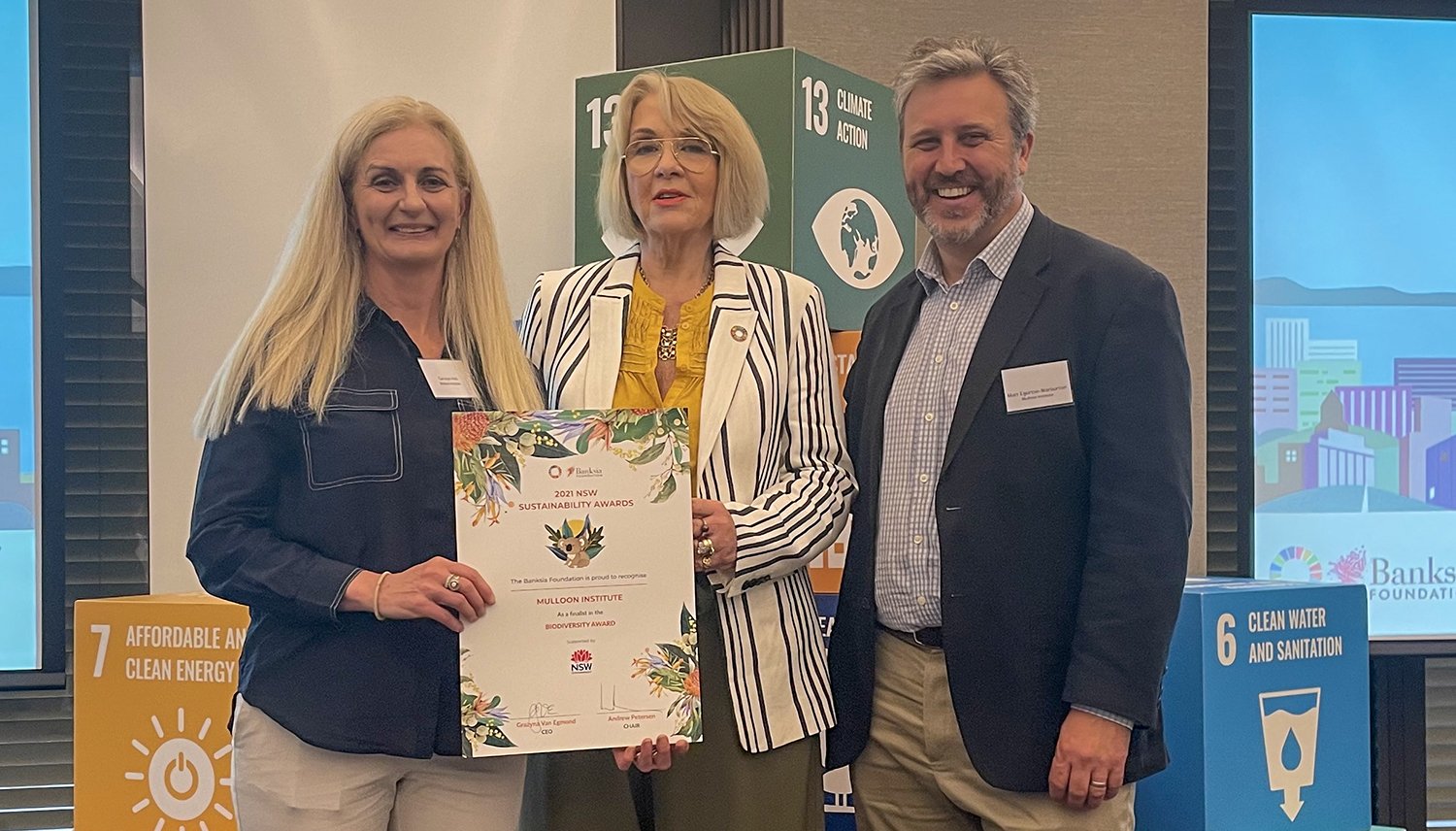
L-R: Carolyn Hall (TMI CEO), Graz van Egmond (Banksia Foundation CEO) and Matt Egerton-Warburton (TMI Mulloon Law Committee).

We’re super excited to announce that our flagship project, the Mulloon Rehydration Initiative, is a top three finalist in the Banksia Awards’ NSW Biodiversity category! The Banksia Awards are the most prestigious sustainability awards in Australia and the longest-running sustainability awards in the world.

The Mulloon Rehydration Initiative is jointly funded through the Mulloon Institute and the Australian Government’s National Landcare Program. The initiative is also assisted by the NSW Government through its Environmental Trust.


Mulloon Institute – Mulloon Rehydration Initiative

The Mulloon Institute rehydrates and restores landscapes to create healthy ecosystems that are full of biodiverse habitat, more resilient to climatic extremes, and capable of ensuring food and water security. Their world class scientific research is recognised globally by the United Nation’s Sustainable Development Solutions Network who has chosen it as one of five demonstrators of sustainable agriculture and environmental regeneration.

NSW Department of Planning, Industry & Environment – Saving Our Species (SoS)

Saving our Species is a framework for large-scale conservation that goes far beyond what is required. Legislation requires Saving our Species to run a biodiversity program and develop recovery plans for threatened species, but maximising the number of species secure in the wild, integrating a range of partnerships to increase investment, and communicating outcomes are just a few examples of ways Saving our Species goes beyond business expectations.

Sydney Institute of Marine Science

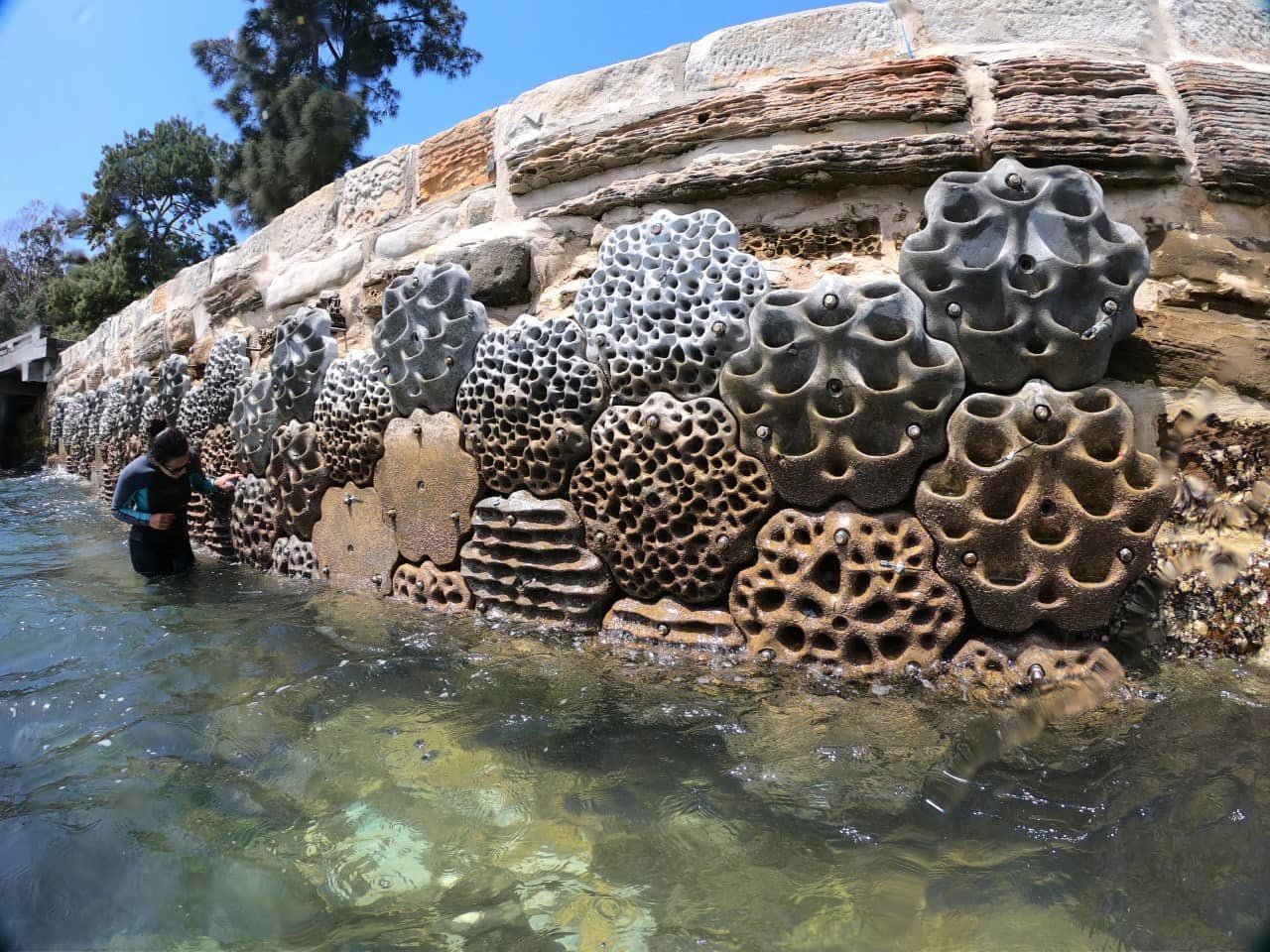
Through innovative design that combines ecological and engineering know-how, a team at the Sydney Institute of Marine Science is bringing marine life back to built structures globally. Their work with Reef Design Lab uses 3D printing technology to recreate the pits, crevices and pools of natural shorelines on modular panels. The panels, which can be manufactured from upcycled materials, are then fitted to new or existing marine developments in customisable mosaics to create Living Seawalls.


Huge congratulations to the winners!

Sydney Institute of Marine Science

The Living Seawalls program has shown that despite marine construction being a large part of the problem, it can also be part of the solution. By blending ecological concepts and engineering in creative design, the team is reviving our increasingly urbanised oceans through the development of affordable, adaptable and scalable methods of ecologically enhancing structures. From humble beginnings in Sydney Harbour, Living Seawalls has now expanded to span across three continents and has gone from strength to strength this year, recently having been a top 3 finalist in the inaugural Earthshot Prize.

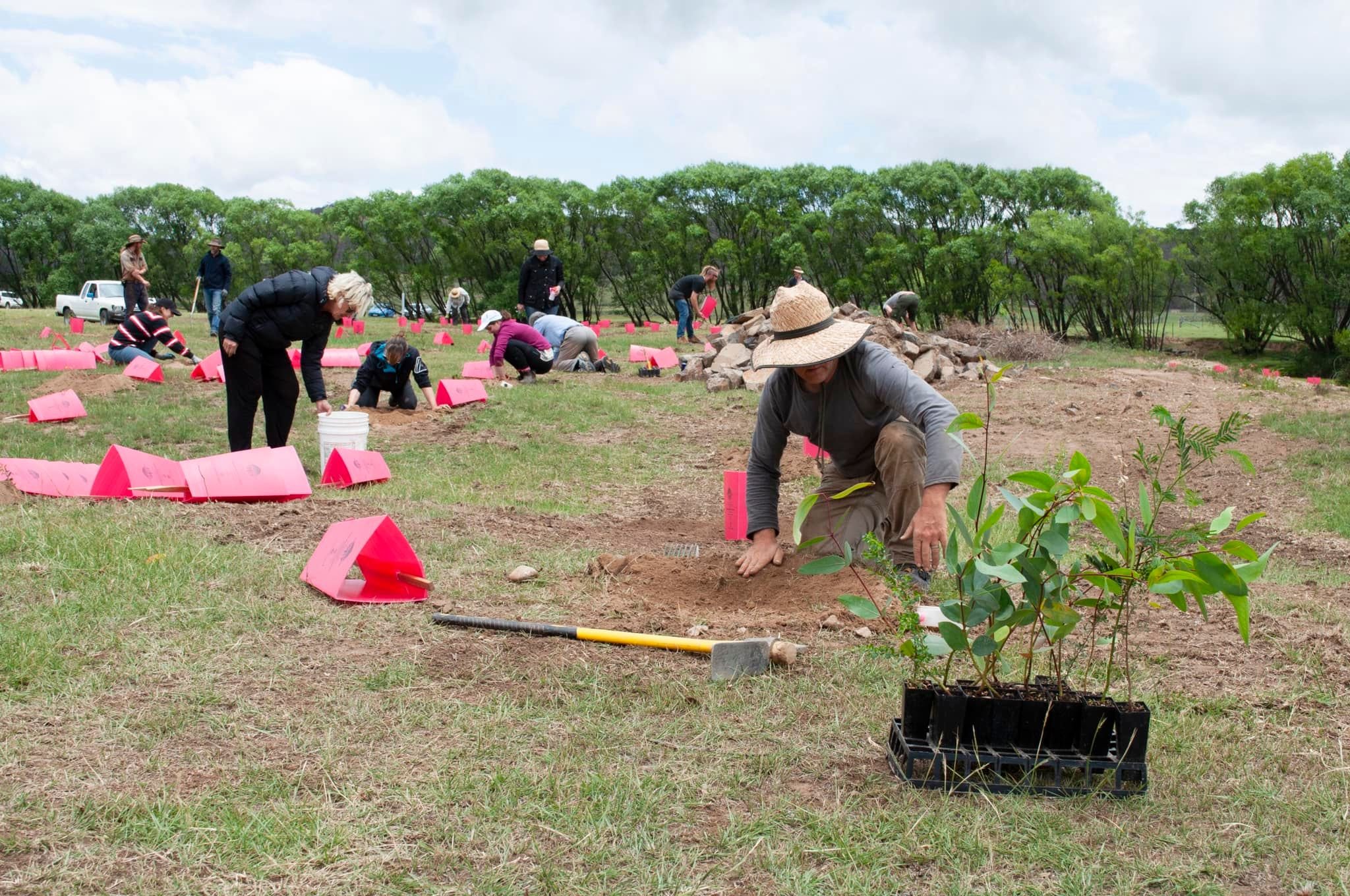
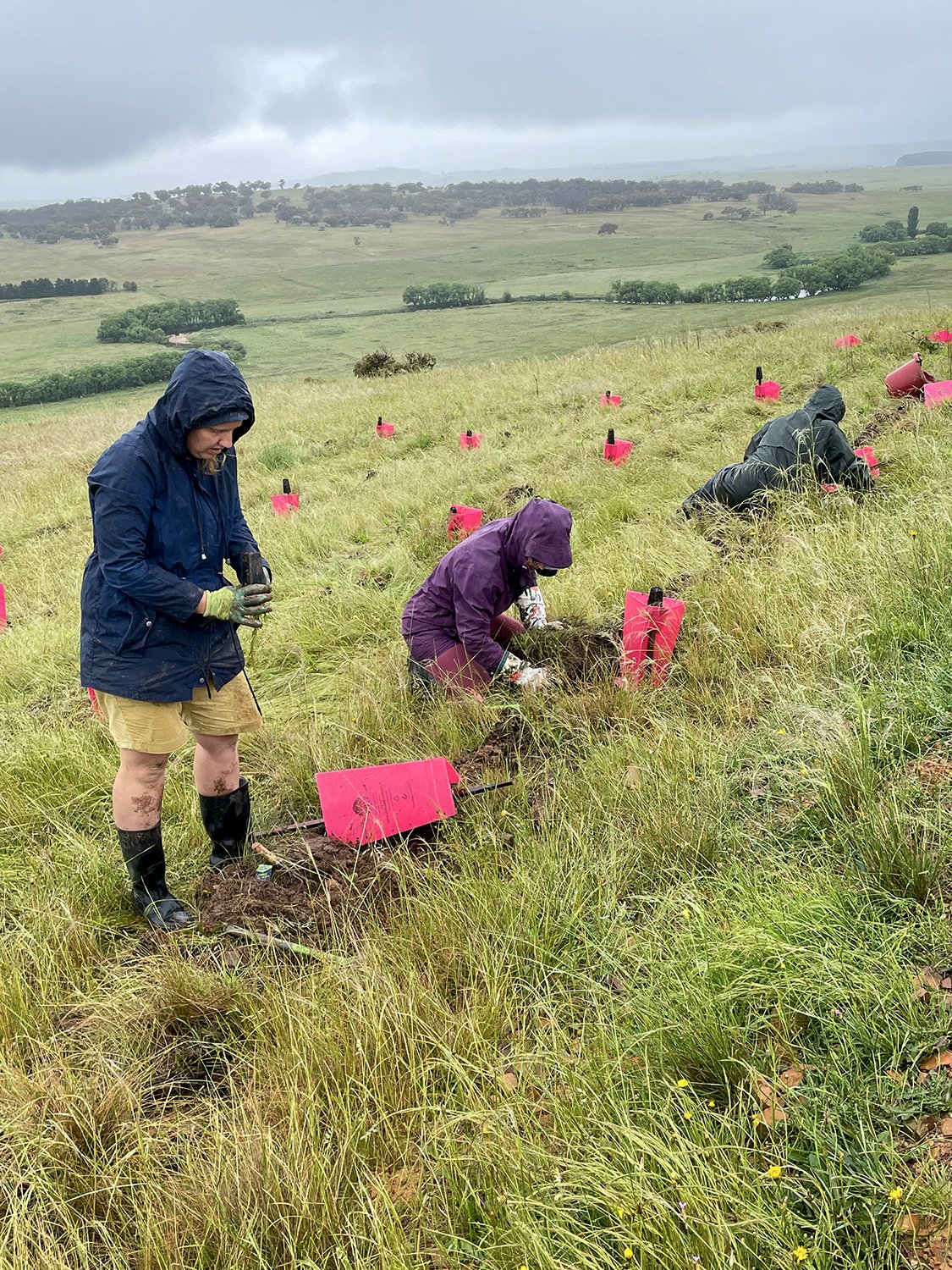
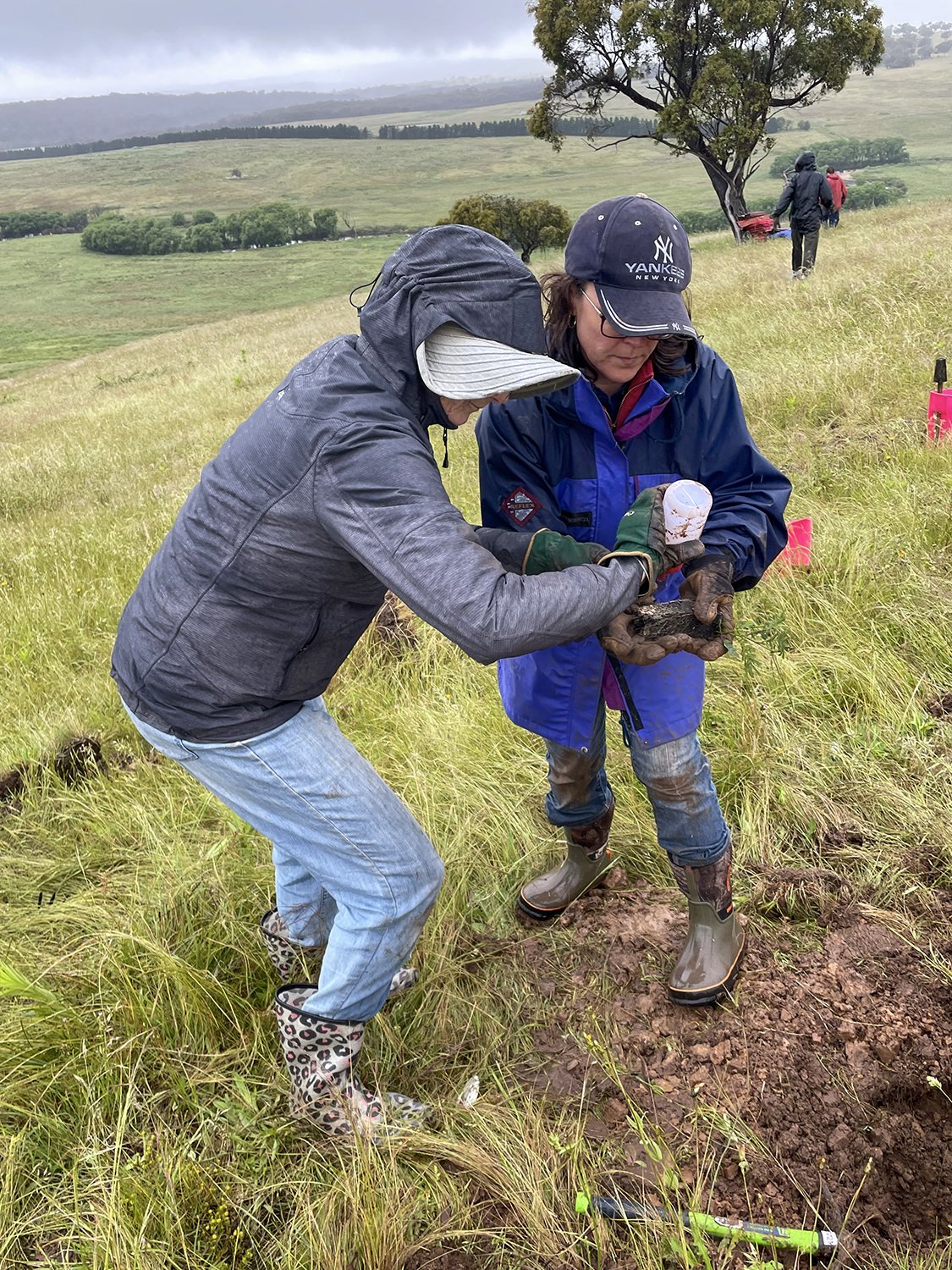
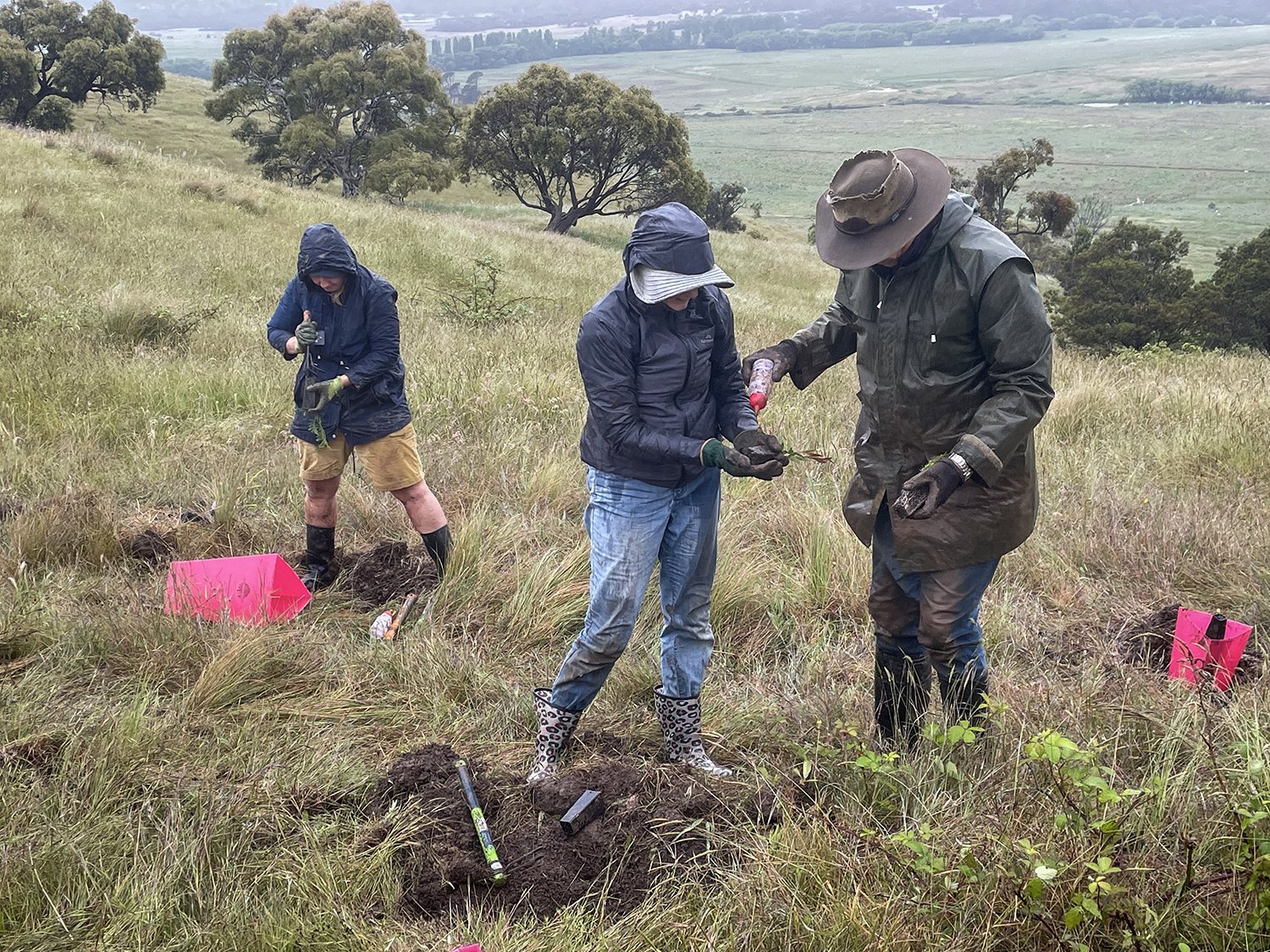
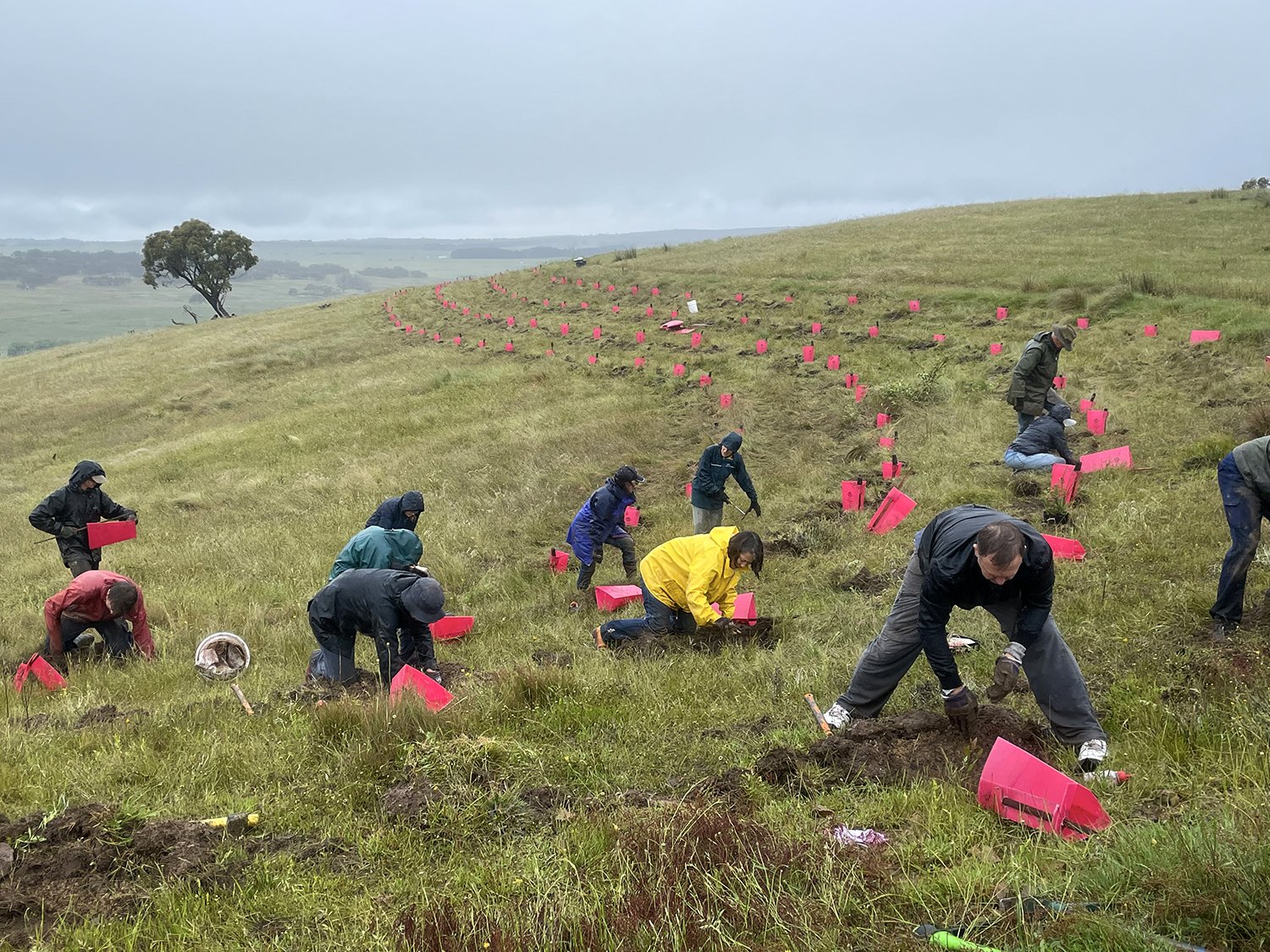
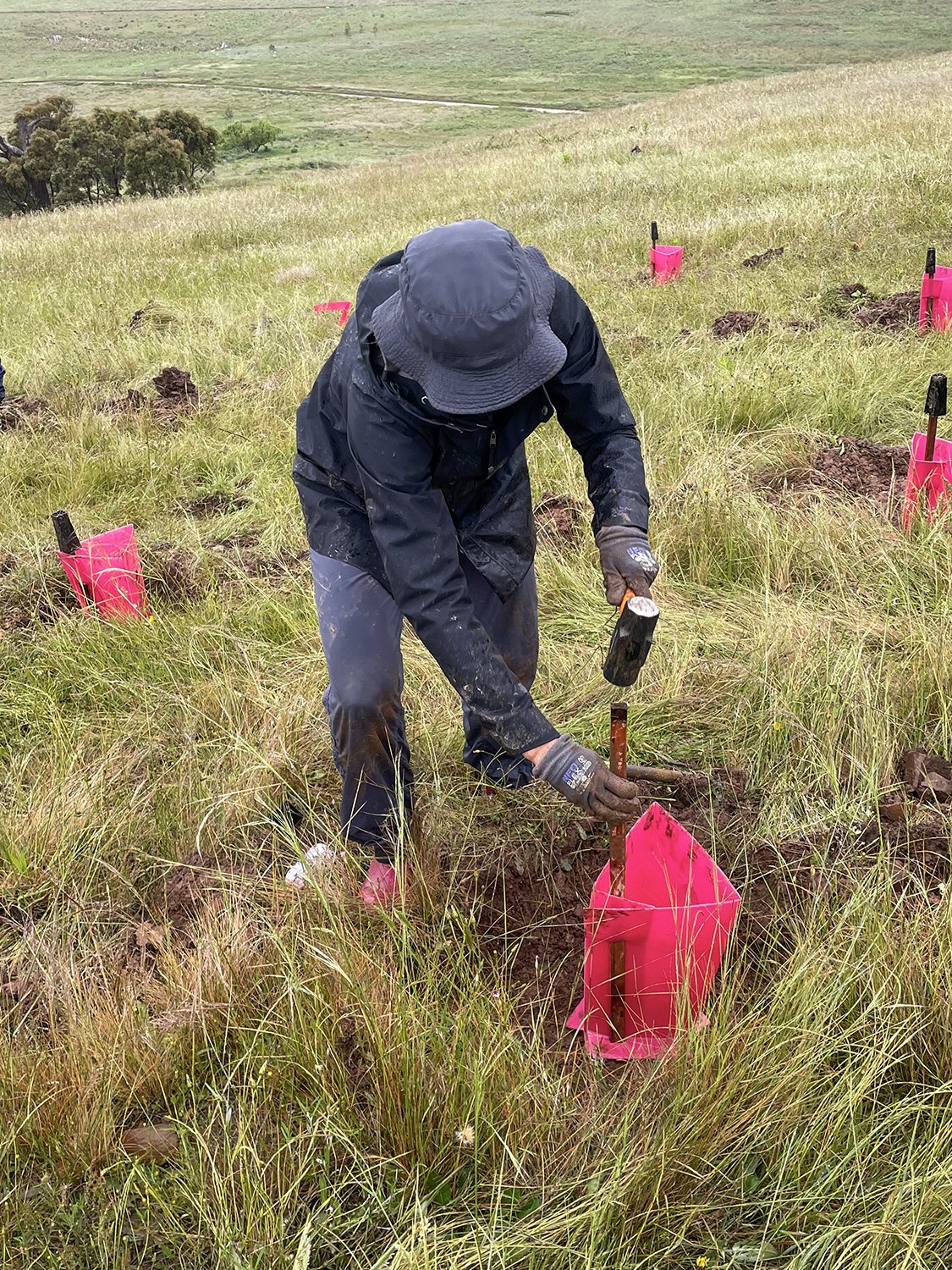
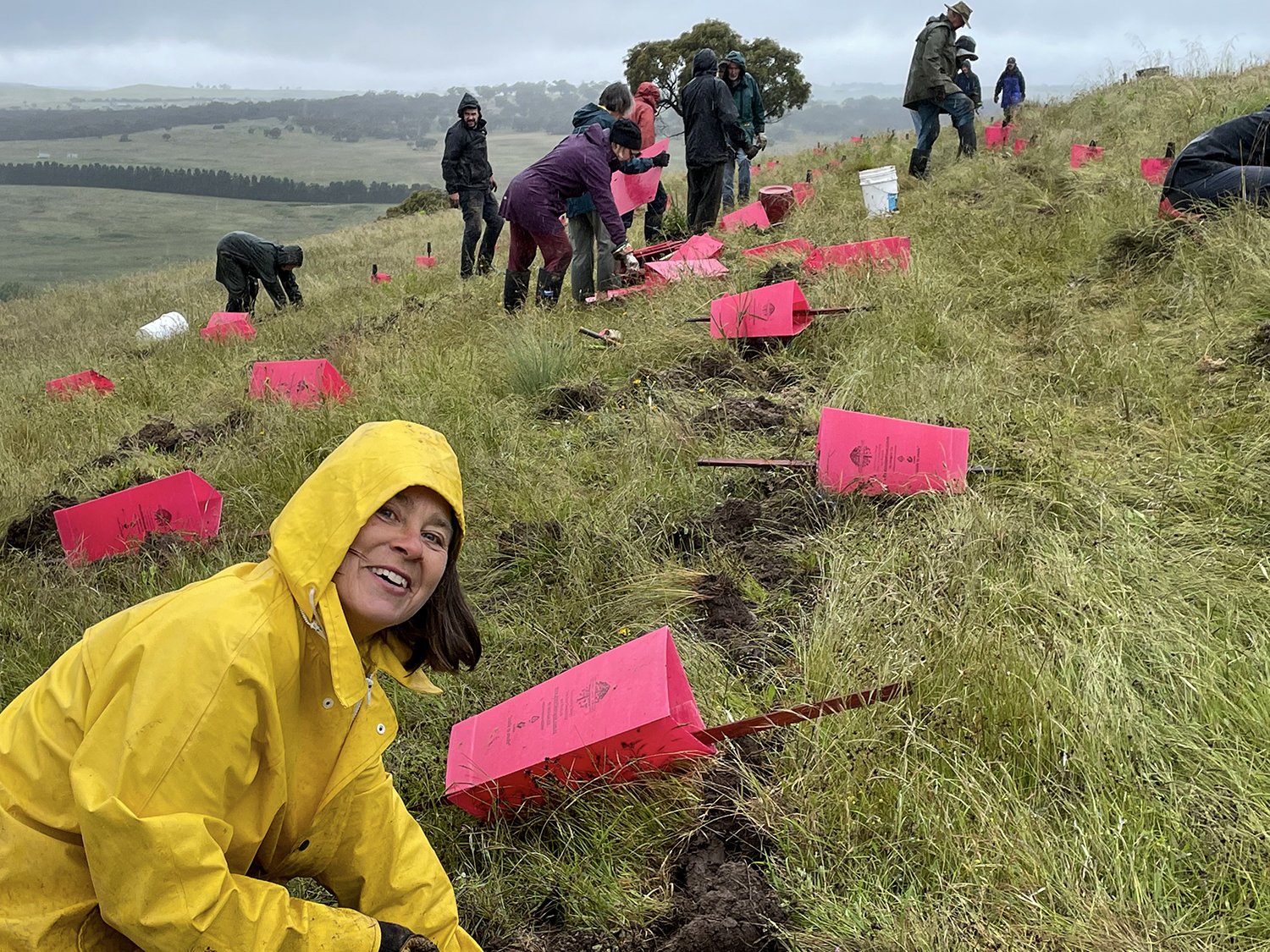
Huge thanks to the volunteers that turned up for our tree planting day at Duralla in November! 

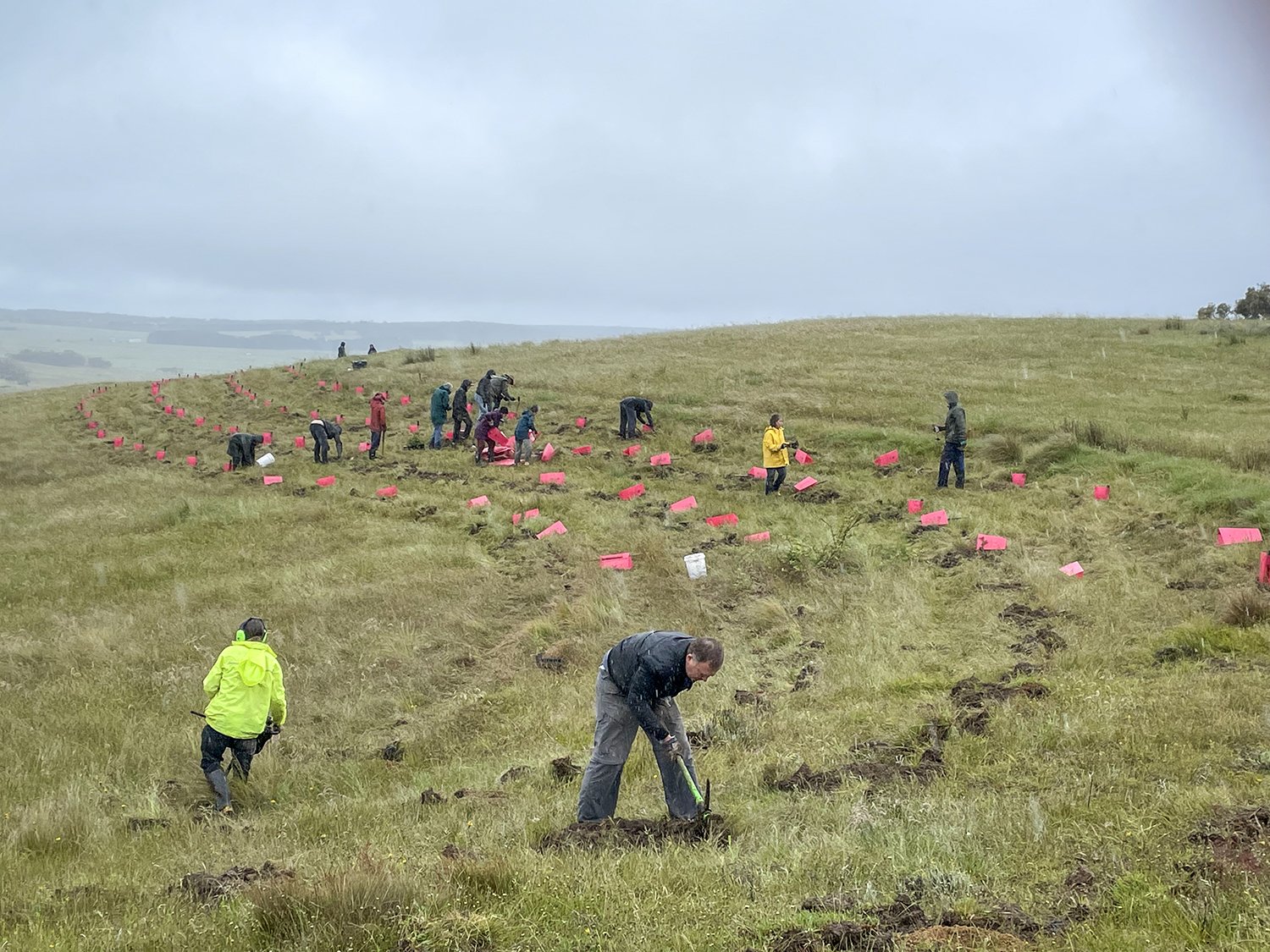
Despite the damp and muddy conditions with fairly consistent drizzle, 20 hardy souls helped us plant 200 trees on the hillside site, including many fast growing wattles. Many participants were from Canberra and others had joined us from Cooma and Sydney.

Conditions on the day were quite challenging with flooding at Duralla making the property inaccessible to two wheel drive vehicles. Most volunteers had to leave their cars and be shuttled several kilometres to the site. Despite the wet conditions which kept worsening during the day, our resilient volunteers remained enthusiastic and managed to plant out all of the pre-prepared holes by lunchtime. A super effort!

After a satisfying lunch in a very welcome marquee on top of the hill, planting continued on the rockier soils of the ridgeline where conditions became even more difficult and the holes had to be dug by hand.

The enthusiasm of the volunteer team was phenomenal and everyone who took part must be congratulated for their patience despite the weather as they worked through difficult conditions with extraordinarily resilience. They certainly exceeded our expectations for the day! Thank-you!

The plantings form part of the award winning Mulloon Rehydration Initiative that is rehabilitating and rehydrating the Mulloon catchment in southern New South Wales and turning a highly eroded creek into a healthy, vibrant ecosystem that captures flood sediments, recycles nutrients and provides valuable habitat. The project spans 23,000 hectares and 50 kms of creek and tributaries and involves 23 landholders and is being rolled out in five stages between 2019 and 2023.

The Mulloon Rehydration Initiative is jointly funded through the Mulloon Institute and the Australian Government’s National Landcare Program. This event was also assisted by the NSW Government through its Environmental Trust.

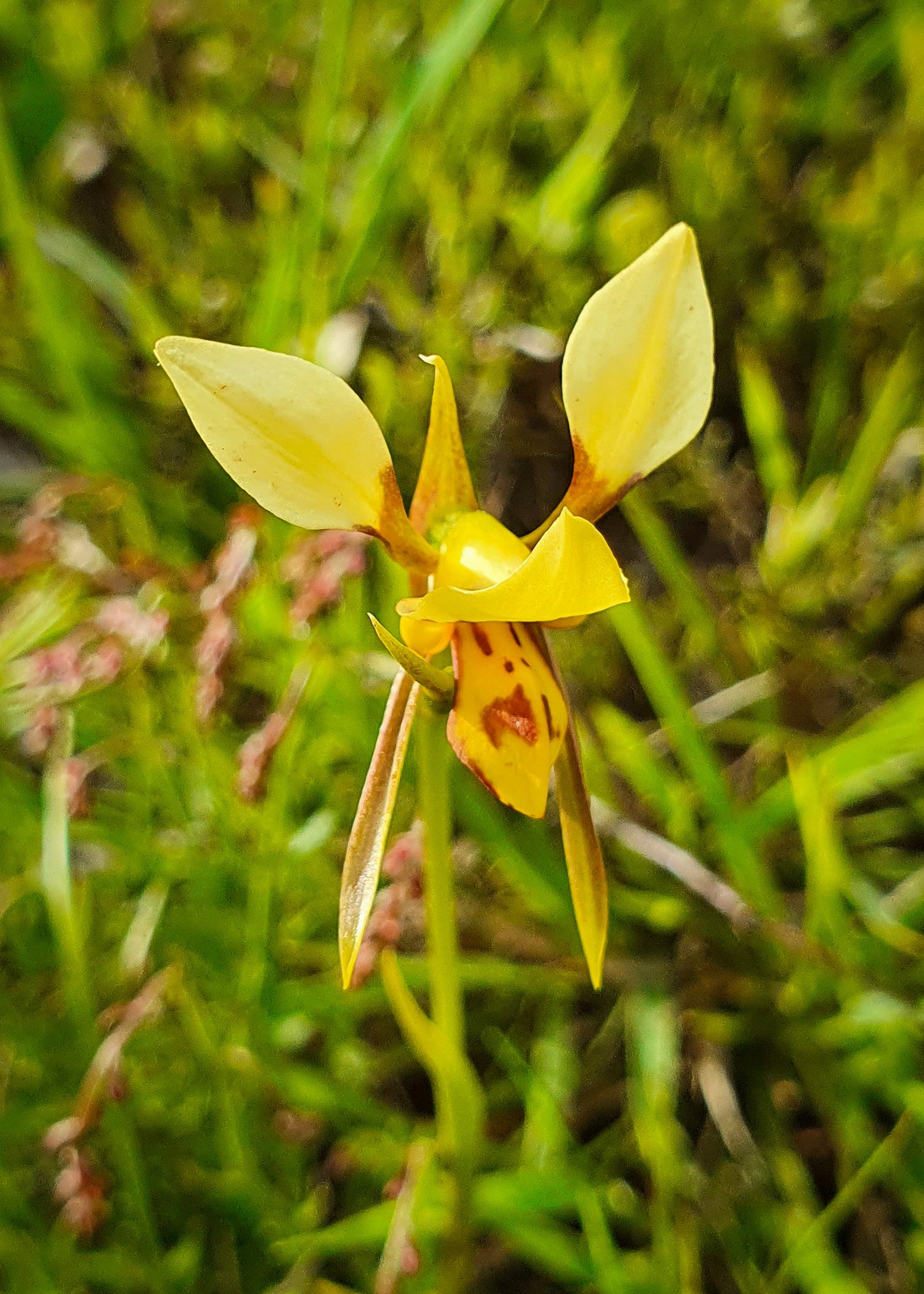
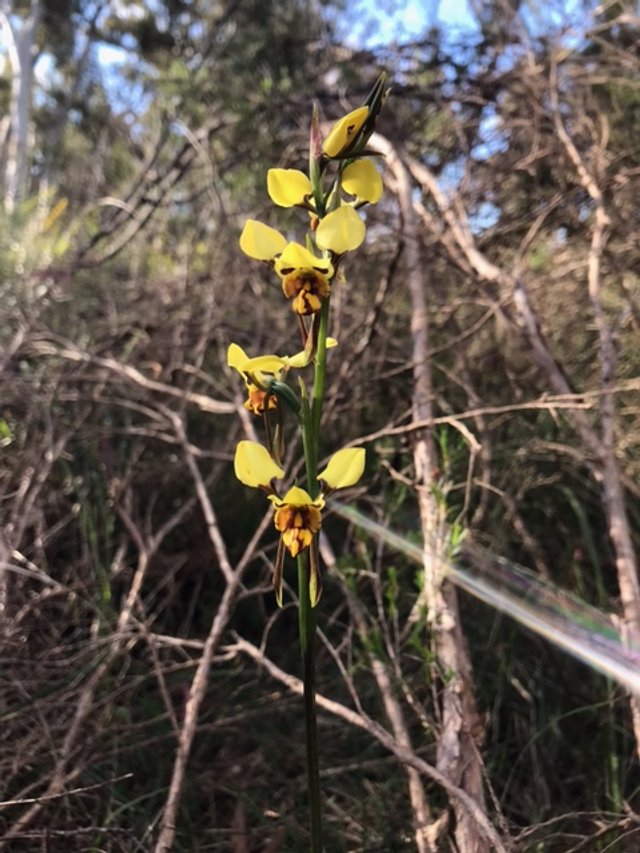
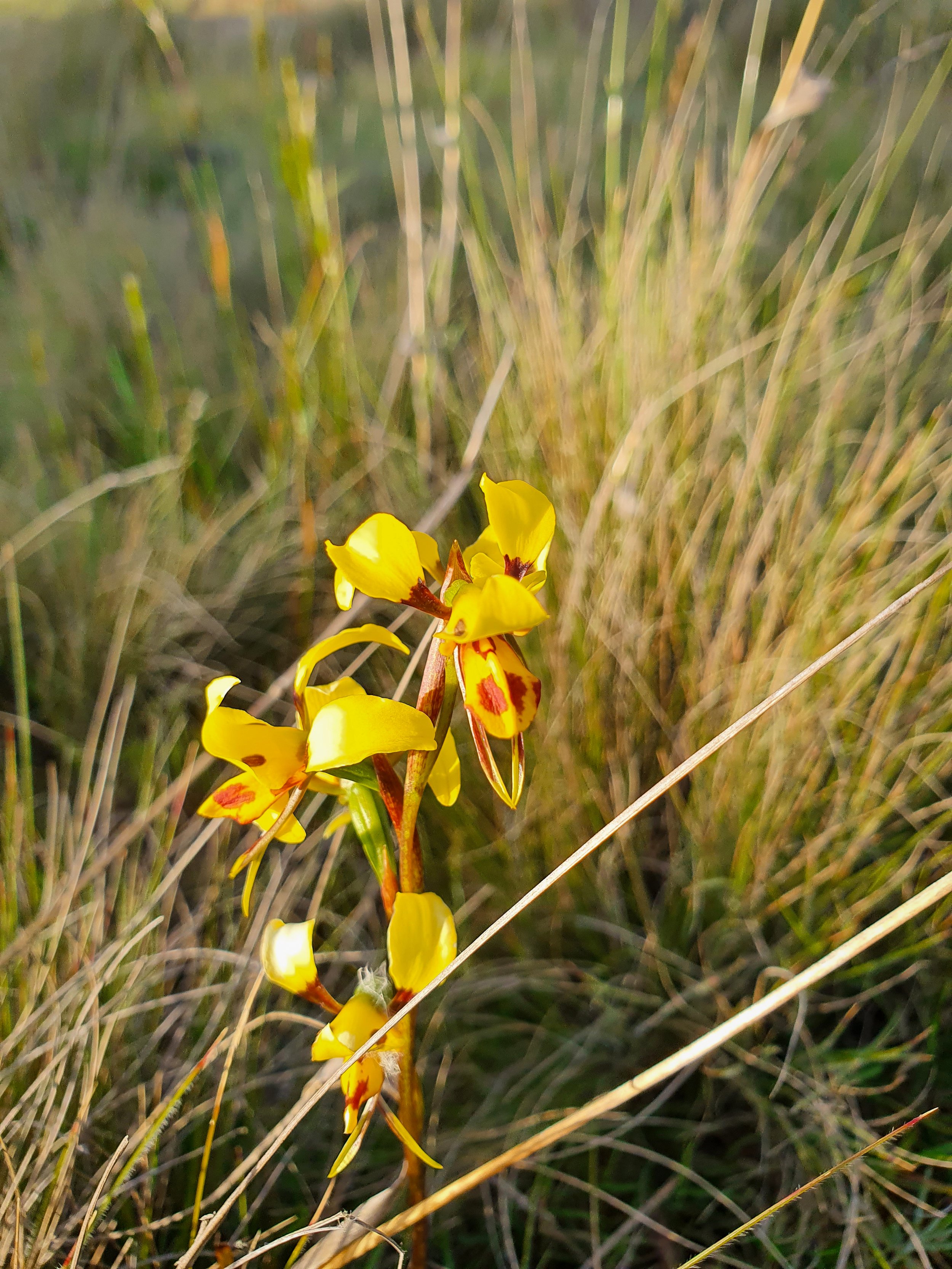
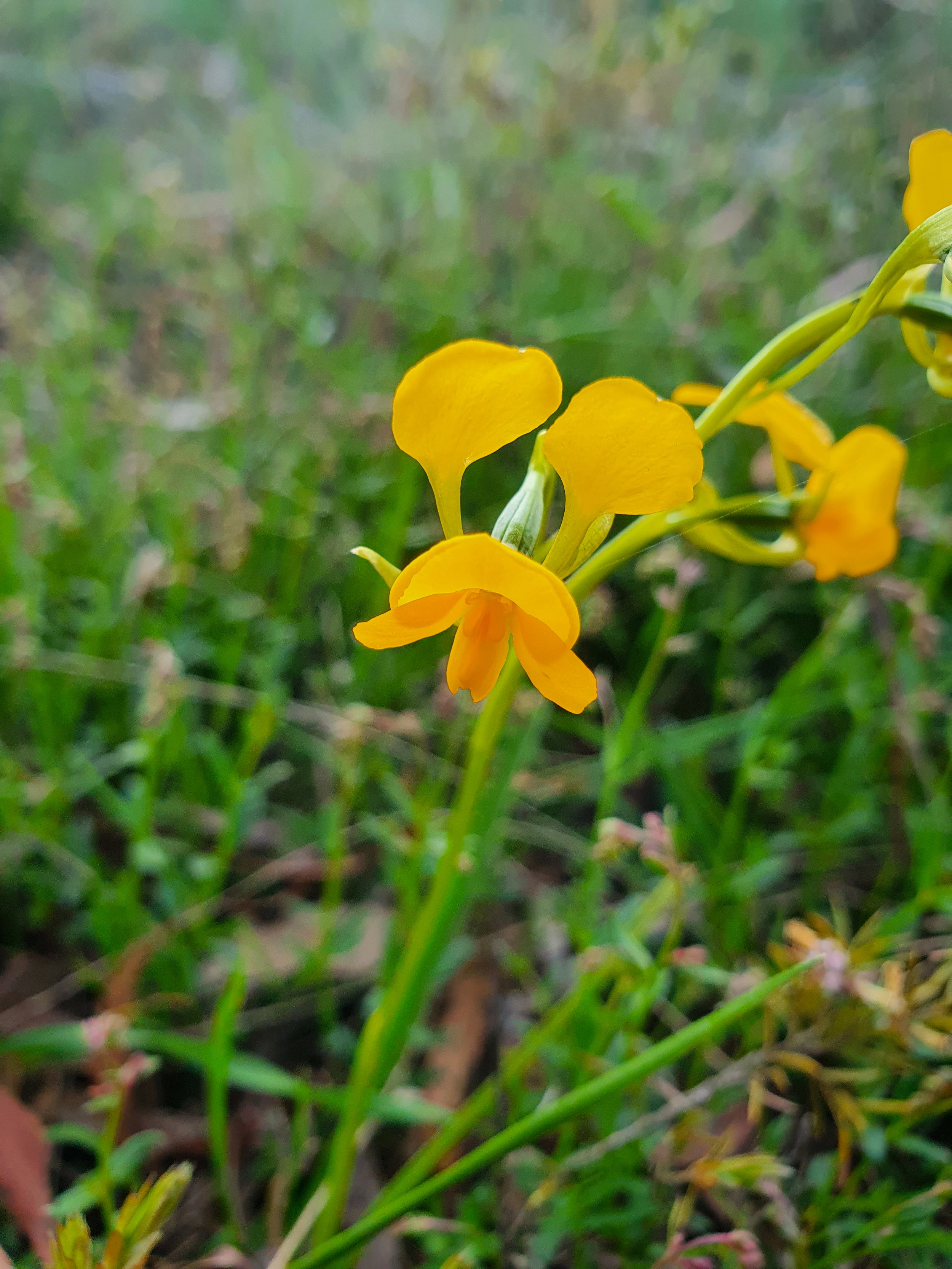
While Research Coordinator Luke Peel and Science Officer Ira Dudley-Bestow were conducting the baseline Rapid Appraisal of Riparian Condition (RARC) surveys across properties in the catchment recently as part of the Mulloon Rehydration Initiative, they also took time to see if they could locate any Buttercup Doubletail (Diuris Aequalis) which are an endangered terrestrial orchid found in forests and woodlands near the Great Dividing Range on the NSW Southern and Central Tablelands. Only a few, small scattered populations remain in the wild, including a previous sighting along the forested ridgeline area west of the main driveway into the Home Farm.

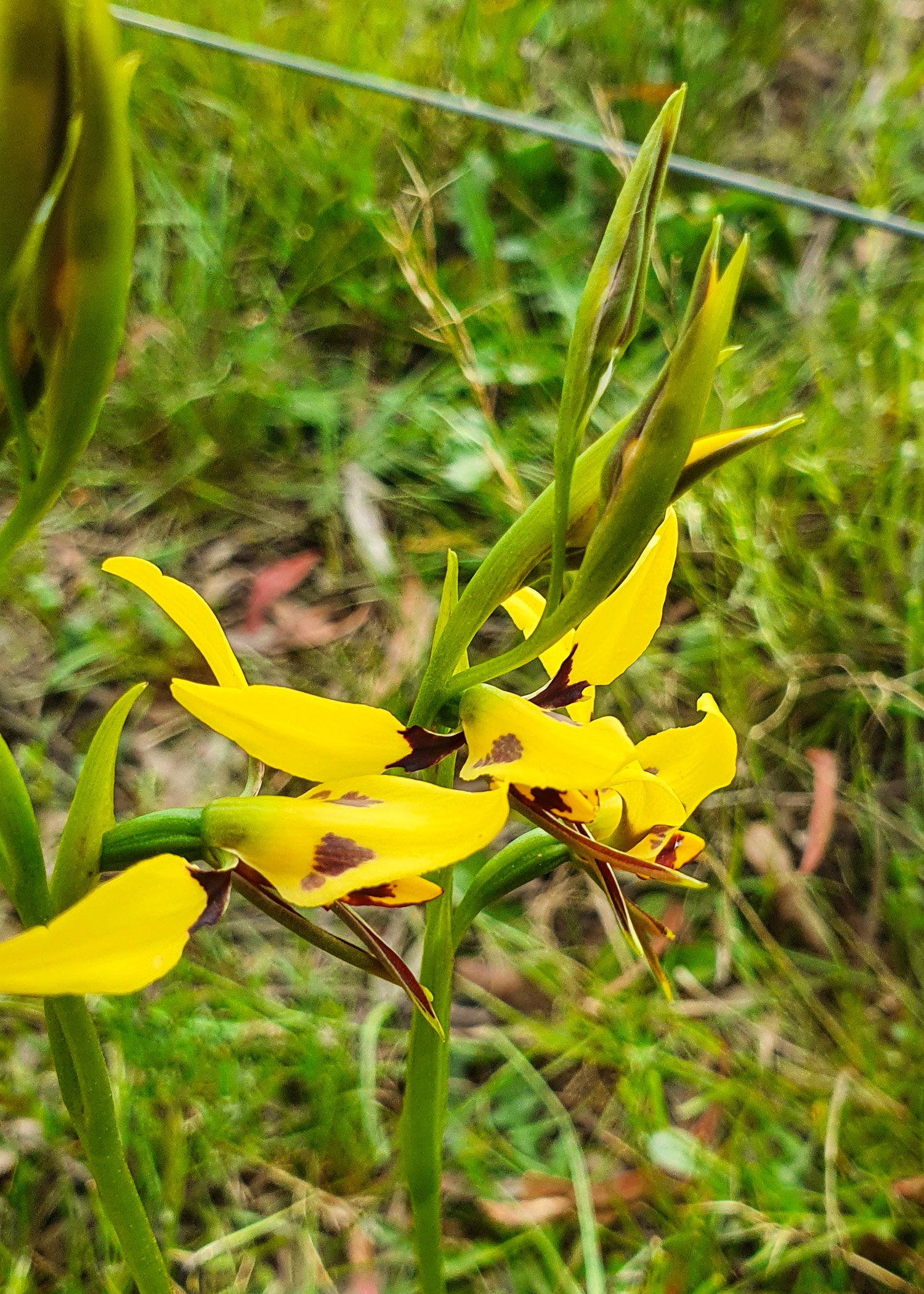
While they didn’t find any this year, they did note its similar cousin the Tiger Orchid (Diuris sulphurea) and many other lovely springtime blooms. Several landholders taking part in the Mulloon Rehydration Initiative also sent in photos of orchids on their properties to see if they had any on their farms. So far this year the orchids remain elusive!

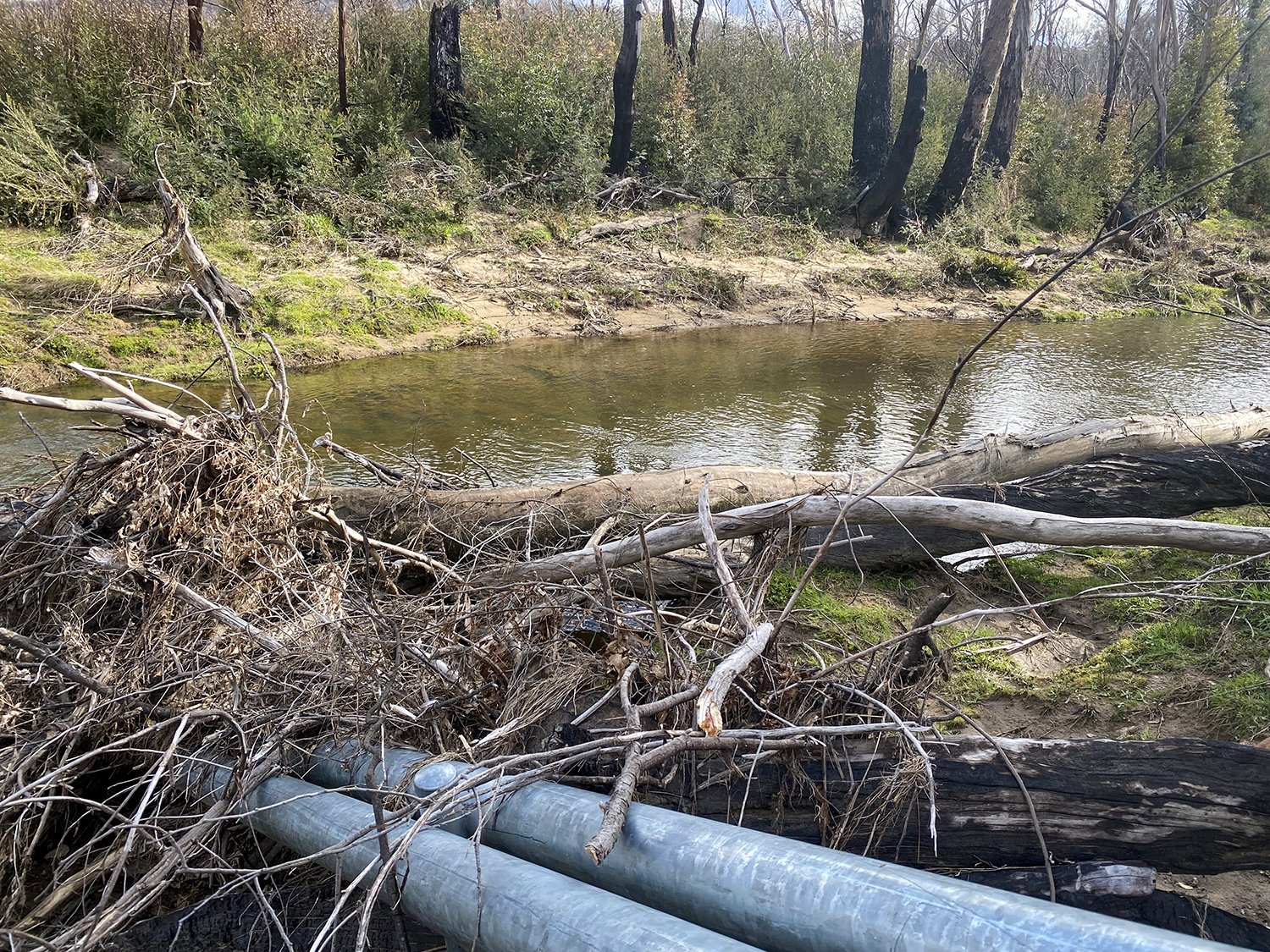
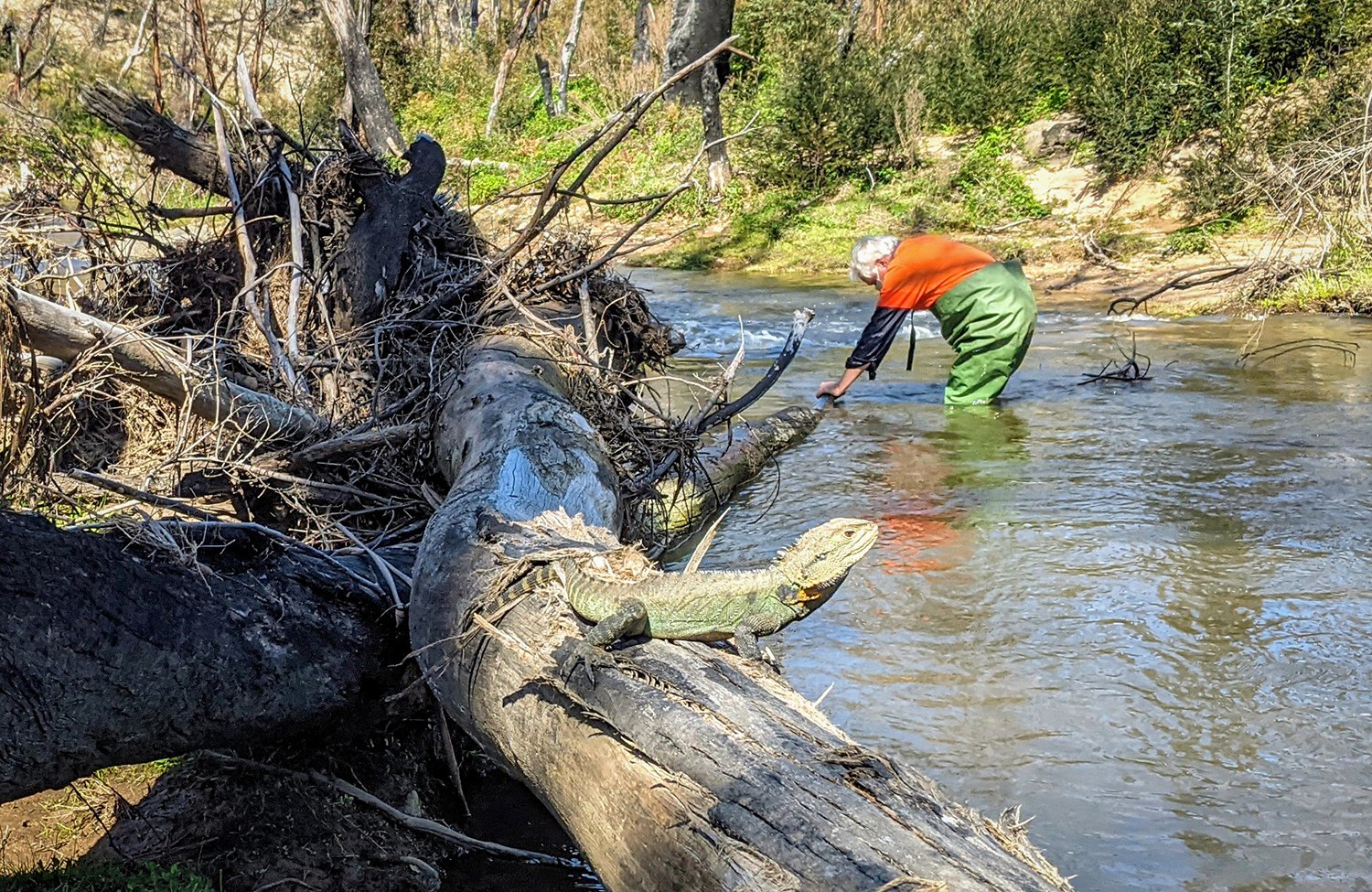
At ‘Landtasia’ Luke and Ira came across a debris piled up against a log that had been brought down in floodwaters from the Upper Mulloon catchment after it was severely burnt in 2019-20. The debris was piled up behind stream gauge housing that RSK Welding had assisted with installing in 2020. Luckily it was strong enough to maintain integrity, with only a slight bend in the housing.

When Luke and Hydrologist Tony Bernardi visited the site for routine maintenance on the stream gauge sensors, Tony tried to clear away smaller debris that could have caused potential issues for accuracy of readings. But while the debris pile could issues for the stream gauge, it had also become home for a great water dragon! Many other debris pile ups and water dragons were spotted at other locations along Mulloon Creek, plus a surprise sighting of a platypus out during the day.

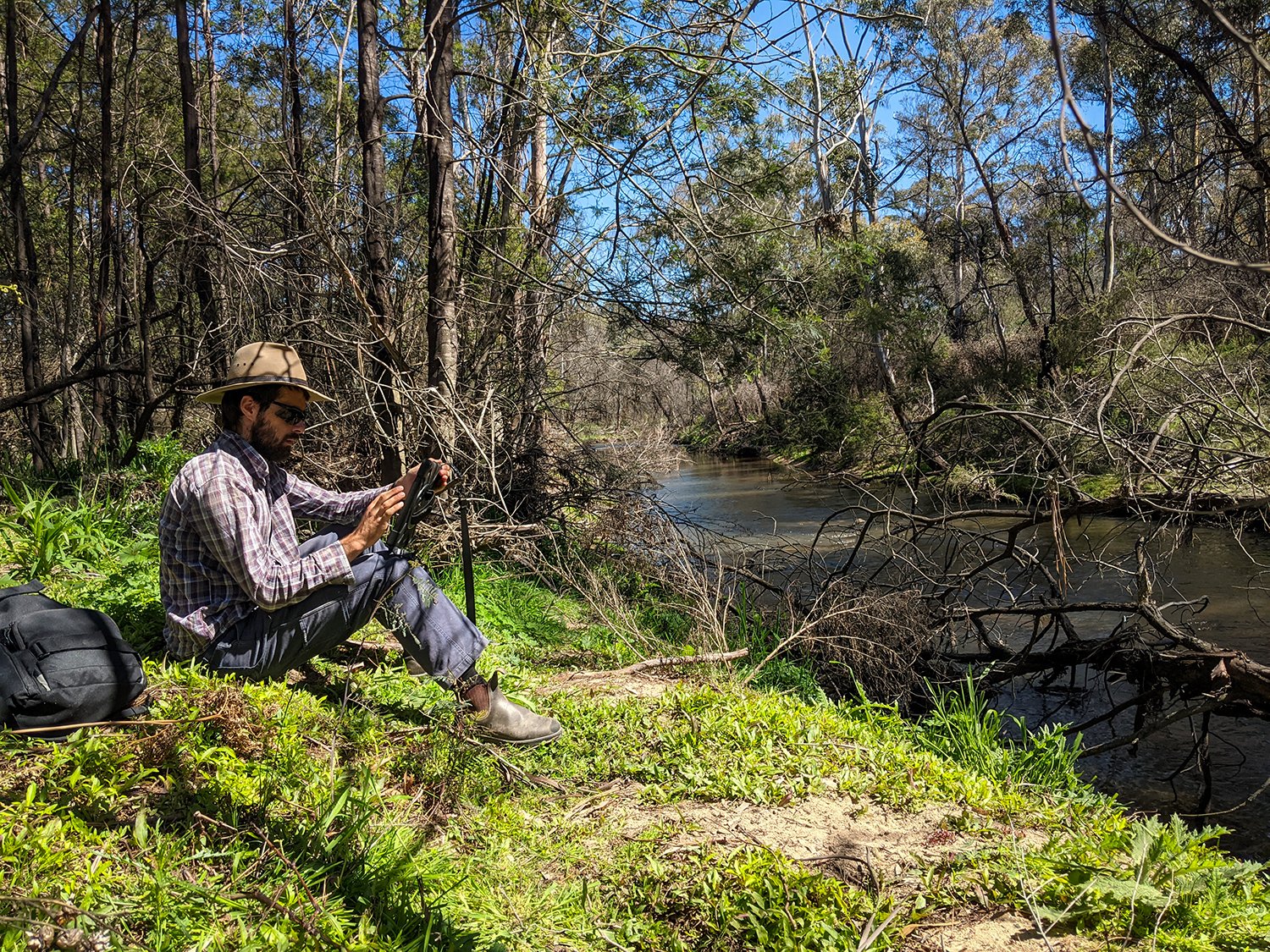
Ira using the new tablets to record data, then capturing RARC survey from hammocks a landowner had placed under some trees – it was too good an opportunity not test out. Ira also had to test out a wombat hole, creek-side at the Home Farm.

Field work is never boring in the day of our scientists!
The Mulloon Rehydration Initiative is jointly funded through the Mulloon Institute and the Australian Government’s National Landcare Program. The initiative is also assisted by the NSW Government through its Environmental Trust.

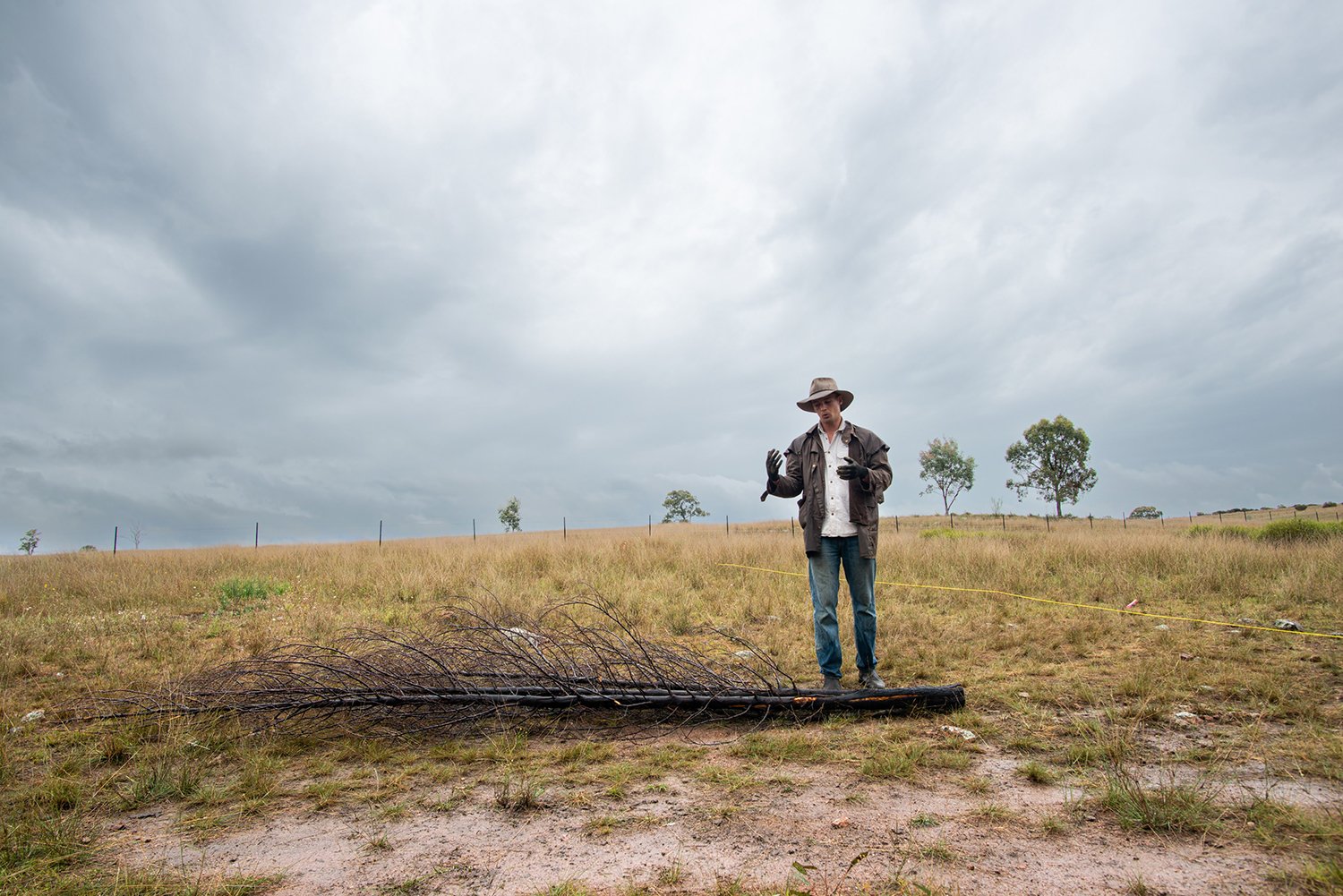
Joe Skuse talking brushpacks at Capertee Valley.

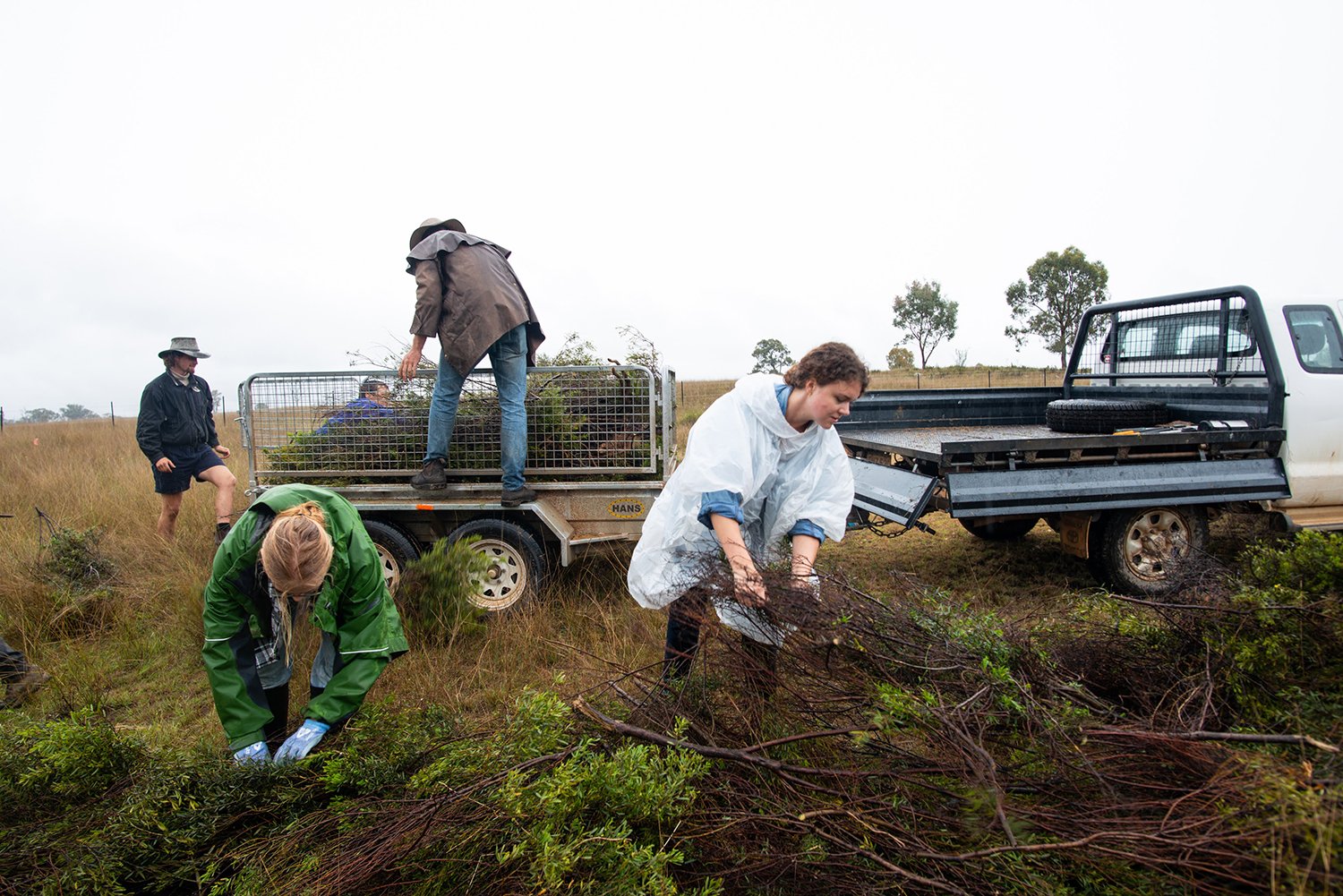
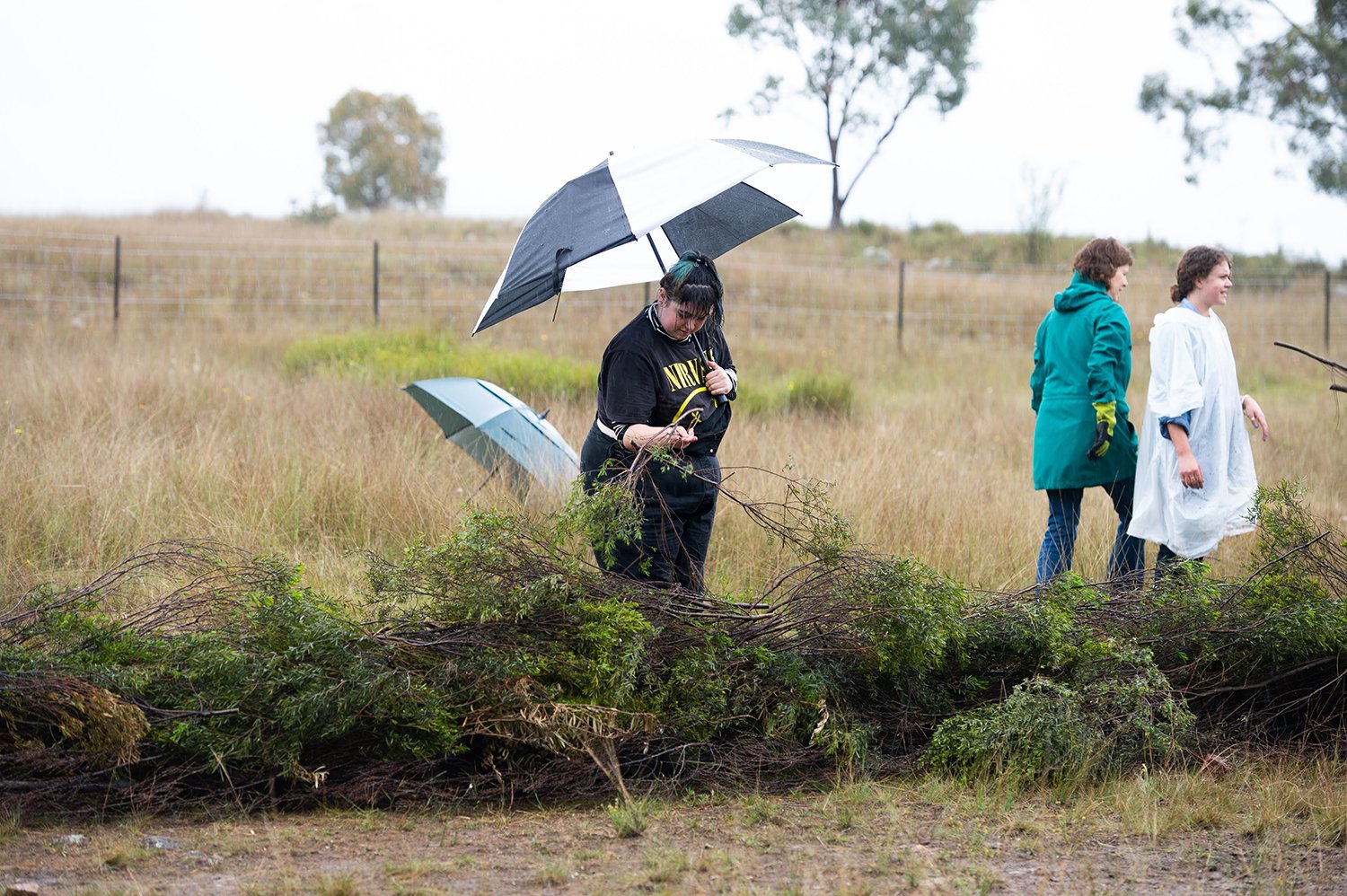
Landscape Planner Joe Skuse recently led a highly successful workshop in the Capertee Valley, NSW on assessing the health of land, tackling erosion and rebuilding fertility using simple techniques.

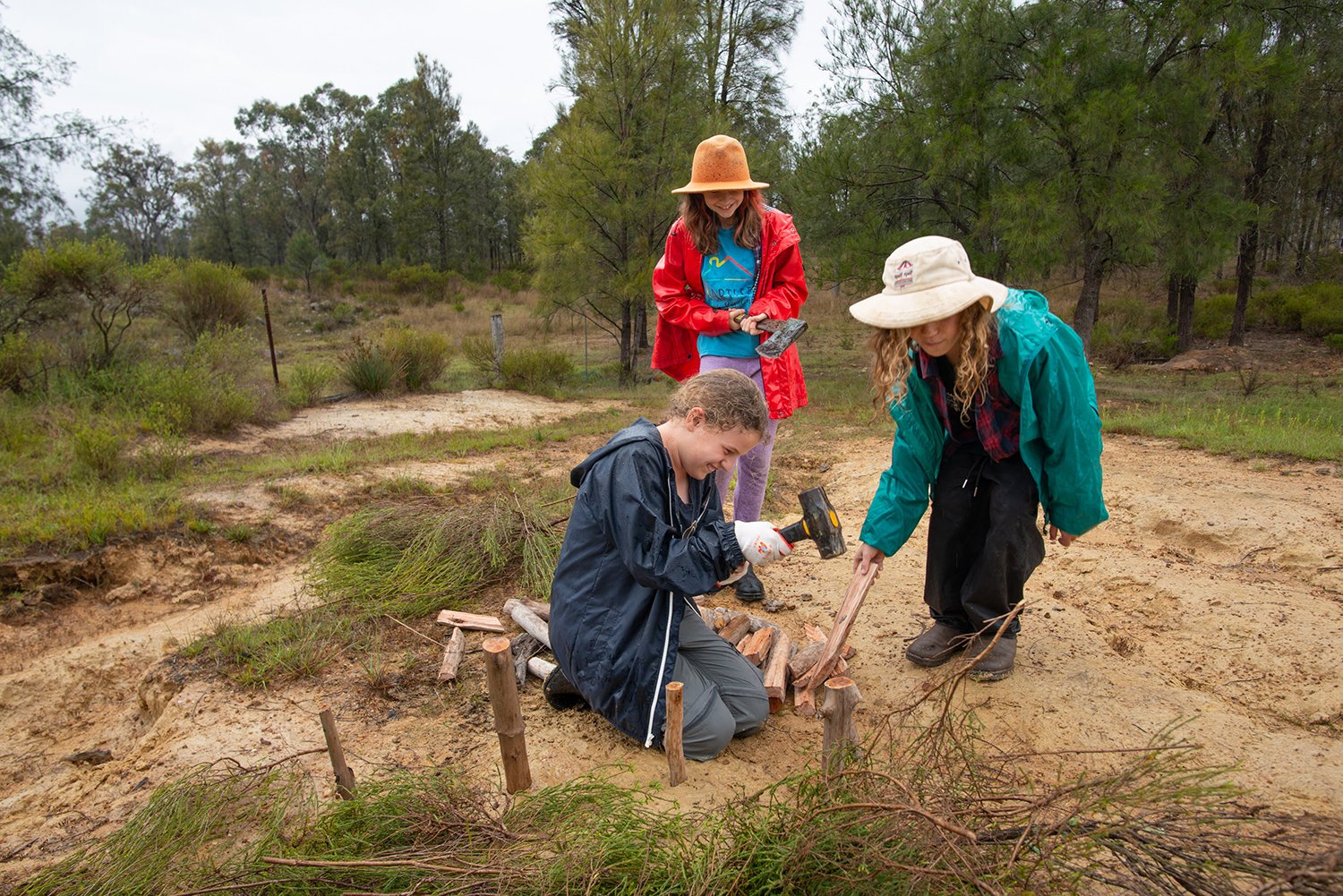
It was a hands-on workshop on how to kickstart landscape recovery using Landscape Function Analysis (a quick and inexpensive way to assess a landscape’s capacity to hold water, cycle fertility and build soil) and brushpacks (an affordable, DIY approach to repairing degraded land).

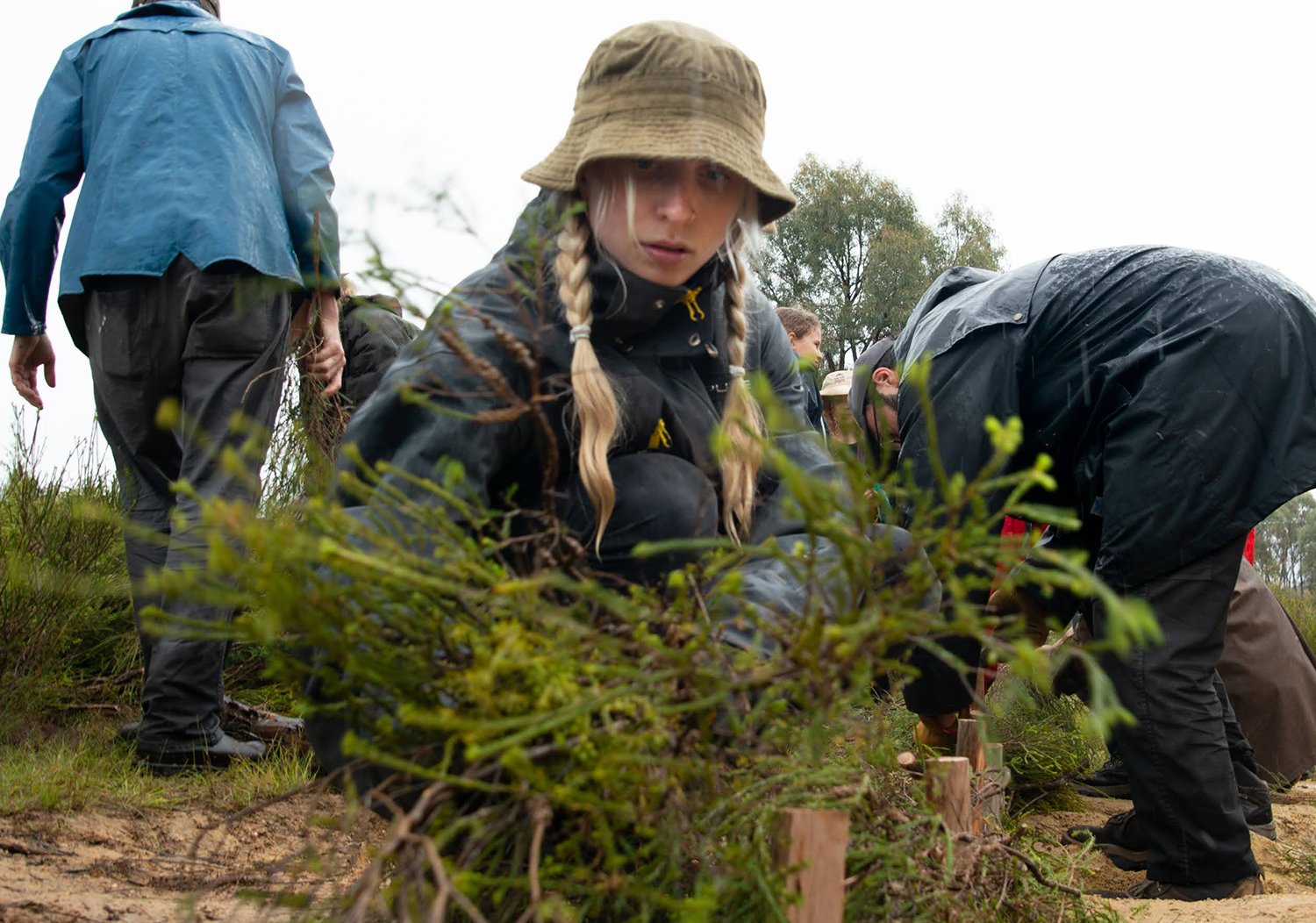
Forty-five university students, lecturers, artists, farmers and Landcare members experienced an artistic version of Landscape Function Analysis and built brushpacks that will support the recovery of a degraded area landowners Charlie and Alex Bogle have fenced off for regeneration on Bimbimbie Farm. Everyone worked enthusiastically in the drizzle!

This event forms part of KSCA’s Land Studio, a program that mingles art, science and land restoration. Land Studio camps bring groups of students, landowners, land custodians and community together to understand our changing landscapes and build resilience to climate change. The workshop was supported by the NSW Environmental Trust and the NSW Government’s Increasing Resilience to Climate Change grant program.

PHOTOS: Alex Wisser.