From frog stories to a very moist chain-of-ponds cake: citizen scientists model landscape rehydration in two university projects.

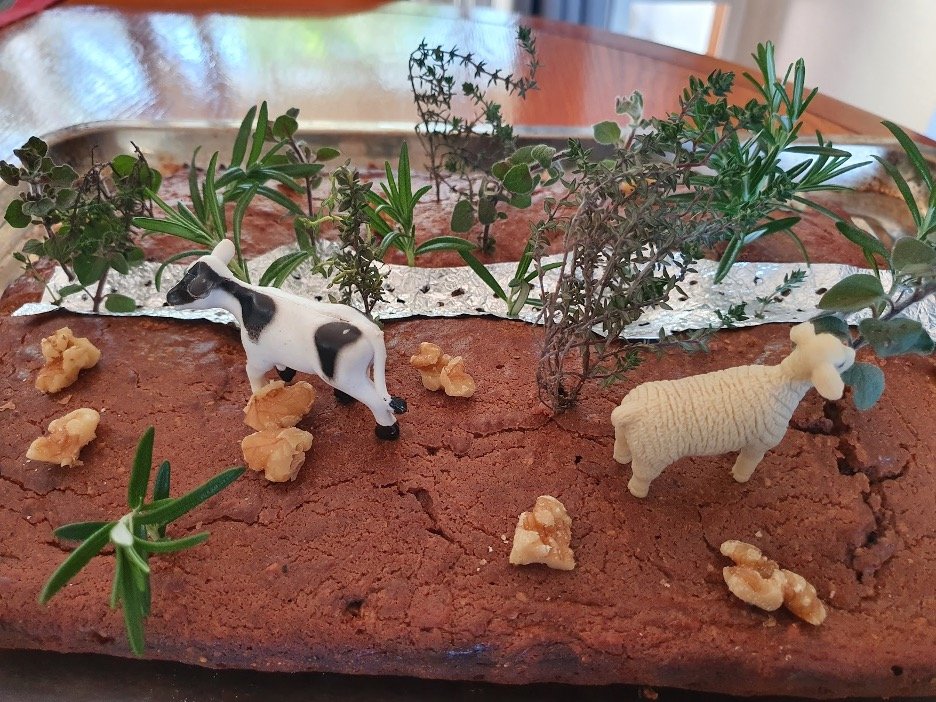
Some imaginative students and staff from Australian National University and the University of Wollongong have taken a deep dive into the art of model-making, kick-starting our ‘Modelling Landscape Rehydration for Catchments, Communities and Curriculum’ citizen science project. Led by Research Officer Laura Fisher, the project will generate models of all kinds to catalyse learning about landscape rehydration.
Some of the questions we posed to our citizen scientists were:

  • How can a model reveal invisible water flows?

  • How can we picture a landscape at many scales, from the scope of a whole catchment right down to a creek site? 

  • What materials can help us demonstrate water filtration through healthy soil?

  • Can a digital model of a catchment help us navigate the scientific data we collect, and tell a compelling story about it to the public?  
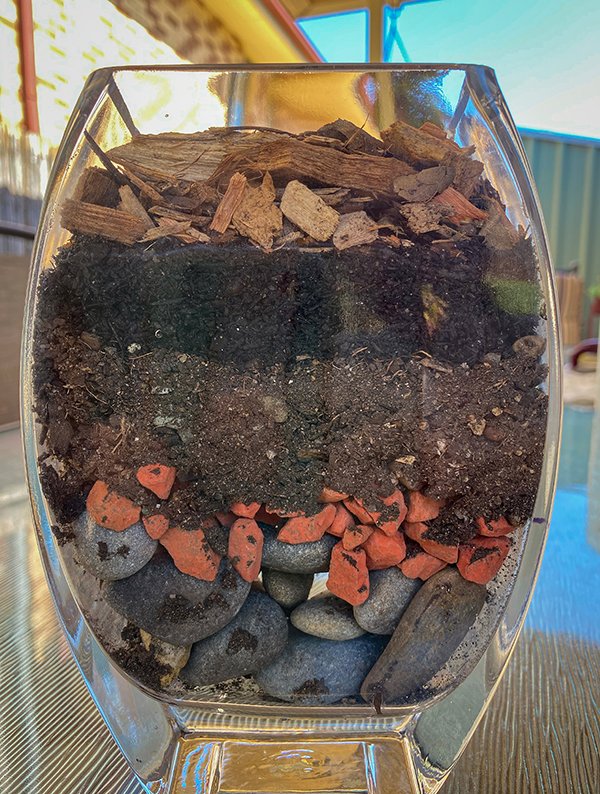
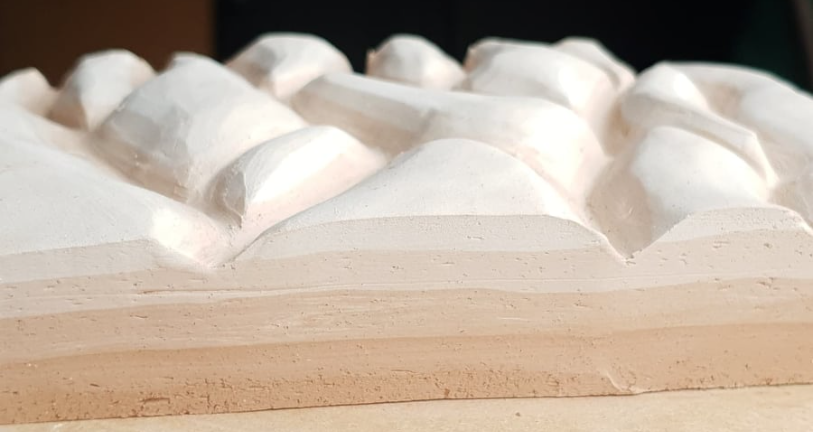
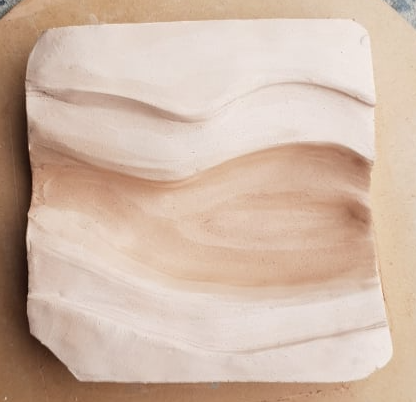
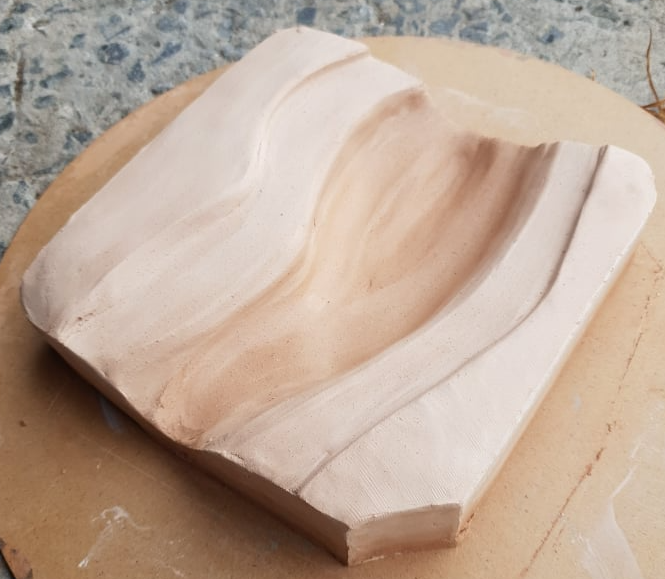
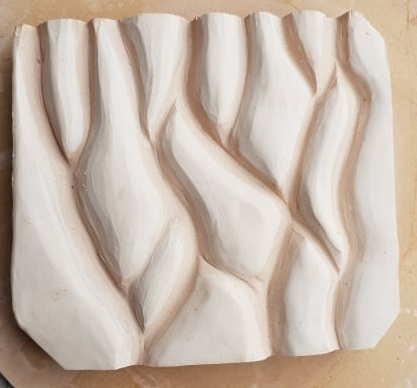
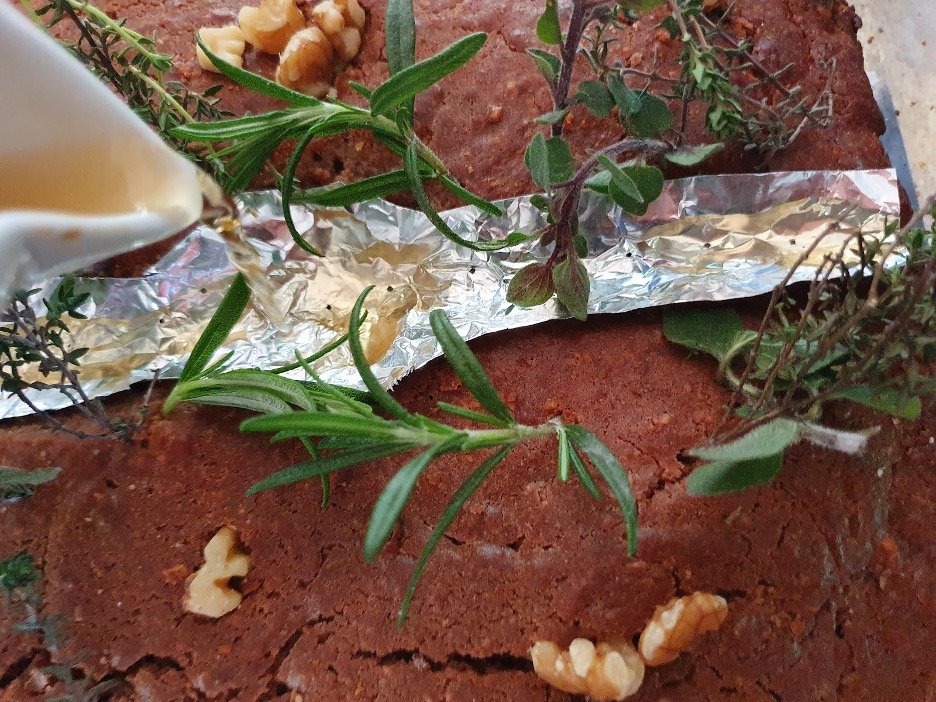
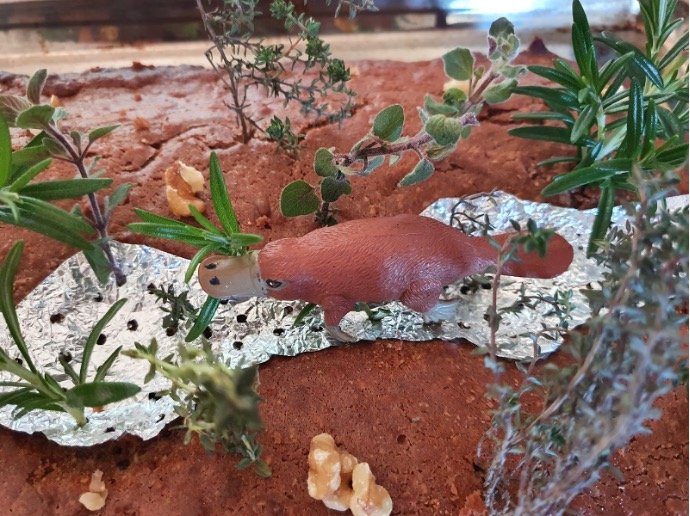
Our creative arts collaborators at the University of Wollongong have used clay, natural materials, fishbowls and food to explore these questions, with some very attractive and tasty results.

“I created a healthy soil profile… using rocks, soil, and organic matter. The experiment makes visible that there are groundwater systems too, not just the surface water that pools in a catchment area.” Olivia-Anne Primmer, UOW student

Meanwhile our ANU students have tackled the digital side of things, focusing on the habitat the Mulloon Catchment can provide for vulnerable frog populations. Their final project provided TMI with a terrific foundation for frog-focused storytelling, incorporating both watercolour paintings (by Anna Kell) and digital imagery. As a whole this collaboration was very constructive in helping us refine some of our science-communication goals.
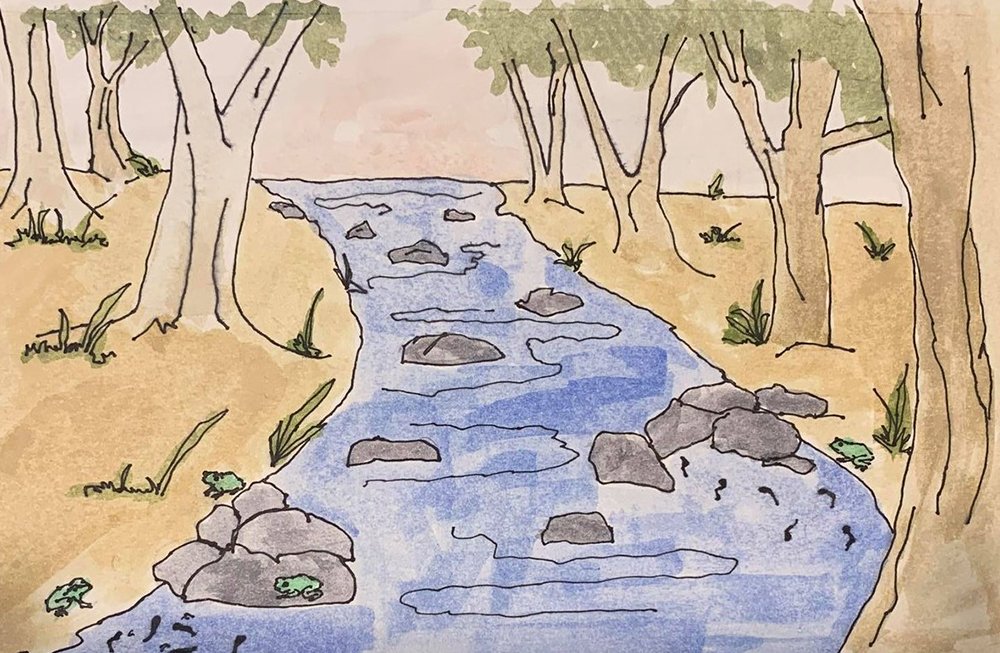
Thanks to the input of IWF Research Fellow and water modeller Joseph Guillaume, we’ve had an exhilarating journey discovering the power of digital twins. While still at a conceptual phase, we will soon be incorporating digital twinning into our catchment-scale projects, as a tool for dialogue, data analysis and for predicting how catchments will change in the future.

With thanks to Olivia-Anne Primmer, Courtney Coller, Lucas Ihlein and Kim Williams from Creative Arts at the University of Wollongong, and Kate Jones, Anna Kell, Madeleine Tomlinson, Isabel Bremner, Marcus Dadd and Joseph Guillaume from the Institute for Water Futures, Australian National University.

The Modelling Landscape Rehydration for Catchments, Communities and Curriculum project received grant funding from the Australian Government.

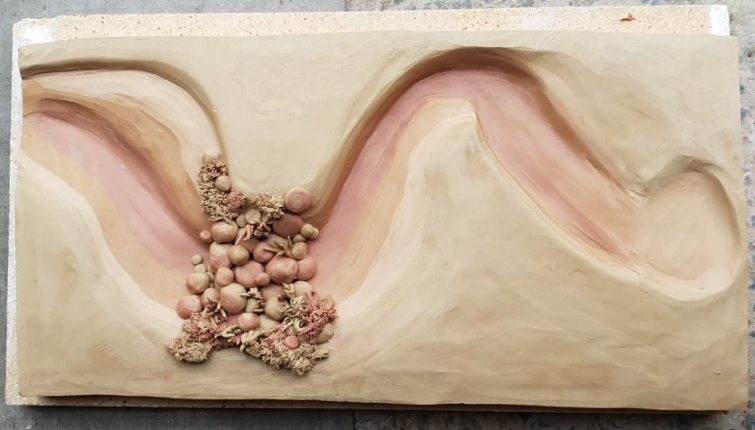
BELOW: Clay models by Courtney Coller, UOW student.
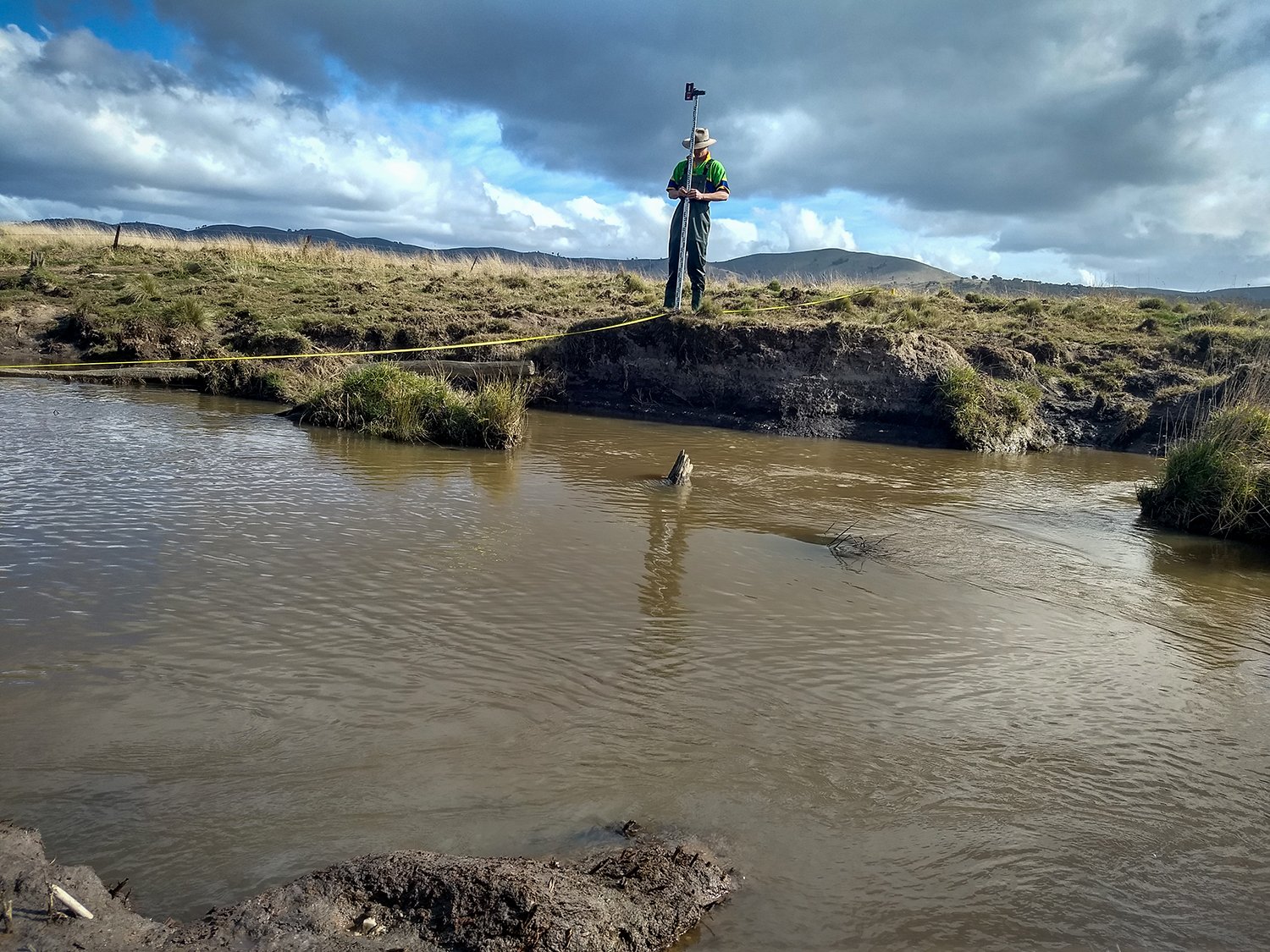
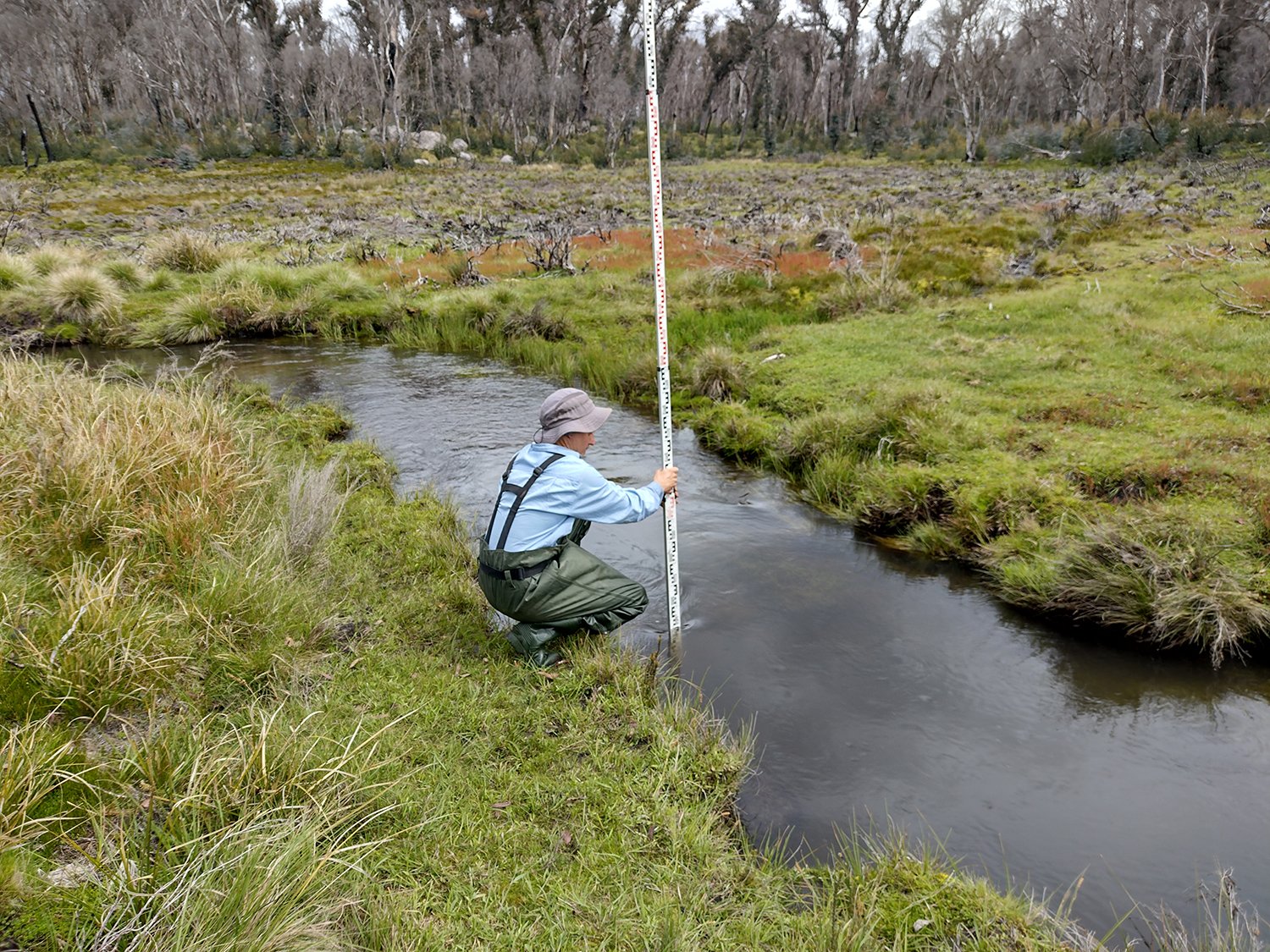
Between Rapid Appraisal of Riparian Condition (RARC) surveys, nighttime frog monitoring, quarterly piezometer (field instrument) maintenance and cows eating soil moisture sensors, the monitoring team has been kept very busy the past quarter. However, with the wettest period on record and Covid lockdown limiting our ability to access the field instruments, we’ve been concentrating on working with key partner HydroTerra to get our data management and reporting system operational for the Mulloon Rehydration Initiative.

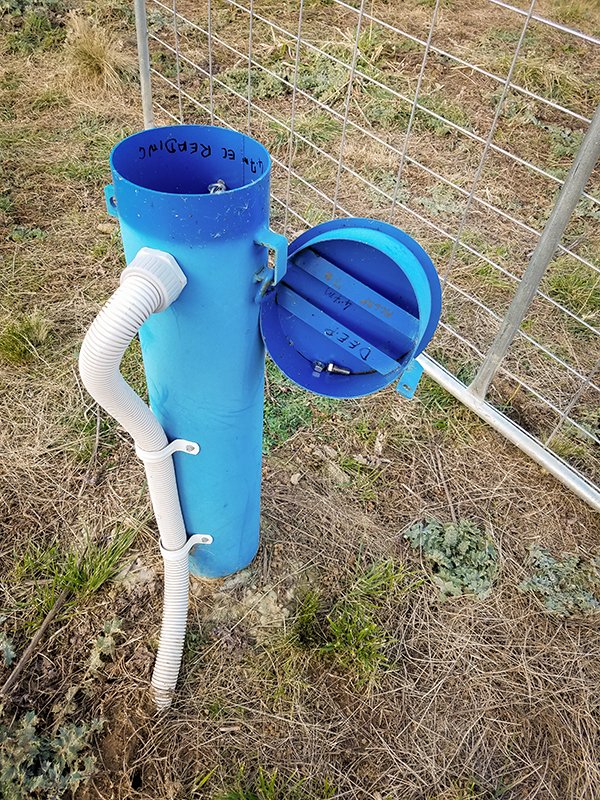
Monument protecting a piezometer well that houses a sensor for measuring groundwater level, temperature and electrical conductivity.

Sentek soil moisture sensor logger and modem unit connected to laptop (via cable on right) for a maintenance check

DataStream is HydroTerra’s data management system that will house all data captured by field instruments, such as piezometer (measures ground water level and quality), soil moisture, stream gauge, climate stations, plus various flora and fauna data the Mulloon Institute collects as part of the Mulloon Rehydration Initiative. This is a rather significant task with some instruments recording data since 2007. It includes capturing information from more than 70 installed piezometers (borehole drill logs) that must be digitised, matched to the instrument data and uploaded. The system includes data from all instruments across the catchment to track and trace for data integrity. The data is managed spatially (Geofabric) which allows analysis and reporting at various scales, such as site, paddock, property, and catchment, or other management area of interest, i.e. floodplain soil and groundwater for plant growth. The ground-based data is very useful for correlating and analysing against satellite-based data, both spatially (specific area of interest) and temporally (matching time of ground data collection).

Another key partner of TMI’s, Cibo Labs provides landholders with access to satellite-based vegetation maps online that are updated every five days with the latest satellite data. Each year the landholders receive an updated report of vegetation changes for their respective properties that extends back to 1990. This provides them with fantastic information on what and where vegetation has changed due to management actions, or how quickly the country has responded when the extreme drought of 2017-20 broke.

An example of the data being collected is shown in graph above which indicates the amount of water (ML/day) measured by the stream gauge in the Lower Mulloon creek area (i.e. Palerang and Duralla boundary), plus rainfall received at the time. Keeping in mind there are times where rainfall has fallen in the upper catchment (Tallaganda National Park) and flowed down Mulloon Creek. The graph shows the first initial rainfall flow event in February and March 2020, a small pulse of water at the end of July followed by the major rainfall and flood event (1 in 50yr), followed by another good pulse of water in November 2020, and another major rainfall and flood event in March 2021. There are also numerous smaller pulses related to rainfall events in between these major events.

The Mulloon Rehydration Initiative is jointly funded through the Mulloon Institute and the Australian Government’s National Landcare Program. The initiative is also assisted by the NSW Government through its Environmental Trust.

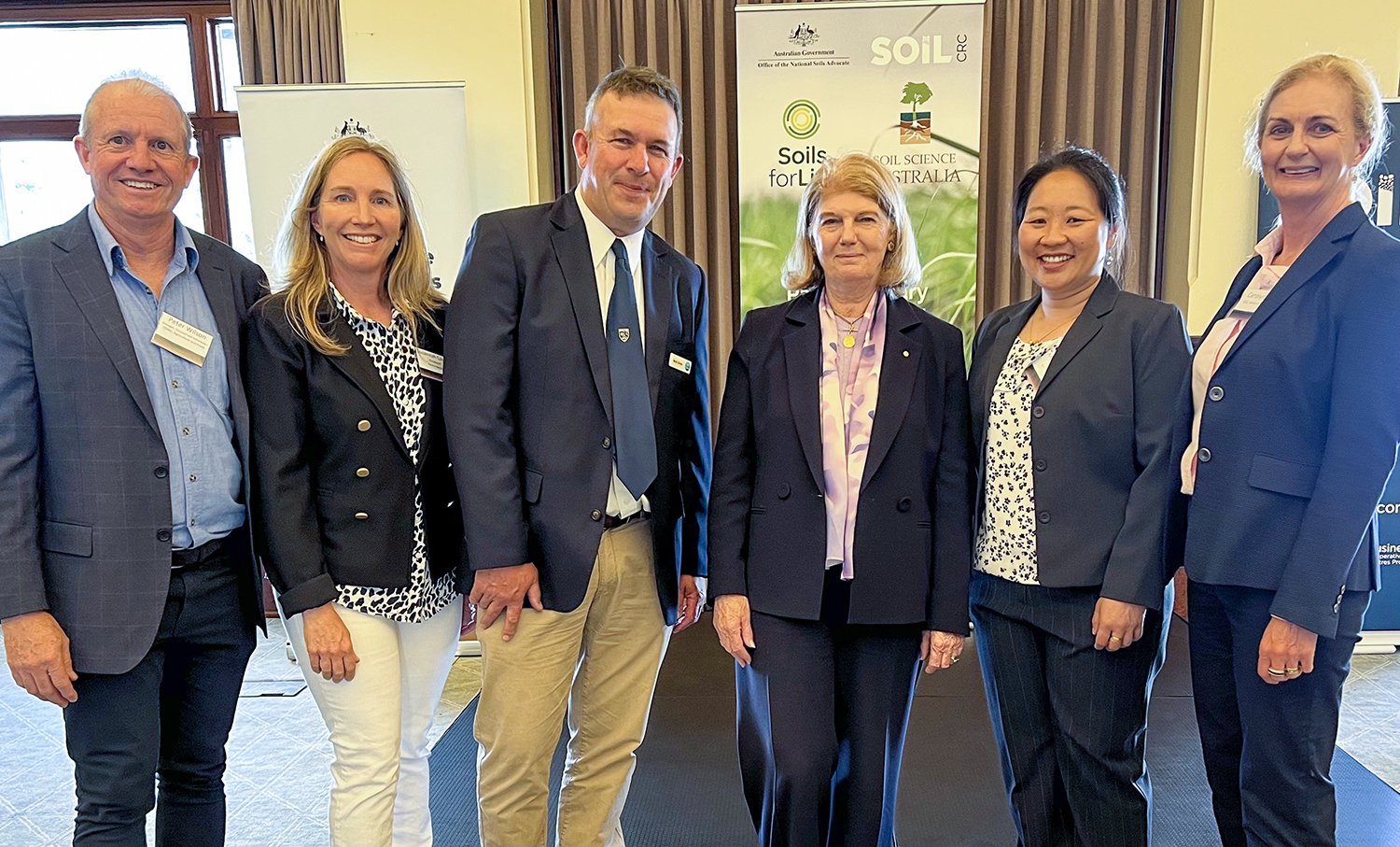
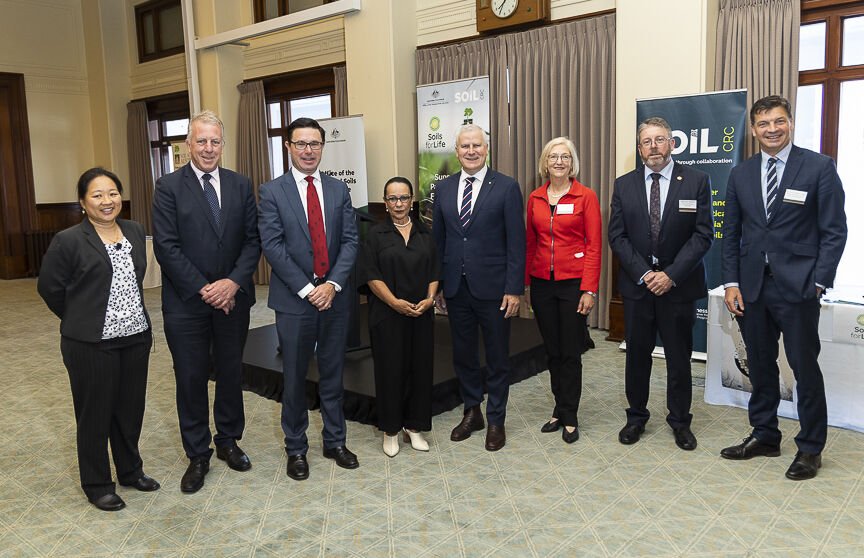
L-R: Peter Wilson (CSIRO), Suzannah Cowley (Nviro Media), CSIRO representative, the Hon Penny Wensley AC, Associate Professor Vanessa Wong, Carolyn Hall (TMI, CEO)

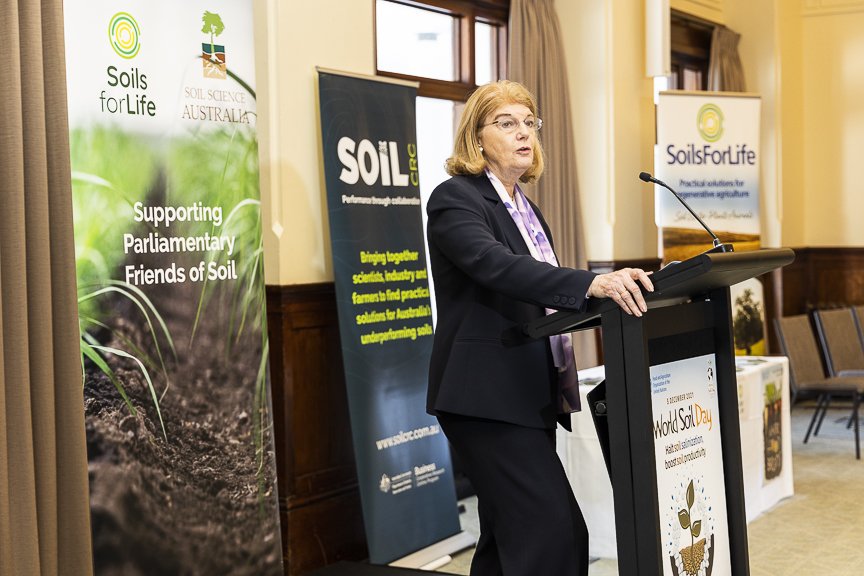
TMI Chairman Gary Nairn and CEO Carolyn Hall had the pleasure of attending the World Soil Day Event breakfast at Old Parliament House in early December, by invitation from the National Soils Advocate the Hon Penny Wensley AC.

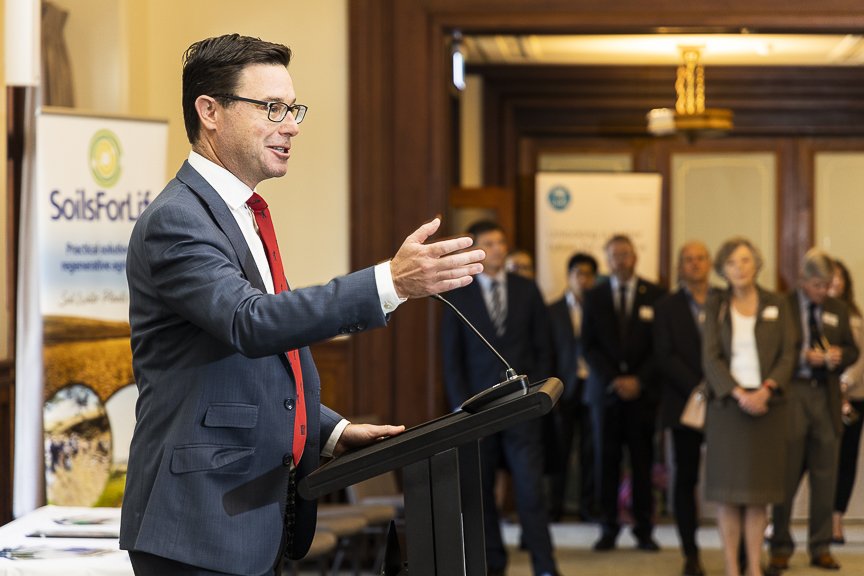
Carolyn spoke with the Hon David Littleproud who asked how we are going at Mulloon, while Gary spoke with the Hon Angus Taylor. The Hon Michael McCormack who co-chairs the Parliamentary Friends of Soil group with the Hon Linda Burney, also spoke very eloquently at the event.

It was a great opportunity particularly for connecting with a number of key people who are either keen to collaborate, or are keen to visit Mulloon, with some very positive connections made for Mulloon in the research space.

As we head into summer, La Nina controls the weather so one day it is warm, the next cold, but regular rain is the norm. Not something to complain about unless you are a crop farmer trying to harvest, or in the case of Mulloon Creek Natural Farms, trying to instal new infrastructure and repair roads. Our last 12 monthly rainfall is almost double the long-term average so quite a change from just two years ago when we had record numbers of drought months!

This is a good practical example of the predictions of extremities in weather and something that had great focus in October with COP26 in Glasgow. The good news for MCNF is that with the work on the Mulloon Rehydration Initiative (MRI), the consistent rain has been well banked in our landscape so will provide hydration for years to come. The Mulloon Rehydration Initiative is jointly funded through the Mulloon Institute and the Australian Government’s National Landcare Program.

Media coverage

In the lead up to COP26 the Federal Government announced its commitment to net-zero by 2050 and its plan to get there had a strong focus on the role of soil carbon sequestration. I thought it was important to highlight the opportunity for farmers and explain the important role landscape rehydration plays in sequestering soil carbon. An Opinion Editorial I prepared, and with the assistance of Newgate Communications, was published in a number of News Ltd publications around the country. (‘Sequestration is a win for farmers’, Courier Mail, 28 October 2021) I was pleased to get very positive feedback following its publication and we have also received lots of interest in our work which continues to expand geographically.

Around Australia

Quite recently our person in WA, Lance Mudgway, conducted our second NT workshop, this time in the Red Centre town of Aileron. Lance has also been busy in “non-lockdown” WA which you can read more about our here.

Sam Skeat in North Queensland has also been able to work with little restrictions but our landscape planner, Joe Skuse, has now been held up for months not being allowed to relocate to Queensland to bolster our presence there. With recent announcements that should happen soon and he can give the on-ground support to Sam. Read more about our recent activities in Queensland.

Collaboration

In all that we do, we are experiencing wonderful collaboration with organisations that complement our work. A specific example is the recently signed Memorandum of Understanding (MOU) with the National Landcare Network (NLN). For many years we have worked directly with Landcare groups as these locally based organisations are ideal connections to the broader community in which our landscape projects reside. It made much sense to develop a closer working partnership with the NLN. Jim Adams, NLN’s CEO, could also see the opportunities an MOU could open up for increased on-ground environmental repair. You can read more about the MOU here.

Scientific publication

A very important aspect of our work is the science behind what we do and equally important is talking about it. Our Science Advisory Council (SAC) which is led by Emeritus Professor Stephen Dovers has embarked on the writing of the story of the Mulloon Rehydration Initiative, with many contributing authors from TMI staff and the SAC, including Dr David Freudenberger. We are pleased to advise that the paper, ‘The Mulloon Rehydration Initiative: the Project’s Establishment and Monitoring Framework’, has been accepted for publication in the prestigious Journal of Ecological Management & Restoration in early 2022. The journal aims to bridge the gap between the ecologist’s perspective and field manager’s experience and answers the growing need among land managers for reliable, relevant information and acknowledges the need for two-way communication in devising new hypotheses, sound experimentation, effective treatments and reliable monitoring. This is a very important achievement for TMI and our SAC!

Annual Reporting

Finally, in early December we held our AGM and presented this year’s Annual Report. It tells our story of the past year including reports of our activities from around the nation, from our CEO, Carolyn Hall, our Mulloon Law Committee and our signature project, the Mulloon Rehydration Initiative.

I hope you enjoy reading this edition of Resilience and our Annual Report. Much thanks for the support of our followers, donors and collaborators – we need you all to help expand our much needed work out across Australia.

Warm regards,
Gary Nairn AO
Chairman

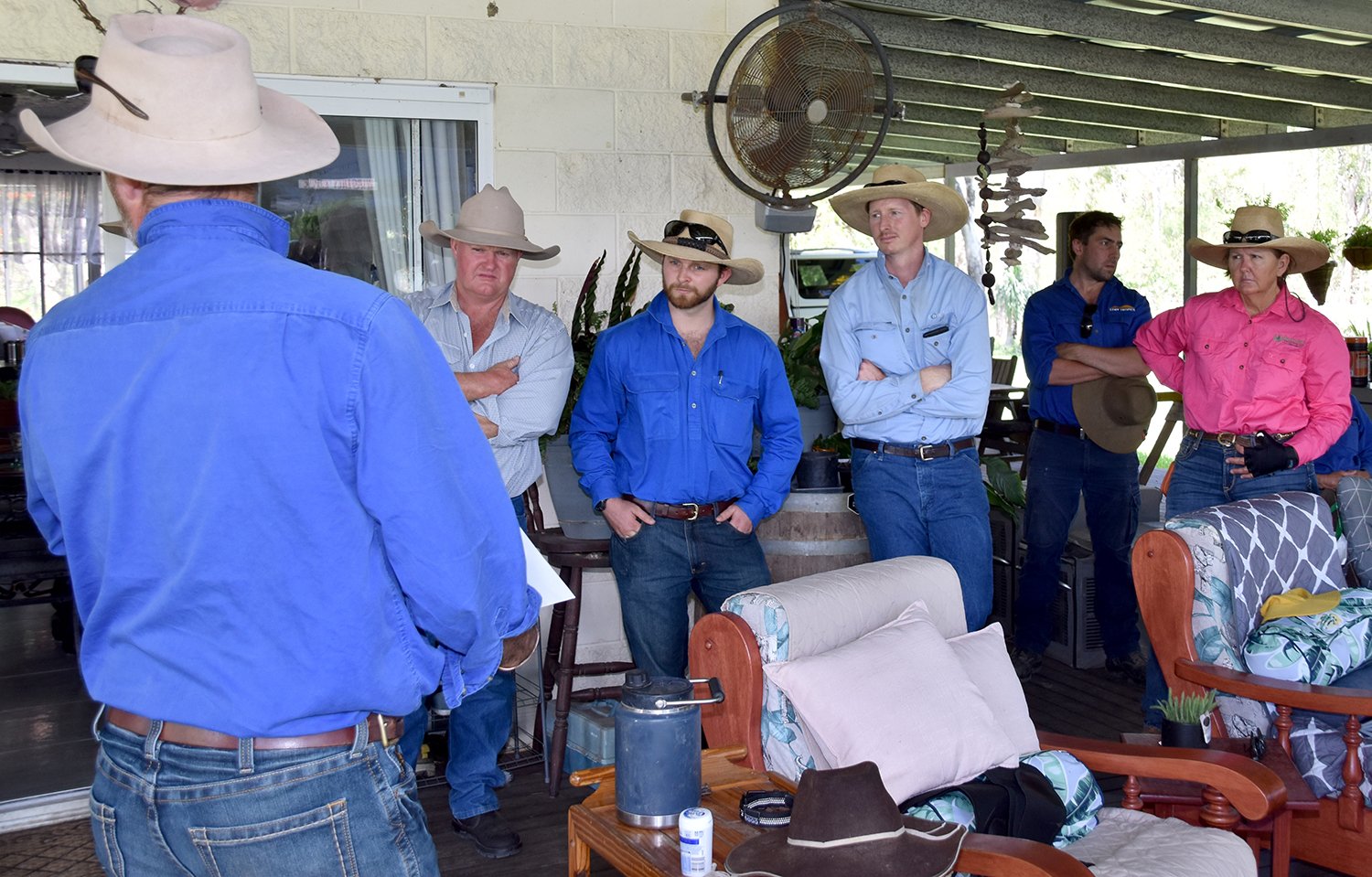
At this workshop, we brought together the Mulloon Rehydration Initiative landholders to learn how grazing management can help their landscape rehydration objectives and also benefit the overall project.

The Mulloon Rehydration Initiative is based in the Southern Tablelands of NSW and involves around 23 landholders. It aims to rebuild the natural landscape function of the Mulloon catchment and boost its resilience to climatic extremes, which will lead to more reliable stream flows, improved ecosystem functioning and enhanced agricultural productivity.

The Mulloon Rehydration Initiative is jointly funded through the Mulloon Institute and the Australian Government’s National Landcare Program. The initiative is also assisted by the NSW Government through its Environmental Trust.

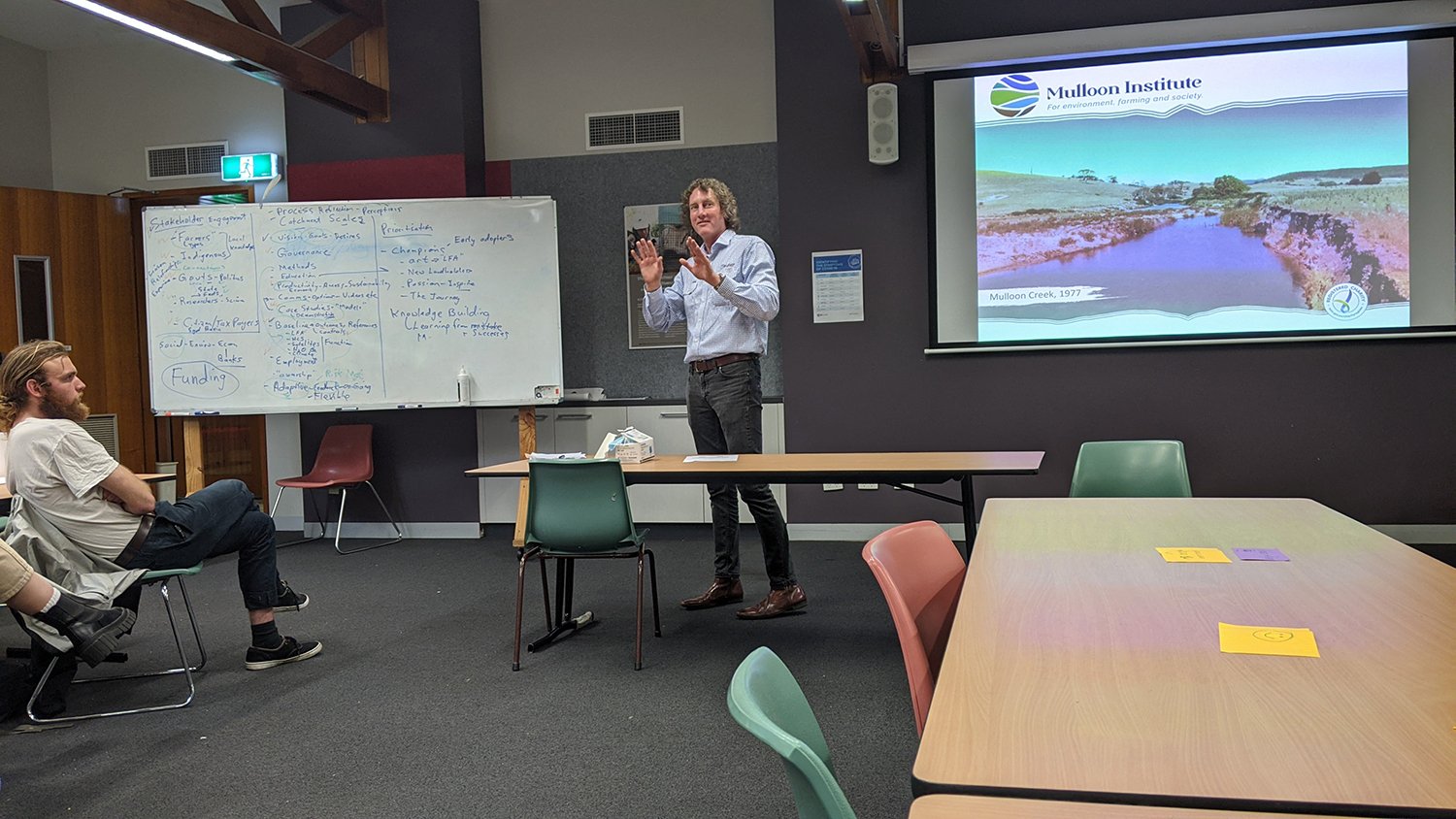
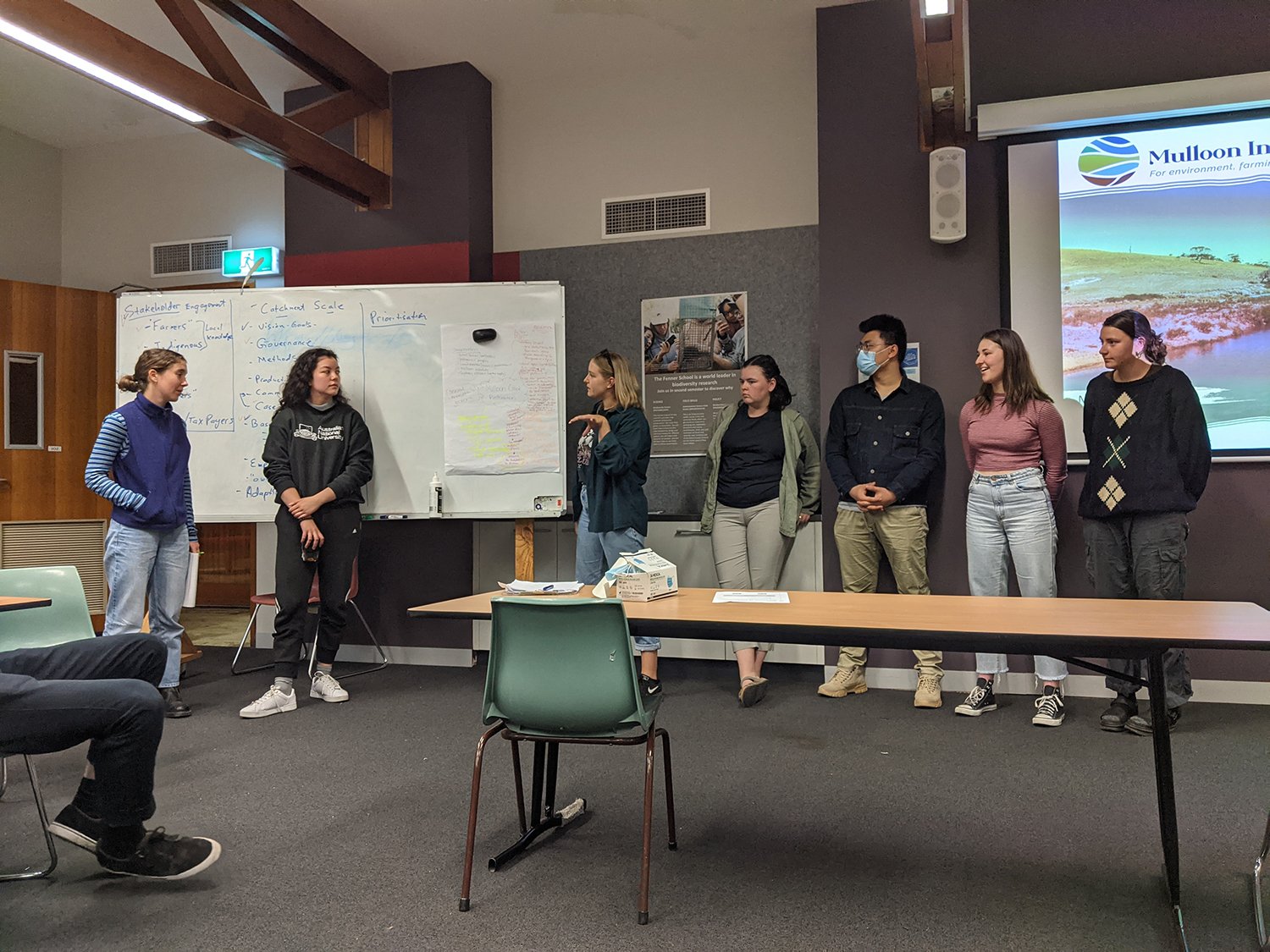
Flooding on the floodplains! With the farm inundated from the highest rainfall ever recorded in the catchment and the farm flooded out, this year ANU Environmental Science Field School invited the Mulloon Institute on-campus for a critical thinking workshop. Using the Mulloon Rehydration Initiative* as a case study, students road-tested their understanding of the complexities surrounding how we can rehydrate landscapes that support communities, economies and the environment.

Prompted by only one photograph of an eroded creek in the Mulloon catchment by TMI’s Research Coordinator Luke Peel, Dr David Freudenberger moved students through a series of peer-led discussions on solutions with the assistance of Hon Associate Professor Peter Taylor and Dr Richard Thackway as our stand-in bureaucrats and landholders and Helen King (PhD candidate Fenner School) as mentor.

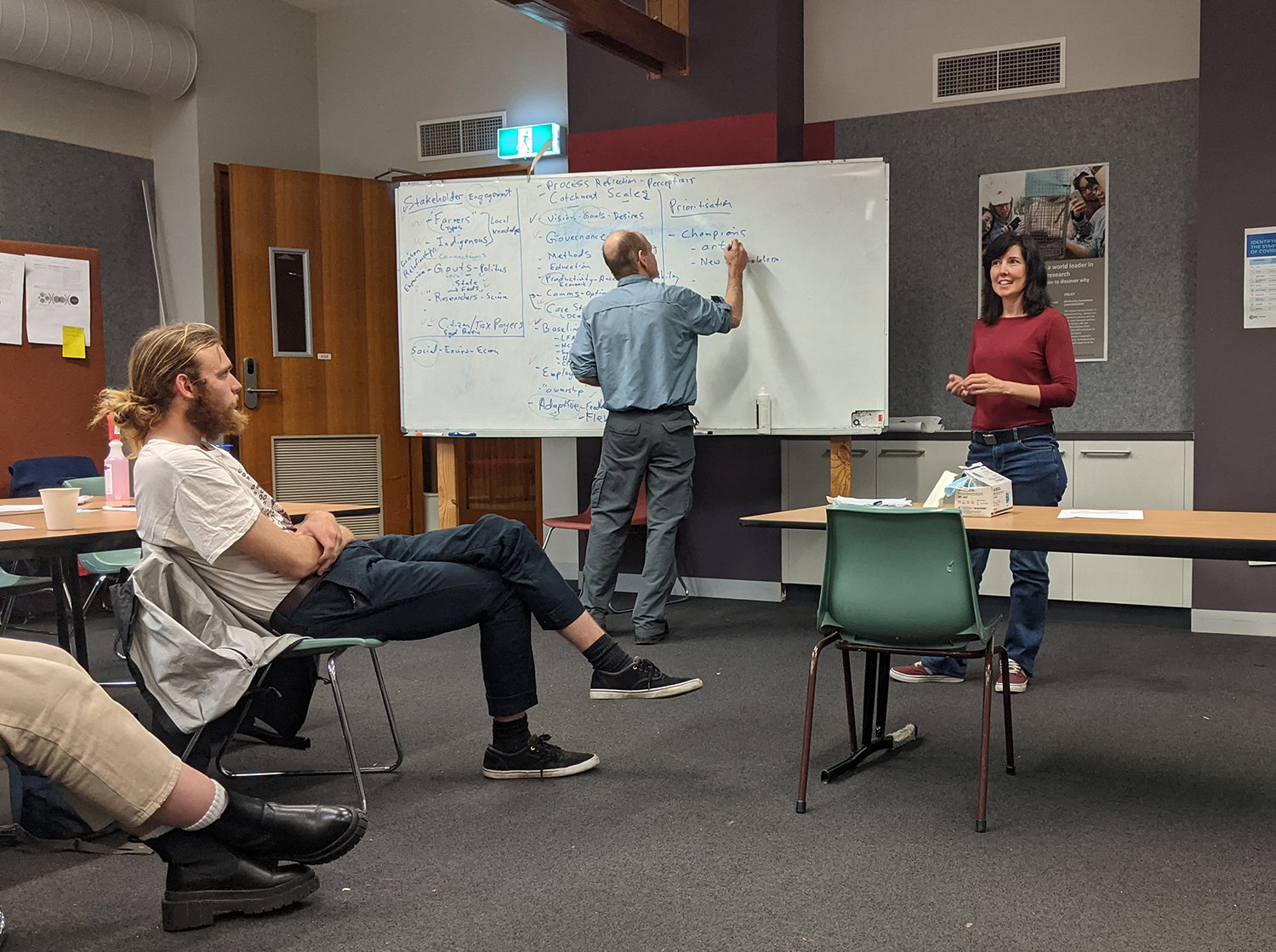
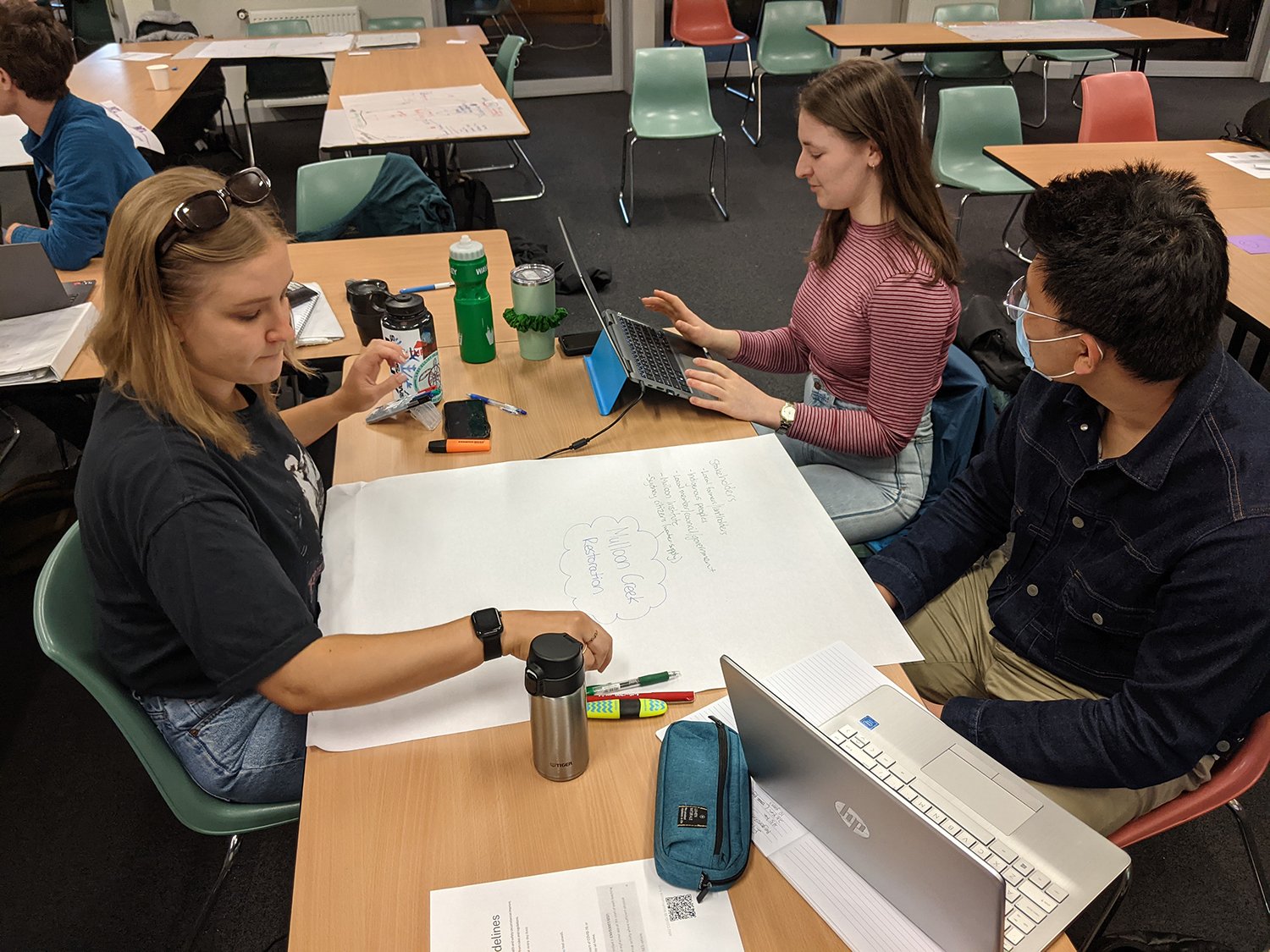
Initially divided into small teams, then merging into larger groups for a peer-review process, students shared their insights to the larger cohort. Common themes emerged as a natural consequence of this collective rapid knowledge gathering, highlighting the adaptive management qualities required of natural resource managers that extend beyond environmental solutions. Students identified a diversity of stakeholders, each with their own requirements around levels of engagement – from traditional custodians, landholders, researchers, through to decision-makers and the public in the effort to restore the land. 

Brainstorming in groups

Reflecting on the participatory nature of the workshop that was full of optimism and collective heart felt desires to repair the land, Luke Peel reminded them of the role the Mulloon Institute and agriculture can play in mitigating the current climate challenges while balancing this with providing food and fibre for the nation.

“Farming is part of the solution. 75% of Australia’s land is used for agriculture and in that, regenerative agriculture is part of the answer. In understanding this connection, every time you eat or drink, you should thank a farmer”. Luke Peel, Research Coordinator

TMI’s Education Coordinator Tam Connor shared an uplifting story of stakeholder engagement through a community of people in the Capertee Valley with all levels of knowledge and background in regenerative practices. Having come together with a common ambition, they were each seeking holistic social and environmental solutions to repair land in their area. 

ANU’s Shoshana Rapley (Fenner School PhD candidate) provided an overview of Mulligan’s Flat Woodland Sanctuary as Australia’s largest single Box-gum Grassy-woodland area managed for conservation. With the area actively managed to keep introduced species, particularly predatory species, out. Shoshana also provided a bigger picture view that there is hope for Australia’s native flora and fauna by involving scientists and the broader community to work together using effective communication to engage people at all levels and provide hope for threatened ecosystems.

In eloquently summarising the workshop, Peter Taylor spoke on the role fear plays in resistance to change by people of all persuasions.

“The goal is to build trust and at the core of this – hope”. Peter Taylor, ANU Hon Associate Professor

* The Mulloon Rehydration Initiative is jointly funded through the Mulloon Institute and the Australian Government’s National Landcare Program. The initiative is also assisted by the NSW Government through its Environmental Trust.

With lockdown lifting over the last couple of months, Mulloon Consulting has become increasingly busy.

A scoping report has been completed for the Swan Brook catchment in northern NSW for GWYMAC Inc., with funding from the Levin Family Foundation and Northern Tablelands Local Land Services. A visit to the region is planned in February 2022 to formally deliver the report. Further funding has been applied for through the Future Drought Fund for a catchment-scale project at Swan Brook that would bring significant education opportunities.

Property inspections have recently recommenced with two NSW trips coming up and a farm plan completed for a property at Mt Jellore. Work for the Forestry Corporation of NSW to restore montane peatlands in the Bago State Forest at Tumbarumba has recommenced after a cold and wet winter, with team members visiting to collect measurements for the design stage. The team have also been busy on a large project along the Molonglo River where landscape rehydration work is aiming to enhance and create habitat for Green and Golden Bell Frogs by repairing riparian areas along the river.

In the ACT, grant funding to complete works at Tidbinbilla Station have been applied for through the Murray–Darling Healthy Rivers program but ongoing wet weather has made the site too soft for large machinery and on-ground works at the moment. Also in the ACT, work continues with the Riverview Group on the Ginninderry Conservation Corridor to repair an ephemeral tributary of Ginninderry Creek.

Further afield in Victoria, a report and virtual workshop have been prepared and delivered for Westernport Water while a demonstration site is planned to be developed in the Bass Coast region with Bass Coast Landcare and support from Melbourne Water.

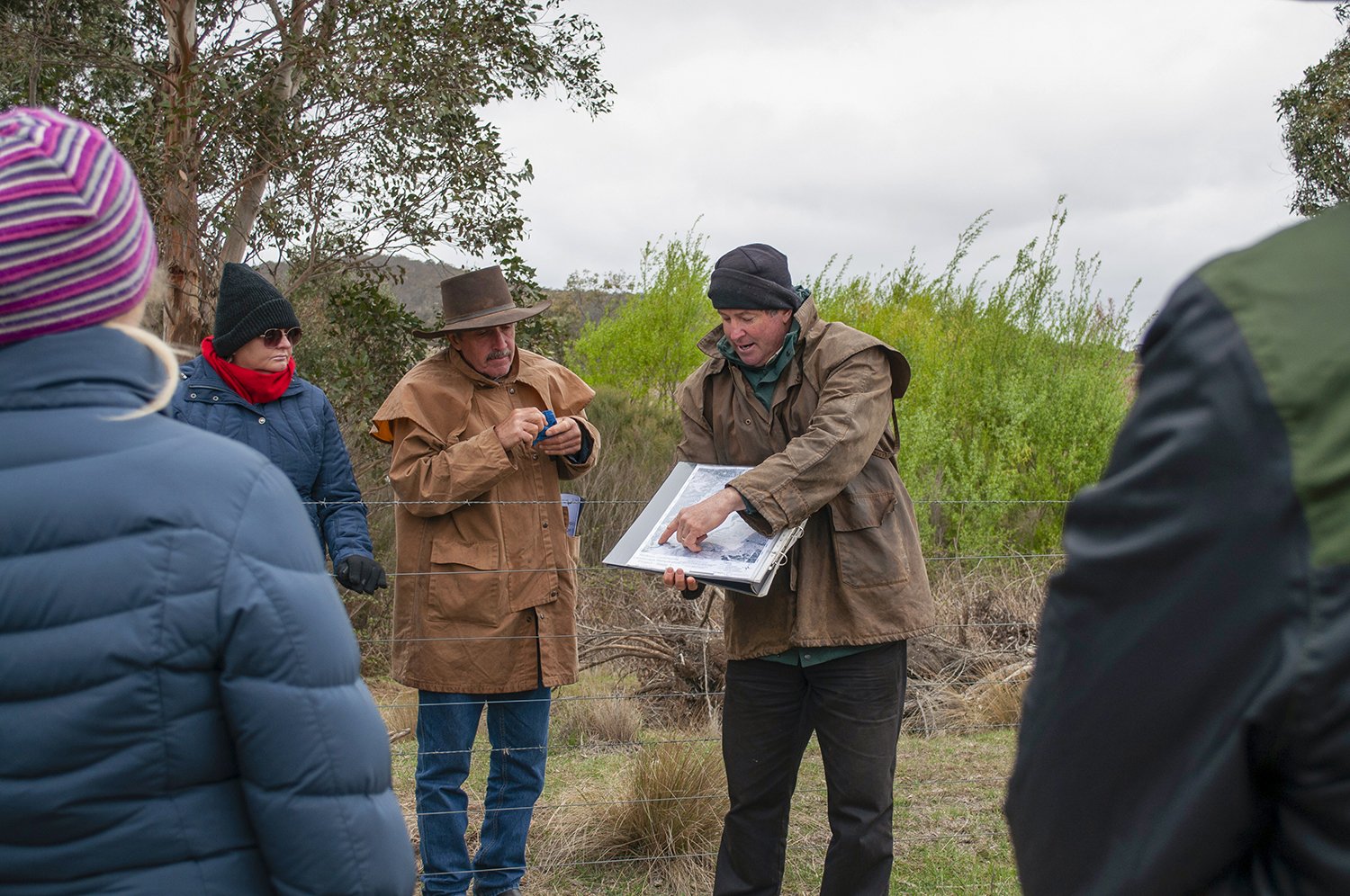
Landholder tour at Mulloon Creek Natural Farms for NQ Dry Tropics.

TMI’s Education team are developing a suite of new Landscape Rehydration courses, bootcamps and skills workshops, set to launch in 2022. Thanks to funding assistance from the NSW Government’s Environmental Trust, the team are working on a range of foundation and Intermediate levels, for a diversity of landscapes, uses and scales. From small blocks to catchment communities, these courses will offer practical, relevant skills in understanding principles and practices for landholders in applying Landscape Rehydration to their properties. Watch this space as the team take the activity-based courses on the road in 2022. 

Wanda the water droplet on some of her adventures.

The Scots College and the Education team are continuing with the co-development of a regenerative agriculture program for primary schools. TMI Home Farm hosted a ‘writers retreat’ with Coordinator of Experiential Education, Kym McMaster and children’s book writers and illustrators, to continue the charming story of Wanda the water droplet through her journey in the water cycle and introduced new characters that engage young minds in earth science. 

We are excited to announce that Home Farm tours are now open for secondary school bookings for Term 1, 2022 onwards! This day-long immersive experience is suitable for a range of science disciplines and covers the research we undertake on our catchment-scale landscape rehydration project with the Mulloon Rehydration Initiative. To book email: Learning@themullooninstitute.org.

Playing the Photosynthesis game as part of brainstorming creative ways to teach landscape rehydration.

Territory Natural Resource Management (TNRM) is helping support those in Agriculture across the NT through building land manager capacity and knowledge in soil health and conservation.

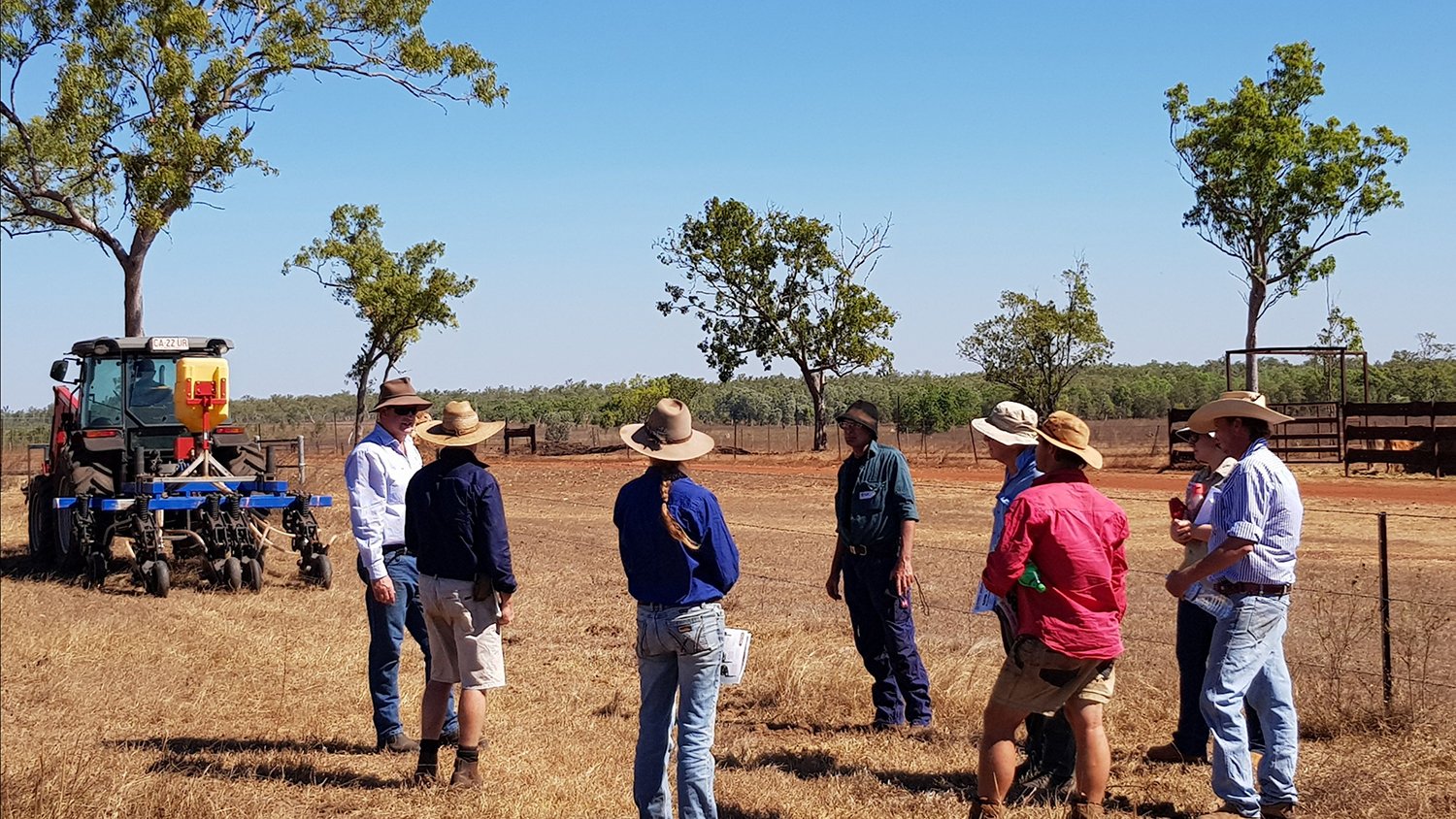
After hosting an erosion control landscape function workshop back in July, TNRM staff recently returned to Old Cameron Downs Station to oversee the installation of a contour across one of the paddocks.

In disturbed landscapes, introducing contour banks is a way of intercepting overland water flow and distributing that water across a wider portion of the landscape. It also helps to capture nutrients, providing conditions favourable to increased plant growth and quality.

TNRM Regional Agriculture Landcare Facilitator Emily Hinds said soils in the NT were variable and were difficult to manage conventionally.

“The variable rainfall further increases the difficulty of managing soil within the region,” she said.

“It is vital we assist land managers to better understand how to manage on-farm soil to ensure that farming in the NT continues in a competitive and sustainable manner.”

The workshop provided practical and theoretical learning for participants to achieve landscape rehydration and restore function and productivity to landscapes.

TNRM established the NT Soil Consortium to bring together soil experts, land managers from various industries and others who are involved in, or have an interest in, soil health and conservation.

It aims to strengthen the capacity and knowledge of land managers, to better enable them to implement land management practices that will improve on-farm soil.

The practical workshop presented by the Mulloon Institute in collaboration with TNRM provided practical and theoretical learning for participants to achieve landscape rehydration and restore function and productivity to landscapes.

The NT Soil Consortium invites everyone who has an interest in the land and their soil to be involved.

SOURCE: TNRM’s Network Notes #6 2021

Field Days

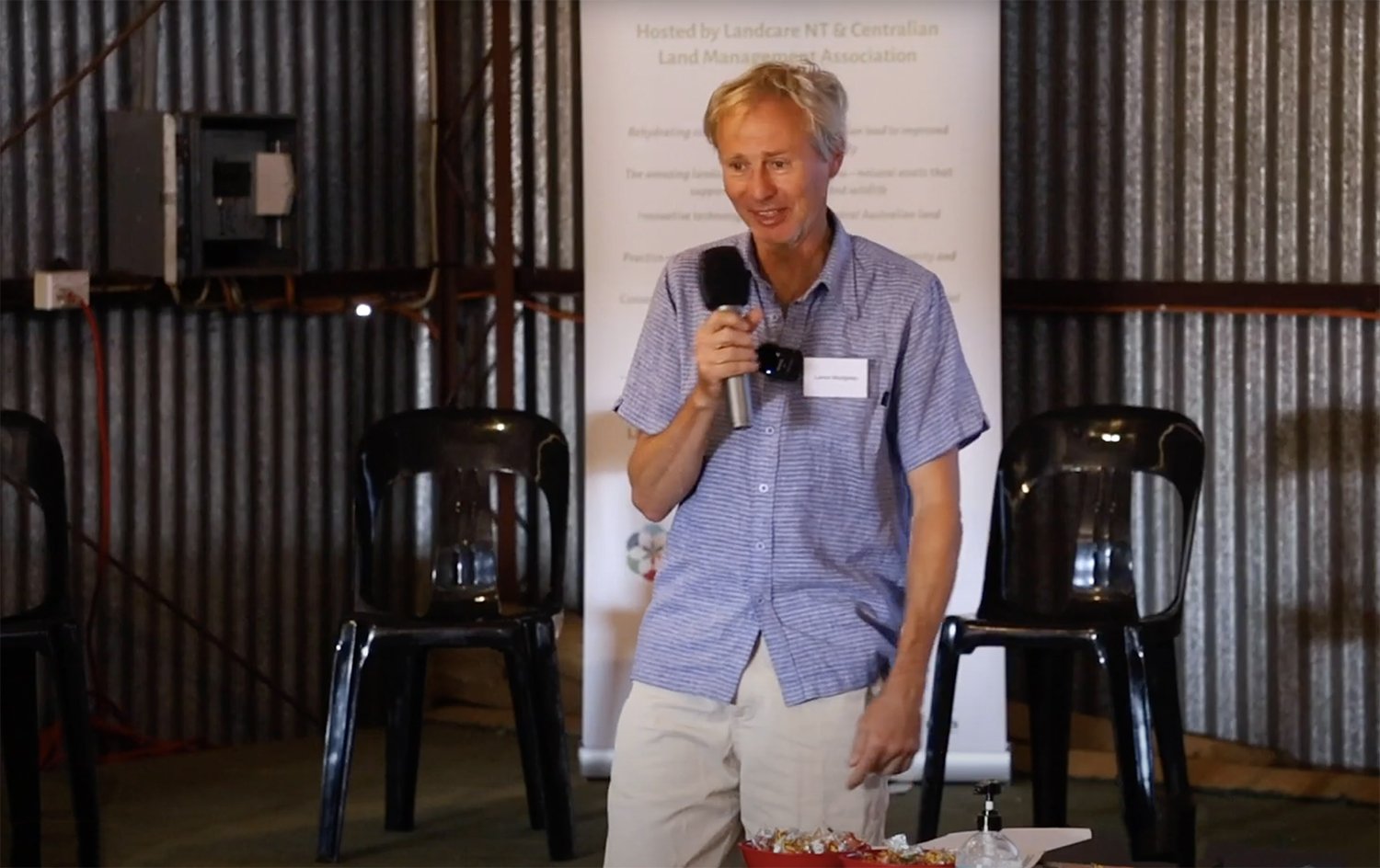
TMI’s Lance Mudgway attended the field days presented by Landcare NT and the Centralian Land Management Association at Aileron Station, Northern Territory this October.

Around 70 participants enjoyed talks on a wide range of subjects – including fire management, soil carbon and landscape rehydration. Lance’s presentations covered developing contours for landscape rehydration as well as providing a demonstration and field trip with Tim Wiley from Tierra Australia.

Woodgreen Station

Following the field days, Lance was lucky enough to visit to Bob and Jim Purvis at Woodgreen Station, about an hour north east of Aileron. Bob has been building his soils after a catastrophic loss of soil in one large event in the 1960s, using various banks and water management devices.

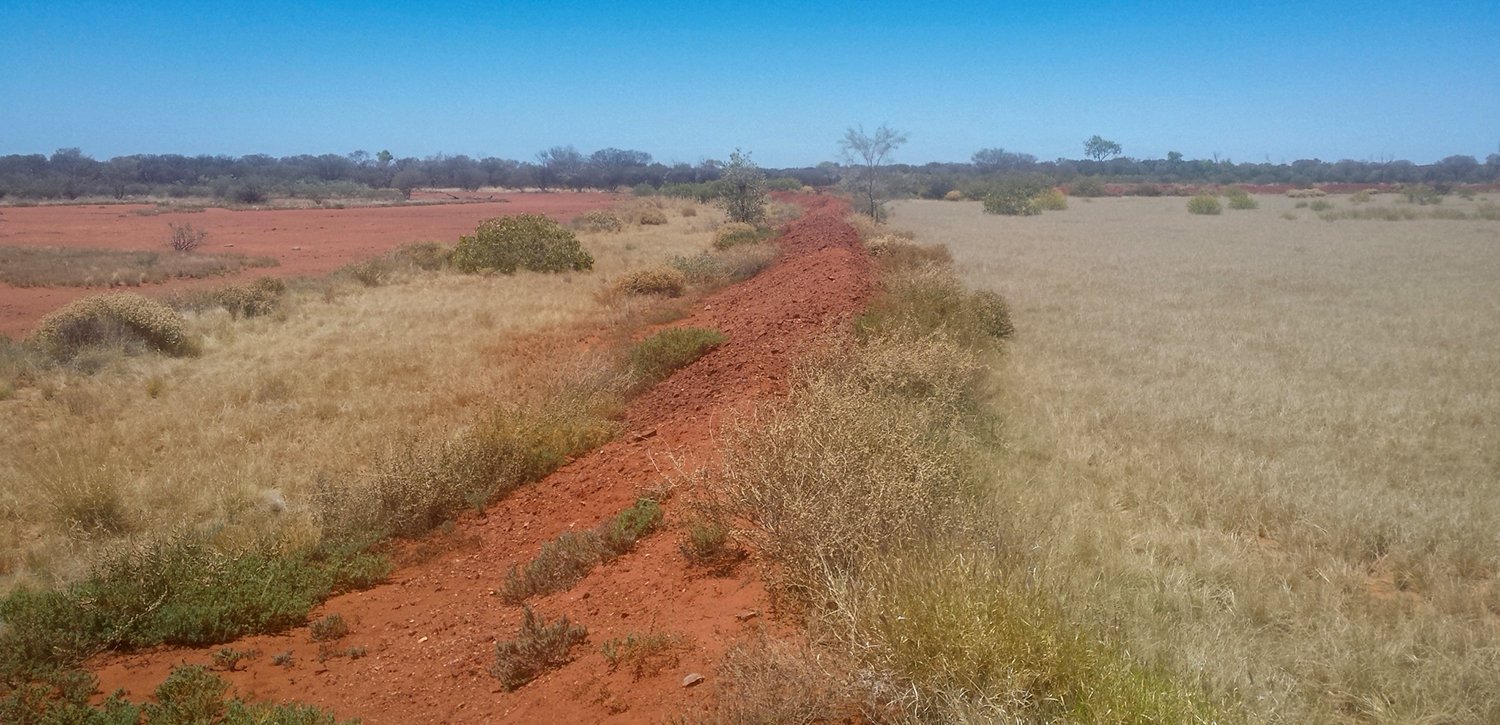
One of Bob’s sediment capture banks, about 8 years old – water flows right to left.