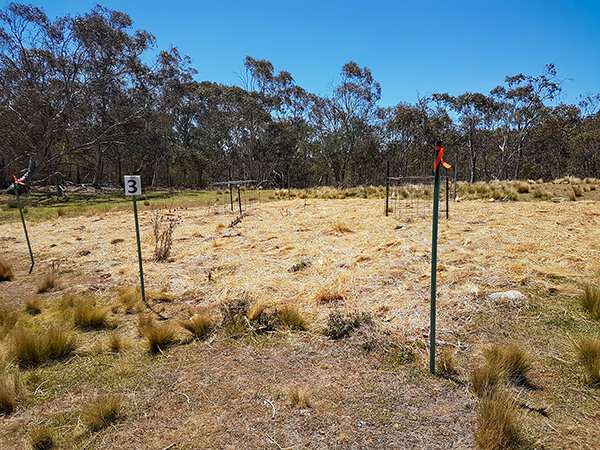
Research trials plots testing various techniques for controlling serrated tussock

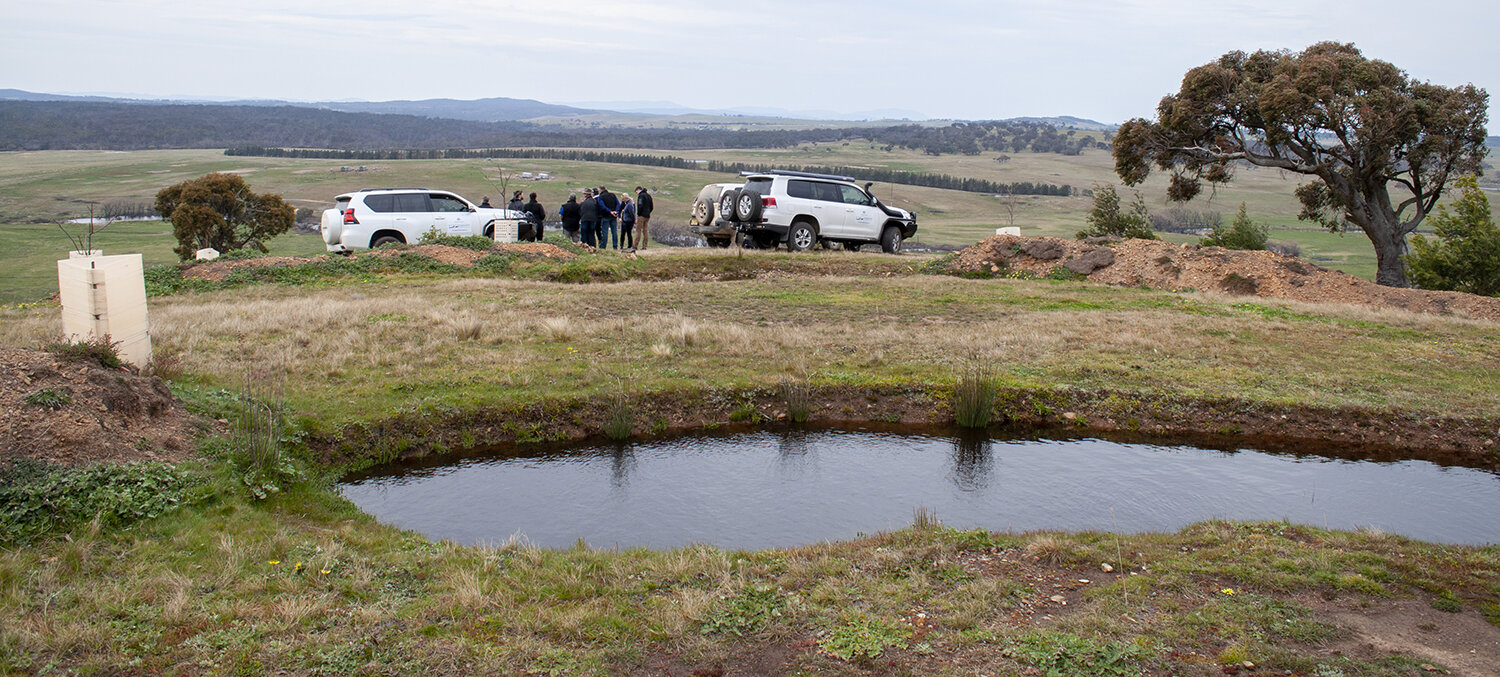
Research trials plots testing various techniques for controlling serrated tussock

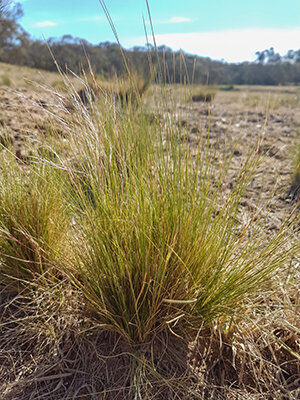
One of the research projects currently being conducted on the Home Farm is a trial of various applications to control serrated tussock. Landscape Planner Anne Gibson and Science Officer James Diack have established a number of small plots including control plots. Techniques being investigated include slashing, composting, fertilizing, application of natural urine, urea and chemicals, which are all being monitored. It is early days but natural urine and urea are proving to be particularly effective. The influence of increased fertility and palatability of serrated tussock plants is evident, as is the competition provided by diverse, healthy pastures.

Serrated tussock

Serrated tussock

During August we added another research plot following a visit from the NonTox company. NonTox is an organic product shown to be very effective on various weeds in varying locations and conditions. Chief Operating Officer David Swansson recently visited the Mulloon Institute to see our rehydration work and was very keen to see the serrated tussock eradication project. He expressed interest in adding NonTox’s product to the research project which can also be useful for controlling blackberries.

As our living laboratory at Mulloon Creek Natural Farms is a certified organic farm we are certainly very interested in trialling and determining the best organic solutions for controlling or eradicating serrated tussock. We’ll be monitoring Nontox’s affect along with the other treatments over the coming months.

These research trials plots are located at the Home Farm of Mulloon Creek Natural Farms

These research trials plots are located at the Home Farm of Mulloon Creek Natural Farms

MCCC has officially updated its name to ‘Mulloon Consulting’ but we’ll still be offering the same, high quality landscape rehydration and restoration services just with a more succinct name. 

In the lead up to spring, the team have been busy implementing a number of erosion control and landscape rehydration measures for clients in the Southern Tablelands and Southern Highlands. Landscape Planners Anne Gibson and Bill McAlister have conducted site inspections at Burra and Jeir and are finalising design work for a property on the Murrumbidgee at Coolac

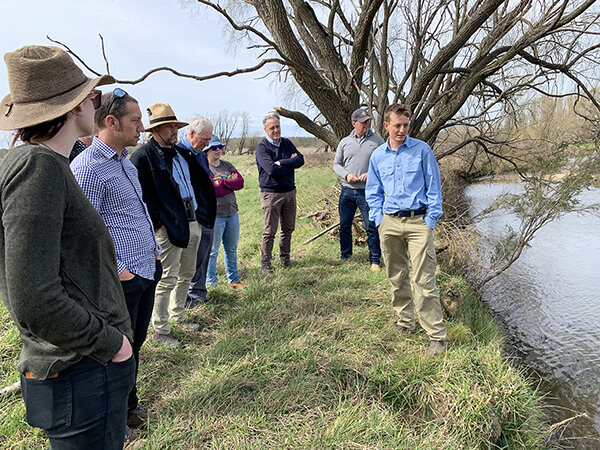
CEO Carolyn Hall, Anne and Bill hosted members from the Ginninderry Conservation Corridor Management Trust and the Ginninderry Development team at the Home Farm, with an overview of the Mulloon Rehydration Initiative (MRI), an introduction to leaky weir construction, and a look at Peter’s Pond and the transformation that has been achieved along Mulloon Creek by installing these leaky weirs. The Ginninderry team are looking to the MRI to help inform their management of a conservation area as part of the Ginninderry Development. We look forward to furthering our relationship with them.

Bill McAlister with the Ginninderry group

Bill McAlister with the Ginninderry group

Further afield we’re building our on presence and reputation by undertaking site inspections for several exciting opportunities to rehydrate and rehabilitate landscapes across NSW and Queensland, and to provide education and training.

Landscape Planner Sam Skeat was guest presenter at the recent Worona Field Day where he delivered an ‘Introductory Landscape Function and Rehydration’ workshop at Worona Station. He provided advice on balancing ecological return and business return when undertaking landscape rehydration projects.

“Graziers are wanting to know more about how to enhance surface and groundwater management for production and ecological goals”, Sam said.

 He has also been following up with interested landholders following his recent tour in south-west Queensland.

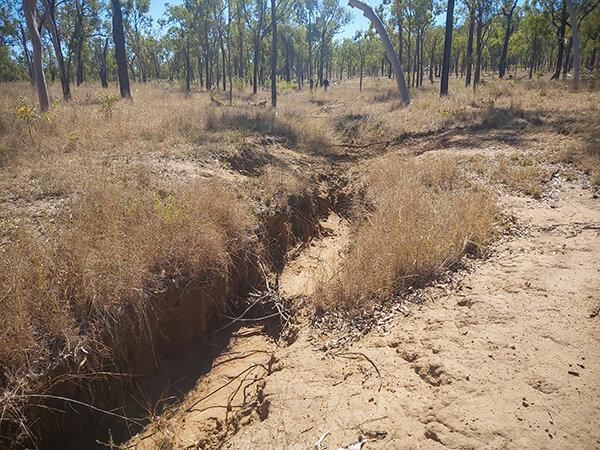
Inspecting erosion at Flagstone

Inspecting erosion at Flagstone

Sam also undertook a site inspection at Flagstone in the lead up to holding a workshop there. Mulloon Consulting will be continuing its relationship with North Queensland Dry Tropics to deliver a demonstration site for landscape rehydration and sediment capture in the BBB (Bogan Bogie Broken catchments) which flows into the Great Barrier Reef. 

Coming up soon, Mulloon Consulting will be delivering an ‘Erosion Control’ workshop at Sutton, ACT on Friday 25 September for the Molonglo Conservation Group and Reedy Creek Landcare. Attendance is FREE but please book your spot in advance.

We are also looking to expand our team and have been busy interviewing candidates – so watch this space! 

The Mulloon Institute was very honoured to welcome the Hon Shane Stone AC QC, Coordinator General of the Federal Government’s National Drought & North Queensland Flood Response & Recovery Agency to view the Mulloon Rehydration Initiative with his team this September.

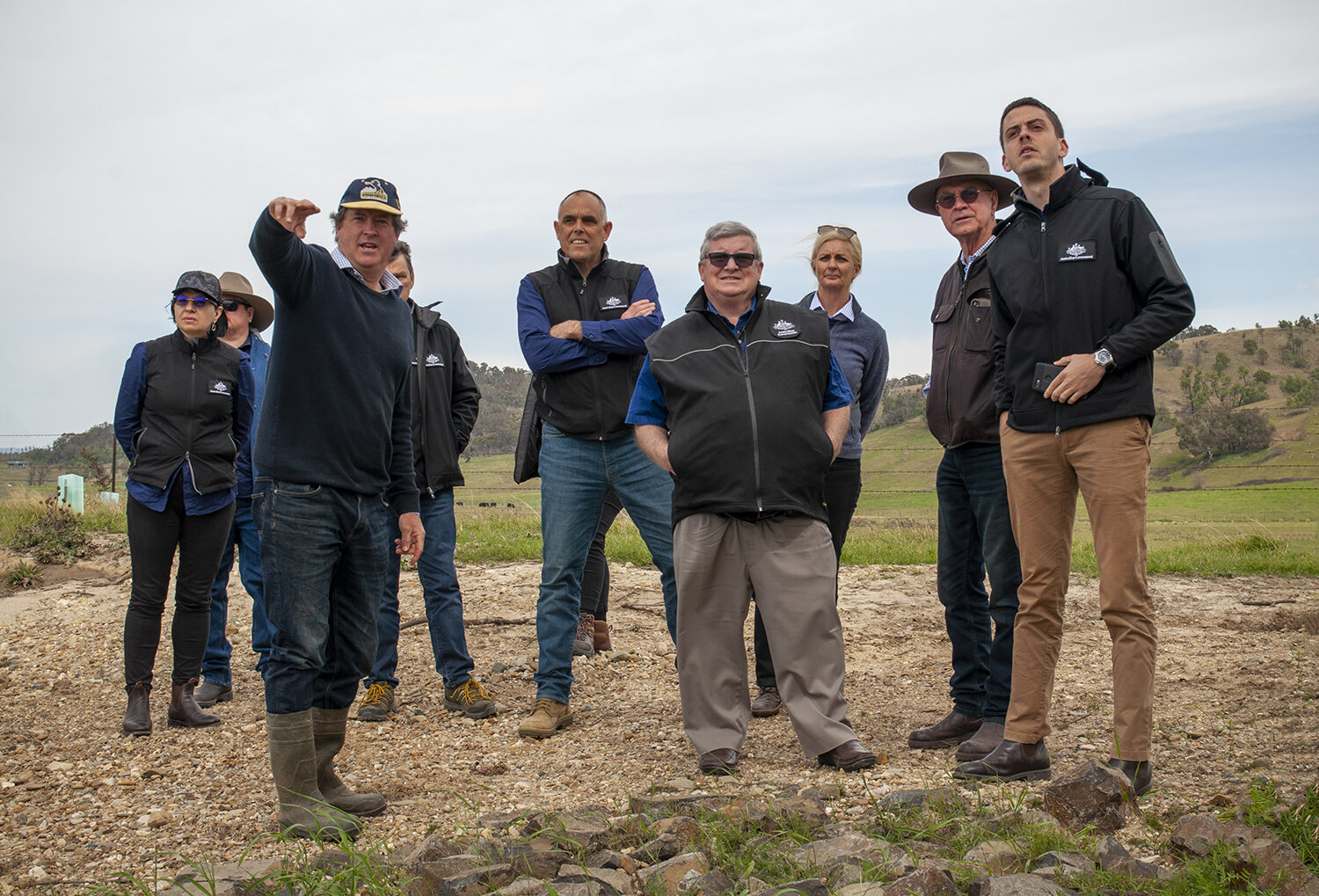
Peter Hazell (MRI Project Coordinator) points out a feature in the landscape.   To his right are Nico Padovan PSM (NDNQFRRA - Deputy CEO & COO), Hon Shane L Stone AC QC (NDNQFRRA - CG), Carolyn Hall (TMI - CEO), Gary Nairn AO (TMI - Chairman).  …

Peter Hazell (MRI Project Coordinator) points out a feature in the landscape.

To his right are Nico Padovan PSM (NDNQFRRA – Deputy CEO & COO), Hon Shane L Stone AC QC (NDNQFRRA – CG), Carolyn Hall (TMI – CEO), Gary Nairn AO (TMI – Chairman).
They are joined Australian Government staff members.

Shane and the Agency work hand-in-hand with communities, all levels of government, charities and agricultural organisations to support farmers and other rural and regional Australians living through the immediate and longer-term effects of drought and flood. Their aim is to ensure that people and communities are given the support they need to be better prepared for droughts and floods, now and into the future.

Shane has previously visited one of our demonstration farms in North Queensland, but was keen to see our Mulloon Rehydration Initiative (MRI) first-hand and to discuss how we can work together to make Australia’s agricultural lands and people more resilient to weather extremes. 

The Mulloon Rehydration Initiative is jointly funded through the Mulloon Institute and the Australian Government’s National Landcare Program and is supported by various affiliates.

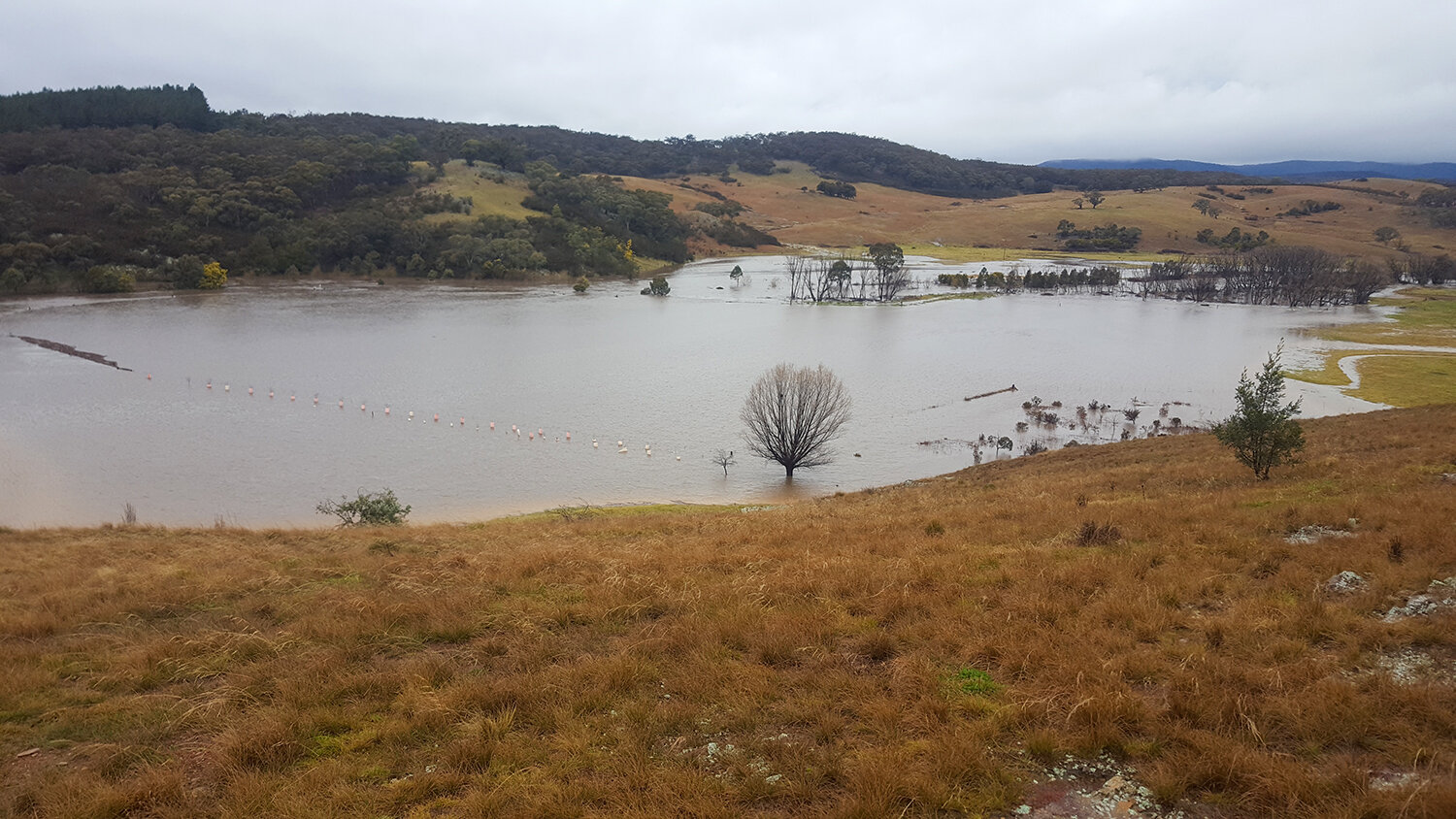
Representatives from the NDNQFRRA visiting the hilltop pond at Duralla.

Representatives from the NDNQFRRA visiting the hilltop pond at Duralla.

The group were taken to Duralla to see the hilltop pond and a freshly installed leaky weir (structure DM2.1, two months old), a more established leaky weir (18 months old) with tree plantings at Westview, and Peter’s Weir at the Home Farm (10+ years old).

We look forward to providing further input into the great work that Shane and his Agency are doing on the ground, right around Australia.

Gary Nairn explaining how scientific monitoring plays an integral role in the Mulloon Rehydration Initiative.

Gary Nairn explaining how scientific monitoring plays an integral role in the Mulloon Rehydration Initiative.

In August 2020 we experienced a 1 in 50 year flood at Mulloon Creek.

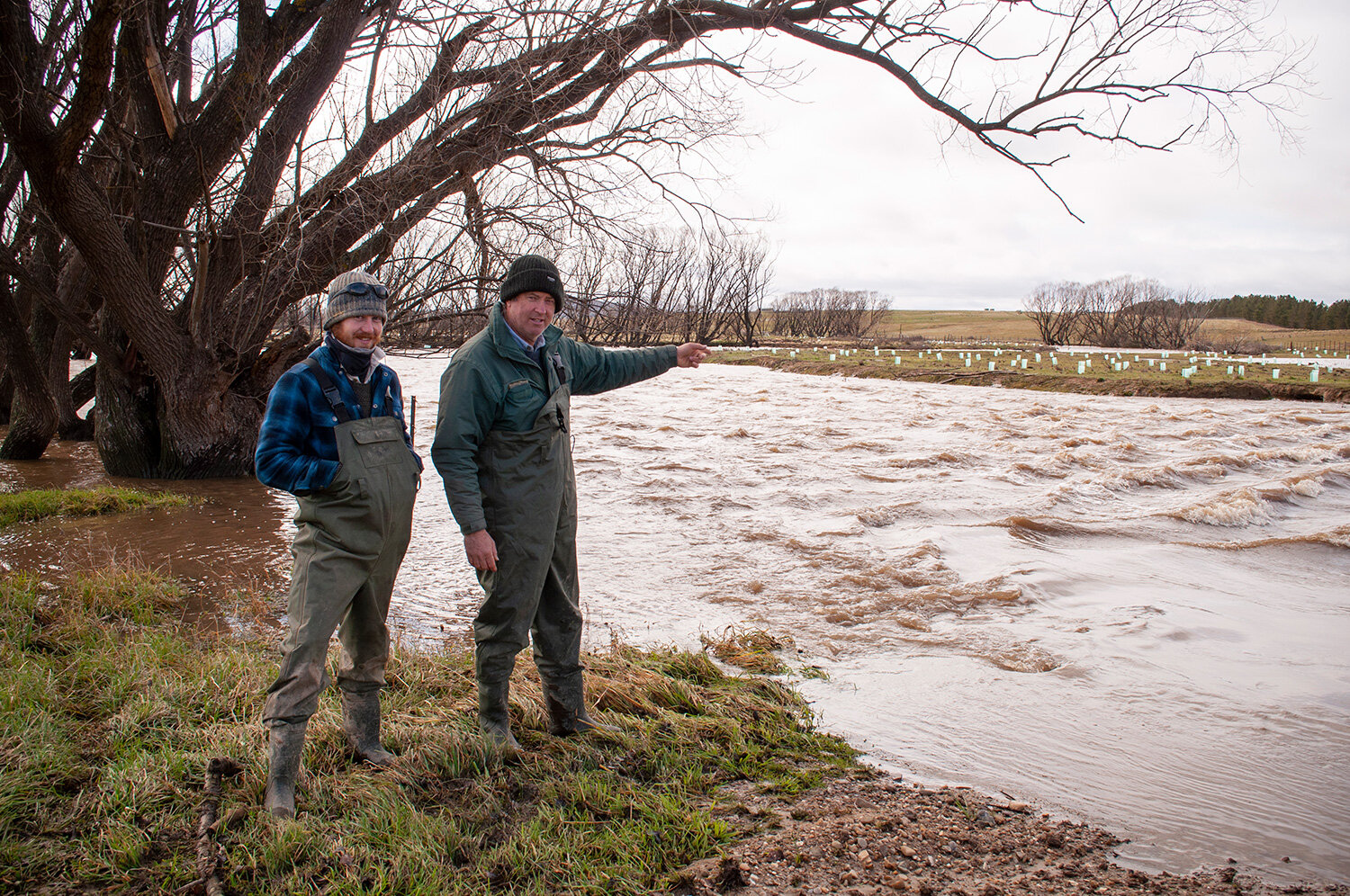
It was with a degree of trepidation that the Mulloon Rehydration Initiative’s (MRI) Project Coordinator Peter Hazell ventured out after the main flood to see how very recently installed leaky weir structures in the lower Mulloon catchment had fared, considering they had been in for such a short time. Normally, we would like a relatively small rain event first up to help ‘settle’ them in place.

However, the strength of both the design and the build was evident when Peter visited the creek. All had held up well and done their job of slowing the water flow and pushing water and nutrient rich sediment out onto the adjoining floodplain.

Well done to Peter and his team!


From Peter Hazell, MRI Project Coordinator

On 9 August 2020, the big flood came to Mulloon!

Not since 1974 had Mulloon seen such an event. Back then, the power of the flood caused untold erosion, chewed out the banks and changed the course of the creek.

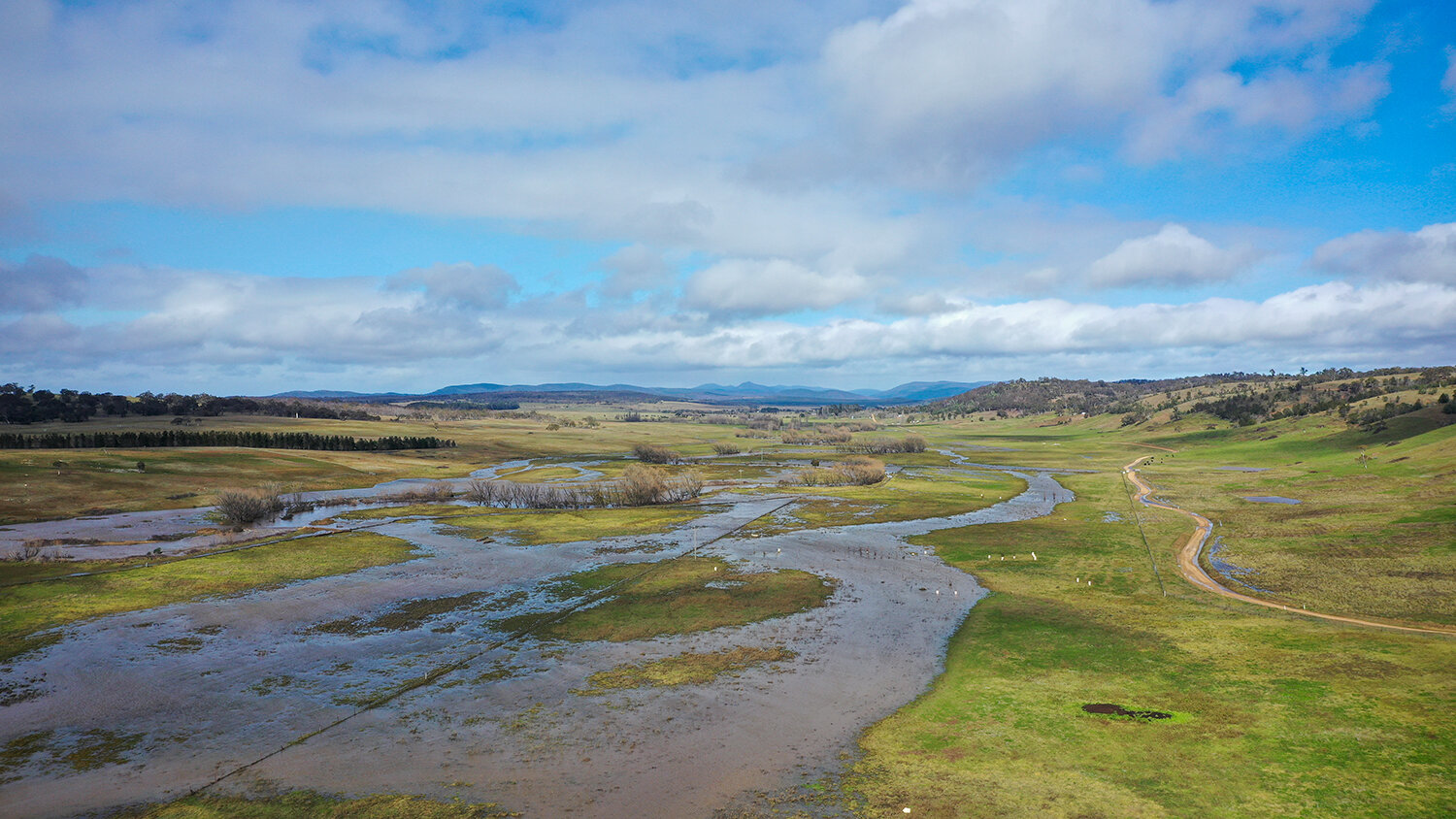
This time however, it was a vastly different story with recent creek works quietening the angry flood. For 36 hours the floodwaters spread across the floodplain filtering the still substantial sediment load from the December 2019 fires and recharging the floodplain aquifer.

All while the very freshly installed leaky weir structures held together as 160 cubic metres of water per second pulsed through the system.

Duralla & Palerang


Peter Hazell (right) with team member Max Brunswick at the Palerang property. The water had been slowed by recently installed leaky weirs to such an extent that the tree guards in the background were hardly impacted when the floodwaters came through…

Peter Hazell (right) with team member Max Brunswick at the Palerang property. The water had been slowed by recently installed leaky weirs to such an extent that the tree guards in the background were hardly impacted when the floodwaters came through. Not one was dislodged!

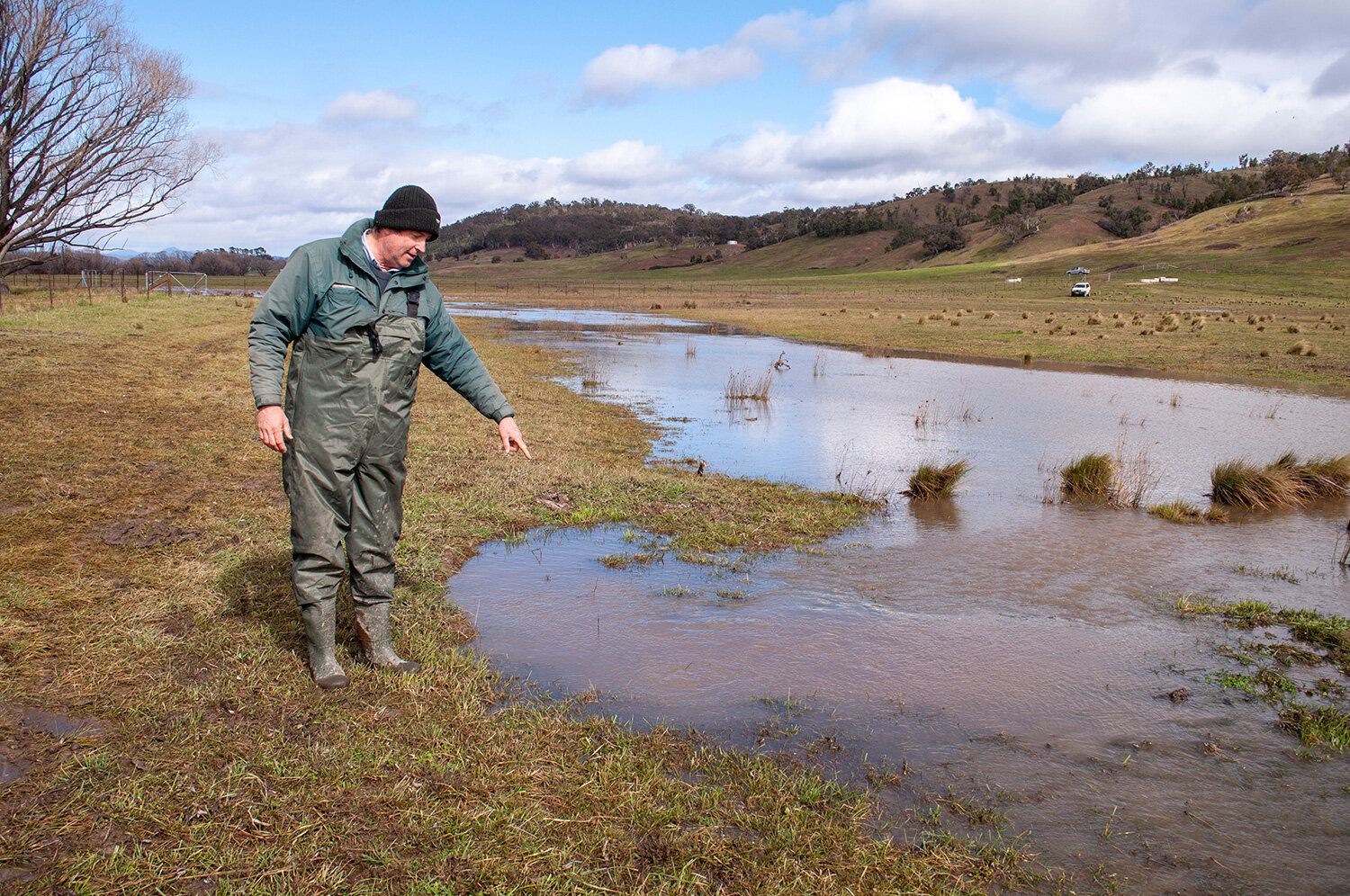
Peter Hazell points out a flooded wombat hole which is now acting as a conduit to help rehydrate the landscape.

Peter Hazell points out a flooded wombat hole which is now acting as a conduit to help rehydrate the landscape.

Floodwater braiding across the landscape at the Duralla property, looking towards Palerang.

Floodwater braiding across the landscape at the Duralla property, looking towards Palerang.

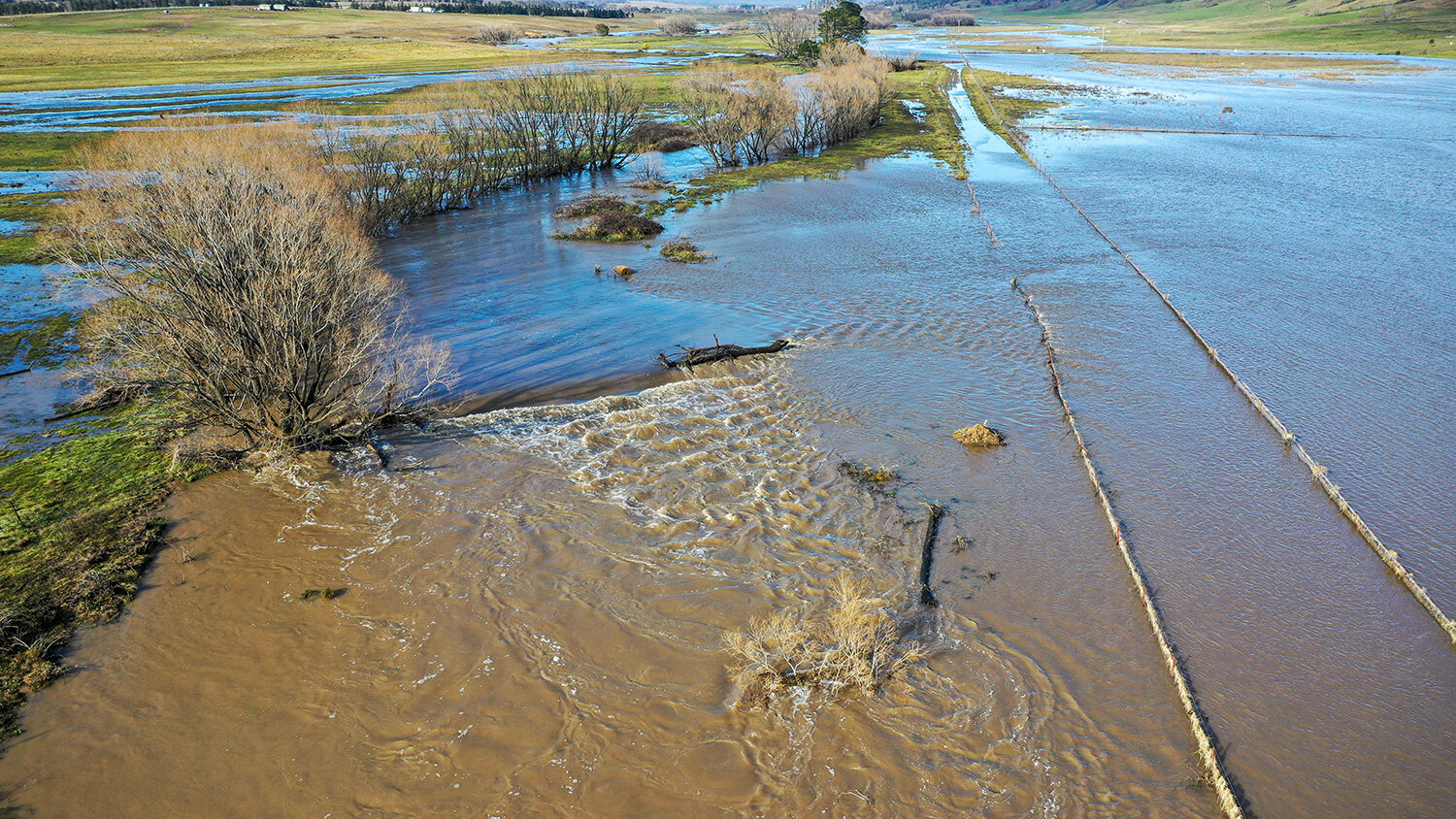
A recently installed leaky weir submerged by floodwaters. Water is spilling onto the floodplain on both sides from the pond above the structure filtering the flow and depositing nutrient rich silt. Sediment in the water has come from the upper catch…

A recently installed leaky weir submerged by floodwaters. Water is spilling onto the floodplain on both sides from the pond above the structure filtering the flow and depositing nutrient rich silt. Sediment in the water has come from the upper catchment which was impacted by the summer bushfires.

Home Farm


Home Farm floodplain the morning after the flood peak. Much silt was filtered out of the flow.

Home Farm floodplain the morning after the flood peak. Much silt was filtered out of the flow.

Peter’s Pond pushing floodwaters out onto the floodplain.

Peter’s Pond pushing floodwaters out onto the floodplain.

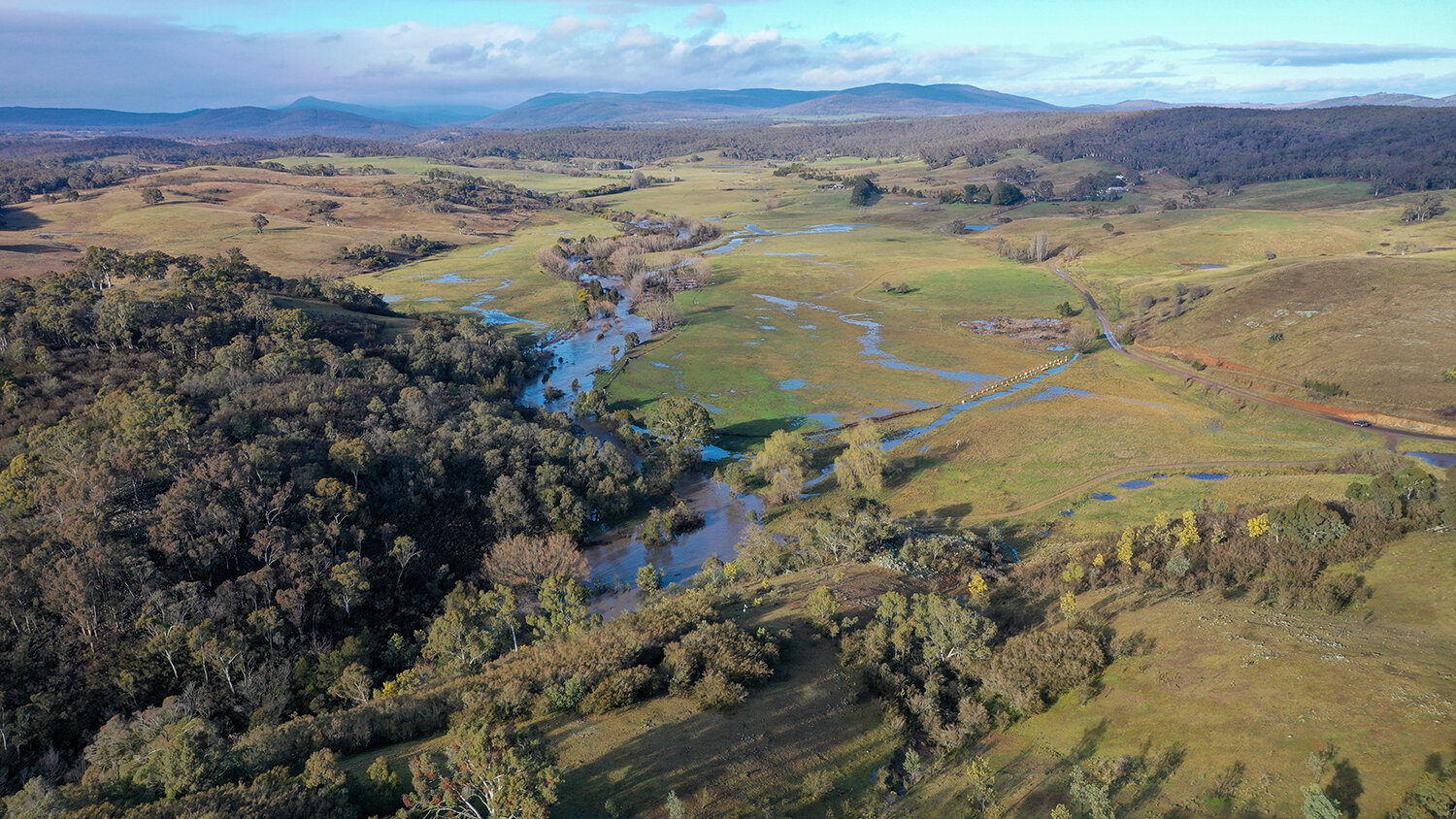
Home Farm floodplain at the peak of the flood. The same scene during the 1974 flood would have shown  water torrenting through the valley. Today, right through the valley, floodwaters move more slowly and more quietly – regenerating, not eroding, th…

Home Farm floodplain at the peak of the flood. The same scene during the 1974 flood would have shown water torrenting through the valley. Today, right through the valley, floodwaters move more slowly and more quietly – regenerating, not eroding, the floodplain.

The Mulloon Rehydration Initiative is jointly funded through the Mulloon Institute and the Australian Government’s National Landcare Program and is supported by various affiliates.

Prime Minister Scott Morrison addresses the crowd at Cooma

Prime Minister Scott Morrison addresses the crowd at Cooma

This year’s Daily Telegraph’s Bush Summit was held in Cooma and brought the national focus back to the impact of extreme weather on the landscape and the people who live and work with its repercussions.

Speakers from the Prime Minister down noted the impact drought, floods, bushfires and now COVID-19, has had and continues to have on regional Australia. 

Resilience was a key theme throughout the day, resilience, not only of our agricultural land, but also of rural communities and individuals. In that context, there was plenty of discussion of mental health, quite natural given many communities have had the triple whammy of drought, bushfire and pandemic within less than the past year.

TMI’s Chairman Gary Nairn represented the institute and took the opportunity to remind the Prime Minister of his visit to Mulloon Creek in 2018. It was encouraging to receive a positive response from him about supporting farmer led ‘peer to peer’ training to expand landscape rehydration, improve soil carbon, biodiversity and better prepare farmers for the inevitable next dry spell.

The Premier of NSW also attended the Bush Summit, as did Federal and State Opposition leaders along with a number of Federal and State Ministers. 

Highlights of the Daily Telegraph’s Bush Summit

NSW Government 2020 Drought Package

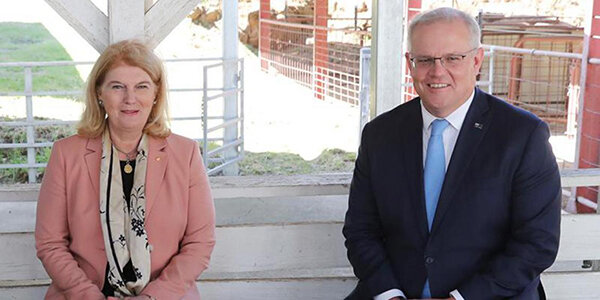
Hon. Penny Wensley AC with Prime Minister Scott Morrison

Hon. Penny Wensley AC with Prime Minister Scott Morrison

The Mulloon Institute extends its congratulations to the Hon. Penny Wensley AC for her new appointment as the new National Soil Advocate for Australia.

Major General Michael Jeffery

Major General Michael Jeffery

Penny’s appointment comes following the stepping down of Michael Jeffery due to ill health. General Jeffery was the inaugural National Soil Advocate since July 2019 and has done a remarkable job in raising the importance of soil, water, vegetation and animals for the future of our agricultural lands. He gave the Australian Government a blue-print for a policy to ensure soil, water and vegetation become key national strategic assets. 

As part of developing a National Soil Strategy over the last six months, the Government has been consulting with around 200 targeted individuals and organisations within Australia’s soil community, including TMI’s CEO Carolyn Hall and Chairman Gary Nairn, who have taken part in a workshop as part of the development work. Interested individuals and organisations are also invited to share their feedback on the National Soil Strategy by taking part in this Survey before 25 September 2020.

Gary congratulated Ms Wensley on her appointment on behalf of the organisation and offered our assistance, to which Penny has expressed a wish to visit to The Mulloon Institute in the near future.

PRESS RELEASE: https://www.pmc.gov.au/domestic-policy/national-soils-advocate

National Soil Strategy survey, closes 25 September 2020

2020-July-600px.jpg

Read our latest Enews update right here! https://conta.cc/2CjHHmJ

MCNF-logo-600px.jpg

Mulloon Creek Natural Farms – Farm Manager 

Job Description 

  • Mulloon Creek Natural Farms is looking to recruit a Farm Manager (FM) with good business sense and a minimum of ten years’ farm management experience. The successful applicant will have managed profitable farms and will be familiar with all aspects of livestock, grazing and pasture management in a regenerative agricultural setting.

  • A proven ability to work collaboratively with staff who are involved in all aspects of the Mulloon Institute (TMI) will be required.

  • You will have sound financial management skills and, working with the CEO and CFO, develop the farm budget. You will understand the relationship between on-farm activity and financial consequences. 

  • Our farms promote Regenerative Agriculture and Holistic Farming practices. It is important that you have a solid and current understanding of these concepts and approaches and how they can be implemented at Mulloon Creek Natural Farms (MCNF). Our farms are run organically using biodynamic principals so an understanding of, and commitment to these methodologies is also required.

  • Outstanding candidates will display leadership skills, are keen problem solvers who are focused on efficiency and take a hands-on approach to management. You are expected to be self-driven and ambitious, demonstrate initiative, and have excellent decision making and problem-solving skills.

  • You will be required to engage with a range of stakeholders including farmers, researchers and educators so you will have excellent communication skills, be polite, a good listener and have a friendly demeanor.

  • The Farm Manager is responsible for the management of farm staff and farm operations on two properties, that together form Mulloon Creek Natural Farms:  The Home Farm and Duralla. The Home Farm is predominantly a cattle grazing enterprise while Duralla, located 5 kilometres from the Home Farm, has cattle and a large scale free range poultry enterprise. You will be expected to work closely with the managers of this enterprise.

  • An understanding of policy and procedure manuals as they apply to farm management and a contemporary understanding of Industrial legislation and HR policy and procedure will be required.

  • The role reports to the CEO. 

Key Duties and Responsibilities:

  1. Maximise farm returns in line with Mulloon Creek Natural Farms business targets.

  2. Responsible for budget and cash flow management and oversee the maintenance of technical and administrative records.

  3. Prepare and deliver reports on Farm Operations to the CEO for the Board of the Mulloon Institute

  4. Collaborate with senior staff to prepare budgets and financial reports.

  5. Direct and supervise all staff in farm operations and ensure the application of safe and appropriate animal welfare practices. 

  6. Ensure a happy and collaborative working environment which also provides for creating opportunities for careers in agriculture within our organisation.

  7. Effectively communicate with staff and ensuring staff are motivated and well led.

  8. Provide opportunities for MCNF staff to learn about and implement regenerative agricultural practices promoted by the Mulloon Institute.

  9. Perform farm operations associated with the management of our poultry and cattle enterprises.

  10. Manage pasture for landscape and stock health and collect management data using software and data management tools.

  11. Support activities and operations required for research projects.  

  12. Assist with education extension activities such as field days including demonstrations.

  13. In conjunction with research and other regional staff, plan and implement the maintenance and development of resources and facilities.

  14. Scheduling repairs, maintenance, and replacement of fences, equipment and machinery.

  15. Ensure all staff adhere to health and safety regulations.

  16. Assist with the recruitment and training of new staff members.

  17. Build professional networks and keep abreast of developments in agricultural science.

Selection Criteria Essential:

  1.  Proven ability to operate profitable farm enterprises and manage finances within budget. 

  2. Broad knowledge and previous experience of cattle station and mixed farming operations management.

  3. An understanding of regenerative agriculture and its practical application.

  4. Technical expertise in farm operations including land preparation and farm maintenance operations.

  5. Proven ability to lead and direct staff to ensure a safe and effective workplace.

  6. Well-developed interpersonal skills, with the ability to communicate with the public, producers and researchers.

  7. Ability to interact effectively with people of diverse cultures.

  8. Experience with computers and familiar with relevant software packages.

  9. An appropriate Degree, Diploma or equivalent in agriculture or related field from a recognised institution and/or extensive relevant experience.

Benefits

  • Accommodation and utilities

  • Work Vehicle

  • Opportunities for professional development through:

    • courses run at the Mulloon Institute

    • interaction with Mulloon Consulting team

    • engagement with a variety of leaders in regenerative agriculture 

  • A diverse and interesting role with the opportunity to develop farm enterprises in line with MCNF and TMI philosophies

Applications

Download the position description here.

For more information to submit your application, please email Nolani McColl via nolani@themullooninstitute.org

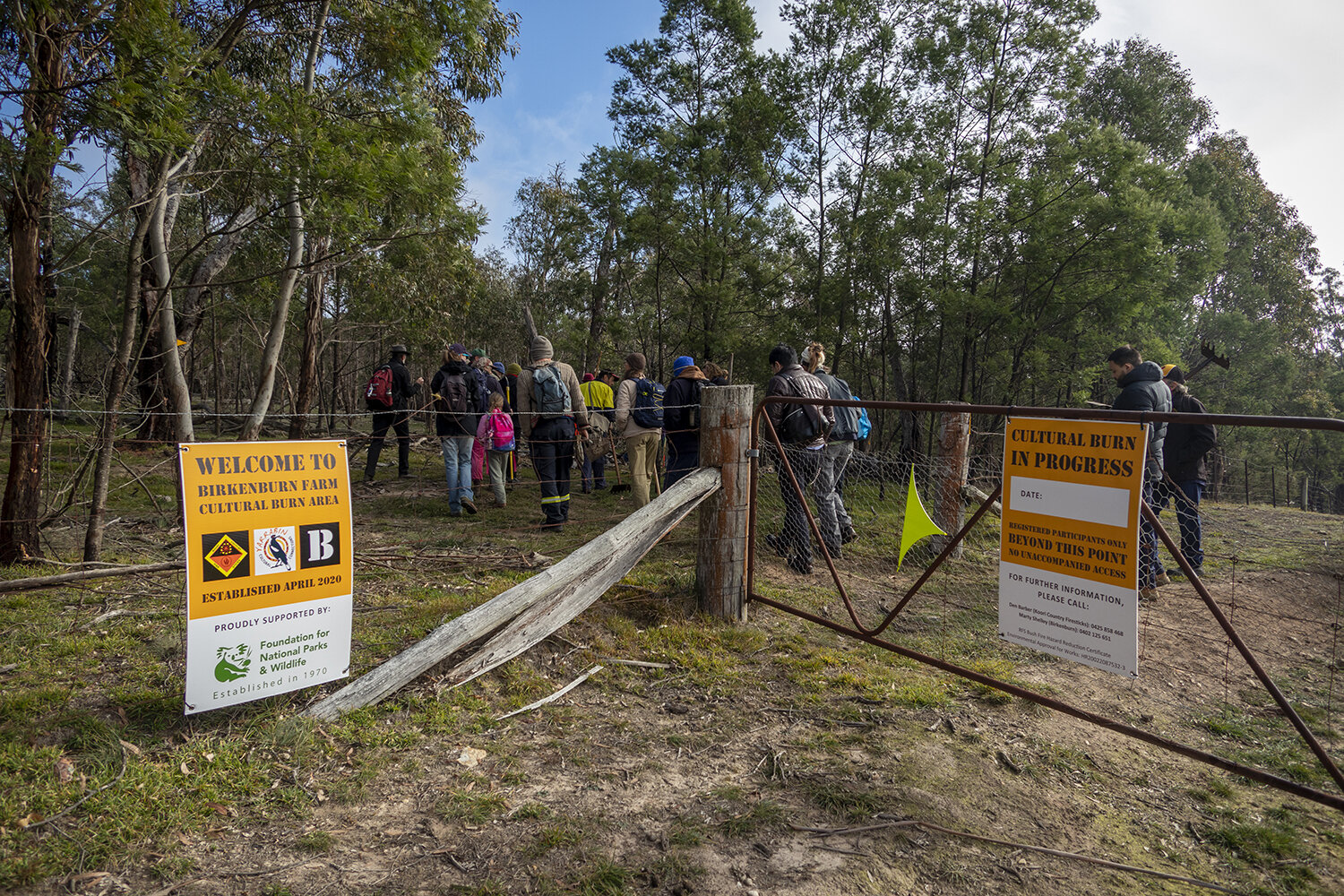
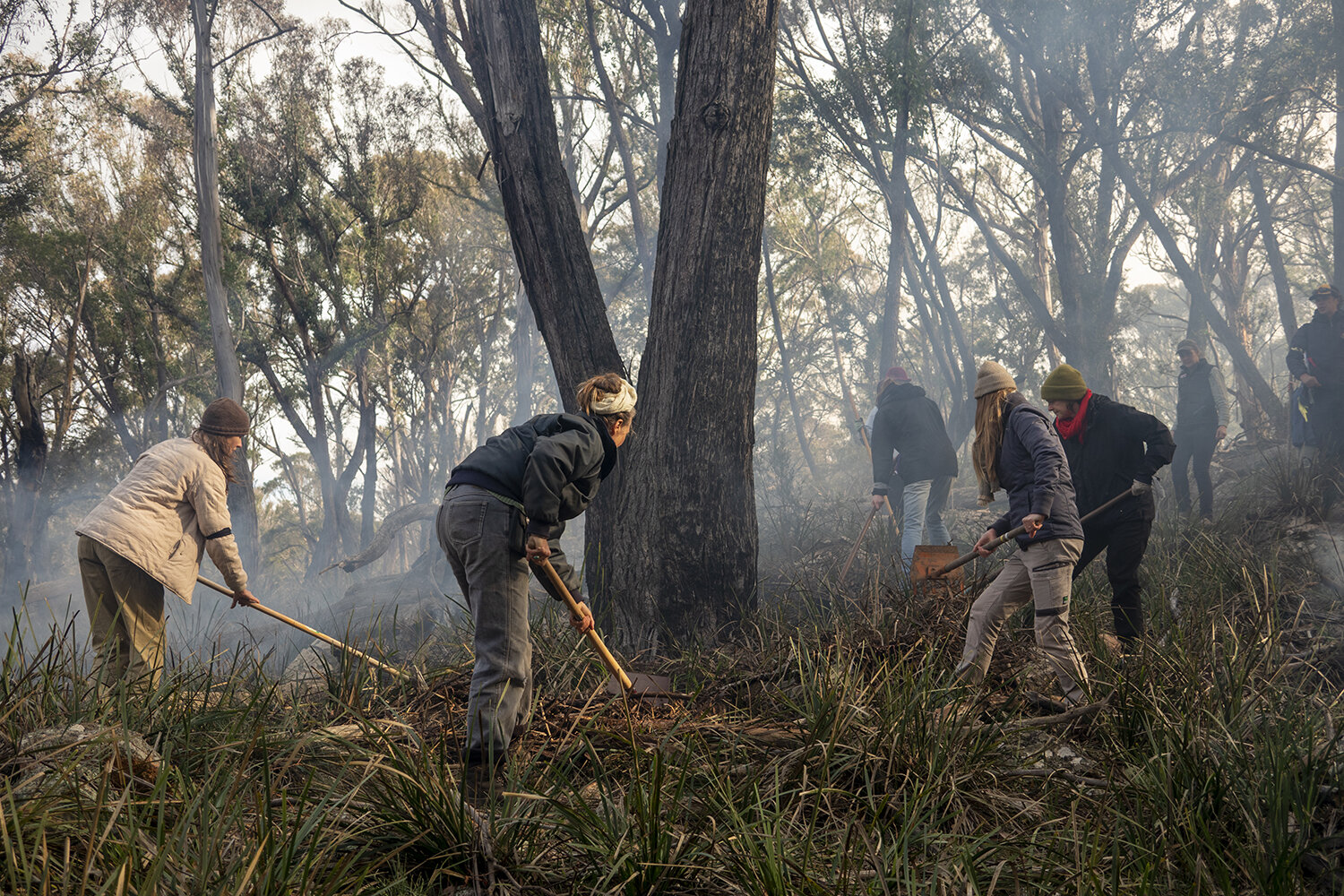
Tom and Martina Shelley from Birkenburn Farm near Bungendore hosted a cultural burning workshop with Cultural Fire practitioner Den Barber during July, as part of their ongoing commitment to environmental projects that includes large-scale tree-planting, creating wildlife corridors and controlling erosion.

After last summer’s catastrophic fires, Martina and her family had been concerned about large fuel loads on the hills. They engaged Den to help them learn how to safely use fire as a tool to manage this risk and decided to hold workshops to further share the knowledge and help build cultural connections and heal the land. 

The project with Den and Koori Country Firesticks is supported by the Foundation for National Parks & Wildlife through their Bushfire Recovery Small Grants fund for specific bushfire response projects. It aims to regenerate and maintain biodiverse habitat on the property and protect it from wildfire, while encouraging and enabling surrounding landholders and community to do the same. It is hoped the series of workshops will increase knowledge of cultural burning practices and give participants the confidence to adopt cultural burning on their own land. 

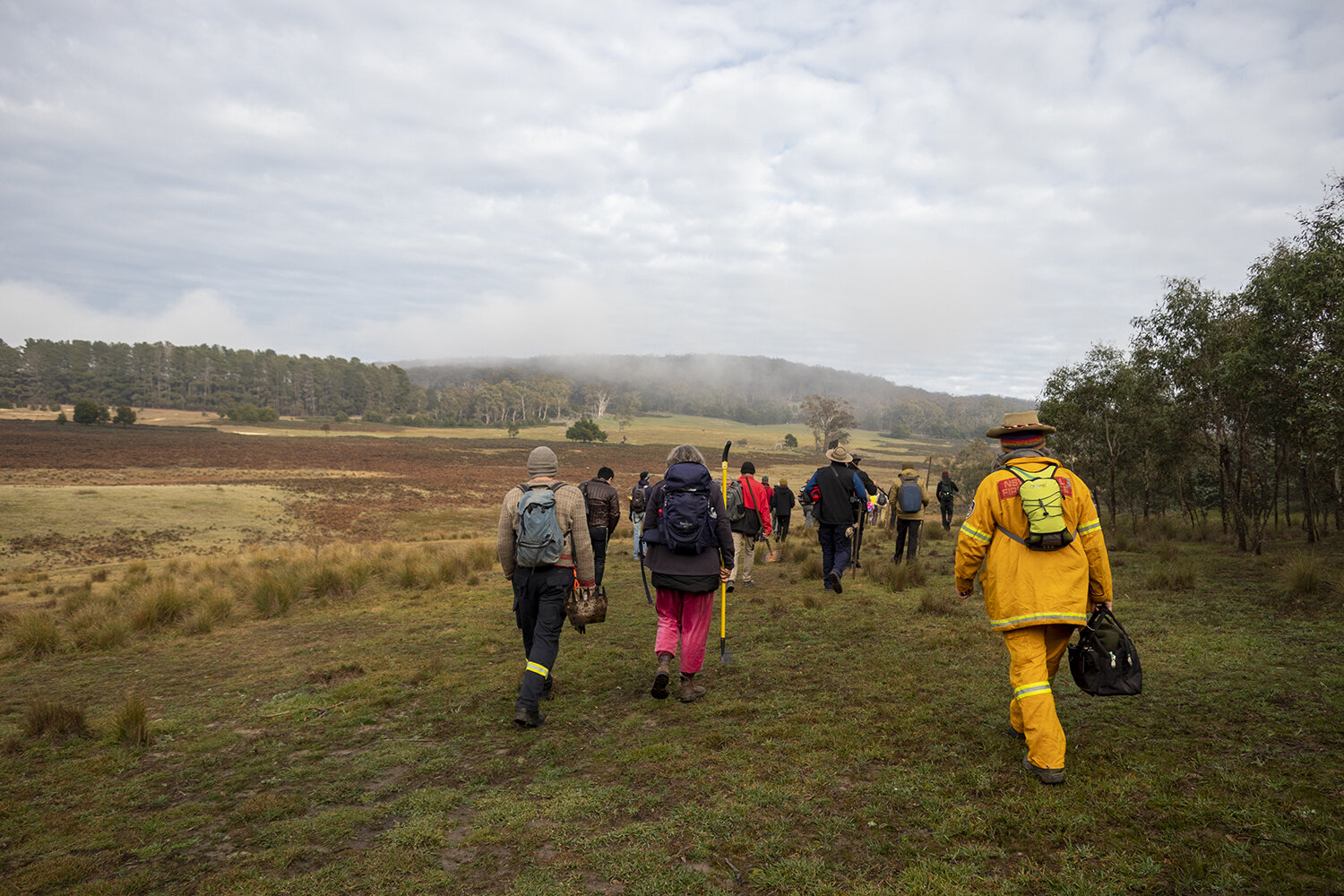
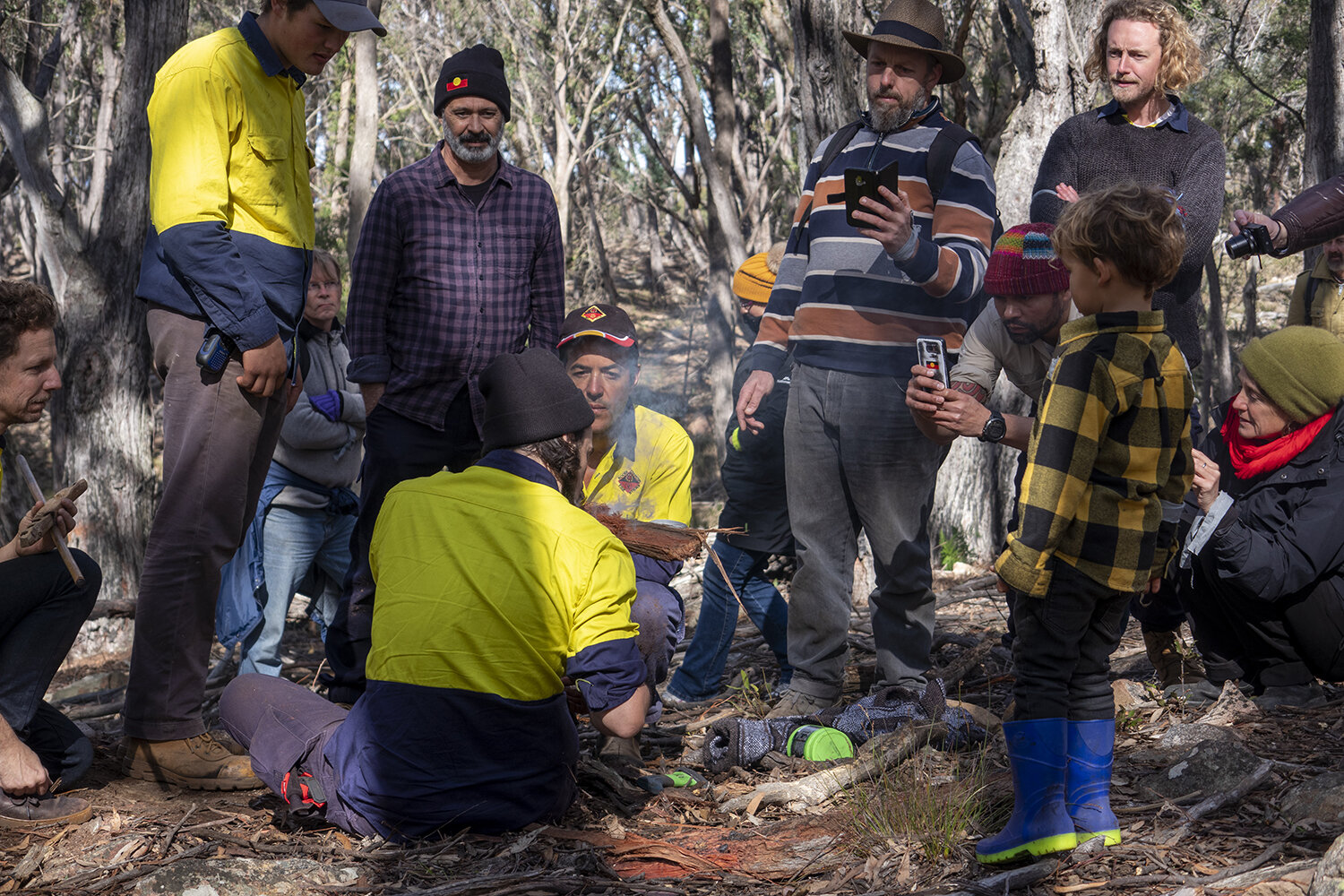
The day started with Den and his team from Koori Country Firesticks Aboriginal Corporation and Yarrabin Cultural Connectionsguiding nearly 50 participants from the paddocks, high up into the hills, where the Great Dividing Range separates the Murray–Darling Basin and the Shoalhaven catchment. A special cleansing smoking ceremony was held, bringing a reverence and cultural immersion to the experience.

Being mindful of conditions is an important part of planning cultural burns especially with the workshop site having had an absence of fire on the land for 50 years, so it was ideal the day was cool and damp with little or no wind. It is also advisable not to plan burns when plants are fruiting or young animals are around.

The aim of the day was to clean the land of the dead logs, branches and leaf litter that makes country ‘messy’. When traditional Aboriginal people still lived on the land they were always collecting fallen wood and logs for their fires and managing the fuel load, but in their absence this continues to build up. Not all fallen logs need to be burned however, some can be saved and placed on contours to slow water down across the landscape and keep moisture and nutrients in the land.

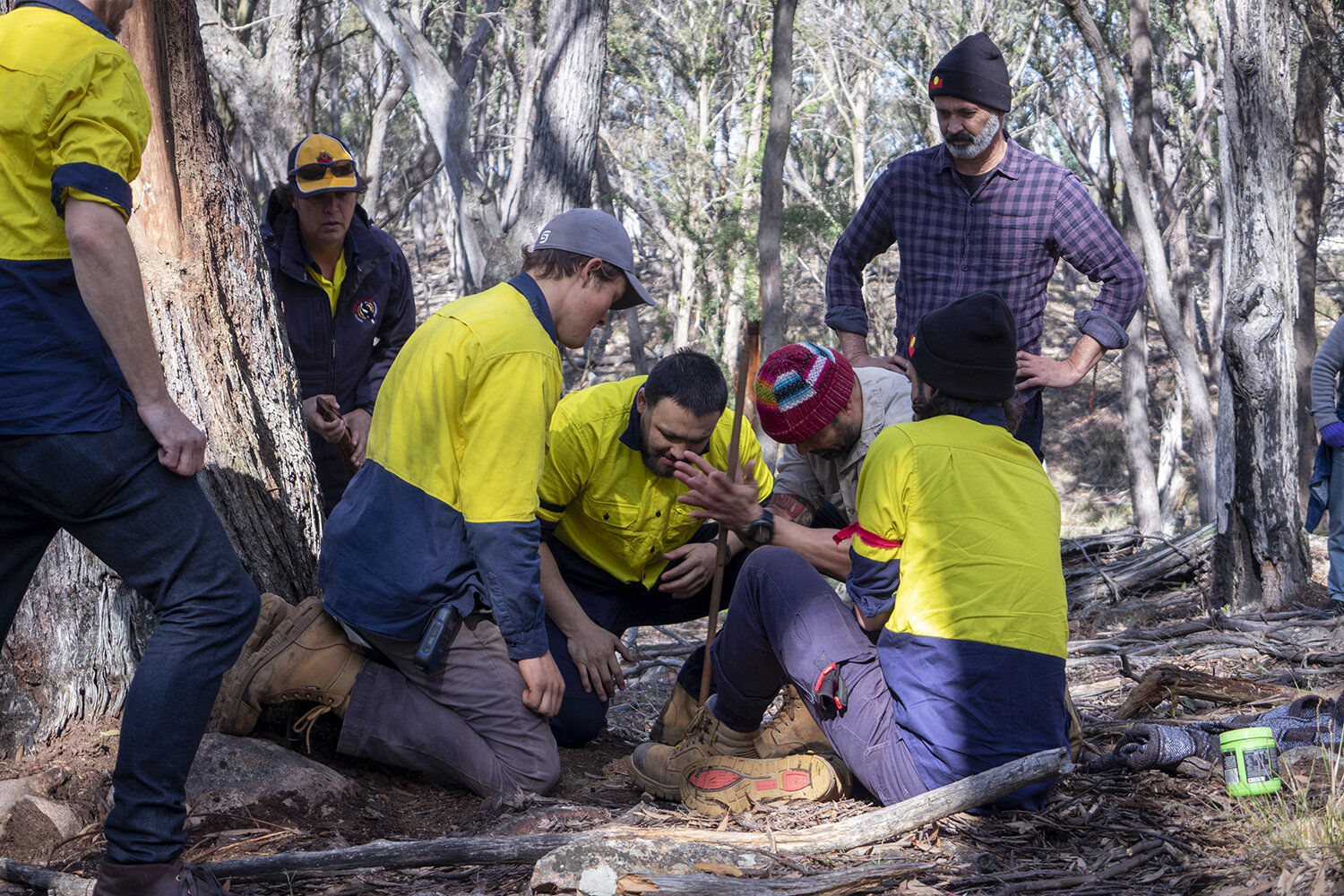
At the top of the range, the team used a traditional method of lighting fire, with a team of four sharing the task of spinning a grass tree flower stalk (Xanthorrhoea) on a softer base of native hibiscus or cottonwood (Hibiscus tiliaceus). Once the spark was ignited it was transferred to a bed of stringy bark tinder where it was blown on gently until a flame emerged. Traditionally, this fire would then be carried between campsites within a banksia cone.

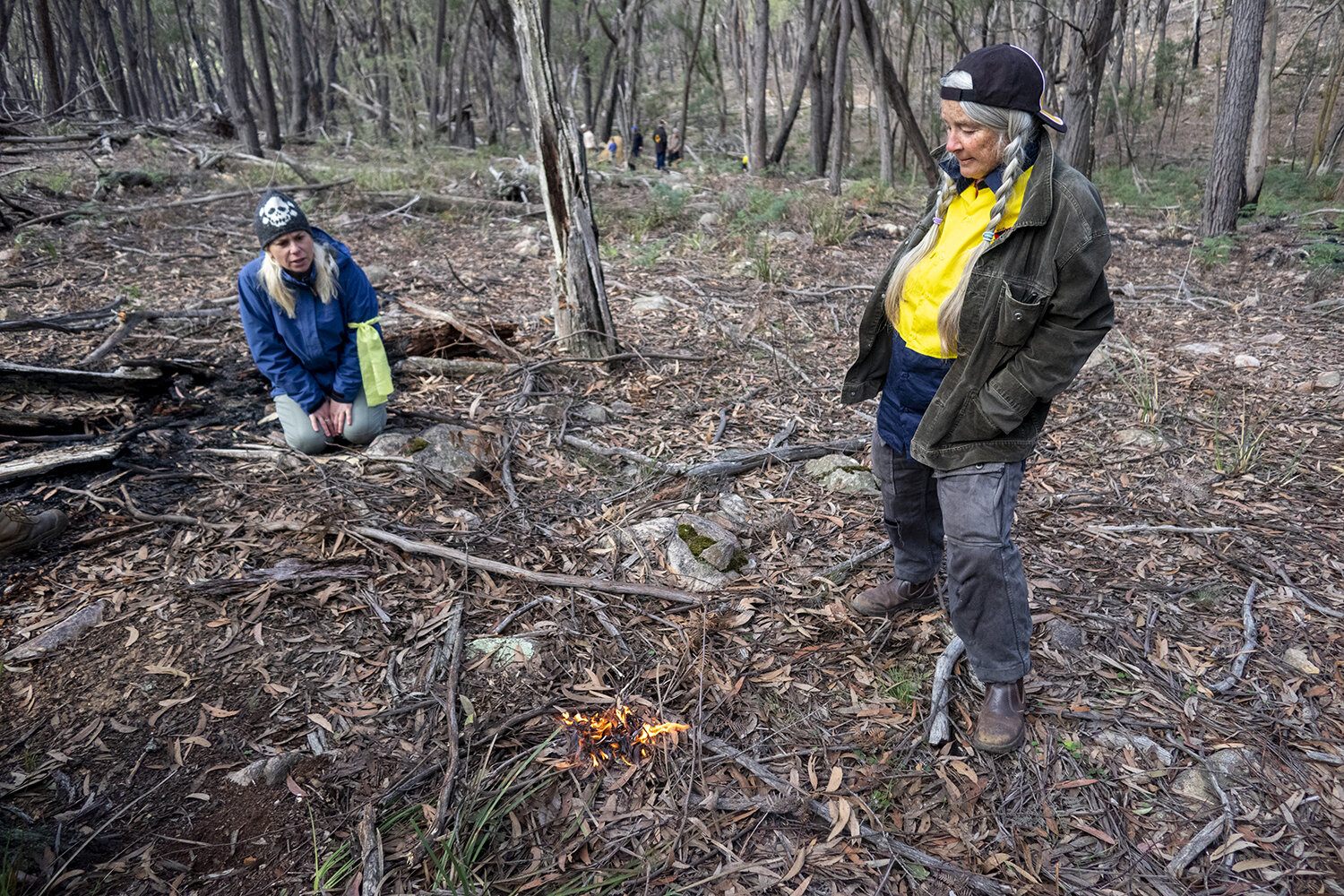
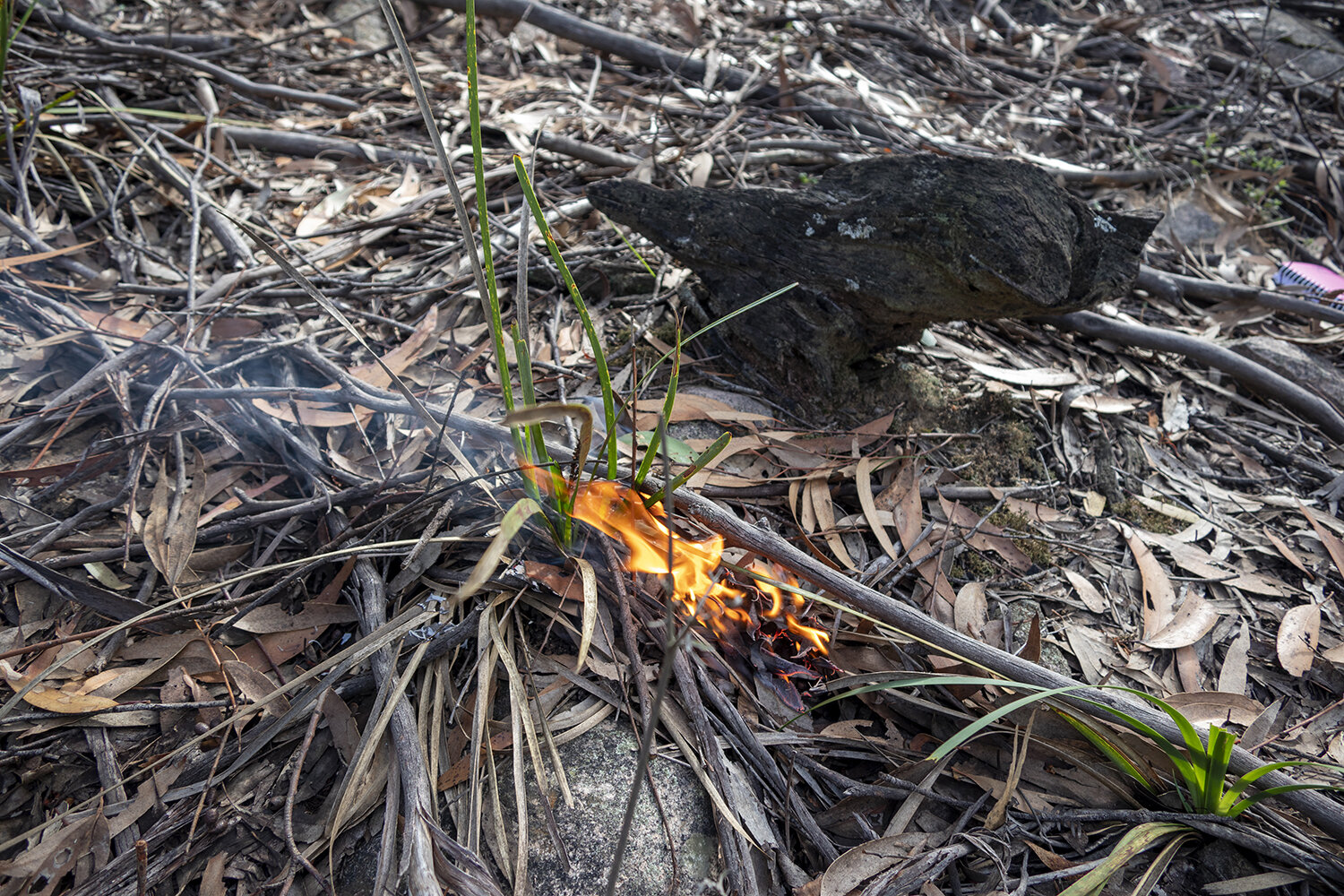
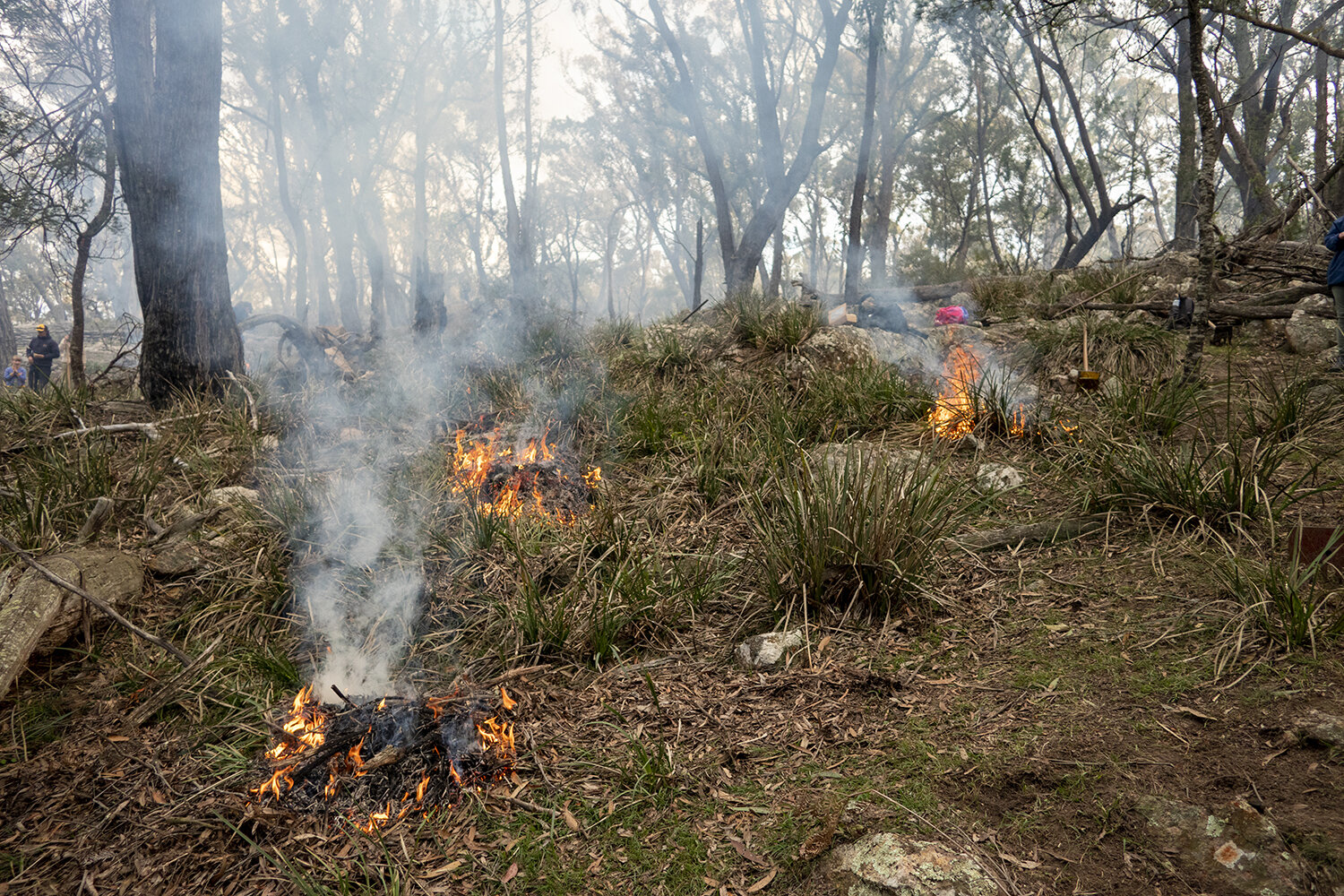
Rather than using a drip torch that creates a hot wall of fire, cultural burn fires are lit in ‘spots’ that radiate out in small circles, leaving a patchwork pattern of burnt and unburnt areas where animals and insects can retreat to as fire approaches. Similarly, keeping fire out of the canopy by clearing branches and leaves from around the base of trees is vital for protecting another refuge place for creatures seeking safety.

Unlike wildfires which wipe out everything down to the dirt, damp leaves usually still remain after a cool cultural burn which helps keep moisture in the ground. Interestingly grass, even when green, will burn much faster than damp leaves. Rocky areas and damp sections also provide natural containment areas for fires, highlighting the importance of rehydrating landscapes to improve resilience to fire and influencing where it will burn. Traditionally, waterway drainage areas were considered so important they were designated as ‘no burn’ areas. 

Participants divided into groups and lit small areas in a mosaic pattern, watching as the fire slowly burnt litter and basket grass (Lomandra longifolia) in circles, going out as they reached one another or hit a damp spot. The cool burn was slow, leaving behind a carbon layer and not damaging soil life. As the small fires burned, Den sang to the land in a spine-tingling, booming voice.

Researchers from The Mulloon Institute will continue to monitor the burn site over time and study the effects it has on soils and vegetation, including measuring how fire impacts the movement of water in the landscape, and how water in a rehydrated landscape can impact the movement of fire.

Thank-you to Den Barber and his team from Koori Country Firesticks and Yarrabin Cultural Connections for sharing their valuable cultural knowledge via these workshops, and to Tom and Martina Shelley for giving so many of us this space and opportunity to learn in. A further workshop is planned for 12-13 September 2020.
Sam Skeat Millmerran 1-600px.jpg

Sam Skeat Millmerran 2-600px.jpg

Sam Skeat Millmerran 3-600px.jpg

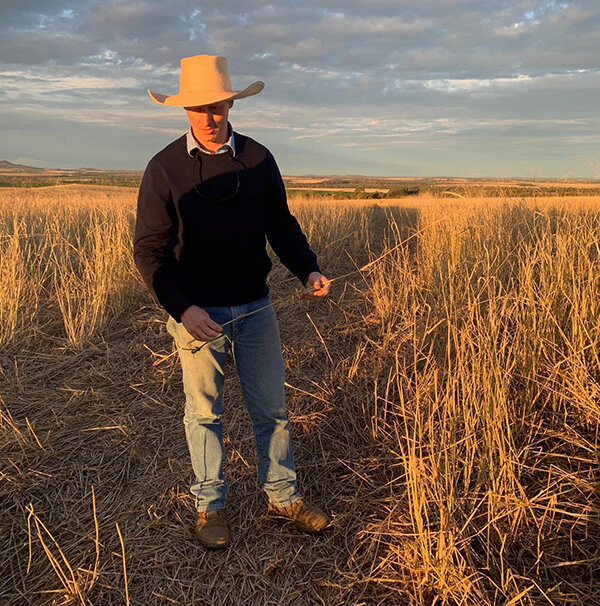
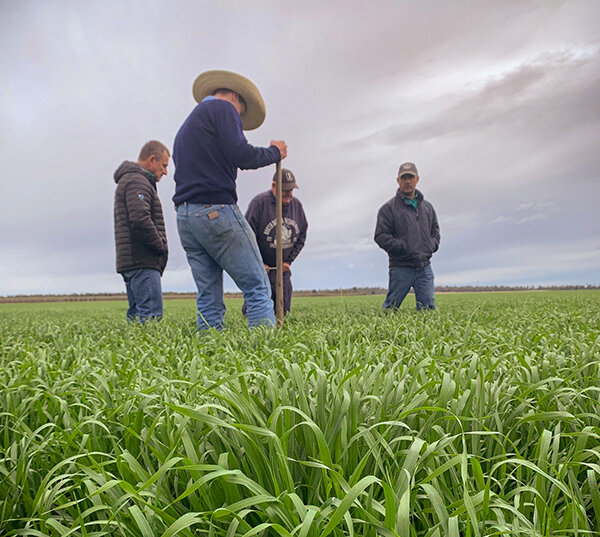
After Sam Skeat’s visit to Mulloon Creek in July he spent a week in Millmerran, southern Queensland undertaking site assessments for four different landholders and delivering a facilitated discussion on the benefits of landscape rehydration to restoring functional processes in the landscape. Sam focused on understanding landscape processes, how to identify features that assist in hydration to develop farm management plans, and using plants and landforms to manage the flow of water. Thanks to Southern Queensland Landscapes and Millmerran Landcare for organising this property planning consultation.

The week in southern Queensland also allowed for the exploration of the synergies between landscape rehydration and grazing management and was a great opportunity to have a close up look at the Condamine River and consider the benefits of landscape scale environmental repair in that region. 

In the Southern Tablelands, the team were busy too with report writing proceeding for a variety of site assessments progressing along with site assessments in Cooma and Michelago by Cam Wilson. Anne Gibson has been kept busy collaborating with a variety of organisations who, along with Mulloon Consulting Contracting and Certifying, were invited by Lismore City Council to submit quotations. These focused on the delivery of innovative landscape rehydration measures and training for rural landholders in the Lismore Shire and on an index for landscape rehydration aiming to monitor changes over time and identification of the impacts of management interventions.