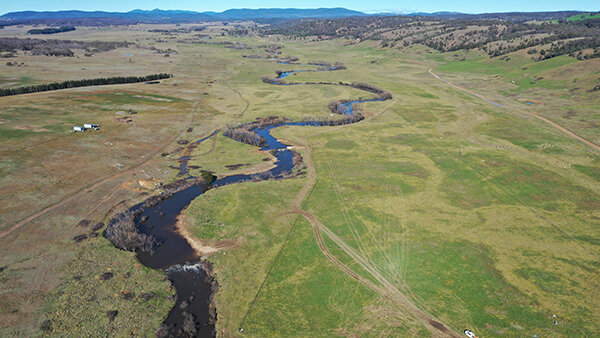
TMI Research Coordinator Luke Peel walks across Peter’s Weir at Mulloon Creek Natural Farms.

TMI Research Coordinator Luke Peel walks across Peter’s Weir at Mulloon Creek Natural Farms.

Drought across the Southern Highlands since mid-2016 has exasperated pastoral conditions for landholders reliant on pasture growth and clear water supplies to maintain stock numbers.

So, how have the leaky weirs established at The Mulloon Institute (TMI) fared during that extended dry period?

The initial pilot project at Mulloon Creek Natural Farms included the installation of 17 structures along three kilometers of the creek which slowed the flood event in June 2016 and spread water across the floodplain.

TMI research coordinator, Luke Peel, pointed out that widespread flooding recharged the floodplain groundwater storage which was slowly released back into the creek as water levels in the creek fell.

“With the severe drought that followed and with little or no flow from upstream, that section of the creek continued to have water flow due to the floodplain storage,” Mr Peel said.

“The flow of water to downstream landholders continued through until November 2019.”

At that time, the creek was reduced to a chain of ponds and that series of connected waterholes and in turn kept stock, flora and native fauna alive during the drought.

“It was amazing to see the amount of water even a small floodplain can store for dry times that kept the creek flowing,” Mr Peel enthused.

Those structures formed the original phase of The Mulloon Institute’s flagship Mulloon Rehydration Initiative (MRI) which demonstrates how landscapes can become more resilient to climate extremes through rebuilding the landscape and ecosystem functions with leaky weirs, re-vegetation and managed grazing of livestock.

TMI Science Officer Nolani McColl

TMI Science Officer Nolani McColl

TMI science officer, Nolani McColl, noted the works along the Mulloon Creek have re-established a reliable stream flow while also enhancing agricultural productivity and improving water available to down-stream users over longer timeframes during times of drought.

“The structures have stabilised the creek bed from further erosion by slowing the flow of water and have moderated the flow of water from rainfall events in February and March this year,” Ms McColl said.

“With only minor rainfall since March, the structures have had the desired effect of providing a consistent water flow of 15 megalitres a day – the equivalent of 15 olympic swimming pools.”

Ms McColl pointed out that flow was sufficient for the relatively small creek to provide water to eventually flow into the Tallowa Dam which supplies part of Sydney’s drinking water.

The structures are designed to slow water flow, filter the water through planted native riparian vegetation and to reconnect the stream with the adjacent floodplain.

“The results have included the recreation of wetlands and habitat along the creek for native flora and fauna, improved water quality and more sustained water flow, even in dry times,” Ms McColl said.

The deposit of silt and other nutrients across the floodplain was further noted by Mr Peel who said in so many ways landholders along the Mulloon Creek gained from the loss of topsoil and nutrients from the bushfire-affected areas upstream following the March rain event.

“Stream gauges along the Mulloon Creek measured high turbidity for the first three days and then subsided back to good levels,” he said.

“That reduced the impact of water quality downstream.”

The introduced structures also meant water levels had since been maintained even though little rain had fallen since March. 

“The structures have moderated the flood pulses and that has had the desired effect of providing the consistent water flow of 15ML/day,” Mr Peel said.

“The structures are not stopping water flow, but they do slow the flow enough to provide many benefits for immediate landholders and all users downstream.

“Imagine if many creeks were rehabilitated in this way and were protected during times of floods and drought, and if those areas were retaining more water and green vegetation, they could also help provide barriers to wildfires.”

SOURCE: https://www.theland.com.au/story/6854744/leaky-weirs-success-through-drought/
Kindly reproduced with permission from author Stephen Burns of The Land newspaper.

The Mulloon Rehydration Initiative is jointly funded through the Mulloon Institute and the Australian Government’s National Landcare Program and is supported by various affiliates.
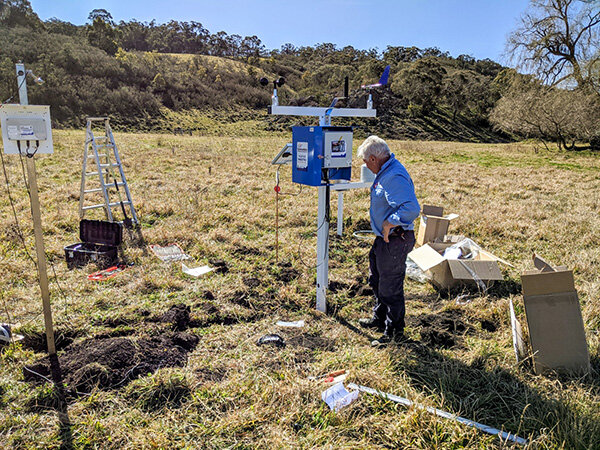
Hydrologist Tony Bernardi mid installation, near Peter’s Pond on the Home Farm

Hydrologist Tony Bernardi mid installation, near Peter’s Pond on the Home Farm

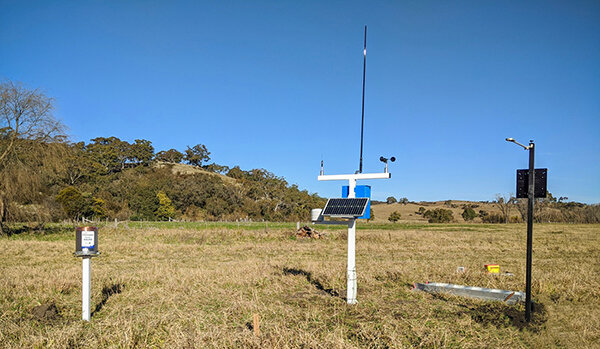
One of two new weather stations commissioned from Environdata has been successfully installed at the Home Farm property by Research Coordinator Luke Peel and Hydrologist Tony Bernardi with a second installation planned at Duralla in the coming weeks. 

The weather stations will monitor air temperature, wind speed and direction, relative humidity, rainfall, barometric pressure, incoming and outgoing solar radiation, soil temperature and soil heat flux. The measurements will allow us to calculate evaporation and stored energy in the soil and monitor changes.

A soil moisture gauge will also be installed to more accurately assess soil water temperature cycle, evapotranspiration (plant usage) and tie in with the incoming and outgoing solar radiation meters on the existing weather station.

Acting MCNF Farm Manager and TMI Board Member Martin Royds visited during the installation and was quite impressed with the rain gauge’s brass bowl and its inner gold-plated tipping bucket which is accurate to 0.2mm. An temporary electric fence has been erected around the site thanks to Tessa Mettke from MCNF until a more permanent enclosure is installed. 

IMG_20200731_151122-crop-600px.jpg

Both sites are located on Mulloon Creek Natural Farms and have been chosen for optimal placement within the Mulloon Creek catchment and to account for any minor differences between upper and lower catchment. The sites need to be in open spaces away from structures and tall plants, and away from tracks and roads to minimise dust, but also remain easily accessible. They need reasonable access to the mobile network for sending data (telemetry) to the data centre at Envirodata. 

Matthew Probets from Environdata reports that the weather station has been activated and all incoming information appeared true and correct so we are happy that the instruments are operational and sending accurate data. Eventually, this data will be combined with the many various monitoring instruments for viewing on Hydroterra’s Datastream website.

The Mulloon Rehydration Initiative is jointly funded through the Mulloon Institute and the Australian Government’s National Landcare Program and is supported by various affiliates.
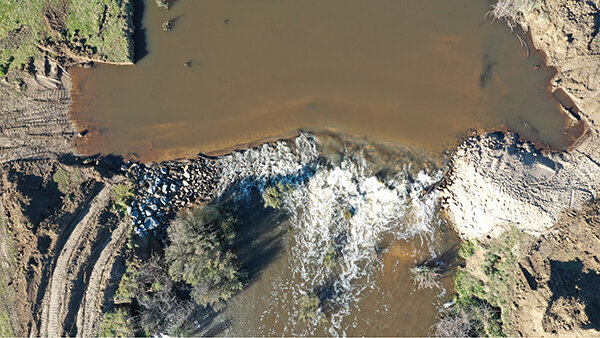
Looking straight down on leaky weir DM8 at Duralla

Looking straight down on leaky weir DM8 at Duralla

On-ground work on the Mulloon Rehydration Initiative (MRI) continued during July once we had accessed logs for the leaky weirs following a shortage caused by the bushfires. Project Coordinator Peter Hazell has been very much ‘back in the creek’ directing another stage of the MRI. 

——

‘TMI got back on the ground in July to finish off the Mulloon section of the MRI. Well over 50 leaky weirs now populate fifteen kilometres of Mulloon Creek stretching from the Home Farm in the south, to Duralla in the north. 

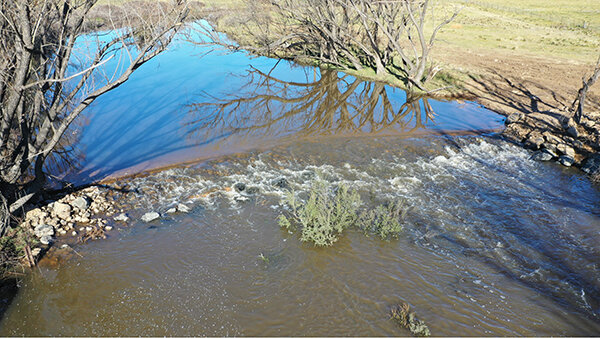
Structure DM9 at Duralla. DM8 and DM9 were completed just as the water level started rising!

Structure DM9 at Duralla. DM8 and DM9 were completed just as the water level started rising!

Immediately after the last leaky weir was installed on Monday 27th July, a major stream pulse came down the system caused by 90mm of rain in the top of the catchment. It is always a nervous time when that first pulse spills over the top of new structures. Even though the structures were very fresh, they did their job – and what was left behind was a chain of bank full ponds as far as even an eye in the sky could see  – a sight not seen in the valley for generations. 

Looking upstream towards Palerang, with structure DM6 in the foreground, two days after a pulse measuring 15m3/second pushed through the system, and just days after the structures were completed.

Looking upstream towards Palerang, with structure DM6 in the foreground, two days after a pulse measuring 15m3/second pushed through the system, and just days after the structures were completed.

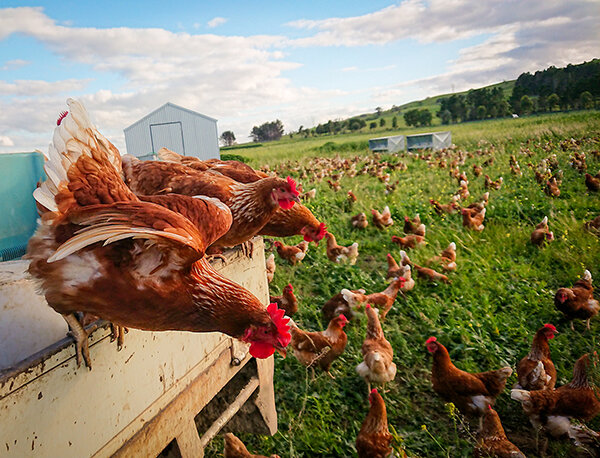
In all 20 leaky weirs are now installed at Mulloon Creek Natural Farms, with six along two kilometres of creek at the organic egg farm at ‘Duralla’ and another 14 at the Home Farm where our cattle operations are based. These sections of creek have been fenced to keep cattle and wildlife out and to protect transplanted plants.

The next stage of on-ground works will commence in the Spring and will continue along Reedy Creek before moving back upstream to properties above the Home Farm.’

The Mulloon Rehydration Initiative is jointly funded through the Mulloon Institute and the Australian Government’s National Landcare Program and is supported by various affiliates.
Peter Hazell, MRI Project Coordinator

chickens 2-600px.jpg

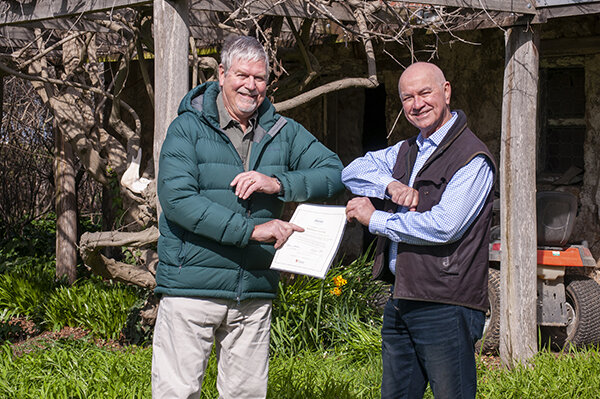
The Mulloon Institute’s (TMI) living laboratory at Mulloon Creek Natural Farms (MCNF) has been announced as the very first farm in Australia to receive Ecological Outcome Verification (EOV) certification from Land to Market Australia. 

Land to Market Australia is part of global network committed to farming practices that measurably regenerate the land and is an accredited member of the Savory Global Network founded by Allan Savory.

This tremendous honour is a fitting reflection of our commitment to using regenerative agriculture techniques and landscape rehydration practices to improve our biodynamic pastures and landscape function at Mulloon Creek Natural Farms, while boosting the productivity of our organic and biodynamic farms so we can produce nutrient dense food such as our certified organic MCNF eggs. Tony and Toni Coote would be proud.

As TMI’s CEO Carolyn Hall commented, “it gives us a robust measure of whether we are achieving our goals of improving ecological health”. 

TMI is an enthusiastic supporter of the Land to Market project through our work at MCNF, as it links our farming, national awareness and training activities with the opportunity for businesses and consumers to choose spending their money in a way that supports regenerative farmers and helps rebuild Australia’s ecological health.

L-R:  Tony Hill (Land to Market Australia) and Gary Nairn AO (Mulloon Institute)

L-R: Tony Hill (Land to Market Australia) and Gary Nairn AO (Mulloon Institute)

MEDIA RELEASE – 4 AUGUST 2020

Land to Market Australia is proud to announce the award of the first-ever Ecological Outcome Verification certificate in Australia to Mulloon Creek Natural Farms.

“Our 2019 monitoring report for Mulloon Creek Natural Farms (MCNF) has just been released, and I am pleased to announce, through this first-ever EOV report, that the health of their farmland is trending positive”, said Land to Market Australia Executive chair Tony Hill.

Mulloon Creek Natural Farms has a leading national profile for regenerative agriculture and is owned by the not-for-profit Mulloon Institute, that was established by the late Tony Coote AM. The Mulloon Institute was selected by the United Nations Sustainable Development Solutions Network (SDSN) as one of five model case study projects globally.

Carolyn Hall, CEO of the Mulloon Institute, said: “Ecological Outcome Verification has become a vital part of our farming operation, as we work with various farm management approaches, because it gives us a robust measure of whether we are achieving our goals of improving ecological health. It gives the businesses and consumers confidence, through this independent verification approach, that they are supporting healthy agricultural production”.

Land to Market Australia believes the verification of ecological health is particularly relevant when farmers face dry times, to ensure the resilience of their farmland when rains fall.

 “The Mulloon Institute is an enthusiastic supporter of the Land to Market Australia project, because it links our farming, national awareness and training activities with the opportunity for businesses and consumers to choose to spend their money in a way that builds ecological health”, said Gary Nairn AO, chairman of the Mulloon Institute Board.

Land to Market Australia has been recognised by Landcare NSW and NSW Local Land Services through their award as Grand Champion for the Australian Government Innovation in Agriculture Land Management Award for 2019.

Media or producer enquiries:

Tony Hill, Executive Chair, Australian Holistic Management Cooperative Limited
tony@landtomarket.com.au, Mobile 0412 128 755, www.landtomarket.com.au

Carolyn Hall, Chief Executive Officer, The Mulloon Institute
carolyn@themullooninstitute.org, Mobile 0418 651 300, www.themullooninstitute.org

allan-savory-300px.jpg

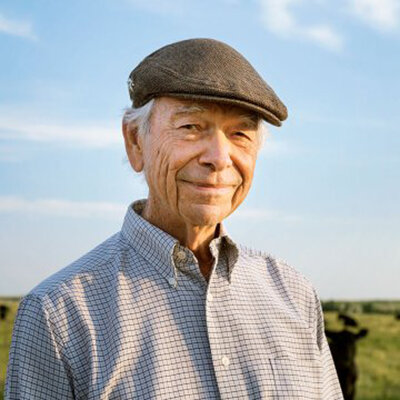
The Mulloon Institute is excited to announce that Allan Savory, founder of the globally recognised Savory Institute and of Holistic Management, has agreed to be guest presenter at this year’s Tony Coote AM Memorial Lecture.

The Savory Institute

The Savory Institute is recognised as a world leader in the education and implementation of regenerative agriculture around the globe, with Allan’s 2013 TED talk ‘How to fight desertification and reverse climate change’ being viewed over 7 millions times. 

Thousands of farmers and pastoralists around the globe have now adopted Holistic Management practices and conservation projects, NGOs, universities and government agencies across five continents are also practising regenerative agriculture to restore the environment.

Allan’s mission is to regenerate the world’s grasslands through Holistic Management. His long-term goal, which he is well on the way to achieving, is to positively influence the management of 1 billion hectares of grasslands by 2025, thereby contributing to global climate, water and food-security.

His Institute has won a number of awards, the most recent being for the Land to Market program operated through the Savory hub, which was named Grand Champion at the NSW Landcare Awards in the category ‘Leadership in Application of Innovative Farming Practices’, as part of the Australian Government Innovation in Agriculture Award.  

Land to Market

The Land to Market initiative helps support farmers and land managers who are regenerating their land through livestock management. It provides a verified means of safeguarding biodiversity and provides an assessment and branding scheme to measure the health of soil, biodiversity and ecosystems. Mulloon Creek Natural Farms, an entity of the Mulloon Institute, is a member of the Land to Market Australia network.

The Savory Institute has recently developed the Ecological Outcome Verification (EOV) methodology as a tool for monitoring and verifying the ecological health of their primary production land. The verification is assessed through a number of land health criteria including soil health, biodiversity and ecosystem function. The EOV is the science within the Savory Institute’s Land to Market program

PLEASE HELP, the Africa Centre for Holistic Management 

Allan and his wife Jody co-founded the Africa Centre for Holistic Management, which empowers Zimbabwe’s farmers to bring prosperity back to their land and communities. The centre actively enhances food and water security and human livelihoods through training that uses livestock to restore degraded watersheds, wildlife habitat and croplands to health. 

But now the Centre needs our help…. 

In Allan’s words, “They have battled incredible odds for years with now seventeen dry years, a collapsed economy and a 100% loss of income due to the pandemic”. 

Please consider making a gift to support their vital work by clicking here.

Online event

Given the current Covid situation this year’s lecture will be run as a virtual online event with the date to be confirmed shortly and bookings to be available soon after that. We certainly hope that you can join us for this exciting event!

[Photo credit: Sara Rubinstein]

What better way to support The Mulloon Institute than by buying one of the heifers we’re selling TOMORROW via Auctions Plus?

We are super proud of how we’ve managed to put 1kg on them each day as a result of running them under our biodynamic pasture-fed chooks at Duralla with low stress stock handling. Holistically managed focusing on principles of building biodiversity on Mulloon Creek Natural Farms. Only being sold due to a change in management situation.

View the Assessment Brochure or visit the online listing here.

2020-June-600px.jpg

Read our latest Enews: https://conta.cc/2DsXCzi

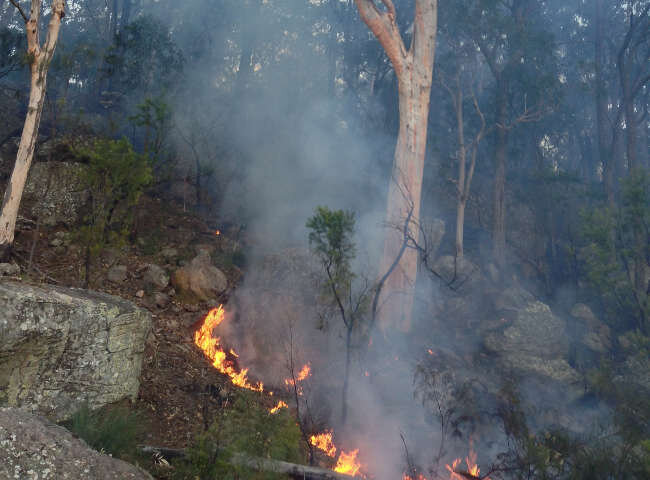
Image from Koori Country Firesticks website

Image from Koori Country Firesticks website

Bungendore landholders Tom Gordon and Martina Shelley will be hosting a ‘Cultural Burning Workshop’ at their Birkenburn Farm this winter with Cultural Fire practitioner Den Barber and members of the Koori Country Firesticks Aboriginal Corporation (KCFSAC).

KCFSAC is a non for profit organisation reviving Traditional Aboriginal cultural practices of burning Country as an alternative approach to Hazard Reduction techniques. This traditional knowledge has been passed onto KCFSAC by Aboriginal Cultural Elders and knowledge holders and is now being passed to other Aboriginal and non-Aboriginal people to help restore Country that has been impacted by wild fire, the absence of fire, and or infestation of exotic weeds.

After last year’s horrific fire season Tom and Martina have been working with the group to learn about and implement Cultural Burning practices in their rural property’s bushland areas. The project aims to regenerate and maintain biodiverse habitat on the property and protect it from wildfire, while encouraging and enabling surrounding landholders and community to do the same. 

Anticipated outcomes include increased community knowledge of cultural burning practices, adoption of the practices by landholders where appropriate, improved biodiversity and resilience to wildfire. 

Researchers from The Mulloon Institute are monitoring the Cultural Burn site and its effects over time, including recording and assessing effects on soils and vegetation. The leading research, education and advocacy organisation are committed to creating regenerative and resilient environments and are based on neighbouring Mulloon Creek Natural Farms.

Birkenburn is a beef and sheep farm that has been in Tom’s family for five generations. Both Tom and Martina are committed to various environmental projects, including large-scale tree-planting, creating wildlife corridors and controlling erosion. Birkenburn is also part of the Mulloon Rehydration Initiative aiming to rebuild the natural landscape function of the Mulloon catchment and boost its resilience to climatic extremes.

This project is being supported by the Foundation for National Parks & Wildlife through their Bushfire Recovery Small Grants fund which has been released for specific bushfire response projects. A second workshop is planned for 29-30 August 2020.

Tickets

Via Eventbrite

Wheatbelt, WA

Wheatbelt, WA

A major undertaking for the TMI/MCCC team including Nolani McColl, Carolyn Hall and Lance Mudgway (WA) has been the preparation of the Western Australia – Community Stewardship Grants 2020Landscape Rehydration Trial and Demonstration in the Wheatbelt of WA. This project has provided the opportunity for us to connect with a range of regenerative farmers in WA and has resulted in eight properties considering landscape rehydration under the grant. The Muresk Institute has agreed to partner on the grant along with Perth NRM, Regen WA, Wheatbelt NRM and South West Catchments Council. We are excited about the opportunity to work with landholders and NRM groups in WA.

Kangaroo Valley, NSW

Kangaroo Valley, NSW

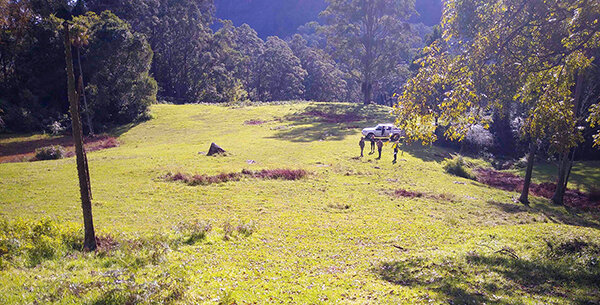
June has also seen MCCC team members Cam Wilson and Anne Gibson on the road. Cam travelled to Kangaroo Valley to undertake a site assessment for a small but “jampacked” property with cattle, sheep, bees, market gardens and medicinal operations. A range of management measures were explored to improve water supply and pasture, identify areas for native revegetation along with the potential for forestry. 

Harefield, NSW

Harefield, NSW

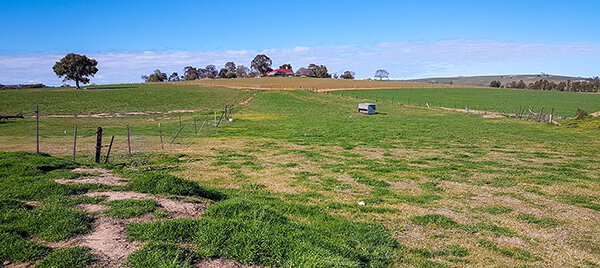
Anne and Cam together travelled to Harefield near Wagga Wagga where they undertook site assessments on two properties. They have explored how diversification might assist production and environmental values and how farm infrastructure and tree planting can deliver on ground benefits. The opportunities for landscape rehydration have also been explored at Harefield including the use of earth banks and plantings to manage surface water.

Mulloon Creek Natural Farms

Mulloon Creek Natural Farms

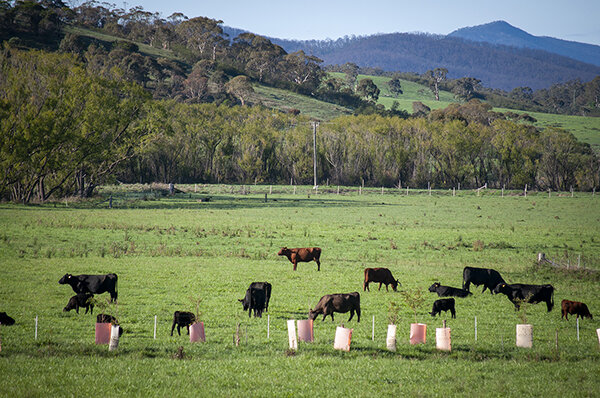
And closer to home, the detailed farm planning process for the Home Farm and Duralla at Mulloon Creek Natural Farms has been progressing during June, keeping Cam Wilson busy considering all the opportunities to continue regenerative agriculture on our farms.

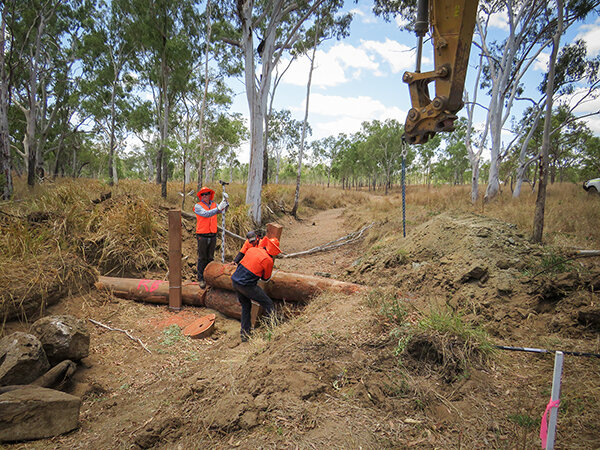
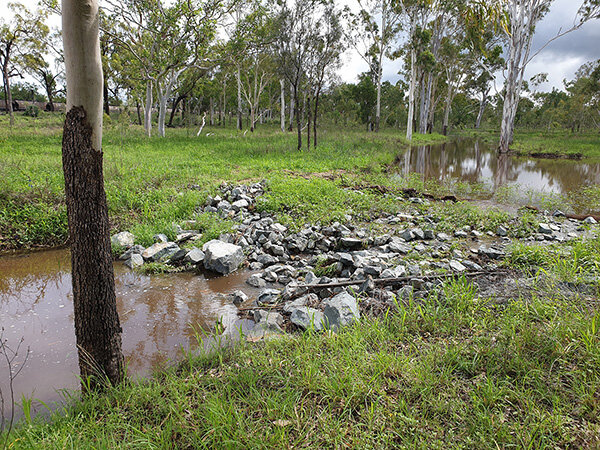
Installation of log and rock weir at Mt Pleasant Station, for NQ Dry Tropics

Installation of log and rock weir at Mt Pleasant Station, for NQ Dry Tropics

Are you passionate about restoring and rehydrating the landscape on your farm or catchment but don’t know where to start? Did you know that we can bring the work of the Mulloon Institute to you? 

Mulloon Consulting Contracting & Certifying (MCCC) is TMI’s consulting arm. We have a team of natural resource management specialists and scientists that deliver advice and consulting and contracting services to landholders seeking to implement landscape rehydration techniques and improve productivity across their catchments and landholdings. Our approach aims to re-establish the natural function, fertility and resilience of agricultural landscapes. 

MCCC is committed to providing accurate advice and delivering timely, practical and effective landscape rehydration services. We endeavour to deliver service excellence across the entire lifecycle of landscape regeneration projects, from planning, capacity building and on-ground works to monitoring and review.

Visit our website to discover what services we provide and which ones are right for you. https://www.mulloonconsulting.com.au or contact us via info@themullooninstitute.org

Log and rock weir installed at Mt Pleasant Station, for NQ Dry Tropics

Log and rock weir installed at Mt Pleasant Station, for NQ Dry Tropics