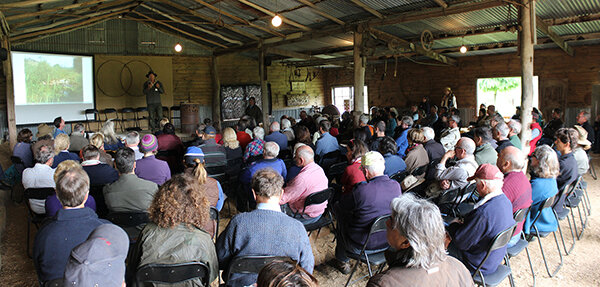
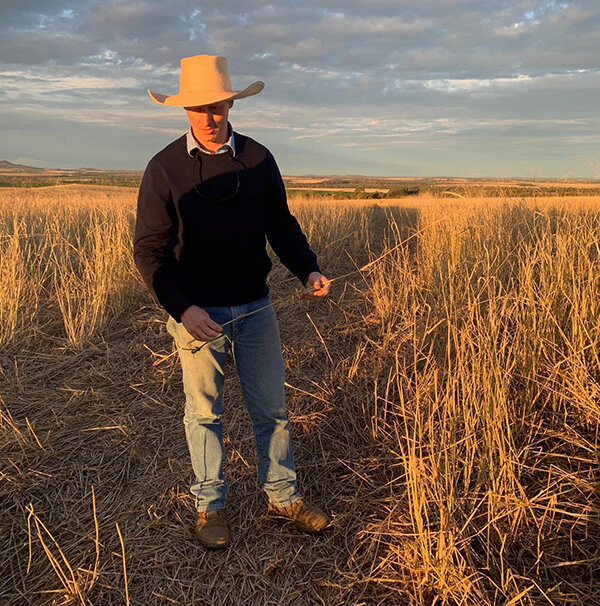
Members of the Mulloon Institute’s Science Advisory Council have been focusing on a scientific paper, ‘Long term Environmental Research and Monitoring in a Production and Social Context: Case Study and Principles’, to be published in the Ecological Restoration Journal. The paper will establish a framework that underpins the Mulloon Rehydration Initiative’s multi-faceted scientific monitoring program using an integrated systems approach. 
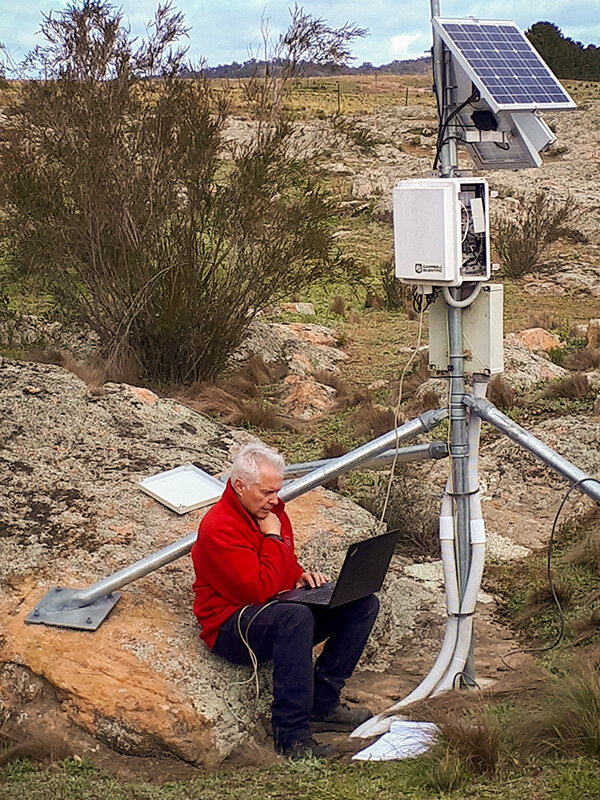
Hydrologist Tony Bernardi checking stream gauge at Mulloon and Reedy Creek confluence

Hydrologist Tony Bernardi checking stream gauge at Mulloon and Reedy Creek confluence

Research Coordinator Luke Peel and Hydrologist Tony Bernardi have been busy with Dr Richard Campbell (Hydroterra) compiling a comprehensive Monitoring Strategy document for the MRI. This provides the details of the what, where and how of all that is to be monitored, data management, integrated analysis and reporting capabilities and is critical for determining what monitoring and associated equipment is required where, and to what specifications. It also provides the basis of many research projects for proactive university students.

Science Officer Nolani McColl and Luke have been obtaining quotes for the monitoring equipment to be purchased and are pleased to report that a significant portion of the budget will be spent on Australian made instruments. We plan to engage many local businesses for supplying and installing the monitoring equipment and MI is proud to have this opportunity to help provide a significant economic stimulus to Australian and local businesses.

This project is jointly funded through the Mulloon Institute and the Australian Government’s National Landcare Program and is supported by various affiliates.

_DSC8809-600px.jpg

During May we worked hard on details for another stimulus project in Restore Australia. We are quickly coming to the pointy end of planning with the Global Evergreening Alliance (GEA), submitting project details to the funding organisation, Ark2030. They expect a four week turn-around so funds start to flow in July. Carolyn Hall (MI’s CEO) provided valuable information for the narrative and budgeting for various regions identified as priorities by Restore Australia.

The MI has identified a number of projects that can be ‘shovel ready’ quite quickly once we know they can be funded. These have come from various inquiries we’ve received and from various preliminary assessments Carolyn and her team have been done over recent months, including several from Queensland, New South Wales and Western Australia.

We are certainly ready to go as soon as we get the green light and Restore Australia will provide a great stimulus to regional Australia and to our agricultural sector.

Evergreening-600px.jpg

Board-Peter-Howarth.jpg

During May we welcomed Peter Howarth OAM to the Mulloon Institute Board. Peter is no stranger to the MI having been a Board member in the early days and then continuing on as a key adviser. In more recent times, he has been our Special Projects Coordinator and has been a strong supporter of our work through The Howarth Foundation. Having been at school with Tony Coote, his knowledge of what Tony wanted to achieve through the MI is part and parcel of Peter’s goals by accepting the Board’s invitation to re-join. His advice and connections have been invaluable to me as we grow the MI.

The team at Mulloon Consulting Contracting & Certifying have continued with landholder site assessments during May for projects across the Southern Tablelands, Southern Highlands and the Hunter Valley, and site assessment reports have been prepared for properties in the Hunter and Dungog.

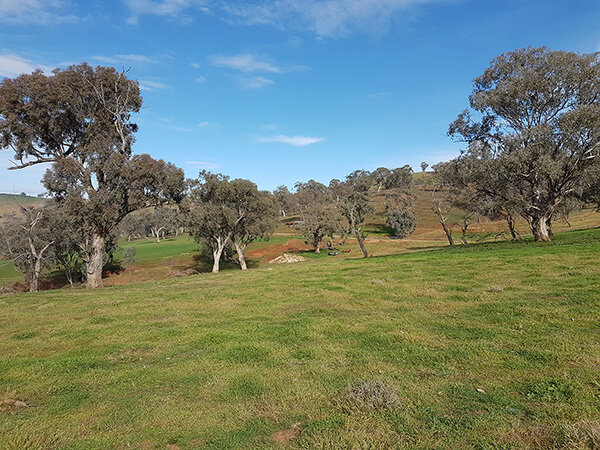
Large paddock trees at Coolac, NSW near the Murrumbidgee River

Large paddock trees at Coolac, NSW near the Murrumbidgee River

Anne Gibson (Senior Landscape Consultant) has been busy in Coolac, NSW providing advice on gully remediation, landscape rehydration measures and revegetation, and she and Cam Wilson (Design & Education) have conducted a site assessment at Taralga, NSW to rejuvenate a small holding supporting a regenerative agricultural approach to livestock management. A further site assessment exploring the creation of wetlands in the Southern Highlands has also kept the team busy.

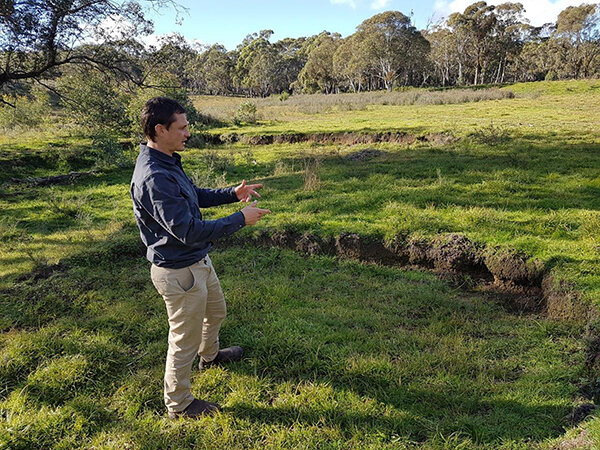
Cam Wilson explaining the erosion processes that can lead to headcuts

Cam Wilson explaining the erosion processes that can lead to headcuts

Bill McAlister (Landscape Planner) and Anne have been busy on developing Controlled Activity Approvals for the Mulloon Rehydration Initiative and detailed design works have advanced with a variety of approaches documented for private clients.

In Townsville, Sam Skeat has been planning for how MCCC can contribute to cost effective sediment saving projects in catchments of the Great Barrier Reef Lagoon and undertake site assessments once travel restrictions are lifted.

While working within the current constraints of Covid-19 does present some challenges, we’re managing quite well to continue discussions and planning with landholders and amongst the team over Zoom.

2020-April-600px.jpg

Read our latest new here: https://conta.cc/3dvvBUf

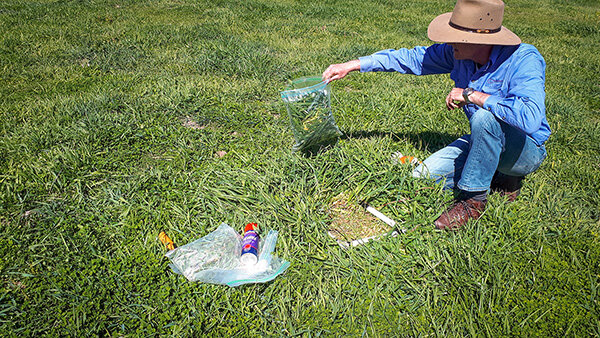
Sampling pasture biomass inside a quadrat

Sampling pasture biomass inside a quadrat

An important factor of our monitoring program in the Mulloon Rehydration Initiative (MRI) involves collecting field data to understand the effect of rehydration on landscape function. This on-ground data can also be used in conjunction with aerial (drone and planes) and satellite to provide spatial and temporal analysis. The Mulloon Institute has engaged Cibolabs to provide satellite analysis maps to landholders in the MRI, indicating pasture growth rates (30 days), greenness (NDVI), pasture biomass (TSDM) and food on offer (FOO).

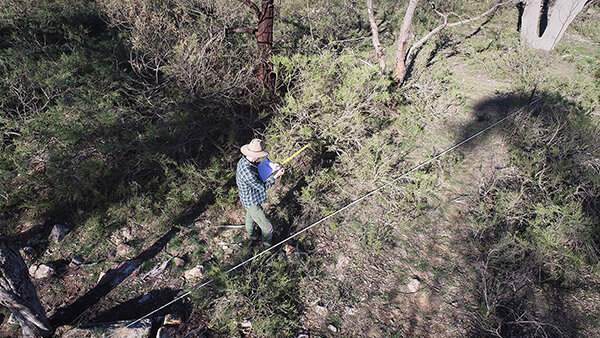
Landscape Function Analysis (developed by David Tongway, CSIRO) involves taking measurements along a transect of approximately 50m that closely examines groundcover, plant types, organic litter, soil characteristics and how water moves through the landscape. These fixed transect sites give us detailed information about how the environment is changing as we return periodically to monitor the same site over time. Read more about Landscape Function Analysis.

Measuring various landscape characteristics along a transect

Measuring various landscape characteristics along a transect

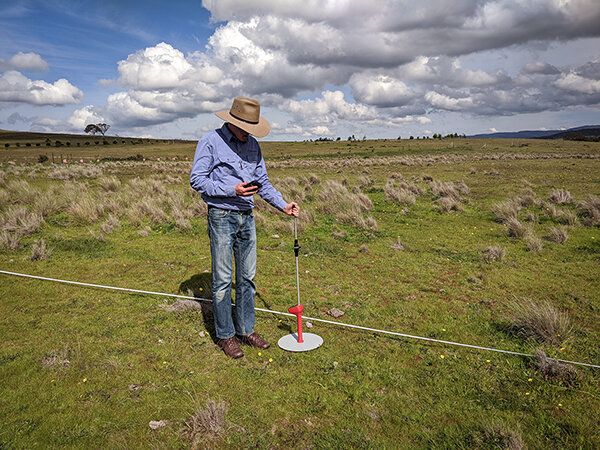
plate meter allows us to take quick and accurate pasture measurements such as pasture height, quantity and growth rate over time. The meter is walked through the paddock along the transect, ‘plonking’ the tool vertically on the ground at regular intervals. Once a reading is taken the height measurement is sent to the user’s mobile phone which records the GPS location and is then uploaded to a central data point once mobile reception is regained. The process is quite fast taking only 15 minutes to get 120 measurements! Read more about plate meters.

Using the plate meter to measure pasture height

Using the plate meter to measure pasture height

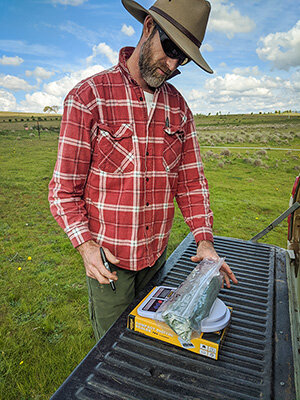
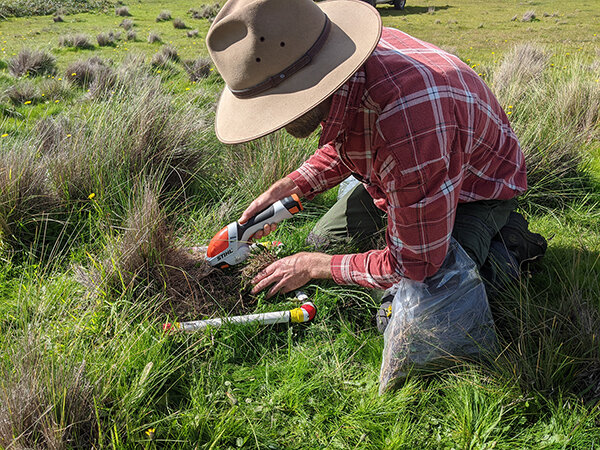
Pasture biomass samples are collected from each paddock using electric grass shears to trim and collect all plant material to ground level within a square ‘quadrat’ frame. Samples are then weighed and dried and then re-weighed to give an accurate measurement of the dry weight of standing biomass (TSDM). The pasture samples are taken from three areas that reflect ‘low’, ‘medium’ and ‘high’ levels of biomass in the paddock, with plate meter measurements also taken at each location.

Initial weighing of pasture biomass samples

Initial weighing of pasture biomass samples

Drone imagery is also recorded to generate a high resolution mosaic image of the transects. 

Collecting such detailed information assists with calibrating and validating the satellite data products, improving satellite accuracy and ability to assess the vegetation response in areas without LFA transects.* Such integrated monitoring is important to understanding the connection between plants, water, and soil that enable a productive and resilient landscape, which in turn helps inform farmers and land managers on how best to manage country with an integrated management approach.

*  A potentially great project for a university student would be to assess the drone images against the LFA data and up-scale it to inform and calibrate the satellite data products.

Using electric grass shears to sample pasture biomass within a quadrat

Using electric grass shears to sample pasture biomass within a quadrat

Field Day at Mulloon Creek Natural Farms

Field Day at Mulloon Creek Natural Farms

Finally there is some light at the end of the tunnel with governments at both the Federal and State levels softening some restrictions. The impact of the past few months on our economy and on how we go about life will last for a very long time. But with every crisis comes opportunities. Australia’s agricultural sector will be a leader in our economic recovery as food and fibre has continued to be produced. When supply chains are fully operating, as restrictions are removed, some form of normal trading should commence quite quickly.

What ‘normal’ actually looks like post COVID-19 remains to be seen. However, there may well be a greater emphasis from the population on the source of their food, the nutritional value of it and on the environment. Repaired, rehydrated and naturally functioning landscapes working with regenerative farming practices not only protects and enhances our environment it helps produce the nutritional food we seek. 

The Mulloon Institute is positioning itself to meet the expected growth in demand for our on-site works, our education and training and the scientific monitoring. As a supporter of TMI you can once again assist us in expanding our work nationally by giving a fully tax-deductible donation. All donations go directly to on-ground repair and rehydration works or for educating and training landholders in hands-on practical workshops.

With your help we can do so much more to fix degraded landscapes and make our agricultural land more resilient to drought, flood and fire.

During April 2020, the Mulloon Institute made submissions to both the NSW Inquiry into the Bushfires and to the Federal Royal Commission. In addition, Chairman Gary Nairn made personal submissions to both Inquiries from the perspective of being the Chairman of a Federal Parliamentary Inquiry into the Australian Bushfires in 2003. That Inquiry produced a report, A Nation Charred, that included some 59 recommendations. Sadly, many of the issues raised back in 2003 were still quite relevant in relation to experiences during the 2019/2020 fires.

TMI’s submissions predominantly raised the opportunity for future fire resilience that landscape repair and rehydration provide. During the recent fires we were aware of examples where intact hydrated valley systems, at the very least, acted to substantially slow fires and greatly reduce their intensity. The most destructive part of the recent fires was their sheer intensity. A hydrated landscape is overwhelmingly one of the most strategic deterrents to wildfire. We also know that a naturally functioning and hydrated landscape also gives resilience to drought and flood. Gary also had an online meeting with the NSW Inquiry’s joint leaders, Mary O’Kane and David Owens to further stress the importance of TMI’s work and his own personal experiences.

The Mulloon Institute submission to the Royal Commission into Bushfires – April 2020

NSW Inquiry into the Bushfires – TMI’s submission – April 2020


Video – Aftermath – Landtasia footage North Black Range Fire 2019

“Between 30 November 2019 and 3 January 2020, the North Black Range Fire destroyed 3600 acres of Landtasia’s forest, wildlife and watershed and over $1 million in improvements. In the following months, strong rains eroded the fragile landscape soils. Wildlife that survived the fire fled to the northern livestock grazing pastures, such as they were after a long drought. However, while the rains eroded, they also enlivened the seed bank enough to provide for both.”

Thanks to landholder Richard Graham of Landtasia Organic Farms who kindly shared this footage showing how this summer’s fires and consequent flooding rains have affected the landscape on his ‘Landtasia’ property, situated between Mulloon Creek Natural Farms’ ‘Home Farm’ and the Tallaganda National Park. This property is part of the Mulloon Rehydration Initiative but has not yet had any on-ground works undertaken.

Also making further progress during April was our Mulloon catchment scale project. Previously known as the Mulloon Community Landscape Rehydration Project (MCLRP), it will now be referred to as the Mulloon Rehydration Initiative (MRI). While still remaining a project, with this name change we also want to emphasise how this ‘initiative’ can be implemented in other landscapes across Australia. 

While ‘MRI’ is generally accepted as a medical term, in many respects there is some synergy between the two. The medical MRI’s have been the most detailed forensic examination of the internal workings of the human body, at least until Positron Emission Tomography (PET) scans came along, and our Mulloon Rehydration Initiative is giving us very detailed data of the workings of our catchment. Stream flows, ground water levels and quality, landscape function analysis, biodiversity enhancements, etc. Our MRI is like an MRI of the landscape!

To date, 14 leaky weirs have been installed in Stage 1 of the MRI, over the 3.5 km stretch of Mulloon Creek running from the Mulloon Road crossing to the Kings Highway. Another 18 structures have been installed so far in Stage 2 across a further 4 km of the creek on the Palerang and Duralla properties. All up we will be installing close to 100 structures along the creek with a total of five stages planned. You can view drone footage of where work has been undertaken along Mulloon Creek at Mulloon Farm North, Palerang, and Westview via our Vimeo page.  


Westview video – Flying upstream at ‘Westview’ farm in April 2020. Three structures were built in November 2018 raising the creek by about 80cm. From downstream to upstream, they are a log rock sill, a double log rock sill and a stock and vehicle crossing. Each is now well vegetated on and this section of creek has transformed from a high energy torrent during periods of high flow to a gentle series of ponds and riffles with hydrated secondary channels, back swamps and wetlands.

Leaky weir MN7 video – Leaky weir at ‘Mulloon Farm North’ in April 2020. This structure was completed in March 2018 and the natural regeneration of plants and habitat has been nothing short of astounding despite being one of the driest periods since records began.

Note – For all of these structures we have received ‘Controlled Activity Approvals’ from the Natural Resources Access Regulator (NRAR).

Mulloon Consulting Contracting & Certifying (MCCC) has zoomed along during April (while adhering to COVID-19 restrictions) with Carolyn Hall and Cam Wilson visiting the Dungog and Hunter regions to explore opportunities for landscape rehydration on private properties, to finalise a farm plan and to spread word about the Mulloon Institute’s work via Zoom conference from the Hunter.

The farm plan MCCC prepared for a property in Bellmount Forest has been finalised with construction on a major gully remediation to begin in spring. Four local site assessments have also been finalised on the Southern Tablelands for private clients during April and site assessments were undertaken at Wamboin, Carwoola, Braidwood and Manar by the MCCC team.

April also saw MCCC become established in Townsville with Sam Skeat joining the team. Sam has extensive experience in the development and delivery of landscape rehydration projects in North Queensland and has specialist skills in the provision of grazing advice in the context of landscape rehydration. Sam runs his own grazing business near his home in Townsville. He has worked in the cattle industry in NSW and QLD and has a Bachelor of Production Animal Science from the University of Queensland (Gatton).

Sam’s main area of focus is on balancing ecological return and business return when undertaking landscape rehydration projects. On top of his understanding of how grazing management can be used to build natural capital he also has an excellent understanding of landscape processes and how to use rehydration design to rebuild degraded areas into functional productive landscapes. His first task will be to develop a grazing management plan for Mulloon Creek Natural Farms.