The Mulloon Creek Field Day is an important opportunity for The Mulloon Institute to share with people the work that has been done, what has been achieved so far and what other activities are currently underway. People have the opportunity to see on-ground works first-hand, including the creek rehabilitation site and the step diffusion system on sloping country. In the afternoon they hear from experts in the scientific and regenerative agriculture fields, and have the chance to ask questions in the Q&A session. It’s a great networking event that helps solidify connections in the regenerative agriculture arena.
Video produced by Nviro Media.
Catch up on our latest news! https://conta.cc/39OEXsV
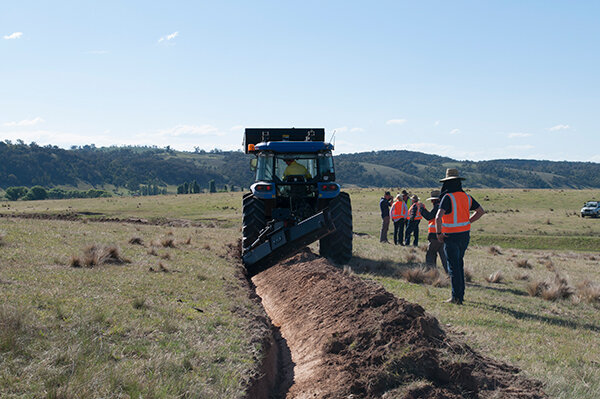
Natural Sequence Farming training
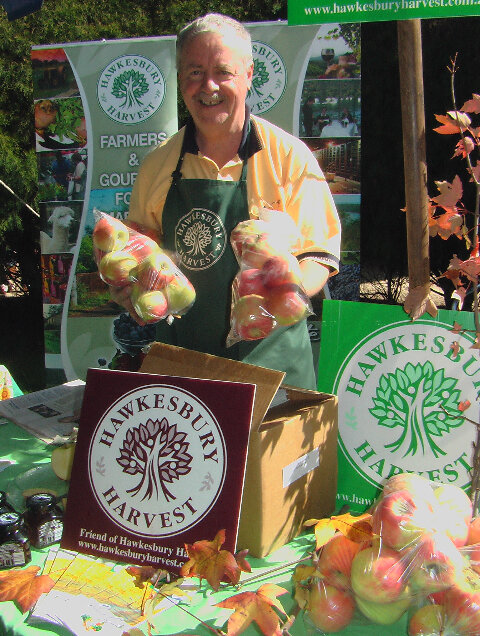
Alan Eagle
Expressions of interest are being taken for a partly sponsored ($1500) place on a Tarwyn Park Training Natural Sequence Farming course held at Mulloon Creek.
The sponsorship is a generous donation from Cheryl Whittaker in memory of Alan Eagle and in recognition of his work and leadership of the Hawkesbury Harvest.
Alan Eagle was Hawkesbury Harvest’s primary ‘operations guy’, as he liked to call himself, from the early days of the Association’s formation until 2016 when he succumbed to lung disease. He was highly admired for his capacity to support, mentor, encourage and guide the leadership team of Hawkesbury Harvest, and its member farmers, growers and food producers. This scholarship is given to honour him by Cheryl Whittaker of Cheryl’s Backyard Produce who Alan inspired with his gentle, kind, and firm counsel.
Eligible farmers need to be from the Hawkesbury region and currently farming in the Greater Sydney basin, peri-urban area extending west to the Blue Mountains.
To apply please complete the Expression of Interest form below.
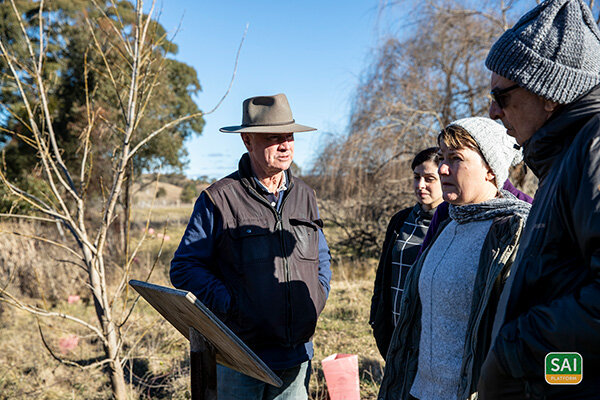
Gary Nairn hosting the SAIP visit to Mulloon in August 2019
The Mulloon Institute’s Chairman Gary Nairn visited Melbourne twice in February 2020 to deliver presentations on TMI’s work. Both presentations were well received and followed by plenty of questions and discussion. The growing level of knowledge and enthusiasm for the principles of landscape repair and rehydration and regenerative agriculture was very impressive!
The first presentation was to the Sustainable Agriculture Initiative Platform (SAI). Members of the group include many major food companies such as Fonterra, Mars, Coles, etc. so it is good to see their interest in our work and in regenerative agriculture. Last year we had a visit at MCNF of some members from SAI so I was pleased to accept an invitation to speak to their broader membership on the “Science behind Regenerative Agriculture”. Also presenting was Dr Michael Crawford, the CEO of the Soil CRC.
The second presentation was to members of the Yeoman Society on “Landscape Rehydration – a Win for Farming, Environment & Society”. The Yeoman Society is a group of Melbourne business people with agricultural interests.
While in Melbourne, I also met with representatives of the Global Evergreening Alliance (GEA). This international organisation is funded by a number of philanthropists and does very good work in various parts of the world, in particular helping small farmers in developing countries be more regenerative. GEA feels that governments around the world have been too slow in addressing issues related to landscape restoration and moving carbon dioxide from the atmosphere into the soil to increase soil carbon. As part of its campaign it will now be investing substantial funds in Australia under a program called “Restore Australia”. GEA immediately recognised the connection to the work of TMI so it was very advantageous to discuss similar interests. GEA will be launching “Restore Australia” in March so I will report further in my March update.

The Mulloon Institute’s CEO Carolyn Hall attended the UNSW Water Research Centre’s NSW Drought Resilience Forum on 10 February 2020 where a variety of researchers, industry and government representatives and community stakeholders came together to discuss our current water challenges and to explore a range of solutions. Much interest was shown by participants in the MCLRP as a catchment scale landscape rehydration project to at this event.
Discussion groups followed each panel with participants breaking off into teams to brainstorm and generate solutions for the water challenge that interested them the most. One of these sessions was called Rehydrating the Land which Carolyn attended.
“Today was important for people across the water industry space to share their ideas and concerns, but it’s also important for them to hear water management success stories like ours,” Carolyn said.
“We’re very passionate about our work and have significant grassroots interest from farmers. If the NSW Government is serious about drought resilience, then they need to listen to communities, farmers, and take landscape rehydration seriously, as part of the mix of the solutions.”
Read more about the Forum:
https://www.engineering.unsw.edu.au/news/building-drought-resilience-in-nsw
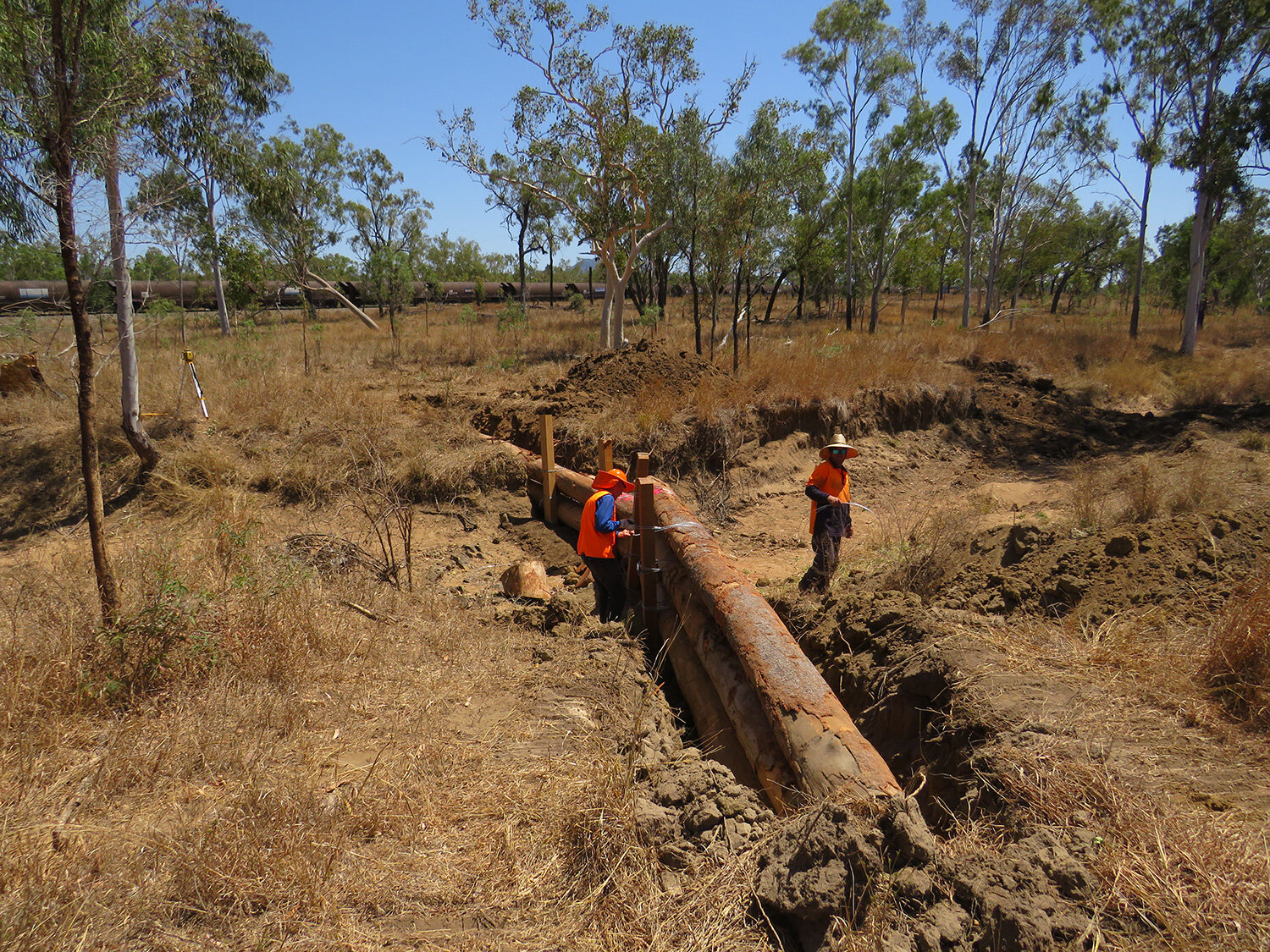
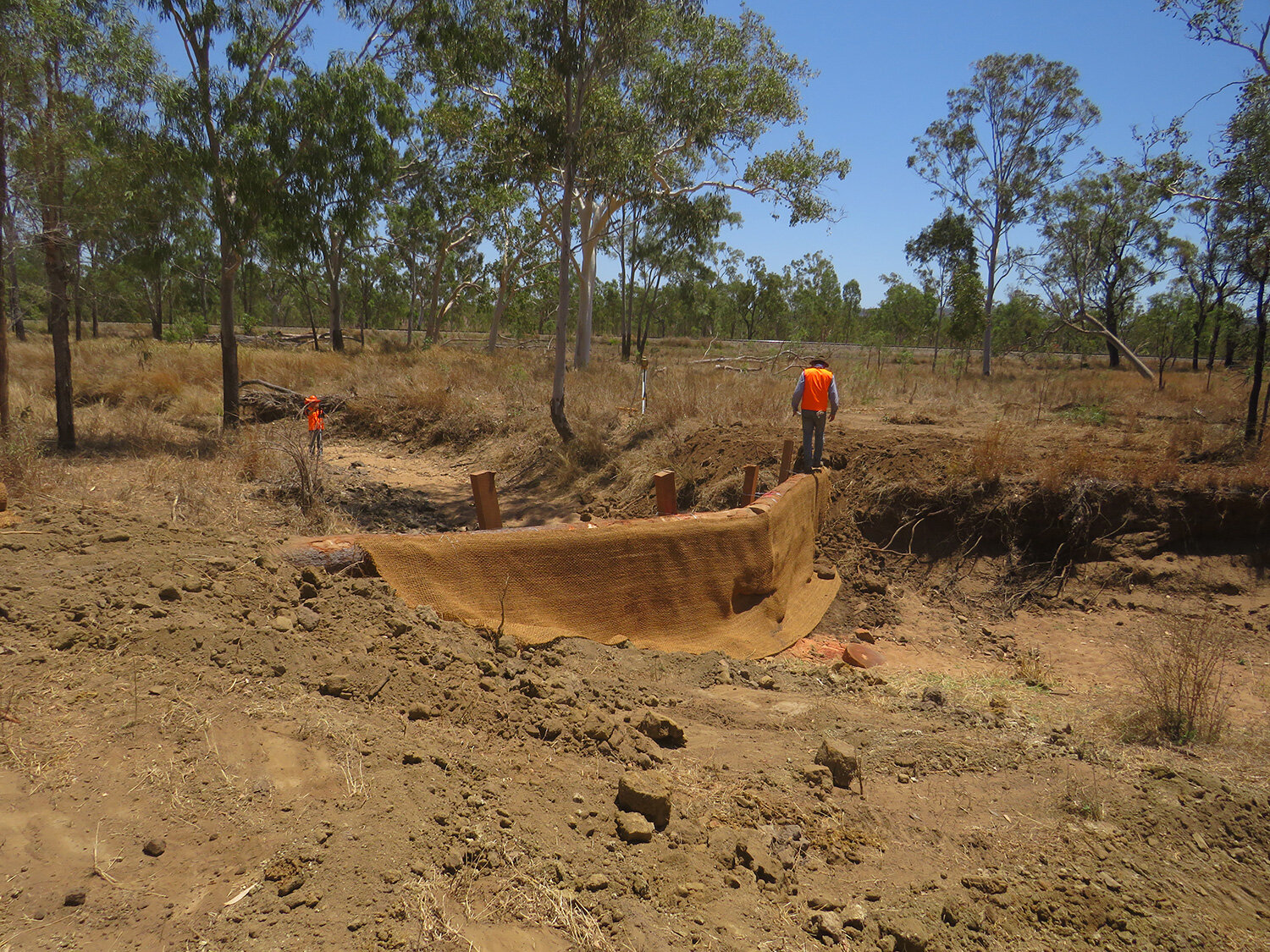
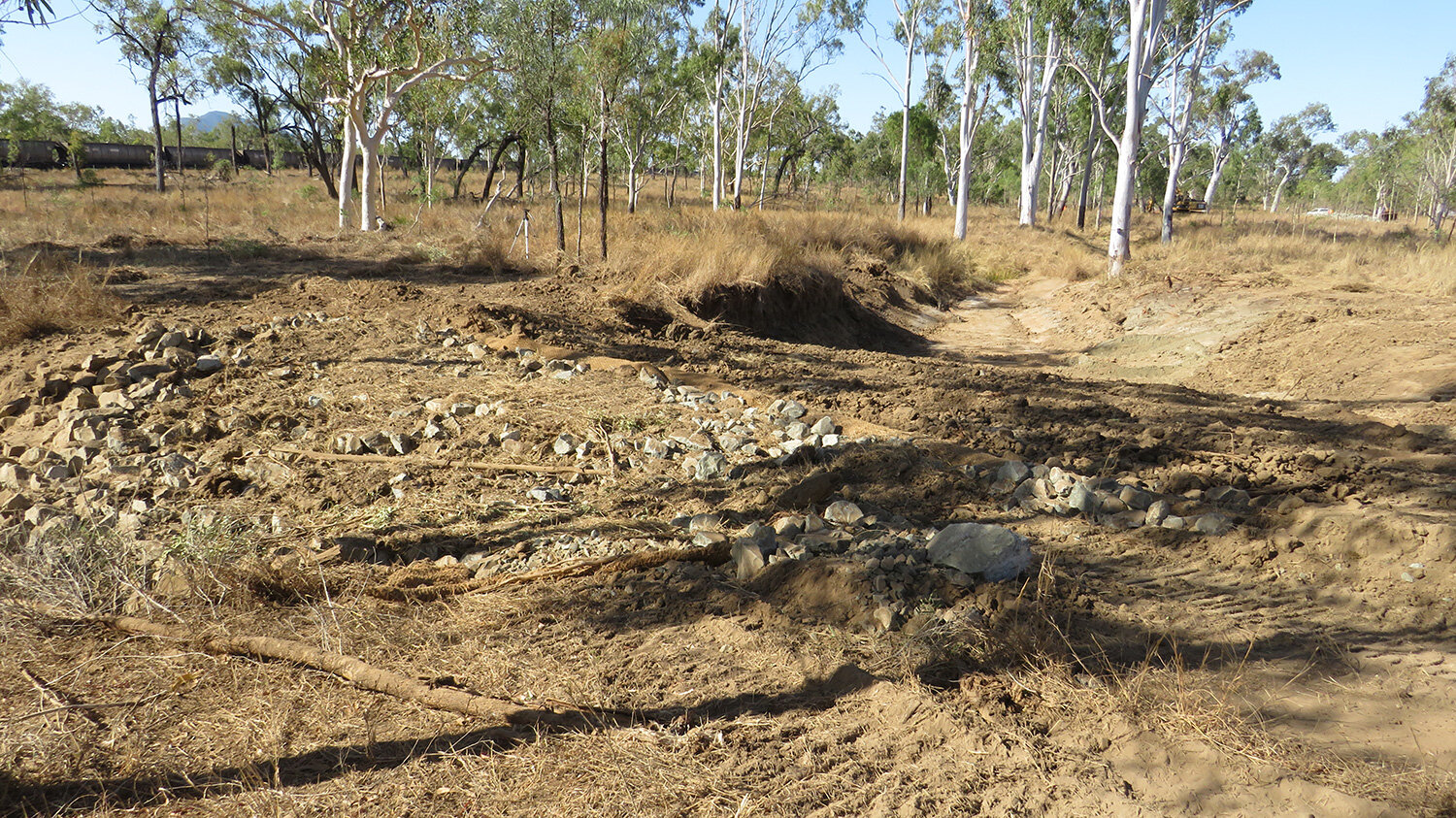
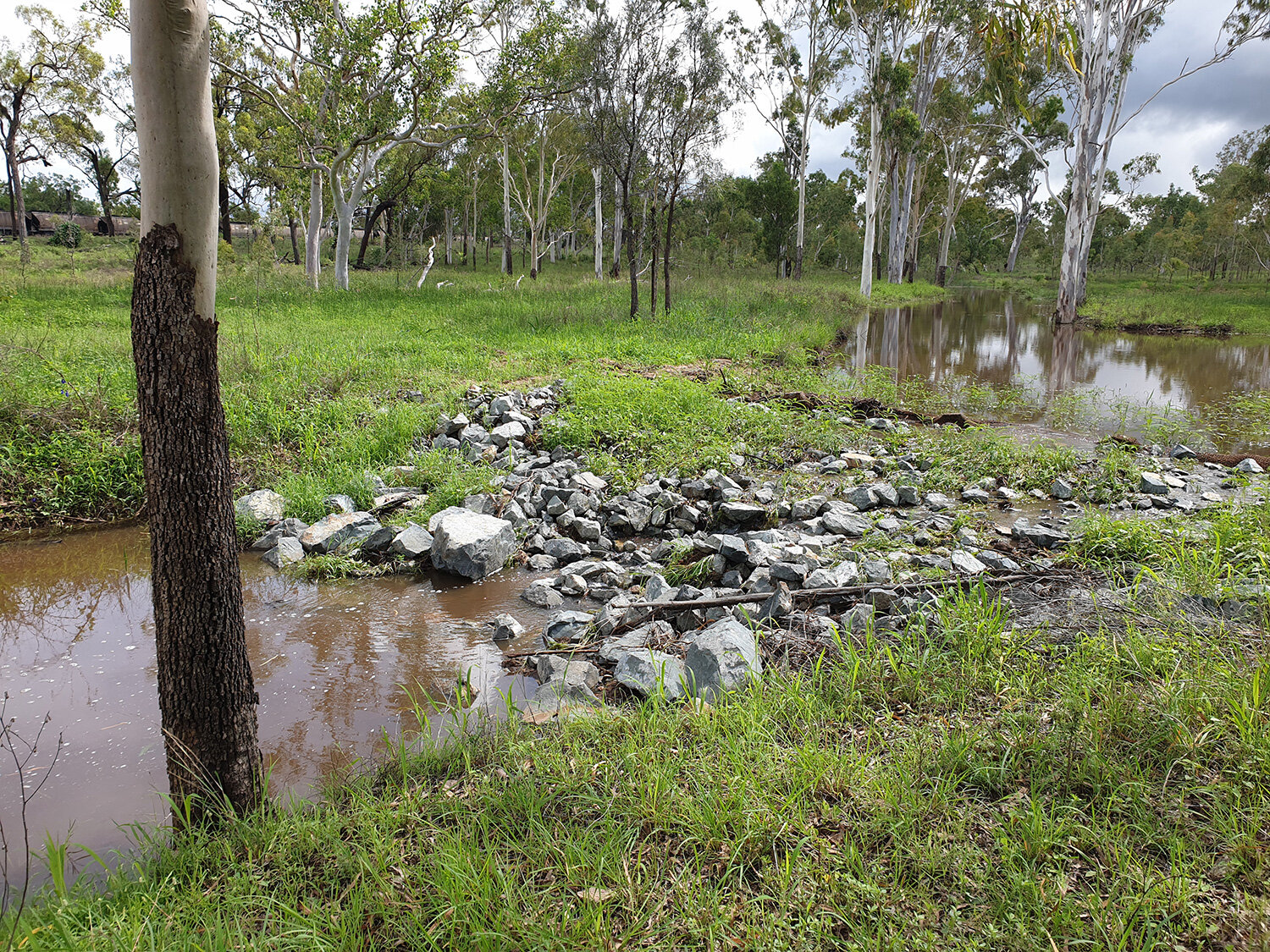
Small-scale, low-cost gully remediation measures installed at the Mt Pleasant Learning Hub on Mt Pleasant station, near Bowen, are doing what they were designed to do after heavy rain…. hold water in the landscape! These four images tell the story of a leaky weir construction from start to finish.
These interventions, engineered by The Mulloon Institute, aim to restore landscape function by increasing rainfall infiltration and improving water tables, also known as landscape rehydration. When combined with good grazing management aimed at improving soil health and pasture cover, the results can be amazing! Expected increases in ground cover and productive pastures are also key to maintaining land and gully condition.
The aim of the landholder-driven Learning Hub is to implement and ground truth techniques that restore landscape function for more efficient farming practices. It is also a meeting place for landholders, scientists and industry to come together to learn about building healthy soil, and how grazing management practices can contribute.
The initiative is part of NQ Dry Tropics NRM’s Landholders Driving Change project – a Burdekin Major Integrated Project funded through the Queensland Environment Department Reef Water Quality Program.
Kindly reproduced from the NQ Dry Tropics NRM Facebook page.
Learning outcomes
Our farm tours can be tailored for students of geography, biology and related sciences, farm management and social studies or to address specific educational outcomes.
Sustainable biomes
The NSW ‘Sustainable Biomes’ curriculum focuses on different world biomes, how biomes are used for food production, whether the world can continue to be fed sustainably, and strategies for increasing global food security. At MCNF we can explore five biomes – riparian, floodplain, gorge, woodland, and slopes – and provide an historical overview of the impact of European farming practices on hydrology, soil and vegetation structures in Australia, and the growing movement towards regenerative agriculture.
Subject matter
Students will be introduced to landscape restoration, water management, natural resource management, integrated landscape management, and how creek interventions (leaky weirs) help repair waterways, restore riparian zones, and hydrate the broader landscape.
Education can cover topics such as: geology and geomorphology; identifying and recording landscape features and indicators of landscape health; assessing and understanding soil; assessing and understanding how water quality and quantity are measured; and, learning how landscape degradation can be reversed.
Further advanced training can also be arranged in scientific monitoring methods such as Landscape Function Analysis (LFA), Rapid Appraisal of Riparian Condition (RARC) and Ephemeral Draining-Line Assessments (EDA).
Tour format
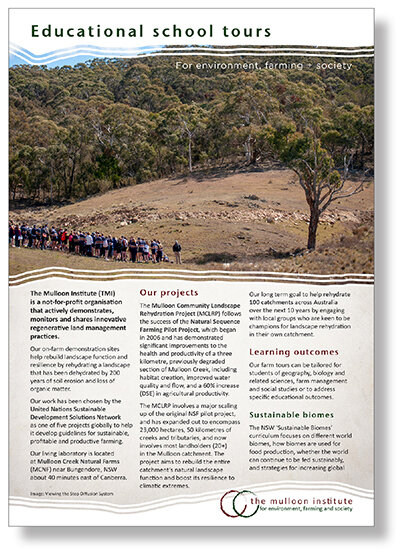
Visits will incorporate a walk along the ephemeral creek and rehabilitated wetlands to the site of the Natural Sequence Farming Pilot Project at Peter’s Pond on Mulloon Creek. This is followed by a tour of the step diffusion system on sloping country then a formal presentation and Q&A session in the Barn. This generally runs from 9am to 2pm with a short lunch break.
Contact
For all tour enquiries, please contact us via info@themullooninstitute.org to discuss your enquiries and options.
Get the flyer!
Download the ‘Educational School Tours’ brochure here.
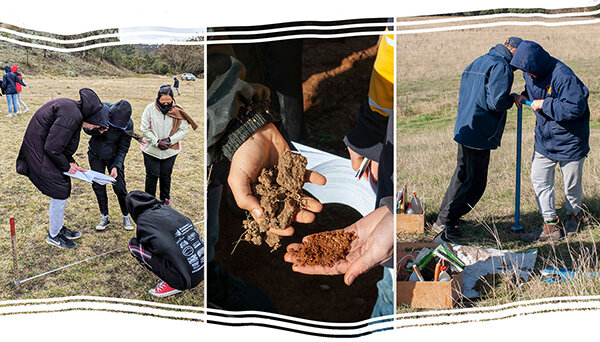
L-R: Conducting Landscape Function Analysis | Examining soil characteristics | Soil sampling using the soil auguer
Over the last month, we have received much rain in the Mulloon Catchment which has had both positive and some less desirable effects.
On the good side of the equation, we have seen some very decent rain, particularly over fire affected areas, but also more broadly and especially in regions that have been experiencing drought for many years. The ‘flow-on’ effect of that is certainly welcomed. At Mulloon Creek Natural Farms (MCNF) we have also recorded some very good rain falls with strong flows along Mulloon Creek and all leaky weir structures holding up well within the Mulloon Community Landscape Rehydration Project (MCLRP).
In addition, it was pleasing to see just how well the paddocks have bounced back so quickly after such a long dry period. Such a strong response being further evidence of the flow-on benefit of our rehydration work and of practicing regenerative agriculture.
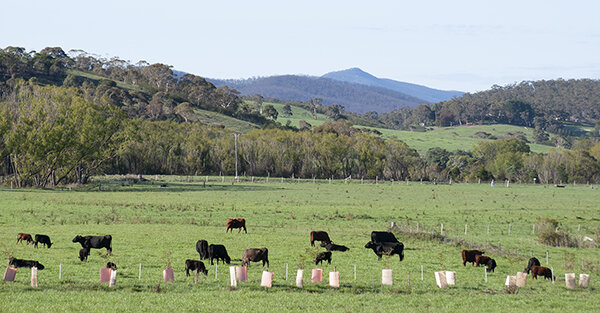
The Home Farm at Mulloon Creek Natural Farms is looking much greener now
On the bad side of the equation has been the increased turbidity recorded on our monitoring equipment caused by the flow from severely burnt areas higher in the Mulloon catchment. The North Black Range fire started in Tallaganda National Park at the top end of the Mulloon catchment and also burnt substantial parts of the property Landtasia situated between MCNF Home Farm and the national park. Landtasia is part of the MCLRP but works have not been approved for that section as yet, so there was substantial sediment and other debris flowing from that property and from further up the catchment into Mulloon Creek. That flow would have been the cause of the increased turbidity readings further down the catchment.
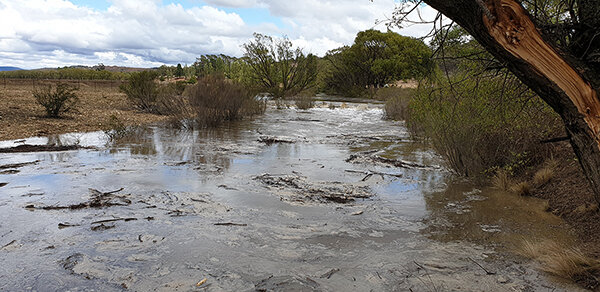
Bad water flowing down a section of Mulloon Creek after the intense February rains
Fortunately, those sections of the creek that have been repaired from the Home Farm to Palerang acted as filters so the effect of the debris on the water flow diminished further down the system. All good news for Sydney residents as Mulloon Creek runs into the Shoalhaven and ultimately into the Sydney water supply.
You can read a more detailed report from MCLRP Project Coordinator Peter Hazell on how the February flows impacted the Mulloon Creek here:
https://themullooninstitute.org/blog/2020/3/3/drought-fire-and-then-flood
Imagine an Olympic swimming pool filling up in 40 seconds. That’s how fast the water pulsed through Mulloon Creek – twice during one week in February 2020. After the driest nine months on record and after bushfires within the upper half of the catchment, finally the heavens opened on the 9th February dumping possibly 200mm at the top end of the catchment.
In ‘normal’ times, the flow from such an event would have taken at least two days to make its way down to the lower end of the Mulloon catchment. This time however, the flow came down in a turbulent torrent of ash, mud and debris soup.
After such a long period of drought, the creek bed was all but dry. On the up side – perfect conditions for building leaky weirs into the creek, of which we had recently completed 18. On the down side – there was no established vegetation to armour the structures and in any way dissipate a flow the likes of which Mulloon catchment had rarely seen before.
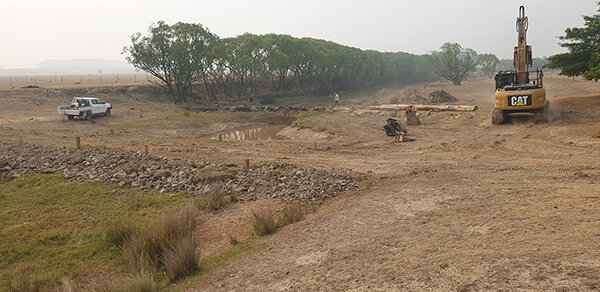
Structure PM14 during construction at the Palerang property
We held our breath as a peak flow of 23 cubic metres per second surged through the areas in which we had been working as recently as two days before. Within 2 hours, Mulloon Creek went from bone dry to fully charged.

Pulse of water flowing over structure PM14

Peak flow over same structure
How did everything hold up? As it turned out – very well! Designed to work as an interconnected system, once full the cushioning effect of the ponds brilliantly protected the structures above them.
This was the WOW factor in action (Water On Water). There was some minor scouring due to the sheer force of the water against dry and still barren ground but in all a great result in the face of yet another extreme event.
If that wasn’t enough for the time being, another test to the system came only five days later when an even higher peak flow came down as a result of an intense storm over the fire ground at the top of the catchment. This time it was a genuine chocolate milkshake – a tragic sight really. Though impossible for the new system to ameliorate such a turbid flow, still many tonnes of silt was trapped within the ponds – which would otherwise have ended up in Sydney’s already contaminated water supply.

Silt build up on a MS3(2) structure on Mulloon Farm South
After these two events, we can feel confident now that further pulses will be well dissipated by the renewed chain of ponds system. From here on in the resilience of the system will rebuild at an accelerating rate as the vegetation will now begin to establish on the freshly hydrated and soiled banks.