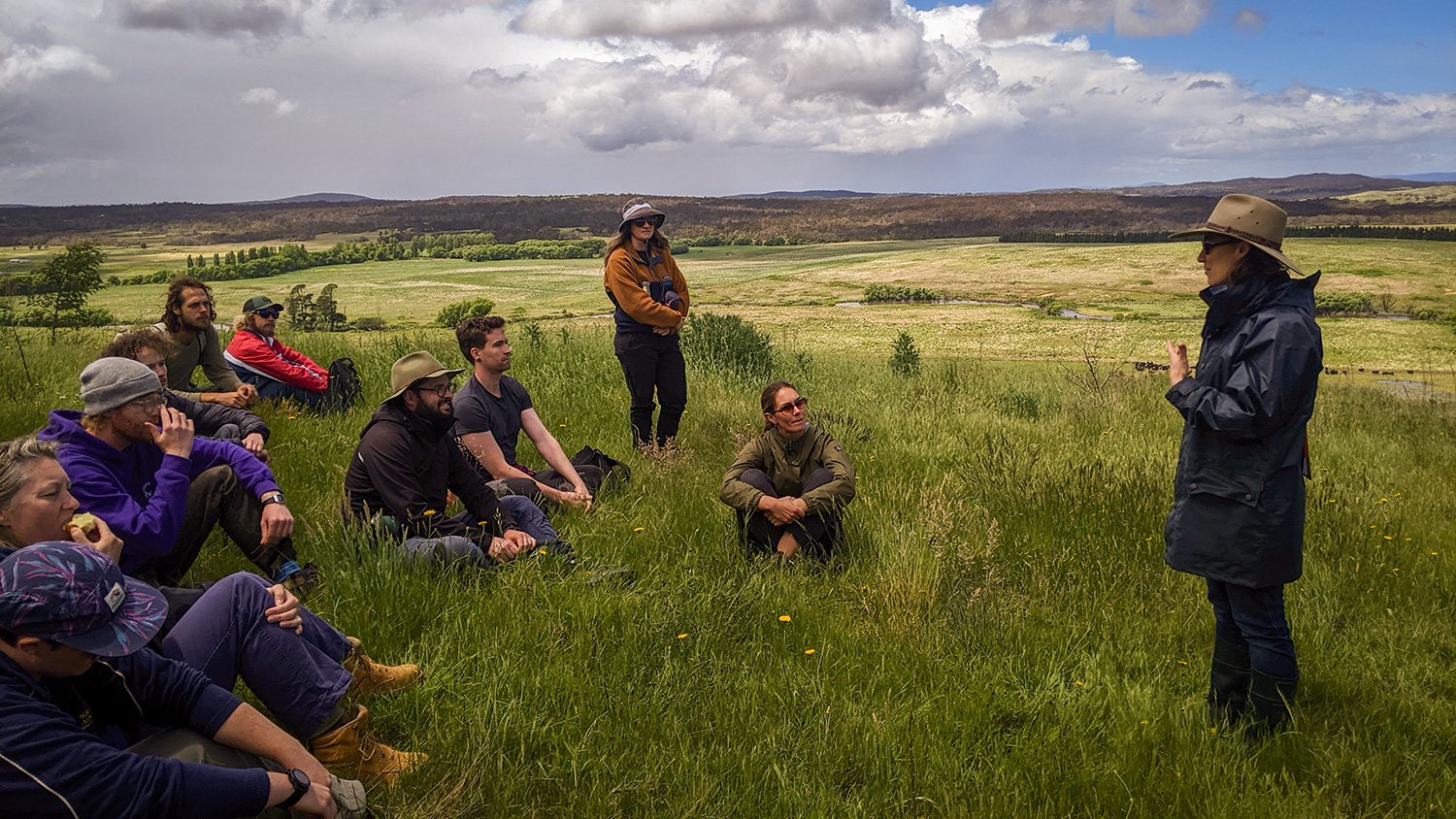
TMI’s Penny Cooper talking with conservation management students from CIT.
Conservation management students from the Canberra Institute of Technology joined the Mulloon Institute’s Nolani McColl and Penny Cooper for a visit to our Mulloon Creek Natural Farms in November 2022. The students, along with their teacher Blake, were excited to hear from farm manager – Matt Narracott, gaining perspectives on regenerative farming practices with grazing management and landscape rehydration at both the farm and catchment scale.
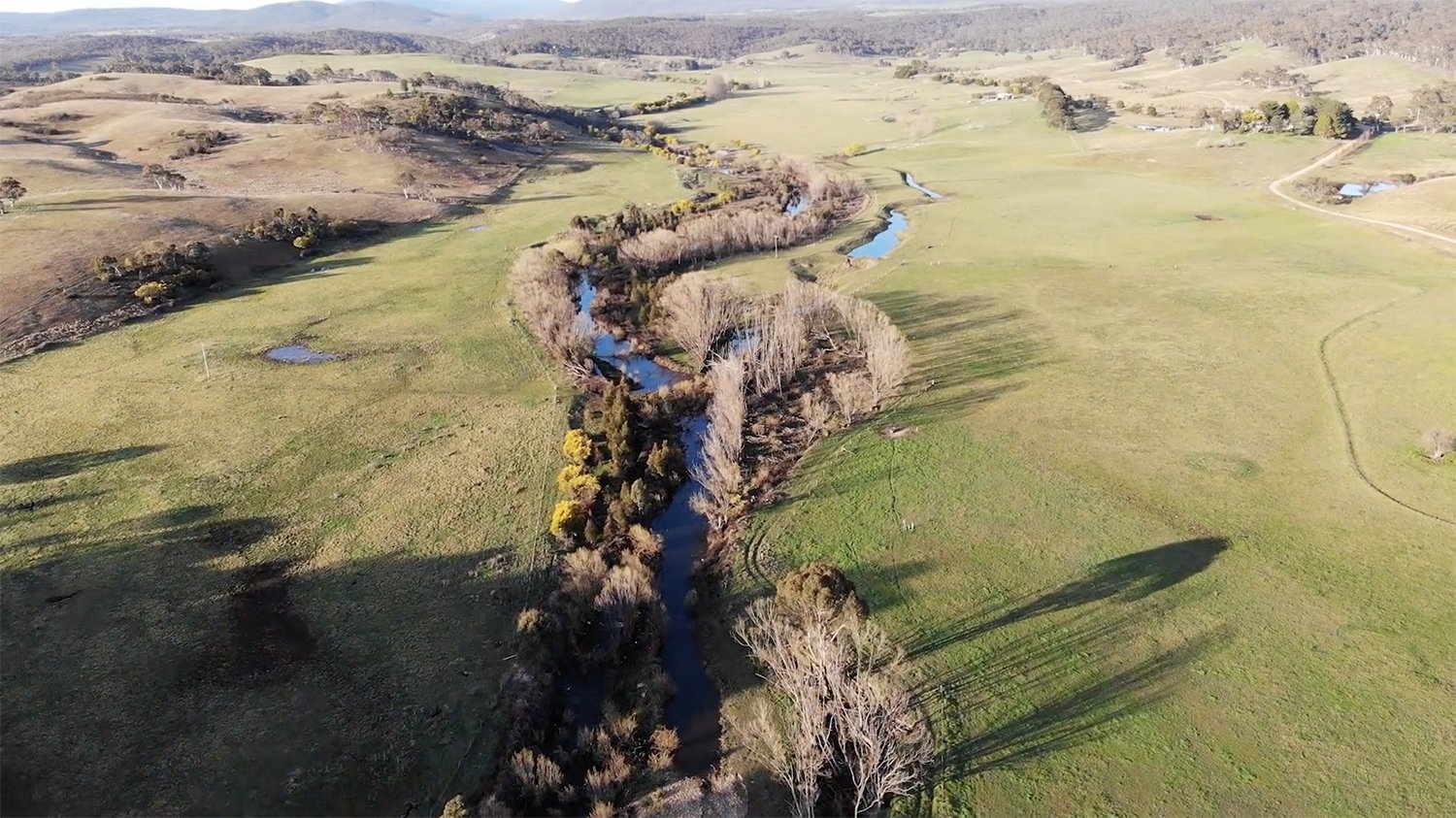
Taking a closer look at landscape rehydration interventions on Home Farm, students then travelled up a hill, affording a magnificent view of the broader catchment from a high point on the property. Students were able to distinguish landscape features and hear about the Mulloon Rehydration Initiative (MRI), a catchment scale project funded jointly by the Mulloon Institute and the Australian Government’s National Landcare Program and assisted through the NSW Government’s Environmental Trust.
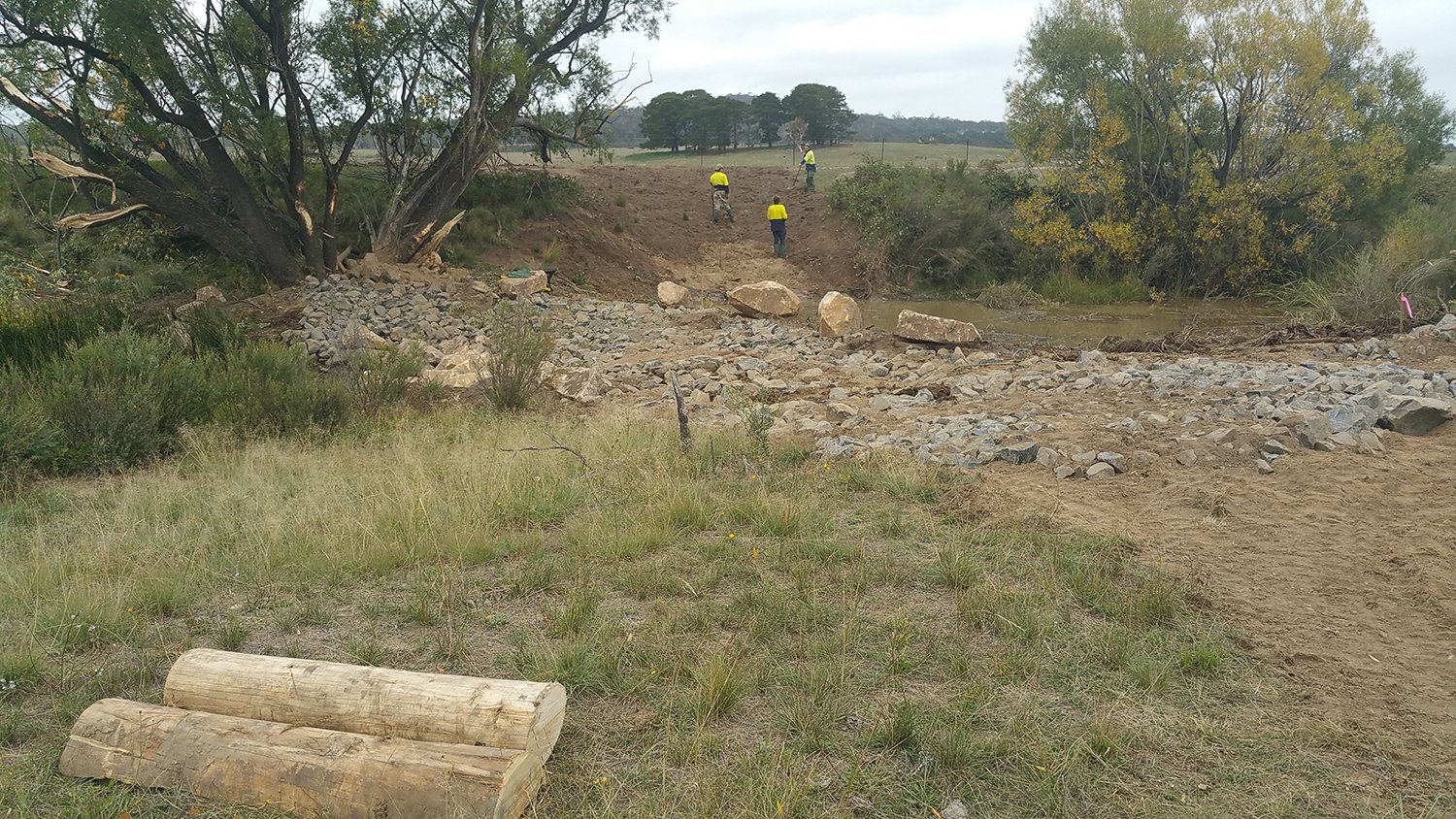
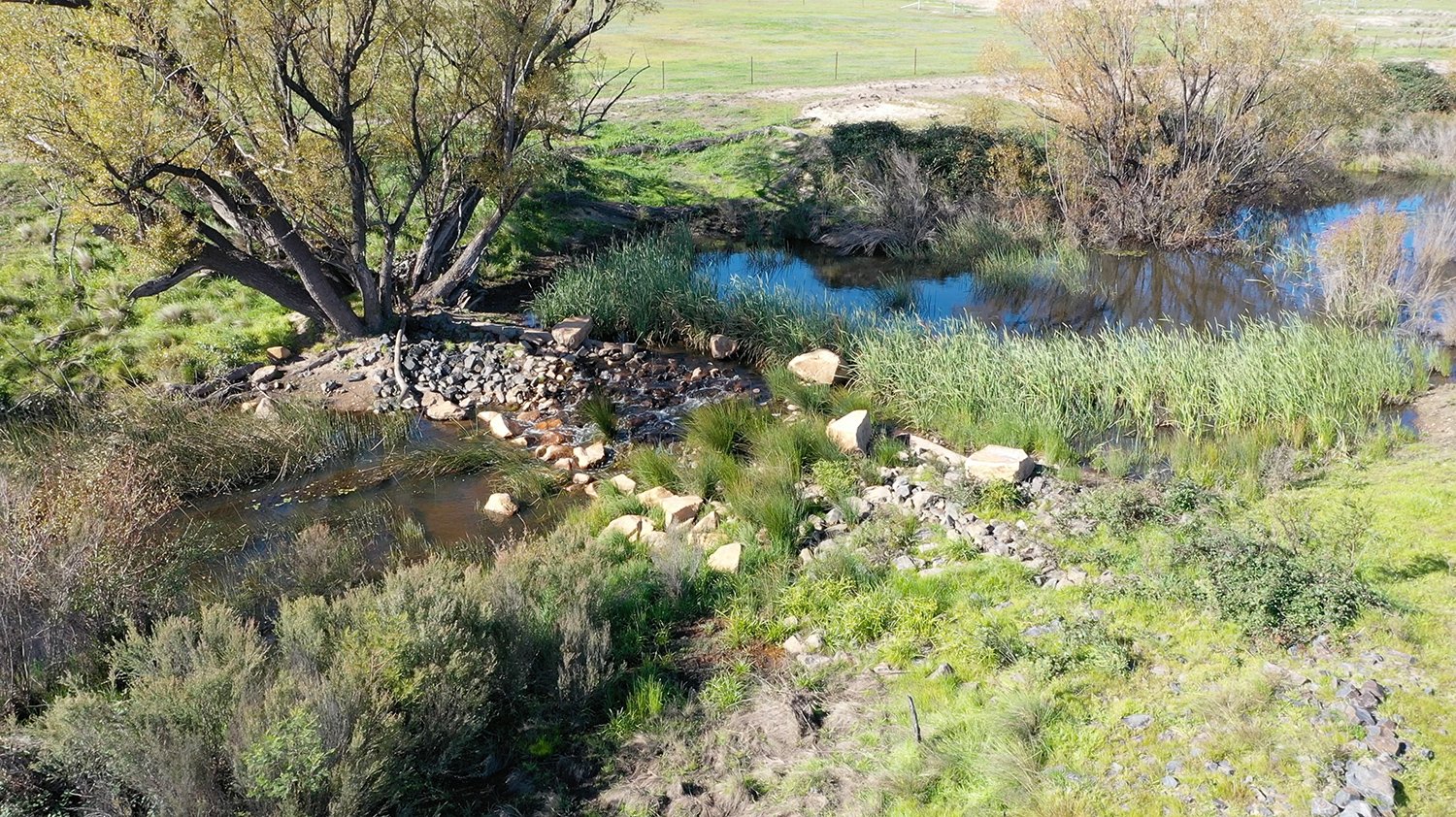
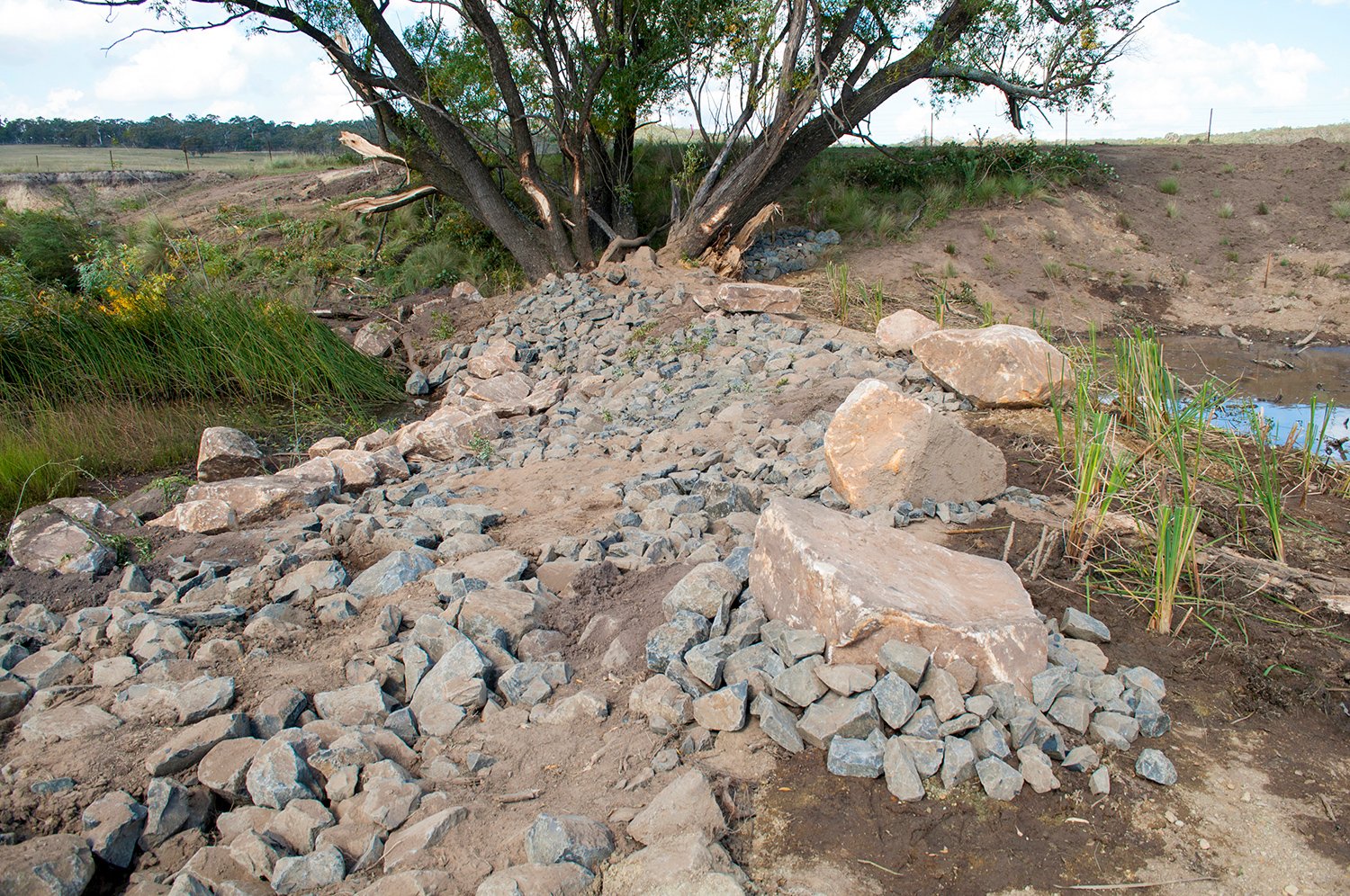
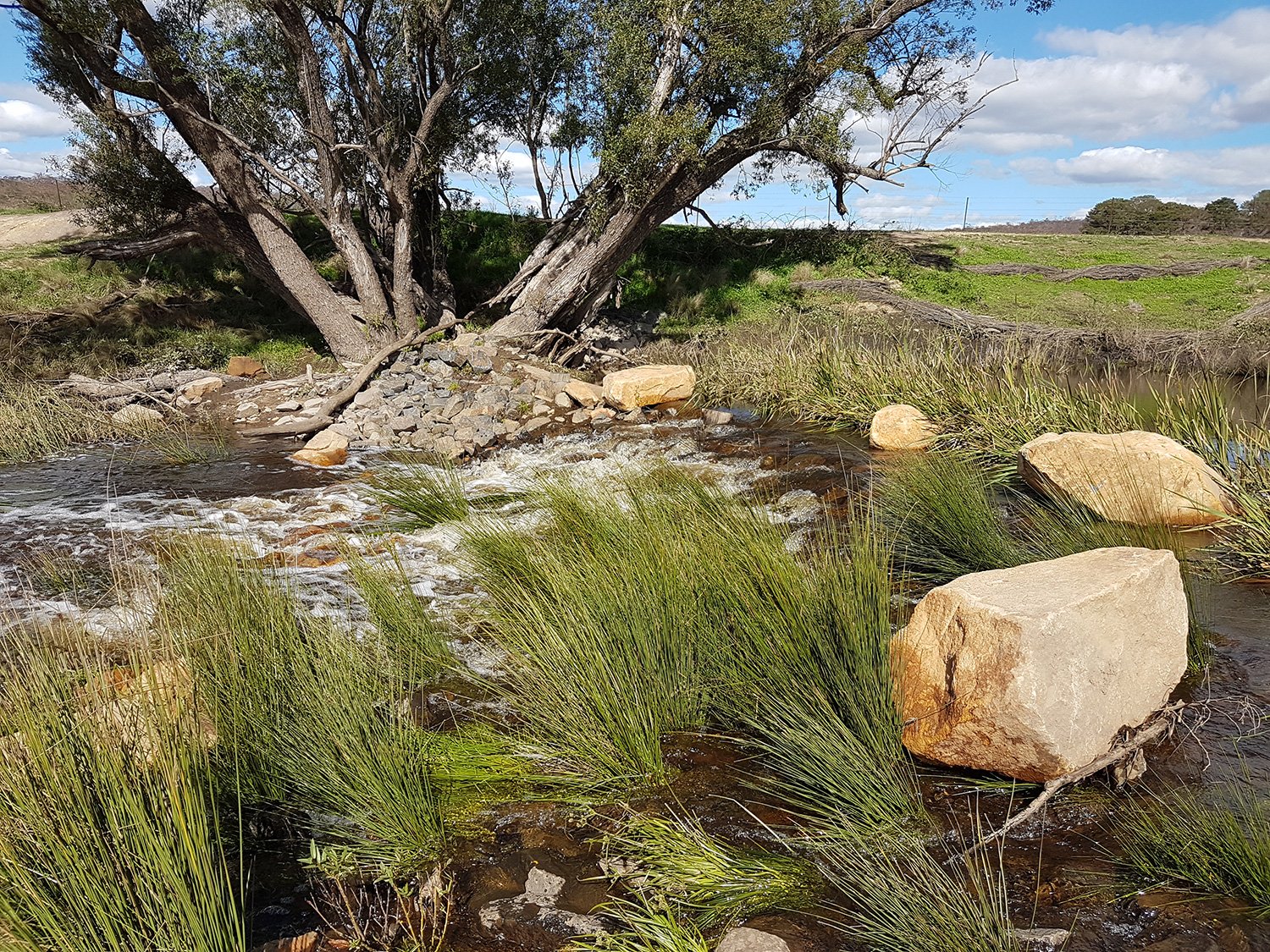
The visit wrapped up at a neighbouring MRI participating property where, after a wet and boggy walk, the students could view one of the newest landscape rehydration installations in the Mulloon Creek. Here they gained perspective on the historic function of Mulloon Creek and the work that is being done to restore that natural function for improved environmental, economic and social outcomes.
MCNF’s Matt Narracott talking about the farm’s regenerative farming practices.
Students studying agriculture, environmental science, geography, careers and TAS joined the ‘Managing Water Using Regenerative Practices’ masterclass.
Erin spoke with the high school students about the role of the water cycle, the significant change in land-use across Australia and the consequences of un-sustainable land management practices. Erin also shared her experiences as a Landscape Planner across Australia to help show the importance of restoring the water cycle in degraded landscapes.
The masterclass was followed by fantastic questions from students and teachers across NSW, tuning into the virtual conference. Questions ranged from, “What’s your favourite part of your job?” to, “What can students study to join the regenerative agriculture field” and, “What can teenagers do to help now?”.
2022 TMI Annual Report
Date published: 8 December 2022
Our 2022 Annual Report provides an insightful snapshot into our work over the last year as we’ve been expanding out across Australia and growing our team. And key to it all has been collaboration.
It’s been such an exciting year and we have so much to share and celebrate with you!
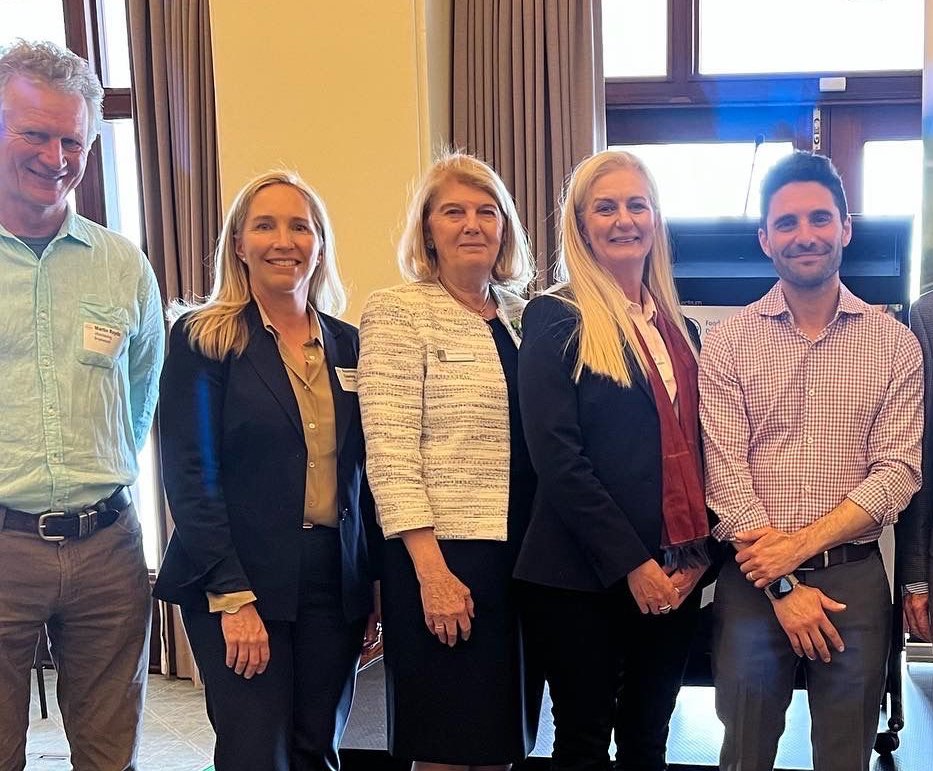
L-R: Martin Royds (Jillamatong), Suzannah Cowley (Nviro Media), the Hon Penelope Wensley AC (National Soil Advocate), Carolyn Hall (Mulloon Institute), Eli Court (Soil for Life). [Photo: Nviro Media]
“Soils are key to sustaining life on earth.”
This was part of the message from the National Soils Advocate the Hon Penelope Wensley AC at the World Soils Day Event hosted by her office at Old Parliament House on the 1st of December 2022 and attended by the Mulloon Institute’s CEO and Managing Director Carolyn Hall.
This short film contains a message from the National Soils Advocate which reinforces that management of our soils is critical to food security and adapting to a changing climate.
The event was a great chance to hear from the Parliamentary Friends of Soil co-chairs – the Hon Michael McCormick MP and Meryl Swanson MP – Paterson NSW and Chair of Standing Committee on Agriculture. There was a real buzz in the air when the Senator the Hon Murray Watt Minister for Agriculture, Fisheries and Forestry and Minister for Emergency Management, mentioned the need for holistic management.
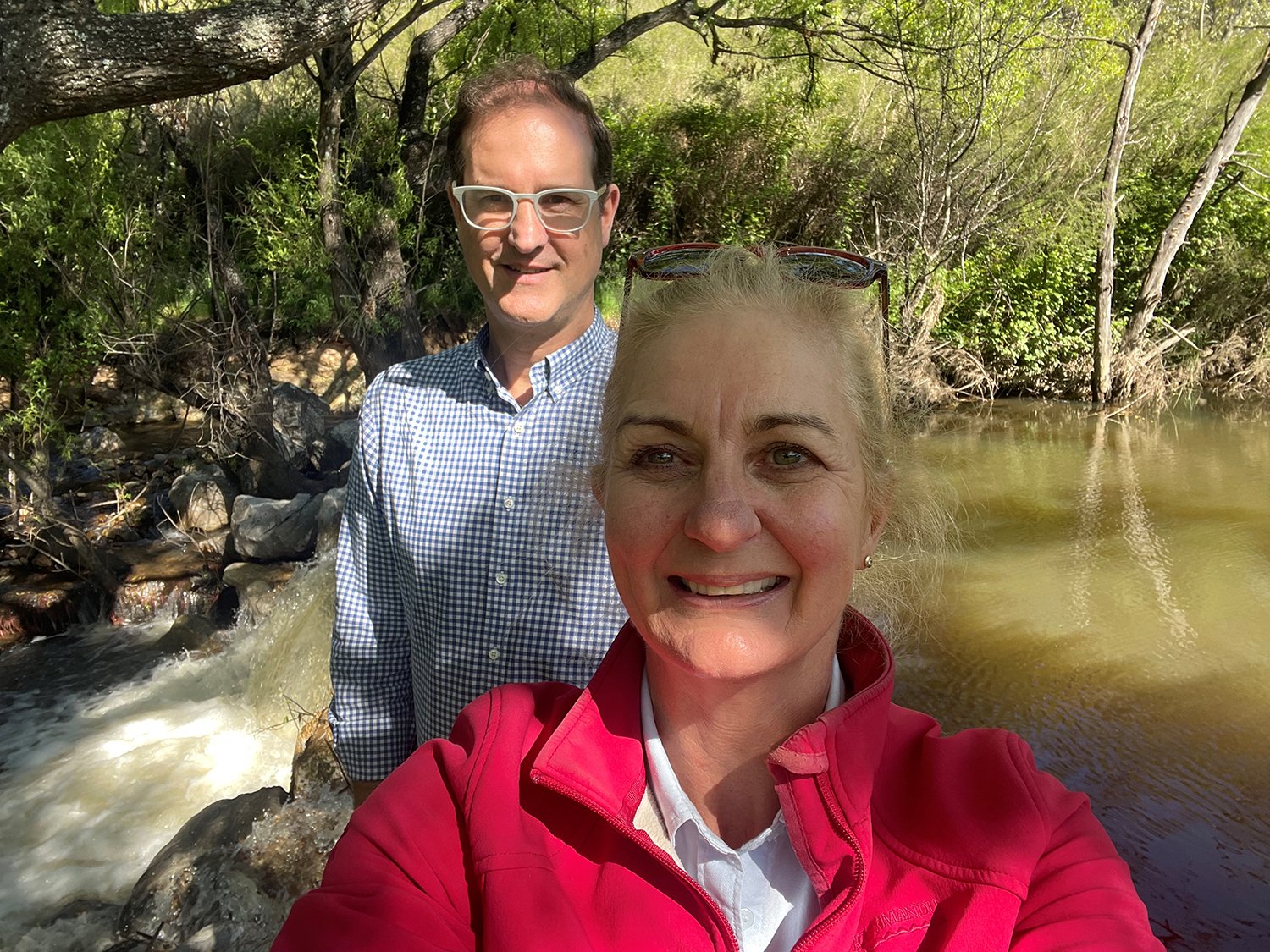
CarbonLinks’ Andrew Gatenby and the Mulloon Institute’s Carolyn Hall.
The Mulloon Institute’s CEO and Managing Director Carolyn Hall hosted Andrew Gatenby from CarbonLink at Mulloon Creek Natural Farms at the end of November 2022.
Carolyn was very excited to host Andrew as he is CarbonLink’s Commercial Director and who better to learn from about carbon farming and the carbon market and the Australian Carbon Credit Unit scheme!
Led by CarbonLinks’ Chairman Terry McCosker, the organisation has been at the forefront of the soil carbon industry for over a decade, delivering innovative technology, streamlined processes and tailored client services. The large Australian-based team of scientists, mapping experts, agricultural and soil specialists and carbon managers, are well placed to deliver on CarbonLink’s mission: To educate, enable and support producers to measure, manage, monitor and monetise their carbon farming potential.
During the visit, Carolyn took the opportunity to show Andrew around the Mulloon Rehydration Initiative and explain the opportunities for landscape rehydration to contribute to improved soil health, climate change mitigation and to the success of carbon farming both above and below ground. Carolyn and Andrew also enjoyed time with MCNF General Manager Jim Steele while exploring the farms and sharing knowledge.
Meet the farmers and landowners working to increase biodiversity and climate resilience on their land.
Australia is a country heavily affected by biodiversity loss, but a group of landholders and managers is aiming to build climate resilience to restore and protect flora and fauna.
Australia’s latest State of the Environment Report notes that more than 1,900 Australian species and ecological communities are known to be threatened or at risk of extinction, and at least 19 ecosystems across the continent have been reported to be showing signs of collapse. But it argues that environmental impacts can be managed, especially with greater investment for the protection of Australia’s threatened species, and more engagement with communities.
The Mulloon Rehydration Initiative is making a difference, via a group of landholders and managers who are rehydrating landscapes. It began as one man’s vision to improve the ecology of the creek on his property, and to rebuild hydration into the landscape.
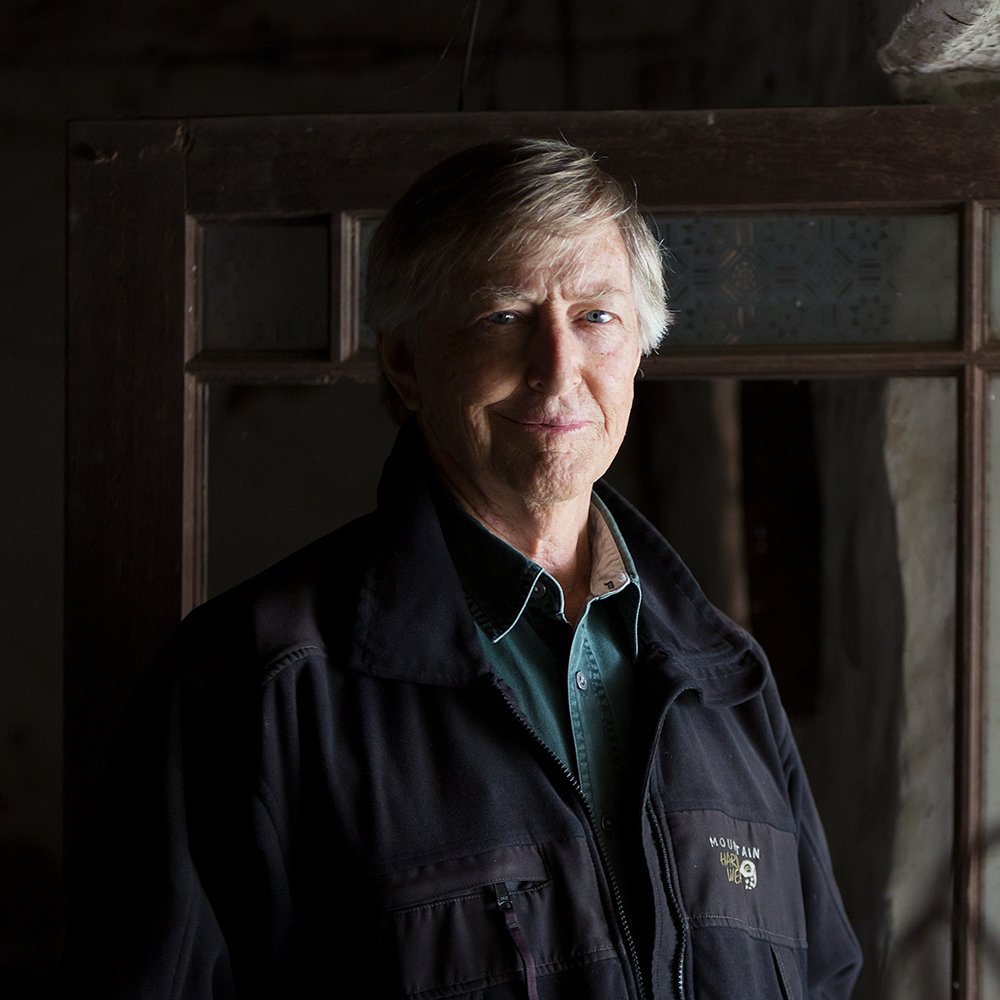
Tony Coote AM. [Photo: Canberra Region Joint Organisation / Adam McGrath]
Expanding his mission across the greater catchment, the late Tony Coote AM built partnerships with his neighbours. Together they set about improving the Mulloon Creek system, and its tributaries, in the New South Wales’ Southern Tablelands, incorporating a variety of methods to hold water within the landscape. As well as the land, the project has improved the habitat of frogs, fish and other aquatic species, invertebrates and birds. Progress that’s monitored here.
The Mulloon Institute is part of the United Nations Sustainable Development Solutions Network. The 23 property owners in the Mulloon Creek catchment have changed landscape practices to help protect 23,000 hectares and 50km of waterways.
Rehydrating strategies in action
Gerry Carroll and Robyn Clarey became Coote’s neighbours in 1998 when they bought a beef farm next to his property. They quickly recognised that drought was their biggest challenge.
“We wanted to bank water into the soil,” Carroll says. “Tony helped us recognise we can fix our farm but the response to building climate resilience needs to be catchment-wide.”
Mulloon Creek and a tributary of Ratall Creek run through their property. “We came to believe Ratall Creek was no longer a permanent creek because of the surrounding damage to other waterways, including Mulloon Creek,” Carroll says.
Over time, slowing and holding up the egress of water across the landscape has resulted in a series of billabongs being rehydrated, soil fertility and organic matter improving, and Ratall Creek re-emerging.
Where Carroll and Clarey identified natural soaks and springs in the landscape, a series of sunken channels, or swales, were built across paddocks, following contour lines. The swales helped radically slow rainwater in its movement across the land, enabling it to spread across and soak into the soil. They also double as small dams. Fencing was erected following these contours that enabled revegetation corridors to be planted and further protect the surrounding land from livestock and vehicle compaction of the soil.
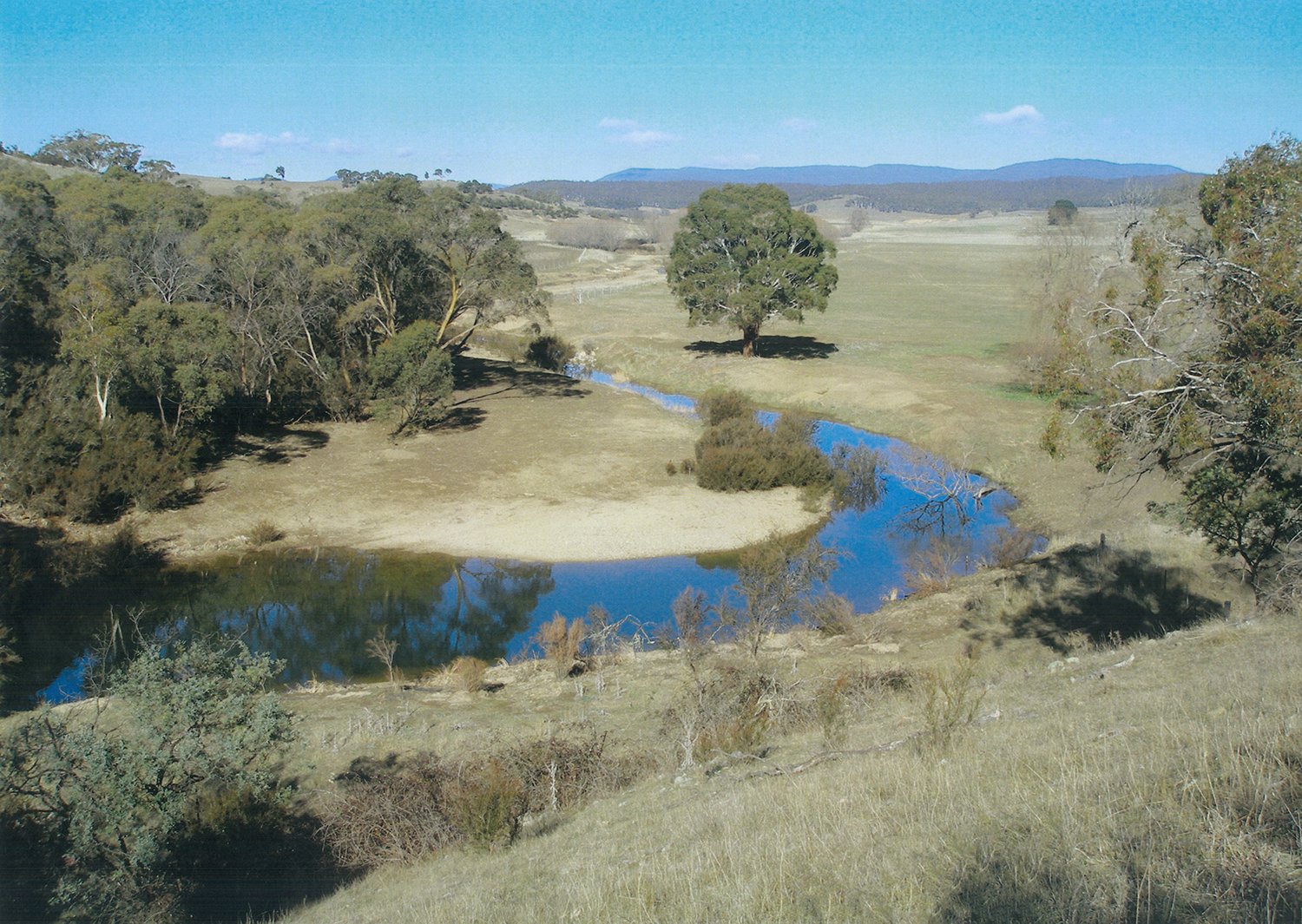
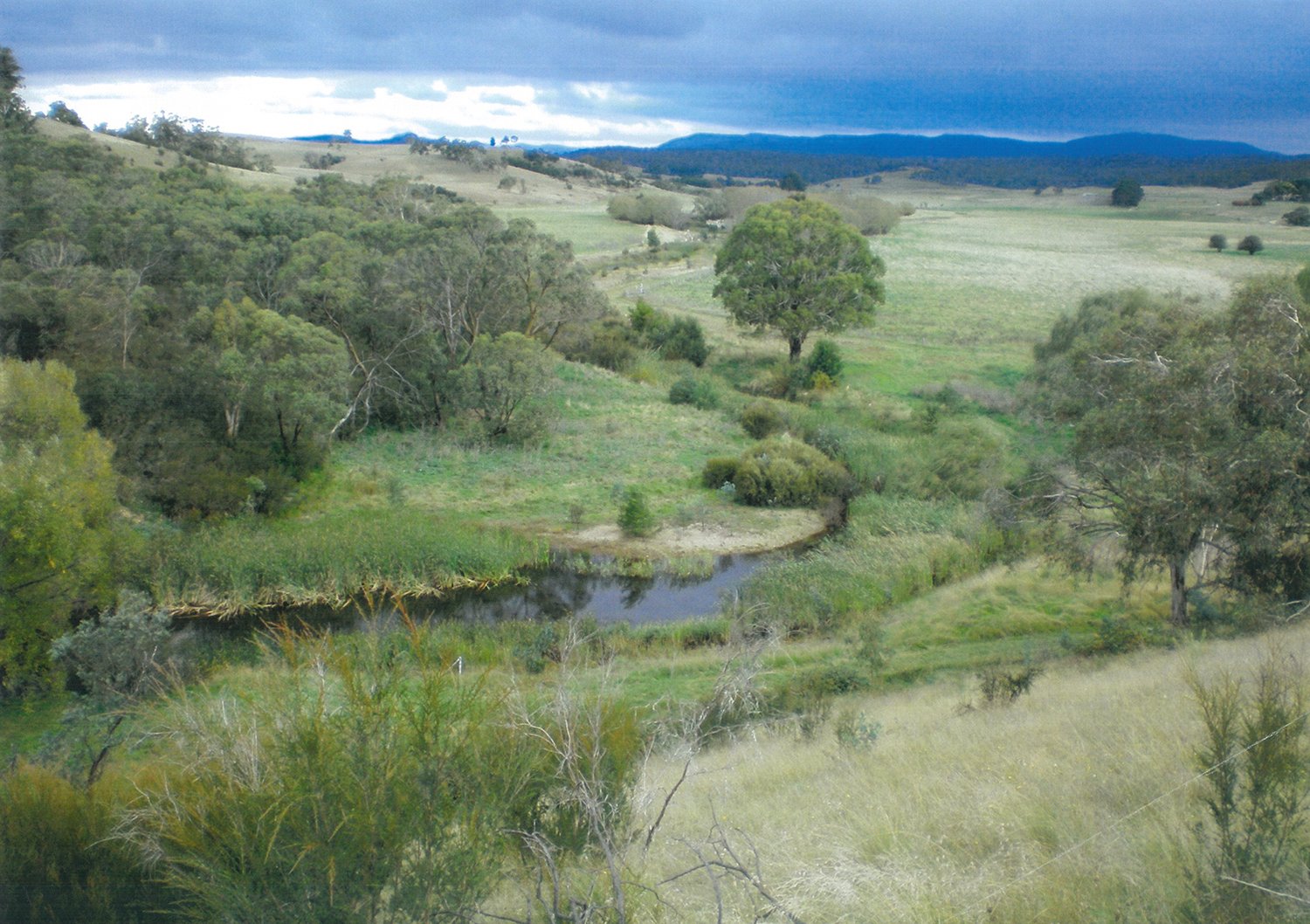
Rehydration efforts on Gerry Carroll and Robyn Clarey’s property, March 2018 to March 2020.
Rehydration efforts on Gerry Carroll and Robyn Clarey’s property, March 2018 to March 2020.
Positive impact on wildlife
The strategies put in place have already had an impact on wildlife, including the scarlet robin, classified as vulnerable in New South Wales because of wide-scale habitat loss. According to environment NSW, 28% of the species’ occurs on reserve (within NSW National Parks and Wildlife Service estate) and the remaining 72% on private land.
“The scarlet robin was a small population in a forest on our farm but had to traverse open land to get to water,” Carroll says. “We set aside some of our land to create a vegetation corridor and rehabilitated forested country, linking the forest to the creek.” This corridor protects the robin from predators, giving it safe access to the creek.
“Every bit of biodiversity adds some resilience to the land.”
Gerry Carroll
After the rebuilding of vegetation corridors, Carroll and Clarey’s land is now included in the Mulloon Institute’s catchment-wide surveys of aquatic and terrestrial life. These surveys have demonstrated increased populations of mountain galaxias fish in the lower Mulloon Creek, and greater diversity and increased numbers of six species of frogs. Eleven species of frogs were recorded in the 2021 survey.
Bird surveys since 2015 have shown increased sightings of species including flame and scarlet robins (both classified as a threatened species) and red-capped robins (rare), as vegetation composition and connectivity has improved.
During the drought years of 2007-2010, aquatic and terrestrial plants continued to thrive along the rehydrated riparian zone and in billabongs and waterways. When the drought broke with two significant floods, the plants reduced flow rates and erosion, and the aquatic plants provided a filtering system for the lower catchment, as well as protection for fish and invertebrates.
View fullsize
View fullsize
Rehydration efforts on Gerry Carroll and Robyn Clarey’s property, March 2018 to March 2020.
Resilience at scale
Carolyn Hall, the CEO and managing director of the Mulloon Institute, says: “We recognised further expansion of the Mulloon Rehydration Initiative – to restore hydrological function and manage how water moves through the landscape – requires funding that goes beyond government.
“It requires partners that understand catchment projects at their core are social projects, and the goals and aspirations of landholders and production for agriculture.”
Plant milk manufacturer Vitasoy was looking for a community partner to work with on a national scale. It selected the Mulloon Institute.
David Tyack, the managing director of Vitasoy Australia Products, says the corporation has a vested interest in ensuring sustainable farming and land management is normal practice for its producers across Australia.
“Our consumers expect brands to be sustainable, particularly in light of climate extremes,” he says. “We also have a social and environmental responsibility to our suppliers.”
Tyack says the brand aims to buy its raw materials from Australian farmers, rather than import them. “We believe in supporting Aussie farmers and actively pursue an Australian-first sourcing policy, meaning that if we can source our raw ingredients from Australian farmers, we always do.”
View fullsize
View fullsize
Rehydration efforts at the Institute’s Home Farm location, June 2006 to May 2011.
According to Tyack: “Recent years have seen Australia ravaged by climatic extremes, both drought and flood, which has resulted in Vitasoy having to source a small proportion of our organic soybeans from overseas to ensure that we can meet market demands.” In practice this meant 29% in 2020-21 due to drought (11% USA and 18% Canada). None in 2021-22 due to good conditions and 15% from the USA in 2022-23 due to floods in New South Wales and Queensland.
“We prioritise reverting back to Australian-grown ingredients as soon as conditions allow and are resolute in our ongoing commitment to Australian manufacturing and farming.”
Tyack says Vitasoy Australia has made a $1.25m pledge to the Mulloon Institute to help rehydrate Australian catchments, across the nation, over the next five years.
“We believe this will help them to scale their work and create a national conversation about sustainable land management. We hope this type of corporate leadership will inspire contributions from other Australian food producers.”
* The Mulloon Rehydration Initiative is jointly funded through the Mulloon Institute and the Australian Government’s National Landcare Program, with assistance from the NSW Government’s Environmental Trust.
Restoring habitat for the endangered Yellow Spotted Bell Frog
Date published: 3 November 2022
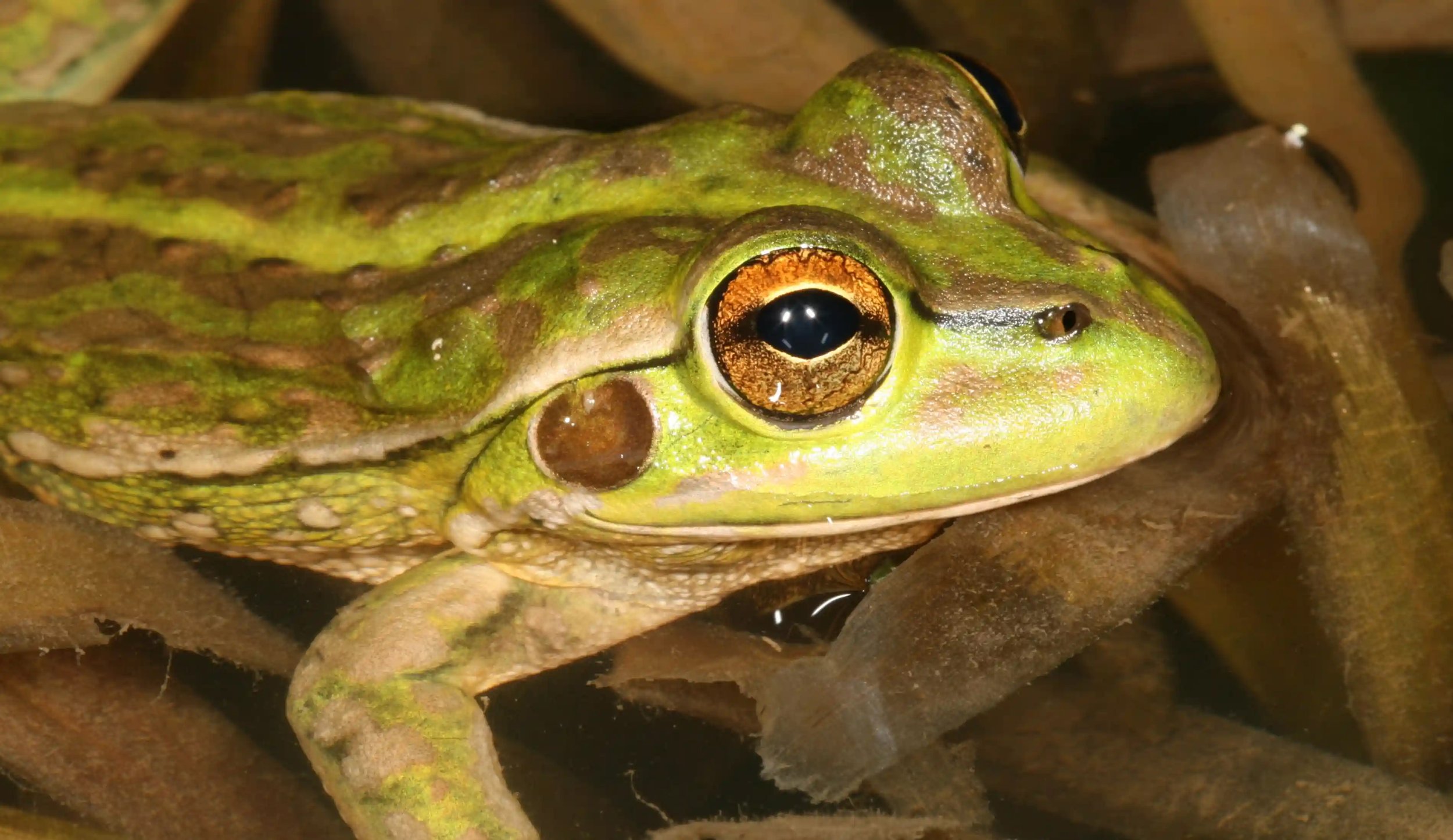
The yellow spotted bell frog has faced severe habitat loss.
The Guardian, 3 November 2022
A captive breeding program at Taronga Zoo and a rehydration project by the Mulloon Institute are working to reintroduce this threatened species to a regenerated habitat.
The number of plant and animal species listed as threatened in Australia is increasing. In 2016 it was 1,774; five years later it was 1,918, with habitat loss the key factor, according to the 2021 State of the Environment report.
Pressure to develop land, coupled with the extreme weather and climatic events of La Niña floods, extended bushfire seasons and El Niño-affected droughts, have caused continued declines in Australia’s vegetation, soil, wetlands, reefs, waterways and biodiversity.
Meanwhile, the harvesting of natural resources (mining, timber), trawl fishing and aquatic farming, industrial production (agriculture) and urban sprawl contribute to land-use changes that lead to habitat destruction, degradation and fragmentation.
How rehydration techniques are benefiting endangered wildlife
The Mulloon Institute is an organisation based in Bungendore, in the Southern Tablelands region of New South Wales, that develops and shares regenerative farming techniques. Its National Rehydration Initiative is focused on rehydrating and regenerating landscapes for improved agricultural productivity, enhanced environmental biodiversity, improved habitat for threatened species and greater community resilience to drought, bushfire and flood.
The methods used in the organisation’s land rehydration efforts also help to restore habitats, build ecosystem resilience and reverse species loss in the Mulloon Creek catchment.
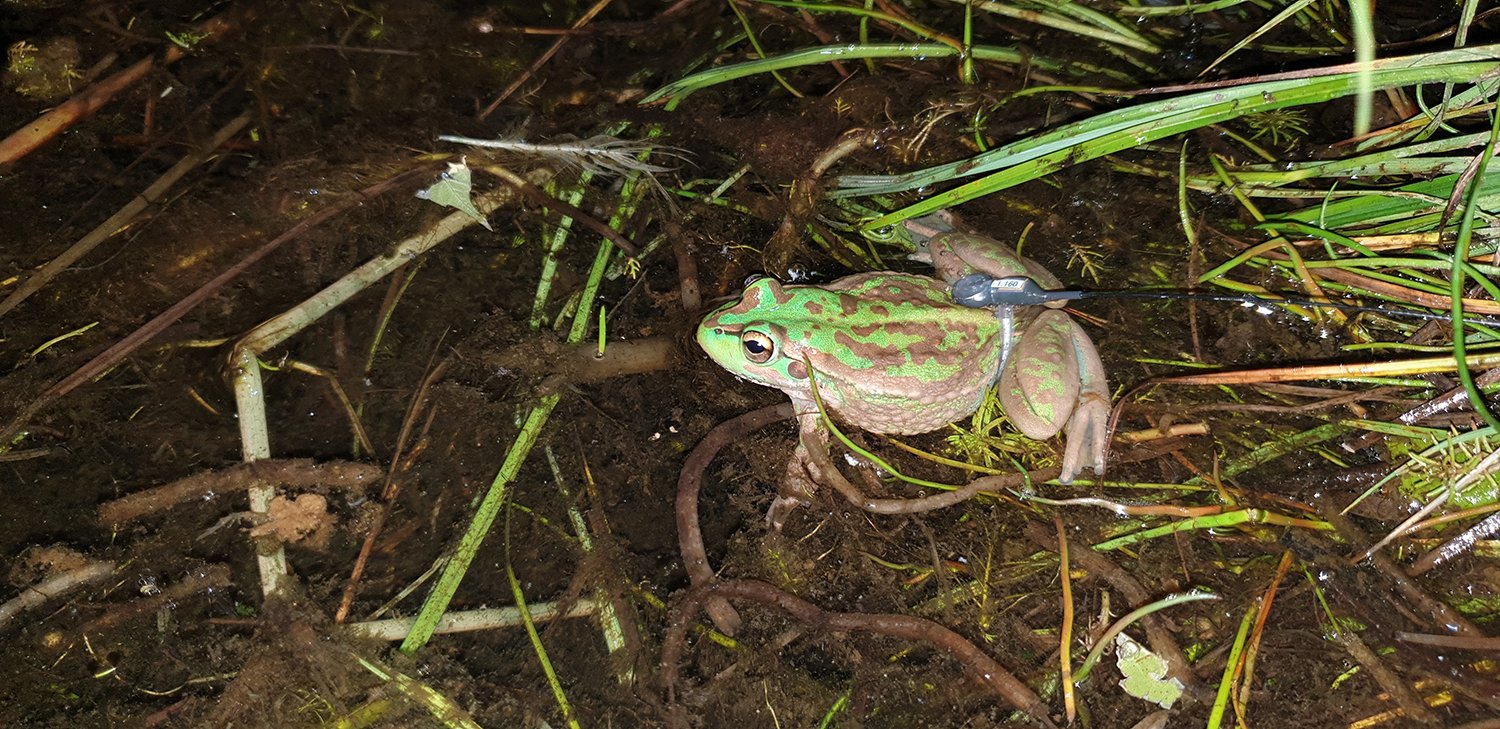
Taronga Zoo’s breeding program continues to monitor of the yellow spotted bell frog released at Mulloon Creek.
One species that has benefited from Mulloon’s land rehabilitation is the yellow-spotted bell frog. With 90% of its habitat having been lost in and around Sydney and the Southern Tablelands, it is deemed critically endangered under New South Wales and federal laws (EPBC list) and on the International Union for the Conservation of Nature’s Red List.
Habitat creation to reverse species decline
It’s believed the only self-sustaining population of yellow-spotted bell frog is in a captive breeding program at Taronga Zoo, established after a chance find in 2009.
“The species was thought to be extinct since 1979,” says Michael McFadden, unit supervisor of the zoo’s reptiles and amphibians division.
“A conservation officer was doing fish surveys in 2009 and saw a frog jump out of the water. A follow-up survey identified there were 100 frogs in this location. We collected tadpoles the following season to establish an insurance colony at the zoo.”
Due to the restorative work that had been done at Mulloon Creek, Taronga Zoo chose the location to reintroduce yellow-spotted bell frogs from its breeding program into the wild.
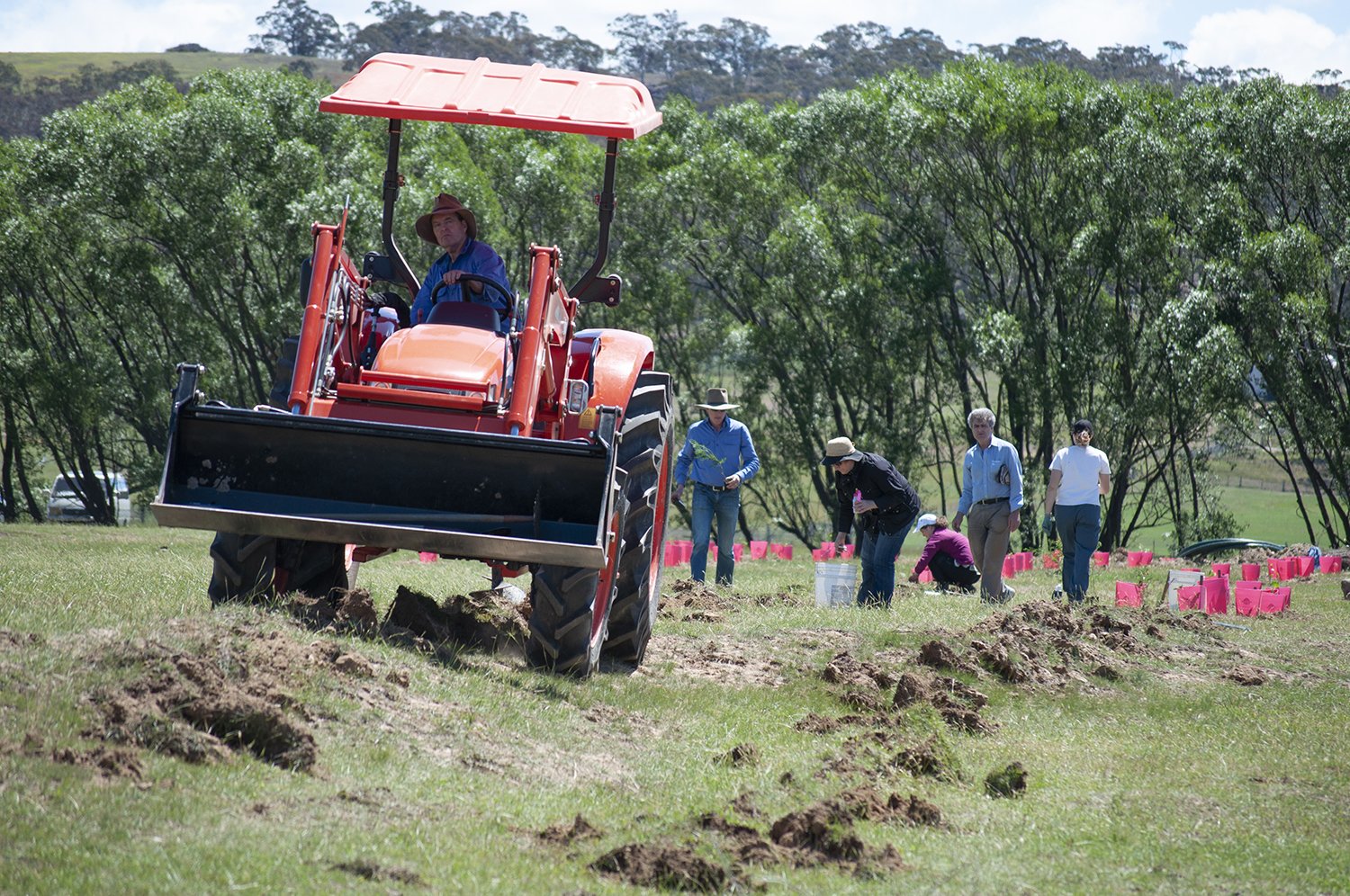
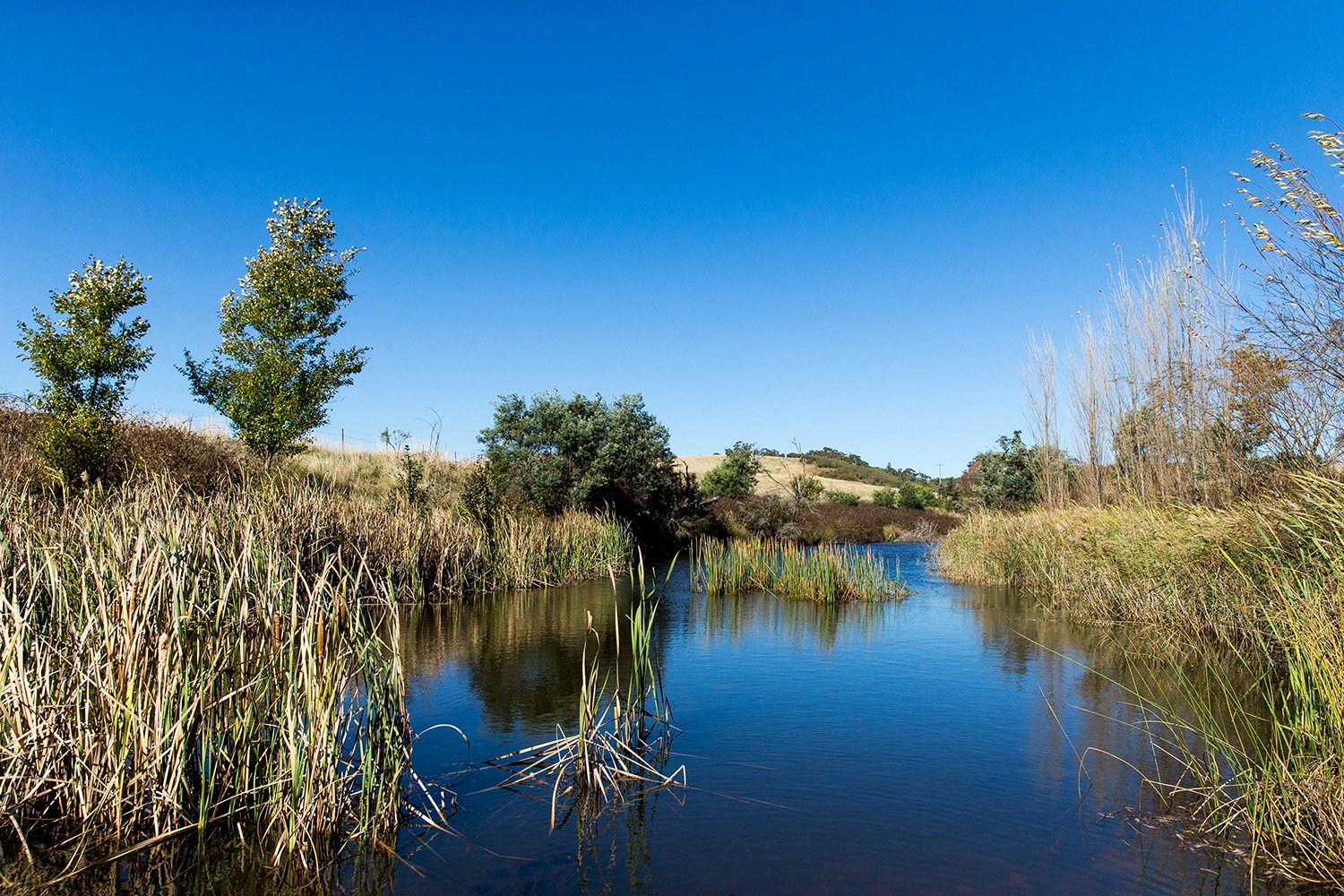
Tree planting alongside Mulloon Creek, part of land rehabilitation that can provide habitat for native wildlife, including the endangered yellow-spotted bell frog.
Staged releases of captive-bred frogs had failed at two sites – one in Mulloon Creek and one elsewhere – after drought created ecological breeding conditions hostile to amphibians. But in 2019, Taronga Zoo released 20 more frogs into Mulloon Creek, followed by two larger-scale targeted releases in the next two seasons. The zoo continues to monitor the population.
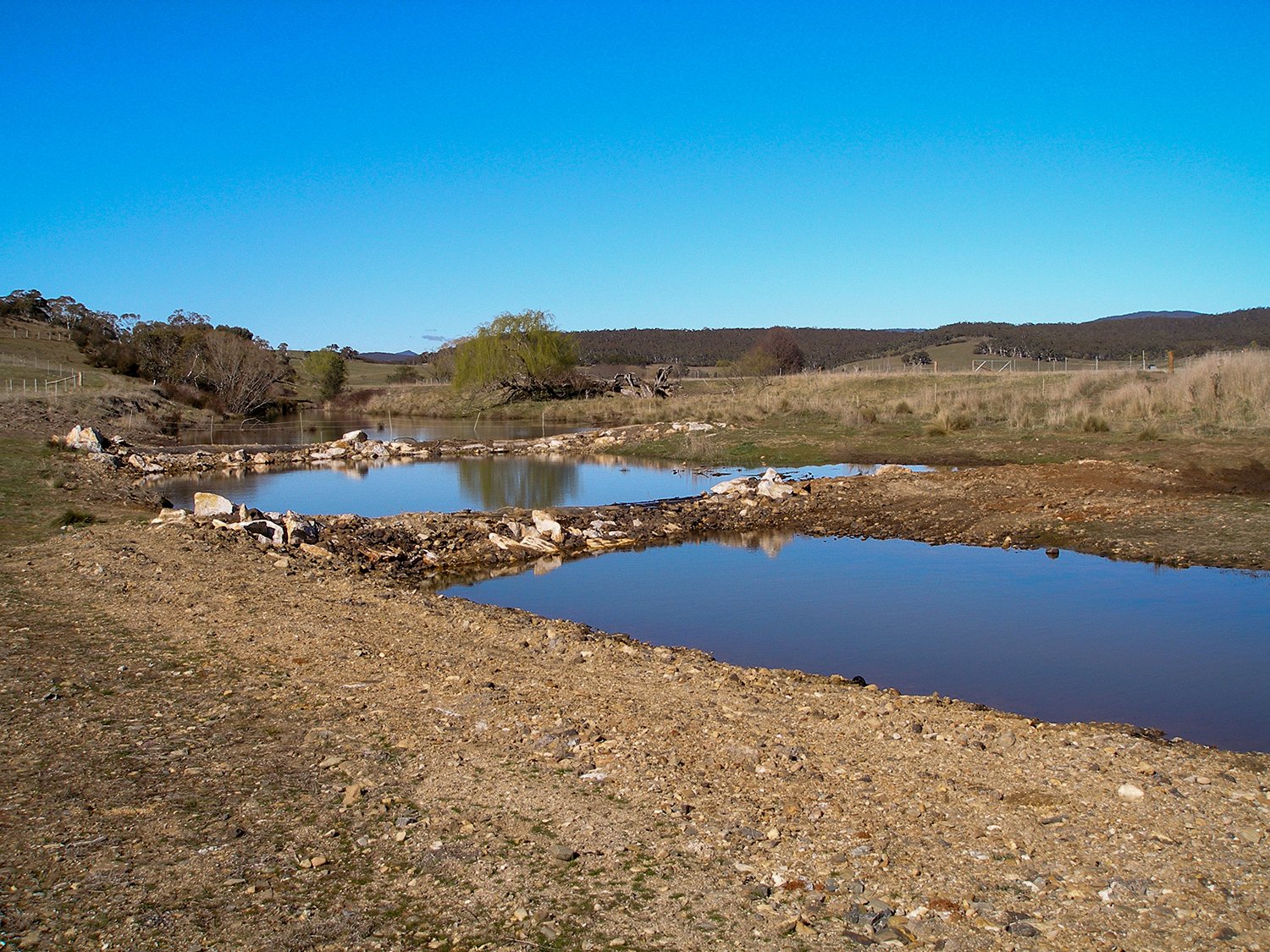
“The Mulloon Creek is an ideal habitat for the bell frogs, being a chain of big, still ponds, slow-moving water, and with really good aquatic vegetation,” McFadden says.
“We radio-track the frogs and survey how they use the habitat.
“It may take a few years of reintroductions to help build a self-sustaining population.”
How the Mulloon Institute has built a more supportive frog habitat
Collaborating with 23 landholders in rehydration and revegetation work in the Mulloon catchment, the institute has stemmed landscape degradation by conducting earthworks, such as building swales (depressions in the land on contour, designed to slow water movement, enabling it to soak into the soil) and leaky weirs, to slow water flowing across the landscape. By slowing the water flow, naturally formed and built depressions create a chain of billabongs and ponds.
Gary Nairn, the chairman of the Mulloon Institute, says: “Rebuilding natural weirs and pools restores the environment. During large downpours, the weirs reduce the water to a steady flow, and it’s a better quality downstream because of the natural filters that have grown during rehabilitation.
“We’ve been able to install equipment on farms along the creek to record water flow and quality, monitor climate data and demonstrate what’s changing through frog, bird and vegetation surveys.”
This focus has extended to the neighbouring Molonglo catchment, where the institute is restoring the wetland habitat along the river as an environmental insurance policy for the green and golden bell frog, a species that has been threatened by the 2019-20 bushfires and this year’s floods.
View fullsize
View fullsize
“The Molonglo floodplain rehydration initiative will re-establish habitat through in-stream and floodplain structures, rehabilitated wetlands, revegetation and regenerative land management,” Nairn says.
Using lessons learnt from the Mulloon catchment, and a $170,000 New South Wales Environmental Trust Restoration and Rehabilitation grant, the institute aims to rehydrate and re-create habitat and reverse species loss in the Molonglo catchment.
Financial support is also essential from commercial contributors, such as plant-based beverage company Vitasoy, which is backing the institute’s rehydration work.
David Tyack, the managing director of Vitasoy Australia Products, says the company has pledged $1.25m to the institute to help rehydrate Australian catchments, across the nation, over the next five years.
He believes this financial support “will help scale their work and create a national conversation about sustainable land management. Our pledge alone will help to rehydrate thousands of hectares, and we encourage all Australian food producers to join the cause.”
* The Mulloon Rehydration Initiative is jointly funded through the Mulloon Institute and the Australian Government’s National Landcare Program, with assistance from the NSW Government’s Environmental Trust.
The Water Story – Artful activities for students & rangers – NSW
Date published: 28 October 2022
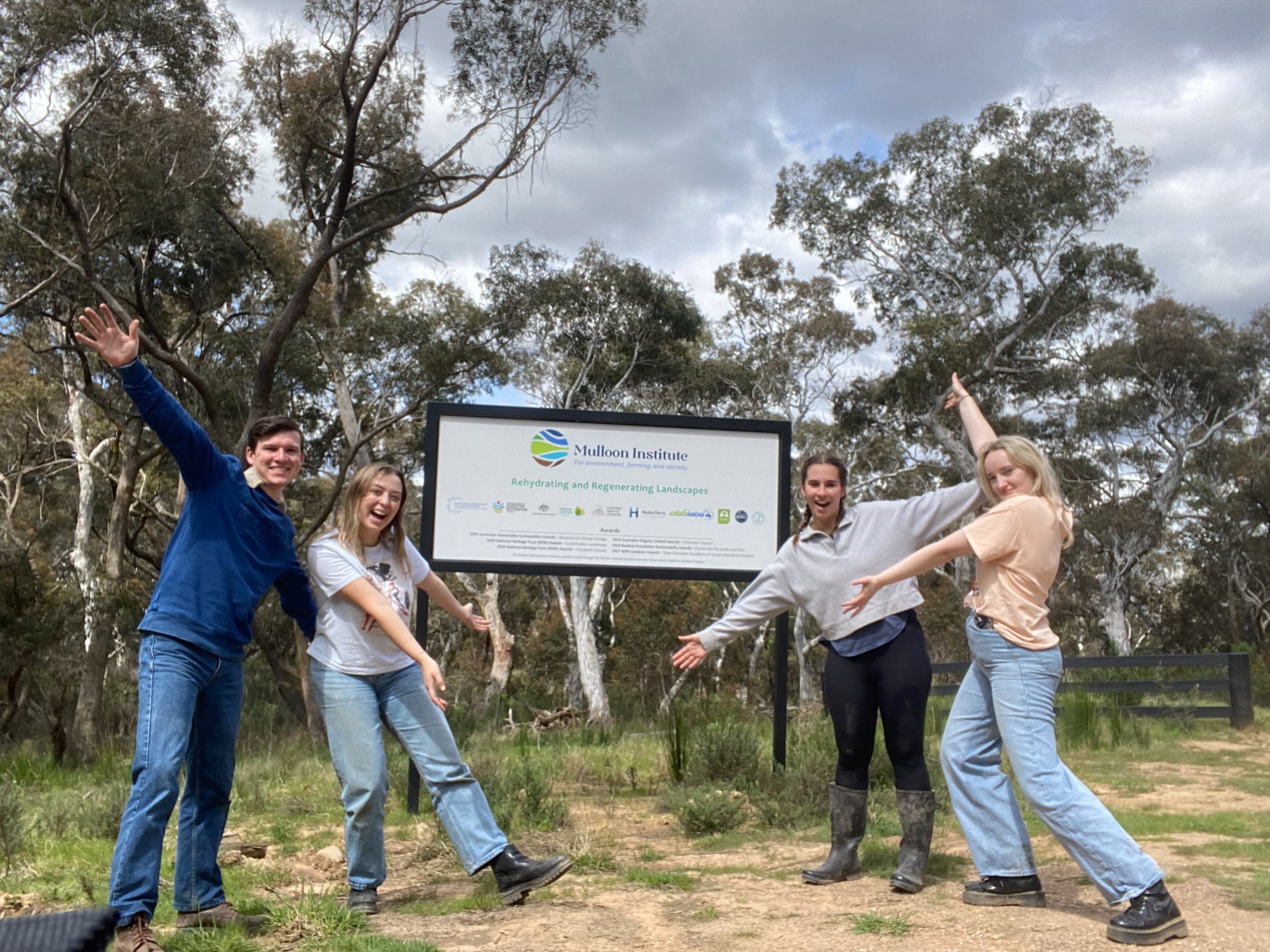
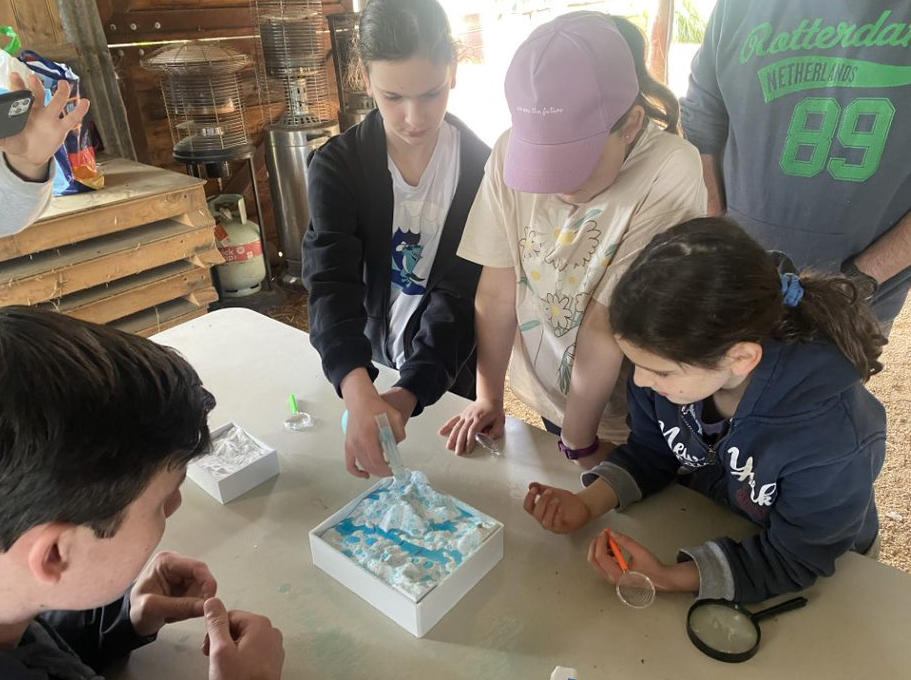
A group of Australian National University design students recently joined in the ACT Young Rangers Workshop run by Tam Connor (Education Coordinator) and Penny Cooper (Trainee Director of On-ground Works) at Mulloon Creek Natural Farms for a very fruitful encounter.
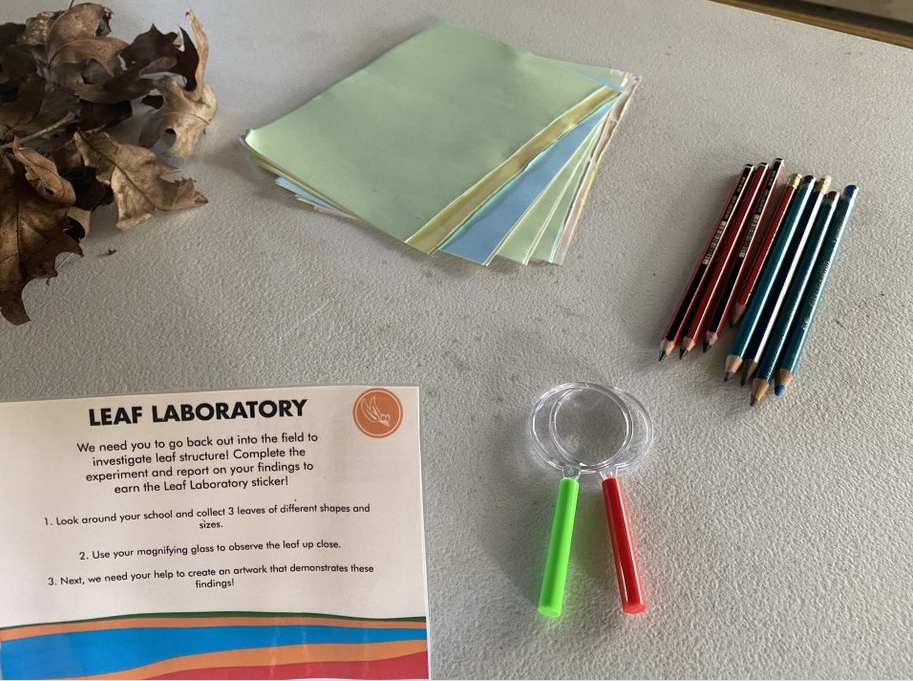
In weekly contact with Laura Fisher (Creative Adaptions Partnerships) through their semester, this highly imaginative crew have been developing a learning kit about the water cycle, containing activities and prompt cards suited to Year 2 classrooms. Their key reference point has been the primary school Regenerative Science curriculum ‘The Water Story’, and its protagonist ‘Wanda the Water Droplet’ being co-developed by The Scots College and TMI. The students were able to ‘user test’ their prototype designs with the Young Rangers, gathering valuable feedback from both children and parents. Here’s what they had to say about the experience:
“This trip was a highlight of our course and such an eye-opening experience getting to see and learn about Mulloon and their practices in person. Together as a group, we discovered where Wanda the water droplet is in our environment, we got to learn about and engage with the silt model and got to test out the learning activities we’ve been working on in class on those who attended.
Over the past couple of months, we have been working with Mulloon to develop a series of educational activities aimed at teaching children about how the environment around them works, and why it is so important to keep our landscape healthy. Being able to put our activities into action was such a privilege and we had so much fun doing it! Getting to see and take in the serene landscape on the farm was definitely a highlight for us. Overall, the learning experience we had was invaluable and we are much looking forward to visiting again!”.
We love your enthusiasm Maddy Brewster, Luke Farrow, Sophie Andrews, Molly Dixon and Tara Lyons!!!
This student engagement has been supported by the NSW Government through its Environmental Trust through the ‘Landscape Rehydration Capacity Building: developing curriculum’ project, as well as the Australian Government through the ‘Modelling Landscape Rehydration for Catchments, Communities and Curriculum’ Citizen Science project.
Sharing the vision – WA
Date published: 19 October 2022
This article has been kindly reproduced from the Farm Weekly’s October issue of RIPE magazine.
From ‘concrete’ to ‘sponge’: slowing the flow on Aussie farmland
Date published: 19 October 2022
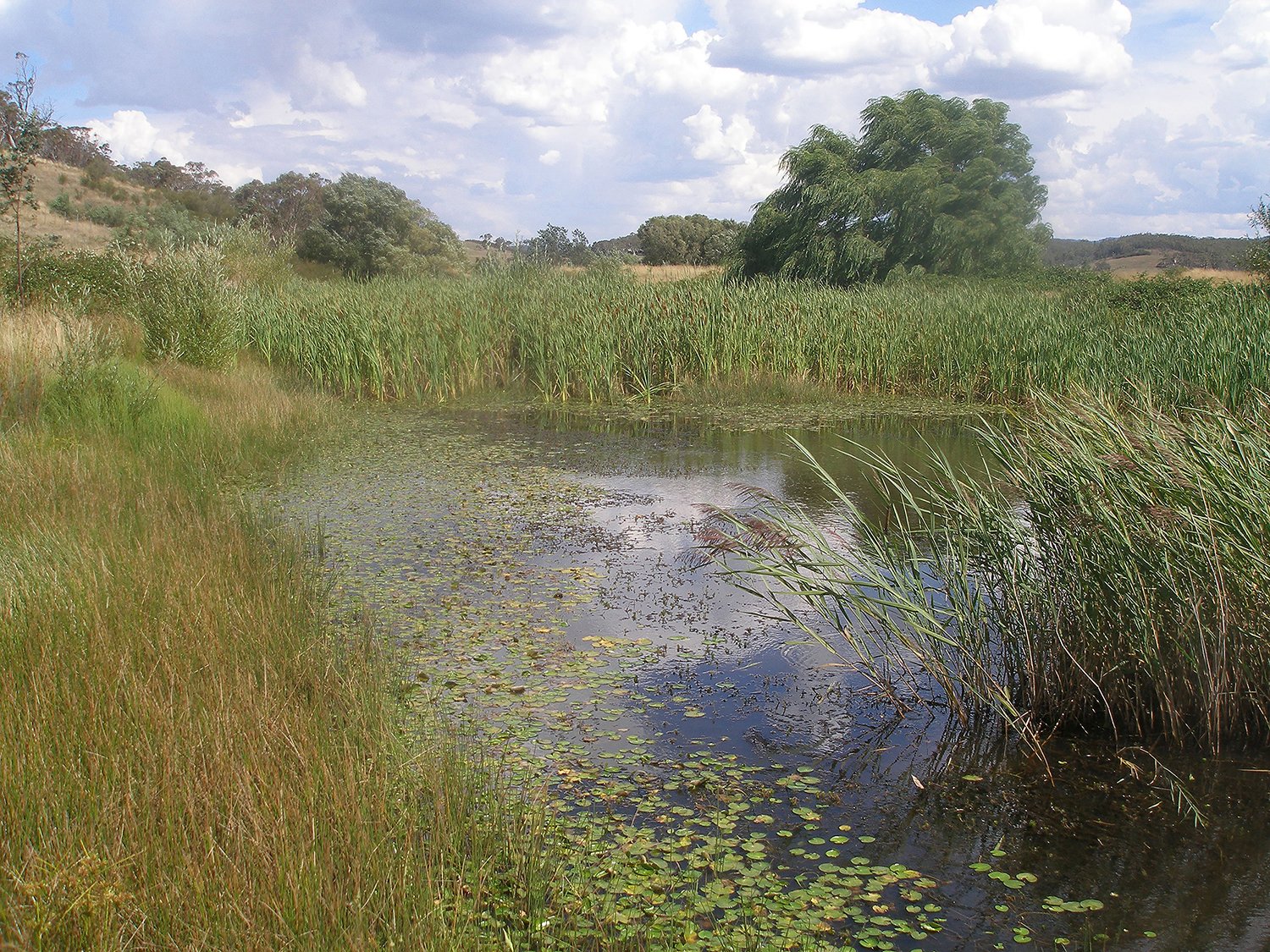
October 2020, a section of Mulloon Creek at Palerang, NSW where a series of shallow v-shaped weirs have helped slow and retain water through the soil and surrounding landscapes.
The Guardian, 19 October 2022
Despite record-breaking rainfall and floods this year, eastern Australian landscapes are facing hydration issues. Slowing the flow of water on farms can help.
There’s a lot of farmland in Australia: about 427m hectares, making up 55% of the nation’s land use. Its condition affects our lives in the most primal ways, from the water we drink, to our ability to cope with flood, fire and drought.
Professor Stephen Dovers, chair of the science advisory committee at the Mulloon Institute, an organisation that develops and shares regenerative farming techniques, believes the state of farmland depends heavily on one issue: how well the land holds onto water.
“Rain is an income,” Dovers says. And too often, rather than banking that resource, we leave it to “flow out the drain”.
The same section of Mulloon Creek shown in main image, three months earlier in August 2020 following a rain event.
The country’s poor water management is illustrated by the fact that despite record-breaking rainfall this year and floods across eastern Australia, landscapes are facing hydration issues.
What good hydration looks like
“We should not see water disappear quickly off paddocks, off fields, down eroded gullies and streams,” Dovers says. “We want to retain water in the landscape, and that’s the fundamental aim of rehydration and a lot of other regenerative farming, even traditional farming: to try and capture as much of that water.”
Through construction and replanting, the institute, based at Bungendore in the New South Wales Southern Tablelands, creates obstacle courses for the water, causing the land to retain it, which creates reserves, and benefits biodiversity. Rather than leaving the land in a quick and wasteful run-off, water is captured and stored in the soil, and flows into our streams slowly, ensuring more water in soil and streams during dry spells.
The way in which water travels under and along the ground is key, Dovers says.
To illustrate, he calls up the image of a backyard: “If I concrete it, all the water runs off. If I have a native garden with mulch, the water soaks in.” The aim is: “A porous landscape, which basically works like a sponge, or a kind of underground dam.”
A v-shaped weir constructed on Mulloon Creek at Palerang, NSW.
Peter Hazell, principal landscape planner at the institute, says farming practices dating back to the arrival of Europeans have changed much of Australia’s land to the extent that it can no longer retain water.
“It’s like our landscape has dysentery,” he says. “It doesn’t matter how much water you drink, it’s still just going to go straight through you.”
Why hydration matters
The institute’s rehydration work is designed to help farmland cope with climatic extremes. “We are looking at a drier climate, but with more extremes of drought and heavy rain events,” Hazell says.
“The drier catchments are, the less resilient they are to the growing extremes in climate that we’re having. You rebuild the function of the catchment, then it has so much more ability to buffer extremes of drought, and floods and fires.”
Fire is a key consideration, particularly in the wake of the record 2019-20 bushfires, in which an estimated 17m hectares of Australian land were burned, according to AFAC, the national council for fire and emergency services. Hazell says well-hydrated land with greener vegetation is not only more resistant to burning, but can act as a firebreak. He says his own property became “the last stand” during that season’s mega fire that swept through Currowan and the south coast of New South Wales. Thanks to the intact chain of ponds on his and his wife’s land, they were able to pump more water to continue fighting the fire.
Hydration in wet weather is also critical. “You want to hang on to a bit of that water because once it goes dry again, you’re going to need it,” Hazell says. “And this is why droughts are biting so hard.
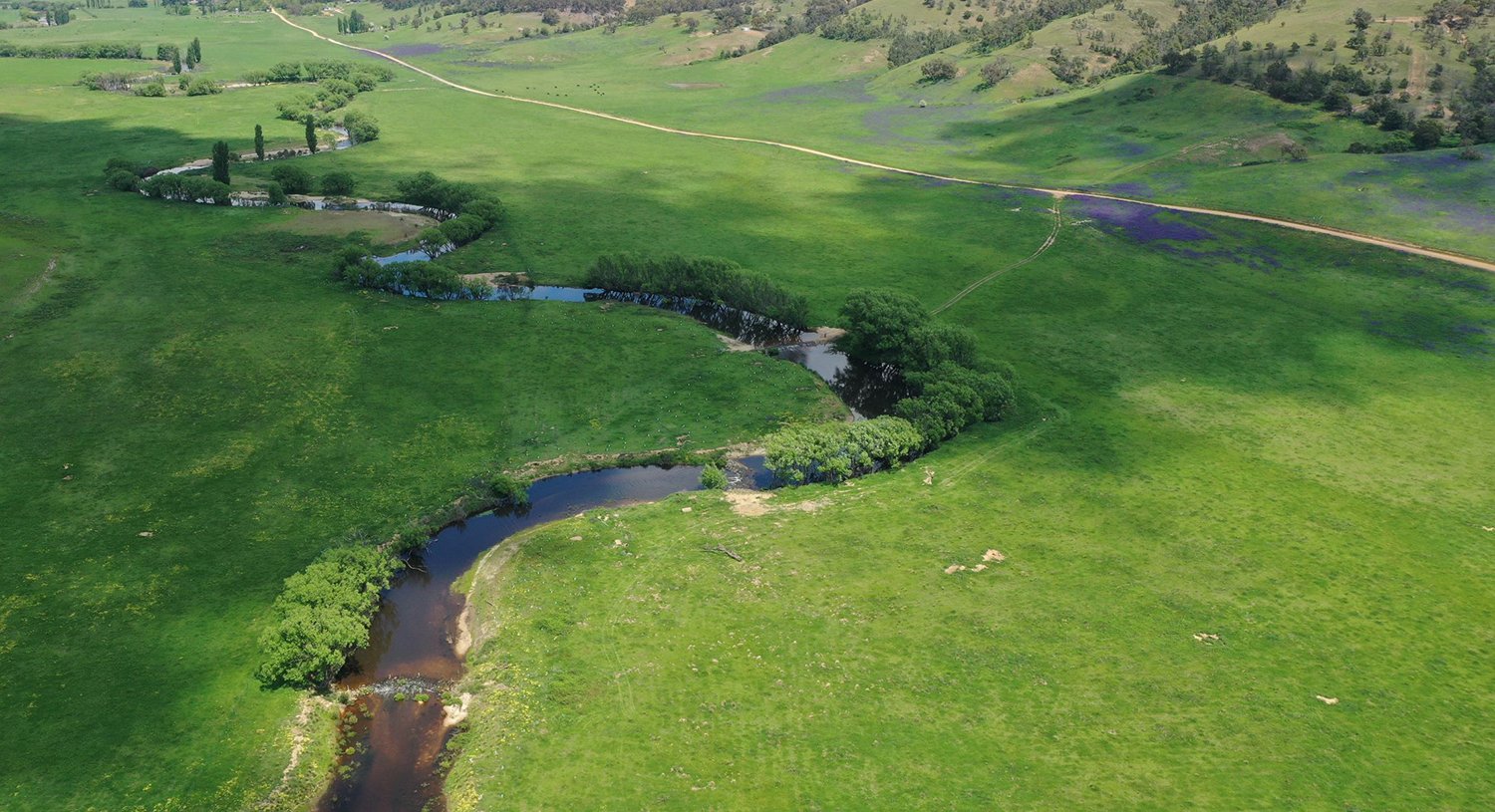
Another section of Mulloon Creek on Mulloon Creek Natural Farms, supporting habitat biodiversity and hydration of surrounding soils.
“Water will always run off the ground, but without intervention and management that slows that flow, that’s where you lose water quickly.”
Erosion caused by fast-flowing water results in the loss of soil, depleting nutrients on the farm. Once that eroded soil migrates beyond the farm, it becomes a whole new problem. Hazell cites the contamination of drinking water in Sydney in 1998, and recently in Dubbo. Further north, sediment from farms upsets the ecology of the Great Barrier Reef – another issue that the institute is using its research to help solve.
By being hospitable to life, and accumulating organic matter, hydrated soil sequesters carbon from the atmosphere. This mitigates the global heating effects of atmospheric carbon dioxide. When land cannot hold onto water, the effect is the opposite.
Beyond Mulloon Creek
The institute’s pilot project, the Mulloon Rehydration Initiative, which began as a collaborative effort in 2005, involves 23 neighbouring landholders. Now, farmers around Australia are turning to the institute’s experts for advice, so they can rehydrate their land as well.
As a not-for-profit, the institute’s work relies on external support. And support is growing. A recent pledge of $1.25m by plant-based food and beverage company Vitasoy is the largest corporate pledge yet for the institute.
It will help fund essential work, says the institute’s CEO and managing director, Carolyn Hall. “Financial support from groups like Vitasoy means we can help build a brighter future for Australian farmers, by equipping them with landscape rehydration skills and helping them build greater resilience in the landscape,” she says.
* The Mulloon Rehydration Initiative is jointly funded through the Mulloon Institute and the Australian Government’s National Landcare Program, with assistance from the NSW Government’s Environmental Trust.