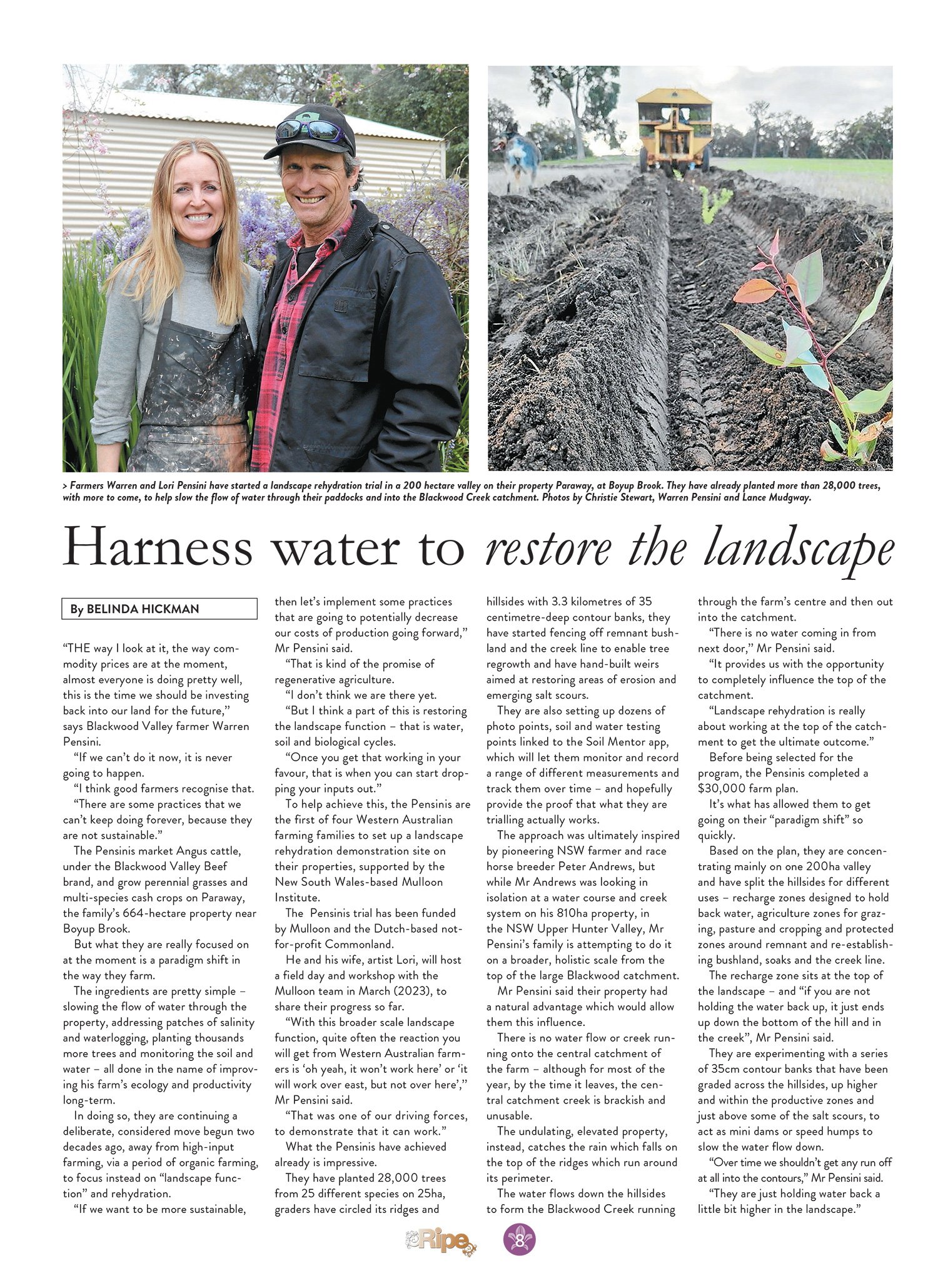
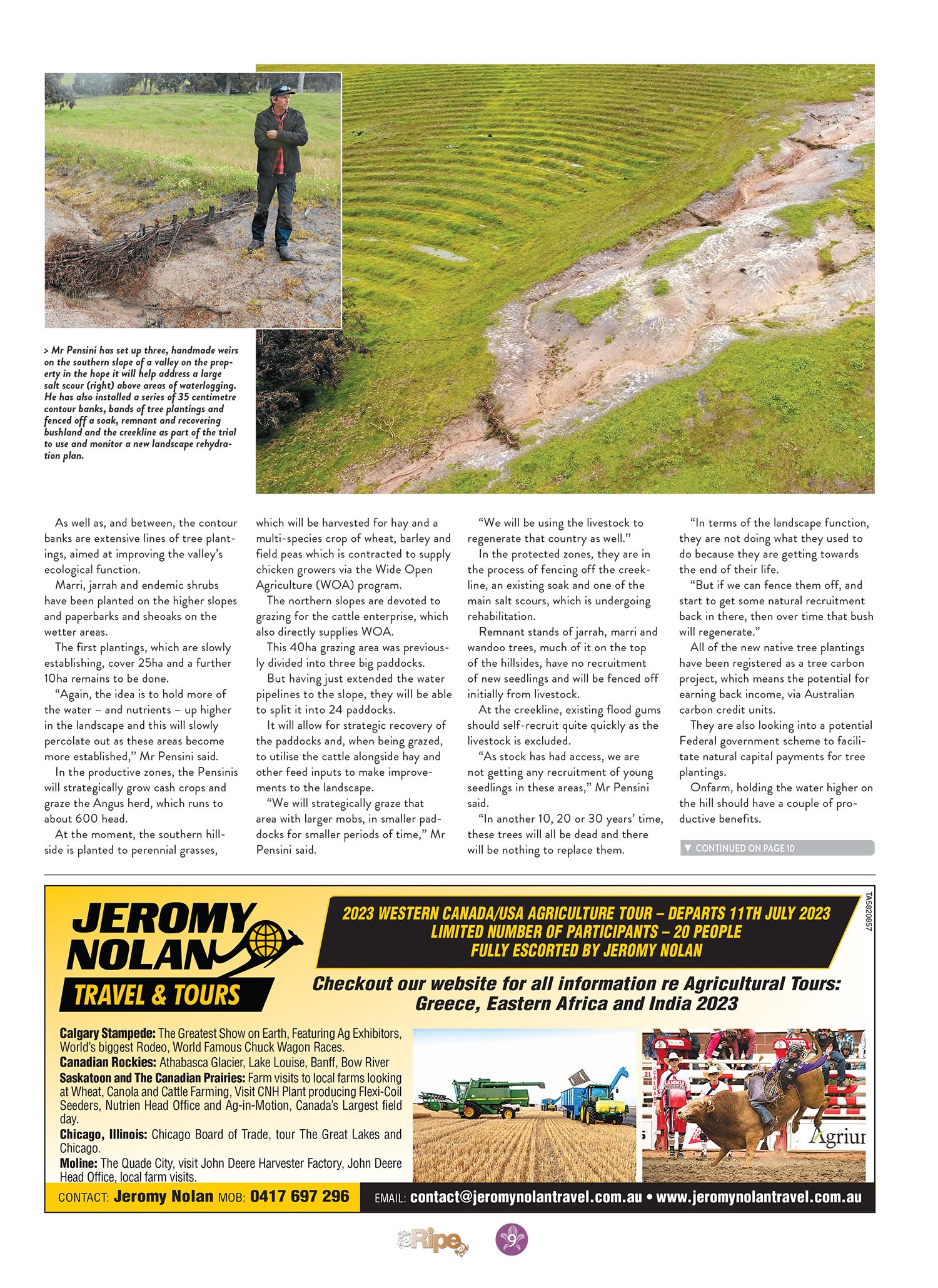
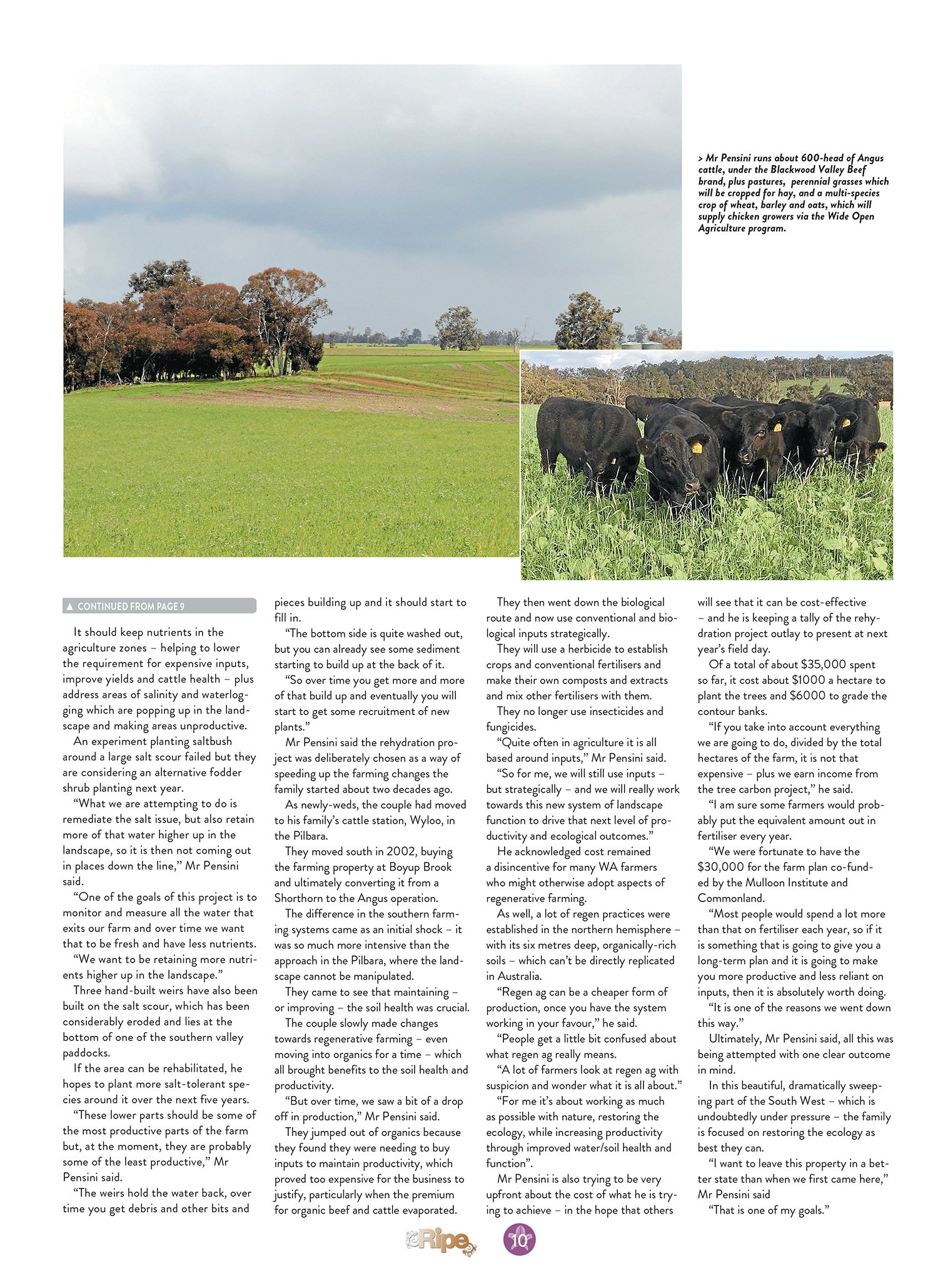
This article has been kindly reproduced from the Farm Weekly’s October issue of RIPE magazine.
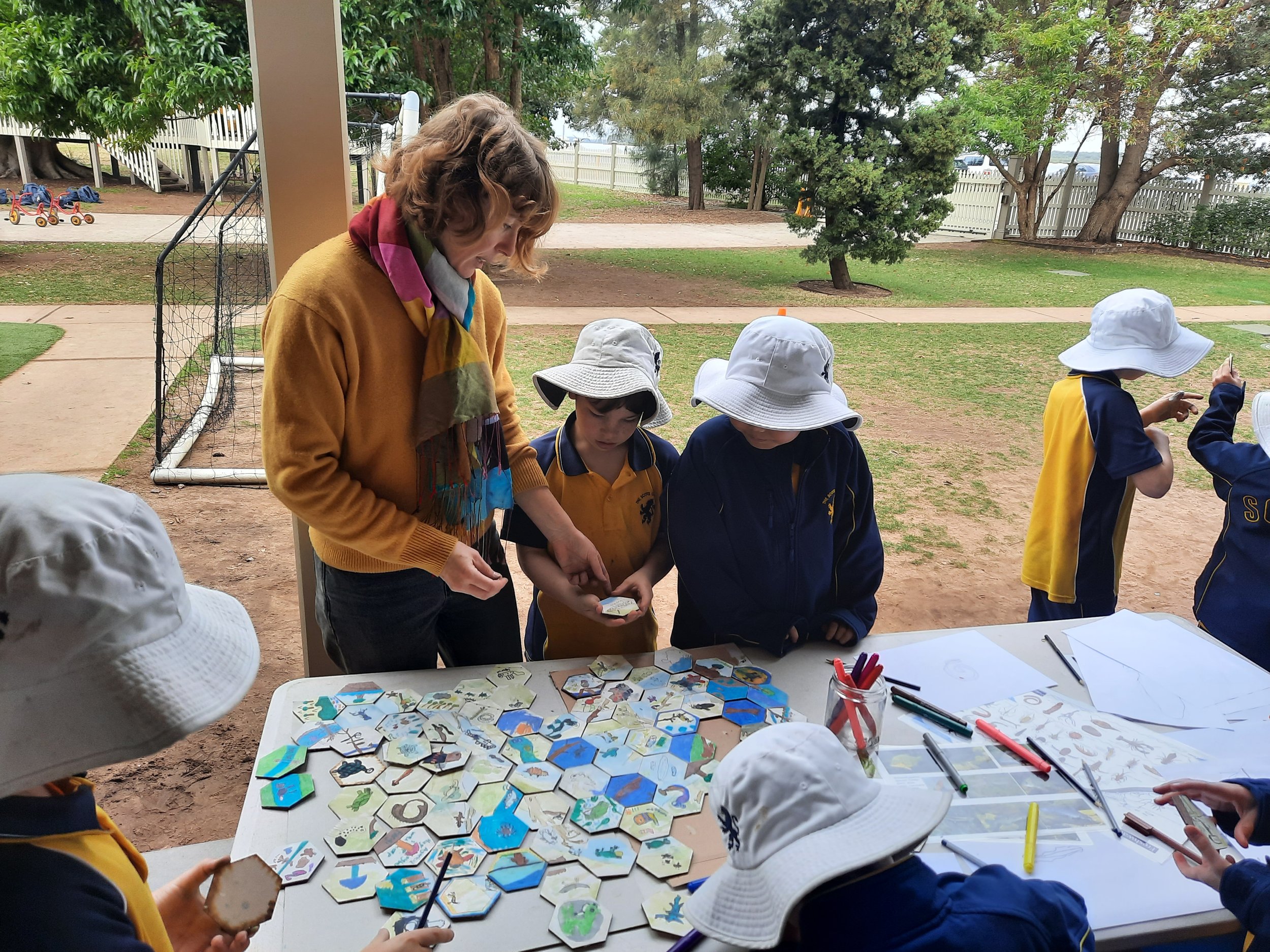
Photo credit: Danielle Metcalf
TMI supported (and survived!) a terrific water-themed Year 2 incursion at The Scots College’s Brighton Campus in Sydney in August. It was linked to ‘The Water Story’, a brand-new regenerative science curriculum being co-developed by the school and our Education team. Modelled in part on The Soil Story, the 12 lessons of ‘The Water Story’ were taught for the first time in Term 3, with teachers reporting that it has been a very stimulating program for the boys and providing helpful feedback for refinement. Kym McMaster, Coordinator of Experiential Education at The Scots College, has been the powerhouse behind this program and supporting the teachers to pilot it this year.

Photo credit: Danielle Metcalf
The incursion was arranged to complement the program, with five classes (totalling around 140 students!) rotated around different stations. Laura Fisher (TMI’s Creative Adaption Partnerships) led the students in an activity to illustrate hexagon tiles featuring the plants, birds and critters that exist in healthy waterways. Collaged together the tiles form a vibrant, thriving landscape that can either be displayed on the wall or played as a puzzle in the classroom. We also brought along the new stream table that Gary McGuigan has created for our education program, and the boys had a great time learning from Gary and experimenting with how water builds and degrades our landscapes.
We loved your enthusiasm boys!
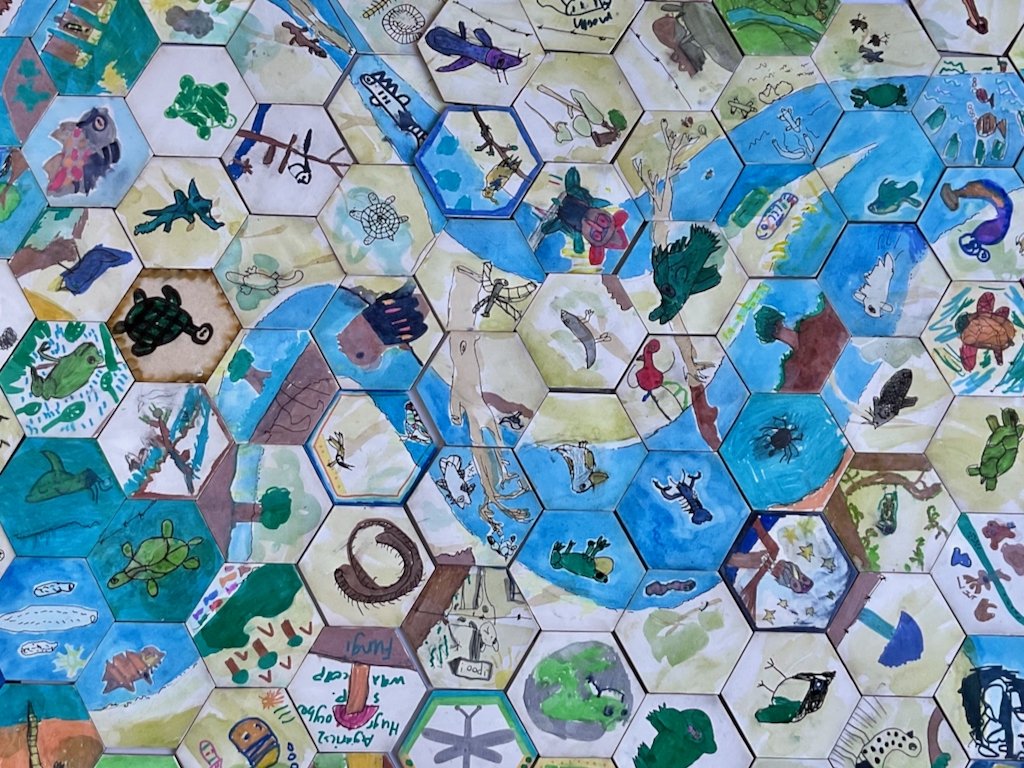
Photo credit: Laura Fisher
This event was supported by the NSW Environmental Trust through TMI’s Environmental Education project, and the Australian Government through Citizen Science project funding.
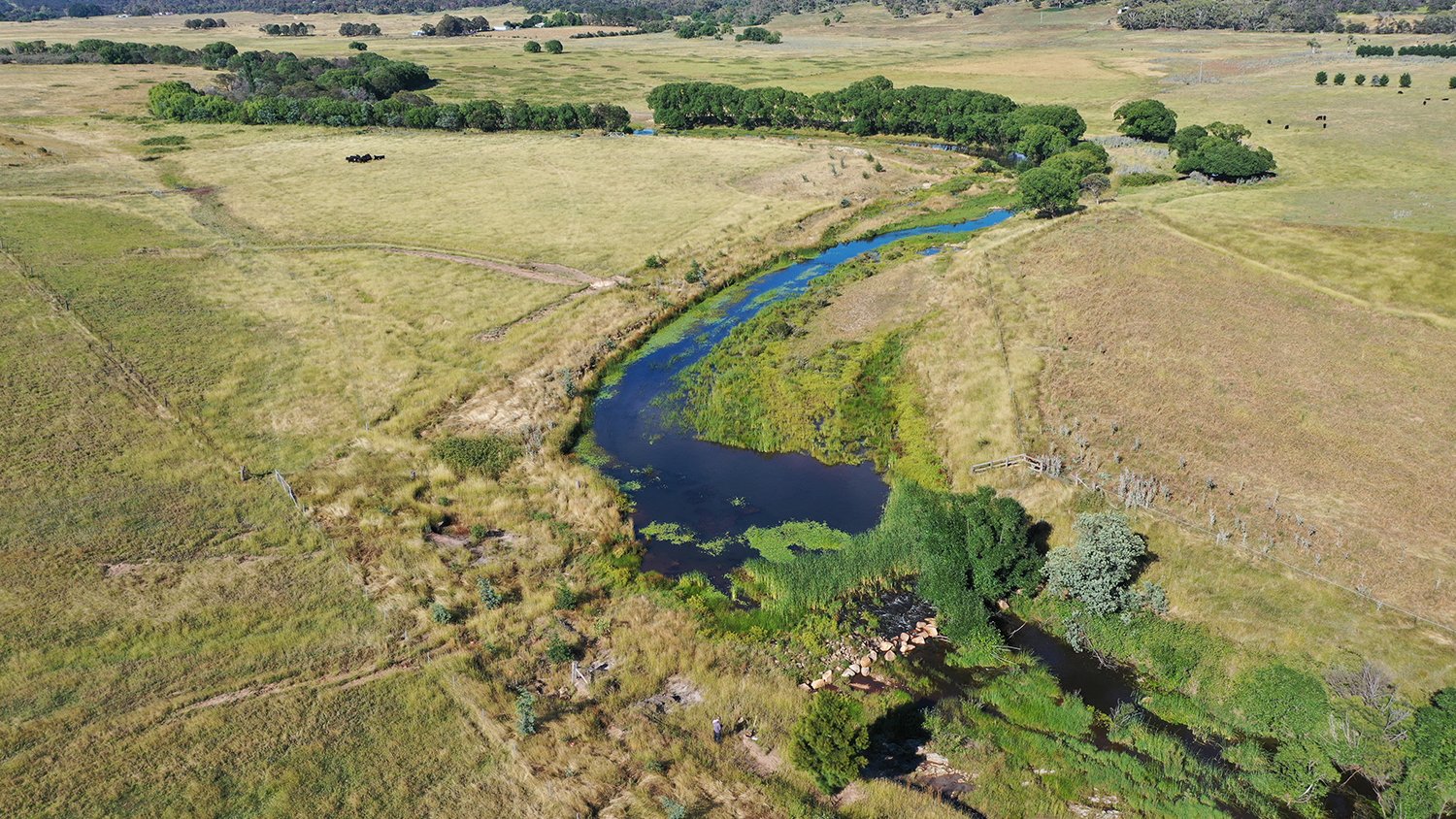
This landscape rehydration infrastructure (pictured in 2020) was constructed at Westview Farm NSW in 2018 as part of the Mulloon Institute’s Mulloon Rehydration Initiative.
The Guardian, 29 September 2022
‘You look at what the landscape is telling you’: how landowners and farm managers are passing on regenerative techniques to keep water in the land
After putting his dogs out and fetching a warming cup of coffee (it can be “freezing” this time of year, he says), Matt Narracott describes the scene outside, on one of the two Southern Tablelands properties he manages for Mulloon Creek Natural Farms.
“You hear frogs, you hear the birds … it’s just a really nice place to be,” he says, detailing features of the land down to the grass on the alluvial paddocks along the creek.
Narracott brought his background in environmental science to the Mulloon Institute in May 2021 when he joined as manager to support operations at Mulloon Creek and Duralla. The two farms are spread across more than 2,000 hectares on two properties near Bungendore, about half an hour’s drive east of Canberra.
The creek didn’t look this idyllic before the Mulloon Institute’s regenerative work began in 2006. Photos taken beforehand show a low-lying creek with sharply eroded banks, and sparse vegetation over dry, bare soil. Narracott attributes the former state to farming practices brought to Australia by Europeans.

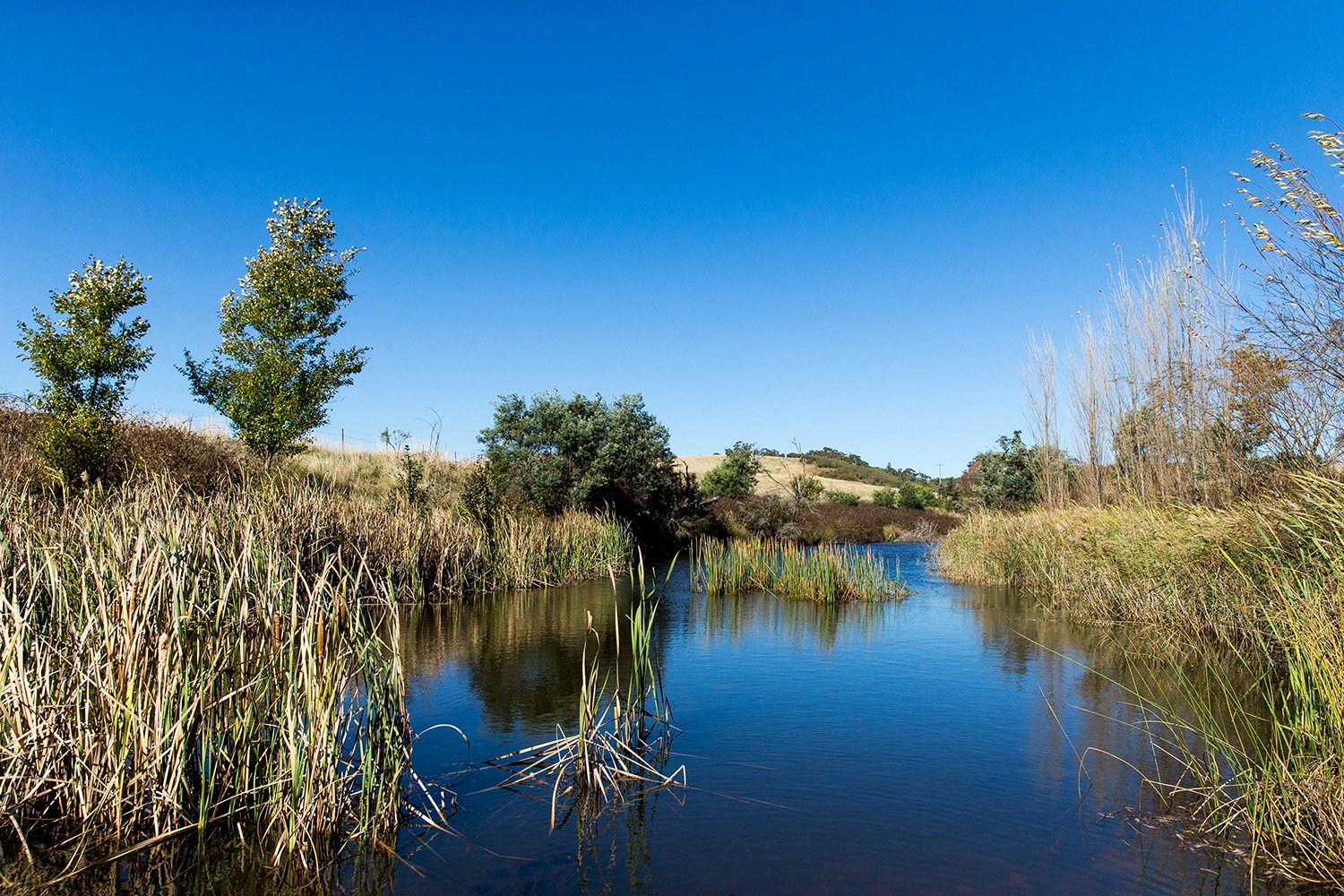
But the institute believes in doing things differently. It specialises in regenerative agriculture and biodynamic farming.
To restore hydration to the land, the institute used innovative methods that worked to control the way water flowed through it. Using materials ranging from rocks to living vegetation, workers started installing obstacle courses for the water, slowing its flow.
The institute’s scientific and agricultural research has found that when the land holds onto water better, this appears to bring a host of benefits, from thriving native wildlife to greater resilience against climatic extremes.
There are still challenges, Narracott says. “You can’t flog it,” he says of the land. “You need to really … look at what the landscape is telling you.”
But he believes the institute is on the right track. “It truly is amazing,” he says. “You see the turnaround and you think they’re definitely onto something here.
“We turned what was a completely degraded, eroded-out gully that basically every time it rained, just drained water, to now being this slow-moving creek, with ponds that foster [life].
“There’s fish in there. There’s frogs in there. I’m told there’s platypus. I haven’t seen one yet, but I keep a lookout.”
Sharing valuable lessons
Seeing the success of its experimental work in regenerative agriculture, the institute runs education workshops and field days to share its techniques. They’re hosted both at the farm and in the community and you can find one that suits you and your land.
The institute’s CEO and managing director, Carolyn Hall, says: “Education is a key strategy for the Mulloon Institute. Our farms are our living campus where we demonstrate and share with farmers how we restore and rehydrate landscapes and practice regenerative agriculture.
“We’re keen to bring the community along with us on this learning journey through regular workshops, training and events. Farmers want to see first-hand how we repair landscapes, so they can take our approach and work with us to adapt it across Australia.”

The Mulloon Institute treats its farms as living campuses, sharing lessons in landscape rehydration.
The Mulloon Rehydration Initiative was one of five model case studies worldwide chosen by the United Nations Sustainable Development Solutions Network to help it develop guidelines for sustainable, profitable and productive farming.
The institute’s results have also been key in convincing financial backers that productivity and helping our ecology are compatible goals. The latest supporter is plant-based milk company Vitasoy, which aims to use Australian almonds, soy, oats, and rice ahead of imported ingredients to make its products.
In a partnership that it hopes will be ongoing, Vitasoy has pledged support for the institute’s continued research, education and advocacy work – helping more farmers around Australia use rehydration to restore their land.
David Tyack, the managing director of Vitasoy Australia Products, says the company has made a $1.25m pledge to the Mulloon Institute to help rehydrate Australian catchments, across the nation, over the next five years.
* The Mulloon Rehydration Initiative is jointly funded through the Mulloon Institute and the Australian Government’s National Landcare Program, with assistance from the NSW Government’s Environmental Trust.
Enjoy our latest news here: https://conta.cc/3SEKSHa
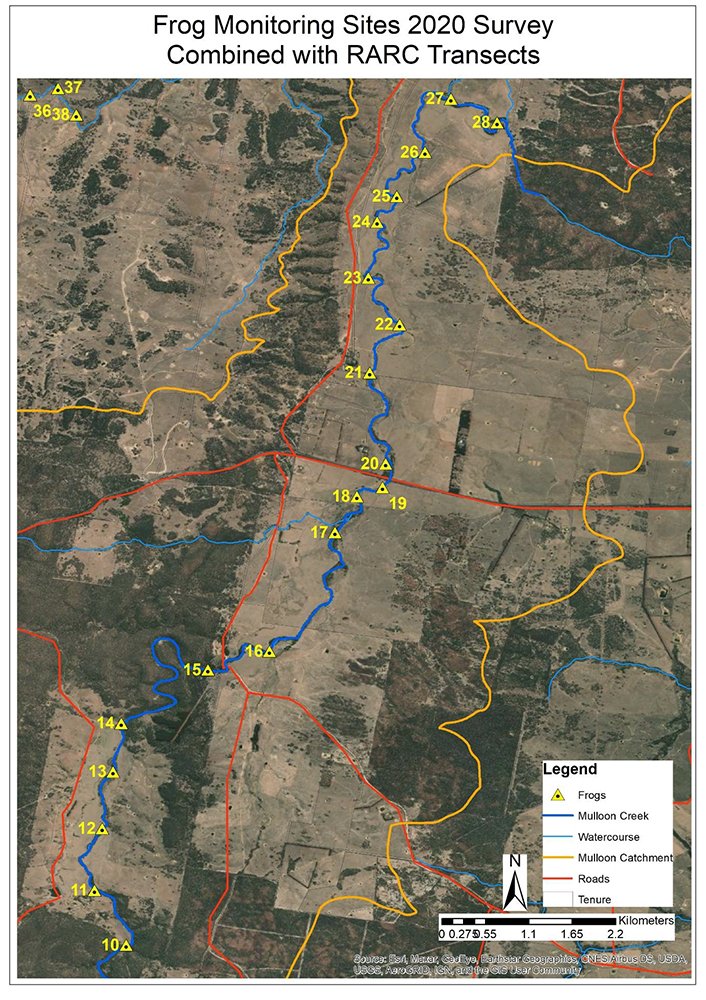
FROG SURVEYS
The Mulloon Rehydration Initiative scientific monitoring team and partners have been finalising the 2021 frog survey report by Sam Patmore (PATH Co Pty Ltd). The report highlights that frog populations have continued to improve since the 2020 survey, with two new species detected in the upper catchment, and most species increasing numbers in the creek and nearby dams and wetlands.
Only two species have shown some decline over the period, as was also reported across the Southern Tablelands, though this may be due to surveys being conducted in December which is outside their preferred range.
The next frog survey will be held in November 2022 to assess if numbers have decreased for these two species. If you would like to help, volunteers are always welcome to be involved, please keep an eye on our events page for details of the event.
The Mulloon Rehydration Initiative is jointly funded through the Mulloon Institute and the Australian Government’s National Landcare Program. This monitoring report is supported by the NSW Government through its Environmental Trust.
FISH SURVEYS
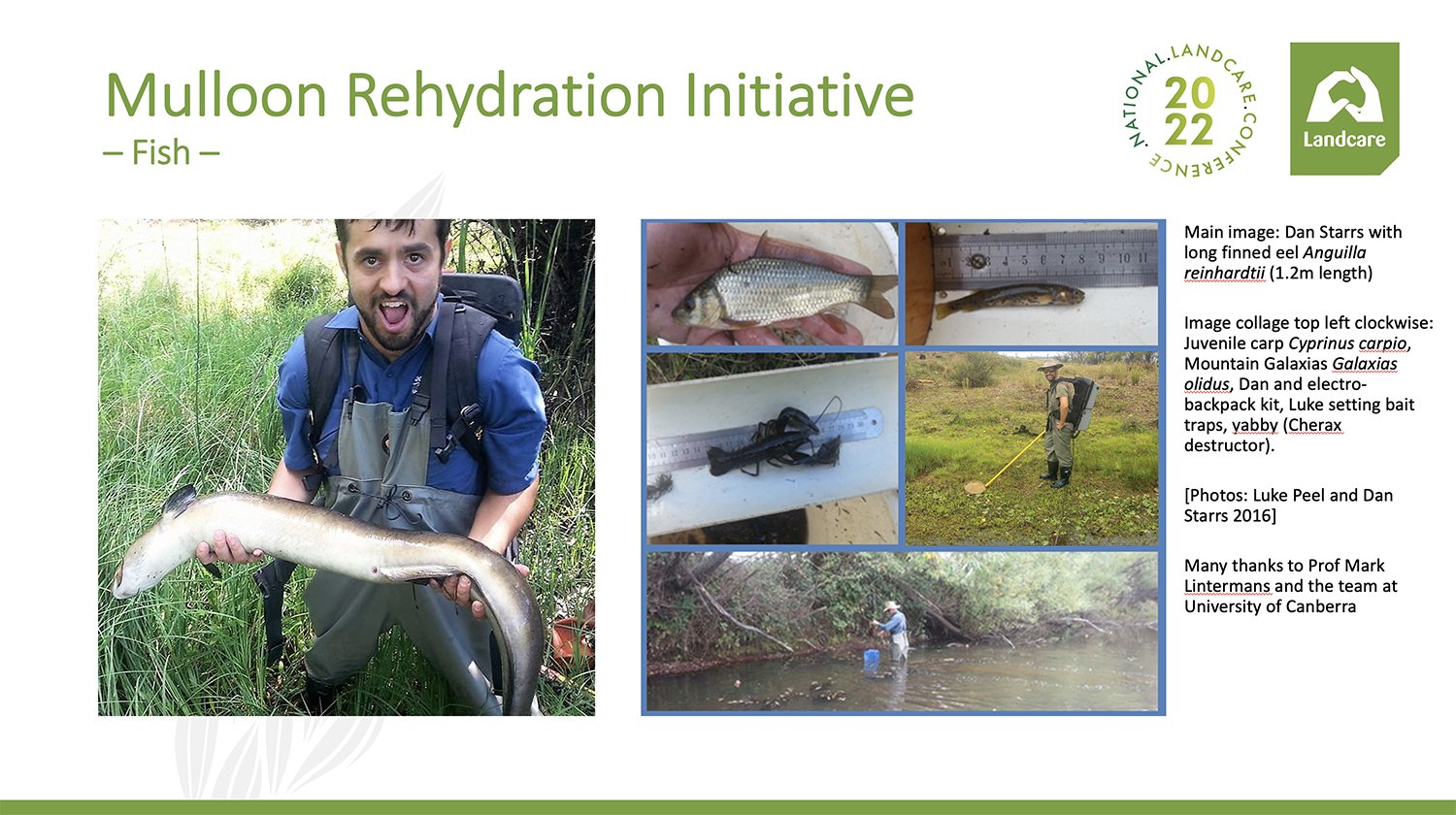
University of Canberra ‘Institute for Applied Ecology’ staff members Ben Broadhurst, Rhian Clear and Ugyen Lhendup conducted fish surveys in May at Mulloon Creek, followed by surveys in three comparison waterways in the region during June. Initial results indicate a good increase in the native Mountain Galaxias Fish (Galaxias olidus), and significant decline of the invasive Mosquito Fish (Gambusia holbrooki), with only two specimens captured in Mulloon Creek. We look forward to receiving the full report soon, which will be made available through our website via our ‘Surveys & Monitoring’ page.

Slightly boggy out on the Mulloon floodplain.
HYDROLOGY
TMI’s hydrologist Tony Bernardi has also been busy managing and maintaining our extensive array of hydrological monitoring equipment and managing the data with the HydroTerra team. With continued wet weather and a small flood in early August, Hydrologist Tony Bernardi has been carefully negotiating some very boggy floodplains at Mulloon!
NEW TEAM MEMBERS
TMI welcomes our new Science Officer Susie Miechels to the team. Susie completed her science degree and Honors in hydrological modelling at Sydney University. Susie is also taking on a partial role as a landscape planner with Mulloon Consulting. Welcome to the team Susie and trust it will be a great experience for you professionally and personally.
TMI is also welcoming Masters student Jochem Meinen from the University of Twente, Netherlands. Jochem aims to conduct a ten week research project investigating ground and surface water changes since the leaky weirs have been implemented in the Lower Mulloon floodplain. He will be ably assisted with academic and technical support by TMI staff, Dr Leah Moore (Australian National University) and Richard Campbell (HydroTerra).
RESOURCES
-
Frog Population Monitoring of Mulloon Creek (2021) Sam Patmore, PATH Co. Pty Ltd
Research Coordinator Luke Peel has presented a summary of the scientific monitoring results from the Mulloon Rehydration Initiative at the National Landcare Conference in Sydney, as he explored how the MRI is rebuilding catchment-scale ecosystem function and resilience by restoring hydrological processes in waterways and associated floodplains.
The Mulloon Rehydration Initiative is jointly funded through the Mulloon Institute and the Australian Government’s National Landcare Program and is supported by the NSW Government’s Environmental Trust.
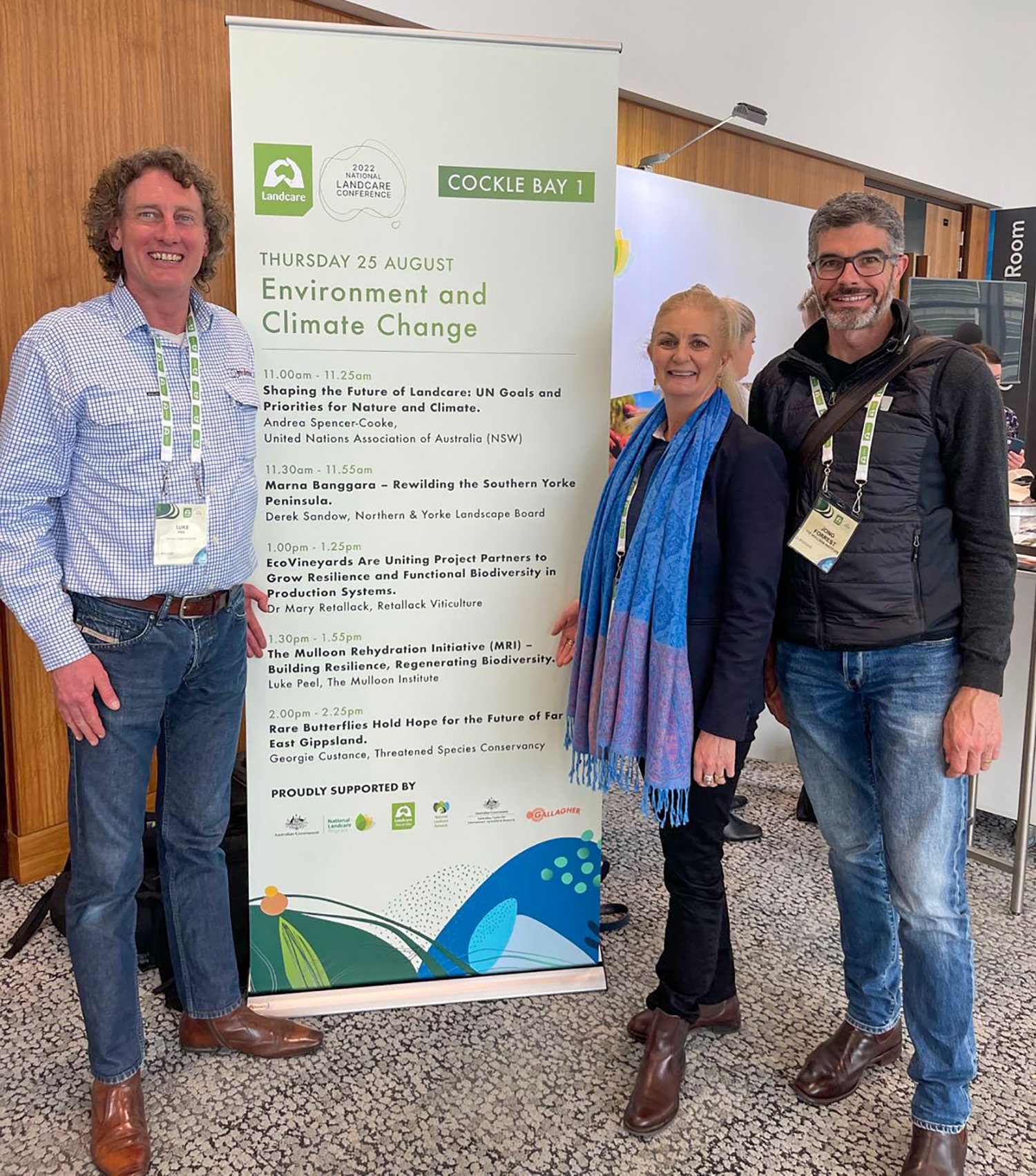
L-R: Research Coordinator Luke Peel, CEO Managing Director Carolyn Hall and Mulloon Consulting General Manager Jono Forrest.
Restoring hydrological processes in the catchment helps regenerate the waterways, riparian zones, floodplains and wetlands that support critical biodiversity corridors and habitat for aquatic and terrestrial flora and fauna. Increased water storage in the broader landscape supports plants and animals for both environmental outcomes and farm productivity, especially when combined with management actions that incorporate a landscape function or integrated systems approach.
Since launching, the MRI rollout has progressively improved the creek’s water levels and quality allowing native flora and fauna to flourish during the extreme 2017–2020 drought. The project has also improved communication and knowledge sharing between landholders, who actively help with fencing the creek, volunteer planting days, scientific monitoring and allowing various Landcare groups to visit, learn and see the positive effects of rehydrating waterways and associated floodplains and wetlands to significantly improve biodiversity and water quantity and quality for immediate and downstream users.



Results
The presentation highlighted increasing trends in flora and fauna since the MRI began, including:
-
Good improvement in habitat, cover and native plants along the riparian corridor.
-
Increased diversity and frequency of frog species detected, in contrast to a general decline in the surrounding region.
-
Good response from native fish to the rehydration works.
-
No sightings of invasive mosquito fish (Gambusia holbrooki) above the well-established leaky weir sites at the pilot project.
-
Confirmed sightings of threatened and rare birds during the extreme 2018 drought.
-
threatened species Flame and Scarlet Robins
-
rare Red-browed Finch and Eastern Yellow Robin
-
rare Red-capped Robins, which usually occur west of the Great Dividing Range.
-
-
Sightings of platypus and water rats.
Further details of the scientific monitoring results can be accessed here.
We acknowledge the traditional owners, the Yuin people, on whose land the MRI is taking place. We also acknowledge that without the permission, support and participation of all the landholders along the length of Mulloon Creek and its tributaries, this project simply would not have happened.
Conference highlights
Highlights of the conference included keynote speakers Prof Mark Howden (ANU), Hon Penny Wensley AC National Soils Advocate and Senator the Hon Tanya Plibersek Minister for the Environment and Water.
Of special note was the specific recognition given to First Nations people’s knowledge and application of caring for Country. There where so many great presentations, including the keynote talk from Victor Steffenson of the Firesticks Alliance and the associated film produced by TMI collaborator Suzannah Cowley from Nviro Media.

A personal highlight for Luke was discussing TMI’s important work with Costa Georgiadis and inviting him to visit to Mulloon soon.
Also representing TMI at the event were CEO Managing Director Carolyn Hall, COO Kathy Kelly and Mulloon Consulting’s General Manager Jono Forrest.
Presentations & Posters
Video recording:
Mulloon Rehydration Initiative – Building Resilience, Regenerating Biodiversity
PowerPoint presentation:
Mulloon Rehydration Initiative – Building Resilience, Regenerating Biodiversity
View all other conference presentations here.
Community Partnerships in Action poster:
‘Mulloon Rehydration Initiative: Bringing the community along’
Landcare Impact poster:
‘Rehydrating Australia with Landcare’

As I write, the news of the passing of Queen Elizabeth II dominates the headlines. An amazing person who demonstrated an incredible commitment to duty of service. With her passing we now have King Charles III. Given Charles’ long-standing interest in and commitment to environmental repair, it will be interesting to see how he might position the monarchy in that respect.
My wife Rose and I were very privileged to spend a day at his Duchy Home Farm back in 2017 together with Patrick Holden and a few others from his UK Sustainable Food Trust as Charles’ Farm Manager took us on a tour of the innovation and regenerative agriculture practices being applied. Patrick, a close friend of King Charles, subsequently visited us at the Mulloon Institute and continues to take a great interest in our work.
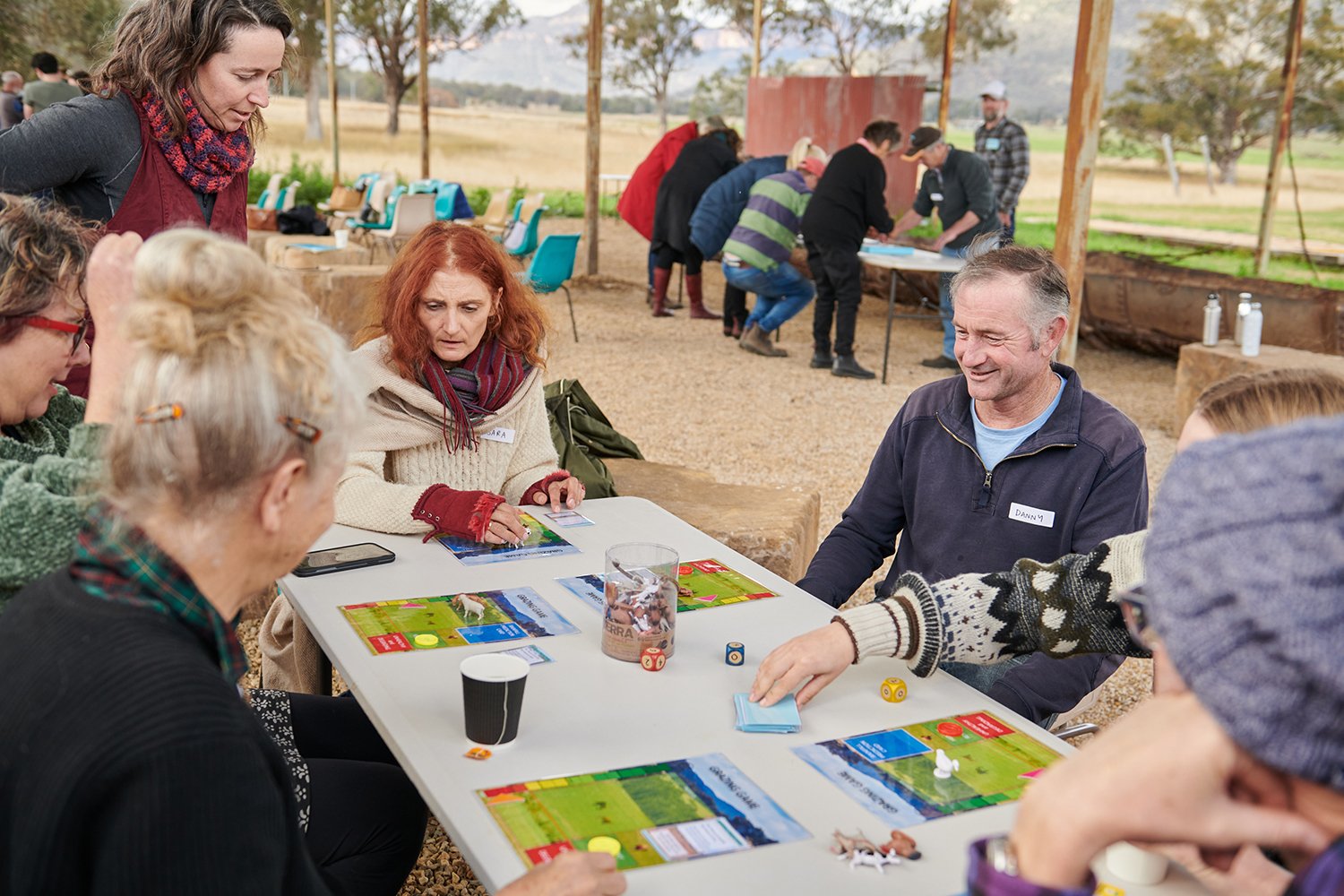
Imogen Semmler (top left) and participants trial ‘The Grazing Game’.
In August 2022, the Mulloon Institute’s Laura Fisher co-hosted a ‘Solving the Puzzle of Landscape Resilience’ workshop in the mellow sunshine of Capertee Valley NSW.
Joining her were Imogen Semmler, Dr Judi Earl, David Hardwick and Gary McGuigan. The workshop reflected their shared interest in how games and other creative tools can help peel back the layers of the landscape, and approach stewardship and decision-making in new ways.


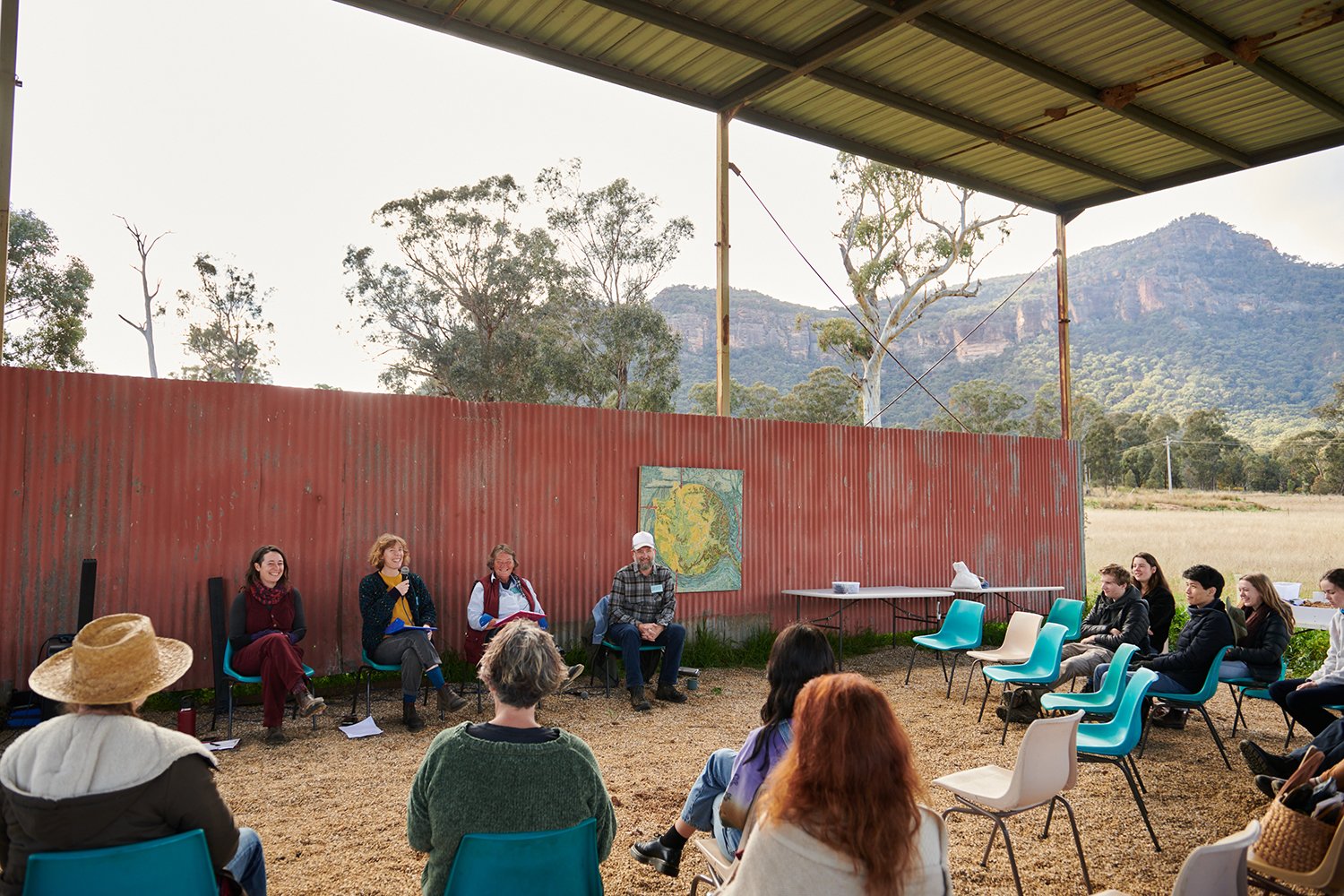

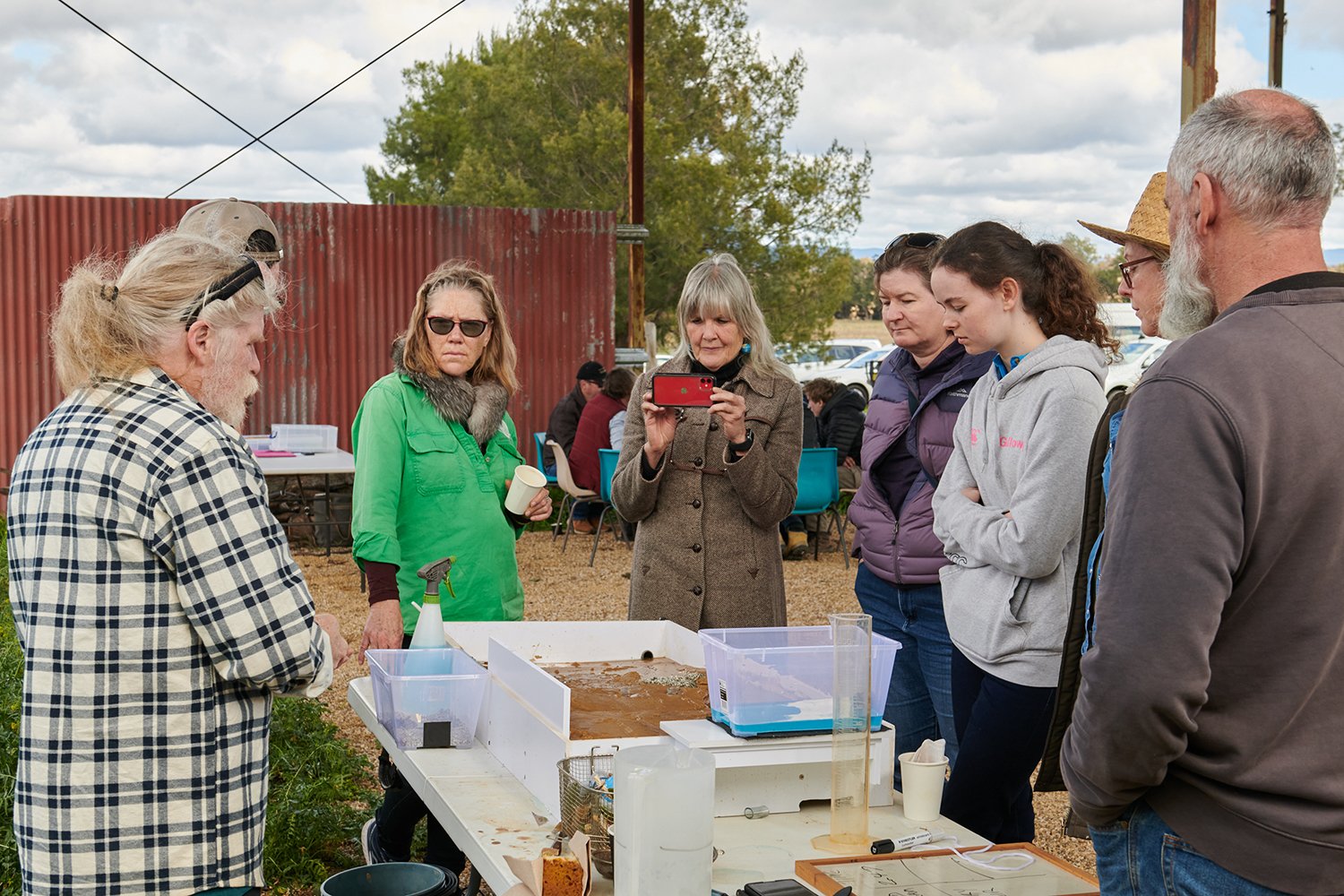
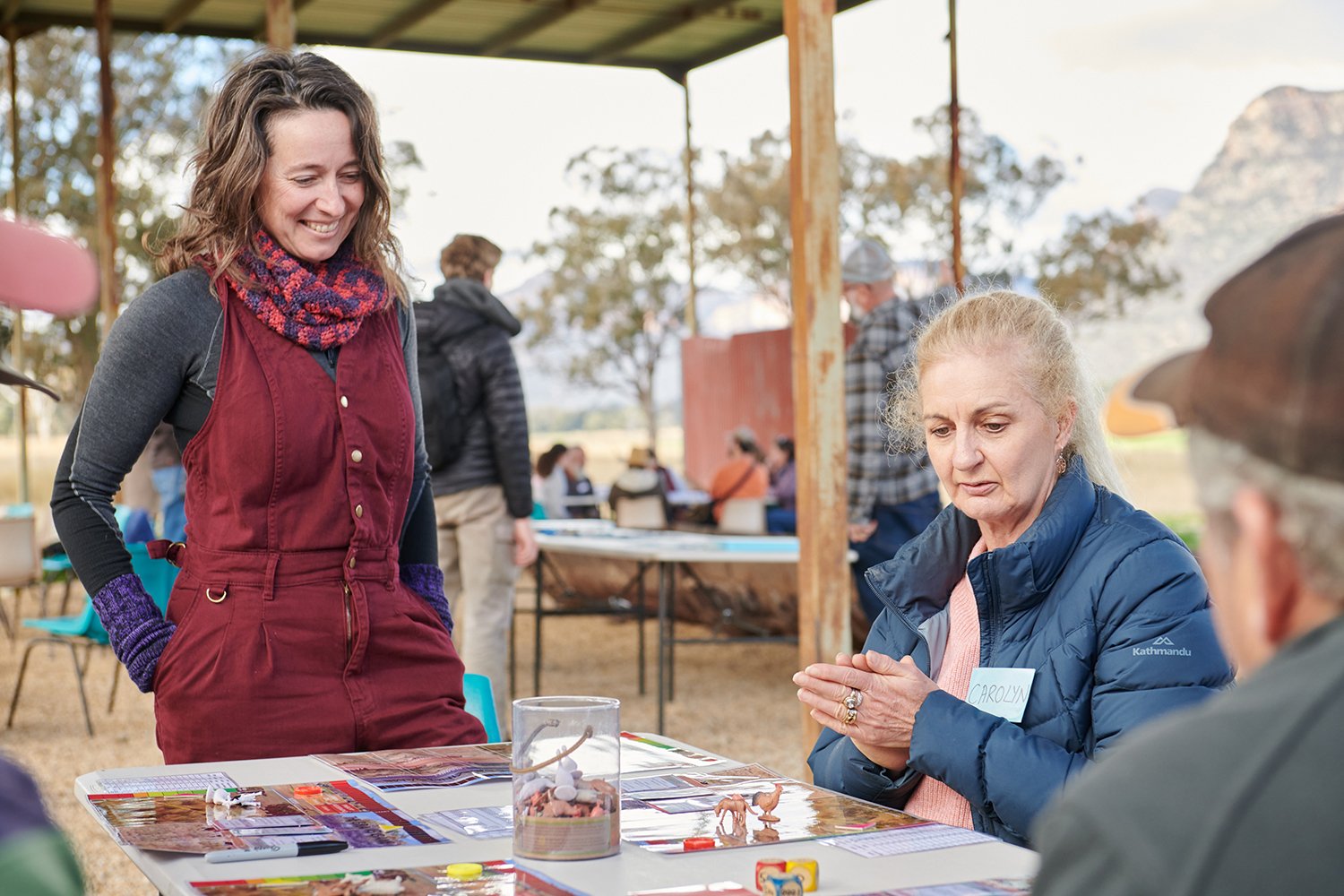
Above: Participants explored grazing management, whole-of-landscape thinking and water movements with role-play, games, puzzles and a silt-based stream table.
Forty participants, including TMI’s CEO Carolyn Hall, gathered at ‘From the Paddock’ in Glen Alice which is a magnificent outdoor venue owned by farmers Terrie Wallace and Stuart Knox. It was a terrific hands-on day with much conversation and laughter.
Highlights of the day included ‘The Grazing Game’ which was co-created by Imogen Semmler and Judi Earl, and a moving presentation by artist Georgie Pollard on her Capertee Valley map artwork. You can read more about Georgie Pollard’s artwork here.
This workshop was a collaboration between Kandos School of Cultural Adaptation, Mulloon Institute, Capertee Valley Landcare and Maldhan Ngurr Ngurra Lithgow Transformation Hub. It forms part of the ‘Regenerating Lithgow – People, Place and Planet’ project under the Black Summer Bushfire Recovery Grants Program, and the Citizen Science project ‘Modelling Landscape Rehydration for Catchments, Communities and Curriculum’, both of which are funded by the Australian Government.
[Photos: Gus Armstrong]

Artist Georgie Pollard with her collaged artwork, ‘Map of the Capertee Valley’.
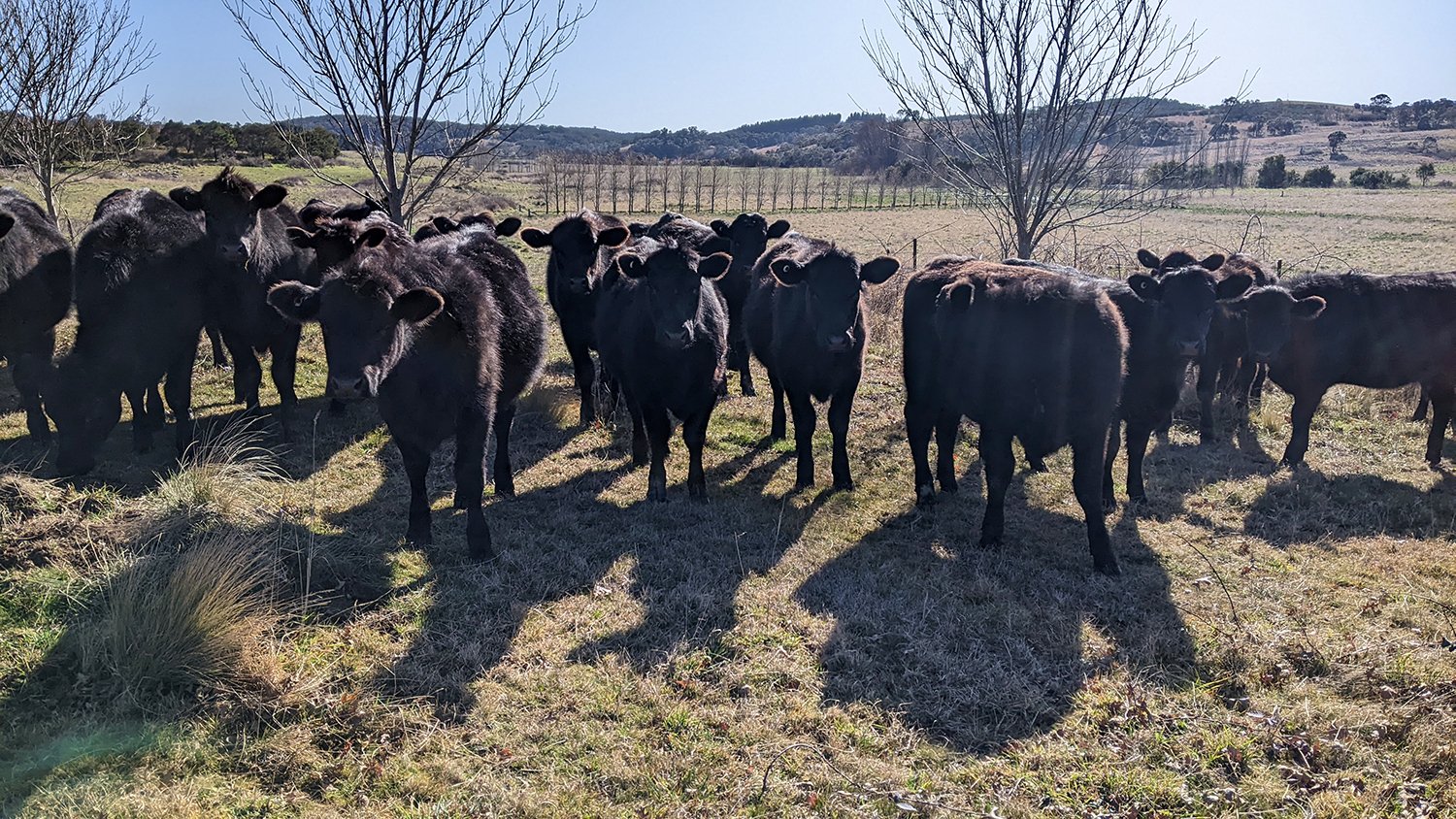
On a picturesque winter’s day, the education team hosted secondary students from Canberra Grammar School on a tour of Mulloon’s Farm.
The resumption of excursions was warmly welcomed by a collective of enthusiastic Year 10 Geography teachers with many returning year after year with their classes. The students were equally excited to be out of the classroom and in our living laboratory, soaking up the lush green landscape, spotting wombats, cows and chickens (from a distance) as we moved around the farm.


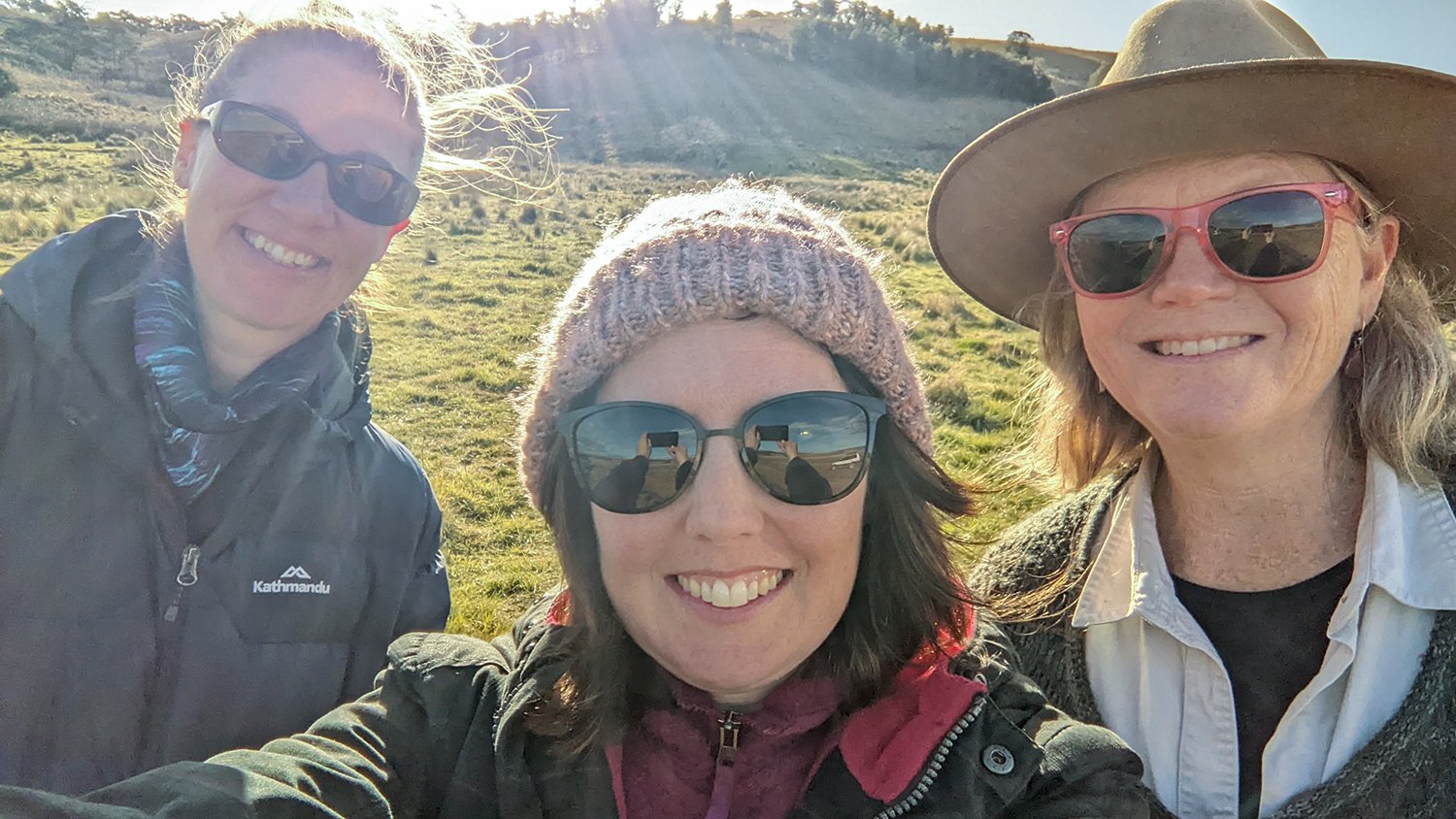
Led by the Learnings Program team with Nolani McColl, Penny Cooper and Tam Connor, students travelled along creeks, through pastures, up steep hills and basked in the warm afternoon sunshine atop a view of the entire catchment. We shared in our research, our carefully bio-engineered structures, the meaning of sustainability for rural communities and the vital links between effective water management and environmental outcomes for the planet.
We are thrilled to be able to share our Australian Curriculum aligned Education Tours at Mulloon Creek Natural Farms for Years 7-12, with a range pf options for class sizes and learning outcomes. Contact us for more information for hosting your school.
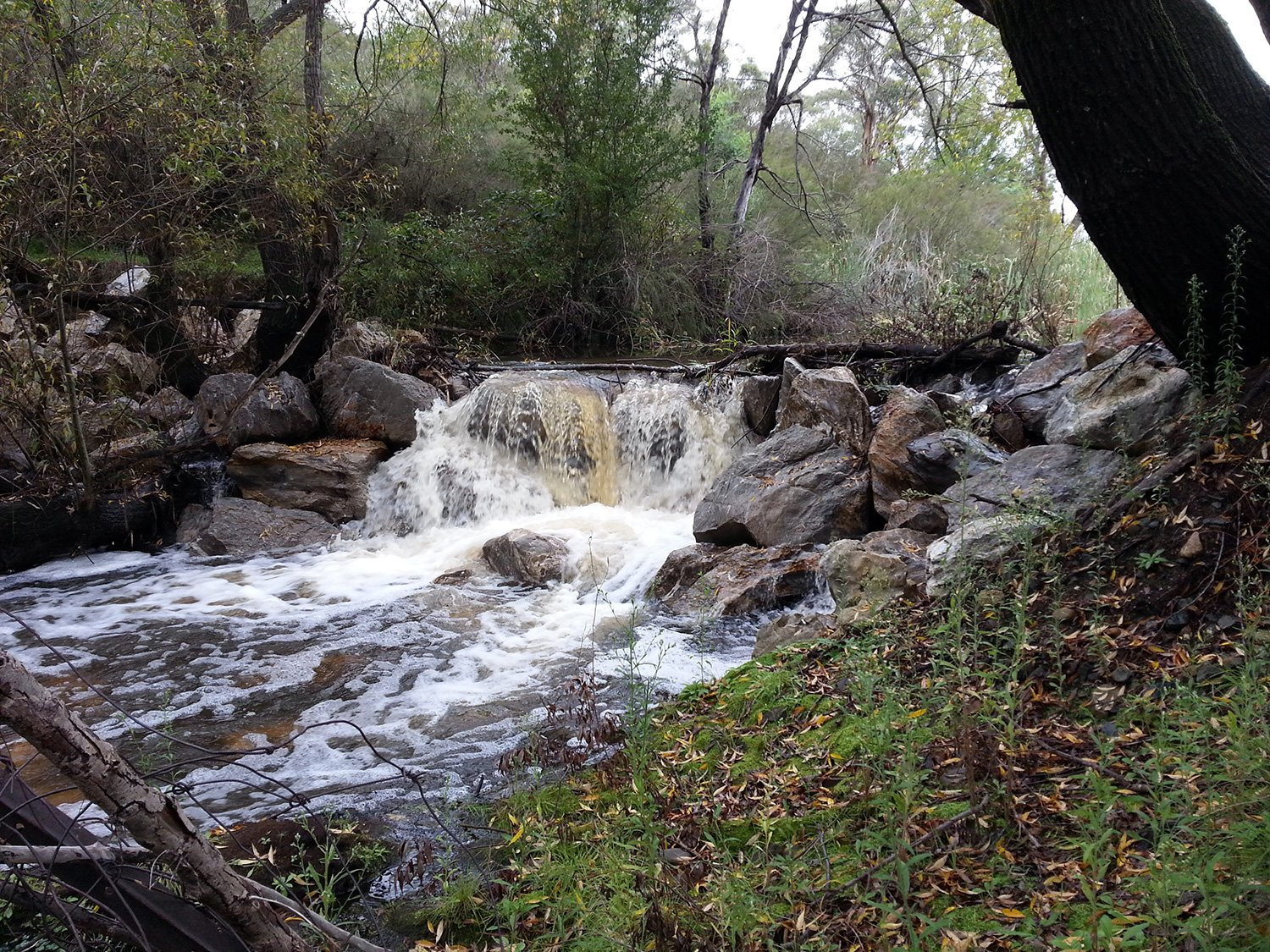
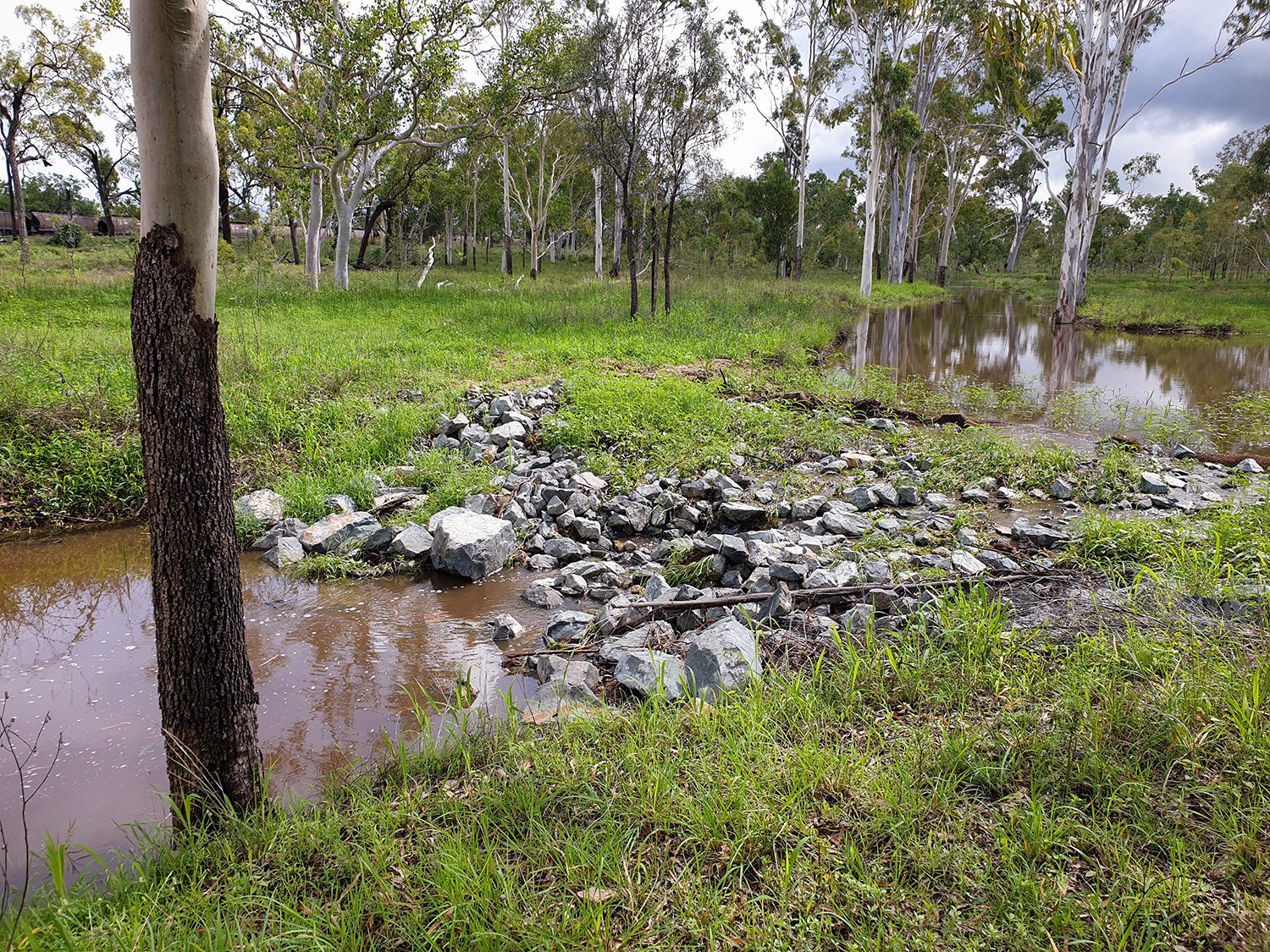
Leaky weir at Peter’s Pond, ‘Mulloon Creek Natural Farms’, NSW
State-based Regulations
As we expand our landscape-scale repair and rehydration work out around Australia through the National Rehydration Initiative, the obstacles of state-based regulations continue to loom large. Despite some significant progress in NSW, the need for a national approach has become the real ‘end game’ if we are to substantially restore Australia’s degraded landscapes and boost their resilience to a changing climate. It would seem the Federal Government is well placed to standardise regulations if it follows suggestions and recommendations in the recent State of the Environment Report, released by the Minister for Environment and Water, Tanya Plibersek.

State of the Environment Report
“The Australian Committee of the International Union for Conservation of Nature (Zischka et al. 2013) calls for all sectors ‘to break down jurisdictional silos and boundaries and create new models and partnerships…”
“Inland water management in Australia also suffers from lack of integrated management. Flow impacts (e.g. water extraction, changes in catchment hydrology) and nonflow impacts (e.g. grazing, introduced species, loss of instream habitat) are usually subject to different management accountabilities and planning arrangements. “
We need “Greater standardisation or uniformity of approaches to management. Areas that would benefit from standardisation include national environmental standards, environmental impact assessments, risk management (in particular, in response to climate change), and data capture and management (see Samuel 2020).”

NSW Infrastructure State Environment Planning Policy
In NSW, we anticipate that Planning Minister Anthony Roberts will release a new Infrastructure State Environment Planning Policy (ISEPP) later this year, following his department taking on-board the Mulloon Institute’s suggestions. While the ISEPP will certainly make gaining approval for our work less bureaucratic, it would appear the department is not yet keen on preparing a ‘code of practice’ that would substantially assist in implementing works on the ground.
Opportunity
With every state and territory having different legislation and regulations for environmental repair works, and given the urgent need of such works as described in the State of the Environment Report, there is a golden opportunity for the Federal Government to act on this with national consistency and standards.
We have approached the Federal Environment Minister to offer our experience in dealing with jurisdictions around Australia and hope that we can work with her and her department on what could be a very positive outcome for the environment, for agriculture and for our climate.