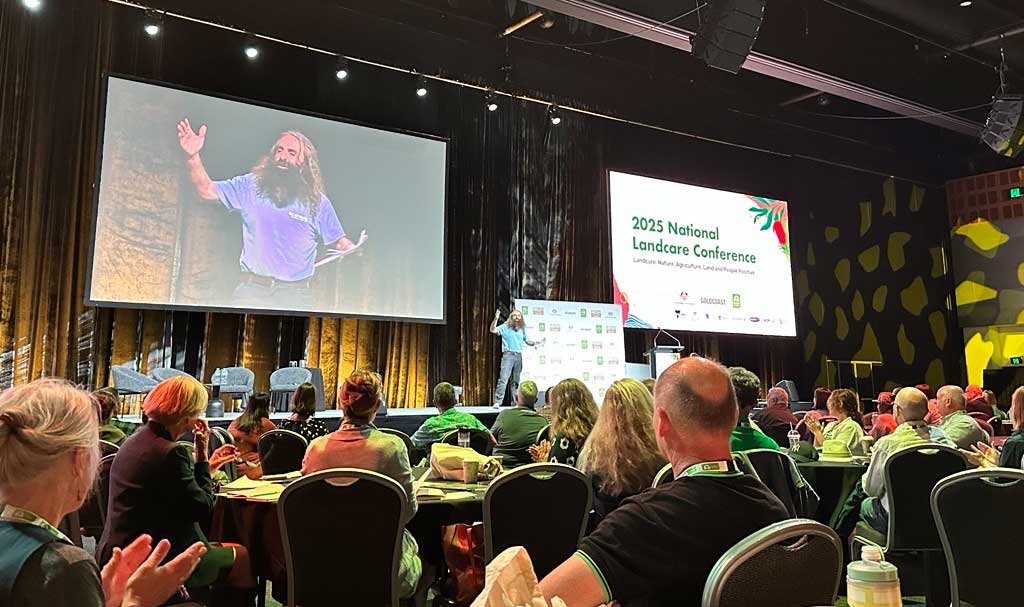
On 22 September, some lucky Mulloon Institute team members headed to the Gold Coast for the 2025 National Landcare Conference.

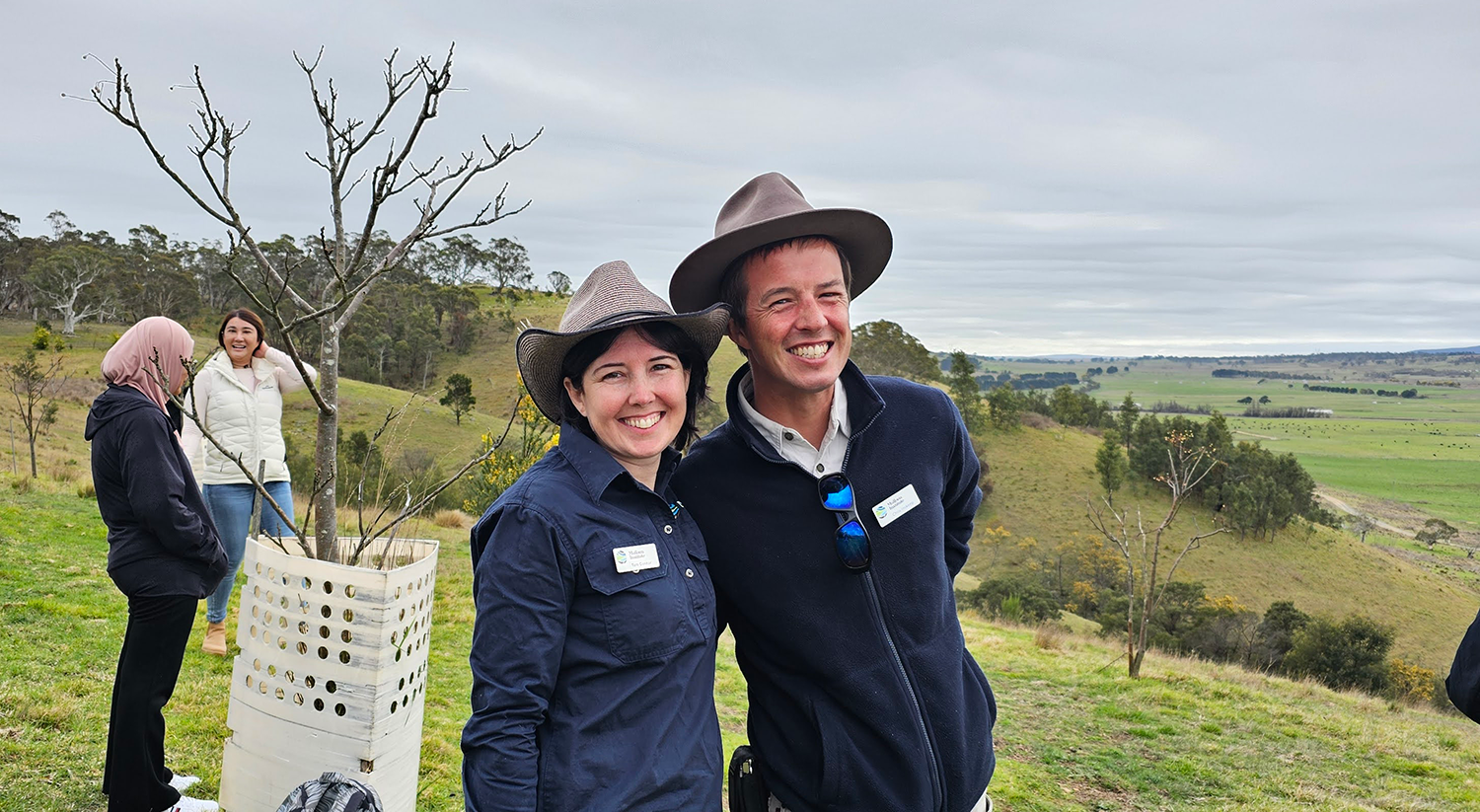
CEO Carolyn Hall and Company Secretary Kathy Kelly were joined by Landscape Planners Annabel Manning and Brooke Cunningham for the event, which was attended by 650 delegates from around Australia.

Monday featured a host of great plenary sessions and concurrent streams that explored nature repair and climate adaptation, community projects around Australia, technology and innovation advancing land management, biodiversity restoration, carbon markets and protecting landscapes at the catchment scale. The day concluded with a welcome reception giving the team the chance to connect with new communities and catch up with familiar faces.

Tuesday’s highlights included an inspiring presentation from Joe Morrison, CEO of Indigenous Land and Sea Corporation, on the importance of integrating Indigenous Knowledge into ecological restoration and conservation projects. This was followed by a panel which featured discussions from Joe Morrison, Natalie Sommerville, Samantha Murray and Toni Hay on the importance of understanding different perspectives, building trust and working together to share knowledge and heal our landscapes.

Tuesday evening’s National Landcare Awards, hosted by Costa Georgiadis (in sequin flare trousers), celebrated the projects, communities and achievements of Landcare groups Australia wide. Among the most coveted recognitions were Holbrook Landcare Network (NSW), which took home the Bob Hawke Landcare Award, while Dr Susan Orgill (ACT) won the General Jeffery Soil Health Award.
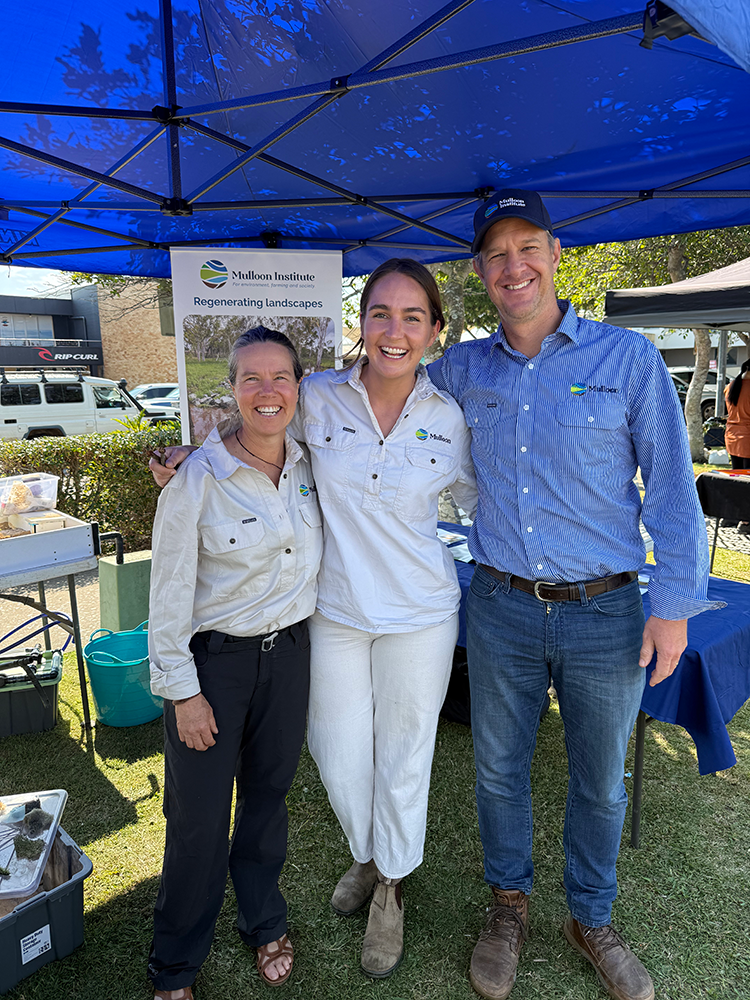
Sunday 28 September, Mulloon Institute joined the launch of Richmond Riverfest in Ballina, setting up a stall at Fawcett Park to engage festivalgoers in conversations about catchment health, water cycles and landscape restoration.

Richmond Riverfest is a month-long celebration that honours river systems, culture and community in the Northern Rivers. This year launched under the theme “Where the River Meets the Sea,” reminding us that the river connects us all, from source to mouth.

At the stall, Matt Smith (Project Delivery & Engagement Manager, pictured at right), Annabel Manning (Landscape Planner, pictured centre) and Brooke Cunningham (Landscape Planner, pictured at left) welcomed passersby, explained Mulloon Institute’s rehydration work and fielded questions about restoring hydrology, regenerating plant communities and building climate resilience.

Throughout the day, the Riverfest program featured talks and panel sessions from regional voices on river restoration, cultural connection to waterways and citizen science. Festival speakers included local river advocates and scientists who underlined the urgent need for cross-catchment collaboration and community stewardship of water resources.

Visitors to the Mulloon stall were invited to ‘dabble in the creek’ with our stream table model using silt and stream simulating. Sculpting miniature catchment landscapes using tools and scaled materials, participants observed the erosive force of water and experimented with ways to restore eroded and degraded creeks.

Stepping into the festival’s spirit of celebration, knowledge exchange and learning, our team left inspired, reminded that places like Ballina are meeting points not only for rivers but for ideas, communities and action.

We look forward to our next pop up at Riverfest Lismore on 26 October!

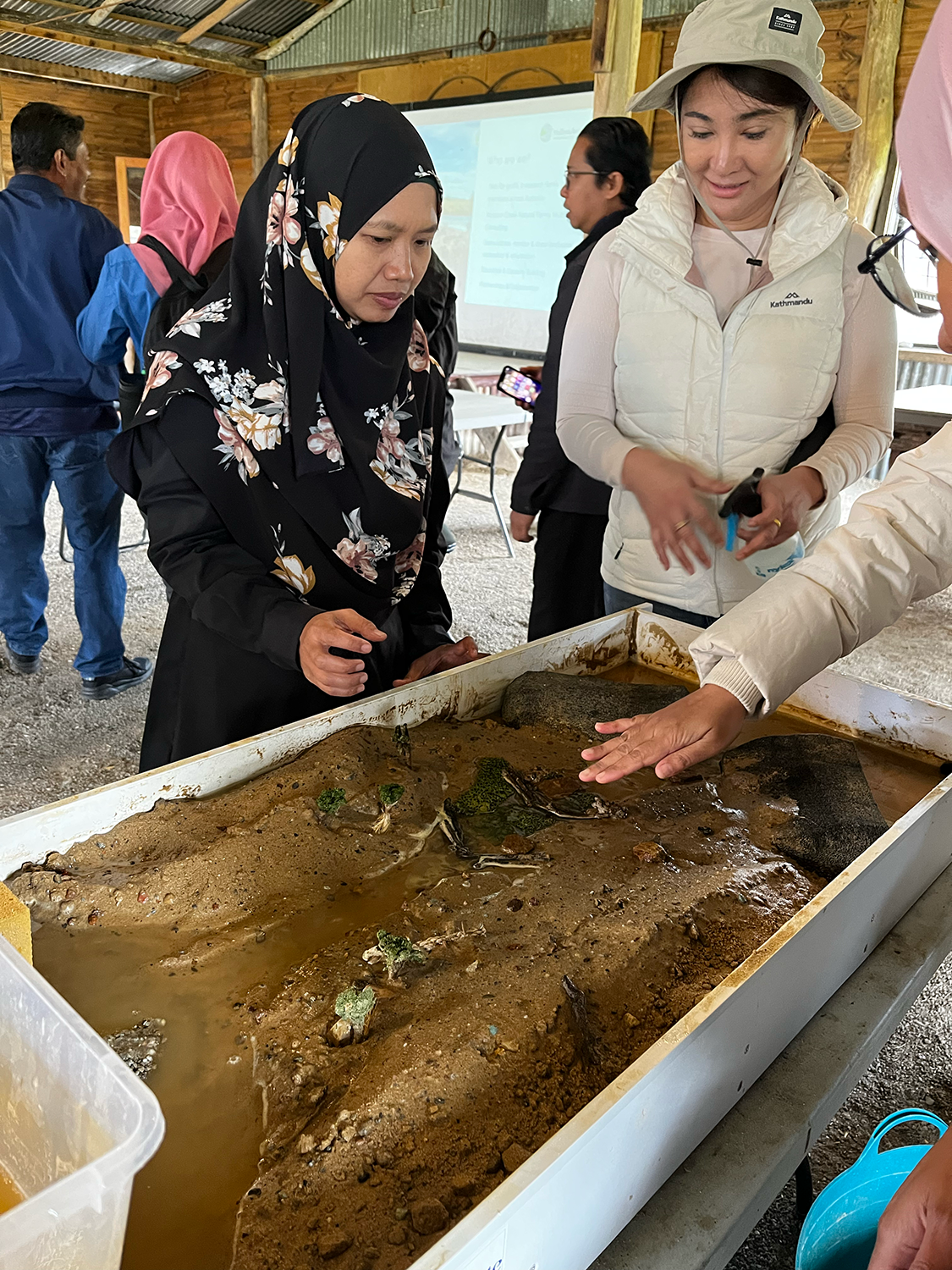
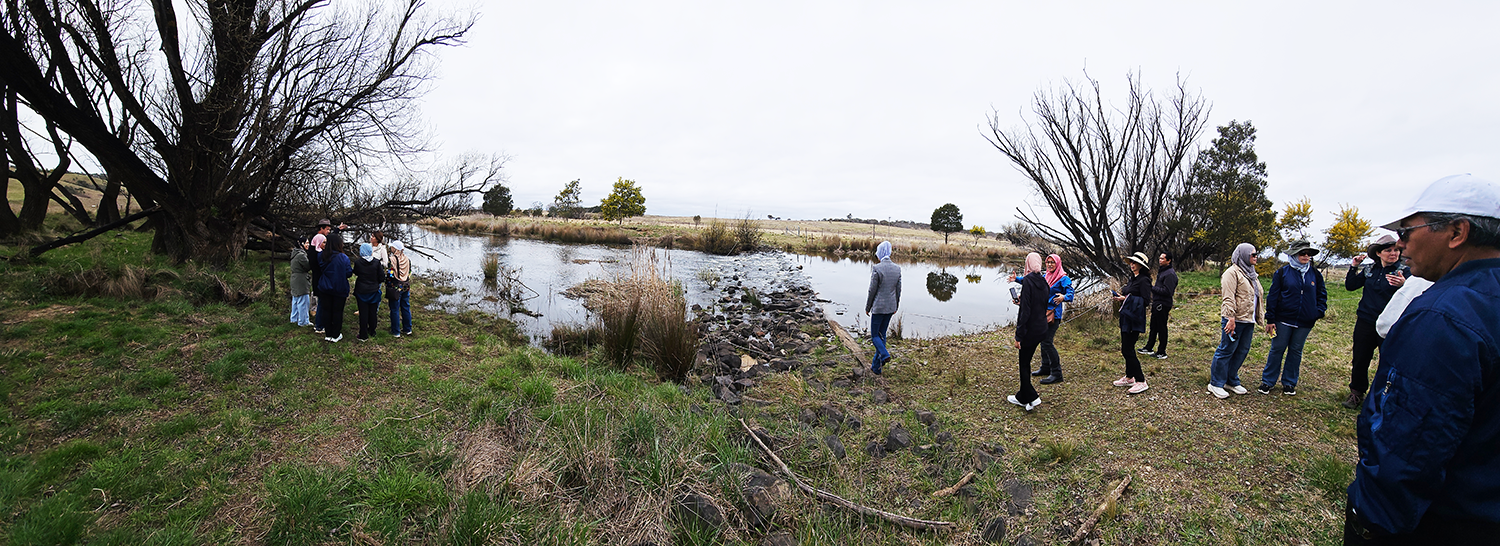
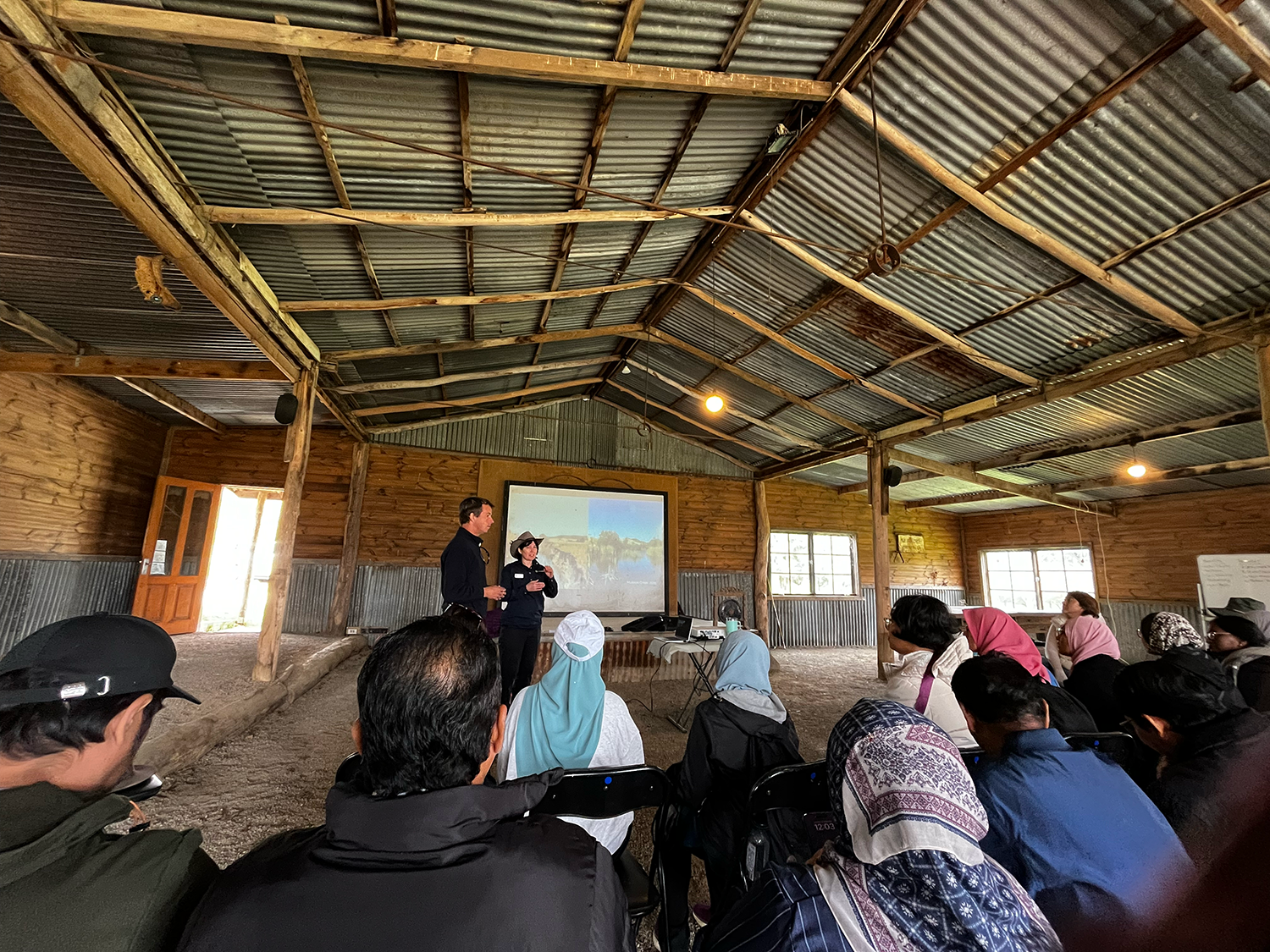
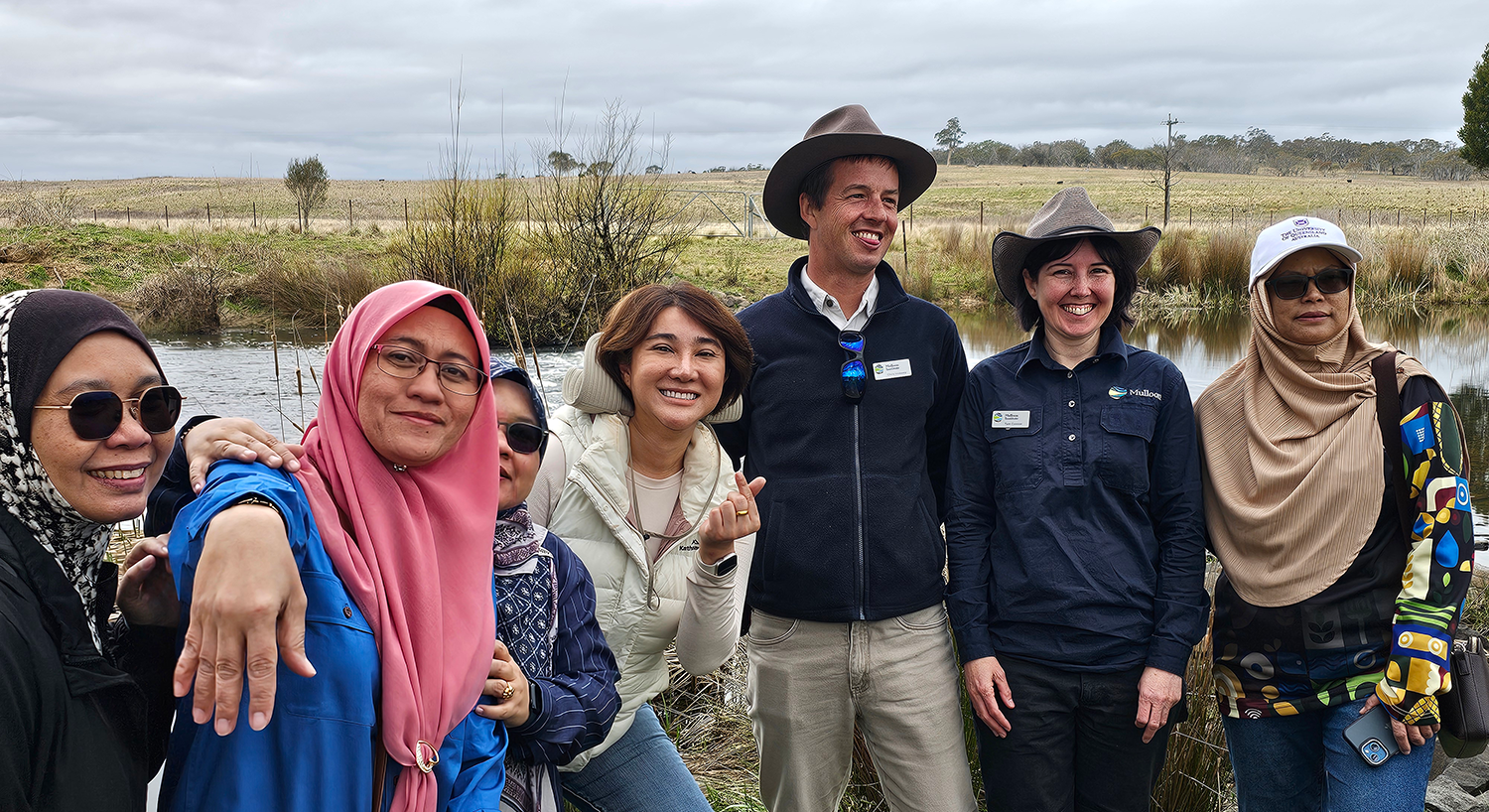
Mulloon Institute was delighted to host a VIP delegation from Malaysia as part of the University of Queensland’s ClimateSmart Global Food Systems Tour.

Our guests represented government, industry and research sectors, and were among the keenest groups we’ve welcomed to the Farms, capturing plenty of selfies while immersing themselves in the story of Mulloon’s catchment-scale rehydration work and lots of knowledge sharing.

The day began with an onsite Acknowledgement of Country, recognising the Yuin, Ngunnawal, Ngarigo and Gundungurra Nations, followed by a hilltop walk at Duralla to orient the group in the landscape. Visitors explored the history of the Mulloon Rehydration Initiative, from Tony Coote’s early restoration efforts to today’s 23,000-hectare multi-landholder project. At Honeymoon Crossing, they saw first-hand how natural infrastructure — log sills and rock weirs — rebuilds hydrological function.

The visit concluded at The Barn with morning tea, a Q&A and hands-on demonstrations of how repairing the small water cycle improves soil, biodiversity, productivity, and community wellbeing.

We thank University of Queensland and DAFF for facilitating this exchange, and our Malaysian visitors for their curiosity and enthusiasm — a reminder of the global relevance of landscape rehydration.

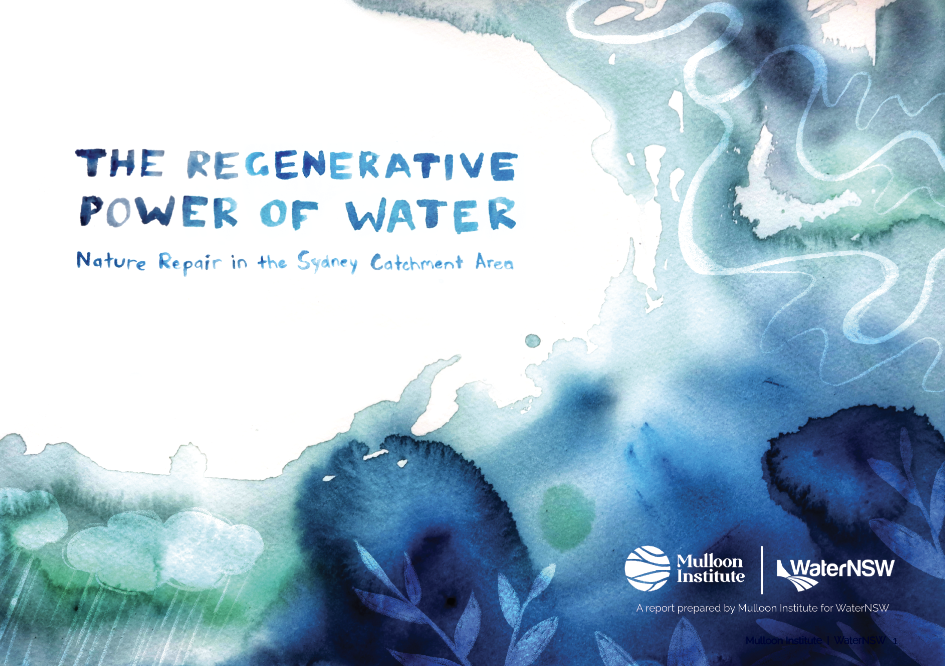
At long last, The Regenerative Power of Water is published and available for download or hard copy purchase!  

Early this year, with bright eyed innocence, we began producing a report about the purpose, principles, science and practice of landscape rehydration. Stuart Naylor, Catchment Program Coordinator at WaterNSW, set the brief just as our Water Stewardship Program began rolling. To support this new community-centred program, we needed a publication that clarified how and why landscape rehydration heals landscapes, and the steps involved in applying these methods to care for the precious water that flows through our catchments. 

The journey was longer than our innocent selves predicted, but here it is! A team effort that drew in particular on Peter Hazell’s deep knowledge, with the illustration skills of Tilda Joy and Kim Williams, and an inspiring suite of landholder and community projects brought into the mix – we are excited to share this with the world. We have tried to make it informative, visual, easy to navigate and not too long… but you be the judge!  

Thanks to funding provided by WaterNSW and The Ian Potter Foundation, the book is now free to download from our website or to purchase.  

The book is also a visual record of the Institute’s collaboration with an array of wonderful people who have contributed time, energy and trust to the Institute’s efforts to spread the benefits of landscape rehydration. A heartfelt thanks to all of you! We extend particular thanks to Stuart Naylor, an extraordinary catchment health champion, for his belief in the value of this work and his calm and patient support of this project. We couldn’t have done it without you.  

For details on how to obtain a hard copy of the book, email Dr Laura Fisher at learning@mullooninstitute.org


DOWNLOAD REGENERATIVE POWER OF WATER (48MB)


PURCHASE REGENERATIVE POWER OF WATER

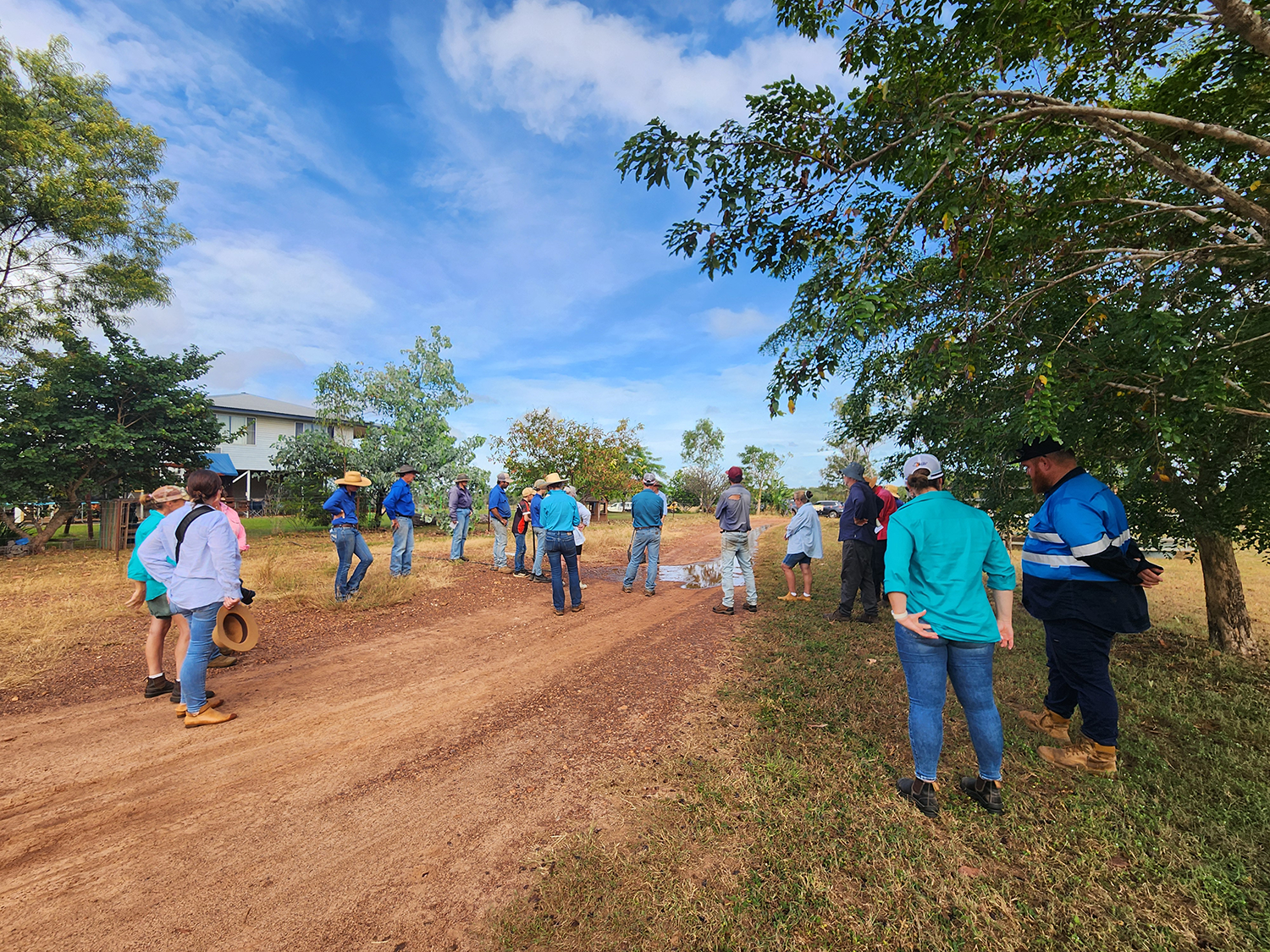
When Fiona and Pete McBean opened the gates to their property, Old Cameron Downs in Batchelor, NT, for a “Boots on Ground” event, they weren’t just hosting—they were sharing a powerful story of transformation in biodiversity and productivity through nature-based solutions. 

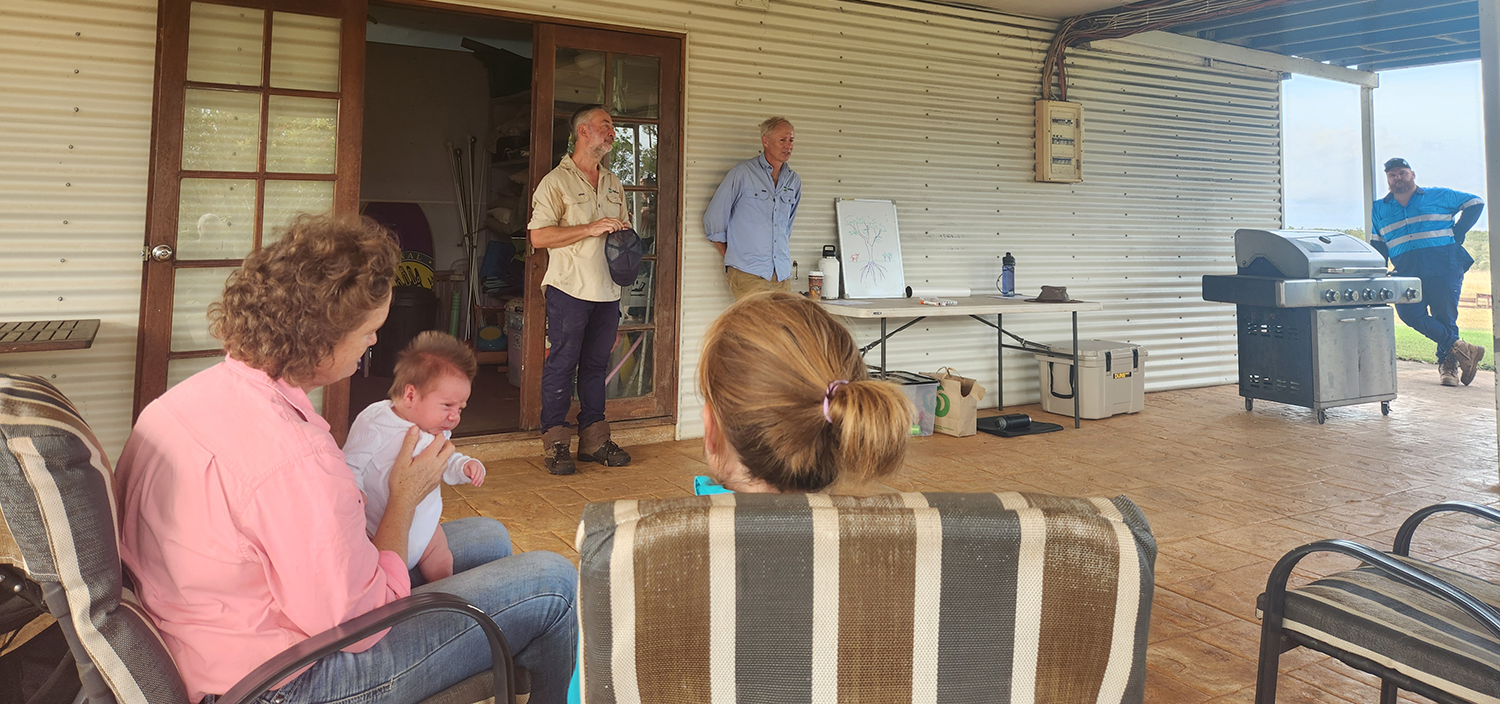
The day offered a valuable opportunity for peer learning, where producers exchanged knowledge about local conditions and shared strategies to improve drought resilience across their enterprises. 

Held at their paddock-to-plate enterprise, the practical demonstration day marked the final stage of the Communities of Practice Project with Lance Mudgway and Tony Wells in partnership with Territory NRM. The project works with producers in developing skills in nature-based solutions so they can plan and implement effective drought resilience strategies. 

Producers toured several sites where over the past 5 years, natural materials have been used to create rock weirs and contour banks, designed to slow, spread, and soak water into the soil. Fiona shared in the impressive results of an extended growing season, while Lance and Tony demonstrated principes and designs of Landscape Rehydration, showing how these approached alongside management practices can build drought resilience.  

Watch the video that captures these incredible results!

This project received funding from the Australian Government’s Future Drought Fund.  

Last week Tam, Chris and Laura joined a terrific cultural camp with Wiradjuri folks at Kelgoola, surrounded by the magnificent Wollemi National Park.

We were continuing our co-design journey building the First Nations Water Skills certificate with North East Wiradjuri Co, Uncle Peter Swain and other community members. 

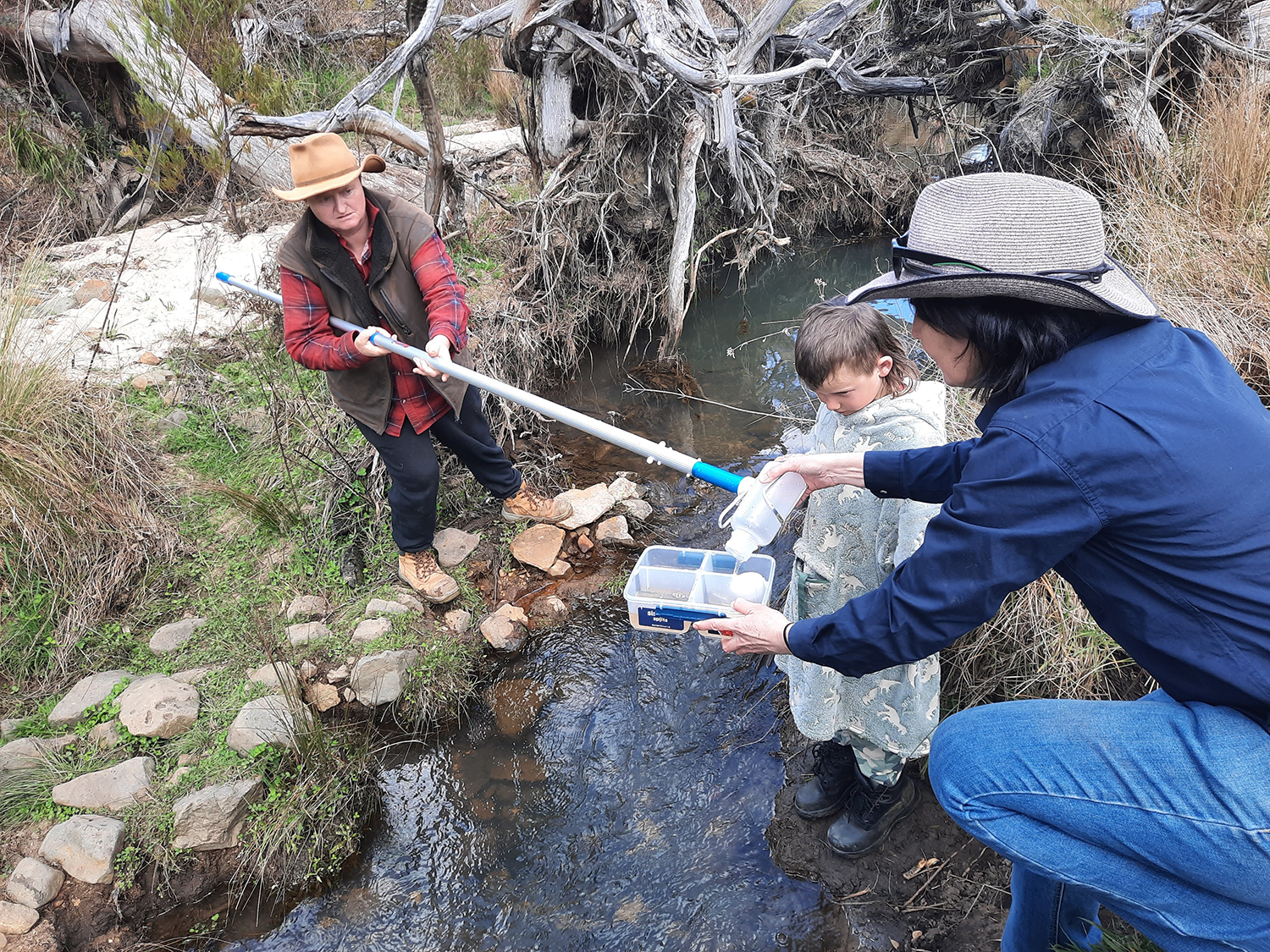
At this camp, we focused on the beautiful Cudgegong River, with which many who attended the camp have a special relationship. The bush site at Kelgoola was an opportunity to be close to the water, share values of connection and observe features of a waterway in great condition. Dharawal Water Man John McInness was also with us, sharing knowledge of native species and waterway health.

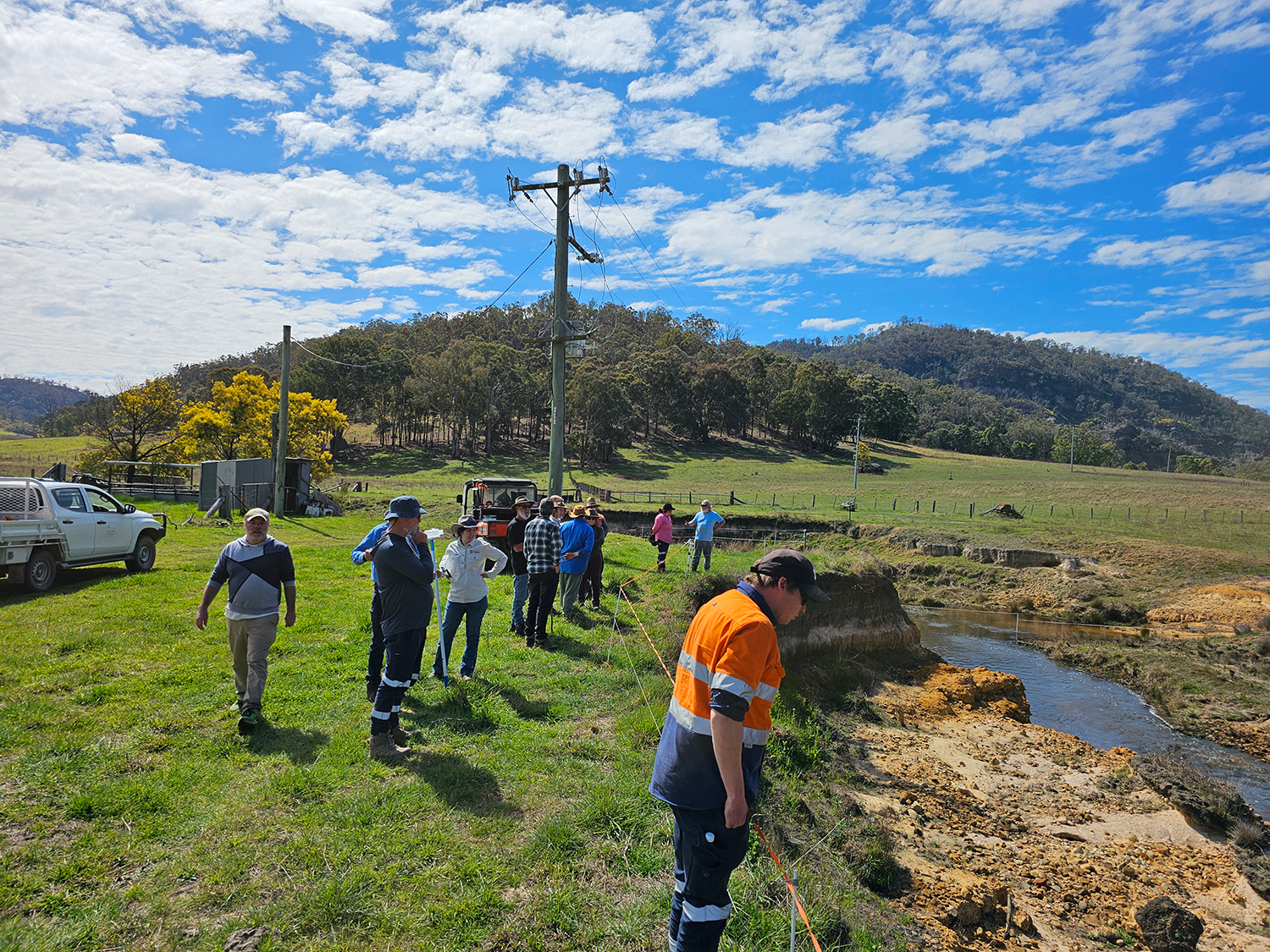
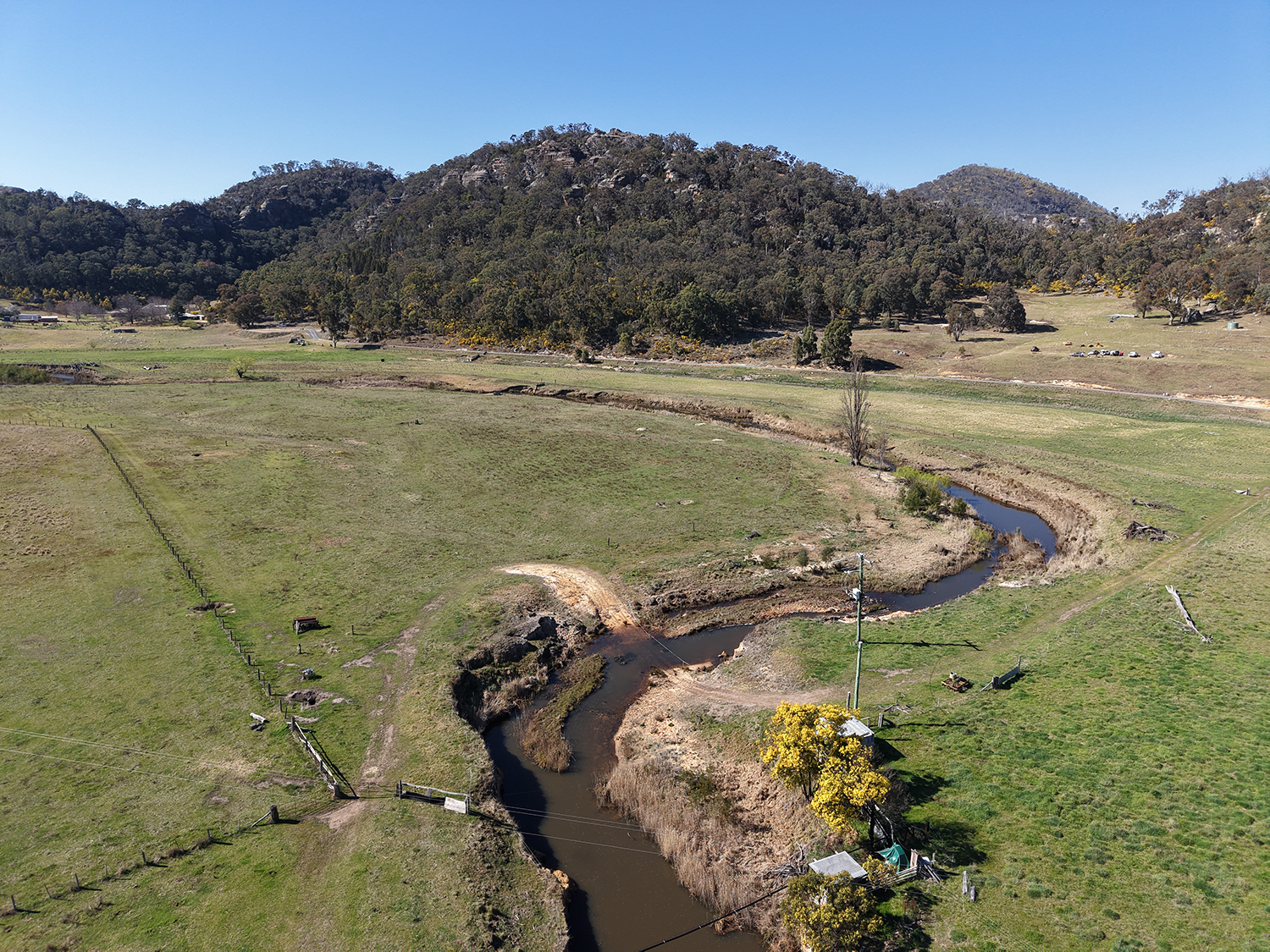
The next day we spent time with the Cudgegong on the regenerative agricultural property Franks’ Breakaway. This property hosted a Mulloon education event with Kandos High School back in 2022, just after the river was badly impacted by the 2022 floods, which were especially erosive due to landscape’s vulnerability following the ‘tinderbox drought’ of 2017-2019 and the ferocious 2019 bushfires. We explored habitat conditions, water quality indicators, and witnessed how the river was gradually regenerating: wattles, cumbungi, riffles and grasses taking over the banks that had been battered by the landowners to be less sheer. 

We also surveyed a recently built contour with plantings on a hillside at Franks’ Breakaway, one of a few that Michael and Cheryl have built to slow surface flows, encourage infiltration and reduce pressure on the waterway. This was an opportunity to connect the ‘landscape rehydration toolkit’ into the river-focused learnings.  

Thank you to all those who participated for involving Mulloon in this important cultural camp! The next step for this crew with the skills certificate will be a practical skills day in November, to begin to put new learnings into practice – the team is keen! 

This event was supported by the Australian Government through funding from the Climate-Smart Agriculture Program under the Natural Heritage Trust. 

Our spring eNewsletter is out now!


This quarter, Mulloon farewells two treasured colleagues, we take on new frontiers with landscape restoration in the ACT and beyond, Erin and Nolani take our work to the 2026 Science Week Symposium, and all the team reports round up a busy winter as we look forward to new growth in spring!


READ NOW

Stage 2 of the construction on the floodplain at Carwoola sees two wetlands constructed and sections of historical flood levees removed to support the function of the floodplain.

Floodplain earthworks at Carwoola are now complete as part of the Molonglo Catchment Rehydration Initiative. Seven floodplain earthworks sites were completed that involve cut outs on historical levee banks on the floodplain. These cut outs in the levees enable flood runners to activate and fill up the wetlands on the floodplain. This aims to restore the natural hydrological regime and floodplain function to enhance breeding habitat for the endangered Green and Golden Bell Frog.

Two wetlands have also been constructed that will provide further breeding habitat for the frog and enable manual water level control in one of the wetlands in an effort to mitigate the impact of the introduced mosquito fish – Gambusia holbrooki, on the breeding success of the frogs.

Senior Landscape Planner Jack Smart supervised the construction of these floodplain earthworks and was supported by herpetologist and Green and Golden Bell Frog expert Sam Patmore during the construction of the wetlands.

Stage two of the Carwoola earthworks including seven levee cut outs, two constructed wetlands and extensive revegetation. These interventions build on the success in February this year with the construction of eight instream structures to raise the water level of the Molonglo River and reconnect it with the floodplain. You can read more about Stage 1 of the project here.

This project has been assisted by the NSW Government through its Environmental Trust.

Pictured right: progress underway to restore the valuable wetlands at Carwoola to enhance the breeding habitat for the Green and Golden Bell Frog.

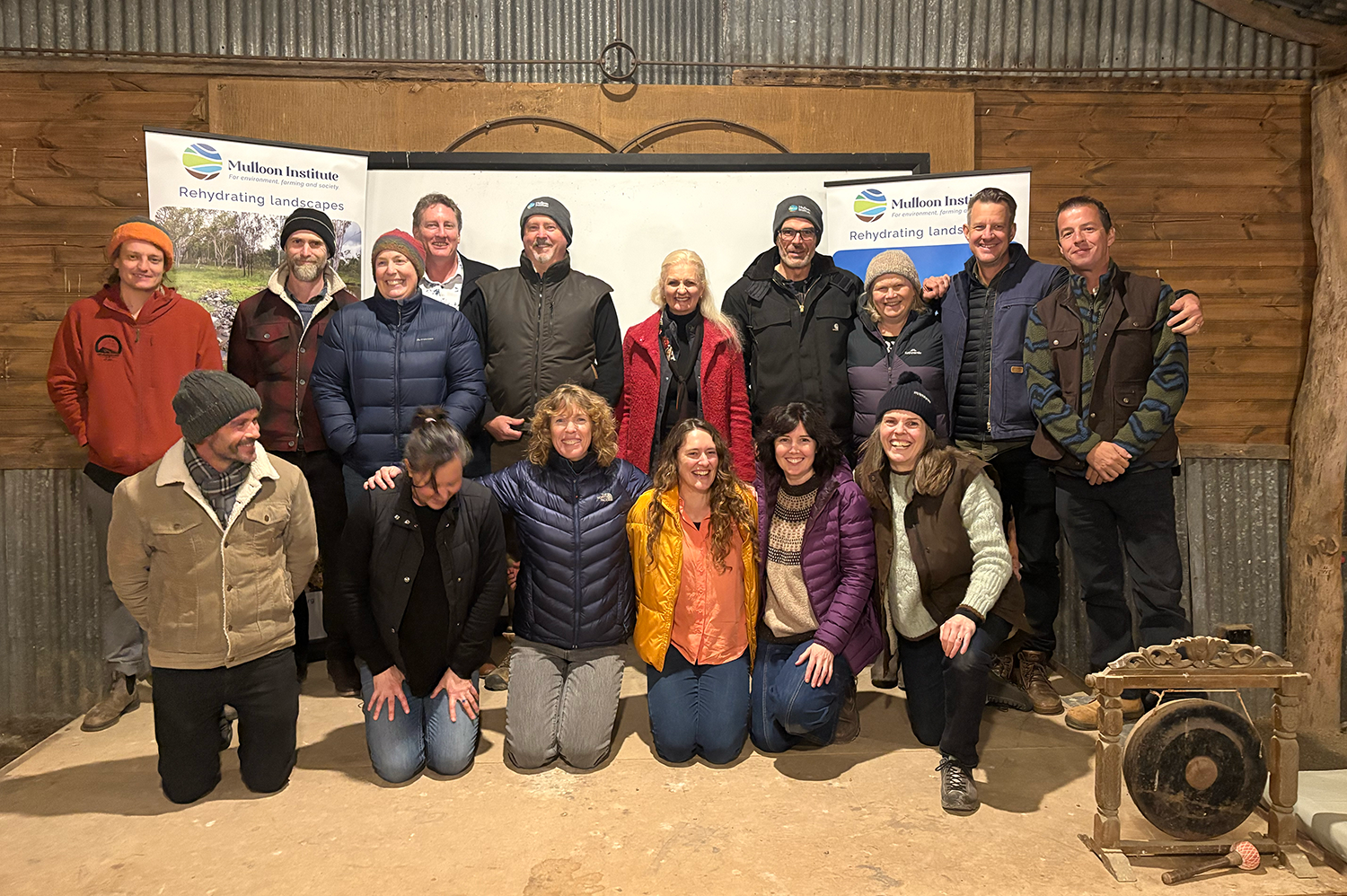
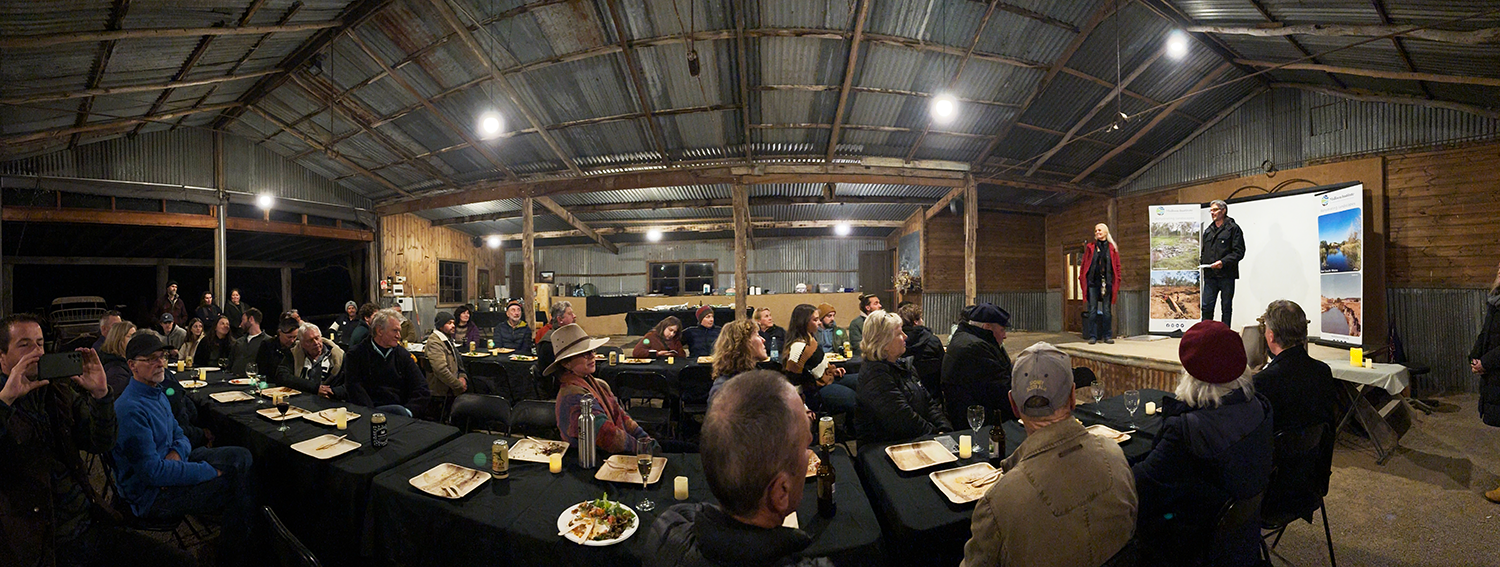
On Friday, 15 August, the Mulloon team were joined by Mulloon Institute members, guests, past Mulloon team members, and Mulloon catchment landholders to farewell two champions of landscape rehydration and repair.

The farewell was held in the barn at the Home Farm on a chilly winter evening but our hearts were warmed with love and respect for our friends and colleagues, Jono Forrest and Peter Hazell as we bid them farewell.

Jono Forrest joined us three years ago to build on the early success of Mulloon Consulting and take the business to the next level. Jono immediately fitted into the team and saw where support was needed and processes could be introduced to help the business thrive.  Jono’s strengths are a real passion for regenerative agriculture, his desire to learn and his gift with “the numbers”.  He has made a remarkable contribution to Mulloon and left us in good shape with an expanded business client list and a thriving business.  Thank you Jono!

Peter Hazell has pioneered the field of landscape rehydration and restoration. His vital contribution to Mulloon Institute’s  Learning Programs has been instrumental to our success in building the capacity communities across Australia to repair their landscapes. As Mulloon’s Principal Landscape Planner he has introduced a new discipline and mentored a new generation of natural resource management professionals. He has helped to drive regulatory reform to create more streamlined pathways for this vital work on Country. For all of us it has been a privilege to work with him. Fortunately Peter’s expertise will remain with us through his ongoing involvement with the Science Advisory Committee.

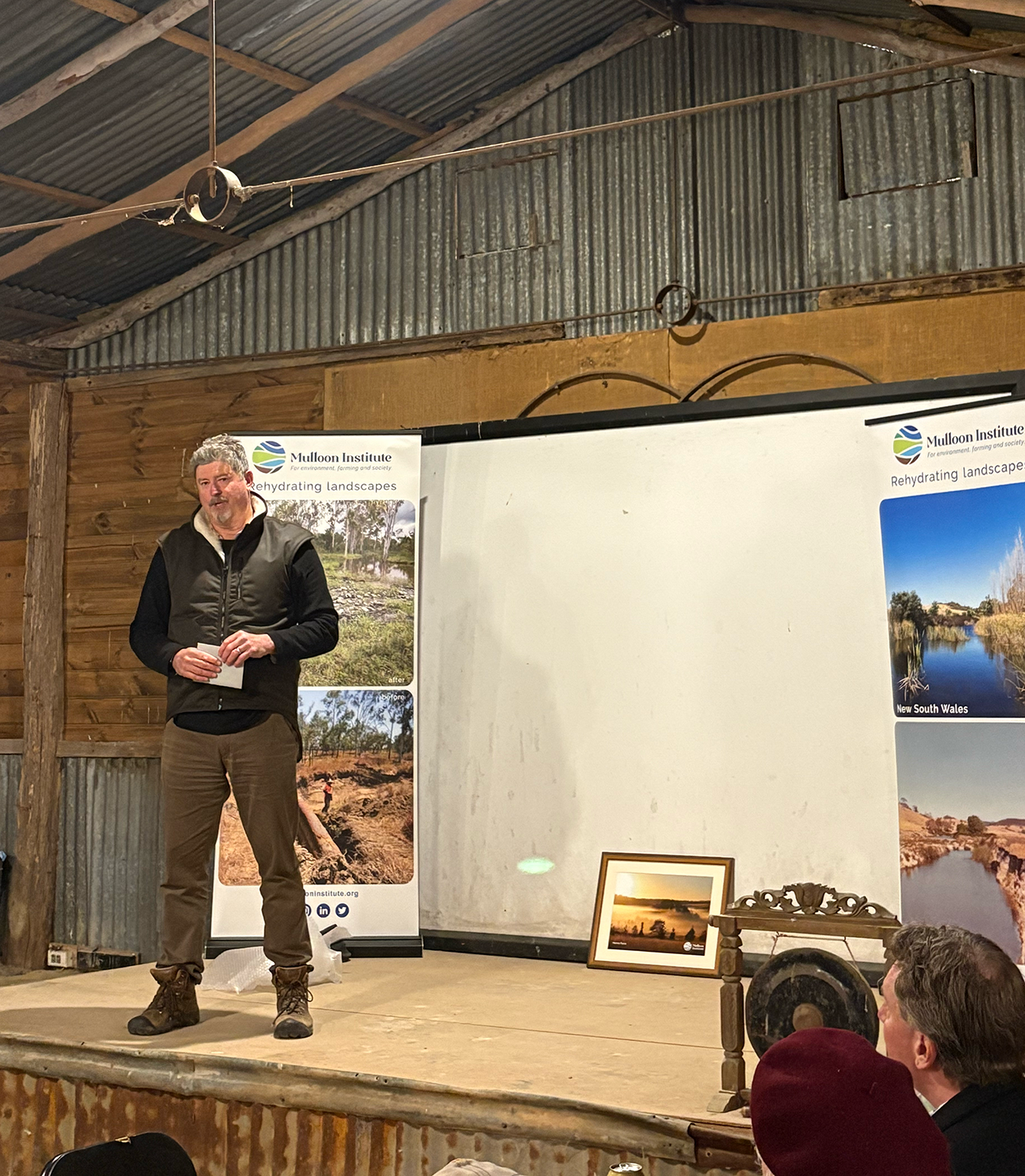
Pictured at right: Peter Hazell lights up the Barn stage for one last time.
Pictured below:
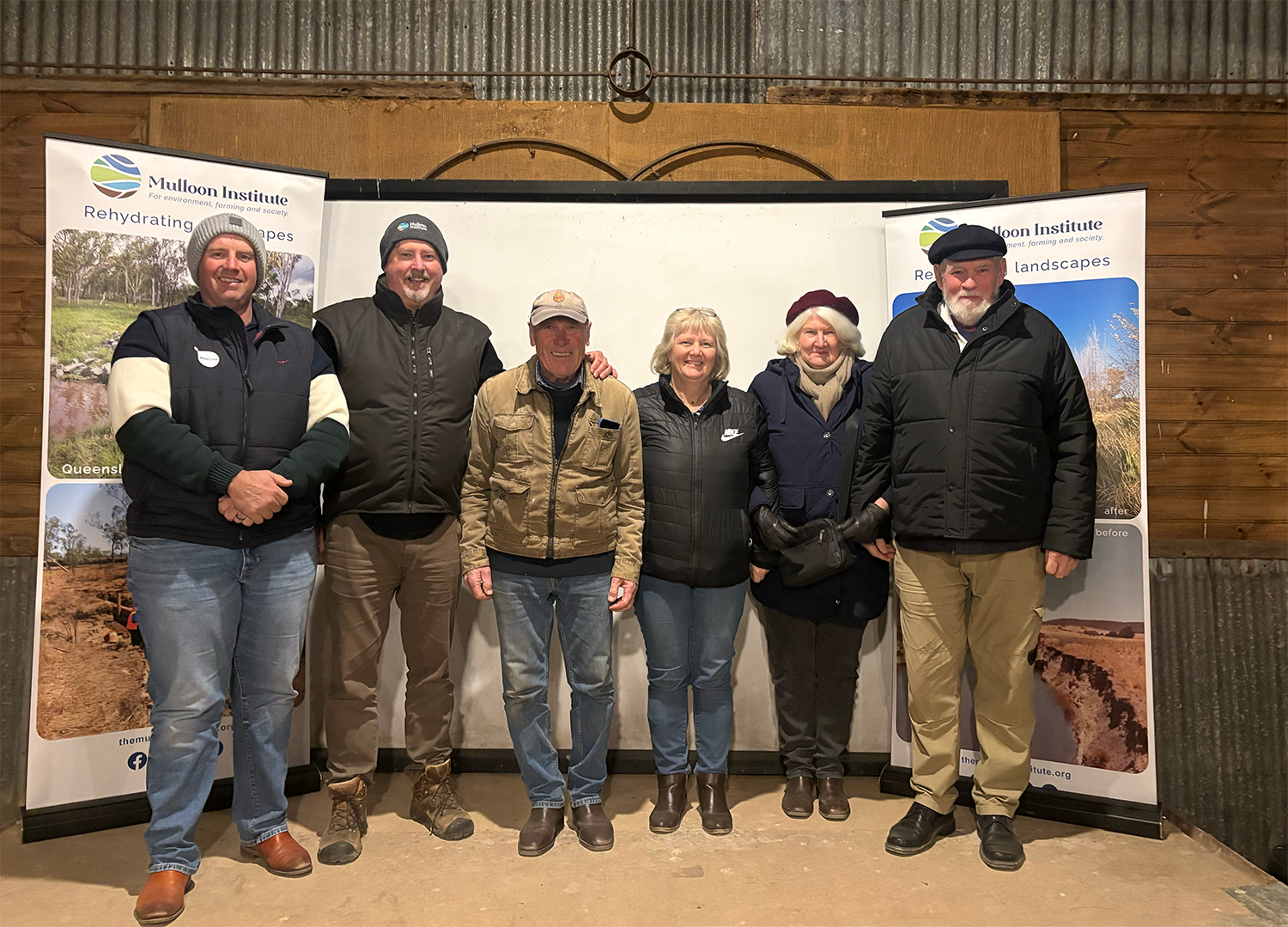
• L-r Home Farm Manager Jason Maloney and Peter pictured with Mulloon Creek landholders Ulli Tuisk, Marlene Cantwell, Robin Clarey and Gerry Carroll. 
• Current and past team members sharing a laugh onstage
• Jono’s farewell speech in the Barn on a cold but cosy winter evening amongst friends. 

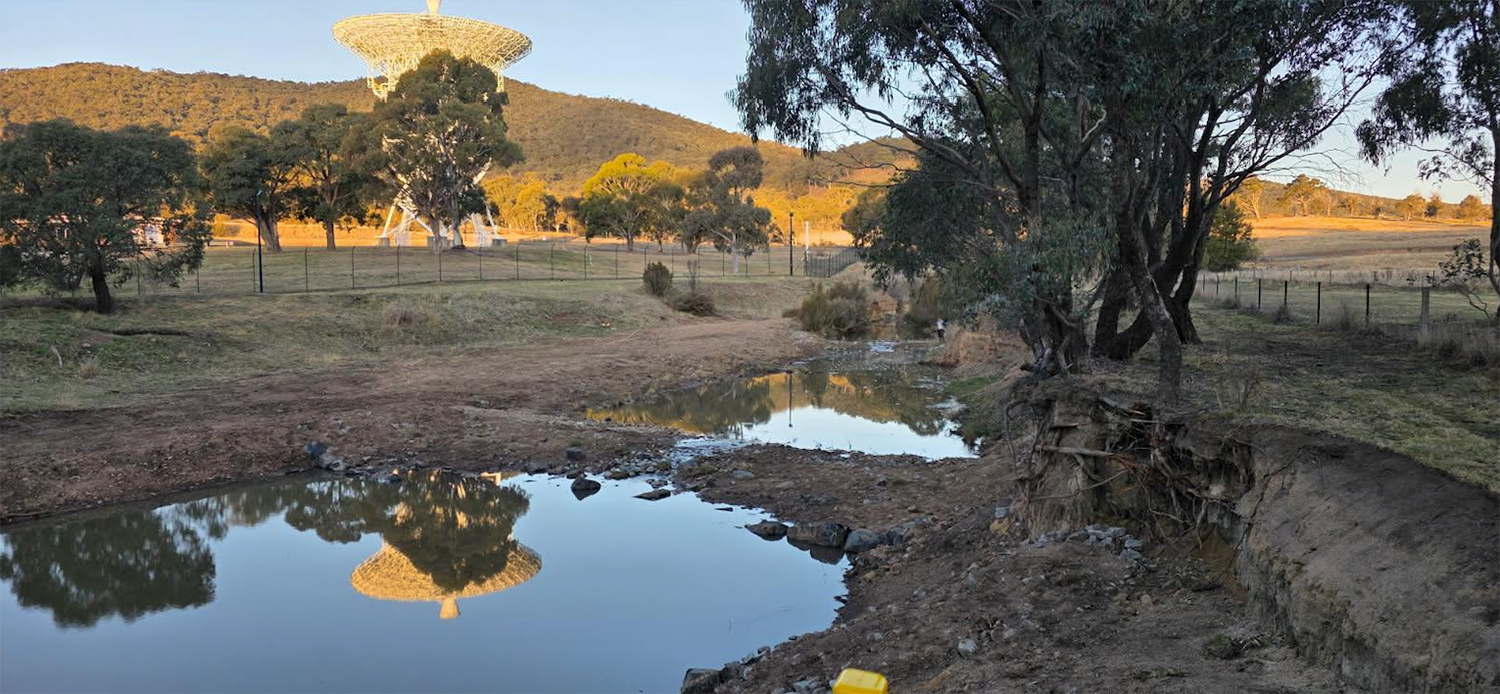
Landscape restoration and deep space communications: a new frontier.

The Canberra Deep Space Communications Complex (CDSCC), west of Canberra, includes part of the Larry’s Creek catchment. Mulloon Institute was approached in 2023 after the team at the CDSCC observed the works we had completed on the adjacent Tidbinbilla Station.

The CDSCC is located within a rural property covering 130 ha in the south of the ACT. The property has historically been extensively cleared and used for livestock grazing and the cultivation of potatoes on the valley floor. Larry’s Creek flows into Paddy’s River and has been subject to concentrated flow and subsequent erosion within the CDSCC property.

In August 2023, Mulloon Consulting was commissioned to explore and make recommendations to address gully erosion in Larry’s Creek and active erosion in the channel floor, resulting in a deeply incised channel with steep banks.

After extensive negotiations with CSIRO and funding ultimately from NASA, Mulloon Consulting was commissioned to prepare detailed designs, gain regulatory approval from the ACT Government and construct landscape repair interventions.

Peter Hazell, joined by Jack Smart, Tony Wells, Mitch Lennon and new landscape planner Ryan Badowski, have been on site these past weeks with Coopers Earthmoving. The team have delivered the in-stream works including log sill and rock weirs, rock weirs, rock groins, rock baffles and an access crossing. Revegetation has also been undertaken as part of the works. This is a fantastic last construction project for Peter Hazell prior to his retirement.